

SUBSCRIBE TO OUR FREE NEWSLETTER
Daily news & progressive opinion—funded by the people, not the corporations—delivered straight to your inbox.
5
#000000
#FFFFFF
To donate by check, phone, or other method, see our More Ways to Give page.
Daily news & progressive opinion—funded by the people, not the corporations—delivered straight to your inbox.

Lindsay Meiman, +1 (347) 460-9082, lindsay@350.org, us-comms@350.org
Richard Brooks, richard@350.org, +1 (416) 573-7209
Today, New York State Comptroller Tom DiNapoli announced that the $226 billion New York State Common Retirement Fund (Fund) is moving to divest from the riskiest oil and gas companies by 2025 and decarbonize by 2040.
New York's announcement is the biggest leap forward worldwide on climate finance action in 2020, an otherwise bleak year for the planet. It creates the most comprehensive program of any large public fund worldwide to divest from fossil fuels, decarbonize across a massive portfolio, and put major financial pressure on public companies -- from auto companies to utilities -- to align their operations with the scale of climate action needed to stave off worldwide catastrophe.
The victory comes eight years after New Yorkers launched the #DivestNY campaign, days ahead of the December 12 fifth anniversary of the Paris climate accord signing, and sets the bar for climate finance action ahead of COP26 next year in Scotland.
Comptroller DiNapoli is taking a ground-breaking, systematic approach to reviewing and assessing each fossil fuel company sub-sector, with a process grounded in fiduciary responsibility. The results of the first review, targeting the coal sub-sector and completed earlier this year, resulted in divestment from 22 coal companies. Similar divestment action is anticipated from the current tar sands review, which is set to conclude next month. After the tar sands review, the Comptroller will review fracking companies,Oil majors, fossil fuel service companies, and oil and gas transportation and pipelines. All reviews and divestment actions will be completed by 2025.
Just like New York City's 2018 announcement of a five-year plan to divest its massive pension funds from fossil fuels, today's announcement by Comptroller DiNapoli will reverberate globally, boosting divestment and climate finance campaigns across the nation and around the world. The commitment to decarbonize the Fund by 2040 is ten years sooner than any other US pension fund. This plan also includes interim trajectory goals, rigorous reporting, staff hiring, and transparency.
NYS-CRF historically has held over $12 billion in fossil fuels, including more than $1 billion invested in ExxonMobil alone. Divestment will ensure that the NYS fund will end such financing.
To celebrate this victory and encourage funds across the country and around the world to take similar action, the multiracial, multi-generational #DivestNY coalition is hosting a virtual press conference and rally at 10amEST today, featuring youth activists, pensioners, financial experts, and academics, along with Bill McKibben, New York State Senator Liz Krueger, and Assemblymember Felix Ortiz. The legislators co-prime sponsored divestment legislation and pushed for such historic action.
The #DivestNY coalition, composed of 40+ groups, won this campaign through focused and diligent campaigning over many years. The campaign demand launched after Superstorm Sandy devastated the Northeast in 2012, costing nearly $70 billion in damages.
In the face of COVID-19, the coalition shifted into virtual campaigning and video conference advocacy and lobbying, escalating momentum toward this victory. In September, 1100+ Academics sent a letter to Comptroller DiNapoli urging him to divest from fossil fuels. To date, over 1300 institutions representing more than $14 trillion in assets have committed to some level of fossil fuel divestment.
Today's announcement also builds momentum for activists and experts to convince the $120 billion New York State Teachers' pension fund to divest. The #DivestNY coalition will continue to work alongside Comptroller DiNapoli, the expanding team at the Comptroller's office working on climate finance, and public officials at all levels to ensure this commitment, its benchmarks, and a fossil free world become reality.
May Boeve, 350.org Executive Director, said: "New York State is sending a global signal that economic recovery goes hand in hand with transformative climate action. This is a victory for all of us fighting for a safe climate, quality jobs, and an equitable society that holds fossil fuel companies accountable. Comptroller Tom DiNapoli, Senator Liz Krueger, and Assemblymember Felix Ortiz should be proud to celebrate their climate leadership alongside New Yorkers. History will show December 2020 as a turn in the tides shifting finance away from coal, oil, and gas of the past, toward our communities and a just recovery. If the $226 billion New York State pension Fund can do it, then every bank, pension fund, sovereign fund, and insurer can do it too. We call on the world's investment funds to take action like New York's bold and comprehensive model. Now."
"This victory--after years of campaigning by so many people--is a great victory for the climate, because it both demonstrates the waning power of the fossil fuel industry and because it accelerates that decline. It is a morally bankrupt industry, and increasingly a financially bankrupt one as well," said Bill McKibben, co-founder 350.org.
"Today's announcement from the Comptroller is an exciting, bold, and responsible leadership position, one that sets a high bar in a vital year for climate action. The New York State Common Retirement Fund is the third largest pension fund in the country, and when it takes action, people pay attention. Rigorous and timely review, with divestment for climate laggards across the energy sector, and a commitment to a net zero portfolio by 2040 will protect the fund, current and future retirees, and taxpayers from unacceptable levels of climate risk. It also sends a clear message that the era of dirty fossil fuels must and will come to an end, and the smart money is getting out sooner rather than later. I thank my many colleagues in the Senate and Assembly who joined me in educating the public and investors about the importance of divestment from fossil fuels, and also the Divest NY advocates for their years of tireless work to achieve this result. This announcement is a big deal, and it is a win-win for the State Pension Fund's bottom line, and the future survival of our society." - NYS Senator Liz Krueger
"As a result of nearly eight years of campaigning and organizing by a multigenerational, multiracial movement that has touched nearly every corner of New York State, the Common Retirement Fund will fully decarbonize by 2040 and divest from fossil fuels" said Hridesh Singh, Executive Director of the New York Youth Climate Leaders. "We commend Comptroller DiNapoli for his leadership on this issue and look forward to seeing the implementation of this plan. Although there is still much work left to be done in the ongoing fight against the climate crisis, today, we celebrate this historic, people-powered victory."
"This is an important step in the worldwide campaign to stop investments in fossil fuels in order to prevent the worst of global warming. This is also a win for the effort to protect taxpayers and retirees from the escalating loss in value of companies engaged with fossil fuels. New York must continue to be a leader in the effort to save future generations from the worst impacts of climate change." - Mark Dunlea, Chair, Green Education and Legal Fund and a member of 350 NYC and Albany (PAUSE)
"Today, Comptroller DiNapoli showed climate leadership with his announcement that the Common Retirement Fund would divest from fossil fuels. This announcement builds on last year's landmark climate law that requires New York to go to net zero emissions by 2050. Climate activists, both public officials and grassroots New Yorkers have led the way. Let's keep up the momentum and demand an end to fossil fuel subsidies, and divestment of the teachers retirement fund from fossil fuels." - Ruth Foster, NY Climate Advocacy Project
"With today's announcement about divestment and decarbonization for the state pension fund, Comptroller Tom DiNapoli cements his status as a true climate hero, the model for other pension fund managers throughout the country and throughout the world to emulate. This is a win for DiNapoli, a win for the NY legislature, a win for climate activists, and most important, a win for pensioners and a win for the planet." - Jordan Dale, Divest NY & 350NJ-Rockland
"Comptroller DiNapoli is launching the best program of any major public fund worldwide to combat climate change and safeguard retirees' long term interests. The Comptroller's listened to experts, activists and state legislators and, today, history is being made." - Patrick Houston, Climate & Inequality Campaigns Associate, New York Communities for Change
"Divestment is about rapidly ending our global addiction to Fossil Fuels in time to stabilize the climate and save a future for our children. It's also about a few concerned citizens, working together to change hearts and minds within local governments and global markets to impact the climate systems of our planet. Lyna Hinkel and Mark Dunlea launched New York's Divestment campaign with 350NYC in 2012. From their initiative and steady work our regional movement widely evolved. The City's commitment to divestment in 2018 and now New York State's commitment to Divestment in 2020 are a message to the world: "The Fossil Fuel era has ended. Clean energy is taking over. We have a chance. We can do this. Join with us as citizens who care!" - John Ingram, 350NYC
"350NJ-Rockland is very pleased with the public announcement that the NY State Pension Fund is committing to an ambitious climate action plan that includes divestment from fossil fuels. This is the latest in an ever-growing series of actions being taken all over the world to drive the urgently needed transition away from fossil fuels to clean, jobs-producing renewable energy, battery storage and energy efficiency. We look forward to the New Jersey pension fund being the second state fund to do so soon and for many states to then follow the NY/NJ area's lead." - Ted Glick, President, 350NJ-Rockland
"Victory is ours! Years of tireless legislative and grassroots advocacy have brought about impactful change. Today's announcement by Comptroller DiNapoli to transition the NYS Common Retirement Fund's portfolio to net zero greenhouse gas emissions by 2040 is a win for all New Yorkers. Investing in companies that produce, support or promote fossil fuels is hazardous to the future of the environment and pensioner's finances. We have proven that together; we can enact powerful positive change for future generations. There is no greater legacy to leave." - Assistant Speaker Felix W. Ortiz
"The climate crisis has been on full display this year with thousands of lives upended all across this country. It's never been more urgent as a global society to cut the cord with fossil fuel polluters. This historic action will help send market signals that fossil fuels have had their day, and clean energy is the future for New York," - Rich Schrader, New York Policy Director, Natural Resources Defense Council (NRDC)
"For years, so many faith based organizations have been on record in supporting divestment of large government and not for profit funds including their own funds of fossil fuel holdings. So many have felt the call to take care of this planet that God has created and ensure that it is in good shape for future generations. Today, it is thrilling to us that Comptroller DiNapoli has decided to take the boldest possible steps to methodically divest the New York State Pension Fund of fossil fuel stocks in order to safeguard our planet and future generations. I am also grateful for all the members of the assembly and state senators who made today possible and I especially want to recognize so many people of faith across this state and nation for their courage, persistence and advocacy to bring us to this great day." - Rev. Peter Cook, Executive Director, NYS Council of Churches
"Mr. DiNapoli's momentous decision will help advance UUP's efforts to create good jobs while promoting climate justice and a sustainable environment in which to live and work." - Ronald Freedman, United University Professions Albany
"Stop NY Fracked Gas Pipeline, (SNYFGP) fought the NED pipeline... And we won. Then we helped to fight the Sheridan Hollow powerplant... And we won again. Now we are fighting the Albany Loop Pipeline... And we expect to win once again. Comptroller DiNapoli's announcement that he is divesting the state pension fund from fossil fuels will help limit funding for future fossil fuel projects and promote investments in renewable energy. Thank you Comptroller! Now we hope we can stop fighting infrastructure and move our energies to promoting renewable energy." - Becky Meier, Co-Founder, Stop NY Fracked Gas Pipeline (SNYFGP)
"PSC-CUNY, AFT #2334, representing 30,000 faculty and professional staff at the City University of New York, is proud to have been a part of the state-wide effort to accomplish divestment of fossil fuel stocks from the Common Retirement Fund of NYS. As state workers, we stand in solidarity with other state workers who can rest assured that their hard-earned pension funds will be protected from the failing fossil fuel sector of our economy and from the destructive effects it has on our planet's climate. We thank all those who have advocated for fossil fuel divestment and will stand the course to see it through its final stages of divestment. This is an important development for the climate movement and its allies." - Nancy Romer, Chair, Environmental Justice Working Group, PSC-CUNY/AFT #2334
"The continuing record-breaking extreme weather this year nationwide is yet another sign that we must radically reduce the greenhouse gases that fuel the climate crisis," said Bob Cohen, Policy Director of Citizen Action. "We praise Comptroller DiNapoli, who is finally acting to align New York's investment policies with New York's climate values and signaling to other governmental entities to do the same. We also applaud DIVEST NY, backed up by thousands of committed New Yorkers, for their tireless work promoting climate action, and Senator Liz Krueger, who led the legislative effort to stop funding climate destruction."
"This is yet more proof that we, the people, can make lasting change when we decide to come together to demand that we divest from industries that threaten the health and well-being of our planet. Divestment from fossil fuels is a good start and inspiration for other state, city and local governments to follow. Our forests are burning, our lungs are polluted, there are jobs lost and lives disturbed due to prioritizing profits for the few over the wellbeing of the many! We must divest now!" - Yousef Zakaria, Coordinator, CODEPINK
"News of the fossil fuel divestment of New York State's massive pension fund is a breath of fresh air! The time is right to stop financially supporting industries that pollute the environment, compromise human health and destabilize our climate. Hopefully, a plethora of funds and institutions will follow suit as divestment is an important tool as we work to mitigate an increasingly disrupted climate." - Sally Courtright, The Climate Reality Project: Capital Region, NY Chapter
"New York is once again leading the way in moving off fossil fuels," said Eric Weltman, a Brooklyn-based senior organizer with Food & Water Action. "We banned fracking, and now thanks to Comptroller DiNapoli's leadership we've struck another blow to the dirty energy corporations profiting from creating a climate emergency. But we cannot relent until New York has put a stop to all new fossil fuel projects, while shutting down existing pipelines and power plants."
"We applaud New York State Comptroller DiNapoli in his announcement on divestment. This is yet another grassroots victory for the climate movement in New York State. Our movement has banned fracking, passed the Nation's most ambitious climate legislation, and now this. We are an unstoppable force that will not rest until we realize a just transition away from fossil fuels." - Ryan Madden, Sustainability Organizer, Long Island Progressive Coalition
"NYCD16 Indivisible salutes Comptroller DiNapoli's monumental and impactful decision to divest the NYS Pension Fund from fossil fuel companies. It's past time to stop investing in an industry that purposefully deceived the American people about its role in global warming, in order to amass the largest possible profit at the expense of all life on our planet. Now, New York State needs to stop building new fossil fuel infrastructure!" - Natalie Polvere and Iris Hiskey Arno, Co-Chairs Environment Committee, NYCD16 Indivisible
"This decision represents a powerful act of compassion and justice. There is no morally acceptable future in which investors seek profit from the destruction of life itself. Today, New York State stands on the side of the angels." - Rev. Ken Scott, Capital Region Organizer, GreenFaith
"Low-income and communities of color suffer most of the damage from the use of fossil fuels, so divestment is an important step in promoting environmental justice. New York needs to be a world leader in transitioning to a sustainable future based on clean, renewable energy and a commitment to a just Green New Deal. We must expand our efforts to break free from fossil fuels," - Francis Magai, PAUSE (People of Albany United for Safe Energy).
"As the economic risks from climate change have mounted, it makes clearer the need for bolder action by government, business and investors. We can build an economy by redirecting our assets out of fossil fuels and into investments in all sectors that enable a more equitable and sustainable economy," said David Levine, President, American Sustainable Business Council. "On behalf of the over 250,000 businesses and investors we represent, we applaud the NY State Comptroller in setting the bar high with a comprehensive climate action plan as an example for the rest of the country to follow."
"Sheridan Hollow Alliance for Renewable Energy (SHARE) is grateful for the climate leadership shown by Comptroller DiNapoli in divesting the state pension fund from fossil fuels," said Merton Simpson, Albany County Legislator and Co-Chair of SHARE. "The rapid transition to a renewable energy future is so important to Sheridan Hollow, an environmental justice community that has been polluted for over a century by the burning of coal, oil, garbage and gas in order to heat and cool the NYS Capitol and Empire State Plaza. Divestment supports us in our efforts to shut down the fossil fuel infrastructure in our community and invest in renewables for our neighbors and for the New York State Capitol."
"Comptroller DiNapoli's announcement is welcome news," says 350Brookyn member Sara Gronim. "New Yorkers have worked long and hard to help him recognize that we must pull investments out of dying industries that are killing us all. We look forward to the positive role our New York State pension funds will play in moving us towards a better future."
"Jewish Climate Action Network NYC thanks Comptroller DiNapoli for taking a leadership role and helping to, once again, propel New York State into a leadership role in fighting climate change. His announcement to divest the state's pension fund from fossil fuel companies and suppliers will be far reaching in achieving an economy and a just society based upon renewables. We are honored to be part of the DivestNY coalition and applaud the efforts of all who worked tirelessly to achieve this milestone announcement." - Lori Robinson, Jewish Climate Action Network NYC
"Mothers Out Front - Dutchess County, whose members are dedicated to protecting children from the climate crisis, applauds the announcement by New York State Comptroller Thomas DiNapoli of a fossil fuel divestment plan for New York State's Pension Fund. This plan sends a powerful message that New York State is committed to combating global warming by transitioning away from fossil fuels, including fracked gas. As investments in renewable energy technologies increase, this plan will also contribute to the continued health of New York State's Pension Fund." - Sandi Stratton-Gonzalez, Mothers Out Front - Dutchess County
"The WESPAC Community thanks New York State Comptroller Tom DiNapoli for committing to divest the state's public pension funds from fossil fuels and for positioning New York as a leader in the fight against the global climate crisis. Our times demand strong action to move us towards a more stable, safe and sustainable future!" - Nada Khader, Director, WESPAC
"New York is once again stepping into a leadership role on climate action. I applaud Comptroller DiNapoli's plan to eliminate investments in fossil fuels from the Common Retirement Fund. This decision sends the message that fossil fuels are no longer a sound financial investment and will contribute to the shift towards an economy powered by renewable energy. The Divest NY coalition is to be commended for their tireless efforts to move NY forward." - Sue Hughes-Smith, Climate Solutions Accelerator of the Genesee-Finger Lakes Region
"Westchester for Change and Stop the Algonquin Pipeline Expansion (SAPE) are heartened by the announcement that Comptroller DiNapoli will initiate a process to begin divestment of the $226 billion Common Retirement Fund from fossil fuels. We celebrate the tremendous work by fellow climate activists in the DivestNY coalition and throughout the state who have consistently upheld the belief that divestment is a powerful tool in addressing climate change. This action will reverberate across the nation and throughout the world." - Susan Van Dolsen, Co-Founder, SAPE & Co-Organizer, Westchester for Change and Diane Torstrup, Co-Organizer, Westchester for Change
"For faith communities around the world, the climate emergency and fossil fuel divestment are profound moral issues. Comptroller DiNapoli's commitment to divest from fossil fuel companies that fail to have real transition plans to get out of fossil fuel production is a genuine act of moral leadership. His climate action plan sends a message to corporations that it is unacceptable to profit from activities that threaten the future of our society and the planet." - Sister Eileen O'Connor, RSM & Roger Cook, Co-Conveners, Interfaith Climate Justice Community of WNY
"Indivisible Mohawk Valley celebrates a huge victory for the climate! We congratulate NYS Comptroller Tom DiNapoli on the announcement of his plan to effectively divest the NYS Common Retirement Fund from fossil fuels and achieve a net zero portfolio by 2040. It has taken years of hard work by many climate activists and state legislators to help achieve this plan. With bold climate action so desperately needed to combat the climate emergency, this news comes not a moment too soon. Thanks to the leadership of Comptroller DiNapoli and Senator Liz Krueger on the divestment issue, New York will again be at the leading edge of climate action and will provide a critical boost to the fossil fuel divestment movement nationally and worldwide!" - Mona Perrotti, Co-Chair, Climate Crisis Working Group, Indivisible Mohawk Valley
"Earlier this year, hundreds of us shut down the Comptroller's office, with a dozen arrests, to send him the message that we are in a crisis. The decision to decarbonize is a great step in the right direction, deserving praise, but our governments and institutions must go much deeper and further if we have any hope of averting tragedy. As we fiddle, carbon continues to fill the atmosphere and ecologies continue to be decimated." - John Johanson, Extinction Rebellion - Capital District
"Dutchess County Progress Action Alliance, DCPAA, is heartened by the announcement of NYS Comptroller DiNapoli that commits NYS to divestment from fossil fuels. Along with divestment actions the world over this decision supports the urgently needed transition away from fossil fuels to renewable energy and well-paying jobs. Fossil Fuel divestment helps to ensure that NYS pension funds remain robust, and that we have a fighting change to address climate change and save our planet." - Caroline Fenner, Dutchess County Progress Action Alliance
"These groundbreaking initiatives by the Comptroller address the climate crisis and remove climate-related risk from New York's state pension holdings. The world can't wait for fossil fuel companies to decide to become part of the solution - pensioners deserve safe investments that help move us a clean energy future. Congratulations to Senator Liz Krueger and the many, many climate activists that helped make this happen. We hope that California is paying attention!" - Sandy Emerson, Board President, Fossil Free California
"We chanted, hung banners, signed petitions, demonstrated by the thousands, occupied offices and got arrested. The Peoples Climate Movement, NY and dozens of different organizations coalesced to demand New York State divest its pension funds from fossil fuel investments. We maintained our activism and today, we won. We acknowledge the Comptroller for taking this important action amidst the worsening climate catastrophe. We are alarmed that the clock is ticking down. "Better late than never" will be too late." - Marilyn Vasta, Peoples Climate Movement, New York
"I'm heartened to hear the agreement is aligned with the goals outlined in the Paris Accord. I'm proud to have signed a divestment letter with 250 Elected Officials to Protect New York asking the Comptroller to make the right fiduciary decision and protect the pension fund," said Albany County Legislator William Reinhardt, Elected Officials to Protect America-New York Leadership Council. "The coalition that brought us together have shown leadership and courage standing up to the oil industry to ensure our public servants need not worry about their retirement investments, and for a brighter tomorrow for all. It is my hope that New York's actions will start a domino effect as other states realize the need to divest their pension funds."
"As a member of the Divest NY coalition, a Financial Advisor, and a Town Councilor in the Town of Manlius, I am overjoyed at the success of the campaign to divest the New York State Common Retirement Fund from fossil fuel companies. It is not often that a group of activists and citizens can come together and truly change the world. The hard work and dedication from the people of Divest NY is nothing short of awe-inspiring. I applaud the decision of the Comptroller to move forward with this comprehensive fossil fuel divestment strategy, ensuring not only the financial performance of the pension fund, but also the future of the planet. I thank him for his leadership and for his commitment to my daughters' future, the future of New Yorkers, and the future of all people, all around the world." - Katelyn M. Kriesel, Manlius Town Councilmember, Elected Officials to Protect America-New York Leadership Council
"I am in full support of divesting from fossil fuel. New York State's pension investments should be reflective of our state's priorities. After working so hard to pass the Climate Leadership Community Protection Act (CLCPA), it is disingenuous to also continue to invest in fossil fuel.
There is still a great deal of work to be done but this is a step in the right direction. Thank you Comptroller DiNapoli for joining us in our clean energy efforts." - NYS Assemblywoman Latrice Walker
"The decision of State Comptroller Tom DiNapoli to decarbonize the New York State Common Retirement Fund and divest from its fossil fuel holdings is a remarkable step of progress in combating climate change. But our work is far from over. Let this be the first of many major environmental victories made by New York State in the years to come." - Matt Oill, New York Youth Climate Leaders
"Like New York's ban on fracking, this move will garner global attention and praise, and it makes good economic sense," said Bob Rossi, Executive Director of the New York Sustainable Business Council. "While the future of fossil fuel investments looks grim, the clean energy sector is booming with tech innovation and accelerating popular demand. New York should capitalize on this energy transition. We applaud Comptroller DiNapoli and urge him to go one step further by reinvesting our pension fund specifically in the growing renewable energy business community based here in New York State. This would ensure their success, growth, and ability to employ more and more New Yorkers."
"I urge the members and leadership of my union the Public Employees Federation and CSEA and NYSUT to support "decarbonize the NYS Pension Fund" which includes divesting from fossil fuel corporations and is a major step forward by Comptroller DiNapoli. This divestment will be converted to investing in renewable and sustainable energy sources, making our fund more fiscally responsible and valuable during the climate change crisis. The Albany County Central Federation of Labor passed a resolution supporting divestment in fossil fuels as did the Troy Area Labor Council. As First Vice President of ACCFL and Delegate to TALC, I urge the entire labor movement to decarbonize pension funds." - Doug Bullock, a state pensioner and Albany County Central Federation of Labor 1st VP.
"I am thrilled that Comptroller DiNapoli is moving forward with aligning New York's money with our values and our climate goals. Fiduciarily and morally, divestment from fossil fuels is a necessity. The fossil fuel industry has proven itself destructive, extractive, and morally bankrupt. With their track record of polluting and displacing our communities, along with decades of efforts to mislead the public on climate science, it is clear that there is no way to engage with these companies as shareholders or attempt to change their basic business model. This industry has shown no regard for the well-being of our families, the breathability of our air, or the health of our natural world. As we have seen, the consequences of climate change, pollution, and environmental destruction are already being felt by those least responsible for causing these problems-- poor communities and communities of color. If New York is as committed as we say we are to tackling the climate crisis and environmental racism, we cannot continue to endorse this industry or its practices. While our climate justice work does not end here, the advocates who have been pushing for this change for years should be incredibly proud of this achievement today." - NYS Senator Julia Salazar
350 is building a future that's just, prosperous, equitable and safe from the effects of the climate crisis. We're an international movement of ordinary people working to end the age of fossil fuels and build a world of community-led renewable energy for all.

Hakeem Jeffries' proposal to pass another war powers resolution instead of blocking funds would result in "a lot of noise and process to say ‘we tried’ while actually doing nothing," an anti-war advocate argued.
While Democratic Party leaders in Congress remain noncommittal about challenging Republicans on a Pentagon spending bill next month that could force a government shutdown, two progressives in the US House are vowing to aggressively oppose any resolution that continues to fund President Donald Trump’s war with Iran—meeting a demand that anti-war critics say would match promises made to voters and be a necessary step to bring the conflict to an end.
“Ahead of the December 11 government funding deadline, Congress faces the task of approving a funding package to maintain government operations,” Reps. Ro Khanna (D-Calif.) and Yassamin Ansari (D-Ariz.) said in a joint statement Wednesday. “Congress must use its constitutional power of the purse to ensure that not another cent of taxpayer money goes toward prolonging this war.”
"We will oppose any funding package that does not explicitly prohibit funds from being used for offensive operations in Iran," they added. "Passing such a measure would defy the demands of Americans who want this war to end—now.”
Opposition to the Iran war and the resulting rise in prices was a major factor in Democrats’ resounding victories in this month’s midterm elections. A Reuters/Ipsos poll last week showed that 71% of Americans want the war to end, including 51% of Republicans.
“The American people were loud and clear on November 3: They want an immediate end to Donald Trump’s reckless war in Iran,” Khanna and Ansari said. “This war was launched illegally and continues to operate without congressional authorization. It has already claimed the lives of at least 23 US service members and over 1,700 Iranian civilians, while significantly driving up prices for already struggling Americans and devastating the global economy.”
Not another cent of taxpayer money should go toward Trump's reckless war of choice. Congress has the power to stop funding this war—we must act now.
— Congresswoman Yassamin Ansari (@RepYassAnsari) November 18, 2026
On Thursday, Punchbowl News reported that Sen. Michael Bennet (D-Colo.) planned to introduce an amendment to the funding bill stating that "none of the funds" could "support directly or indirectly combat activities" against Iran unless Congress authorizes them.
Bennet said the measure, modeled on the 1973 amendment that forced then-President Richard Nixon to end the US bombing of Cambodia, would ensure Congress provided “not another cent for Trump’s war of choice in Iran.”
In addition to Bennet, at least four other senators have said they also plan to oppose any continuing resolution that does not explicitly block funding for the war—Sens. Bernie Sanders (I-Vt.), Chris Van Hollen (D-Md.), Tammy Duckworth (D-Ill.), and Tim Kaine (D-Va.).
Not another cent for Trump’s war of choice in Iran.
— Michael Bennet (@SenatorBennet) November 19, 2026
Rep. Hakeem Jeffries (D-NY), whom House Democrats nominated for speaker on Wednesday, has said ending the war should be an immediate priority of the new Democratic majority. But he has strategically avoided saying whether or not he would take the step of holding up next month’s funding package to cut off the flow of money that allows Trump to continue the war.
Democrats could delay the fight until they take control of Congress next year. Rep. Rosa DeLauro (D-Conn.) suggested earlier this week that Democrats may seek a continuing resolution to fund the government until February and take up war funding then.
However, Jeffries has suggested an entirely different course of action that does not involve using the power of the purse at all, but instead passing another war powers resolution.
During an interview at The Atlantic Summit in Washington, DC, on Tuesday, the magazine’s editor-in-chief, Jeffrey Goldberg, asked Jeffries whether “ending the war” meant “not funding [US] operations in the Gulf.”
"Well, no," Jeffries responded. "It means a cessation of hostilities… So that's what a war powers resolution is able to do, right?"
In June, Congress passed a war powers resolution directing Trump to withdraw US forces from hostilities with Iran unless Congress authorized the war. Trump has ignored it. On Thursday, the GOP-controlled Senate voted 51-48 to reject a separate Iran war powers resolution that the House passed in September.
Asked what the plan was if Trump vetoed a future resolution passed by the incoming Democratic majority, Jeffries said, “there’s nothing more powerful than putting that bill on the president’s desk.” He suggested Democrats needed to make a veto embarrassing for Trump, but critics denounced such maneuvers as a far cry from their rhetoric about bringing the war to a swift and total end.
If this is Democrats’ plan to “end the war” then they lied and don’t actually want to end it. Jeffries is talking about passing another war powers resolution — which Congress has already passed and the WH does not consider binding. If they are serious about that strategy they need to take the matter to court. Instead, Jeffries is saying he’d pass another war powers resolution — but a version that actually goes to the president’s desk for signature. And then the President will veto it and Democrats won’t have the 67 votes in the Senate to override it. In other words: a lot of noise and process to say “we tried” while actually doing nothing and refusing to use real power to get it done. If Democrats are unwilling to use the power of the purse and cut funding, any promises to end the war are a lie.
— Jamal Abdi (@jabdi) November 18, 2026
Jamal Abdi, president of the National Iranian American Council, argued, “If this is Democrats’ plan to ‘end the war,’ then they lied and don’t actually want to end it.”
"Jeffries is talking about passing another war powers resolution—which Congress has already passed, and the [White House] does not consider binding," he explained. "If they are serious about that strategy, they need to take the matter to court."
“Instead, Jeffries is saying he’d pass another war powers resolution—but a version that actually goes to the president’s desk for signature. And then the president will veto it, and Democrats won’t have the 67 votes in the Senate to override it,” he continued. “In other words: a lot of noise and process to say ‘we tried’ while actually doing nothing and refusing to use real power to get it done.”
"If Democrats are unwilling to use the power of the purse and cut funding," he said, "any promises to end the war are a lie."

“The only ones who would benefit from BAAJA are industry executives.”
Fossil fuels industry watchdog Oil Change International on Thursday criticized a bipartisan permitting reform bill for failing address the climate crisis or stop what it described as "skyrocketing" energy costs for consumers.
Citing data fromRhodium Group, which recently studied the Bipartisan American Affordability and Jobs Act of 2026 (BAAJA), Oil Change found that even with the bill’s passage, electricity prices are still projected to increase by around 8% by 2040.
While this is a smaller increase than the 13% hike over the same period absent the BAAJA's passage, the group nonetheless found that "the bill’s savings are overshadowed by the increases."
"For example, according to Rhodium, in the Mid Emissions Scenario with BAAJA, the bill is seen to shave $50 off the average annual bill, or just over $4 a month," Oil Change explained. "But our calculation shows the average annual bill in 2040 would still be over $157 higher than in 2025, or over $13 a month. Households that are already struggling to afford to keep their electricity on today will not see relief from rising energy bills under BAAJA."
The group also cited a number of other factors contributing to higher energy prices that aren't addressed in the bill, including "rising electricity demand from data centers, extreme climate events spiking energy costs in winter, wildfires and storms repeatedly destroying infrastructure that needs to be rebuilt, excessive utility profits, and overdependence on increasingly expensive fossil gas."
The bottom line, wrote Oil Change, is the BAAJA "does not address affordability or the climate crisis," but is instead "a massive gift to the Trump administration, Big Oil, and Big Tech."
Oil Change's analysis earned an endorsement from fellow environmental watchdog Food and Water Watch.
"The only ones who would benefit from BAAJA are industry executives," the group wrote in a social media post.
The Senate is expected to hold a final vote on BAAJA in the coming days. If it passes, the bill would go to the Republican-controlled US House of Representatives, which has a narrow window to act on it before Democrats take over both chambers of Congress in January.

US Sen. Ron Wyden's amendment comes amid a reported push by the US Department of the Interior to identify federal lands that can be used for data centers.
US Sen. Ron Wyden on Thursday slammed Republicans for blocking a vote on his amendment to a bipartisan permitting reform bill that would bar the construction of data centers on public lands.
According to a Thursday report in The Hill, Wyden (D-Ore.) has been holding up votes on the Bipartisan American Affordability and Jobs Act of 2026 (BAAJA), which has been criticized by environmental groups as a giveaway to the fossil fuels industry, because his data center amendment is not currently up for consideration.
In a Thursday social media post, Wyden explained his rationale for holding up the legislation.
"Republicans are blocking a vote on my amendment to ban data centers on public lands," Wyden wrote, adding that BAAJA achieves Sen. Mike Lee’s (R-Utah) "fever dream of giving away your public lands to tech giants."
Wyden proposed his amendment weeks after The Washington Sun reported that the US Department of the Interior, under the leadership of Secretary Doug Burgum, has pushed the Bureau of Land Management (BLM) to “identify public land ripe for data center development,” and provide lists to department leadership.
Earlier this month, ProPublica reported that Burgum stands to personally profit from data center construction on public lands, as he has anywhere between $18.1 million and $64.4 million invested in artificial intelligence companies.
Environmental advocacy organization Earthjustice recently highlighted provisions in BAAJA that it said would open up public lands for data center development in an action alert.
"Buried within more than 400 pages of dense legislative text," Earthjustice wrote, "the Senate permitting bill includes provisions that would put public lands on the chopping block, enable fast delivery of gas to fuel the artificial intelligence data center build-out, threaten historic and cultural sites, give handouts to oil and gas companies, lock in deep-sea mining for years to come, and codify illegal permits."
Environmental groups aren't the only ones rallying opposition to building data centers on federal lands.
As Washington State Standard reported on Tuesday, a coalition of veterans groups called Veterans for Public Lands called for the halt of data centers built on public lands.
“These are our lands,” Gregg Bafundo, a senior adviser of the coalition and former ranger of the Okanogan Wenatchee National Forest, told Washington State Standard. "If the government’s going to do anything with these, they have to ask the permission of the American people. And right now, the American people don’t want data centers on our public lands."

One expert said the analysis makes clear that the war-related crisis "has irrevocably changed the global energy system, adding to the many reasons why countries would benefit from a rapid transition to clean energy."
High-polluting countries like the US are continuing to push for oil and gas extraction, but despite the unwavering commitment of leaders like President Donald Trump to fossil fuels, a report released Thursday by the International Energy Agency says that Trump's own war on Iran made "vulnerabilities in traditional fossil fuel supply systems" clearer than ever.
“I don’t see any credible pathway for the energy world to return to the way it was before,” said Fatih Birol, the IEA's executive director, as the Paris-based agency released its "World Energy Outlook 2026."
The vulnerability that is inherent in countries' fossil fuel dependence became impossible to ignore this year as Iran swiftly retaliated against Trump and Israeli President Benjamin Netanyahu after they launched the war. Iranian officials effectively closed the Strait of Hormuz, which about 20% of the world's oil supply passes through, and sent energy prices skyrocketing.
"The world has been through several major oil supply shocks since 1970," said the agency. "The current crisis is by far the largest."
The IEA coordinated the release of 400 million barrels of crude oil in an attempt to stabilize energy markets, but Birol said a "range of energy futures" are likely to emerge from the upheaval, which “delivered a huge shock to the system."
Mohamed Adow, director of Power Shift Africa, told The Associated Press that "this crisis has exposed the price of fossil fuel dependence. It’s crazy that a conflict thousands of miles away can send energy bills soaring at home.”
“With the world on the brink of breaching 1.5°C of global warming and climate impacts rapidly worsening, world leaders must drastically change course and help secure a healthier, safer world powered by clean, affordable energy for all.”
The war will likely ultimately lead to countries reducing their dependence on the Strait of Hormuz, the IEA forecast, estimating that the 20 million barrels of oil per day that passed through the waterway could be reduced to 8.5 million by 2030 and under 2 million by 2035.
Meanwhile, renewable energy sources, especially solar power, as well as nuclear power, are set to be the “biggest beneficiaries” as governments rethink their energy supply.
The IEA report emphasizes that consumers are already responding to the oil and gas shock of 2026 by turning to electric vehicles and solar panels.
The report was released as leaders assembled in Antalya, Türkiye head into their final days of negotiations at the United Nations Climate Change Conference (COP31), with the latest draft of an agreement leaving advocates dismayed by failing to include a call for a transition away from fossil fuels—even though both the economic realities described in the IEA report and the worsening climate emergency demand such a transition.
“The IEA’s latest report makes clear that the fossil energy crisis unleashed by the US-Israel war on Iran has irrevocably changed the global energy system, adding to the many reasons why countries would benefit from a rapid transition to clean energy and electrification," said Rachel Cleetus, climate program director at the Union of Concerned Scientists. “The future of the energy system and our climate are inextricably intertwined. World leaders at COP31 must stand up to fossil fuel enablers and commit to a fast, fair transition away from all fossil fuels to renewable energy, and ramping up energy efficiency."
“The Trump administration’s attacks on clean energy policies and boosting of fossil fuels is only serving the interests of large fossil fuel polluters who are raking in billions in profits while people struggle to afford basic necessities. It’s time for the newly elected Congress to reverse the harms, keep the administration in check, and hold fossil fuel companies accountable for the damages they are causing," added Cleetus. “With the world on the brink of breaching 1.5°C of global warming and climate impacts rapidly worsening, world leaders must drastically change course and help secure a healthier, safer world powered by clean, affordable energy for all.”

"We need leaders willing to rein in the power these companies have, make them pay for the harm they cause, give workers bargaining power over how AI is used, and ensure everyone shares in the wealth it creates."
The stock market debut of artificial intelligence giant Anthropic on Thursday was met with protests outside the Nasdaq MarketSite in Times Square, where demonstrators gathered to voice their opposition to unchecked AI and the "tech oligarchs" benefiting most from the Wall Street frenzy.
Several people were arrested at the "Stop Tech Oligarchs" demonstrations, organizers said, as Anthropic briefly hit a $2 trillion valuation in its trading debut. One protester arrested outside the Nasdaq building said in a statement that "our demand is clear: Freeze reckless AI development and don’t bail out Big Tech when their bubble inevitably pops."
Anthropic's record-shattering IPO served to spotlight the lack of safeguards around the rapidly advancing AI industry and the extreme wealth a small group of investors and executives are accumulating thanks to a technology that poses potentially massive threats to workers, the environment, and the future of humanity.
"Calling yourself a public benefit corporation doesn’t make the pressure to deliver profits disappear. And workers’ livelihoods, our children’s safety, and the public’s ability to control this technology cannot depend on whether doing the right thing helps the stock price,” Shaunna Thomas, executive director of Guardrails Action, said in a statement Thursday. “A trillion-dollar valuation is not a plan for the rest of us. We need leaders willing to rein in the power these companies have, make them pay for the harm they cause, give workers bargaining power over how AI is used, and ensure everyone shares in the wealth it creates.”
Jose Gonzalez, an activist with Stop Funding Billionaires and New York Communities for Change, warned that "teachers, firefighters, and civil servants will pay for that loss" if—and perhaps when—the AI bubble bursts.
"Institutional investors, like pension funds, hold billions of dollars in investments for many average investors, who count on that money for their retirements," said Gonzalez. "Those funds will be invested in the AI bubble. Anthropic counts on that investment to sway the market. Those average investors are not protected from that drop in value."
The Stop Funding Billionaires campaign, which helped organize Thursday's protests, noted that "Wall Street has already rewritten financial rules so that newly public, large AI companies can be fast-tracked into workers’ pensions and 401(k)s—meaning working people’s money is being set up to prop up AI corporations."
"Pre-IPO investors and insiders will be able to cash out, while working people’s retirement money in slower-moving index funds will be left exposed to the losses," the campaign said. "This reality, which echoes the dot-com bubble of the 1990s and the 2008 housing crisis, is triggering grave concern amongst the general public."
Insiders, meanwhile, are reaping a windfall.
"Each of Anthropic's co-founders is now worth about $20 billion, based on their stock holdings and the $83-per-share price of its record-setting initial stock offering," CBS News reported Thursday. "Their individual wealth, at least on paper, will put them in the same ranks as Rupert Murdoch and his family, worth a combined $20 billion, and famed inventor James Dyson, who is worth $19.9 billion, according to the Bloomberg Billionaires Index."

“We’ve already seen how AI money distorts the balance of power in our democracy," said one campaigner. "Now it will have billions more to shape the rules meant to hold it accountable.”
As Anthropic's historic initial public offering generates tens of billions of dollars in instant wealth for the artificial intelligence company's founders, executives, and early investors, progressive campaigners are warning that without aggressive taxation, the windfall will further entrench Big Tech's already outsized political power.
According to CBS News, Anthropic's seven co-founders are now each worth approximately $20 billion, following Wednesday's pricing of the company's shares at $83 each. The initial public offering, which raised approximately $81 billion and valued the San Francisco-based developer of the Claude chatbot at roughly $1.5 trillion, is the largest in US history.
CNBC reported that the IPO will also make thousands of current and former Anthropic employees instant multimillionaires.
While those figures represent estimates of equity wealth and not money employees will immediately receive, they nevertheless illustrate the extraordinary concentration of wealth being created and exacerbated by the artificial intelligence boom.
"We’ve already seen how AI money distorts the balance of power in our democracy," Igor Volsky, campaign director of Tax the Greedy Billionaires, said Thursday. "The industry spent roughly $79 million in the midterms to build a bench of allies in Congress, often with ads that never mentioned AI. Now it will have billions more to shape the rules meant to hold it accountable."
"Regulating AI is essential, but guardrails won’t hold if the people they’re meant to restrain have unlimited resources to tear them down or rewrite the rules in their favor," he added "Congress must pass a robust wealth tax, strong enough not just to raise revenue for the communities AI is upending, but to also shrink billionaires’ fortunes.”
Overnight, Anthropic’s IPO made a small group of founders, executives, and investors some of the richest people on Earth.That wealth was built on the work of writers, scientists, teachers, artists, and journalists whose contributions power AI—but they won’t see any of it.
[image or embed]
— Tax the Greedy Billionaires (@taxgreed.bsky.social) November 19, 2026 at 6:21 AM
A memo published Wednesday by Tax the Greedy Billionaires and research and advocacy organization P Street warned that the coming wave of technology and AI public offerings could create 16,000 new millionaires and 20 new billionaires.
"These fortunes aren’t sitting idle," the groups wrote. "This wealth is shaping who writes AI’s rules and forcing lawmakers to calculate the political costs of regulating the industry."
The memo notes:
The 2026 midterms offered a preview of what’s to come. The AI industry spent approximately $79 million across 68 House and Senate contests to recruit legislative allies and send a message to industry critics. AI [political action committees] invested heavily in primaries in ways that obscured their involvement. The PACs generally focused on safe seats and spent millions to build “a bench of champions” through ads that highlighted non-AI issues like affordability or immigration. The New York Times reviewed 95 unique ads bought by major AI super PACs and found that none mentioned data centers and only seven referenced AI.
"Our tax code reflects policy choices that favor wealth over work: Workers typically have income and payroll taxes withheld from every paycheck, while billionaires can let stock gains accumulate for years without paying income tax and pass those gains to heirs without ever paying income tax on them," Tax the Greedy Billionaires and P Street said. "These preferences shield enormous fortunes from contributing to the public services and infrastructure that working people help finance with every paycheck."
"Taxing excessive wealth directly would reach fortunes that otherwise grow for years without being subject to income tax," the groups added. "The goal should not simply be to collect a small share because that would leave billionaire power over our democracy and economy intact. The goal should be to reduce the concentration of wealth itself, with rates strong enough to counter the extraordinary growth of the largest fortunes."
Anthropic's corporate governance structure has also drawn scrutiny. Although the company is incorporated as a public benefit corporation—a designation requiring it to balance shareholders' financial interests with its stated mission to have a positive impact on society—critics say that details in its prospectus point to a significantly different reality.
"Anthropic’s multi-class share system and unusual corporate governance structure enshrine billionaire insiders and insulate founders further from accountability," Americans for Financial Reform Education Fund (AFREF) warned Thursday. "The danger is heightened by Trump [administration] regulators rolling back oversight, transparency requirements, and buffers against crisis."
"This IPO amounts to another wealth transfer to tech oligarchs, leaving the rest of us to bear the downside risks," AFREF added.
Oxfam America raised additional concerns about the consequences of concentrating enormous private wealth in the hands of people developing increasingly powerful AI systems that many experts believe pose a potentially existential risk to humanity.
In a new analysis, Oxfam warns of six major risks associated with Anthropic's AI platforms:
"Anthropic’s IPO lays bare a disturbing contradiction: a company claiming to be a public benefit corporation while concentrating wealth and power in the hands of a few founders, all at a time when AI is rapidly reshaping the future of our economy,” Oxfam America senior manager of private sector campaigns and advocacy Hana Ivanhoe said Wednesday.
"This could be the largest IPO in history. It can’t be overstated what a massive windfall just a handful of insiders and early investors stand to make here," Ivanhoe added. "And those gains rest on a company that seems to be externalizing AI’s risks onto the public at large. It’s a story of extreme inequality we know all too well—the ultra-rich get even richer while the rest of us bear the consequences of their actions."
As Anthropic rang in its IPO on the NASDAQ in Manhattan's Times Square on Thursday, protesters led by Stop Funding Billionaires rallied outside to raise some of the same concerns as the campaigners quoted in this article. At least several demonstrators were arrested.
The campaigners' advocacy for meaningful taxation of AI windfalls follows similar calls from people ranging from author Naomi Klein and comedian Ilana Glazer to progressive US lawmakers including Sen. Elizabeth Warren (D-Mass.) and Rep. Greg Casar (D-Texas).
“Congress should act now, and not wait to see if the worst-case scenario arrives,” Casar argued earlier this year. “AI companies are already pouring hundreds of millions of dollars into elections to try to shape what regulations get considered. We cannot wait for these companies to become even wealthier and more powerful.”

"If you want to see what the dehumanization of Palestinian journalists and the permission given to exterminate them looks like, look no further than this NYT editorial," said one media critic.
The New York Times Editorial Board is facing criticism over an editorial published Wednesday examining “threats to the press” worldwide, which inexplicably lacked any mention of Israel, the country that has been responsible for the majority of journalist and media worker killings worldwide since 2023.
The unsigned editorial says that in recent years, “the press has become a frequent target of dictators and aspiring autocrats,” citing efforts by authoritarian regimes to shut down critical news outlets, investigate and prosecute journalists, and enact new laws that restrict reporting on sensitive political matters.
Alex Skopic, an associate editor at Current Affairs Magazine, marveled that in the editorial, “Russia, Egypt, Bangladesh, and India are called out by name, but not Israel.”
Making the omission even more glaring was the piece's mention of the fact that "129 journalists and media workers were killed last year," without mention of the fact that, according to the Committee to Protect Journalists (CPJ), which the Times itself cited as the source of the statistic, 86 of them—more than two-thirds—were killed by Israel, mostly in Gaza.
According to CPJ’s global tally, Israel has been responsible for most journalist and media worker killings worldwide since 2023, when its genocidal war on Gaza began following Hamas’ October 7 attacks.
As of September 24, CPJ reported that Israeli forces had killed at least 241 journalists and media workers, including 189 who were killed in Gaza. Others were killed in Israeli attacks on Yemen, Lebanon, and Iran. These killings made 2024 and 2025 the two deadliest years for journalists worldwide since CPJ began tracking such deaths in 1992.
The organization has called Israel’s attacks on journalists since 2023 “the deadliest and most deliberate effort to kill and silence journalists” it has ever documented. It has identified dozens of cases in which Israeli forces appear to have deliberately killed journalists and media workers in retaliation for their reporting.
In April, CPJ cited drone strikes suggesting precise targeting and attacks on journalists visibly marked as members of the press. It also documented Israeli authorities’ practice of labeling journalists “terrorists” without substantiating the allegations.
The New York Times Editorial Board has not responded to Common Dreams’ request for comment on why Wednesday's editorial omitted Israel.
It is unclear which members of the board wrote and edited the piece. David Leonhardt, who became the board’s leader in 2025, has frequently defended Israel’s actions in Gaza even as human rights organizations have said its conduct amounted to genocide.
In October 2023, writing in the Times’ morning newsletter, Leonhardt asserted that “Hamas is responsible for many of the civilian deaths” caused by Israeli attacks. The following month, discussing Israel’s attack on Al-Shifa Hospital, he argued that “there may be no way” for Israel to both eliminate Hamas and minimize civilian casualties. In January 2024—after more than 25,000 Palestinians had been killed and about 63,000 injured in just three months, including scores of women and children—Leonhardt suggested that the decline in the daily death toll showed that Israel “has responded to international pressure in ways that suggest its harshest critics are wrong to accuse it of wanting to maximize civilian deaths.”
This is a powerful and necessary editorial from the NYT about threats to press freedom around the world but it is genuinely weird that Israel doesn’t get name-checked given that two thirds of the journalists killed last year were killed by the IDF. www.nytimes.com/2026/11/18/o...
[image or embed]
— Jameel Jaffer (@jameeljaffer.bsky.social) November 18, 2026 at 9:37 AM
Wednesday's editorial has been met with criticism from journalists and media critics, including Jameel Jaffer, the executive director of Columbia University's Knight First Amendment Institute.
"This is a powerful and necessary editorial from the NYT about threats to press freedom around the world," Jaffer wrote on social media. "But it is genuinely weird that Israel doesn’t get name-checked given that two-thirds of the journalists killed last year were killed by the [Israel Defense Forces]."
He also questioned the editorial’s use of the “passive voice” to describe journalists’ deaths, adding that “Israel is able to continue killing journalists precisely because there are no consequences for it—not even a mention in an editorial like this.”
“If you want to see what the dehumanization of Palestinian journalists and the permission given to exterminate them looks like, look no further than this NYT editorial,” wrote Sana Saeed, a journalist and media critic who spent a decade at AJ+, whose parent company, Al Jazeera, has seen several of its employees killed by Israeli forces in recent years.
“No other country has made this world as unsafe for journalists as much as Israel has. The numbers alone are a testament to this,” she added. “Palestinian journalists simply do not exist, and their murderers are unnamed and forgiven.”
Others noted the article's omission of Israel's attacks on journalists was part of a broader trend. Days earlier, Assal Rad, a researcher at the Media Integrity Center, had flagged a similar omission in an editorial by The Guardian. Under the headline “Authoritarians target journalism because it matters,” the board described attacks on journalists by officials in Egypt, Russia, and the US without mentioning Israel.
Like the Times, The Guardian reported that 129 journalists and media workers were killed in 2025 without telling readers that Israel was responsible for two-thirds of those deaths.
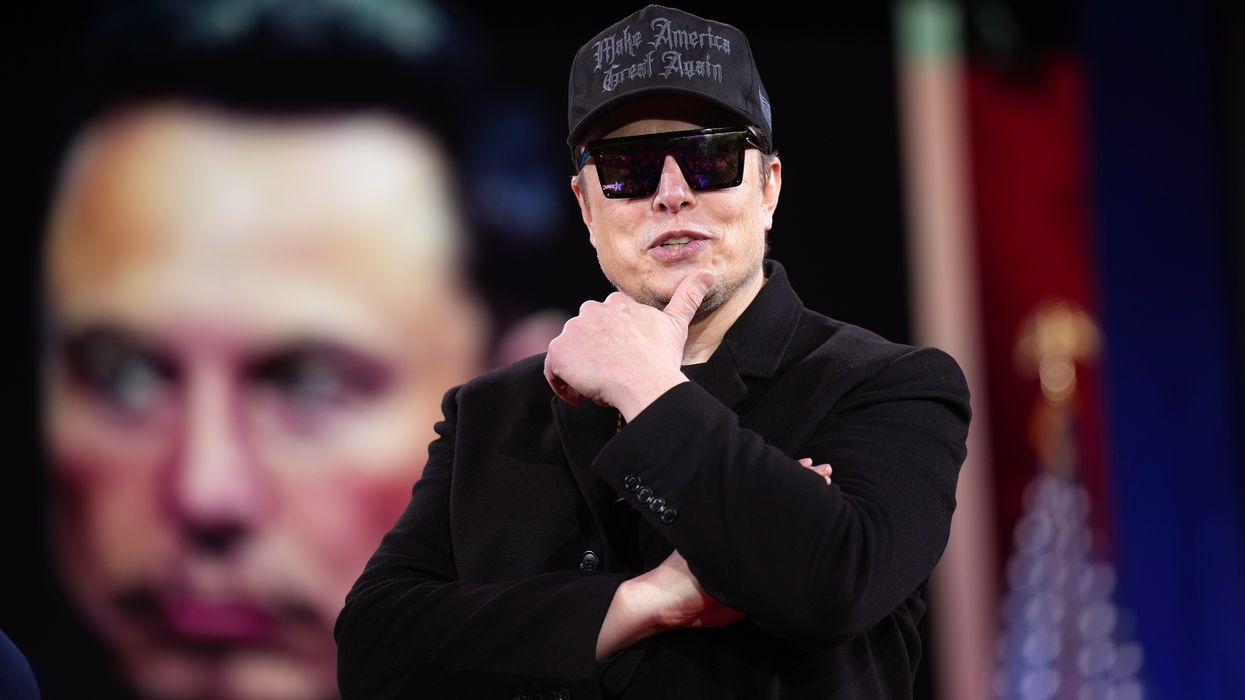
"Elon is absolutely MAGA—since core of Trump's MAGA politics is transactional deals with authoritarians around the world," said one critic.
Billionaire Elon Musk on Wednesday tried to back off his support for President Donald Trump and his Make America Great Again movement despite being the single biggest funder of the president and his Republican Party over the last two election cycles.
In an interview conducted at the New York Times' DealBook Summit, Musk said he felt "pretty foolish" for spending hundreds of millions of dollars this year in a failed attempt to help Republicans maintain their majorities in the US Congress.
The SpaceX CEO, who has regularly been photographed wearing MAGA hats, also insisted that he is "not MAGA."
Elon Musk claims he’s “not MAGA” https://t.co/3hZZQgSPaN
— Headquarters (@HQNewsNow) November 19, 2026
"I’m not sure what MAGA means," Musk said, "but if that means sort of blind adherence to a set of policies by the Republican Party, then I certainly don’t have that."
Musk is estimated to have spent more than $440 million during the 2026 midterm election cycle, nearly half of which was dedicated to a US Senate race in Texas where Republican Ken Paxton lost to Sen.-elect James Talarico (D-Texas) by 12 points.
Critics of Musk were quick to brush off his attempt to rebrand himself as a political moderate.
"Yeah sure," wrote Rep. Yassamin Ansari (D-Ariz.) in response to the Musk interview, "but we’re still investigating you, Elon."
Sen. Ruben Gallego (D-Ariz.) expressed a similar sentiment.
"You are still getting a subpoena," he informed Musk.
Journalist Nathan Newman slammed the Times for continuing to "normalize [Musk's] evil" by letting him try to whitewash his past misdeeds without any pushback.
"Elon is absolutely MAGA—since core of Trump's MAGA politics is transactional deals with authoritarians around the world," Newman wrote. "This is the man who led effort to gut USAID and help murder millions around the world as food and medicine was cut off."
Ezra Levin, co-executive director of Indivisible, slapped away Musk's overture, arguing that the only appropriate response to the tech mogul is to "investigate," "prosecute," and "imprison."
In an analysis published Wednesday, Gizmodo reporter Matt Novak argued that Musk's abrupt about face was entirely about self-preservation, pointing out that the SpaceX CEO once had a friendly relationship with former President Barack Obama.
People like Musk, Novak explained, "just want to acquire more money and more control over our lives" and "most of them don’t actually care that much if the politician they’re glad-handing has a D or an R next to their name."
"None of these guys are going to change who they are," Novake added. "But their marketing materials could be altered dramatically as they try to pretend they didn’t spend the past two years kissing Trump’s ass."

The term "fossil fuels" did not appear in the draft, released one day before the conference is set to close.
The latest draft of the cover decision released Thursday at the United Nations Climate Change Conference in Antalya, Türkiye asserts that negotiators aim to keep the goal of limiting planetary heating to 1.5°C "within reach."
Less clear is how leaders plan to do that, considering all mentions of transitioning away from fossil fuel energy—and even the term "fossil fuels"—were eliminated from the draft that was published with one day to go until the summit's close.
Language regarding the “transition away from fossil fuels," which scientists and energy experts have long agreed is imperative in order to limit the global temperature rise to 1.5°C above preindustrial temperatures, had been included in the 18-page draft that was released Monday.
In the document released Thursday, negotiators instead pledged a “transition towards low greenhouse gas emissions and climate-resilient development," and called for "concrete solutions to accelerate" that less ambitious transition.
They wrote that the goal of keeping "1.5° within reach" and limiting the overshoot remained, "recognizing that countries will take different pathways and solutions."
The draft did not appear compatible with multiple reports that have been released by United Nations agencies in recent weeks, warning that countries must take action to rapidly reduce fossil fuel emissions in order to have any hope of ensuring an overshoot of the 1.5°C threshold—now considered to be inevitable—is only temporary.
Climate Action Tracker released an analysis last week emphasizing that "a transition away from fossil fuels" is a key lever "that could cut emissions at the speed and urgency needed to follow" a pathway aligned with the Paris Agreement of 2015, which identified and secured commitments regarding the 1.5°C threshold.
Advocates were dismayed not only by the absence of any mention of fossil fuels, but also by the inclusion of carbon capture and storage (CCS) "and other unscientific and costly carbon removal technologies," which experts warn would undermine the energy transition.
Jasper Inventor, who has led Greenpeace's delegation at COP31, told The Guardian that the new draft "dangerously adds the option of a carbon capture and storage target to the mix" in a move that was "profoundly unacceptable."
“The [United Nations Framework Convention on Climate Change] process has never had such a target and anything that provides a way for the fossil fuel industry to keep polluting the climate would be a profound backwards step at a time when climate impacts are rapidly worsening," Inventor said.
At last year's summit in Belém, Brazil, more than 500 lobbyists promoting carbon capture, which has been called "a lifeline for fossil fuels," gained access to the negotiations, and Romain Ioualalen, global policy lead at Oil Change International, said the text released Thursday once again had "the fingerprints of fossil fuel interests all over it."
"Governments have managed to remove almost everything that would actually signal countries are serious about phasing out fossil fuels," said Ioualalen. "Instead they’re playing sycophant to the fossil fuel industry, leaving the door wide open for failed technologies like CCS and more fossil gas. The crucial call to accelerate the transition away from fossil fuels is so diluted it might as well be absent."
Advocates also noted that the new text proposed a launch of an “Antalya-to-Addis Ababa Roadmap on Adaptation and Resilience Finance” initiative—a reference to next year's conference in Addis Ababa, Ethiopia—but no longer mentioned the figure of $120 billion needed for climate finance for the Global South by 2035—"the bare minimum rich countries should have committed to in Antalya," according to 350.org.
Andreas Sieber, head of political strategy for 350.org, said the conference is "on the brink of an outrageous and utterly embarrassing lack of leadership by the COP31 presidencies," held this year by Türkiye and Australia. "Rich countries’ failure on finance is a historic disgrace. They expect developing countries to shoulder the costs of a global transition while refusing to provide the means to deliver it. This is not a failure of technical negotiations. It is a shameless abdication of political responsibility. If this is where COP31 lands, history will remember it as a summit where those entrusted with leadership chose the comfort of inaction over the courage to confront reality.”
A target of ensuring that 35% of energy is derived from electricity by 2035 remained in the draft on Thursday, but was listed as a "voluntary" option countries can take "in accordance with their national circumstances and development priorities."
Rukiya Khamis, East Africa lead for 350.org, said that "electrification that masquerades as green yet opens the door to more fossil fuel use is not what we came here for."
"Africa needs to electrify with renewables to keep people safe, lower bills, and create green jobs and industries," said Khamis. "We cannot build this future on crumbs thrown by rich polluting nations. Governments are spending around $1 trillion on fossil fuel subsidies. But at COP31 they have only pledged $50 million for adaptation, and the draft text delays agreeing on a baseline for tripling adaptation finance with yet another process. If that isn’t fixed, Ethiopia will be left to clean up the mess that rich nations, particularly European nations, made in Antalya by blocking climate finance."
"Developing countries and frontline communities don’t need another process, they need the money," Khamis added. "COP31 must set the baseline now and get it delivered. Anything less is a cruel injustice and an insult we will not accept.”
The draft was released a day after Juan Carlos Navarro, Panama's environment minister, warned that negotiators at the meeting were "being held hostage by the petroleum mafia" and had been "stricken by Stockholm disease."
"We are being held hostage by the petroleum mafia," says @juancanavarro. https://t.co/CEgPrdCy3k
— Fossil Fuel Treaty Initiative (@fossiltreaty) November 18, 2026
"They are so smart that they have convinced us that they are actually doing this for our own good," said Navarro. "They destroy our planet for our own good. They destroy nature to help us... We must look forward, tell the truth, and act with urgency in our own national interest."
Navarro, leading Panama's delegation, wrote a letter Thursday to the COP31 presidencies saying the country would block any outcome of the talks that does not meet its demands. The final agreement out of the meeting must be unanimous.
"While we listen to endless oratory, the planet is being destroyed," said Navarro, who has pushed for a cap on oil production. "Outside this room and this conference, the world needs and expects radical change from us, and we are not delivering it... Accordingly, I inform you that Panama will not join any consensus, and will formally object in the closing plenaries, to the adoption of any decision that does not lead to an outcome satisfactory to our principles and our values.”
“Panama will not lend its name to an outcome that continues to ignore and attempts to excuse each nation’s individual responsibility," he added, "and by so doing prolongs and worsens the crisis."

"After spending years pointing to climate change and rising disaster costs to justify offering policyholders less protection at a higher price, the insurance industry is reaping record profits."
As fossil fuels push up temperatures worldwide, with deadly consequences, and governments debate how to handle the worsening climate emergency at a summit in Türkiye, a trio of groups on Thursday called out home insurance companies in the United States for "generating $113 billion dollars of excess underwriting profit over the last five years" by hiking premium rates and suppressing claim payouts.
"Rather than helping customers adapt and reduce climate risk, the industry funnels these profits into financial markets, boosting investment income, and enriching executives and shareholders," says the new report from Americans for Financial Reform Education Fund (AFREF), Public Citizen, and the Revolving Door Project (RDP), titled "Home Insurers Are Ripping People Off Amid the Climate Crisis."
The publication features four main sections, the first of which analyzes national trends. It shows that "between 2021 and 2025, home insurance premium revenue has increased by almost 60%. All but one of the 10 largest property and casualty (P&C) insurers increased premium revenue in their home insurance line by at least 40%. In the same period, claims payouts increased at only half the rate of premium revenue. As a result, loss ratios in the home insurance market fell by 20%."
Data shows soaring home insurance costs cannot be fully explained by rising climate impacts, increased cost of reinsurance, or construction costs. “Families are paying too much for home insurance and getting less back when climate disasters strike.” - Alex Martin, AFREF
[image or embed]
— Americans for Financial Reform (@ourfinancialsecurity.org) November 19, 2026 at 8:01 AM
Specifically, home insurance companies earned $113.9 billion from premiums in 2021, and paid out about 69 cents in claims for every dollar collected. By 2025, they brought in $181.2 billion and paid out only about 55 cents per dollar collected. Both of those figures are "far below the historical average of 70 to 80 cents in the 1990s," noted Alex Martin, climate finance policy director at AFREF.
The companies are "maximizing profits" by not only raising rates, but also "closing a staggering number of claims without payment," explained Elyse Schupak, policy advocate with Public Citizen's Climate Program. During the study period, insurers closed nearly a third of claims without payment, and of those they paid, more than a fifth took at least two months to process.
"After spending years pointing to climate change and rising disaster costs to justify offering policyholders less protection at a higher price, the insurance industry is reaping record profits," Schupak stressed. "Insurance companies preach about protecting households, but the numbers reveal that the industry is actively padding its bottom line at their expense."
The report points out that "in 2025, some states had exceptionally low loss ratios, meaning insurers held onto much of the premiums they collected. These include Hawaii, where insurers paid out just eight cents of every dollar collected in premiums (8%), Florida (11%), New Mexico (22%), Louisiana (23%), and South Carolina (26%)."
Part two of the publication focuses on some of the states where home insurers "posted extremely low loss ratios" last year: Idaho, Iowa, Florida, Maine, and Texas. In Florida, which faces rising seas and increasingly devastating hurricanes due to the climate crisis, "insurers increased premiums collected in the state by 64% over the past five years, from $11.4 billion in 2021 to $18.7 billion in 2025. Claims payouts decreased by 67% during the same period, from $6.5 billion to $2.1 billion."
"No hurricanes made landfall in the US in 2025, which contributed to extremely low loss ratios in the state, though insurers also had low loss ratios in 2024 when the state had high hurricane activity," the report says. "Nonetheless, the high cost of reinsurance and the risk of especially damaging hurricanes requires insurers to purchase reinsurance to cover severe hurricanes, and may require additional reserves to promote solvency."
Home insurance rates increased even where claims payouts fell:🚨 In Texas, insurers collected 78% more in premiums in 2025 than in 2021, while claims payouts fell 23%. Liberty Mutual’s largest home insurance company in Texas increased its rates by a cumulative 144%.
[image or embed]
— Americans for Financial Reform (@ourfinancialsecurity.org) November 19, 2026 at 8:01 AM
Part three of the report lays out how industry profits "could have been used to fund climate adaption," highlighting that "even if only a small fraction of the industry's excess underwriting income was reinvested in communities to support adaptation efforts, it would make an enormous difference in preserving people's ability to stay insured."
Redirecting just 10% of the industry's excess underwriting income from 2021-25 could have provided nearly $5 billion dollars each year for climate adaptation projects, "far more" than the Federal Emergency Management Agency's annual spending on pre-disaster mitigation, according to the analysis. The full $113 billion "is enough money to fund 11.3 million standard roof fortification matching grants valued at $10,000, providing grants to over a third of the estimated 33.1 million US homes facing moderate or greater hurricane wind risk."
Part four features policy recommendations, urging decision-makers to "consider prior loss ratios in rate regulation, strengthen oversight of insurer rate increases, require insurers to invest in and reward resilience, increase oversight of insurer claims handling, and increase transparency over insurer underwriting, pricing, and claims decisions."
With home insurers "simultaneously overcharging and short-changing households as the fossil fuel-driven climate crisis intensifies," said RDP deputy research director Kenny Stancil, "public officials must use every tool at their disposal to curb industry profiteering and insist that these ill-gotten gains be used instead to help communities adapt to increasingly frequent and severe weather."