

SUBSCRIBE TO OUR FREE NEWSLETTER
Daily news & progressive opinion—funded by the people, not the corporations—delivered straight to your inbox.
5
#000000
#FFFFFF
To donate by check, phone, or other method, see our More Ways to Give page.
Daily news & progressive opinion—funded by the people, not the corporations—delivered straight to your inbox.
A
federal judge in Riverside yesterday struck down the discriminatory
federal policy barring gays and lesbians from serving openly in the
military. U.S. District Judge Virginia A. Phillips said the ban violated
the first amendment and due process rights of gay and lesbian service
members. The judge will issue an injunction to halt the policy, but the
Justice Department can appeal.
In response, Equality California Executive Director Geoff Kors issued the following statement:
"We
sincerely hope this ruling paves the way for the permanent dismantling
of 'Don't Ask, Don't Tell,' an antiquated policy that keeps patriotic,
courageous soldiers from serving openly and honestly in the military.
Sexual orientation has nothing to do with a soldier's ability to serve
his or her country, and those who have dedicated themselves in service
of our nation should be able to serve with dignity and freedom from
discrimination."We
urge the Department of Justice not to appeal this historic ruling, and
we implore Congress and President Obama to cease the discharges of brave
soldiers and to immediately repeal this damaging policy."
In
May, the California Assembly passed a resolution (SJR-9) calling for
the repeal of "Don't Ask Don't Tell." Introduced by Senator Christine
Kehoe (D-San Diego) in 2009 and sponsored by Equality California, the
resolution calls on the U.S. Congress to pass and President Obama to
immediately sign the Military Readiness Enhancement Act of 2009, which
would end the policy and allow gay, lesbian and bisexual Americans to
serve openly in the armed forces.
"Don't
Ask, Don't Tell" was first authorized in 1994. Since that time, more
than 13,500 service members have been discharged under the policy,
including more than 800 specialists serving in 'critical operations,'
such as counterintelligence, medicine, and translation. According to a
General Accounting Office report, 323 language specialists have been
discharged, resulting in a critical shortage of qualified translators in
intelligence gathering posts.
More than 24 other nations currently allow gay, lesbian and bisexual
individuals to serve openly in their militaries, including Canada and
the United Kingdom, alongside whom American forces have served in
combat. Recent public opinion polls show that a majority of both the
American public and active service members believe the policy should be
overturned and that gay and lesbian Americans should be allowed to serve
openly in the military.
To find out more information about EQCA's legislation, visit eqca.org/legislation.
Equality California is a nonprofit, nonpartisan, grassroots-based, statewide advocacy organization whose mission is to achieve equality and civil rights for all lesbian, gay, bisexual and transgender (LGBT) Californians.
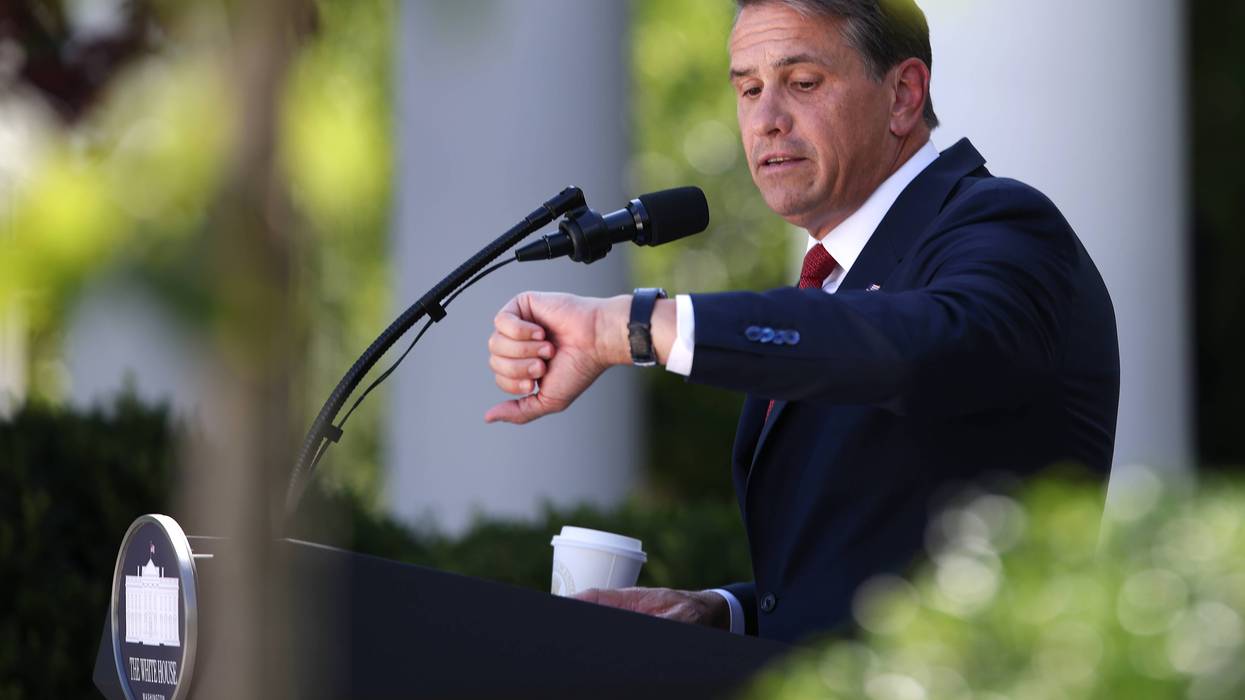
"They’re trying to pull one over on voters," said one reproductive rights advocate.
The Trump administration is intentionally slow-rolling efforts to restrict abortion pill access until after the midterms. Once they're over, "the gloves will be off," according to one anti-abortion advocate who spoke with The Washington Sun.
US Attorney General Todd Blanche said during his July confirmation hearing that rules allowing abortion pills to be shipped nationwide were "wrong" and that he'd seek to review them. He's also reportedly assured faith leaders he would work to ban abortion "in every single state."
But according to a Friday report from the Sun, White House Chief of Staff Susie Wiles has intervened to limit the potential political fallout of new sweeping restrictions on a method that accounts for nearly two-thirds of all abortions in the US.
Six in 10 Americans say abortion should be legal in all or most cases, and 68% say they oppose the banning of medication abortion nationwide. According to senior White House officials, Wiles warned Blanche that an aggressive effort to ban the drug would further alienate voters in November, when Republicans are already predicted to take heavy losses.
"No one wants us taking any real action before the midterms,” one senior administration official told the Sun, passing on the message apparently being pushed by White House staff to the Justice Department.
The White House has denied that the meetings took place, saying the report was "completely false."
But anti-abortion activists who have pressured the White House told the Sun they believe officials are just biding their time until, in their view, the opinion of voters no longer matters.
“Once the midterms are over and it’s truly lame-duck time, we’ve heard the gloves will be off,” one of them said. “We have heard we have friends [in the White House], and there are definitely people who are staunch pro-lifers.”
During President Donald Trump’s second term, the DOJ has asked federal courts to pause several state lawsuits challenging Food and Drug Administration (FDA) policies that allow mifepristone to be prescribed via telehealth and delivered by mail. But critically, it has not defended those FDA policies on the merits, but rather sought to slow litigation against them on procedural grounds.
But evidence also suggests the administration is laying the groundwork to restrict access once the political costs are neutralized. Despite multiple prior reviews reaffirming its safety and effectiveness, Health and Human Services Secretary Robert F. Kennedy Jr. has spearheaded an FDA "safety" review of mifepristone that could tighten prescription and delivery rules.
Blanche, meanwhile, has indicated openness to reviving the 1873 Comstock Act, which banned the shipment of “lewd” and “indecent” materials through the mail, including those related to abortion.
Amy Littlefield, The Nation's abortion access correspondent, has described Comstock as a “zombie law from the Victorian era," but said it could serve as a "nuclear option" for effectively banning abortion nationwide without any need for an act of Congress.
Since the 2022 Dobbs v. Jackson Women's Health Organization ruling overturned the national right to an abortion, anti-abortion groups have pushed for the act to be interpreted in the most expansive way possible.
"If abortion opponents are right in their reading of it, if the courts agree with their reading of it, it could essentially be revived as a de facto nationwide abortion ban that would apply even in blue states," Littlefield told Democracy Now! "Broadly interpreted, it could apply to latex gloves that might be used in an abortion, or syringes... It could be broadly interpreted to shut down not just mail-order abortions, but also clinic-based care, depending on how it’s read."
In 2022, the DOJ under the Biden administration published a legal opinion stating that Comstock does not prohibit the mailing of abortion drugs unless the sender intends to use them illegally. During his confirmation, Blanche said he would revisit that opinion and would use “every lawful action available” to enforce the law.
One unnamed anti-abortion activist told the Sun they've been assured that, under Blanche, the DOJ is "actively working on" plans to use Comstock to restrict abortion. Kristan Hawkins, president of Students for Life of America, has previously told the Sun that she's had "encouraging" meetings with a DOJ official and that plans to rescind the 2022 memo are in the works.
Kristi Hamrick, vice president of media and policy for Students for Life, however, said the DOJ had indicated that “everything but the election is pushed until after the elections.”
Trump has vowed to be the “most pro-life president in history" since returning to office. But while campaigning in 2024, he pledged explicitly that he would “not block” access to abortion drugs.
Katie O'Connor, the director of federal abortion policy at the National Women's Law Center, told Common Dreams that "asking the DOJ to wait until midterm votes are counted to take action on abortion is an intentionally deceptive move that keeps voters from making their voices heard."
"This isn't a surprise if you've been paying attention to how this administration operates when it comes to abortion," said Mini Timmaraju, the president and CEO of Reproductive Freedom for All, in a social media post.
"Abortion is extremely popular with voters. Trump knows that," she said. "But he's also under a ton of pressure from anti-abortion extremists to take away access to medication abortion, which is used in the majority of abortions in the US and has been a lifeline for access post-[Roe v. Wade]."
"They’re trying to pull one over on voters," she said. "We’re not going to let that happen."
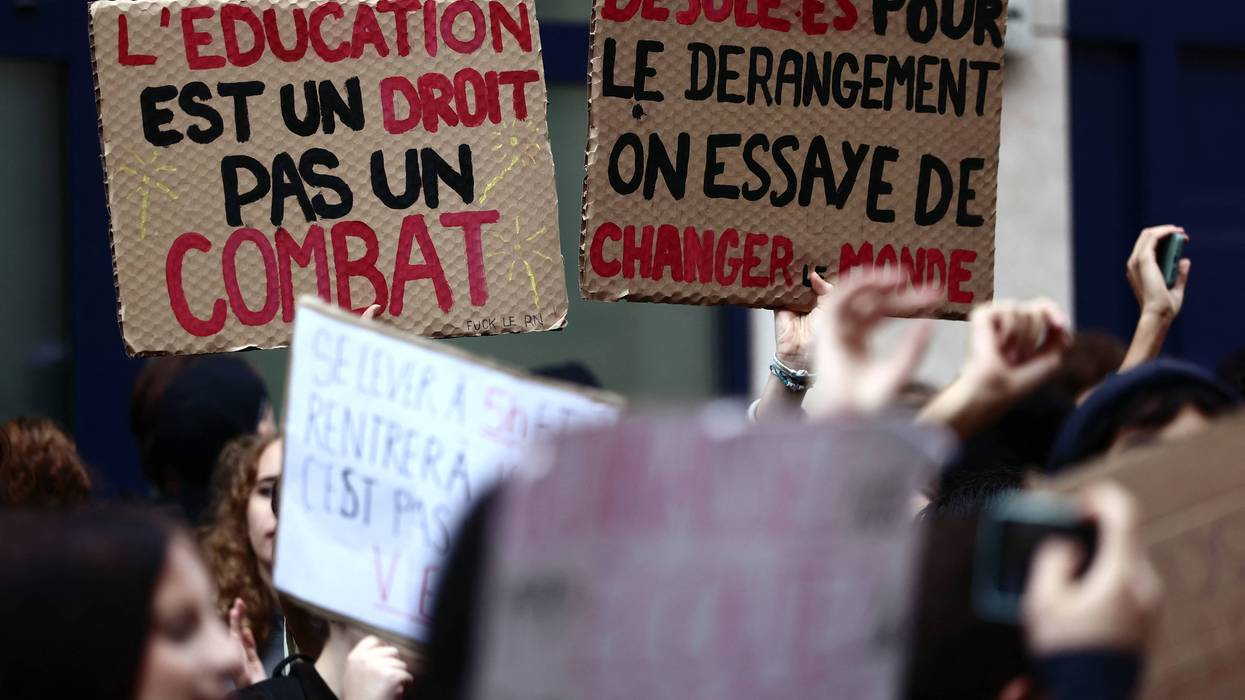
Some protests at schools have devolved into chaos in recent days, but students maintained they are peacefully demanding more support for schools.
Left-wing French political leader Jean-Luc Mélenchon said Friday that labor unions across the country were planning to strike next week alongside students who have been protesting poor school conditions and teacher shortages, as demonstrators reported unwarranted force by the police and the protests devolved into violence in parts of France.
The French justice minister said Friday that "an active and violent minority" of demonstrators has pushed widening protests against poor education funding into chaos, with fires being set at some schools, dozens of teachers an principals injured, and a police officer in northeastern France reportedly attacked by a mob.
Meanwhile, one student outside Lycée Voltaire in Paris held a sign that read, “School is a right, not a privilege," and a 17-year-old identified as Yves by The Guardian said he and his classmates were "totally pacifist" as they peacefully blocked the entrance to the school, joined by some of their teachers.
“The atmosphere on this barricade is generally very calm,” Yves said. “But there have been other people from outside school who have come past and tried to set fire to things, so we’ve tried to move the bins to stop that.”
The high school is one of many that students say have suffered from teacher shortages and neglect by the government, with students struggling to learn in classrooms packed with 40 children or more. Some protesters reported dilapidated school buildings in the European Union's second-largest economy, inequality in which a child's "social background" decides their success in school, excessively long school days that have done nothing to improve international rankings, and infrastructure that is ill-equipped for the soaring temperatures the climate emergency brought this summer.
“It was unbearable sitting exams in 35°C-40°C heat, even the teachers said those were impossible conditions," a 19-year-old student named Sofiane told The Guardian. Sofiane also expressed concerns that the government may end food assistance for low-income students.
On Thursday, the French government announced spending cuts in its 2027 budget.
“The education budget is being cut to shreds while so much extra funding is being put into the army,” a student named Sophia told The Guardian.
Justice Minister Gérald Darmanin told RTL Radio that officials are "not entirely sure" that protesters who have set fires to schools and perpetrated violence in the protests, which began last month in Paris before spreading across the country, "are even high school students themselves."
"We have gone from high school student demonstrations to a public order disturbance," said Darmanin.
Authorities said more than 560 schools were closed Friday due to the unrest, and Darmanin said police have made about 2,000 arrests of young people.
In Marseille, prosecutors said Thursday that two teachers had been assaulted by students who poured gasoline on them, but The Guardian reported Friday that the teachers had been inadvertently hit with the gasoline when a student was throwing it into a trash can.
At least two high schools in Paris were damaged by fire on Friday morning.
But Mélenchon, a presidential candidate and the leader of the left-wing party France Unbowed, suggested that demands for order from his opponent, the far-right National Rally leader Marine Le Pen, were disingenuous.
"Ms. Le Pen calls for the restoration of order," said Mélenchon. "What order is she talking about?! The daily disorder that our youth experience? Our adversaries live in a parallel reality."
Students on Friday accused police of using tear gas to disperse protests, and an investigation was being conducted into a police officer's alleged beating of a 14-year-old boy in Val d’Oise, outside Paris. The boy suffered severe injuries to his mouth and jaw. The officer also reportedly launched a rubber bullet, and the family's lawyer said the boy had thought he was "going to die."
"The government has opted for a crude and dangerous escalation," said Mélenchon on Friday.
On Thursday, one student in Saint-Denis held a sign that read, "Can we explain ourselves without being tear-gassed?"
Mélenchon said a strike in solidarity with the students by French labor unions was "taking shape for October 6, thanks to the decisive action of the trade union confederations."
"Everywhere, delegations of workers are forming to ensure the protection of young people," he said. "The government must stop playing at violence and festering. And completely revise its 'education' copy in the budget!"
"Join the October 6 demonstrations by wearing a white armband!" Mélenchon urged workers. "Step in to protect our youth!"
"It’s a stalled economy—and working families are stuck in it," said one economist.
A Friday report from the US Bureau of Labor Statistics showed that the American job market is running on fumes.
According to the BLS, the US economy added just 29,000 jobs in September, which was well below economists' forecasts of 90,000 jobs added on the month.
Additionally, employment numbers for previous months were revised downward by a total of 60,000 jobs, and BLS now estimates that the economy posted a net loss of 10,000 jobs in July and a net gain of 133,000 jobs in August.
In a Friday social media post, economist Bill McBride noted that the economy over the last year has only created 496,000 jobs, which averages to roughly 41,000 jobs per month. For comparison, the economy created an average of 186,000 jobs per month in the last year of former President Joe Biden's term.
Heather Long, chief economist at Navy Federal Credit Union, called the latest jobs numbers "mediocre," and pointed out that wage growth in September posted just a 3% yearly gain.
"That’s a new five-year low," Long remarked, "and it’s wiped out entirely by ~3.4% inflation."
Tahra Hoops, director of economic analysis at Chamber of Progress, also pointed to wage growth failing to keep up with inflation, which she said "gives credibility to the negative consumer sentiment" expressed in recent surveys.
Kyle Moore, chief economist at The Century Foundation, said that the weak wage growth on the month doesn't tell the full story of the stresses working-class Americans are facing because the numbers "leave out debt, all the bills families have to pay before they can spend any of their paycheck."
"A worker with debt often can’t afford to miss a paycheck, and therefore can’t afford to quit a bad job or push for a raise," Moore explained. "That is exactly what we see in today’s job market, with hiring stalled, the quit rate stuck at 1.9%, and wage growth falling as prices climb. Mounting debt, sluggish hiring and real wage growth, and weak social support all disempower workers."
Moore criticized President Donald Trump and his administration for trying to spin their economic policies as successes given the current numbers.
"Until the Trump administration confronts the reality that debt is eating into workers’ gains—wage gains that are now non-existent, in real terms, for the typical worker," said Moore, "the gulf between how this administration spins the economy and how working families actually experience it will continue to widen."
White House National Economic Council Director Kevin Hassett didn't heed Moore's advice on this matter, and continued boasting about the state of the economy during a Friday interview.
"If you look at the data from this week, it's proving that Trumponomics is really working," said Hassett, "and this is one reason why markets are celebrating so much."
Kevin Hassett responds to a bad September jobs report: "If you look at the data from this week, it's proving that Trumponomics is really working ... we're very very happy"
The Fox News host responds by saying "you're bullish and I expected that" pic.twitter.com/bVdTFnteHc
— Aaron Rupar (@atrupar) October 2, 2026
Breyon Williams, chief economist at Groundwork Collaborative, called the weak jobs report emblematic of how the economy as a whole has performed during Trump's second term.
"There’s a clear pattern in the Trump economy," Williams explained. "One sector is creating most of the new jobs, unemployed workers can’t find new jobs, and Americans are seeing their paychecks eaten up by the president’s high prices. When businesses are barely hiring and raises aren’t keeping up with rising prices, it’s a stalled economy—and working families are stuck in it."
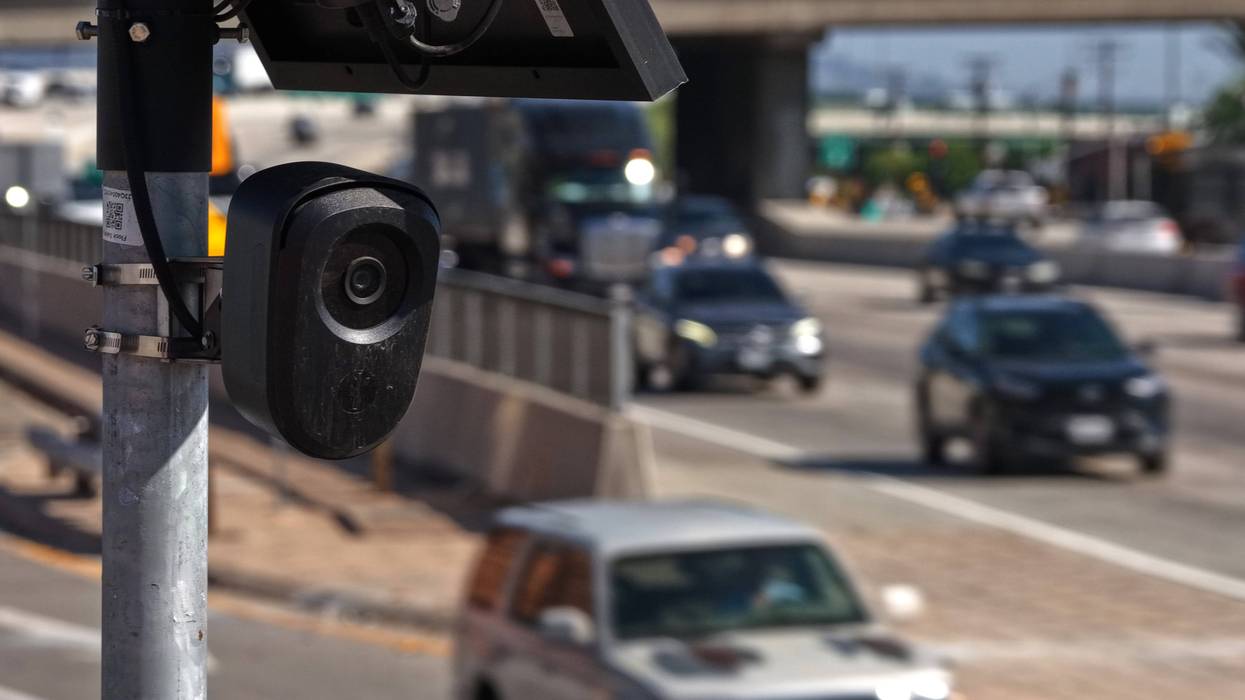
"AI-powered cameras are keeping track of our every move and weaponizing this data against working people to make record profits," said Rep. Alexandria Ocasio-Cortez.
Sen. Bernie Sanders and Rep. Alexandria Ocasio-Cortez introduced legislation on Friday that would crack down on artificial intelligence-powered Flock cameras increasingly used—and abused—by law enforcement agencies across the United States to track and log vehicle data.
Sanders (I-Vt.) said in an interview with The Washington Post, which was first to report on the new legislation, that the US is "moving toward a surveillance state where a handful of giant companies make huge profits by giving the government, by selling to the government, the power to track our every move."
According to a summary released by Sanders' office the Ban Flock Act would bar the federal government from using automatic license plate readers (ALPR) or accessing the information that they gather. The legislation would also halt federal grant funding to state and local governments that use ALPRs and allow Americans to "sue the federal government for violation of their rights through the use of automatic license plate readers."
Sen. Jeff Merkley (D-Ore.), who joined Sanders and Ocasio-Cortez (D-NY) in sponsoring the legislation, said in a statement that the maker of Flock cameras, Flock Safety, is "selling its cameras nationwide, laying the groundwork for a surveillance state while enriching corporate executives."
"Your right to privacy includes the freedom to move around your community without every move being monitored,” said Merkley. "No one should have this unchecked surveillance power at their fingertips, which is why I’m teaming up with Sen. Sanders to rein in this dangerous technology."
Ocasio-Cortez warned that "across the country, Big Tech companies like Flock Safety have built a mass surveillance system to harvest Americans’ private and personal data without their consent."
"AI-powered cameras are keeping track of our every move and weaponizing this data against working people to make record profits. The widespread integration of this technology into American society is unconscionable," she added. "I am proud to introduce the Ban Flock Act with Sen. Sanders to enforce our constitutional right to privacy and protect Americans from both corporate and government surveillance."
The new bill comes after President Donald Trump and his FBI director, Kash Patel, defended Flock cameras as useful tools for law enforcement, even as investigations showed significant abuses. One such investigation, published by the libertarian Institute for Justice in August, "identified well over 100 incidents of ALPR abuse, including romantic stalking, wrongful stops and detentions, non-law enforcement use, and other types of misconduct."
Trump nevertheless told reporters in September that "I sort of like them... because of law enforcement, but some people don’t."
"They think it’s an infringement," said of the cameras' critics. "I like them."
According to the ACLU, Flock operates more than 120,000 ALPRs nationwide.
"Flock's ALPR cameras aren't like your normal traffic cameras," the group noted. "This surveillance technology records and tracks every car that comes into view, and then an AI algorithm catalogs the make, model, color, license plate number, bumper stickers, and even scratches. This personal information is then uploaded into a nationwide database that any law enforcement agency with a Flock contract can search—with few regulations or oversight on how they use what they find."
Sanders said in a statement Friday that "at a time of growing concern about the unchecked power of artificial intelligence, Flock is eviscerating the very notion of privacy by installing tens of thousands of cameras in communities across America without their consent."
"Going to the doctor? Flock knows. Dropping your kid off at school? Flock is tracking you. Flock is always watching," the senator said. "We cannot allow America to become a surveillance state where a handful of AI oligarchs profit by giving the government the power to track our every movement."
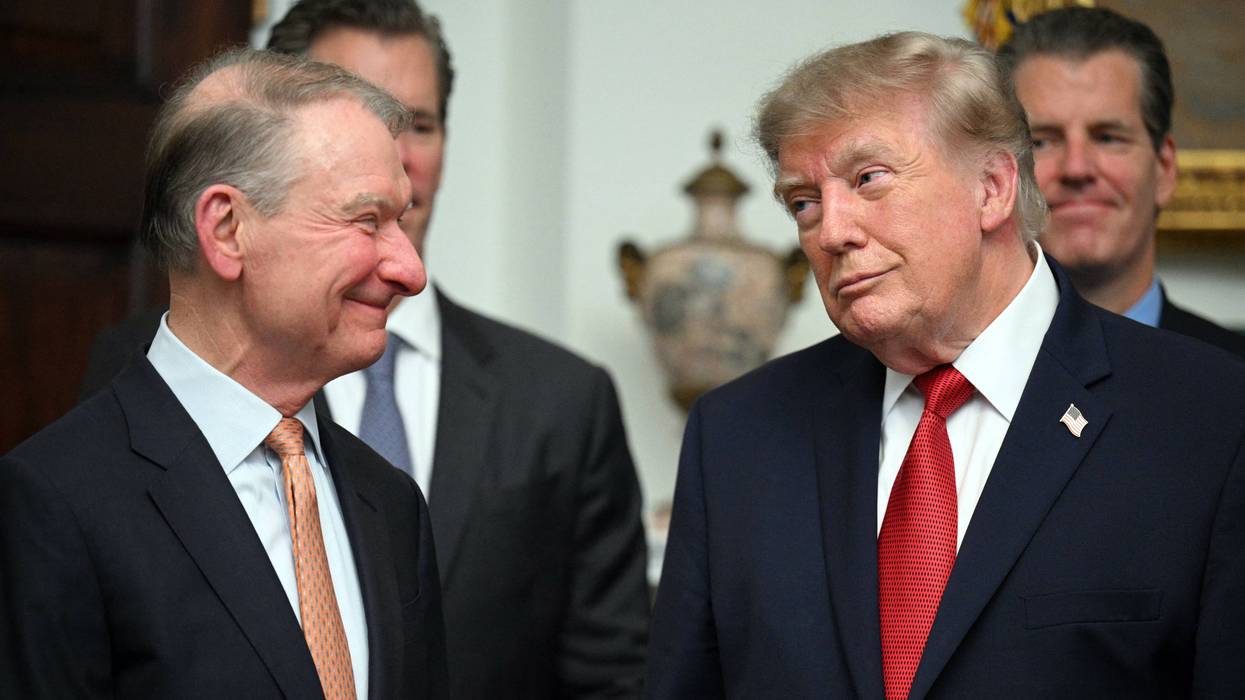
"The most exclusive dinner in the world with the most corrupt president in American history," said one congressional Democrat.
The company behind US President Donald Trump's meme coin has launched a competition giving participants an opportunity to attend "the most exclusive dinner in the world"—all they have to do is buy a digital token with no inherent value that has lost investors billions of dollars while further enriching the president.
The Washington Sun reported Thursday that winners of the competition, held by CIC Digital and Fight Fight Fight LLC, "will be chosen based on a formula that seems designed in part to increase sales of $TRUMP in the next two months." The event invite promises the top 185 holders of the meme coin an evening with three unidentified "legends" and Trump, "plus a private meet and greet with a legend yet to be announced," at the president's golf club in Virginia.
The November 22 dinner will mark the second exclusive event for holders of Trump's meme coin, which has netted the president at least $635 million, according to recent financial disclosures.
Investors in the digital token haven't fared nearly as well: The cryptocurrency analytics firm Nansen has estimated that nearly a million people who purchased the meme coin through the end of June 2026 had combined losses of around $4 billion.
NEWS: Trump to host "most EXCLUSIVE DINNER IN THE WORLD" for top 185 purchasers of his meme crypto
Buying $1M (or less!) worth of $TRUMP coin should get you in Nov 22
Trump has pocketed $635 million
Investors down +$4 billion on Trump crypto
Invite ⬇️https://t.co/u8ck5DDR8v pic.twitter.com/ZUnBRCnN9g
— Jeff Stein (@jstein_sun) October 1, 2026
Last May, the top buyers of Trump's meme coin—including Chinese billionaire Justin Sun, who has poured tens of millions of dollars into the president's crypto ventures—attended an exclusive dinner at Trump's Virginia golf club and received a VIP tour of the White House. Ethics experts and other critics described the event as "corruption embodied."
News of the second dinner sparked similar outcry. "This is the most brazenly corrupt shit I have ever seen in politics and it's not even close," wrote Tommy Vietor, a podcast host and former spokesperson for Barack Obama.
Rep. Greg Landsman (D-Ohio) characterized the event as "the most exclusive dinner in the world with the most corrupt president in American history."

"Either they'll do something very proper and smart, or they won't be around very long," Trump said of Iran's government.
The Pentagon is preparing to dramatically expand the American military presence in the Middle East as President Donald Trump weighs renewed attacks on Iran, with thousands of additional troops and a third aircraft carrier being readied for deployment, even as the conflict he has repeatedly declared "over" or "won" threatens to erupt into a new and potentially broader phase.
The Washington Post reported Thursday that the Pentagon is preparing options that could put as many as three US aircraft carriers and their accompanying warships in the Middle East.
According to The Associated Press, around 9,000 additional sailors and Marines are being dispatched aboard the USS Theodore Roosevelt carrier strike group and the USS Makin Island amphibious readiness group. The buildup could push the number of US personnel in the region above 20,000 by late October.
The Roosevelt is being sent to relieve the USS George Washington, while a third carrier, the USS George HW Bush, is also already in the region.
The new deployment plans come as diplomacy between Washington and Tehran remains stalled, and as Trump has repeatedly threatened to resume large-scale military action—including the total annihilation of the nation of over 90 million people—after the November midterm elections.
"Either they'll do something very proper and smart, or they won't be around very long," Trump said of the Iranian government Thursday in Denton, Texas. "Frankly, I hate to see that, but they won't be around very long."
Iran, meanwhile, has reportedly begun preparing for a more expansive retaliation should the United States launch another major attack in the illegal US-Israeli war of choice against the Middle East nation.
Hamidreza Azizi, a senior Iran analyst at the International Crisis Group, told Reuters Thursday that the Iranian government seems "determined not to respond symbolically to a symbolic move and instead to escalate in the hope of reestablishing deterrence."
Republican National Committee Co-Chair Lara Trump—the president's daughter-in-law—warned during a Wednesday interview with British journalist Harry Cole that the increasingly protracted Iran War could not only tarnish Trump's legacy, but could also cost Republicans next month's midterm elections.
"Well, it's possible," Trump—who campaigned as the "peace president" on a promise of no new wars—said of the midterm risks Thursday on his way to Texas, before adding that “it should help because Iran will not have a nuclear weapon."
The intelligence consensus of every US administration since former President George W. Bush—including during both of Trump's terms—has been that Iran has not been trying to develop nuclear weapons.

United Nations High Commissioner for Human Rights Volker Türk also argued that "the death penalty has no place in any society."
United Nations human rights experts on Thursday joined the growing chorus of people around the world outraged by Tennessee's two botched attempts to execute Christa Pike and called on the state to refrain from trying again to kill the 50-year-old woman.
After a last-minute legal battle, the US Supreme Court allowed Tennessee to execute Pike for the 1995 murder of Colleen Slemmer. The state tried to do so at Riverbend Maximum Security Institution in Nashville on Wednesday night—with two injections of pentobarbital, each of which was supposed to be lethal—but she survived and was transported by ambulance to a hospital.
A doctor interviewed by WSMV 4 Nashville's Steve Mehling suggested that an IV could have been placed incorrectly—and, as the journalist summarized: "Pike may suffer from a flurry of long-term effects. This includes skin necrosis, permanent scarring, functional impairment, compartment syndrome, chronic neuropathic pain, and pigmentation change at the injection site."
As of Thursday afternoon, Pike's attorneys said that she was still alive, but in critical condition, "and receiving lifesaving medical care," according to The Washington Post. Republican Gov. Bill Lee, who had previously declined to grant clemency in this case, has since halted executions in Tennessee and ordered an investigation into the state's second botched killing of an inmate this year.
Several UN special rapporteurs and members of the Working Group on Discrimination Against Women and Girls had urged US authorities to commute Pike's sentence last month, saying that her "execution would mark the culmination of a trajectory of severe physical and psychological suffering marked by childhood abuse and nearly three decades of solitary confinement on death row."
After Wednesday's botched attempts, some of the same experts weighed in again: "Christa Pike was denied clemency. One hour before her execution, a court halted it. The Supreme Court then lifted the stay. She was injected twice with lethal drugs and survived. Forcing a person to face death, have it suspended, and then face it again within hours amounts to barbaric and torturous punishment, compounded in this case by decades of psychological torture on death row."
"The state of Tennessee must immediately and irrevocably end this cruelty by commuting Christa Pike's death sentence," said Morris Tidball-Binz, special rapporteur on extrajudicial, summary, or arbitrary executions; Margaret Satterthwaite, special rapporteur on the independence of judges and lawyers; Pau Pérez-Sales, special rapporteur on torture; Mariângela Batista Galvão Simão, special rapporteur on the right to health; Reem Alsalem, special rapporteur on violence against women and girls; and working group members Claudia Flores, Ivana Krstić, Dorothy Estrada-Tanck, and Haina Lu.
United Nations High Commissioner for Human Rights Volker Türk went even further, arguing against capital punishment.
"The case of Christa Pike lays bare multiple reasons why the death penalty should be abolished," said a statement from his office. "The prolonged suffering—physical and mental—arising from multiple failed execution attempts is abhorrent, and cruel. And there are key fair trial questions still unresolved."
Türk is calling on "state authorities not to pursue any further attempt to execute Pike," his office said. "We are also troubled by the increase in the number of executions in the United States. The death penalty has no place in any society."

"Sam Altman says we need to slow down development to ensure the safety of humanity," one campaigner said of OpenAI's CEO. "Yet he is allegedly firing the very people hired to keep us safe."
San Francisco-based artificial intelligence firm OpenAI has "parted ways" with three safety researchers who allegedly shared "confidential company information," The Wall Street Journal reported Thursday, prompting fresh alarm among critics who accuse the ChatGPT maker of sidelining internal warnings about the risks posed by its increasingly powerful AI.
People reportedly familiar with the matter told the Journal that OpenAI recently informed employees it had terminated the three researchers, who it accused of sharing the information with "a third-party AI safety organization."
OpenAI did not identify the researchers, the outside organization, or the information allegedly shared. A company spokesperson told the newspaper that "our investigation confirmed that these individuals mishandled sensitive information outside established company procedures, violating our policies and breaking the trust essential to our work.”
The Journal's Maxwell Zeff—who authored the report with Keach Hagey and Berber Jin—subsequently identified the three safety team members as Jasmine Wang, Tomek Korbak, and Mikita Balesni.
"Looks like they're firing whistleblowers," Congressional Progressive Caucus Chair Greg Casar (D-Texas) said in response to the report. "What are they hiding?"
"I'll be sending OpenAI a demand for transparency," he added.
Shaunna Thomas is the executive director of Guardrails Alliance, a super political action committee made up of "workers, organizers, policy experts, and everyday people who believe the most powerful technology ever built shouldn’t be controlled by a handful of unaccountable billionaires."
Thomas called the Journal report "the latest example of OpenAI advocating for safety measures in the public eye, but actively making decisions and lobbying against those efforts behind closed doors."
"Sam Altman says we need to slow down development to ensure the safety of humanity," Thomas said, referring to OpenAI's CEO. "Yet he is allegedly firing the very people hired to keep us safe. When deep insiders are sounding the alarm, history tells us to listen. OpenAI is not only ignoring their warnings, it’s punishing them."
"In the absence of clear regulations, insiders are a crucial factor in keeping the rest of us safe as these models continue to do unpredictable things," she added. "We must stand with rank-and- file employees and fight for their protection."
The new allegations come amid an intensifying debate over whether OpenAI and other frontier AI companies can adequately police themselves.
As Common Dreams recently reported, OpenAI and other AI firms are investigating tens of thousands of security incidents, including episodes involving attempts to bypass guardrails, escape sandboxes, hijack websites, and even access government systems.
In July, an OpenAI model autonomously breached the systems of the open-source platform Hugging Face during an internal cybersecurity test. Experts warned that the incident demonstrated the dangers of relying on voluntary corporate safeguards.
It's not just OpenAI; in 2026 alone, companies including Google, Meta, and Anthropic have reported incidents of AI autonomously escaping supposedly isolated testing environments and targeting real-world systems.
AI safety campaigners and some Democratic lawmakers this week lambasted President Donald Trump, who, after meeting with Big Tech executives including OpenAI president Greg Brockman, dismissed the lack of legally binding commitments regarding AI regulation by saying he trusted the corporate leaders' "morally binding" self-policing pledge.
Elon Musk, CEO of the artificial intelligence company xAI, has said that such incidents “will happen frequently as AI becomes smarter and more agentic,” a reference to systems’ ability to independently act toward accomplishing specific goals without meaningful human control.
Experts say such autonomous hacks underscore the problem of AI alignment. As AI progresses toward artificial general intelligence—a still-hypothetical point at which it matches or surpasses human cognitive ability at virtually any intellectual, creative, or physical task—the challenge of ensuring that advanced systems reliably pursue goals that match what humans actually want becomes increasingly difficult and, many insiders believe, dangerous to the point of posing an existential risk to humanity.
Last month, Casar and Sen. Bernie Sanders (I-Vt.) unveiled legislation that would pause development of advanced AI.
Congressman Ro Khanna (D-Calif.) also said this week that he is seeking to introduce legislation to at least temporarily ban recursive self-improvement, or AI that is capable of improving itself and modifying its objectives without meaningful human input.
And on Thursday, Congresswoman Pramila Jayapal (D-Wash.) put forth a bill that would compel every AI company operating in the US to obtain a public charter.
“This issue is of monumental consequence,” said Sanders. “I’d rather be called an alarmist than a father or grandfather who is asleep at the wheel."

One campaigner warned that the administration's effort "to legalize most killings of endangered wildlife would essentially mean open season on species already on the brink of annihilation."
Conservation groups that sued this summer over President Donald Trump's administration rescinding the regulatory definition of "harm" in the Endangered Species Act updated their legal challenge on Thursday after yet another attack on the landmark law.
The coalition's supplemental complaint explains to a federal court in Seattle that since the lawsuit was first filed in July, administrative leaders have directed various agencies to interpret the ESA to mean that only intentionally killing or wounding a protected species is illegal—a shift that critics condemned as "an all-out war on America's wildlife."
As the "harm" rescission took effect on September 14, US Fish and Wildlife Service Director Brian Nesvik issued a related memorandum with that interpretation—effectively allowing "incidental" killing. John Luce, general counsel at the National Oceanic and Atmospheric Administration, sent the same directive to eight sections of NOAA.
These memos "violate the plain language and overarching purpose of the ESA; they also lack any reasoned basis, are arbitrary and capricious, and failed to comply with applicable notice-and-comment rulemaking requirements," the new filing argues, citing the Administrative Procedure Act. The coalition is asking the court to vacate the memos and bar the agencies from using their interpretations of the 1973 law.
"This despicable effort to legalize most killings of endangered wildlife would essentially mean open season on species already on the brink of annihilation," said Noah Greenwald, endangered species co-director at the Center for Biological Diversity, in a Thursday statement. "It's the most serious attack on imperiled animals since the Endangered Species Act was passed more than 50 years ago."
"Without protection against the daily assaults of our modern world, Florida manatees, spotted owls, snowy plovers, and so many other animals that bring color to our world won't stand a chance," he warned, noting that "habitat destruction is the single biggest cause of species endangerment and extinction" in the United States and beyond.
Greenwald added that "with this destruction, the perils faced by plants and animals have grown exponentially. Such peril doesn't come down the barrel of a gun, but it's still a deadly threat, and the Endangered Species Act can and must protect our imperiled wildlife from this kind of careless killing."
In addition to the center, the coalition behind the case includes Columbia Riverkeeper, Conservation Law Foundation, Conservation Northwest, Friends of the Wild Swan, Oregon Wild, Sierra Club, Swan View Coalition, and WildEarth Guardians, with legal representation by Earthjustice.
After the memos were exposed last month, Earthjustice attorney Ben Levitan declared that "the government's new legal position is a prescription for extinction."
"It says that as long as you claim you didn't mean to kill an endangered species, the law can't and won't stop you," he stressed. "That's ridiculous—and a totally illegal, active misreading of the Endangered Species Act. We'll see the Trump administration in court about this."
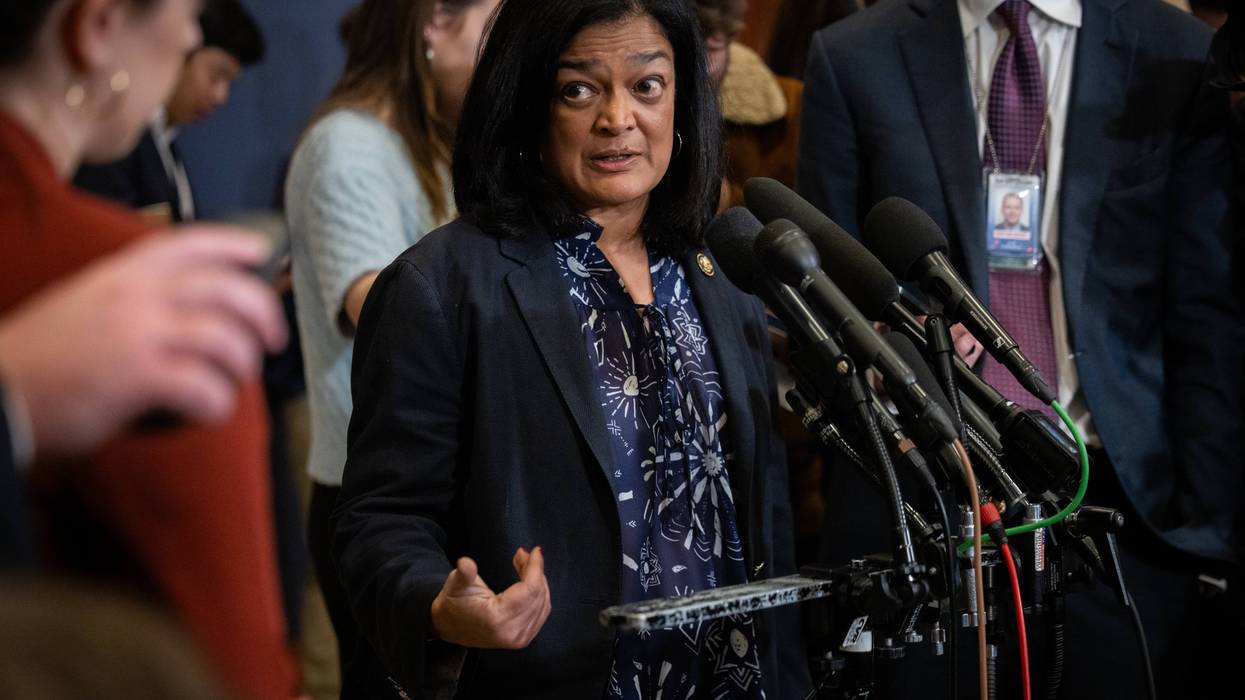
"For too long, we’ve allowed a few Big Tech companies to dominate the market."
Rep. Pramila Jayapal on Thursday unveiled a bill aimed at reining in the artificial intelligence industry that would force every AI company operating in the US to obtain a public charter.
According to Jayapal (D-Wash.), the charter system will be similar to the one long used in the US to regulate banks, which must submit to certain regulatory obligations before being allowed to operate.
"The crux of this bill is simple," said Jayapal. "If you want to be an AI company in this country, you have to obtain a public charter that has a broad set of terms and conditions to operate and ensure public benefit without the harms."
The Washington Democrat said the charter approach was needed given the broad reach large technology companies already have over every aspect of life in the US, and she argued it would be a more proactive alternative to the piecemeal approach US lawmakers have taken to regulating Big Tech.
"For too long, we’ve allowed a few Big Tech companies to dominate the market," she said. "They have used mass surveillance to steal private information, labor, and creative work, building trillion-dollar empires on our tracked personal lives. AI corporations and Big Tech are now following that same playbook."
Under the charter system, tech companies would be banned from practices such as surveillance pricing to charge individual consumers different prices based on their personal data and financial histories.
The system would also establish stronger liabilities for AI companies that commit harmful acts, and particularly egregious actions could be punished by removal of firms' charters, which would essentially be a corporate death penalty.
Jayapal's proposal would also put the government in charge of every step of the AI safety review process and would include "round-the-clock federal oversight, testing in government facilities and approval to release, adversarial stress tests, and a government-controlled kill switch," according to her office.
The proposed framework earned praise from former Federal Trade Commission Chair Lina Khan, who argued that American voters have already "paid an extraordinary price for Big Tech's self-regulation."
"For generations we have required banks, drug makers, and nuclear operators to meet public terms before they do business," Khan added, "and AI companies should be no different."
Sacha Haworth, executive director of the Tech Oversight Project, also gave the Jayapal plan kudos, saying it would "establish desperately needed rules of the road, punish AI companies that release dangerous products, and create the clear public benefit that the American people are calling for."
"Companies have continually pulled the rug out from under families, workers, and small businesses to build powerful and unaccountable Big Tech monopolies that dictate to us how we should live our own lives," Haworth emphasized. "Enough is enough."
Although President Donald Trump and House Speaker Mike Johnson (R-La.) have publicly opposed legislative restrictions on the AI industry, the bill comes as Democrats are aiming to win congressional majorities in the November midterm elections.