

5
#000000
#FFFFFF
To donate by check, phone, or other method, see our More Ways to Give page.
Daily news & progressive opinion—funded by the people, not the corporations—delivered straight to your inbox.
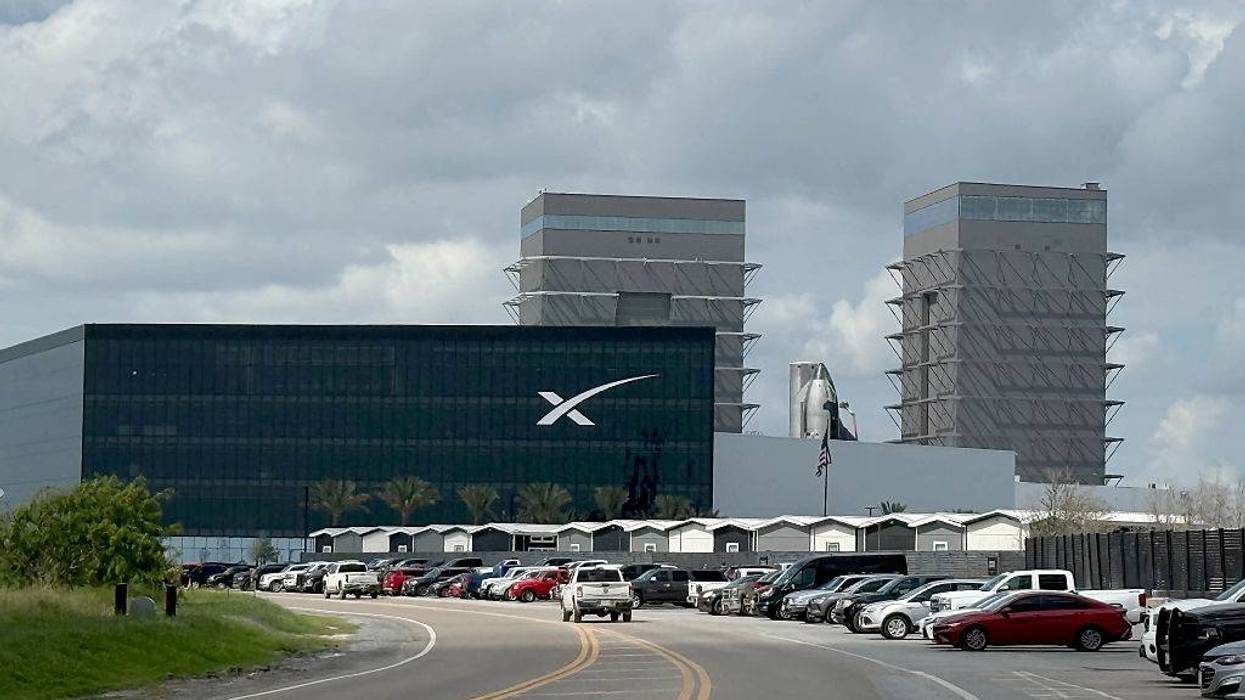
"Mr. Musk’s bid for planetary reach is about to be turbocharged with billions of dollars of rocket fuel. Who will suffer the fallout if it all blows up?"
Elon Musk became the world's first trillionaire on Friday, as his private space exploration firm SpaceX became a publicly traded company with a market cap of $2 trillion despite reporting negative net income for two of the last three years.
To mark this occasion, The New York Times published an essay by journalist Amy Gamerman, who has spent the last several months documenting life in Starbase, Texas, a city built by Musk to house SpaceX employees.
Gamerman wrote that it's best to think of Starbase as a corporate fiefdom that has been granted extraordinary treatment by Texas' state government.
"One new Texas law makes interfering with Starbase’s operations potentially punishable with jail time," the journalist explained. "Another allows the company to shut down the highway into town and to the beach at the mayor’s discretion. Another shields SpaceX, and by extension Starbase, from lawsuits by neighbors over nuisance caused by its rockets."
While the community of nearly 600 people appears idyllic, Gamerman found there are several "darker realities" lying beneath the surface, with one resident who wished to remain anonymous saying that Starbase is "like living in a dictatorship" where people fear raising concerns will lead to retaliation by the company.
Another disturbing aspect outlined in Gamerman's essay is the way that Starbase seemingly operates outside the laws and norms of the rest of society.
For example, the city has now erected electronic gates on every single road leading to Starbase Village, the main center of the city where SpaceX employees live and that is cut off from other parts of the community.
"Those who live outside the gates of Starbase Village... often feel shut out," wrote Gamerman. "Amber Pompa said her father, Homer Pompa, a disabled veteran who lives near Starbase Village, has no access to the restaurants or any other buildings there. And as Starbase expands, new gates have gone up in other parts of town."
Gamerman also highlighted the story of Jose Luis Bautista Jr., a 25-year-old construction worker who died in an accident in Starbase last month. When the nearby city of Brownsville dispatched an ambulance to take Bautista to a hospital, Starbase officials denied it access and said their own emergency medical services were handling the situation.
The incident, noted Gamerman, is being investigated by the Occupational Safety and Health Administration.
Taking a look at the broader picture, Gamerman expressed concern that Musk becoming a trillionaire could allow him to expand his vision of billionaire-owned cities across the US.
"Mr. Musk’s bid for planetary reach is about to be turbocharged with billions of dollars of rocket fuel," the journalist concluded. "Who will suffer the fallout if it all blows up?"

"This could ruin people's finances, while creating a financial incentive for insurers to deny coverage," said one Democratic congresswoman.
After the Republican Party's decision to terminate subsidies that had significantly reduced healthcare costs under the Affordable Care Act for 22 million people, the White House is considering a new way to—officials claim—"help" Americans who face massive medical bills, either due to high-deductible plans that don't cover routine costs or because of emergency expenses.
The proposal, though, could just shift "who [the patients] owe the debt to," as one doctor and researcher told The New York Times, which reported Thursday on the Trump administration's proposal to allow people to take out loans directly from their health insurance companies when they can't afford to pay a hospital or doctor's office out of pocket—and then pay the insurance company back, likely with interest.
"Hard to top this level of dystopia," said one writer in response to the Times report. "Have health insurance through the ACA? The Trump administration is going to turn your health insurer into a loan shark you borrow money from if you can't afford to pay your portion of medical procedures."
As the newspaper was reported, the provision is buried in a 1,121-page final rule issued last month regarding how the ACA will be regulated next year.
The Trump administration is planning to significantly expand the number of Americans who are eligible for high-deductible "catastrophic" health insurance plans that provide no coverage for day-to-day medical expenses.
"We note that multiyear and 1-year catastrophic plans may be able to offer relief from the high deductible and maximum annual limitation on cost sharing through other mechanisms," reads the final rule. "For example, issuers of catastrophic plans could consider financing the deductible by providing enrollees a loan."
Currently, the average annual deductible for people insured under the ACA is nearly $4,000, and about 40% of enrollees this year have "Bronze" plans, which have an out-of-pocket maximum that's over $10,000 for an individual, likely leaving many people having to pay thousands of dollars in medical expenses despite having coverage.
By 2028, as Common Dreams reported earlier this year, catastrophic plans with lower premiums could have deductibles as high as $31,000 for families.
The plan to shift more people onto expensive plans that provide less coverage for day-to-day medical care—and to push patients to take out loans from their insurers—comes as about one-third of Americans, even those with insurance, report skipping meals or cutting back on other expenses to afford their medical bills.
The Times reported that at least one major health insurer—UnitedHealthcare, the nation's largest—is already equipped to start lending patients money to cover unexpected medical bills. The company operates a bank that administers loans to doctors and offers health savings accounts.
Rep. Shontel Brown (D-Ohio) said the latest proposal from the White House shows that President Donald Trump "is destroying healthcare from all sides."
The advocacy group Protect Our Care said the "suggestion" buried in the Centers for Medicare & Medicaid Services' final rule "is not only out of touch, it is cruel—accruing medical debt only adds to families’ financial burdens."
“While working families drown in the high cost of living, the Trump administration’s answer to the healthcare affordability crisis they created is to throw people an anchor made of medical debt and call it relief," said Leslie Dach, chair of Protect Our Care. "Trump and Republicans had a simple, popular fix sitting right in front of their faces—extending the ACA tax credits—but they killed it anyway, triggering premiums to double, triple, or even quadruple for millions of working families, all to make billionaires and big corporations even richer."
"Americans are being bankrupted by crushing medical debt, and this administration isn’t lifting a finger to help—it’s busy shoveling more people into that hole," said Dach. "Voters will remember this foolishness at the ballot box in November, just you wait.”
Melanie D'Arrigo, executive director of the Campaign for New York Health, which advocates for a universal, single-payer healthcare system for New York state, suggested the proposal makes the latest case for a federal, government-funded healthcare program similar to those in other wealthy countries, which would end the healthcare profit motive by expanding the existing Medicare system to the entire US population.
"Letting Americans take out loans to afford healthcare forces Americans deeper into debt and drives up profits for the health insurance industry," said D'Arrigo. "Abolish the health insurance industry. Demand Medicare for All."
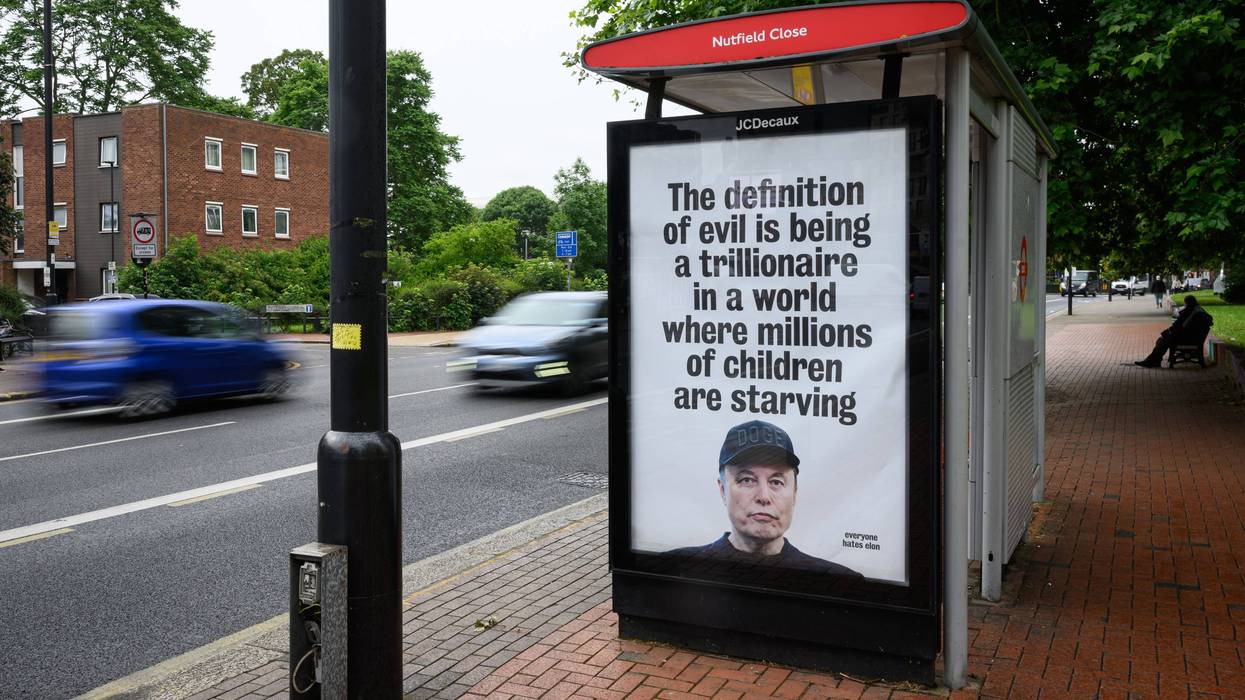
"The level of wealth that Mr. Musk has reached requires human exploitation, wage theft, wage suppression, anti-competitive markets, monopolistic control, price collusion, inadequate tax systems, and corruption."
Elon Musk's net worth surged past $1 trillion on Friday as SpaceX—the rocket company he founded and controls—made its debut on the public market, prompting global revulsion and calls for an aggressive wealth tax to rein in out-of-control inequality.
“Musk became the world's first trillionaire because our tax system shields the wealth of the ultra-wealthy from taxation while requiring working to people pay taxes on every paycheck," said Igor Volsky, director of the Tax the Greedy Billionaires Campaign. "Today’s milestone should serve as a wake-up call to us all."
"Unless we plan to cede control and agency over our future to a handful of ultra-wealthy individuals, lawmakers must pursue bold tax policies that actually meet this moment—not just slowing the accumulation of extreme wealth, but reversing it," Volsky added. "That means passing taxes on billionaire wealth ambitious enough to make the ultra-wealthy less wealthy, reduce the stranglehold they have over our economy and democracy, and restore the ideal that no one in America gets to buy their way to unchecked power.”
Reuters reported Friday that "most of Musk's wealth now rests with SpaceX, where he holds a stake worth roughly $866 billion."
"Along with Tesla and the rest of his properties, his net worth will exceed $1.1 trillion when the stock begins trading Friday," Reuters noted. "The tally includes stock components that would vest over time."
While Musk's on-paper fortune could drop below the trillion-dollar mark if SpaceX's stock price drops below $135 per share—which is highly possible, as experts argue the company's valuation is absurd—campaigners said Friday that the milestone is an appalling product of a society that has allowed the mega-rich to dictate policy, funneling immense wealth to the very top while millions worldwide face hunger, violent displacement, and preventable disease. Oxfam has estimated that just a 10% tax on Musk's fortune could lift 800 million people above the extreme poverty line.
“Eighty-six of Americans are worried about the price of food. Elon Musk is a trillionaire. These two things are deeply, inherently connected," said Erica Payne, founder and president of the advocacy group Patriotic Millionaires. "The level of wealth that Mr. Musk has reached requires human exploitation, wage theft, wage suppression, anti-competitive markets, monopolistic control, price collusion, inadequate tax systems, and corruption. Mostly inadequate tax systems and corruption."
Musk's companies, including SpaceX, have relied heavily on and benefited massively from government contracts, subsidies, and research, while paying minimal taxes.
The New York Times reported last year that SpaceX "has most likely paid little to no federal income taxes since its founding in 2002 and has privately told investors that it may never have to pay any, according to internal company documents." As for Tesla, the Institute on Taxation and Economic Policy found earlier this year that the company "avoided almost all federal income tax on over $12 billion of US income over the past three years."
Musk, whose immense wealth is largely stock appreciation that is not taxed in the US unless shares are sold, paid nothing in federal income taxes in 2018, according to ProPublica. "Between 2014 and 2018, he had a true tax rate of 3.27%," the investigative outlet noted.
Writer Elizabeth Spiers argued Friday that "trillionaires shouldn't exist," noting in a column for The Nation that "as Musk's wealth multiplies, he continues to prosper on the public dime."
"Musk’s cosmic-scale wealth-hoarding is particularly abhorrent when you place it against the backdrop of how much damage he’s done," wrote Spiers. "It’s hard to quantify the scale of destruction and deprivation that he will never personally be held accountable for. How do you value the lives of the hundreds of thousands of people who have died since Musk, in his words, gleefully 'fed [USAID] into the woodchipper'? How do you value the lives of people who will die because DOGE cut major biomedical research funding?"
"Musk has enriched himself via a rigged investment economy ensuring that those with the most contribute the least—or in many cases, nothing at all," Spiers added.