

SUBSCRIBE TO OUR FREE NEWSLETTER
Daily news & progressive opinion—funded by the people, not the corporations—delivered straight to your inbox.
5
#000000
#FFFFFF
To donate by check, phone, or other method, see our More Ways to Give page.
Daily news & progressive opinion—funded by the people, not the corporations—delivered straight to your inbox.
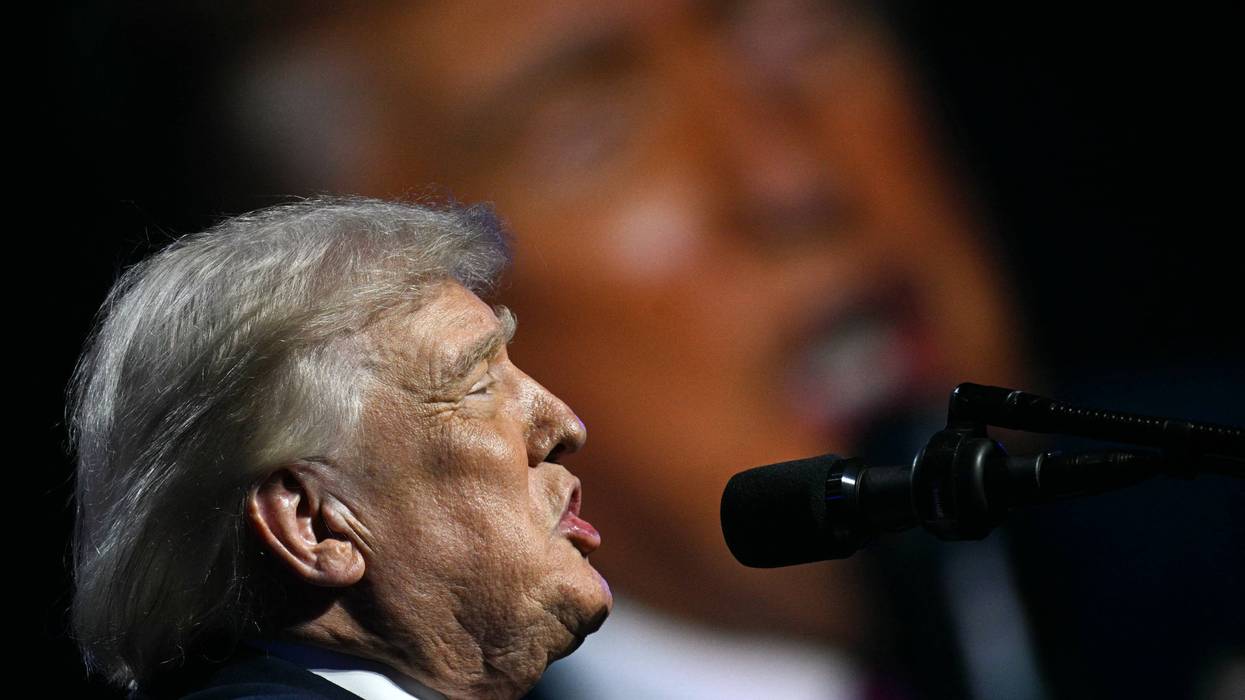
The man—the most despicable this nation has ever produced—should truly be considered a full-scale dystopian nightmare playing out in real time.
Unlike every other column of mine, this one won’t be broken up with section titles for a simple reason. It’s all about Donald J. Trump and when it comes to him, in this strange world of ours, no one ever really gets a break.
In that context, here’s my advice to you: Don’t get old. For years, I managed not to do so, but unfortunately that’s all over now and I’m increasingly an old man. In fact, I’m not quite two years older than Donald J. Trump. I was born on July 20, 1944, while World War II was still ongoing, and he was born on June 14, 1946, in the peacetime that followed but would all too soon become the Cold War with the Soviet Union.
And let me tell you something else: these days it’s hard enough to keep the website I still run, TomDispatch, in some kind of reasonable shape, while also keeping track of our ever-stranger, more confusing, all-too-Trumpian world. But keeping track of things nationally and globally as an 80-year-old president of the United States (with another two-and-a-half years to go) in a world that seems to be coming apart at the — whoops, sorry, I can’t help it! — seams? I simply can’t imagine that. Of course, I couldn’t imagine it for Joe Biden either, and yet he left the presidency when he was a staggering 82 years and 61 days old and will still have been younger than Trump if he truly makes it to January 20, 2029. (And both of them will have beaten the oldest Roman Emperor, Gordian I, who at 81 only lasted a few weeks in power.)
It’s hardly news that Donald Trump is now the oldest president ever to take the oath of office (twice!) and, in that sense, he’s been both record-setting and, in his own strange way, remarkable. But in case you hadn’t noticed, while he’s always had his odd moments, they are indeed getting ever odder and more frequent. After all, how many times has this country had a president who mistook himself for (or do I mean confused himself with) Jesus Christ? Oh, wait, how could I be so confused? That image wasn’t of Jesus but (as “our” president insisted) of a lookalike medical doctor. (“I thought it was me as a doctor,” the president said. “Only the fake news could come up with that.”)
And meanwhile, of course, in his own ever stranger fashion, “our” president took out after Leo, the American pope, himself a veritable youth at 70 years old, calling him of all things, “WEAK on crime” and, of course, “catering to the Radical Left.” Oh, and while he was at it, Trump also posted an image of himself being hugged by (yes, of course!) Jesus. And Leo responded to the president’s abuse by all too accurately deploring a world being “ravaged by a handful of tyrants” (including, of course, You Know Exactly Whom).
Just in case you hadn’t noticed, as an imperial power (even, historically speaking, the imperial power, the only one at its height to control quite so much of the planet in one fashion or another), this country, too, is growing ever older and (again) in its own strange fashion going down (as, of course, all great imperial powers do sooner or later). Phew! That was a long sentence for this old guy, but you can’t get too long and complicated (or do I mean confused?) when it comes to the world of Donald J. Trump. In electing him a second time in 2024, 49.8% of American voters clearly opted to go down in style by giving imperial oldness a startling new meaning.
These days, I’m sure you won’t be surprised to learn that Trump’s approval ratings are heading for the planetary basement. As I was writing this piece, for instance, only 31% of Americans approved of how he was handling the economy. (Of course, you might wonder, at this point, why it wasn’t 11% or even 0%.) Meanwhile, Vice President J.D. Vance’s approval ratings, too, have been hitting historic lows.
Mind you, Donald Trump has always given unpredictability new meaning, but these days, a constant version of unpredictability is his aging middle name. Remember the president who was against “warmongers and America-last globalists” and was going to remove them from office in his second term in the White House? Remember the president who was going to “turn the page forever on those foolish, stupid days of never-ending wars”? Hmmm, well, think again (and again and again!) now that he’s gone to war (or is it to peace, or even to pieces?) with Iran in an all too strikingly destructive fashion. But that’s today’s news and, in the era of the aging Donald Trump, who knows what tomorrow might hold for any of us (or, for that matter, what might happen an hour from now)? Count on one thing, though: “our” president sure doesn’t know and so, sadly, neither can we.
(Phew! Without section breaks, I’m already exhausted, but who can truly take a break when it comes to Donald Trump?)
And here’s what might be the saddest thing of all (not that all of it isn’t sad as hell, and potentially leading the rest of us all too literally into a hell on earth): given this country’s military machine, which “the peace president” seems eager to feed an extra $500 billion (and no, that’s not a typo!), which would raise the Pentagon budget by an exceedingly modest 50%, the United States still has the power to turn this planet into a hell on Earth in a fashion no other imperial power in decline has ever been able to do. (And I’m not even thinking about this country’s vast nuclear arsenal.)
So, here’s our horrifying reality: in the next two and a half years, if, of course, he doesn’t either keel over tomorrow or somehow grab even more time as president — remember that, last year in Iowa, which he won in all three of his election campaigns, he asked an audience ominously, “Should we do it a fourth time?” — Donald J. Trump is genuinely capable of preparing to take not just this country but the planet down with him. Phew again!
And I’m not just thinking about his ability (if that’s faintly the word for it) with allies like Israel to turn parts of this world into hell zones of war. I’m thinking instead about the climate disaster to come and the president who has called it “the greatest con job ever perpetrated on the world” and a “green scam,” and is prepared in his own fashion to heat this planet to the boiling point. (And keep in mind that the U.S. military is the largest institutional emitter of greenhouse gases, even in peacetime, on Planet Earth.)
Honestly, I still find it hard to imagine that a near majority of American voters elected such a distinctly disturbed old man as president yet again, one seemingly intent on squashing green energy of any sort and potentially taking this planet down with him the second time around. Consider it truly strange, in fact (or do I mean: consider it unstrange beyond words) that the two oldest presidents in our history (Donald Trump, Joe Biden, and, yes!, Donald Trump again) have occupied the White House consecutively for the last decade, given that this country is now distinctly an aging, even potentially, fading power on a planet that may itself be aging and fading all too rapidly.
I’m old enough to have experienced 15 presidents in my lifetime so far (and that’s not even counting Trump the second time around) and yet he is distinctly, day by day, month by month, year by year, one of a kind in the worst sense imaginable. Consider it odd, in fact, that, as a con artist first class, he may himself turn out to be the greatest con job ever perpetrated on this world of ours and, in his own eerie fashion, a world-ending figure. Worse yet, whether we like it or not, it seems as if we are all now his apprentices.
Imagine as well that making war and “unleashing” ever more coal, oil, and natural gas are the two things he seems to be specializing in during his second term in office, even if, thanks to his conflict with Iran, he actually put a sudden limit on the global distribution of oil and gas via the Strait of Hormuz and helped (in his own fashion) and with a distinct hand from Iran to clobber the big oil producers of the Middle East.
(Whew! If only I could put a section break up right here and take a break myself! Facing such a world and such a president, this old writer finds himself increasingly out of breath!)
You know, if, when I was young and when, in the midst of the Cold War with the Soviet Union, the youthful John F. Kennedy was president, you had even tried to describe Donald Trump’s version of the world to me, I would have thought you not just literally mad, but one of the worst creators of fiction around. Can there be the slightest doubt, in fact, that President Trump has indeed turned out to be among the worst creations of a planet that couldn’t be in deeper trouble?
I wanted to write “fictional creations” there. If only this were indeed a grim dystopian novel, rather than the actual world, and if Donald Trump himself were indeed some mad fictional creation. What a thrill that would be! After all, such a weird and wild version of a Philip Roth noveI would once have seemed to readers like a mad laugh-a-thon.
If only…
But when the voters of your very own country decide to make just such a fiction our reality a second time around in this all too real world, you know that something is truly wrong on Planet Earth.
In a sense, Donald Trump could be thought of as the way, after this country’s endless decades of imperial war-making from Korea to Vietnam to Afghanistan to Iraq, and now to Iran (and that’s leaving out plenty of our warring activities), we Americans decided not just to make war on the rest of the world but on ourselves as well. And by reelecting a man who proudly insists that climate change is the “greatest con job ever perpetuated” and a total “green new scam,” we’re obviously involving ourselves in a big-time fashion in what might be thought of as World War III, the ultimate war on planet Earth itself.
I mean, you have to feel anxious when you only have to put “Donald Trump, climate change” into your computer search window and up come endless disturbing pieces, including, for me just now, Maxine Joselow of the New York Times writing an article headlined (rather mildly under the circumstances) “Climate Change Denial Sees a Resurgence in Trump’s Washington.” It began this way:
“Climate change is a hoax perpetrated by ‘leftist politicians.’ Fossil fuels are the greenest energy sources. More carbon dioxide in the atmosphere will be harmless. These were some of the false claims made at a conference on Wednesday held by groups that reject the overwhelming scientific consensus on climate change. What might have seemed like a fringe event in years past this time boasted a prominent keynote speaker: Lee Zeldin, the administrator of the Environmental Protection Agency and one of President Trump’s possible choices for the next attorney general.”
Tell that, of course, to all of us in New York City, who only recently lived through record-breaking 90-degree July weather in early April. Consider it strange indeed that, in response to the never-ending news that we humans have long been turning this planet into a fossil-fuelized hothouse, a near majority of us would indeed opt to again elect a president who makes climate-change denial seem like a far too mild term.
Of all the things that Donald Trump hasn’t done, he’s worked in what, for him, is a remarkably organized fashion to stall or nix any projects that wouldn’t further heat this planet of ours. Utterly unfocused as he so often is, he’s remained strikingly focused on shutting down wind power and solar energy projects, while launching ever more fossil-fuel ones, including opening more than a billion acres of coastal waters to oil and gas drilling and paying a French company almost a billion dollars not to create two wind farms off this country’s east coast, but instead to invest in oil and gas projects here in the U.S.
Talk about dystopian! Donald Trump should truly be considered a full-scale dystopian nightmare playing out in real time.
Wait! I have a last urge for this piece. Think of it as a way for me to finally catch my breath. To end it, I want to create one of those missing section heads right here, right now. How about:
The Hothouse President on a Planet Going to Hell
[And yes, that is indeed the end of this piece, but not for a moment the end of the nightmare we’re now living through.]

The most important lesson of the First World War is that leaders who think they can manage escalation usually can’t.
Saturday’s back-to-back headlines on The Washington Post were: “‘They Have Chosen Not To Accept Our Terms,’ Vance Says” and “U.S. Intelligence Shows China Taking A More Active Role In Iran War.” They echo headlines from a century ago that reported on the early days of what quickly became World War I.
In 2021, China and Iran became military allies, signing a “broad strategic partnership encompassing economic, diplomatic, and security dimensions.” Russia signed a similar comprehensive military/security agreement with Iran in January of last year. The three countries are now military allies and formally assisting each other. Hold that thought.
Then, on Sunday morning, America’s resident madman Donald Trump announced on his Nazi-infested social media site that the United States Navy will illegally blockade the Strait of Hormuz—the narrow chokepoint through which twenty percent of the world’s oil used to flow every day—threatening to intercept “every vessel in International Waters” that’s paid a toll to Iran.
The US blockade of the Strait begins the hour that this article was published: 10 AM ET on Monday, April 13th.
What happens when a US destroyer orders a Chinese-flagged tanker to heave to in the Strait of Hormuz and a Chinese warship sails between them?
That means all the shipping of oil for China and drones for Russia will be intercepted by the US. We’re now blocking the war and energy supplies of nations that have nuclear weapons and whose military assets are already in the region. And it came just hours after the peace talks in Islamabad—led by three American grifters with absolutely no diplomatic experience—had predictably collapsed.
What happens next will depend entirely on whether anyone in this administration has ever seriously studied what happened the last time a similar cascade of great-power commitments, cornered leaders, and military miscalculations all converged at once.
A hundred and twelve years ago this summer, a young Bosnian Serb named Gavrilo Princip fired two shots in Sarajevo, killing Archduke Franz Ferdinand of Austria-Hungary.
What followed was a deadly catastrophe, because every major European power had spent the previous forty years putting together mutual defense treaties with other major European powers.
(In the 1908 Bosnian Crisis Austria-Hungary had annexed Bosnia, land that Serbia claimed; the Serbs were humiliated and furious. The Balkan Wars of 1912-13 left Serbia stronger and more willing to reach out to the Slavic people still living under Austria-Hungarian rule, particularly those in Bosnia, further enraging the Austria-Hungarians.)
Everybody was armed to the teeth and, frankly, paranoid about everybody else. So, when Franz Ferdinand’s assassination gave Austria-Hungary an excuse to punish it’s longtime enemy Serbia, those treaties clicked into place like the tumblers of a massive combination lock and the doors of hell swung open onto the most catastrophic war the world had, at that time, ever seen.
Austria-Hungary declared war on Serbia. Russia, bound by pan-Slavic solidarity and treaty, mobilized. Germany, allied with Austria-Hungary and seeing the Russian mobilization, declared war on Russia. The Franco-Russian alliance dragged France in.
Once the fighting started, Germany’s Schlieffen Plan required invading France through neutral Belgium, which triggered Britain’s 1839 treaty obligation to protect Belgian neutrality.
Within six weeks of two pistol shots in Sarajevo, virtually every major power in Europe was engaged in a brutal war that escalated with the inevitability and power of a landslide. The leaders who set the whole machine in motion genuinely believed they could control the escalation, but they were terribly and tragically wrong. The interlocking agreements and past hostilities simply took over, and seventeen million people died.
I’ve been thinking about Sarajevo a lot this week, because what’s happening in the Strait of Hormuz right now follows the same terrifying script, except that this time, the European, Middle Eastern, and Asian powers that are being pulled toward what could easily become World War III all have nuclear weapons.
Here’s how we got here:
Benjamin Netanyahu made six trips to the White House in the year before the war began, each time pressing Trump and his old family friend Jared Kushner with the argument that Iran was ripe for regime change, that the mullahs were one good strike away from falling, and that history was calling.
What the New York Times’ reporting now makes clear—and what Trump’s own CIA director and secretary of state reportedly called “farcical” and “bullshit” in private—is that Netanyahu had an overwhelming personal reason to want this war: he’s been fighting a fraud, bribery, and breach-of-trust criminal trial that could put him in prison if he’s convicted.
Wars are good for embattled leaders: they can generate emergency status and even pause court proceedings. And when this war started on February 28th, Netanyahu’s trial did indeed grind to a halt under Israel’s wartime court emergency rules, which had to be repeatedly extended. The trial is only now, this week, resuming. (Trump, to help his fellow authoritarian, has been publicly pressuring Israel’s president to pardon Netanyahu, telling him to do it “today” and calling him a “disgrace” for hesitating.)
So Trump (himself facing a crisis from the Epstein documents and accusations of raping a 13-year-old girl) and “Whiskey Pete” Hegseth (who simply loves war) launched a bloody confrontation in which one of the key decision-makers’ primary motivation—at least on the Israeli side—was to keep himself out of prison.
And 44 days later, the man who should be in the defendant’s chair is instead flying into southern Lebanon to pose with troops (his popularity is now sky-high in Israel because of the war) while the United States Navy blockades one of the most consequential waterways on the planet.
Yesterday, Trump posted to his failing social media site a declaration that may end up being seen, in retrospect, much like the assassination of Archduke Ferdinand. He proclaimed that the Navy will begin “BLOCKADING any and all Ships trying to enter, or leave, the Strait of Hormuz” and will “seek and interdict every vessel in International Waters that has paid a toll to Iran.”
That last sentence is the one that could rock the planet, because, as the independent National Security Desk analysis makes clear, Trump’s phrase “every vessel in International Waters” is a global directive. It means the US Navy now officially claims the legal right to board, search, and seize foreign ships anywhere on the world’s oceans as well as the ships of any nation trying to pass through the Strait.
Under international maritime law, that’s called “piracy.” And here’s the other parallel to the tensions between Austria-Hungary and Serbia back in the day: roughly 80 percent of China’s oil imports that transit the Strait—that Trump just said he will “blockade”—are Chinese-owned or Chinese-connected vessels.
— China already has a Type 055 cruiser, a Type 052D destroyer, and a massive surveillance ship sitting right there in the region, in the Gulf of Oman.
— Chinese satellites have been providing real-time targeting intelligence to Iran throughout this war.
— Russia has been running electronic warfare systems that, according to pre-war assessments, degrade American radar and communications by as much as 80 percent.
— Iran’s military has been successful in killing over a dozen American troops and wounding hundreds — and downing multiple US military aircraft — because of targeting information Putin’s reportedly been giving them.
These are active military contributions to the Iranian war effort right now.
So what happens when a US destroyer orders a Chinese-flagged tanker to heave to in the Strait of Hormuz and a Chinese warship sails between them? Trump has to choose between backing down—and watching the blockade collapse—or firing on the naval vessel of a country with roughly 400 nuclear warheads.
And this isn’t a purely hypothetical scenario. China and its leader Xi Jinping have made it abundantly clear that maintaining an uninterrupted energy supply through the Strait is one of its core national interests; it won’t simply steam away.
On the Russian side, Vladimir Putin is also not a man who responds with moderation to being cornered. And he’s already in deep trouble in his own country, as well as on his back foot in Ukraine.
The Atlantic Council and RAND have both documented that Putin’s domestic position is more stressed than at any point since his brutal and criminal Ukraine invasion began. Russia today faces runaway military spending consuming eight percent of GDP, skyrocketing inflation, fuel shortages, and a society that polls show has grown deeply tired of the war in Ukraine.
Analysts at the Royal United Services Institute have concluded that Putin literally cannot afford to be seen accepting strategic defeat, because the entire justification of his authoritarian model rests on his promise to “restore Russian greatness” (Make Russia Great Again). If he fails, he may not survive. Not just politically, but physically; Russia has a long, ancient history of dealing harshly with failed leaders.
Thus, a cornered, domestically vulnerable Putin with 6,000 nuclear weapons who is already actively helping Iran kill Americans isn’t a guy who backs down gracefully. He’s a leader who escalates.
And to compound things, yesterday one of the most important parts of the worldwide autocratic network Putin’s been building for decades (including his support for Trump’s election and re-election) collapsed.
In Hungary, where Viktor Orbán has spent 16 years building the model of “illiberal democracy” that Trump, Vance, and the Heritage Foundation have openly cited as their template, voters turned out in the highest numbers since the fall of communism—a stunning 78 percent—and handed a decisive victory to opposition leader Péter Magyar and his Tisza party.
In 1914, it took six weeks until the dogs of all-out-war were fully unleashed. This time, we’re already 43 days in, and we have destroyers parked in a mined strait that China needs to stay alive economically and Russia would love to see humiliate the United States and Europe.
Vice President Vance was just there last week, rallying with Orbán, promising Trump’s “economic might” to help out Hungary (which is suffering under years of corruption and looting by Orbán’s oligarch buddies) if Fidesz held on. Today, that ally is soon to be gone (Magyar takes over in May). The worldwide autocrat network, which is now largely led by Putin, Trump, Orbán, and Netanyahu, is beginning to fracture at its European edge.
When great powers are simultaneously cornered along with a smaller ally, when their leaders face domestic crises that demand the appearance of strength, when interlocking military commitments are already active and drawing them toward conflict, that’s when the world has historically stumbled into catastrophes that nobody wanted and nobody planned.
In 1914, it took six weeks until the dogs of all-out-war were fully unleashed. This time, we’re already 43 days in, and we have destroyers parked in a mined strait that China needs to stay alive economically and Russia would love to see humiliate the United States and Europe.
Louise and I have traveled the world extensively; I’ve stood in the World War I cemeteries of France and Belgium, with row after row of white crosses stretching to the horizon, and been stunned by the fact that every one of those young men died in a war that the people who started it genuinely believed they could control.
The lesson of WWI is that leaders who think they can manage escalation usually can’t.
The time to speak up is right now, before the tumblers click into place. Call your senators and representative (you can reach them through the Capitol switchboard at (202) 224-3121) and tell them to support the Democrats’ War Powers Resolution that could stop Trump from going even farther down this treacherous, deadly, possibly-planet-destroying road.
Congress must reassert its constitutional war-making authority: under our Constitution, no president gets to blockade an international waterway with a social media post, and the American people didn’t vote for a nuclear confrontation with China and Russia over Benjamin Netanyahu’s corruption trial. Trump must be impeached now.
And make sure you’re registered to vote and that everyone you know is registered, because the November 2026 midterms are the most direct democratic check we still have on where this is all heading. Check your registration at Vote.gov.
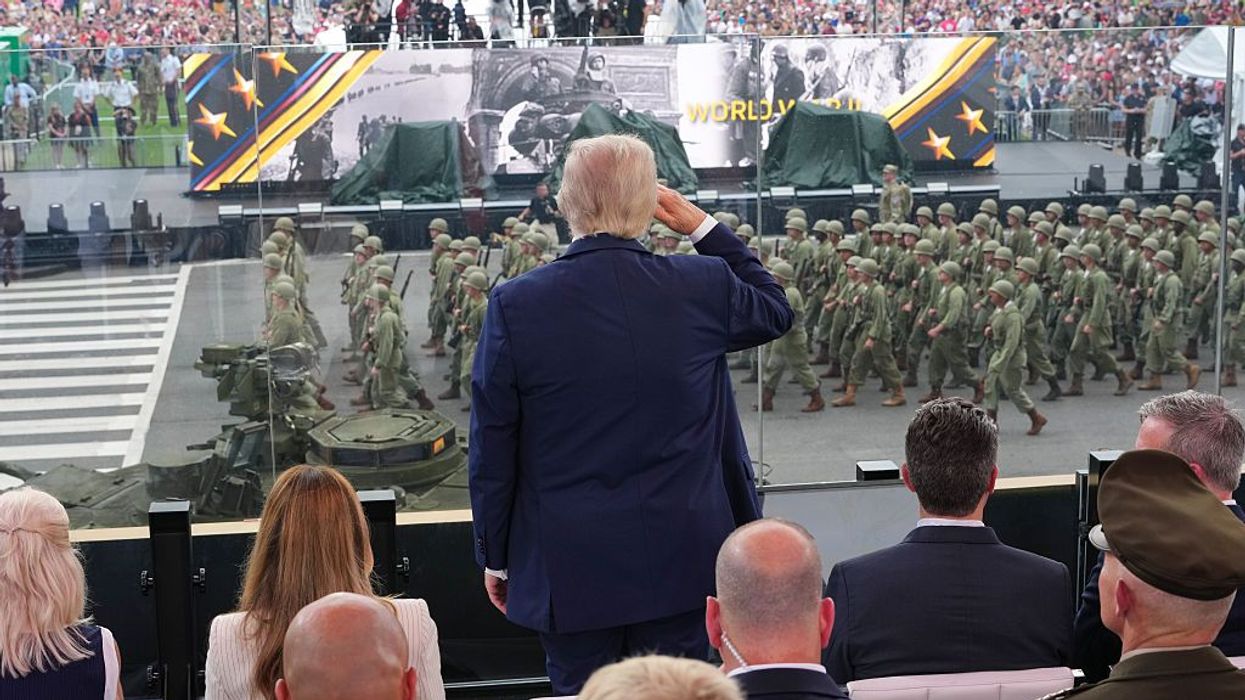
Historian Greg Grandin argued that Trump's foreign policy will likely result in "more confrontation, more brinkmanship, more war."
Yale historian Greg Grandin believes that President Donald Trump's foreign policy is putting the US on a dangerous course that could lead to a new world war.
Writing in The New York Times on Monday, Grandin argued that the Trump administration seems determined to throw out the US-led international order that has been in place since World War II.
In its place, Grandin said, is "a vision of the world carved up into garrisoned spheres of competing influence," in which the US has undisputed control over the Western Hemisphere.
As evidence, he pointed to the Trump White House's recently published National Security Strategy that called for reviving the so-called Monroe Doctrine that in the past was used to justify US imperial aggression throughout Latin America, and that the Trump administration is using to justify its own military adventures in the region.
Among other things, Grandin said that the Trump administration has been carrying out military strikes against purported drug smuggling boats in the Caribbean and the Pacific Ocean, and has also been "meddling in the internal politics of Brazil, Argentina, and Honduras, issuing scattershot threats against Colombia and Mexico, menacing Cuba and Nicaragua, increasing its influence over the Panama Canal, and seizing an oil tanker off the coast of Venezuela."
Most ominously, Grandin said, is how the US Department of Defense has been "carrying out a military buildup in the Caribbean that is all but unprecedented in its scale and concentration of firepower, seemingly aimed at effecting regime change in Venezuela."
A large problem with dividing the globe into spheres controlled by major powers, Grandin continued, is that these powers inevitably come into violent conflict with one another.
Citing past statements and actions by the British Empire, Imperial Japan, and Nazi Germany, Grandin argued that "as the world marched into a second global war, many of its belligerents did so citing the Monroe Doctrine."
This dynamic is particularly dangerous in the case of Trump, who, according to Grandin, sees Latin America "as a theater of global rivalry, a place to extract resources, secure commodity chains, establish bulwarks of national security, fight the drug war, limit Chinese influence, and end migration."
The result of this policy shift, Grandin concluded, "will most likely be more confrontation, more brinkmanship, more war."

Under the influence of the neocons, Democrats and Republicans alike have marched America into one disaster after another, in a vain effort to defy the economic tides by which all great powers rise and fall. Trump and his team are no exception.
Not a day goes by without a new shock to Americans and our neighbors around the world from the Trump administration. On April 22nd, the International Monetary Fund (IMF) downgraded its forecasts for global growth in 2025, from 3.3% to 2.8%, and warned that no country will feel the pain more than the United States. Trump’s policies are expected to drag U.S. growth down from 2.7% to 1.8%.
It’s now clear to the whole world that China is the main target of Trump’s trade wars. The U.S. has slapped massive tariffs—up to 245%—on Chinese goods. China hit back with 125% tariffs of its own and refuses even to negotiate until U.S. tariffs are lifted.
Ever since President Obama announced a U.S. “pivot to Asia” in 2011, both U.S. political parties have seen China as the main global competitor, or even as a target for U.S. military force. China is now encircled by a staggering 100,000 U.S. military personnel in Japan, South Korea and Guam (plus 73,000 in Hawaii and 415,000 on the U.S. West coast) and enough nuclear and conventional weapons to completely destroy China, and the rest of us along with it.
To put the trade war between the U.S. and China in context, we need to take a step back and look at their relative economic strength and international trading relations with other countries. There are two ways to measure a country’s economy: nominal GDP (based only on currency exchange rates) and “purchasing power parity” (PPP), which adjusts for the real cost of goods and services. PPP is now the preferred method for economists at the IMF and OECD.
If the U.S. keeps trying to bully its way back to the top, we could all lose everything.
Measured by PPP, China overtook the U.S. as the largest economy in the world in 2016. Today, its economy is 33% larger than America’s—$40.7 trillion compared to $30.5 trillion.
And China isn’t alone. The U.S. is just 14.7% of the world economy, while China is 19.7%. The EU makes up another 14.1%, while India, Russia, Brazil, Japan, and the rest of the world account for the other 51.5%. The world is now multipolar, whether Washington likes it or not.
So when Malaysia’s trade minister Tengku Zafrul Aziz was asked whether he’d side with China or the U.S., his answer was clear: "We can’t choose—and we won’t." Trump would like to adopt President Bush’s “You’re either with us or with the terrorists” posture, but that makes no sense when China and the U.S. together account for only 34% of the global economy.
China saw this coming. As a result of Trump’s trade war with China during his first term in office, it turned to new markets across Asia, Africa, and Latin America through its Belt and Road Initiative. Southeast Asia is now China’s biggest export market. It no longer depends on American soybeans—it grows more of its own and buys most of the rest from Brazil, cutting the U.S. share of that market by half.
Meanwhile, many Americans cling to the idea that military power makes up for shrinking economic clout. Yes, the U.S. outspends the next ten militaries combined—but it hasn’t won a major war since 1945. From Vietnam to Iraq to Afghanistan, the U.S. has spent trillions, killed millions, and suffered humiliating defeats.
Today in Ukraine, Russia is grinding down U.S.-backed forces in a brutal war of attrition, producing more shells than the U.S. and its allies can at a fraction of our cost. The bloated, for-profit U.S. arms industry can’t keep up, and our trillion dollar military budget is crowding out new investments in education, healthcare, and civilian infrastructure on which our economic future depends.
None of this should be a surprise. Historian Paul Kennedy saw it coming in his 1987 classic The Rise and Fall of the Great Powers. Every dominant empire, from Spain to Britain to Russia, eventually confronted relative decline as the tides of economic history moved on and it had to find a new place in a world it no longer dominated. Military overextension and overspending always accelerated the fall.
“It has been a common dilemma facing previous ‘number one’ countries that even as their relative economic strength is ebbing, the growing foreign challenges to their position have compelled them to allocate more and more of their resources into the military sector, which in turn squeezes out productive investment…,” Kennedy wrote.
He found that no society remains permanently ahead of all others, but that the loss of empire is not the end of the road for former great powers, who can often find new, prosperous positions in a world they no longer dominate. Even the total destruction suffered by Germany and Japan in the Second World War, which ended their imperial ambitions, was also a new beginning, as they turned their considerable skills and resources from weapons development to peaceful civilian production, and soon produced the best cars and consumer electronics in the world.
Paul Kennedy reminded Americans that the decline in U.S. leadership “is relative not absolute, and is therefore perfectly natural; and that the only serious threat to the real interests of the United States can come from a failure to adjust sensibly to the newer world order…”
And that is exactly how our leaders have failed us. Instead of judiciously adapting to America’s relative decline and carving out a new place for the United States in the emerging multipolar world, they doubled down—on wars, on threats, on the fantasy of endless dominance. Under the influence of the neocons, Democrats and Republicans alike have marched America into one disaster after another, in a vain effort to defy the economic tides by which all great powers rise and fall.
Since 1987, against all the historical evidence, seven U.S. presidents, Democrats and Republicans, have blindly subscribed to the simplistic notion peddled by the neocons that the United States can halt or reverse the tides of economic history by the threat and use of military force.
Trump and his team are no exception. They know the old policies have failed. They know radically different policies are needed. Yet they keep playing from the same broken record—economic coercion, threats, wars, proxy wars, and now genocide—violating international law and exhausting the goodwill of our friends and neighbors around the world.
The stakes couldn’t be higher. It took the two most deadly and destructive wars in human history to put an end to the British Empire and the age of European colonialism. In a nuclear-armed world, another great-power war wouldn’t just be catastrophic—it would very likely be final. If the U.S. keeps trying to bully its way back to the top, we could all lose everything.
The future instead demands a peaceful transition to international cooperation in a multipolar world. This is not a question of politics, right or left, or of being pro- or anti-American. It’s about whether humanity has any future at all.

On living in the burn-baby-burn world of this monstrous individual.
From childhood, I think I had some eerie sense of just how bad it could get in America. After all, in junior high and high school, I was riveted by this country’s Civil War. Among all my toy soldiers — cowboys and Indians, British marching troops in red jackets, and plastic Army-green World War II soldiers (from my father’s war) — and those Landmark Books on American history that I piled up on my floor to create hills and valleys where I could play out the cowboy and Indian ambushes and battles I had seen at local movie theaters, my favorites were always the blue and grey lead soldiers of the Union and Confederacy, including Commanding General Ulysses S. Grant on a horse. (He’s still in the saddle on a small shelf beside the computer where, almost 70 years later, I’m writing this.)
In those days, thanks to my parents, I also subscribed to the history magazine American Heritage, whose editor was Bruce Catton, while, in my spare time, I feverishly read the Civil War histories for which he won a Pulitzer Prize. (I still have my ancient copies of Glory Road, This Hallowed Ground, and A Stillness at Appomattox.) At some point in those youthful years, my father even drove me to Gettysburg to see firsthand the site of perhaps the most crucial and devastating battle of that war.
I don’t think I ever truly imagined, though, what it might be like for this country to be at its own throat again, especially in the eerily strange way it is today. I never dreamed that the world I grew up in (despite Senator Joe McCarthy) could truly ever — yes, ever — begin to come apart at the seams. And yet, at this very moment, that very country, the United States of America, is at the edge of who really knows what, but nothing — I can guarantee you — that our children or grandchildren would be thrilled to play out on the floors of their rooms (or even their video screens). In truth, how in the world would you play Donald J. Trump and crew? To my surprise, I find that there are indeed Trump toys and an Elon Musk bobblehead, and even — can you believe it? — a Pete Hegseth action figure (or am I being conned?). Still, tell me how, on the floor of your childhood room, you would sort out Trumpworld and an America that appears to be coming apart at the seams, not in ancient history but right before our eyes on a planet where the same distinctly holds true.
“Drill, Baby, Drill”
I don’t know who the Bruce Catton of the future will be or what he or she (or, yes, in the age of Trump, they) might write, but I do know that there will be no Bull Run, no Gettysburg or Appomattox, no glory on that distinctly unglorious road to… well, who knows what. Count on one thing, though: it ain’t going to be pretty.
No, Donald Trump isn’t Jefferson Davis (and he certainly isn’t Abraham Lincoln), nor is he even, I suspect, a Benito Mussolini or Adolf Hitler in the making. He’s distinctly his own strange and strangely disturbed character. He’s the man who, until he was suddenly elevated to the presidency, was known mainly for being the host of the TV show, The Apprentice, in which contestants battled for jobs in his companies (“You’re fired!”), while he pulled in the dough; for a series of books written in his name by others; and, of course, for overseeing six companies that, with remarkable consistency, all went bankrupt before he was elected — yes! — president of the United States! Elected a second time no less, even after having been told “You’re fired!” by American voters in 2020. Under the circumstances, in the Trumpworld of this moment, no one should be surprised if bankruptcy once again becomes a subject of interest.
Think of him, in fact, as President Bankrupt. Though I have no way of knowing whether he’ll literally bankrupt this country as he and Elon Musk attempt to take it apart at the seams (while globally putting tariffs of all sorts on a striking variety of goods and sending the stock market plunging), there is indeed something distinctly bankrupt about the world he represents.
And in that sense of bankruptcy, he’s a far less singular figure than he so often seems. After all, in my grown-up lifetime, the way was prepared for Donald Trump in a striking fashion, whether you’re talking about making war on this planet (in this century, Afghanistan, Iraq, etc.) or all too literally making war on this planet. We’re talking, of course, about the man who won the presidency the second time around on the slogan “drill, baby, drill,” and whose representatives are now doing their damnedest to take apart the Environmental Protection Agency, not to speak of the environment itself. In the end, loud as he is, however incessantly he babbles on, he may be overseeing a future “stillness,” if not at Appomattox, then across this planet itself.
Like every American president since George W. Bush invaded Afghanistan in the wake of the 9/11 attacks, President Trump is now engaged in his own war (guaranteed to end in a fashion no better than the others of this century), this time in Yemen. He’s already sworn that the bombing campaign he recently launched there (though Joe Biden’s administration did some of the same) won’t end anytime soon. As he put it, “I can only say that the attacks every day, every night… have been very successful beyond our wildest expectations… We’re going to do it for a long time. We can keep it going for a long time.” A long time, indeed, before there is ever again a stillness in Yemen.
And sadly, when it comes to wars, that’s the least of it for Donald Trump (and the rest of us). After all, though it’s seldom thought of that way, he’s at war with the planet in a fashion that’s no less brutal than what he’s now doing in Yemen. Of course, to put him in a proper wartime context, humanity is now essentially engaged in World War III (though no one thinks of it that way) on this planet, at least as a livable place for us and so many other species. And in that war, President Trump is distinctly a warrior first-class of a devastating sort.
In fact, just imagine for a moment, on that toy floor in your brain, how Americans could twice elect (slim though those majorities were) a man whose most significant “plank” in the last election was indeed the phrase “drill, baby, drill” and the promise that he would essentially fight the slightest attempt to bring this already desperately overheating planet of ours under any sort of control. He would instead do his damnedest to dismantle the Environmental Protection Agency as a functional workplace, while “walking away from virtually every important climate policy on the books.” (After all, why would anyone want to protect the environment in which we all live???) He is, of course, also doing away with any efforts to deal with climate change, including almost instantly reversing some of Joe Biden’s relatively modest attempts to respond to global warming. Instead, he’s preparing to go all out to take the country that already produces more oil than any other on Earth (or in history), and also exports more natural gas than any other, into a blazing future.
Nothing is too remote for him to take a hammer to, not when it comes to the climate. His administration has even typically ended “a flagship foreign aid program to support renewable energy projects and increase electricity access across Africa” run by the now largely dismantled U.S. Agency for International Development. And all of what he’s done so far is only the beginning of what should be considered his climate war — which will also be a war against the rest of us and, above all else, against the future.
Despite the progress that has indeed been made globally when it comes to producing clean energy, the use of greenhouse-gas-producing fossil fuels remains on the rise on Planet Earth, even without Donald Trump in the White House. Now, of course, he’s intent in his own striking fashion and — the second time around this is indeed an appropriate word — tradition on bankrupting the planet itself as a livable place for the rest of us. And yes, he did indeed oversee those six bankruptcies earlier in his life, but historically they will prove to be nothing compared to the bankruptcy he’s likely to oversee in the next three years and nine months before he leaves office (if he does), while saying, “You’re fired!” to the American people and the world. In a country that distinctly seems to be coming apart at the seams — if not in a literal civil war, then in some kind of civil dissolution — think of him indeed as President Bankrupt (and that bankruptcy is going to play out on Planet Earth in a way that might once have been unimaginable).
Down, Down, Down
Not surprisingly, Donald Trump has already spent the first days of his second term in office, as Robert Reich put it recently, attempting “to intimidate lawyers, law firms, universities, the media, and every other institution of civil society.” And just to add one more thing to that list, he’s doing his best to devastate this planet.
The Earth is already feeling the heat. In 2024, the hottest year on record, according to the U.N.’s World Meteorological Organization (though these days you can say that of more or less any year, since the last 10 have been the hottest ever), there were a record 151 extreme weather events — heatwaves, floods, and storms — planet-wide that were worse than any previously recorded in whatever regions they hit. Take that in for a moment and then think about the fact that Donald Trump won the 2024 election by what may prove to be the most devastating 1.6% of the vote in history.
Madness, right? Imagine what those extreme weather figures might look like three years and nine months from today, after ever more record heat. And then try to imagine what books your grandchildren (or mine) might be reading in their rooms some years from now: The Road to Hell? This Damned Earth? A Stillness at [you fill in the blank, but be sure to make it loud and terrifying]?
Think of Donald Trump, then, not only as President Bankrupt, but President Decline. After all, he’s the leader of the country that, only 30-odd years ago, after the collapse of the Soviet Union, was considered the “lone superpower” on planet Earth and now is anything but. In that sense, Donald Trump represents something that might be considered old hat in this world of ours: the decline of empire. After all, the country that once, all too long ago, was led by a crew that liked to think of themselves as “the best and the brightest” is now led by a crew that could certainly qualify as the worst and the dumbest, and seems intent on creating an America that will prove to be a bankruptcy first class.
Not that there’s anything strikingly new about that in the history of empires. What’s new, of course, is that Donald Trump may, in his own fashion, be overseeing and intensifying a planetary bankruptcy as well, a kind of decline and fall that until now hasn’t been part of the human experience.
Of course, it’s possible that public opinion might just be starting to turn against him and the Republicans. And the civil-war-style mood might even be toning down a bit (though I wouldn’t count on that). Nonetheless, it’s not happening faintly soon enough to matter on a planet already heating to the boiling point.
For the foreseeable future, unfortunately, we will all be living in a burn-baby-burn world whose climate will be set by that expert in bankruptcies, Donald J. Trump.
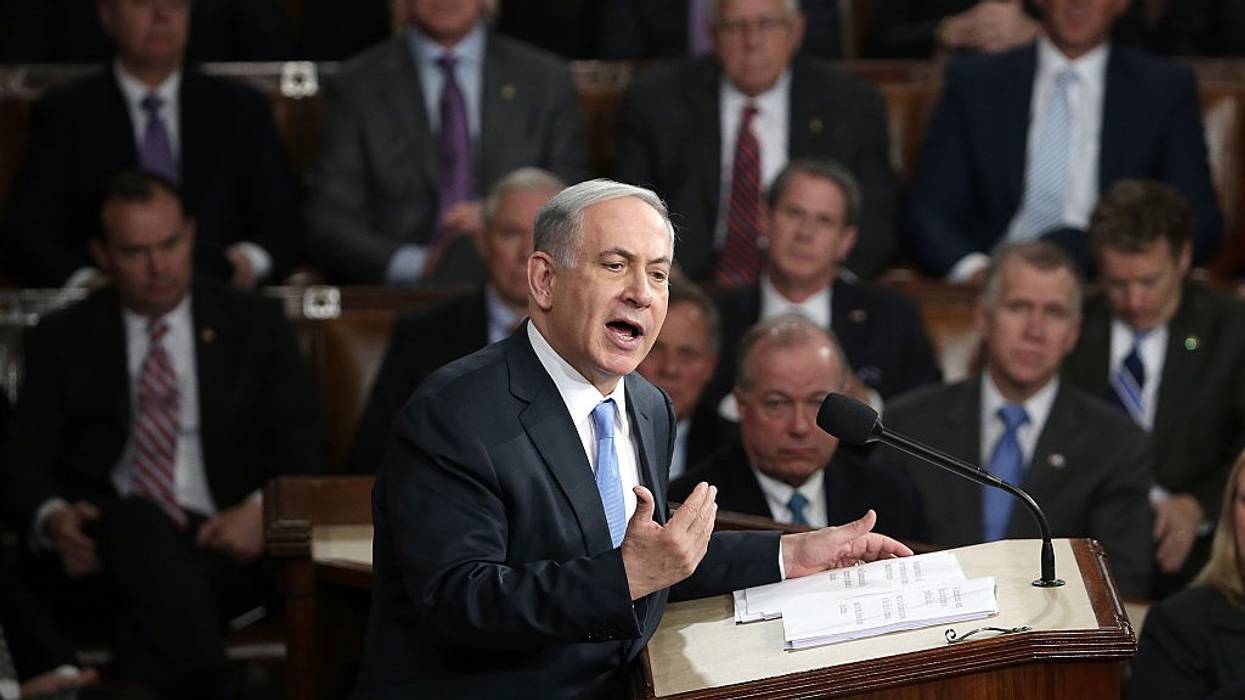
It’s official now. America’s closest ally, Israeli Prime Minister Benjamin Netanyahu, the one accorded more than 50 standing ovations in Congress just months ago, is under indictment by the International Criminal Court for crimes against humanity and war crimes. America must take note: the U.S. Government is complicit in Netanyahu’s war crimes and has fully partnered in Netanyahu’s violent rampage across the Middle East.
For 30 years the Israel Lobby has induced the U.S. to fight wars on Israel’s behalf designed to prevent the emergence of a Palestinian State. Netanyahu, who first came to power in 1996, and has been prime minister for 17 years since then, has been the main cheerleader for U.S.-backed wars in the Middle East. The result has been a disaster for the U.S. and a bloody catastrophe not only for the Palestinian people but for the entire Middle East.
These have not been wars to defend Israel, but rather wars to topple governments that oppose Israel’s oppression of the Palestinian people. Israel viciously opposes the two-state solution called for by international law, the Arab Peace Initiative, the G20, the BRICS, the OIC, and the UN General Assembly. Israel’s intransigence, and its brutal suppression of the Palestinian people, has given rise to several militant resistance movements since the beginning of the occupation. These movements are backed by several countries in the region.
The obvious solution to the Israel-Palestine crisis is to implement the two-state solution and to demilitarize the militant groups as part of the implementation process.
Israel’s approach, especially under Netanyahu, is to overthrow foreign governments that oppose Israel’s domination, and recreate the map of a “New Middle East” without a Palestinian State. Rather than making peace, Netanyahu makes endless war.
What is shocking is that Washington has turned the U.S. military and federal budget over to Netanyahu for his disastrous wars. The history of the Israel lobby’s complete takeover of Washington can be found in the remarkable new book by Ilan Pappé, Lobbying for Zionism on Both Sides of the Atlantic (2024).
Rather than making peace, Netanyahu makes endless war.
Netanyahu repeatedly told the American people that they would be the beneficiaries of his policies. In fact, Netanyahu has been an unmitigated disaster for the American people, bleeding the U.S. Treasury of trillions of dollars, squandering America’s standing in the world, making the U.S. complicit in his genocidal policies, and bringing the world closer to World War III.
If Trump wants to make America great again, the first thing he should do is to make America sovereign again, by ending Washington’s subservience to the Israel Lobby.
The Israel Lobby not only controls the votes in Congress but places hardline backers of Israel into key national security posts. These have included Madeleine Albright (Secretary of State for Clinton), Lewis Libby (Chief of Staff of Vice President Cheney), Victoria Nuland (Deputy National Security Advisor of Cheney, NATO Ambassador of Bush Jr., Assistant Secretary of State for Obama, Under-Secretary of State for Biden), Paul Wolfowitz (Under-Secretary of Defense for Bush Sr., Deputy Secretary of Defense for Bush Jr.), Douglas Feith (Under-Secretary of Defense for Bush Jr.), Abram Shulsky (Director of the Office of Special Plans, Department of Defense for Bush Jr.), Elliott Abrams (Deputy National Security Advisor for Bush Jr.), Richard Perle (Chairman of the Defense National Policy Board for Bush Jr.), Amos Hochstein (Senior Advisor to the Secretary of State for Biden), and Antony Blinken (Secretary of State for Biden).
Netanyahu has been an unmitigated disaster for the American people, bleeding the U.S. Treasury of trillions of dollars, squandering America’s standing in the world, making the U.S. complicit in his genocidal policies, and bringing the world closer to World War III.
In 1995, Netanyahu described his plan of action in his book Fighting Terrorism. To control terrorists (Netanyahu’s characterization of militant groups fighting Israel’s illegal rule over the Palestinians), it’s not enough to fight the terrorists. Instead, it’s necessary to fight the “terrorist regimes” that support such groups. And the U.S. must be the one to lead:
The cessation of terrorism must therefore be a clear-cut demand, backed up by sanctions and with no prizes attached. As with all international efforts, the vigorous application of sanctions to terrorist states must be led by the United States, whose leaders must choose the correct sequence, timing, and circumstances for these actions.
As Netanyahu told the American people in 2001 (reprinted as the 2001 foreword to Fighting Terrorism):
The first and most crucial thing to understand is this: There is no international terrorism without the support of sovereign states. International terrorism simply cannot be sustained for long without the regimes that aid and abet it… Take away all this state support, and the entire scaffolding of international terrorism will collapse into dust. The international terrorist network is thus based on regimes—Iran, Iraq, Syria, Taliban Afghanistan, Yasir Arafat’s Palestinian Authority, and several other Arab regimes, such as the Sudan.
All of this was music to the ears of the neocons in Washington, who similarly subscribed to U.S.-led regime change operations (through wars, covert subversion, U.S.-led color revolutions, violent coups, etc.) as the main way to deal with perceived U.S. adversaries.
After 9/11, the Bush Jr. neocons (led by Cheney and Rumsfeld) and the Bush Jr. insiders of the Israel Lobby (led by Wolfowitz and Feith), teamed up to remake the Middle East through a series of U.S.-led wars on Netanyahu’s targets in the Middle East (Lebanon, Iran, Iraq, Syria) and Islamic East Africa (Libya, Somalia, and Sudan). The role of the Israel Lobby in stoking these wars of choice is described in detail in Pappe’s new book.
The neocon-Israel Lobby war plan was shown to General Wesley Clark on a visit to the Pentagon soon after 9/11. An officer pulled a paper from his desk and told Clark: "I just got this memo from the Secretary of Defense's office. It says we're going to attack and destroy the governments in 7 countries in five years—we're going to start with Iraq, and then we're going to move to Syria, Lebanon, Libya, Somalia, Sudan and Iran."
In 2002, Netanyahu pitched the war with Iraq to the American people and Congress by promising them that “If you take out Saddam, Saddam’s regime, I guarantee you that it will have enormous positive reverberations on the region[...] People sitting right next door in Iran, young people, and many others, will say the time of such regimes, of such despots is gone.”
A remarkable new insider account of Netanyahu’s role in spearheading the Iraq War also comes from retired Marine Command Chief Master Sargent Dennis Fritz, in his book Deadly Betrayal (2024). When Fritz was called to deploy to Iraq in early 2002, he asked senior military officials why the U.S. was deploying to Iraq, but he got no clear answer. Rather than lead soldiers into a battle he could not explain or justify, he left the service.
The neocon-Israel Lobby teamwork has marked one of the greatest global calamities of the 21st century.
In 2005, Fritz was invited back to the Pentagon, now as a civilian, to assist Under-Secretary Douglas Feith in the declassification of documents about the war, so that Feith could use them to write a book about the war. Fritz discovered in the process that the Iraq War had been spurred by Netanyahu in close coordination with Wolfowitz and Feith. He learned that the purported U.S. war aim, to counter Saddam’s weapons of mass destruction, was a cynical public relations gimmick led by an Israel Lobby insider, Abram Shulsky, to garner U.S. public support for the war.
Iraq was to be the first of the seven wars in five years, but as Fritz explains, that follow-up wars were delayed by the anti-U.S. Iraqi insurgency. Nonetheless, the U.S. eventually went to war or backed wars against Iraq, Syria, Libya, Somalia, Sudan, and Lebanon. In other words, the U.S. carried out Netanyahu’s plans—except for Iran. To this day, indeed to this hour, Netanyahu works to stoke a U.S. war on Iran, one that could open World War III, either by Iran making the breakthrough to nuclear weapons, or by Iran’s ally, Russia, joining such a war on Iran’s side.
The neocon-Israel Lobby teamwork has marked one of the greatest global calamities of the 21st century. All of the countries attacked by the U.S. or its proxies—Iraq, Lebanon, Libya, Somalia, Sudan, and Syria—now lie in ruins. Meanwhile, Netanyahu’s genocide in Gaza continues apace, and yet again the U.S. has opposed the unanimous will of the world (other than Israel) this week by vetoing a UN Security Council ceasefire resolution that was backed by the other 14 members of the U.N. Security Council.
The real issue facing the Trump Administration is not defending Israel from its neighbors, who call repeatedly, almost daily, for peace based on the two-state solution. The real issue is defending the U.S. from the Israel Lobby.
The Israeli prime minister continues to wage war because war keeps him in power. He may burn the Middle East to the ground in the process.
Israel has assassinated the leader of Hezbollah and killed many of its members by way of booby-trapped pagers and walky-talkies. After a blitzkrieg bombing campaign, Israel once again invaded Lebanon this week to escalate its campaign against the paramilitary-cum-political party. Meanwhile, it continues to wage war against Hamas in Gaza. It has bombed various locations in Syria. And it has even attacked the Houthis in distant Yemen.
The Israeli government has never tried to hide its larger objective: weaken the sponsor of Hamas, Hezbollah, and the Houthis. Israel is really fighting against Iran.
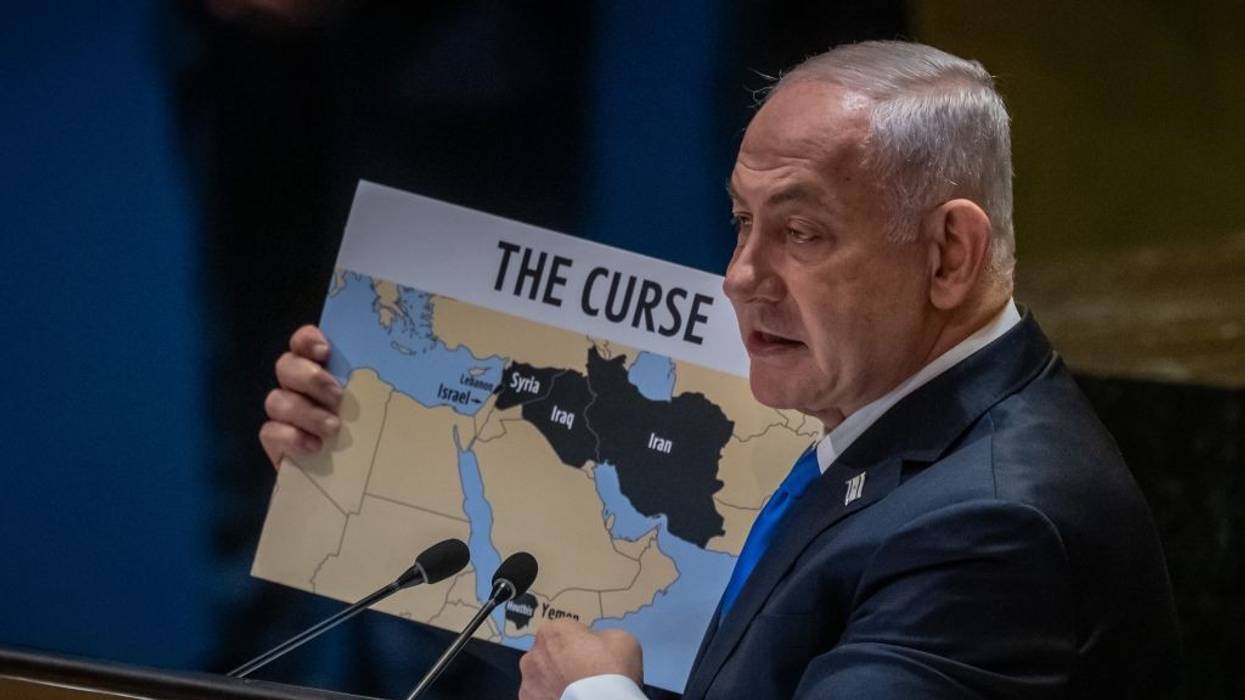
At the United Nations last week, Israeli Prime Minister Benjamin Netanyahu displayed a map of the region labelled “The Curse.” It showed a swath of the Middle East in black that encompassed Iran, Syria, and Iraq, with outposts in Lebanon and Yemen.
“It’s a map of an arc of terror that Iran has created and imposed from the Indian Ocean to the Mediterranean,” Netanyahu declared. “Iran’s aggression, if it’s not checked, will endanger every single country in the Middle East, and many, many countries in the rest of the world, because Iran seeks to impose its radicalism well beyond the Middle East.”
Israel has not been content to launch attacks against Iranian proxies. Back in April, Israel struck Iran’s diplomatic compound in Damascus, killing three senior Revolutionary Guards (IRGC) officials. Over the summer, in a brazen violation of Iranian sovereignty, it detonated a bomb inside a guest house in Tehran to assassinate a top Hamas leader. And in the most recent aerial attack on Beirut that killed Hezbollah leader Hassan Nasrallah, Israel also killed a top Iranian military official, Gen. Abbas Nilforushan of the IRGC.
These last two attacks have come after elections in July elevated a reformer to the presidency in Iran. They have come after Iran has given a number of indications that it is reevaluating its unremittingly hostile policy toward Israel. They have come after the Iranian government has showed signs of willingness to restart nuclear negotiations with the United States.
If Donald Trump wins the U.S. presidential election in November, Israel will once again have an ally that is equally committed to confronting Iran, militarily if necessary.
But if Kamala Harris wins, the stage will be set for a potential return to a détente in U.S.-Iranian relations.
Certainly, the Israeli government is interested in weakening both Hamas and Hezbollah. Certainly, it wants to push back against Iran on various fronts.
But perhaps the real motivation for Netanyahu right now in attacking Hezbollah and refusing a ceasefire in the conflict in Gaza is to goad Iran into retaliating and burying all hopes of a reconciliation between Washington and Tehran. This week, with Iran lobbing missiles at Israel, everything is so far going according to plan. What’s not yet clear is whether Netanyahu will reap a side benefit of making the Biden administration look foolish, thus elevating Trump’s electoral chances in November.
Imagine if Russia had somehow smuggled a bomb into Volodymyr Zelensky’s hotel room in Washington, DC and managed to assassinate him on his recent visit. The United States might very well use such an attack as a casus belli to declare war on Russia. The only thing that could stay Washington’s hand would be Russia’s nuclear arsenal and the potential for planetary annihilation.
Israel’s assassination of a Hamas official inside Iran at the end of July might have triggered an all-out war—if not for Israel’s nuclear arsenal. Of course, Tehran threatened revenge. Its retaliation for the attack on the Iranian compound in Syria, which took place two weeks later in mid-April, might have looked impressive: 300 missiles and drones aimed at Israel. But only a few evaded Israeli defenses, and there were no Israeli casualties.
Israel has an advantage over Iran in terms of intelligence and technology. How on earth did it smuggle a bomb into one of the most secure buildings in Iran and then trigger it at just the right moment to kill its target? And how did it manage to turn hundreds of pagers and walky-talkies into hand-held bombs that killed and injured Hezbollah operatives along with many Lebanese civilians? These were intelligence failures on the part of Iran and its proxies, to be sure, but they also reveal the patience, planning, and technological sophistication of the Israelis.
In other words, it’s not just Israel’s nukes that serve as deterrent.
In effect, Iran is practicing a policy of “strategic patience.” It knows that it’s outmatched in any conventional (or nuclear) conflict. In response to successful Israeli operations, its feckless missile attacks on Israel have been more theater than actual military campaign. In some cases, it has been even more restrained, for instance, after the death of three U.S. soldiers in Jordan in January when it instructed its allies not to escalate their attacks against U.S. targets.
In general, the successes that Iran and its allies have had against Israel have been in guerrilla warfare. “Hezbollah and Iran are conserving military resources and waiting for Israeli ground forces to enter a trap inside Lebanon territory,” former Iranian journalist Mohammad Mazhari concludes.
In its eagerness to “teach Hezbollah a lesson” and draw Iran into a wider war, Israeli forces may just be walking into that trap once again.
While Netanyahu beat the drum of the Iran threat at the UN, Iranian President Masoud Pezeshkian took a different tack in his speech to the General Assembly:
I embarked on my electoral campaign with a platform focused on “reform,” “national empathy,” “constructive engagement with the world,” and “economic development,” and was honored to gain the trust of my fellow citizens at the ballot box. I aim to lay a strong foundation for my country’s entry into a new era, positioning it to play a effective and constructive role in the evolving global order.
Pezeshkian also announced his willingness to work on reviving a nuclear agreement. What he said in private meetings was perhaps even more important. For instance, he promised to accept whatever agreement that Palestinians favored to end the conflict with Israel, which presumably includes the two-state solution that Iran has traditionally opposed because it would mean acknowledging Israel as a state.
Indeed, after replacing Ebrahim Raisi, who died suddenly in a helicopter crash last May, Pezeshkian has quietly charted a different trajectory for Iranian foreign policy. One important indication is the team that he has assembled. Head of the foreign policy team is Abbas Araghchi, who played a key role in orchestrating the 2015 nuclear deal with the United States and other countries. Javad Zarif, the face of Iran’s negotiating team that year, is now vice president for strategic affairs. The cabinet contains plenty of conservatives, but the foreign policy team is both ready and experienced in the politics of détente.
Outside observers ascribe Iran’s “tepid” response to attacks on Iranian territory and against allies like Hezbollah and Hamas to Iran’s relative weakness. “The biggest explanation appears to be simply that Iran is weaker than it wants the world to believe,” writes David Leonhardt in The New York Times. “And its leaders may recognize that they would fare badly in a wider war.”
Another explanation, however, is that the consensus inside Iran is shifting, not simply within the political establishment (which has swung from reformism to conservatism and back again) but within the governing religious bodies as well. This is not a doctrinal transformation so much as a coming to terms with different geopolitical realities, particularly within the Middle East.
Contrary to Netanyahu’s ominous presentation at the UN, Iran is not experiencing a massive expansion of its influence. To be sure, it can count on support from Syria, a significant share of Iraq’s population, and the three Hs: Hamas, Hezbollah, and the Houthis. But Syria’s still a mess, Iraq is divided, and the three Hs are reeling.
Meanwhile, Sunni powers in the region like Saudi Arabia, Egypt, and Turkey are ascendant. The Abrahamic Accords, pushed by Trump and embraced by Biden, rallied Sunni powers like the United Arab Emirates and Morocco to recognize Israel. Saudi Arabia was next in line when Hamas disrupted the looming rapprochement by attacking Israel on October 7. So concerned was Iran about the prospect of the Abrahamic Accords cutting it out of regional geopolitics that it concluded its own détente with Saudi Arabia in 2023 after seven years of severed relations.
The risk of regional escalation is large. This week, Iran fired missiles at Israel, though they have done limited damage. Israel wants an excuse to strike back against Iran, particularly against its nuclear complex. The United States has expanded its military footprint in the region as a visible sign of preparedness. Although Israel has declared that its invasion into Lebanon will be limited, the government has generally pursued maximalist goals—the destruction of Hamas and Hezbollah—even in the face of doubts from the Israeli Defense Forces.
The Israeli government aside, nobody wants a regional conflict. The Israeli government aside, everyone after October 7 has practiced a degree of restraint. Iran, in particular, has absorbed the kind of punishment that rarely goes without serious retaliation in today’s world of geopolitics. To a certain degree, it has satisfied demands both internally and externally for retaliation against Israel without inflicting any serious damage—like a short fired into the air in a duel. At some point, however, Iran might feel compelled to abandon its strategic patience and take more lethal aim at Israel.
To prevent a wider war, the Biden administration had best be conducting non-stop quiet discussions with Pezeshkian’s foreign policy team. Even while expressing support for Israel, the United States has to go over Israel’s head to negotiate with Iran. Benjamin Netanyahu is a problem that must be isolated somehow within Israel and somehow within the region.
But how to pry Netanyahu out of his office and put someone in his place with at least an ounce of pragmatism? The prime minister continues to wage war because war keeps him in power. So, too, did Antaeus draw strength from the earth until an opponent lifted him into the air to defeat him. That is the essential question today: figuring out a way to separate Netanyahu from war and thus deprive him of his power.
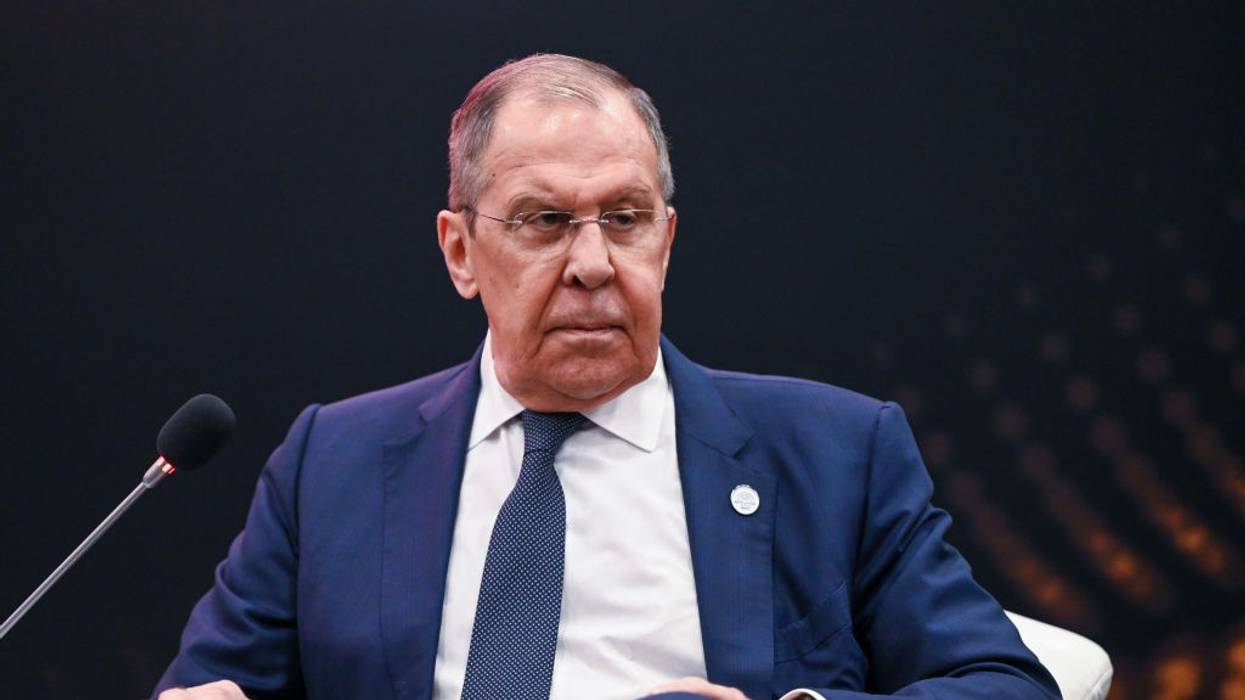
"They have a mindset of a master sitting somewhere out there overseas and believing to be totally safe and secure, thinking that not only Ukrainians, but also... Europeans would be willing to do the dirty work and die for them."
Russian Foreign Minister Sergey Lavrov on Tuesday warned the United States that if the war in Ukraine escalates into a wider military conflict, a potential World War III would not be limited to battlefields in Europe.
While taking questions from journalists two-and-a-half years after Russian President Vladimir Putin's invasion, Lavrov was asked to address recent reporting in The Guardian about Ukrainian President Volodymyr Zelenskyy wanting to use long-range Storm Shadow missiles that "threaten Moscow and St. Petersburg" to force Russia to the negotiating table.
As the British newspaper explained: "Storm Shadow missiles were developed primarily by an Anglo-French collaboration and are made by European joint venture MBDA, which also has an Italian partner. But because some of its components are supplied by the U.S., the White House also has to agree to its use inside Russia. It has so far refused to do so, fearing an escalation of the conflict."
Lavrov declared that "this is blackmail, an attempt to pretend that the West seeks to avoid any excessive escalation. In reality, they are full of mischief. Avoiding escalation is not what the West is after. To put it into plain language, they are simply picking a fight."
The longtime Russian minister also pointed to various remarks from John Kirby, the White House national security communications adviser, along the lines of what he said Friday: "We've been watching escalation risks since the beginning of this conflict, and that ain't gonna change. We're always going to be concerned about the potential for the aggression in Ukraine to lead to escalation on the European continent."
Lavrov said that "for Americans, any talk about the Third World War comes down to something that would affect Europe alone, and God forbid if it ever happened. This is quite telling, since this idea reflects the mindset of the American planners and geostrategy experts who believe that they can simply sit the whole thing out. I think that it is important to understand in this situation that we have our own doctrine, including the one governing the use of nuclear weapons. An effort to update it is underway."
"Moreover, these Americans are well aware of the provisions it sets forth. This fact transpires from the Freudian slips they make when they say that having a Third World War would be a bad thing because they do not want Europe to suffer," he continued. "This is what this American mindset comes down to. They have a mindset of a master sitting somewhere out there overseas and believing to be totally safe and secure, thinking that not only Ukrainians, but also, as it turns out, Europeans would be willing to do the dirty work and die for them."
"We have long been hearing speculation about authorizing Ukraine to use not only the Storm Shadow missiles, but also U.S.-made long-range missiles," the minister noted. "Now, all we can do is confirm once again that playing with fire is a dangerous thing for the men and women in charge of nuclear weapons across the Western world, but they are playing with matches as if they never grew up."
While there are nine nuclear-armed nations, the United States and Russia collectively have roughly 90% of the global arsenal. Since the Kremlin launched its invasion in February 2022, as the U.S. and Europe have armed Ukraine's soldiers, Putin and other Russian officials—along with NATO Secretary-General Jens Stoltenberg—have stoked fears of nuclear weapons use.
Mikhail Sheremet, who represents Crimea—which Russia invaded and annexed from Ukraine a decade ago—in Russia's State Duma, told TASS on Tuesday that the U.S. should consider the consequences of giving Ukrainian troops long-range cruise missiles.
"The ball is now in the U.S.' court but it's clearly finding it difficult to play the game because it will have to take reality into consideration and carefully weigh everything before passing the ball to Ukraine, which aims to drag the U.S. and Europe into a potential World War III," Sheremet told the Russian news agency.
"Undoubtedly, the U.S. will try to implement its far-reaching aggressive plans to provide cruise missiles to the Kyiv regime. They will probably try to do that through Europe, which they have under their thumb," he added. "But in any case, the price of this decision will be too high for them to pay, leading to the loss of their own statehood."
Earlier this month, Ukraine attacked Russia's Kursk region and "has carved out a slice of territory in the biggest foreign attack on Russia since World War II," Reuters reported Tuesday. As the outlet detailed:
Russia has said that Western weaponry, including British tanks and U.S. rocket systems, have been used by Ukraine in Kursk. Kyiv has confirmed using U.S. HIMARS missiles to take out bridges in Kursk.
Washington says it was not informed about Ukraine's plans ahead of the surprise incursion into Kursk. The United States has also said it did not take any part in the operation.
Multiple Russian government officials have made clear that they don't believe those U.S. claims.
Still, based on interviews that Anatol Lieven of the Quincy Institute for Responsible Statecraft recently conducted with "members of the Russian establishment, including former diplomats, members of think tanks, academics, and businesspeople, as well as a few members of the wider public," the majority of them want "an early cease-fire roughly along the existing battle lines."
"Most of my conversations took place before the Ukrainian invasion of the Russian province of Kursk. As far as I can make out, however, this Ukrainian success has not changed basic Russian calculations and views," Lieven wrote Tuesday for Foreign Policy.
"In the end, of course, Russia's negotiating position will be decided by Putin—with whom I did not speak," he acknowledged. "Nobody I spoke to in Moscow claimed to know for sure what Putin is thinking. However, the consensus was that while he made terrible mistakes at the start of the war, he is a pragmatist capable of taking military advice and recognizing military reality."
We need our tax dollars for healthcare, climate, and education—not war and destruction.
f you looked at the U.S. military budget without knowing otherwise, you’d probably guess we were in World War III.
Our military spending is now the highest it’s been at any point since World War II — and Congress keeps adding more. The House of Representatives just passed legislation that will take military spending to $895 billion, while the Senate Armed Services Committee passed a bill that would total $923 billion.
Those totals don’t even include the military aid to Ukraine and Israel that was included in the $95 billion war package Congress passed this spring. We’re teetering closer and closer to a $1 trillion military budget.
Adjusting for inflation, the last time the national security budget topped $1 trillion was in 1945, the final year of World War II.
Unlike a world war, there’s nothing happening today that can justify this level of spending. Even the war in Ukraine and the decimation of Gaza (which is being carried out with U.S.-supplied weapons) account for just a small fraction of overall spending.
So what’s all this spending for?
We need members of Congress to do three things: focus on the problems we do have, stop trying to rule the world, and have the spine to say no to military contractors.
It’s to keep the U.S. military machine running as it has since World War II, with the more or less explicit goal of global military domination. That goal is shared by many in Congress. But members of Congress also receive constant encouragement — and campaign funds — from for-profit, corporate military contractors who can expect to receive about half of the total military budget.
But it turns out that global military dominance is pretty expensive. And luckily, it’s not at all necessary to safeguard U.S. security.
After 20 years of disastrous wars in Iraq and Afghanistan, too many in Congress and military leadership haven’t learned that having the biggest, strongest military in the history of the world costs a lot — more than $21 trillion in the first 20 years of the millennium — but doesn’t make the world any safer.
Senator Roger Wicker (R-MS) called for adding another $55 billion to the already-gargantuan Pentagon budget — supposedly justified by competition with China. But the U.S. military budget is already more than three times higher than China’s.
Many experts agree that the military threat from the Chinese has been oversold. But whatever threats the U.S. faces, it should say something more troubling about the U.S. military if we can’t achieve security by spending more than three times what an adversary spends.
Anyone genuinely concerned with the security of the American people should be more concerned about that $1 trillion military budget. The obsession with China and world dominance is bleeding our public coffers. This is money that can’t be invested in infrastructure, education, health care, or other necessities to keep our own country functioning.
Meanwhile, as another summer starts, we face growing bills for disaster relief from floods and heat waves to storms and wildfires. In a world where climate change is making these disasters more frequent, we have to start budgeting for those expenses and doing more to limit the damage by transitioning to renewable energy.
Even a fraction of the $1 trillion soon to be spent on the military would go a long way to making life safer on each of these fronts.
Luckily, we don’t face the same problems the world did in 1945 — and we don’t need a World-War-III-level military budget. Instead, we need members of Congress to do three things: focus on the problems we do have, stop trying to rule the world, and have the spine to say no to military contractors.
Only then will we have a budget designed for 2024, not 1945.

In the process of watching Gaza burn, it would be good to remember that we’re also turning the whole planet into a Gazan-style catastrophe. It’s just happening in relative slow motion.
Imagine this: humanity in its time on Earth has already come up with two distinct ways of destroying this planet and everything on it. The first is, of course, nuclear weapons, which once again surfaced in the ongoing nightmare in the Middle East. (An Israeli minister recently threatened to nuke Gaza.) The second, you won’t be surprised to learn, is what we’ve come to call “climate change” or “global warming” — the burning, that is, of fossil fuels to desperately overheat our already flaming world. In its own fashion, that could be considered a slow-motion version of the nuking of the planet.
Put another way, in some grim sense, all of us now live in Gaza. (Most of us just don’t know it yet.)
Yes, if you actually do live in Gaza, your life is now officially a living (or dying) hell on Earth. Your home has been destroyed, your family members wounded or killed, the hospital you fled to decimated. And that story, sadly enough, has been leading the news day after day for weeks now. But in the process, in some sense even more sadly, the deepest hell of our time has largely disappeared from sight.
I’m thinking about the urge to turn our whole planet into a long-term, slow-motion version of Gaza, to almost literally set it ablaze and destroy it as a habitable place for humanity (and so many other species).
Yes, in the midst of the ongoing Middle Eastern catastrophe, the latest study by James Hanson, the scientist who first sounded the climate alarm to Congress back in the 1980s, appeared. In it, he suggested that, in this year of record temperatures, our planet is heating even more rapidly than expected. The key temperature danger mark, set only eight years ago at the Paris climate agreement, 1.5 degrees Centigrade above the pre-industrial level, could easily be reached not in 2050 or 2040, but by (or even before) 2030. Meanwhile, another recent study suggests that humanity’s “carbon budget” — that is, the amount of carbon we can put into the atmosphere while keeping global temperature rise at or under that 1.5-degree mark — is now officially going to hell in a handbasket. In fact, by October, a record one-third of the days in 2023 had broken that 1.5-degree mark in what is undoubtedly going to prove another — and yes, I know how repetitive this is — record year for heat.
Oh, and when it comes to the globe’s two greatest greenhouse gas emitters, China is still opening new coal mines at a remarkably rapid pace, while the U.S., the world’s biggest oil producer, is expected to have “a third of planned oil and gas expansion globally between now and 2050.” And the news isn’t much better for the rest of the planet, which, given the dangers involved, should be headline-making fare. No such luck, of course.
Setting the Planet Afire
In fact, I’ll bet you hardly noticed. And I’m not surprised. After all, the news could hardly be worse these days in a country that, however indirectly, seems distinctly bound for war. There’s Ukraine, turning into ever more of a disaster zone by the week; there’s Israel, Gaza, and the West Bank promising yet more of the same, whether you’re listening to Hamas or Benjamin Netanyahu (with American military activity increasing in the region as well); and then there’s that “cold war” between the U.S. and China — yes, I know, I know, President Biden and China’s President Xi Jinping actually met and chatted recently, including about climate change — but don’t hold your breath when it comes to truly improving relations.
And yet, if you were to look away from Gaza for a moment, you might notice that significant parts of the Middle East have been experiencing an historic megadrought since 1998 (yes, 1998!). The temperatures baking the region are believed to be “16 times as likely in Iran and 25 times as likely in Iraq and Syria” thanks to the warming caused by the burning of fossil fuels. Meanwhile, if you take a skip and a jump from the flaming Middle East to Greenland, you might notice that, in recent years, glaciers there have been melting at — yes, I know this sounds unbearably repetitious — record rates (five times faster, in fact, in the last 20 years), helping add to sea level rise across the planet. And mind you, that rise will only accelerate as the Arctic and Antarctic melt ever more rapidly. And perhaps you won’t be surprised to learn that the Arctic is already warming four times faster than the global average.
If you have the urge to put all of this in context for 2023, you need to remind yourself that we’re now ending November, which means a final accounting of the devastation wrought by climate change this year isn’t quite in. Admittedly, it’s already been one hell of a year of record heat and fires, floods, extreme drought, and so on (and on and on). You’ve probably forgotten by now, but there were those record heat waves and fires — and no, I’m not thinking about the ones that swept across Europe or that broiled parts of Greece amid record flooding. I’m thinking about the ones in Canada that hit so much closer to home for us Americans. The wildfires there began in May and, by late June, had already set a typical seasonal record, only to burn on and on and on (adding up to nine times the normal seasonal total!) deep into October, sending billows of smoke across significant parts of the United States, while setting smoke pollution records.
Nor is the news exactly great when it comes to climate change and this country. Yes, heat records are still being set month by month this year in the U.S., even if the record highs are still to be fully tallied. Just consider those 55 days in which our sixth largest city, Phoenix, suffered temperatures of 110 degrees or more (31 of them in a row), resulting in a heat version of Gazan casualties, a 50% surge in the deaths mostly of seniors and the homeless to almost 600. A recent congressionally mandated report released by the Biden administration on global warming found that this country is actually heating up faster than the global average. “The climate crisis,” it reported, “is causing disruption to all regions of the U.S., from flooding via heavier rainfall in the northeast to prolonged drought in the southwest. A constant is heat — ‘across all regions of the U.S., people are experiencing warming temperatures and longer-lasting heatwaves’ — with nighttime and winter temperatures rising faster than daytime and summer temperatures.”
A Planetary Gaza?
For some global context, just consider that, in 2022, the planet’s greenhouse gas concentrations in the atmosphere were the highest on record, according to the National Oceanographic and Atmospheric Administration. So were the temperatures of ocean waters, while sea levels rose for the 11th straight year! There were also record-shattering heat waves across the planet and that was the way it all too disastrously went.
And yet none of that will hold water (or do I mean fire?), it seems, when it comes to 2023, which is clearly going to set another heat record. After all, we already know that, month by sweltering month, from November 2022 to the end of October 2023, a major heat record was set that seemingly hadn’t been topped in the last 125,000 years. It’s a near certainty as well that this full year will prove similarly record-breaking. And given the way we humans are still burning fossil fuels, we won’t have to wait another 125,000 years for that to happen again. The odds are, in fact, that 2024 will indeed set another global heat record.
So, tell me, how’s that for a planetary Gaza? And yet, strangely enough, while the nightmare in the Middle East is being covered daily in a dramatic fashion across the mainstream media, often by brave reporters like the PBS NewsHour‘s Leila Molana-Allen, the burning of the planet is, at best, a distinctly secondary, or tertiary, or… well, you can fill in the possible numbers from there… reality.
The sad truth of it is that there aren’t enough reporters spending their time on the front lines of global warming and nowhere do I see the staff members of up to 40 government agencies protesting over the weakness of climate-change policy the way so many of them recently did over the Biden administration’s policies on Israel and Gaza. While every night we venture into the devastated Gaza Strip with reporters like Molana-Allen (not to speak of the 41 journalists who died in the first month of that conflict), rare is the night when we do the same in our overheating world. All too few journalists are focusing on the humans already being driven from their homes, experiencing (and even dying from) unprecedented heat, storms, flooding, and drought.
Nor are there many reporters stepping directly into the flames. I’m thinking, in this case, of the coverage (or lack of it) of the drilling for or mining of fossil fuels, the companies making record profits — absolute ongoing fortunes — off them, while their CEOs are pulling in unbelievable sums yearly, even as the ferocious burning of their products continues to pour carbon into the atmosphere.
And mind you, fossil-fuel emissions are still — a word that once again seems all too appropriate — hellishly high. Yes, the International Energy Agency does expect such emissions to peak before 2030, if not earlier. Still, we humans are going to be burning coal, oil, and natural gas for one hell (that again!) of a long time and those fossil-fuel companies will continue making fortunes while damaging all our lives and those of our children and grandchildren into the distant future.
There’s no question that Gaza has truly been a hell on Earth. Deaths in that small strip of land had already exceeded 11,000 (many of them children) while I was writing this. Meanwhile, from hospitals to homes, Israeli bombs and missiles have turned staggering amounts of its living (or now dying) spaces into rubble. And that is indeed a horror that must be covered (just as the nightmarish initial Hamas attack on Israel was). But in the process of watching Gaza burn, it would be good to remember that we’re also turning the whole planet into a Gazan-style catastrophe. It’s just happening in relative slow motion.
World War II ended in September 1945 and since then — despite endless wars — there hasn’t been another “world” version of one. Gaza and Ukraine remain horrific but relatively localized, just as the Korean and Vietnam conflicts once were.
But while, whatever the horrors and damage done, there hasn’t been another world war, there has been and continues to be a war on the world, a slow-motion global Gaza that will only grow worse unless we put our energy into moving ever faster to transition from coal, natural gas, and oil to alternative energy sources. In truth, that is the war we should all be fighting, not the ones that distract us from the worst dangers we face.
In fact, it’s past time to start talking about World War III, even if this time it’s a war on the planet itself.