

SUBSCRIBE TO OUR FREE NEWSLETTER
Daily news & progressive opinion—funded by the people, not the corporations—delivered straight to your inbox.
5
#000000
#FFFFFF
To donate by check, phone, or other method, see our More Ways to Give page.
Daily news & progressive opinion—funded by the people, not the corporations—delivered straight to your inbox.

One group said that the proposal "puts poor and working families that rely on HUD assistance at greater risk of danger, displacement, and homelessness."
Housing and environmental advocates on Tuesday condemned the Trump administration’s planned rollback of flood protections for federally funded housing, warning that the move will leave low-income households exposed to increasingly severe climate-driven flooding while shifting more costs to taxpayers.
In July, the US Department of Housing and Urban Development (HUD) proposed rescinding key portions of the Federal Flood Risk Management Standard (FFRMS), a Biden-era policy that required federally financed projects in areas prone to flooding to account for current and future inundation risks.
Proponents of the move, which would strip a layer of federal flood requirements, argue that local governments know their flood conditions better than Washington bureaucrats.
However, the National Housing Law Project (NHLP), a San Francisco-based advocacy group, warned Tuesday that the proposal "puts poor and working families that rely on HUD assistance at greater risk of danger, displacement, and homelessness by reducing notification and mitigation requirements for homes that are vulnerable to flooding."
NHLP called the move "part of the Trump administration’s attempt to dismantle the government programs that keep people housed, safe, and healthy."
On Tuesday, NHLP submitted a comment to HUD noting that “flooding events have become more frequent and widespread, and put the health, safety, and livelihood of low-income families at risk."
"Tenants displaced from federally subsidized housing face an even more acute crisis, because they often endure temporary or permanent loss of their housing assistance,” the group added. “Due to the personal and societal harm of extreme flooding events, HUD should work toward increasing the resilience of HUD-assisted properties. This proposed rule does the opposite.”
The proposed FFRMS rescission is part of the broader regulatory rollback that began during President Donald Trump's first term. In 2017, Trump repealed Obama-era executive orders that had updated the federal flood standard for the first time since the Carter administration and established regulations meant to ensure that federally funded infrastructure projects were climate-resilient.
In March, Trump issued an executive order directing federal agencies to identify and eliminate regulations deemed unnecessarily costly or burdensome to housing construction.
Responding to HUD's proposed FFRMS rollback, Liz Zepeda, federal regulatory director at the Virginia-based legal advocacy group Southern Environmental Law Center, said in July that “it’s discouraging to see the federal government ignore climate science and put some of our most vulnerable communities at greater risk, especially as we head into hurricane season."
"Reckless deregulation like this is why we need Congress to step up and pass reasonable emergency management policies,” Zepeda added.
In 2021, an NPR investigation revealed that, dating back to at least the Obama administration, the federal government sold homes it had previously purchased after repeated flooding to new buyers—often without adequately informing them about the properties’ flood histories and risks.
Historical data compiled by the National Oceanic and Atmospheric Administration show 45 billion-dollar flooding disasters between 1980-2024 that caused an estimated $215 billion in combined damages, adjusted for inflation. As the climate emergency worsens, the frequency and severity of such flooding have increased dramatically, from an average of 3.3 billion-dollar disasters in the 1980s, to 6.7 in the 2000s, to 23 in the 2020s.
"Policymakers must pursue creative, tangible, and lasting solutions that bring homeownership back into reach."
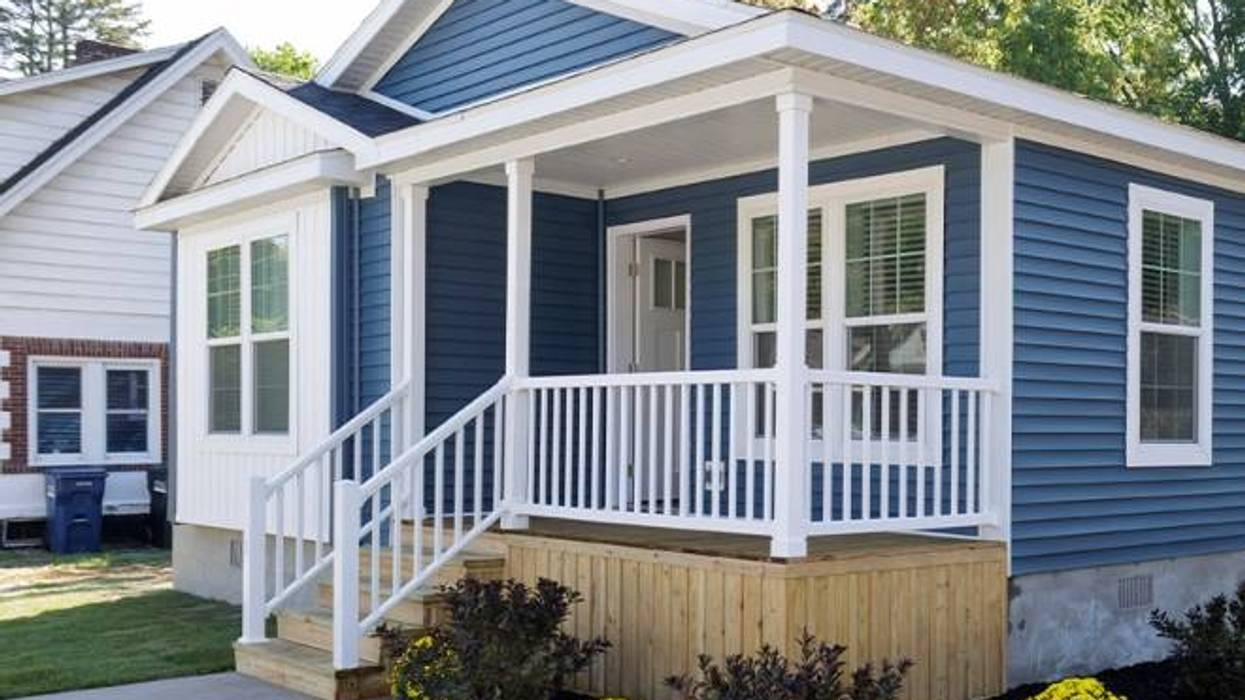
As young families are increasingly priced out of the housing market, a group of economic researchers is pushing to revive an idea from the past to bring the distant dream of homeownership back within reach: mass-produced homes.
A report published Wednesday by the Groundwork Collaborative proposes a federal program to subsidize the creation of 500,000 prefabricated houses over the next eight years—starter homes that they estimate would be drastically more affordable than the ones currently on the market.
The report was written by three economic policy analysts who served under former President Joe Biden: Noah Ball-Burack and Emily DiVito, who worked on policy for the Treasury Department, and Alex Jacquez, who was Biden's special assistant for economic development and industrial strategy at the White House National Economic Council.
The proposal draws from history: From 1908-40, around 75,000 Americans ordered mass-produced homebuilding kits from Sears, Roebuck & Co. through catalogs, which provided pre-cut lumber, doors, windows, and other materials to construct a home that ended up being considerably cheaper to build than those constructed conventionally.
These "Sears homes" were not only fully functional but also durable: More than 80 years after the program was discontinued, thousands of them are still standing today.
Groundwork's researchers argued that, by marshaling the government's resources, a modern Sears home program could go great lengths toward combating the housing affordability crisis.
"For too many families, homeownership has gone from a milestone to a mirage. Decades of under-building have left us with an affordable housing shortage that’s pricing people out of their communities," DiVito said. "Policymakers must pursue creative, tangible, and lasting solutions that bring homeownership back into reach. The Modern Sears Home program does just that.”
The group called for Congress to appropriate between $44 billion and $75 billion over eight years—less than the US spends on the military in a single month—to guarantee large orders of factory-built homes, acquire and prepare land for them, and then sell the completed houses to eligible buyers with government-backed affordable mortgages.
They estimate that factory-produced single-family homes could be sold for roughly $170,000-$215,000 each. That's around half the median price of a new single-family home, which has increased nearly 25% since the start of the decade.
"Sears offered these homes for profit," the researchers wrote. "The federal government—with greater resources, lower borrowing costs, and unmatched power to scale—can do it better."
Unlike private capital, the Department of Housing and Urban Development (HUD), which would administer the program, doesn't have a profit motive and is capable of guaranteeing large amounts of demand so that manufacturers can build scale.
And since the goal is to ensure that people are housed rather than to increase profit margins, the researchers argued that the homes are less vulnerable to the fluctuations of the housing market, which currently disincentivizes lowering rent.
"Private developers build only when projects pencil, meaning that expected rents, net of construction and financing costs, clear the rate of return their investors demand," the report explains. "This math ties new housing supply to high rents. If rents begin to fall, private capital will walk away.”
The researchers argued that their proposal would not just benefit those who are able to purchase new Sears homes, which HUD would target at households earning 60%-100% of a local area's median income, but everyone in the housing market, by driving up supply.
"Sustainably lowering housing prices relative to other prices in the economy requires public investment," they wrote. "The government can either build housing itself or finance private construction at below-market returns. It should do both.”
The proposal comes as pre-fab homes are being viewed increasingly as a policy solution to confront the housing crisis and as an opportunity for developers looking to attract young homebuyers.
Eager to build cheap starter homes fast, developers are experimenting with entire subdivisions of factory-built houses, as The Washington Post reported on Wednesday.
New York state, meanwhile, is trying out a miniature version of what Groundwork has proposed, building 1,500-square-foot homes in Syracuse, Schenectady, and Newcomb. The state has completed three homes so far and awarded funding for 211 more.
According to a 2023 report by the Harvard Joint Center for Housing Studies, these kinds of higher-end manufactured homes, known as "CrossMods," cost 27% less on average compared to an identical home built on-site.
The ones that have gone up in New York have borne out these cost-saving projections. They took about a third of the time to construct as traditional homes and cost about $250,000 to build and install, about half the cost of a comparable house, according to the state's affordable housing agency.
An affordable housing law that passed Congress in June also took steps toward expanding factory-built housing with a bipartisan bill passed last month that removed regulatory barriers to manufactured homes and sought to make construction easier to finance. However, the law does not provide any new federal funding for housing production.
The researchers said this was a good start that could help speed up the process of building homes. But they said it was far too narrow to really address the problem.
"It will take a government willing to act not at the margins of the market, but at its center—financing cheaply, building at scale,” they wrote. "The technology and policy levers to realize this vision already exist. The question is not whether the federal government can act at this scale—but whether it will."
"While claiming to protect all Americans, the administration is rolling back systems that communities have long turned to for relief.”
Eighteen months into President Donald Trump's second term in the White House, the administration has systematically gutted the infrastructure within the federal government that for decades had worked to ensure that civil rights and anti-discrimination laws were being enforced—and has turned agencies "against the communities they were meant to protect," as one researcher at Human Rights Watch said Thursday.
In a new report, the organization detailed how four key agencies have been substantially weakened since Trump took office and almost immediately, with the help of tech billionaire Elon Musk and the Department of Government Efficiency, set about slashing the federal workforce and demanding that the civil servants who remained be "fully on board" with the president's right-wing agenda.
The report, titled "Remedies Abandoned: US Civil Rights Enforcement Under the Trump Administration," explains how the US Department of Justice's (DOJ) Civil Rights Division lost about 75% of its attorneys after the White House told staff that they were not to operate independently from the president; the Office of Civil Rights (OCR) at the Department of Education closed more than half of its regional offices and laid off nearly half its staff in one day; the Fair Housing Office at the Department of Housing and Urban Development (HUD) shrank from 31 staffers to 11; and the Equal Employment Opportunity Commission reached its lowest staffing level in over four decades.
With the federal civil rights enforcement workforce decimated, the White House has abandoned discrimination complaints at the four agencies and has carried out demands outlined in Project 2025, the right-wing policy blueprint put forward by the Heritage Foundation. In addition to pushing for the administration to reclassify civil servants like those who were pushed out of their civil rights enforcement roles, the document called for presidential control of the Justice Department and an end to "disparate impact enforcement."
In April 2025, three months after taking office, Trump signed an executive order directing all federal agencies to eliminate their analysis of disparate impact—the framework that confronts discriminatory policies based on their impacts rather than their intent—to the "maximum degree possible."
Disparate impact analysis, said HRW, "allows people to challenge hiring criteria, lending practices, school discipline policies, and housing regulations that produce discriminatory outcomes even when no one can identify a smoking gun like a policy that explicitly says 'exclude Black applicants.'"
The executive order and related directives that followed had a sweeping impact, with HUD dropping seven major housing discrimination and environmental justice cases months later, after they had been ongoing for years.
For example, the agency informed Chicago officials it would no longer monitor the civil rights agreement that had required zoning reform to end concentrated industrial pollution in Black and Latino neighborhoods.
"Department leadership said it would no longer treat environmental harms as fair housing violations in situations without explicit indication of intentional discrimination, in line with President Trump’s April 2025 order seeking to end disparate impact enforcement," reads the HRW report.
HUD has closed at least 115 fair housing complaints without issuing findings on the claims of discrimination, and career attorneys at the agency filed a whistleblower complaint last September showing they'd been barred from contacting complainants and working with the DOJ to resolve the matters.
"One of the ways we know that our democracy is functioning and healthy is that your rights don't just disappear because the political winds shift," said Trey Walk, a US program researcher at HRW.
NEW: The Trump administration has gutted federal civil rights enforcement in the United States, leaving the people the laws were built to protect without adequate remedies.
In a new report, HRW documents the administration’s efforts to unravel the work of four key agencies… pic.twitter.com/4VADDpmFDR
— Human Rights Watch (@hrw) August 13, 2026
The Education Department's OCR also appears to have resolved no racial harassment cases in 2025, despite the fact that in 2024, such complaints reached a new record among Black and Latino students.
The case of a 12-year-old boy in Lubbock, Texas, who had been interrogated by school officials without his parents present and falsely accused of a sexual offense, had been close to being resolved when the OCR office for the region abruptly closed in March 2025. When an attorney for families in Lubbock who had had open cases emailed the federal investigator who had been working on the complaints, they received an autoreply, saying the employee no longer had access to any of the case files.
"Numbers illustrate the scale of abandonment," reads the report. "With 11,985 education-related civil rights cases pending when the administration took office, OCR reached just 112 resolution agreements across all of 2025—1% of the caseload, and 78% fewer than the year before on the same budget. OCR reported no resolution agreements for sexual harassment, none for sexual violence, none for racial harassment, none for discriminatory school discipline, and none for seclusion and restraint of students with disabilities. The 2025 case resolution number is low, even compared to previous years when the agency was not adequately staffed or funded."
Walk said that the Trump administration "is targeting efforts to address discrimination without offering any alternatives. While claiming to protect all Americans, the administration is rolling back systems that communities have long turned to for relief.”
More than half of OCR's nationwide staff were among the 1,300 Education staffers whose jobs were cut in a single day in March 2025. Vince L., a career attorney at OCR who was one of 40 people interviewed by HRW for the report, said that in the administration's first weeks, he and his colleagues had received a directive essentially saying: "Stop all work. Decimate staffing. Divert resources to political witch hunts."
"Seven of 12 regional offices shut with no notice," he said. "Some people didn’t even know until their computers didn’t work. You’d come in the next morning and your badge wouldn’t work. That’s how you’d find out you were being terminated.”
Similar scenes played out at the DOJ's Civil Rights Division, where an attorney identified as Gloria A. described how the department's independence from the White House "flew out the window" early in Trump's term when lawyers were directed to carry out the president's political agenda.
“We viewed ourselves as attorneys for the United States,” another civil rights lawyer who was reassigned to complete administrative work, told HRW. “Which is different.”
A significant sign of the gutting of civil rights enforcement at the DOJ came when the agency moved to dismiss multiple consent decrees to reform police departments.
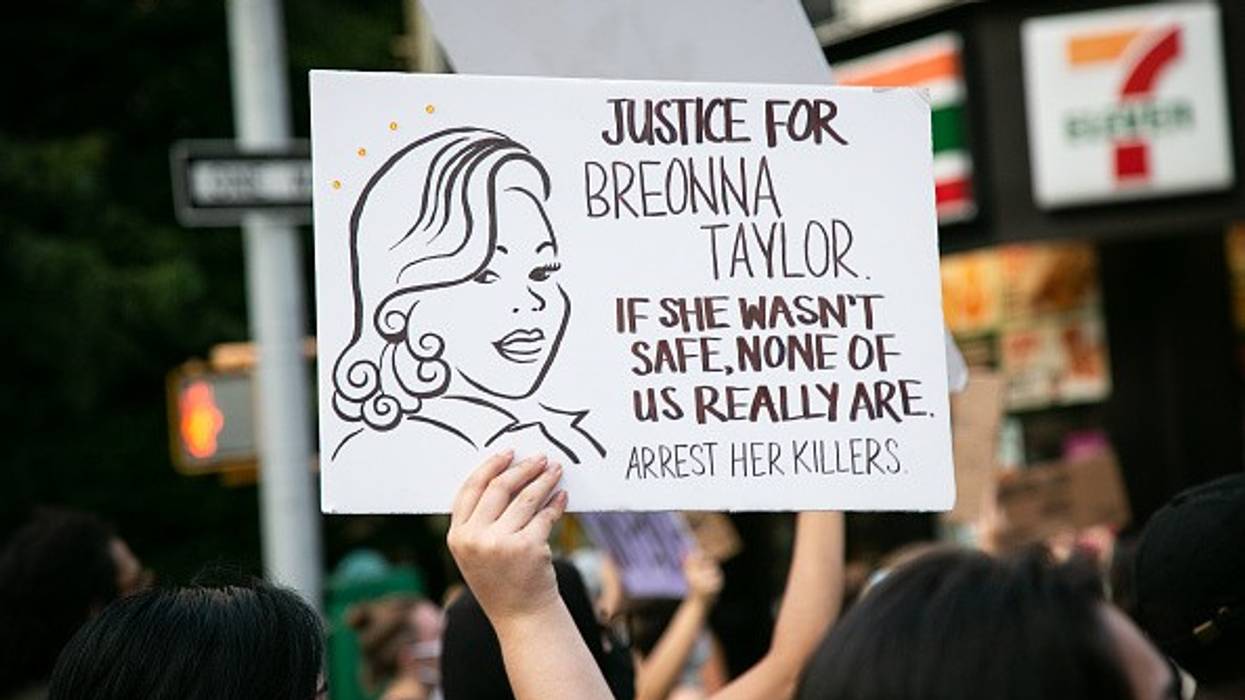
A two-year DOJ probe had found a pattern of racially discriminatory force by the Louisville Metro Police Department, where officers fatally shot Breonna Taylor in 2020, but the DOJ moved to dismiss the consent decree that had demanded reform at the police department just six months after it was signed.
A similar consent decree was dismissed around the same time, in May 2025, in Minneapolis—almost exactly five years after George Floyd was murdered by a police officer there.
"At least four other consent decrees to reform police departments across the US were dismissed in the same period," reads the report. "In each case, the department withdrew before any independent finding that the underlying violations had stopped."
HRW called on Congress to conduct oversight hearings on "the collapse of enforcement capacity at key federal agencies" and urged state legislatures to pass or strengthen disparate impact standards, create or fund state fair housing enforcement agencies with investigative authority, and create private rights of action under state law for discrimination claims previously only covered by federal enforcement.
It called on state agencies to expand intake capacity to take complaints currently not being accepted at the federal level and urged state attorneys general to consider challenging federal agency decisions, including case closure policies that have harmed state residents.
The group emphasized that it was not making formal recommendations to the White House or any federal agencies.
"The leadership of these agencies have not demonstrated good faith interest in improving anti-discrimination enforcement in the US," said HRW. "The immediate remedies lie with Congress, state and local actors, the media and civil society, and international bodies. A future administration will need to rebuild what has been dismantled by this executive branch."