

SUBSCRIBE TO OUR FREE NEWSLETTER
Daily news & progressive opinion—funded by the people, not the corporations—delivered straight to your inbox.
5
#000000
#FFFFFF
To donate by check, phone, or other method, see our More Ways to Give page.
Daily news & progressive opinion—funded by the people, not the corporations—delivered straight to your inbox.
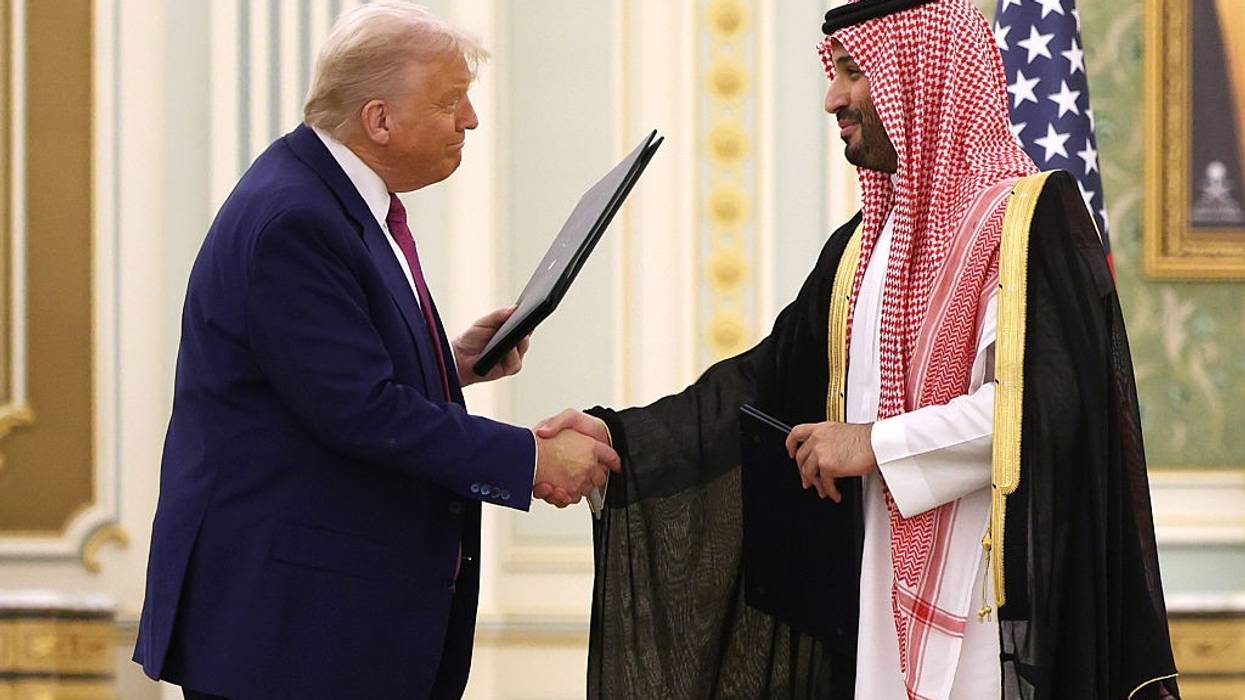
"I like him a lot," Trump said of Saudi Crown Prince Mohammed bin Salman, a prolific human rights violator. "I like him too much."
In what the White House described as "the largest defense sales agreement in history," U.S. President Donald Trump on Tuesday announced a deal for prolific human rights violator Saudi Arabia to purchase $142 billion worth of arms from a dozen different American companies.
The White House unveiled the sale as Trump visited Saudi leaders including Crown Prince Mohammed bin Salman in the kingdom's capital city of Riyadh on the first leg of a Mideast tour, with stops also scheduled in Qatar and the United Arab Emirates.
A fact sheet published by the executive office said the arms sale involves "air force advancement and space capabilities, air and missile defense, maritime and coastal security, border security and land forces modernization, and information and communication systems upgrades."
"Oh, what I do for the crown prince."
Reuters reported that military-industrial complex titans including Lockheed Martin, RTX—formerly Raytheon—Boeing, Northrop Grumman, and General Atomics are involved in the deal. The U.S. and Saudi Arabia reportedly discussed the potential sale of Lockheed Martin F-35 fighter jets to the kingdom, but it remains unclear if the Trump administration will allow the transfer of the highly advanced warplanes.
The agreement is part of a broader Saudi commitment to invest $600 billion in the United States, which the White House said will "strengthen our energy security, defense industry, technology leadership, and access to global infrastructure and critical minerals."
Trump and his relatives, including son-in-law Jared Kushner, enjoy close personal and financial relations with the Saudi royal family, which has poured billions of dollars into their business ventures.
During a signing ceremony, Trump—who apparently fell asleep during the proceedings—joked that the Saudis should invest $1 trillion.
Business leaders including Tesla and SpaceX CEO Elon Musk—who is also the de facto Department of Government Efficiency chief—OpenAI CEO Sam Altman, IBM CEO Arvind Krishna, CitiGroup CEO Jane Fraser, and the heads of investment firms including BlackRock, Franklin Templeton, and Blackstone Group also traveled to Saudi Arabia.
Critics including congressional progressives and anti-war groups have long opposed U.S. arms sales to Saudi Arabia, which stands accused of a litany of human rights violations including bombing and starving civilians in Yemen, massacring African migrants, and the 2018 murder of journalist and U.S. resident Jamal Khashoggi.
In 2019, during Trump's first term, Congress passed three bipartisan bills aimed at blocking an $8 billion arms sale to Saudi Arabia and its coalition partner in the U.S.-backed war on Yemen, the United Arab Emirates. Trump vetoed the legislation. His successor, former President Joe Biden, paused U.S. arms transfers to Saudi Arabia and the UAE but subsequently lifted the freeze despite pleas from human rights defenders.
The record arms sale comes amid Trump's effort to broker a diplomatic normalization deal between Saudi Arabia and Israel. The president is no longer demanding that the Saudis normalize relations with Israel as a precondition for a civilian nuclear cooperation deal, a move that reportedly alarmed Israel's far-right government.
Trump lavished praise on the Saudi monarchy in a rambling speech in Riyadh on Tuesday, hailing bin Salman as an "incredible man."
Trump gushes over MBS: "We have great partners in the world, but we have none stronger and nobody like the gentleman right before me. He's your greatest representative. And if I didn't like him, I'd get out of here so fast. He knows me well. I do. I like him a lot. I like him too much."
[image or embed]
— Aaron Rupar (@atrupar.com) May 13, 2025 at 9:01 AM
"We have great partners in the world, but we have none stronger, and nobody like the gentleman that's right before me, he's your greatest representative, your greatest representative," Trump said. "And if I didn't like him, I would get out of here so fast. You know that don't you? He knows me well."
"I do, I like him a lot. I like him too much, that's why we give so much, you know?" the president continued. "Too much. I like you too much!"
"Oh, what I do for the crown prince," he added.
Trump also announced that the U.S. would lift sanctions on Syria and restore relations with the country's new government, a move the peace group CodePink called "good news."
"The bad news is he's making new arms deals with Saudi Arabia, jeopardizing diplomacy with Iran, and continuing to ignore the U.S. and Israel's genocide in Gaza as they drop bombs on hospitals," the group added.

We all have a choice to hold ourselves accountable in the face of Dr. King's warning that we are approaching spiritual death.
Over the past three years, a collective of volunteer researchers, lawyers, and commentators created The Merchants of Death War Crimes Tribunal, dedicated to holding accountable four weapon manufacturing corporations based in the U.S. Their tribunal amassed copious evidence to prove that Boeing, Lockheed Martin, RTX (formerly Raytheon), and General Atomics (a company which manufactures weaponized drones) are guilty of committing war crimes. On January 15, 2025, as the world marks the birth of the Rev. Dr. Martin Luther King, a press conference will announce the tribunal's verdicts and release the report of 10 international jurors who have weighed the evidence submitted to them.
Of necessity, the evidence was culled from examining a limited range of devastatingly criminal U.S. "forever wars," of brutal and needless wars of choice. The tribunal focused on specific U.S. war crimes and crimes against humanity in the invasions, occupations, and aerial assaults that followed the "9/11" attacks in 2001.
What if we could enlarge the tribunal, bringing before it war crimes occurring right now, the U.S.-assisted massacres we watch in real time on our phone and computer screens?
Certainly, one witness we would beg to appear for testimony would be Dr. Husam Abu Safiya, who was the director of Gaza's Kamal Adwan Hospital when such a place existed. The tribunal would wish to amplify his testimony on the harrowing weeks of siege during which Israel subjected his hospital to artillery and aerial bombardment. They would help to record his story of witnessing assassinations targeting medical staff, field executions of people clutching white flags in an attempt to surrender, the hospital's forced evacuation with at-gunpoint humiliation stripping of women and girls. The initial attacks disabled the hospital's operational capacities by targeting power generators and oxygen production equipment, but now an iconic photo shows Dr. Abu Safiya walking toward an Israeli tank through collapsed buildings and rubble. The tribunal would like to interview him, but he is being held without charge by Israel's military.
Our tribunal would surely turn to three of the world's most crucial international human rights groups for testimony.
On December 5, 2024, Amnesty International concluded that Israel is committing genocide against Palestinians in Gaza. Its research documents how, during its military offensive launched in the wake of the deadly Hamas-led attacks in southern Israel on October 7, 2023, "Israel has unleashed hell and destruction on Palestinians in Gaza brazenly, continuously, and with total impunity."
On December 19, 2024 Médecins Sans Frontières (MSF, Doctors Without Borders) stated that "repeated Israeli military attacks on Palestinian civilians over the last 14 months, the dismantling of the healthcare system and other essential infrastructure, the suffocating siege, and the systematic denial of humanitarian assistance are destroying the conditions of life in Gaza." The report says there are "clear signs of ethnic cleansing" by Israel as it wages war in Gaza.
Also issued on December 19, 2024 was a report from Human Rights Watch, entitled "Extermination and Acts of Genocide," stating that Israel has killed thousands of Palestinians in Gaza by denying them clean water, which it says legally amounts to acts of genocide and extermination.
Corroborating the testimony of healthcare workers and human rights advocates in Gaza would be Pope Francis' January 9, 2025 message to international diplomats. Pope Francis denounced Israel's ongoing war in Gaza, calling the humanitarian situation in the Palestinian enclave "very serious and shameful." Pope Francis referenced the deaths of children who froze to death because of Israel's destruction of infrastructure: "We cannot in any way accept the bombing of civilians. We cannot accept that children are freezing to death because hospitals have been destroyed or a country's energy network has been hit."
Recommendations made by jurors in the Merchants of Death War Crimes Tribunal call for major weapon makers to pay reparations for suffering caused. They echo the words of Pope Francis, whose message to the assemblage of diplomats made this appeal:
With the money spent on weapons and other military expenditures, let us establish a global fund that can finally put an end to hunger and favor development in the most impoverished countries, so that their citizens will not resort to violent or illusory solutions, or have to leave their countries in order to seek a more dignified life.
Considering such testimony from so many diverse sources, one might expect that U.S. lawmakers would reevaluate their murderous, unwavering support of Israel. Instead, on January 9, 2025, the U.S. House of Representatives voted to sanction the International Criminal Court in protest of its arrest warrants for Israeli Prime Minister Benjamin Netanyahu and his former defense minister.
Who are the criminals? U.S. news coverage of five former or current presidents gathered for the funeral of President Jimmy Carter never hinted that hideous wars of choice along with massive increases in weapon sales had marked the administration of each of the five. There was no mention of President Joe Biden's order to send $8 billion dollars of weapons to Gaza. This gathering of U.S. presidents is referred to as "The World's Most Exclusive Club." Exclusive indeed. What other club of so few has caused so much suffering to so many?
On April 7, 1967, Dr. Martin Luther King Jr. gave his famously insightful, prophetic speech about another illegal U.S. war of choice—"Beyond Viet Nam: A Time to Break the Silence"—in which Dr. King said, "Increasingly, by choice or by accident, this is the role our nation has taken: the role of those who make peaceful resolution impossible by refusing to give up the privileges and the pleasures that come from the immense profits of overseas investments."
Dr. King's verdict, in this speech, on the momentous first anniversary of which he was taken from us, was that "this business of burning human beings with napalm, of filling our nation's homes with orphans and widows, of injecting poisonous drugs of hate into the veins of peoples normally humane, of sending men home from dark and bloody battlefields physically handicapped and psychologically deranged, cannot be reconciled with wisdom, justice, and love. A nation that continues year after year to spend more money on military defense than on programs of social uplift is approaching spiritual death."
The four defendants before our tribunal certainly did their part to pressure these five other criminals toward their varied crimes, but we all have a choice to hold ourselves accountable in the face of Dr. King's warning that we are approaching spiritual death. One step toward reconciling with wisdom, justice, and love would be to demand the release of Dr. Husam Abu Safiya from an Israeli prison so that we could humbly learn from him about war crimes and reparations.

"This research provides a view into just how embedded the corporate, profit-fueled war machine is in our higher education and cultural institutions," said one campaigner.
A trio of human rights groups on Wednesday announced a new interactive initiative exposing what the coalition is calling a "Genocide Gentry" of weapons company executives and board members and "54 museums, cultural organizations, universities, and colleges that currently host these individuals on their boards or in other prominent roles."
The coalition—which consists of the Adalah Justice Project, LittleSis, and Action Center on Race and the Economy (ACRE)—published a map and database detailing the "educational and cultural ties to board members of six defense corporations" amid Israel's ongoing annihilation of Gaza, for which the U.S.-backed country is on trial for genocide at the International Court of Justice.
"Israel has destroyed every university in Gaza and nearly 200 cultural heritage sites since October 2023, using bombs and weapons manufactured by the companies included in the Genocide Gentry research," the coalition said. "As of April, these attacks have killed more than 5,479 students and 261 teachers and destroyed or critically damaged nearly 90% of all school buildings in Gaza."
"Universities across the country including the likes of Columbia University, Harvard University, the University of Southern California, and New York University have remained largely silent on Israel's genocidal campaign in Gaza," the groups added. "Behind closed doors, these same universities are hosting executives and board members of the companies manufacturing the weapons used in these attacks as board members, trustees, and fellows."
Members of the Genocide Gentry include:
"Students on university campuses across the country have not only been demanding divestment, but transparency," said Sandra Tamari, executive director of the Adalah Justice Project. "Transparency about their institutions' investments, partnerships, donors, and decision-makers, and their connections to individuals and companies directly enabling and profiting off war and genocide."
"This research helps provide some of this transparency by illuminating just how embedded the interests of the weapons industry are within our institutions, so we can begin chipping away at the power and influence that they wield," she added.
ACRE campaign director Ramah Kudaimi noted that "as part of its genocide since October 2023, Israel has targeted universities and cultural centers across Gaza, destroying campuses, museums, libraries, and more."
"That this is all backed by the United States means U.S. educational and cultural institutions have a responsibility to consider what their role is in helping end these war crimes, and that starts with reconsidering their connections with the weapons companies profiting from the destruction," Kudaimi said.
Munira Lokhandwala, director of the Tech and Training program at LittleSis, said: "This research provides a view into just how embedded the corporate, profit-fueled war machine is in our higher education and cultural institutions. Through this research, we show how the defense industry shapes and influences our civic and cultural institutions, and as a result, their silence around war and genocide."
"We must ask our institutions: What role are you playing in whitewashing war and destruction by inviting those who profit from manufacturing weapons onto your boards and into your galas?" she added.
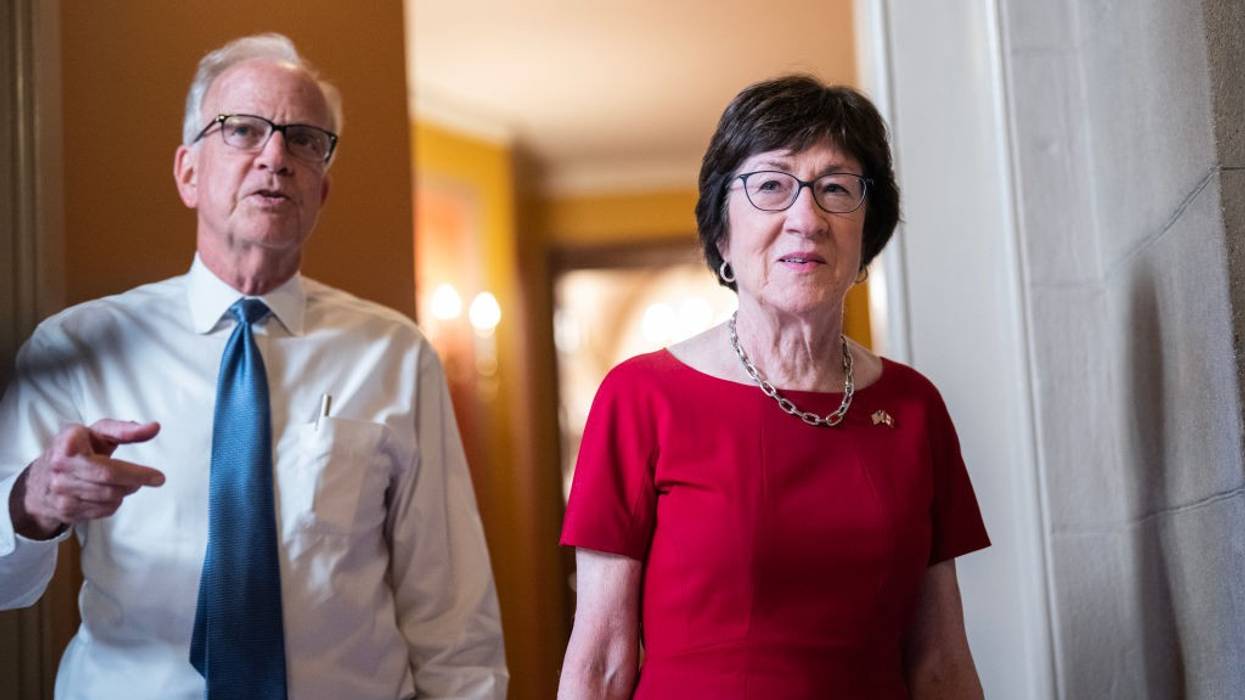
"It's abjectly terrifying that the personal benefit of any member of Congress is factored into decisions about how to wield and fund the largest military in the world," said one critic.
At least 50 U.S. lawmakers or members of their households are financially invested in companies that make military weapons and equipment—even as these firms "receive hundreds of billions of dollars annually from congressionally-crafted Pentagon appropriations legislation," a report published Thursday revealed.
Sludge's David Moore analyzed 2023 financial disclosures and stock trades disclosed in other reports and found that "the total value of the federal lawmakers' defense contractors stock holdings could be as much as $10.9 million."
According to the report:
The spouse of Sen. Susan Collins (R-Maine), the ranking member of the Defense Appropriations subcommittee, holds between $15,000 and $50,000 worth of shares in each of Boeing and RTX, as well as holdings in two other defense manufacturers. Sen. Jerry Moran (R-Kansas), another Defense Appropriations subcommittee member, holds up to $50,000 in the stock of Boeing, which received nearly $33 billion in defense contracts last year. On the Democratic side of the aisle, Sen. John Hickenlooper (Colo.) holds up to a quarter of a million dollars' worth of stock in RTX...
The most widely held defense contractor stock among senators and representatives is Honeywell, an American company that makes sensors and guiding devices that are being used by the Israeli military in its airstrikes in Gaza. The second most commonly held defense stock by Congress is RTX, formerly known as Raytheon, the company that makes missiles for Israel's Iron Dome, among other weapons systems.
All 13 senators whose households disclosed military stock holdings voted for the most recent National Defense Authorization Act, which, as Common Dreams reported, allocated a record $886.3 billion for the U.S. military while many lawmakers' constituents struggled to meet their basic needs.
"It is an obvious conflict of interest when a member of Congress owns significant stock investments in a company and then votes to award the same company lucrative federal contracts," Craig Holman, government affairs lobbyist at the consumer advocacy group Public Citizen, told Sludge.
"Whether or not the official action is taken for actual self-enrichment purposes is beside the point. There is at least an appearance of self-enrichment and that appearance is just as damaging to the integrity of Congress," Holman added. "This type of conflict of interest is already banned for executive branch officials and so should be for Congress as well. The ETHICS Act would justly avoid that conflict of interest by prohibiting members of Congress and their spouses from owning stock investments altogether."
Holman was referring to the Ending Trading and Holdings In Congressional Stocks (ETHICS) Act, introduced earlier this year by Sens. Jeff Merkley (D-Ore.), Jon Ossoff (D-Ga.), Gary Peters (D-Mich.), and Josh Hawley (R-Mo.).
In the House of Representatives—where the 2024 NDAA passed 310-118, with the approval of over two dozen members who own shares in military companies—House Foreign Affairs Committee Chair Michael McCaul's (R-Texas) household owns up to $2.6 million in General Electric, Oshkosh Corporation, and Woodward shares. Rep. Dave Joyce (R-Ohio), who sits on the Defense Appropriations subcommittee, owns as much as $100,000 worth of Boeing and General Electric stock.
Other House lawmakers with potential conflicts of interest include Rep. Gerry Connolly (D-Va.), a member of the Foreign Affairs Committee, who owns Leidos shares worth as much as $248,000; Rep. Debbie Dingell (D-Mich.), who owns up to $100,000 worth of RTX stock; and Rep. Patrick Fallon (R-Texas), a member of the Armed Services Committee who holds Boeing stock worth between $100,000 and $250,000.
"Every American should take a long, hard look at these holdings to conceptualize the scope of Congress' entanglement with defense contractors," Public Citizen People Over Pentagon advocate Savannah Wooten told Sludge. "It's abjectly terrifying that the personal benefit of any member of Congress is factored into decisions about how to wield and fund the largest military in the world."
"Requiring elected officials to divest from the military-industrial complex before stepping into public service would create a safer and more secure world from the outset," she added.

The world's largest pension fund recently adopted new ethics rules that could preclude it from owning shares in several U.S. arms firms.
Norway's $1.76 trillion sovereign wealth fund—the world's largest—could soon be forced to divest from companies including linchpins of the U.S. military-industrial complex due to updated ethics standards for businesses complicit in Israeli human rights violations in occupied Palestine.
Reuters reported Wednesday that the Government Pension Fund Global Council of Ethics informed the Norwegian Ministry of Finance on August 30 that it "believes the ethical guidelines provide a basis for excluding a few more companies" to its divestment list, "in addition to those already excluded."
The ethics council has been investigating whether to blacklist more companies ever since Israel began its bombardment, siege, and invasion of Gaza 334 days ago in response to the Hamas-led October 7 attack.
Since then, Israeli forces have killed or maimed more than 145,000 Palestinians, while forcibly displacing, starving, and sickening millions more and obliterating the Gaza Strip. Israel is currently
on trial for genocide at the International Court of Justice (ICJ) in The Hague.
Also under the council's consideration is Israel's conduct in the illegally occupied West Bank, where occupation forces have killed hundreds more Palestinians and settlers have carried out deadly pogroms under the protection—and sometimes with the participation—of Israel Defense Forces troops.
The fund's ethics rules—which are made by Norway's parliament, the Storting—were updated partly due to the ICJ's July advisory opinion that Israel's 57-year occupation is an illegal form of apartheid that must immediately end.
Companies under consideration include U.S.-based RTX (formerly Raytheon), General Electric, and General Dynamics.
Under its previous policy, the fund divested from nine companies operating in the occupied West Bank. Targeted businesses build homes and roads in illegal Israeli settler colonies, as well as provide surveillance systems for the Israeli separation wall, often called the "apartheid wall," along the Green Line boundary and inside parts of the West Bank.
In June, another Norwegian pension fund, Kommunal Landspensjonskasse (KLP), divested its nearly $70 million stake in Texas-based Caterpillar, citing the use of its bulldozers in ethnic cleansing in the West Bank.
"For a long time, Caterpillar has supplied bulldozers and other equipment that has been used to demolish Palestinian homes and infrastructure to clear the way for Israeli settlements," KLP head of responsible investments Kiran Aziz said at the time. "It has also been alleged that the company's equipment is being used by the Israeli Defence Forces in connection with its military campaign in Gaza."
Norway is one of several nations including Spain, Ireland, Slovenia, and
Armenia that have recently joined the nearly 150 countries that have formally recognized Palestinian statehood.
"In the midst of a war, with tens of thousands killed and injured, we must keep alive the only alternative that offers a political solution for Israelis and Palestinians alike: Two states, living side by side, in peace and security," Norwegian Prime Minister Jonas Gahr Støre said in late May.
Israeli Foreign Minister Israel Katz threatened "severe consequences" for Norway, Spain, and Ireland after they announced they would recognize Palestine.
In a move that the Palestinian Ministry of Foreign Affairs
called an "alarming precedent," Israel last month revoked the accreditation and visas of eight Norwegian diplomats over the Nordic nation's support for Palestine.

"That the organizers of SXSW have taken the decision to mix the arts with the military and weapons contractors is unforgivable," said one band from Northern Ireland.
More than 100 musical acts have pulled out of the music and cultural festival South by Southwest in protest of the event's close ties to the U.S. Army and numerous defense contractors which have displayed exhibits at the week-long gathering, with one hip hop trio from Northern Ireland saying they would face a "significant financial impact" due to the decision.
The financial loss, said the Belfast-based band Kneecap, "isn't an iota of hardship when compared with the [unimaginable] suffering being inflicted every minute of every day on the people of Gaza."
The Austin For Palestine Coalition (AFPC) has been campaigning in the Texas state capital for several weeks to push bands and speakers to boycott the festival, which is commonly known as SXSW and has been based in Austin since 1987.
Out of at least 105 performers that had announced they are boycotting this year's event as of Wednesday, 60 were from the United Kingdom. All 12 Irish bands that had been scheduled to participate have canceled their appearances.
"That the organizers of SXSW have taken the decision to mix the arts with the military and weapons contractors is unforgivable," said Kneecap in a statement posted to social media. "That they have done so as we witness a genocide facilitated by the U.S. military and its contractors is depraved."
The U.S. is the largest international financial backer of the IDF, providing Israel with nearly $4 billion per year. The Biden administration has also approved numerous weapons sales to Israel since the current escalation began in response to a Hamas-led attack on the country on October 7.
The American musician Ella Williams, also known as Squirrel Flower, noted in her announcement that the International Court of Justice said in January that Israel is "plausibly" committing genocide in Gaza.
"A music festival should not include war profiteers," said Williams. "I refuse to be complicit in this and [withdraw] my art and labor in protest."
AFPC condemned the Army's sponsorship of SXSW as well as festival organizers' decision to welcome defense contractors including RTX, also known as Raytheon; Collins Aerospace; and BAE Systems as participants.
RTX and Collins Aerospace, its subsidiary, make missiles, bombs, and aircraft components that are used by the Israel Defense Forces (IDF), which has killed at least 31,341 Palestinians in Gaza since beginning its U.S.-backed bombardment of the enclave in October.
Rania Batrice, a Palestinian American progressive advocate, also announced Wednesday that she was canceling a speaking engagement at the festival.
"As a Palestinian and a human," said Batrice, "I cannot be part of such a callous convening that platforms and celebrates an entity like RTX, which has caused so much death and destruction, and is now complicit in the genocide of my people—including far too many children."
As the boycott grew, SXSW organizers this week defended the contractors, which have participated as exhibitors and sponsored events at the festival, as "leaders in emerging technologies" who "bring forward ideas that shape our world."
They added that "the situation in the Middle East is tragic" and said the festival supports "human rights for all"—a response AFPC called "empty" and "performative."
"These empty words touting 'justice' did not do a great job hiding the fact that SXSW IS forcing musicians to be in bed with warmongers," said the group.
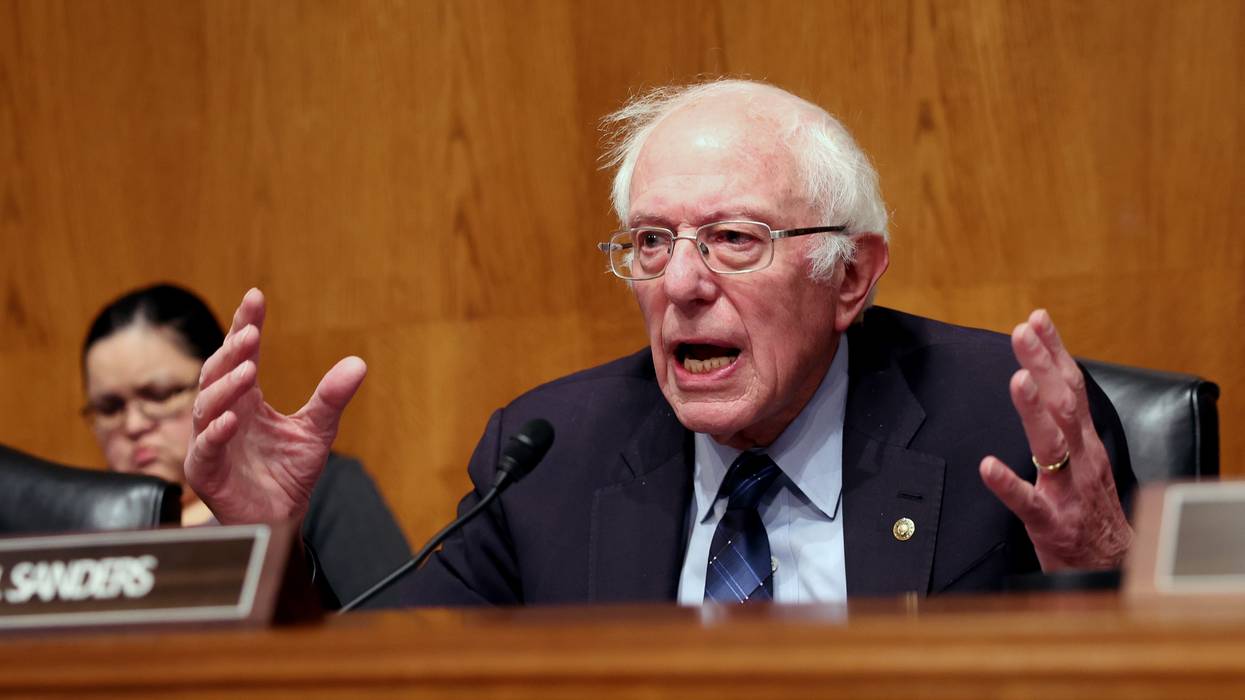
"Congress must put an end to this form of corporate welfare," the senator said, arguing that one new way to do that involves reviving an old policy.
U.S. Sen. Bernie Sanders has a novel way to stop military-industrial complex profiteers from "bilking the American people"—and it's actually over 80 years old.
In an article published Tuesday in The Atlantic, Sanders (I-Vt.) called for a revived Truman Committee—a World War II-era bipartisan congressional panel "designed to rein in defense contractors, closely oversee military contracts, and take back excessive payments."
"America's national priorities are badly misplaced," the senator asserted. "Our country spends, with almost no debate, nearly $1 trillion a year on the military while at the same time ignoring massive problems at home. We apparently have unlimited amounts of money for nuclear weapons, fighter planes, bombs, and tanks. But somehow we can't summon the resources to provide healthcare for all, childcare, affordable housing, and other basic needs."
"The United States remains the world's dominant military power," the senator continued. "Alone, we account for roughly 40% of global military spending; the U.S. spends more on its military than the next 10 countries combined, most of whom are allies. Last year, we spent more than three times what China spent on its military."
Sanders noted that nearly half of the approximately $900 billion the U.S. will allocate for military spending this year "will go to a handful of huge defense contractors enjoying immense profits," with many weapons companies profiting handsomely off sales to Ukraine, which is struggling to repel a two-year Russian invasion.
In what Sanders called a "particularly egregious example" of war profiteering, RTX Corporation—formerly Raytheon—has increased the price of its Stinger shoulder-launched surface-to-air missiles by 600% to $400,000 since the early 1990s.
The senator continued:
It's not just RTX. The stocks of American arms manufacturers have surged: Northrop Grumman's share price increased 40% by the end of 2022, and Lockheed Martin's by 37%. In 2022, the federal government awarded Lockheed Martin more than $45 billion in unclassified contracts. The company returned about one-quarter of that amount to shareholders through dividends and stock buybacks, and paid its CEO $25 million.
"There's a name for all this: war profiteering. There's a solution too," Sanders stressed. "Congress should resurrect the Truman Committee."
"These companies' greed is not just fleecing the American taxpayer; it's killing Ukrainians," he contended. "A contractor padding its profit margins means that fewer weapons reach Ukrainians on the frontlines. Corporate greed is helping [Russian President] Vladimir Putin."
Sanders highlighted the U.S. Department of Defense's six consecutive failed audits, including the most recent one last December, in which the Pentagon was unable to fully account for nearly two-thirds of its $3.8 trillion in assets.
"It should therefore come as no surprise that defense contractors routinely overcharge the Pentagon—and the American taxpayer—by nearly 40-50%," he wrote. "One company, TransDigm, overcharged by 4,451%."
"But despite billions in fines for fraud or misconduct, the contracts never seem to dry up," Sanders said. "That may be down to America's system of legalized bribery: A share of the profits from these lucrative contracts will flow back to politicians who gladly accept millions in campaign contributions to make sure the defense budget is always flush."
"According to the watchdog group OpenSecrets, defense contractors spent nearly $140 million lobbying the federal government last year," he noted. "Millions of dollars more go directly to members of Congress in campaign contributions from companies, individuals, and political action committees linked to the defense industry."
"Congress must put an end to this form of corporate welfare," Sanders argued. "The best way to do that is to reinstate the Truman Committee on war profiteering so that we can end corporate greed in the defense industry. A windfall profits tax could help achieve this end as well."

"As the Biden administration attempts to deny the death toll of Israel's campaign of mass murder in Gaza and sell genocide as a stimulus for the U.S. economy, these are the death merchants profiting from the war machine."
With more than 7,300 Palestinians killed so far in Israel's three-week bombardment of Gaza, a series of reports this week have exposed how U.S. weapon-makers and billionaire donors are enabling what legal scholars say could amount to genocide.
After Israel declared war in response to Hamas killing over 1,400 Israelis and taking around 200 hostages, the stocks of major American and European war profiteers soared. A Thursday report from Eyes on the Ties—the news site of LittleSis and Public Accountability Initiative—targets five U.S. firms with a record of providing weaponry to Israel.
The outlet stressed that while announcing a supplemental funding request that includes $14.3 billion for Israel, U.S. President Joe Biden last week "invoked 'patriotic American workers' who are 'building the arsenal of democracy and serving the cause of freedom,' but it's the defense company CEOs who rake in tens of millions a year, and Wall Street shareholders, who are the real beneficiaries of warmongering."
The five targeted industry giants collectively recorded $196.5 billion in military-related revenue last year, Eyes on the Ties reported. They are Boeing ($30.8 billion), General Dynamics ($30.4 billion), Lockheed Martin ($63.3 billion), Northrop Grumman ($32.4 billion), and RTX, formerly Raytheon ($39.6 billion).
"The top shareholders in these five defense companies largely consist of big asset managers, or big banks with asset management wings, that include BlackRock, Vanguard, State Street, Fidelity, Capital Group, Wellington, JPMorgan Chase, Morgan Stanley, Newport Trust Company, Longview Asset Management, Massachusetts Financial Services Company, Geode Capital, and Bank of America," the news outlet noted.
Eyes on the Ties also highlighted how chief executives are handsomely compensated—and the CEOs' ties to Big Pharma, the fossil fuel industry, Wall Street, and foreign policy think tanks such as the Council on Foreign Relations and Center for Strategic and International Studies.
According to the report:
Other reporting this week has taken aim at those CEOs for their suggestions that Israel's assault on Gaza is good for business.
During Lockheed Martin's latest earnings call, Taiclet correctly predicted Biden's request last week, saying that "there continues to be the option... for supplemental requests related to support Ukraine, Israel, and potentially Taiwan."
In addition to the request for Israel—which already gets nearly $4 billion in annual U.S. military aid—Biden asked for $4 billion to counter Chinese influence in the Indo-Pacific region and $61.4 billion more for
Ukraine, which is battling a Russian invasion.
"We are all witnessing significant geopolitical tensions across the globe, including the ongoing war in Ukraine and the horrific attacks in Israel," Warden said during Northrop Grumman's Thursday earnings call, according to VICE. "As we saw last week, the [Biden] administration continues to make supplemental requests for urgent needs, including those in Ukraine and Israel, to include investments in weapons systems and defense industrial base readiness."
As The Lever reported:
"The Israel situation obviously is a terrible one, frankly, and one that's just evolving as we speak," said Jason Aiken, chief financial officer and executive vice president at General Dynamics, on Wednesday. "But I think if you look at the incremental demand potential coming out of that, the biggest one to highlight and that really sticks out is probably on the artillery side."
He continued: "Obviously that's been a big pressure point up to now with Ukraine, one that we've been doing everything we can to support our Army customer. We've gone from 14,000 rounds per month to 20,000 very quickly. We're working ahead of schedule to accelerate that production capacity up to 85,000, even as high as 100,000 rounds per month, and I think the Israel situation is only going to put upward pressure on that demand."
Last week, roughly 100 activists gathered outside of General Dynamics' weapons plant in Pittsfield, Massachusetts, to protest the Israeli war, holding signs with slogans like, "Genocide: Brought To You By General Dynamics."
Both The Lever and VICE also pointed out that during RTX's Tuesday call, Hayes started by "acknowledging the tragic situation playing out in Israel" before turning to "an update on our end markets."
If Congress approves Biden's request for Israel, VICE explained, "some of the money would be used to restock Israel's Iron Dome rocket defense system, which RTX manufactured." Hayes said: "I think really across the entire Raytheon portfolio, you're going to see a benefit of this restocking. On top of what we think is going to be an increase in [U.S. Department of Defense] top line."
It's not just defense executives enabling Israel's mass slaughter of civilians in Gaza. As Eyes on the Ties reported, "Lobbying groups including the American Israel Public Affairs Committee (AIPAC) and Democratic Majority for Israel have been active in Washington, calling on lawmakers to send money and weapons to Israel."
The report names some billionaire donors to the lobbying groups, including New England Patriots and the Kraft Group CEO Robert Kraft, private equity investor Marc Rowan, venture capitalist Gary Lauder, hedge fund managers Daniel Loeb and Paul Singer, and Home Depot co-founder Bernard Marcus, who is also the founding president of the Israel Democracy Institute.
U.S. Rep. Summer Lee (D-Pa.) said Wednesday that Americans "know that funneling billions more dollars into arms dealers' pockets won't keep our children safe from weapons of war at home or across the world. It won't keep our loved ones safe from toxins in our air and drinking water. They know that lining the pockets of weapons manufacturers won't help families struggling to afford housing, medicine, or grocery costs. They know defense contractors won't safeguard Medicare and Social Security or shield our communities against the climate crisis."
Unlike the CEOs of firms like Lockheed Martin and RTX, "moms who can't afford childcare, young folks who can't pay off their debt, veterans who can't keep up with housing costs, and children who go to school hungry don't have million-dollar lobbying budgets," added Lee, one of the few members of Congress pushing for a cease-fire in Gaza. "So it's up to us to stand up for their needs."

"As countries need to replenish their weapons, we do think defense companies will do very well," said one expert.
"War is good for business."
That's what one defense executive said at a London arms conference last month, and what the stock market reflected on Monday, as Israel blockaded and bombarded the Gaza Strip—bombing the occupied Palestinian territory's main university, residential buildings, a refugee camp, and a major hospital—in response to Hamas' weekend attack that killed hundreds of Israelis.
The United States, which already gives Israel $3.8 billion in annual military assistance, is now preparing to send additional weaponry and other support. Meanwhile, the stocks of U.S. and European firms that make money off of war soared on Monday.
U.S. companies including Lockheed Martin, Northrop Grumman, and RTX—previously known as Raytheon—were all affected, as were top British, French, Germany, and Italian firms, according to The Wall Street Journal.
Fox Business reported that "shares of General Dynamics, which makes submarines and combat vehicles, rose the most since March 2020 when it gained over 9%."
"Lockheed Martin's stock jump Monday was the biggest for the U.S.' largest defense contractor on a non-earnings day since March 2020, narrowly topping the gains it notched immediately after Russia launched its full-scale invasion of Ukraine," Forbes noted. "Northrop Grumman shares also had their best day since 2020."
Barron's pointed out that "separately, Lockheed's board on Friday approved the expansion of Lockheed's stock repurchase program by $6 billion, and the company raised its quarterly dividend to $3.15 a share from $3."
Commenting on the bloodshed in Israel and Gaza over the past few days, Sameer Samana, senior global market strategist at Wells Fargo Investment Institute, told MarketWatch that "clearly it's a huge human tragedy."
"It seems like we're entering a different phase globally with respect to geopolitics," he added, with conflicts appearing more likely compared with recent decades. "As countries need to replenish their weapons, we do think defense companies will do very well."
Less than two months after Russia's invasion last year, William Hartung, a senior research fellow at the Quincy Institute for Responsible Statecraft, highlighted how such conflicts benefit the arms industry, writing for TomDispatch that "the war in Ukraine will indeed be a bonanza for the likes of Raytheon and Lockheed Martin."
"First of all, there will be the contracts to resupply weapons like Raytheon's Stinger anti-aircraft missile and the Raytheon/Lockheed Martin-produced Javelin anti-tank missile that Washington has already provided to Ukraine by the thousands," he explained. "The bigger stream of profits, however, will come from assured post-conflict increases in national security spending here and in Europe justified, at least in part, by the Russian invasion and the disaster that's followed."
Last December, in Forbes, Hartung warned against using the Russia-Ukraine war to permanently expand the weapons industry:
Plans that have been floated so far include building new weapons factories, dramatically boosting production of ammunition, anti-tank weapons, and other systems, and easing oversight of weapons procurement. These changes will come at a cost that over time will run into tens of billions of dollars above current spending plans, and possibly more—much more.
This drive to rapidly expand the size and reach of the military-industrial complex is both unnecessary and unwise. The rush to do so while reducing existing safeguards against waste and poor performance risks promoting price gouging and substandard production even as it ties up funds that could be used more effectively on other urgent priorities.
Oil prices also climbed on Monday in response to the violence in the Middle East.
The Associated Press explained that "the area under conflict is not home to major oil production, but fears that the fighting could spill into the politics around the crude market sent a barrel of U.S. oil up 4.1% to $86.16. Brent crude, the international standard, rose 3.9% to $87.91 per barrel."