
SUBSCRIBE TO OUR FREE NEWSLETTER
Daily news & progressive opinion—funded by the people, not the corporations—delivered straight to your inbox.
5
#000000
#FFFFFF
To donate by check, phone, or other method, see our More Ways to Give page.


Daily news & progressive opinion—funded by the people, not the corporations—delivered straight to your inbox.
From conventional therapy to culturally relevant initiatives and healing-based, trauma-informed programming, youth can grow in a healthy manner through a sustainable relationship with community-based caregivers.
The currently popular “tough on crime” narratives touted by local, state, and federal policymakers—as evidenced by the attacks on mayors of sanctuary cities at recent congressional hearings—pose a risk that the United States will revert to a dangerous place that will harm marginalized communities for decades to come.
The nation’s stability is directly tied to the stability of this country’s younger generations. As a 25-year veteran of Juvenile Diversion programs in Denver, I took an early retirement to lead a nonprofit that works with young people referred through deflection, a pre-citation or pre-arrest intervention that connects young people to resources without criminalizing their behavior.
The goal is to make my old job obsolete.
Something must change. Community based organizations and legal advocates are already seeking solutions and are floating reform initiatives across the country.
During the past three decades, I have been deeply involved in community organizing, while simultaneously working full time inside the Juvenile Justice Industrial Complex where I have heard the internal systemic whisperings while also seeing how those systemic policies affect the communities they serve in real time.
On any given day, there are about 27,600 youth in detention centers in the U.S., representing a 75% decline since the year 2000. Juvenile crime rates plummeted between 1994-2020 by 78%. There is an obvious correlation between the drop in youth in detention and the decrease in crime. Reducing involvement in the juvenile justice system reduces juvenile crime.
The troubling national trend of rolling back justice reform efforts is raising alarms among advocates, as seen in Washington state where they are repurposing adult detention centers to create more juvenile lock-ups. And in North Carolina, legal expert Jake Sussman criticized policies leading to youth isolation, stating, “We are only aggravating any existing problems by placing these very vulnerable kids in isolation.”
Recently, I witnessed a 10-year-old stand behind his mother in Denver’s municipal juvenile court, clutching her jacket sleeve, struggling to understand how he came to be paraded before a judge for age-appropriate behavior. He tossed a pencil behind his back that grazed a teacher’s leg. Sitting in the intake room, his feet did not even touch the floor.
A 2024 study clearly spells out the damage that this one experience in the juvenile justice system will have on this child’s life as he grows up, carrying the trauma of this day and the burden of heightened scrutiny that will come from being placed on juvenile diversion. The study highlights the fact that young offenders often experience polyvictimization, developmental trauma, and complex PTSD, emphasizing the need for trauma-informed approaches within juvenile justice systems.
The National Center for Youth Law published a report in January detailing the extensive harm that tickets inflict on students everywhere, which unveils specifically how Lakewood, a large Denver suburb, has vastly overcriminalized students through the municipal court system.
Many municipal courts in the country, like Cleveland, New Orleans, and Denver, function in much the same manner as Lakewood. Children are ticketed for low-level offenses not worthy of a district-level charge, often by a police officer at their own school.
Ticketed students are siphoned into diversion programs that require them to miss school (and their parents to miss work) so they can show up for a court appearance. That experience is followed by another missed day of school and work to show up for a highly invasive intake interview.
Finally, the student is required to participate in costly classes that range from $60-$150 for one class, which is designed to address and correct criminogenic thinking in adults, at the family’s expense.
Students are required to complete rigorous community service assignments that can include dozens of hours of work. In Colorado for instance, a child is not permitted to perform community service hours without a parent present. So once again, a child’s ticket jeopardizes their parent’s employment.
Something must change. Community based organizations and legal advocates are already seeking solutions and are floating reform initiatives across the country such as the Colorado Youth Justice Collaborative, MILPA Collective, and Denver Healing Generations.
Ideally, healing a young person happens at home and within their own school and community. Some children are not able to have these positive resources.
In the school environment, alongside school discipline matrix reforms is a push for what has been termed deflection. The proposed deflection policies are what advocacy organizations nationwide tout as a means of avoiding harming a child through the juvenile justice system. The goal is to send the young person to an organization for services within their community directly from the point of contact with law enforcement instead of formally charging them.
There are bills in Colorado Judiciary Subcommittees that would begin to codify these policies and lead to a refreshing approach to addressing problematic behavior in young people. The City of Longmont, Colorado has had an 86% success rate already with its Deflection program as it routed youth away from the justice system.
Similarly, Cambridge, Massachusetts has a program that serves as a model for expansion into more cities.
From conventional therapy to culturally relevant initiatives and healing-based, trauma-informed programming, youth can grow in a healthy manner through a sustainable relationship with community-based caregivers. This is an investment in the future of America where healthy young people become healthy adults. That is a net positive for everyone.
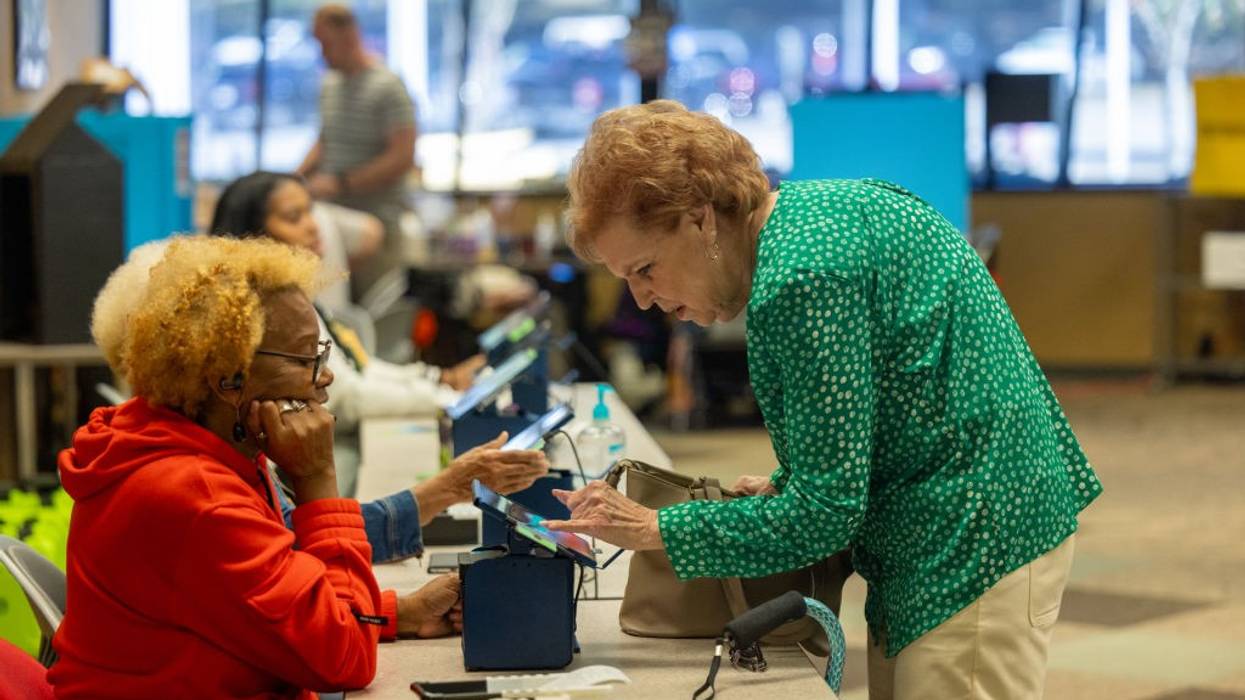
Voting is more than a civic duty. It is a form of empowerment.
A recent UCLA study found that 2 million people with felony convictions have the right to vote, but misinformation and lack of clarity can prevent them from exercising this right. Similar trends are pervasive in other marginalized communities – such as those experiencing homelessness and recent immigrants – which is why social workers are uniquely positioned to help empower citizens to vote this election cycle. As the 2024 presidential and state elections approach, doing so is more important than ever.
Many of the individuals we work with are politically and socially disenfranchised, and thus turn out to the polls in much lower numbers. However, low voter turnout in these communities reinforces a cycle of neglect, as elected officials are less inclined to allocate resources to areas that don’t engage in the political process. It also means that their voice isn’t heard, even when issues that directly impact them are on the line.
Social workers can help break this cycle by showing clients how their personal struggles are linked to policy decisions. For example, as few as 10% of unhoused individuals vote in elections, while this year alone more than 2,000 bills about housing and homelessness were introduced in 48 of 50 states—not to mention the other economic and social policies enacted that affect the state of homelessness and welfare of unhoused individuals. In essence, the clients that we work with are often disproportionately affected by the outcomes of elections—and deserve a voice.
Voting is one of the most direct ways individuals can influence policies on education, healthcare, housing and social services. Research from the University of Connecticut shows that higher voter turnout leads to better health, education and economic outcomes, particularly for low-income populations. When communities vote, they compel elected officials to pay attention. Social workers, as trusted advocates, can help bridge the gap between disempowered individuals and the political system that governs their lives.
Voting is one of the most direct ways individuals can influence policies on education, healthcare, housing and social services.
Doing so means first becoming more informed about the voting process ourselves. For many of the people we serve, voting feels daunting. Some don’t know if they are eligible, how to register, or where to vote. Social workers can demystify the process by providing clear, factual information about registration, poll locations, absentee ballots and early voting. Our role is to ensure our clients know these rules and are prepared to vote.
Armed with information, we can better help clients identify registration deadlines, voting locations and nonpartisan resources on candidates and issues. By integrating voter education into our practice, we can impact voter turnout in communities often overlooked by policymakers.
Beyond registration, social workers can help clients make informed decisions at the ballot box. We can help identify the issues that matter most to them: For instance, many of our clients are directly affected by policy decisions on food assistance, education reform, healthcare access, and criminal justice. Whatever the topic, we can help them find reliable, nonpartisan information about candidates, and encourage thoughtful participation in the election. This isn’t about endorsing any candidate – it’s about ensuring our clients have the information they need to vote for the candidates and policies that align with their best interests.
Voting is more than a civic duty. It is a form of empowerment. When people vote, they have a say in decisions that affect their lives, from local issues like school funding to national debates on healthcare and immigration. For those who have been marginalized or feel disconnected from society, this ability to effect change can be incredibly empowering.
With the 2024 elections nearing, social workers have a crucial role to play in creating a stronger and more inclusive democracy. Many of the people we serve are from marginalized and traditionally underserved communities, and feel disconnected from not just politics, but their civic community. They may have been taught their voice doesn’t matter, and thus believe that voting won’t have an impact—and doesn’t have the power to change their lives. This is where social workers can make a difference.
We have an opportunity to educate and encourage participation in a system that directly affects the well-being of our clients and communities. Our work doesn’t stop with addressing the immediate needs of our clients—it extends to advocating for systemic change that can improve the lives of entire communities. And few actions are as powerful in shaping systems as casting a vote.
Imagine that you were just assaulted and needed emergency assistance from the police. But instead of responding with care and concern, the police reacted with hostility, shamed you for seeking help, and expressed disinterest in your safety or in investigating your case. This is too often the reality for the too many victims of sexual assault and domestic violence every year in the United States.
When discriminatory attitudes negatively affect the response that survivors receive from police, most survivors stop reaching out to the police for help altogether.
A new report by the ACLU and scholars from the University of Miami School of Law and CUNY School of Law exposes the widespread discrimination that survivors of these crimes face when dealing with law enforcement. We surveyed over 900 advocates, service providers, and attorneys who work with survivors of sexual assault and domestic violence from across the country about their concerns regarding policing and recommendations for improvement. Responses from the Field: Sexual Assault, Domestic Violence, and Policing describe what they shared with us. We presented our findings at the White House Domestic Violence Awareness Month Roundtable this month.
Advocates identified police inaction, hostility, and bias against survivors as a key barrier to seeking criminal justice intervention. Eighty-eight percent said that police sometimes or often do not believe victims or blame victims for the violence. Survivors also commonly experienced bias based on gender, race, immigration status, sexual orientation, gender identity, socio-economic status, disability, and other identity characteristics. Many of these concerns are magnified within communities already entrenched in problematic policing practices. Over 80 percent of respondents believed that police relations with marginalized communities influenced survivors' willingness to call the police.
Police involvement can also trigger collateral consequences that make survivors think twice about reaching out for help. Nearly 90 percent of survey respondents said that contact with the police sometimes or often resulted in the involvement of child protective services, threatening survivors with loss of custody of their children. Other negative consequences named by respondents include initiation of immigration proceedings and loss of housing, employment, or welfare benefits. Some reported that victims themselves face arrest when reaching out to the police, particularly if they have a criminal record.
In addition, advocates said that many survivors' goals do not align with those of the criminal justice system or how it operates. Some survivors were looking for options other than punishment for the abuser, while others feared that once they were involved with the criminal justice system, they would lose control over the process. Still, others were reluctant to engage the system because they believed that it was complicated, lengthy, and trauma-inducing.
In spite of these challenges, community meetings between social service providers, police, and prosecutors were reported to be helpful in addressing the needs of survivors. However, 72 percent did not know whether civilian complaint boards or other types of independent, community-based police oversight mechanisms exist in their communities. The majority were unaware of the Department of Justice's ability to investigate gender-biased policing.
Advocates recommended improvements in police training, supervision, and hiring of more women and people of color. Changes in police culture must include prioritizing domestic violence and sexual assault cases and greater partnerships between police and community-based organizations that provide support to survivors.
The ACLU and over 170 national and local organizations have urged Attorney General Loretta Lynch to provide guidance from the Department of Justice that would show how police departments can work with communities to end biased policing that strips victims of their civil rights.
The only way to ensure equal protection for survivors of domestic and sexual violence is to institute more robust accountability for law enforcement and child protection, immigration, and other systems that render people more vulnerable to violence.
As we come up on the 10th anniversary of Hurricane Katrina, the terrible devastation wrought by the hurricane is in the headlines again. For those who experienced the storm first-hand, the ongoing struggle to recover is ever-present, and this must be a wrenching anniversary. What can we do as a nation to support frontline communities better prepared and protected for future disasters? How can we better account for the growing risks to coastal communities, especially in light of sea level rise and worsening storm surge? And how can we ensure that we equitably channel our investments to build resilience in all communities?
Major storms like Katrina cut a wide swathe of destruction. Still, they have a disproportionate impact on marginalized communities that may lack the means to get out of harm's way or live in places that are more prone to flooding or more exposed to wind damage. Low-income and fixed-income households may also be unable to afford to pay for insurance that could help cover their losses. The elderly can be particularly vulnerable. All this means that recovery efforts and preparations for the next storm must be made to protect those most at risk.
In the case of storms like Katrina, two federal agencies play a major role in disaster aid and recovery: the Federal Emergency Management Agency (FEMA) and the U.S. Department of Housing and Urban Development (HUD). Once a presidential disaster declaration is made, several federal response and recovery programs are triggered, with funding attached as Congress approves. Through various programs deployed in the wake of Katrina, FEMA has spent nearly $10 billion in Mississippi. The agency has also spent nearly $20 billion in Louisiana on recovery, rebuilding, and mitigation after Hurricanes Katrina and Rita. In addition, Congress appropriated $19.7 billion in supplemental Community Development Block Grant (CDBG) program funds administered by HUD for Gulf Coast disaster recovery in the wake of Hurricanes Katrina, Rita, and Wilma in 2005.
Targeting these major sources of funding more effectively and ensuring that they are helping communities become resilient instead of just rebuilding as before in potentially maladaptive ways is an important opportunity to do better. As my colleague Erika wrote: We simply can't afford to still play business as usual.
Furthermore, we've got to make sure that aid also flows to those who rent, instead of just to homeowners, that communities get help navigating myriad administrative hurdles in applying for aid (including translation services if needed), and that those who are displaced have the opportunity to return if they want.
If shelter is considered a basic human need, Mississippi's experience after Katrina highlights the importance of ensuring disaster aid funding prioritizes rebuilding and repairing safe, affordable housing in frontline communities. For example, a study from the RAND Corporation estimated that affordable housing units in Harrison County, MS, which were already in short supply prior to the storm, declined by 25 percent due to damage from Katrina.
Recovery efforts focused more on repairing single-family, owner-occupied homes than on multi-family rental units. This increased the shortage of affordable housing, with rents climbing for the remaining units. Employment losses, healthcare costs, and property damage caused by the storm have further damaged low-income communities.
A striking example of the missteps in recovery efforts was the diversion of disaster aid from rebuilding affordable housing to building the Port of Gulfport. Local groups had to sue HUD to remedy the situation.
Hurricane Katrina's damage to the Gulf Coast was incalculable, with a huge storm surge of 25 to 28 feet reaching far inland. Scientific projections show that land subsidence along the Gulf coast, combined with accelerating sea level rise due to climate change, will lead to an estimated increase in local sea level of an additional 19 inches by 2050 in Mississippi and Louisiana. The rapid loss of coastal wetlands to growing development and industrial activities simultaneously reduces natural protections against storm surges and flooding and worsens their impacts.
These growing risks make it urgent to adopt a more protective, science-based approach to future planning, one that considers the perspectives of frontline communities and their first-hand experience of climate impacts.
Some tough choices are ahead in places where the seas will ultimately prevail. Coastal Louisiana, for instance, is already experiencing a loss of coastal land, which is set to grow significantly over time. Those living in these highest-risk places deserve the resources to ensure they have options even in these difficult circumstances.
What about preparing before disaster strikes? A recent GAO report found that despite numerous expert recommendations highlighting the value of pre-disaster mitigation efforts, we tend to spend much more on post-disaster recovery.
For example, from fiscal years 2011-2014, FEMA obligated more than $3.2 billion for HMGP post disaster hazard mitigation while the Pre-Disaster Mitigation Grant Program obligated approximately $222 million.
A 2014 report from the Office of the Inspector General, Department of Homeland Security found that:
Over 8 years since Hurricane Katrina, FEMA has not obligated approximately $812 million of the $2.16 billion in authorized mitigation funds... This $812 million represents missed or delayed opportunities to protect lives and property from future disasters.
Investing adequate resources in preparing communities ahead of the next disaster is critical. It's a smarter, more cost-effective way to use limited taxpayer dollars and can help us plan instead of merely being in an emergency response framework.
What's more, FEMA and HUD need to do more to proactively engage with frontline communities, understand their needs, and build working relationships before a storm hits. That will make recovery efforts more effective and aligned with a community's wants.
FEMA's Hazard Mitigation Grant Program is the primary source of federal funds to help communities become more resilient after disasters. FEMA's Public Assistance program assists in debris removal, emergency measures, and restoration of infrastructure. Where cost-effective, this includes funding for measures to reduce future risks and repairing damaged buildings and infrastructure. FEMA pays up to 75% of a project's costs through these programs, while the state contributes 25%. HUD's Community Development Block Grant program is another federal source of recovery and rebuilding funds.
Local residents in Gulf Coast cities and towns affected by Hurricane Katrina have fought hard to protect and revitalize their communities and regain decision-making power. Through organizations, including the North Gulfport Community Land Trust, the NAACP, the Steps Coalition, the Sierra Club, the Audubon Society, the Gulf Coast Fund, the Gulf Restoration Network, the Deep South Center for Environmental Justice, the Greater New Orleans Organizers' Roundtable, regional collaborations like Gulf South Rising, and many others they are advocating for environmental and climate justice and putting pressure on state. Local officials to include their perspectives in how funds are used and how the region plans for coastal development and restoration.
There are clear opportunities to help ensure frontline communities are better prepared and protected. These include:
The 'Katrina 10 Week of Action', commemorating the 10th anniversary of Hurricane Katrina, is a powerful testament to the strength and endurance of frontline communities in the Gulf Coast states. It's also a reminder that if we fail to take action to protect frontline communities, the devastation and hardships they face today will be a reality for many more communities tomorrow. Let's honor the losses that so many, many people suffered through Hurricane Katrina and other more hidden daily disasters unfolding even now in frontline communities by ensuring that the core American values of fairness and equity are a part of all our climate solutions.
Columbia University on Monday announced that it would divest from the private prison industry and ban reinvestment in companies that operate prisons, making it the first college to cut ties with a system that student activists say is racist, exploitative, and unjust.
The announcement follows 16 months of campaigning by the prison abolitionist group Students Against Mass Incarceration, which launched after a number of students discovered in 2013 that the school had invested roughly $10 million of its endowment in the Corrections Corporation of America (CCA) and G4S, two for-profit companies that operate private detention centers and prisons around the world.
G4S is the largest private security firm in the world. CCA is the largest private prison company in the U.S. Both have long histories of human rights abuses against prisoners and have lobbied in favor of draconian legislation like mandatory minimum sentencing and Arizona's infamous SB1070 statute.
"We targeted the university's investments in two private prison companies, but we hope that private prison divestment campaigns, with the abolitionist vision of a larger anti-prison movement, can help us start working towards divesting from the idea that prisons equal justice, which we believe to be fundamentally racist," said one organizer, Dunni Oduyemi.
"These companies have a fundamental interest in expanding incarceration in order to maximize profit. We will not see an end to the racism and exploitation embedded in our contemporary systems of mass incarceration and detention if we do not dismantle the economic engines of this prison-industrial complex," said Gabriela Catalina Pelsinger, another student organizer.
"[P]art of the power of the prison divestment movement is in its potential to build coalitions across multiple movements that advocate for racial and economic justice," Pelsinger told Common Dreams. "The companies we target have become billion dollar corporations because their business models depend entirely on the implementation and continuation of laws and practices that allow them to warehouse as many people for as long of a time as possible."
Asha Rosa, a core organizer of the divestment campaign, said much of the work involved on-campus actions, political education, and meetings with university committees that were put in place as bureaucratic roadblocks to student activism.
"We used all these different channels to hold the university accountable to its internal policies," Rosa told Common Dreams. Overcoming those obstacles required "a lot of determination and endurance" from the students involved in the campaign, she said.
The divestment campaign, which launched in February 2014, also connects the prison industry to the larger issues of state violence and anti-black racism, drawing on the work of the Black Lives Matter movement and the anti-gentrification efforts in West Harlem, where Columbia is located.
"The roots of these systems are all tied up in the legacy of Jim Crow, the legacy of slavery, and anti-black racism," Rosa continued. "We're trying to re-frame [investment in the prison industry] as part of the larger movement of criminalization of black and brown bodies."
The campaign also asks Columbia students to "recognize the privilege that comes with being a student at an elite university... and acknowledge our complicity in a complex system" that perpetuates institutional inequality, Rosa said.
In a statement, organizers explained that the "racist, classist images of 'criminals deserving of punishment' are created in tandem with images of 'hard-working college students deserving of opportunity,' and each is defined in relation to the other... [w]e refuse to buy into the false narratives that justify our privilege at the expense of the suffering of others."
Lou Downey, an organizer with the Stop Mass Incarceration Network, told Common Dreams that the students "are standing up refusing to be complicit with inhumane private prisons. But it's even beyond private prisons and prison profit-making. These horrors are felt in the whole U.S. mass incarceration system from Rikers Island to Pelican Bay. There is a program of criminalizing millions of Black and Brown youth whom this system can offer no future while at the same time, fears could be at the center of rising up against America's injustices."
Rosa added that it is important not to treat the announcement like a "victory moment for Columbia."
The school is still involved in the system of inequality through other means, Rosa said, like the on-campus racial profiling of black students and the push for sprawling gentrification in West Harlem. With gentrification comes displacement, heavy policing, and criminalization of marginalized communities, she said.
She said that rather than seeing the divestment as a conclusive triumph, the focus should be on continued efforts to divest from all systems of inequality—not just prisons. "This is a moment of pressure."