

SUBSCRIBE TO OUR FREE NEWSLETTER
Daily news & progressive opinion—funded by the people, not the corporations—delivered straight to your inbox.
5
#000000
#FFFFFF
To donate by check, phone, or other method, see our More Ways to Give page.
Daily news & progressive opinion—funded by the people, not the corporations—delivered straight to your inbox.

"The U.S. Chamber got its way for now—ensuring families get price-gouged a little longer with credit card late fees as high as $41," one advocate said of the ruling.
A Trump-appointed judge on Friday delivered a win for big banks when he granted the U.S. Chamber of Commerce a temporary injunction halting a Biden administration rule that would cap credit card fees at $8.
The Consumer Financial Protection Bureau (CFPB) rule, which would have gone into effect May 14, could save U.S. consumers more than $10 billion each year. The decision to pause its implementation, issued by U.S. District of the Northern District of Texas Judge Mark Pittman, will cost ordinary Americans around $27 million each day it is in effect.
"In their latest in a stack of lawsuits designed to pad record corporate profits at the expense of everyone else, the U.S. Chamber got its way for now—ensuring families get price-gouged a little longer with credit card late fees as high as $41," Liz Zelnick, the director of the Economic Security and Corporate Power Program at Accountable.US, said in a statement.
"It's time the U.S. Chamber stops clogging the courts with baseless lawsuits designed to enrich corporate CEOs on the backs of working families—and it's time the judiciary stops legitimizing venue shopping from big industry."
The CFPB issued the rule on March 5 as part of the Biden administration's commitment to crack down on "junk fees." However, the Chamber of Commerce and other banking trade associations—including the American Bankers Association and the Consumer Bankers Association—quickly sued to block it. The executives of Bank of America, Capital One, Citibank, and JPMorgan Chase sit on the boards of the groups behind the suit, according to The Washington Post.
"Banks make billions in profits charging excessive late fees," Sen. Elizabeth Warren (D-Mass.) wrote on social media Saturday in response to the ruling. "Now a single Trump-appointed judge sided with bank lobbyists to block the Biden administration's new rule capping these junk fees."
Accountable.US also criticized the fact that the suit was before Pittman at all, arguing that the U.S. Chamber of Commerce filed the suit in Texas federal court so that it would end up under the jurisdiction of the 5th Circuit Court of Appeals, which has 19 Republican-appointed justices out of a total of 26. The chamber has filed nearly two-thirds of its lawsuits since 2017 with courts covered by the 5th Circuit.
"The U.S. Chamber and the big banks they represent have corrupted our judicial system by venue shopping in courtrooms of least resistance, going out of their way to avoid having their lawsuit heard by a fair and neutral federal judge," Zelnick said. "It's time the U.S. Chamber stops clogging the courts with baseless lawsuits designed to enrich corporate CEOs on the backs of working families—and it's time the judiciary stops legitimizing venue shopping from big industry."
The 5th Circuit's treatment of the case has also come under fire, as Trump-appointed Judge Don Willett has not recused himself despite the fact that he owns tens of thousands of dollars in Citigroup shares. While Willett has argued that Citigroup is not a party to the case, it belongs to trade groups that are, and any ruling on credit card fees would significantly impact the bank. Collectively, all the judges on the 5th Circuit have invested as much as $745,000 in credit card or credit issuing companies, according to the most recent publicly available information.
Donald Sherman, Gabe Lezra, and Linnaea Honl-Stuenkel of Citizens for Ethics in Washington wrote: "Judge Willett's refusal to recuse, and the lack of transparency about the rationale, reinforces the need for more judicial ethics reform to ensure that everyday Americans and government agencies have a level playing field when they go into court against corporate interests."
The chief judge of the Northern District of Texas indicated the court will not follow new guidance, while a lower court judge called out a pro-business group's use of "judge shopping."
Right-wing groups will still be able to pick and choose the judges who hear their cases in one of the most conservative federal court districts in the United States, following a decision by the Northern District of Texas on Friday that goes against new anti-"judge shopping" guidance.
Chief U.S. District Judge David Godbey of the Northern District wrote in a letter to Senate Majority Leader Chuck Schumer that the court would not abide by new guidance from the Judicial Conference, which said earlier this month that the court system should randomly assign lawsuits to any judge throughout the district where they're filed.
"The consensus was not to make any change to our case assignment process at this time," wrote Godbey, an appointee of former President George W. Bush.
The policy, announced on March 12, would require lawsuits that challenge federal or state laws to be assigned to a judge randomly throughout a federal district rather than staying in the specific smaller division where they were initially filed, a practice known as "judge shopping" or "venue shopping."
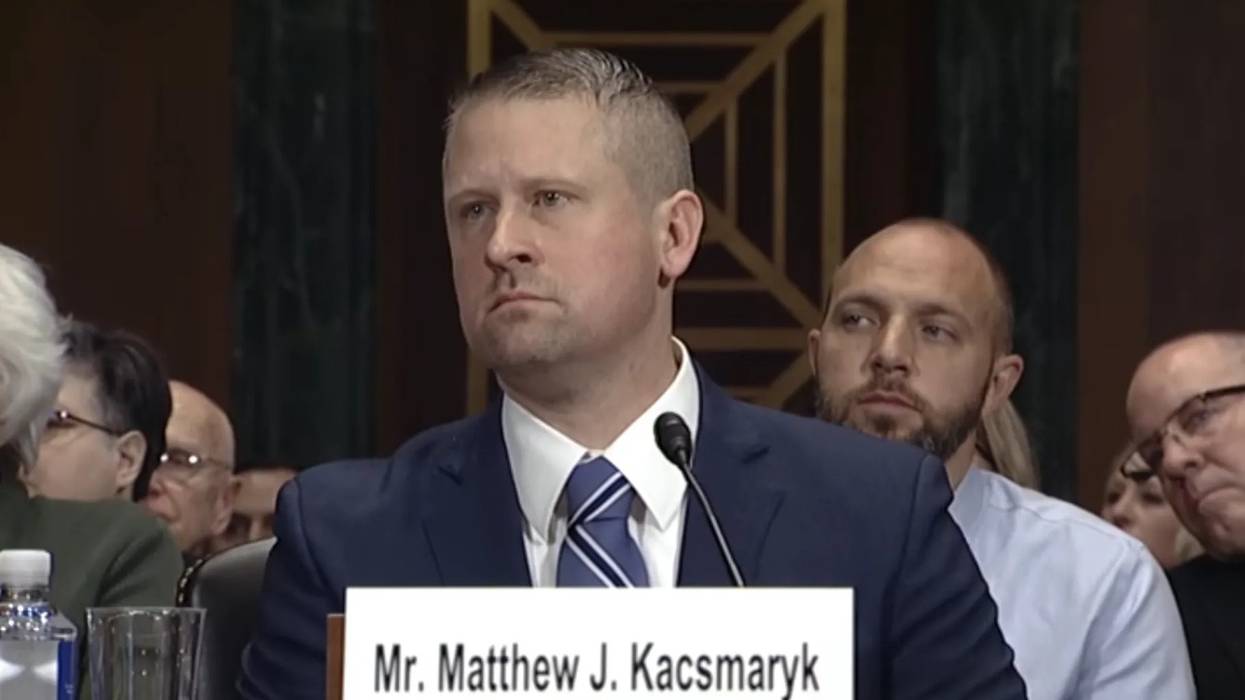
The practice has garnered scrutiny in recent months as right-wing groups have filed numerous lawsuits in the court of Judge Matthew Kacsmaryk, who presides over a federal court in Amarillo, Texas—also in the state's Northern District.
Kacsmaryk, an appointee of former President Donald Trump, ruled last year that the Food and Drug Administration's approval of mifepristone, a drug used for medication abortion, should be suspended. The U.S. Supreme Court heard arguments in an appeal last week, and the justices signaled that they were unlikely to impose new restrictions on the medication.
After Republican lawmakers wrote to federal judges telling them to disregard the Judicial Conference's guidance—which the body noted is discretionary—Schumer called on the courts to apply the new reforms to stop "extremists" from handpicking judges.
Godbey's letter signaled that the court will continue allowing conservative plaintiffs to select the venue where their cases are heard.
Judiciary observers noted that another judge in the Northern District—Mark Pittman in the Fort Worth division—suggested that chief judges may not have the final word on whether judge shopping continues to be tolerated.
Pittman, who was also appointed by Trump, ruled that a case filed by the U.S. Chamber of Commerce and other banking industry groups against the Consumer Financial Protection Bureau (CFPB) should be transferred to a federal court in Washington, D.C.
The judge agreed with the CFPB, which had argued the banking lobby had filed its lawsuit over the bureau's slashing of credit card late fees in the Northern District of Texas in order to secure a favorable ruling.
"Venue is not a continental breakfast; you cannot pick and choose on a plaintiff's whim where and how a lawsuit is filed," said Pittman. "Federal courts have consistently cautioned against such behavior."
"Even the judges you least expect," said David Dayen of The American Prospect, "are pissed at being pawns in a conservative game."
Random case assignment serves as a bulwark against the undue influence of political agendas on our courts.
If you are a right-wing activist looking to persuade a federal judge to impose your views on the country, what do you do? For starters, you go shopping.
Judge shopping, that is. Head to the courthouse in Amarillo, Texas. No matter if you aren’t from there. There is precisely one federal district judge in Amarillo. His name is Matthew Kacsmaryk. And odds are high that he will issue a ruling just as you seek, one that imposes a highly conservative, indeed theocratic, worldview. He might even issue an injunction that purports to cover the entire country.
That’s what happened a year ago when activists pulled up to Amarillo and won a ruling by Kacsmaryk effectively banning mifepristone, a medication used for more than half of all abortions in the United States. The activists knew, as the judge’s sister told reporters, that he had made it his mission to end all abortions in the United States. (He has called homosexuality “disordered” for good measure.) It showed the power of one judge with a gavel and a grudge to impose his views on tens of millions of citizens.
It will crush confidence in the rule of law if judges are seen as partisan or political actors.
This was too much even for the reactionary Fifth Circuit Court of Appeals, which stayed some of the more extreme parts of Kacsmaryk’s order while the case was appealed to the Supreme Court. Later this year, the court will hear this case. However it turns out, it was an unsettling reminder of the vulnerability of our legal system to judge shopping.
All states have at least one federal district court, but these are often broken into smaller divisions that usually automatically assign cases among one or two judges. Litigants can strategically file in a division with an ideologically friendly judge to boost their odds of a favorable ruling. That matters most when a case is heavy with political or ideological significance. Picking the right law is great; picking the right judge can be even better.
All this is magnified by the weird fact that the Supreme Court has never ruled on whether a single judge can issue a nationwide injunction stopping conduct or barring government from acting. Liberals and conservatives alike have used this for years.
Last fall, the Brennan Center urged the Judicial Conference, a panel of judges that sets policies for the federal judiciary, to address this problem. In a meeting last week, the conference took a welcome if tentative step in the right direction. It announced a policy to encourage random assignment of cases with a statewide or nationwide impact. That would lessen the odds that filing a case in a given division would give a plaintiff their judge of choice. The policy makes sense. But the guidance is nonbinding, and it’s unclear whether districts will follow it. Still, it is a promising sign that federal judicial leaders recognize judge shopping as a threat to public trust. Soon we will learn if their gentle encouragement leads to action. I’m not holding my breath.
The stakes could not be higher. Yesterday we got a glimpse of why this matters so much. Murthy v. Missouri is part of the drive to clear the path for disinformation in the 2024 election. A judge had barred the federal government from even talking to social media platforms to discourage disinformation on Covid-19 or voting. Republican state attorneys general brought the case in a division where they were all but guaranteed to get Trump-appointed Judge Terry Doughty. Last July, he ordered federal officials to stop communicating with social media companies about false content, removing a vital check on the rampant election falsehoods that continue to circulate online.
A Supreme Court ruling on the Murthy case will come in the next few months, but as my colleagues Lawrence Norden and Gowri Ramachandran have pointed out, the trial judge’s ruling has already wreaked significant damage. Government agencies simply stopped talking with Facebook, YouTube, and other platforms. Private groups and scholars pulled back. There is a wide-open terrain for the Big Lie in the 2024 election.
Judge shopping undermines public trust. Opposing it should be a nonpartisan cause. Instead, the new policy—mushy as it is—faced a sharp partisan backlash. Republican senators sent letters to about a dozen federal district court chief judges advising them to disregard the policy change. They accused the conference of involving itself with partisan battles, even though 15 of the conference’s 26 current members were appointed by President George W. Bush.
Public trust in the Supreme Court has plummeted to the lowest level ever recorded in polls. Lower courts may not be far behind. It will crush confidence in the rule of law if judges are seen as partisan or political actors. Random case assignment serves as a bulwark against the undue influence of political agendas on our courts. So one or maybe two cheers for the new policy. Next, the Judicial Conference should cement this policy in the Federal Rules of Civil Procedure. The window for judge shopping should be slammed shut.
"Look who just came out and said it: We're against the fair and impartial administration of justice," said one civil rights attorney.
Republican lawmakers on Thursday signaled they want to stop judges from following a new judicial policy unveiled this week that's aimed at curbing what one journalist called "one of the most outrageous aspects of the American legal system."
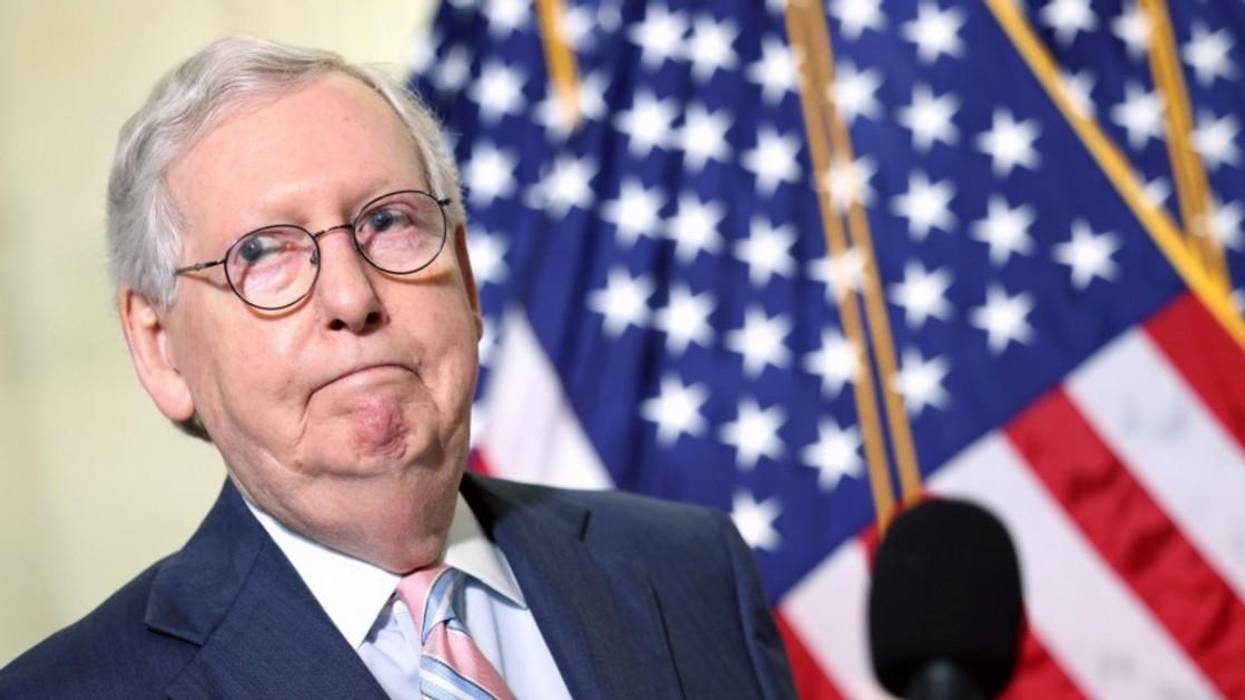
In a letter to the chief justices of U.S. district courts across the country on a new rule regarding the practice of "judge shopping," Senate Minority Leader Mitch McConnell (R-Ky.) joined Sens. John Cornyn (R-Texas) and Thom Tillis (R-N.C.) in advising the judges that "Judicial Conference policy is not legislation."
The policy in question, approved by the Judicial Conference on Tuesday, would prevent plaintiffs from filing lawsuits that seek to block state or federal actions in single-judge divisions—a practice that right-wing litigants have been criticized for using in order to secure favorable rulings. Instead, the court system would randomly assign lawsuits to any judge throughout the district where they were filed.
The practice of judge shopping, wrote Ian Millhiser at Vox on Tuesday, "turned Matthew Kacsmaryk, an obscure advocate on the Christian right appointed by former President Donald Trump to the Northern District of Texas, into one of the most powerful government officials in the entire country" in recent years, due to the judge's status as the only federal trial judge based in Amarillo, Texas.
Attorneys representing right-wing causes have filed numerous lawsuits in Kacsmaryk's court, including one in which a parent sued the government over Title X funding of family planning clinics and a case challenging federal approval of mifepristone, which is used in medication abortion.
Senate Democrats last year wrote to the Judicial Conference and called on the body to "address this problem and restore fairness to our federal judiciary."
In an attempt to ensure the judicial system continues supporting judge shopping, the Republican leaders told chief justices: "It is your job to manage the caseload of your court according to the dictates of local circumstances and convention. We therefore hope and expect that you will continue to do what is in the interest of justice for litigants in your jurisdiction without regard to partisan battles in Washington, D.C."
The letter amounted to an admission that the GOP is "against the fair and impartial administration of justice," said civil rights attorney Leslie Proll.
At The American Prospect, Ryan Cooper wrote Friday that judge shopping is "offensive" to "basic principles of the rule of law and democratic values."
"Government is supposed to be based on the consent of the governed, and the principal focus of the judiciary should be ensuring the law is applied in a consistent and coherent fashion rather than acting as an unelected legislature," wrote Cooper. "That holds double when it comes to any one of 677 district court judges, who have no business whatsoever dictating terms to the people as a whole. But with judge shopping, a random handful of extremists can file a lawsuit based on crackpot nonsense or actual lies, present their case to a carefully chosen friendly judge who will automatically rule in their favor, and seize control of some national policy."
Sen. Dick Durbin (D-Ill.), who chairs the Senate Judiciary Committee, told Bloomberg Law Thursday that the Judicial Conference had acted "to curb the ability of MAGA extremists to handpick their preferred Trump-appointed judge."
"America has seen what happens when MAGA Republicans use the courts to advance their unpopular agenda because they cannot prevail in the court of public opinion—just look to recent mifepristone cases in Texas. Preventing this abuse of the system will help restore the public's trust in our court system and strengthen our democracy."
Judicial advocacy group Demand Justice said the reform introduced by the Judicial Conference is "long overdue."
"We will need oversight and reform from Congress to restore legitimacy and balance to our courts," said the group.
Democratic senators including Sens. Mazie Hirono of Hawaii and Ron Wyden of Oregon have proposed legislation to prevent judge shopping. The Republicans noted in their letter Thursday that Congress rejected a bill in 1999 that would have required cases to be randomly assigned.
Cooper called the Judicial Conference's announcement "a highly welcome reform that should reduce the amount of judicial overreach in this country," but also "an indicator of just how broken the other two branches of government have become, particularly Congress."
“Ultimately, we can't expect the judiciary to truly regulate itself," wrote Cooper. "As Thomas Jefferson once wrote, 'Our judges are as honest as other men, and not more so. They have, with others, the same passions for party, for power, and the privilege of their corps.' When feral judges arrogate the powers of Congress to themselves, the legislature is supposed to slap them down. Until it does, the problem of judicial tyranny will remain."