SUBSCRIBE TO OUR FREE NEWSLETTER
Daily news & progressive opinion—funded by the people, not the corporations—delivered straight to your inbox.
5
#000000
#FFFFFF
To donate by check, phone, or other method, see our More Ways to Give page.
Daily news & progressive opinion—funded by the people, not the corporations—delivered straight to your inbox.
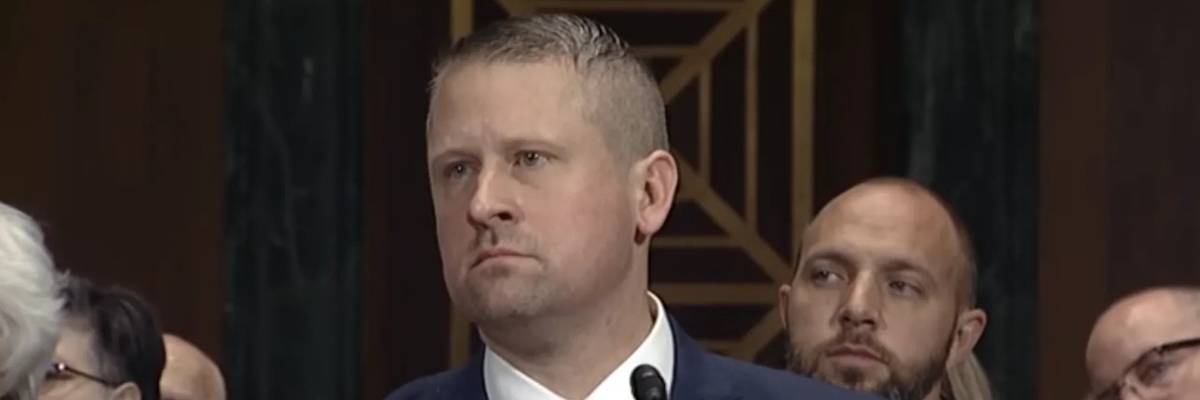
Then-judicial nominee Matthew J. Kacsmaryk appeared before the U.S. Senate Judiciary Committee on December 13, 2017.
Random case assignment serves as a bulwark against the undue influence of political agendas on our courts.
If you are a right-wing activist looking to persuade a federal judge to impose your views on the country, what do you do? For starters, you go shopping.
Judge shopping, that is. Head to the courthouse in Amarillo, Texas. No matter if you aren’t from there. There is precisely one federal district judge in Amarillo. His name is Matthew Kacsmaryk. And odds are high that he will issue a ruling just as you seek, one that imposes a highly conservative, indeed theocratic, worldview. He might even issue an injunction that purports to cover the entire country.
That’s what happened a year ago when activists pulled up to Amarillo and won a ruling by Kacsmaryk effectively banning mifepristone, a medication used for more than half of all abortions in the United States. The activists knew, as the judge’s sister told reporters, that he had made it his mission to end all abortions in the United States. (He has called homosexuality “disordered” for good measure.) It showed the power of one judge with a gavel and a grudge to impose his views on tens of millions of citizens.
It will crush confidence in the rule of law if judges are seen as partisan or political actors.
This was too much even for the reactionary Fifth Circuit Court of Appeals, which stayed some of the more extreme parts of Kacsmaryk’s order while the case was appealed to the Supreme Court. Later this year, the court will hear this case. However it turns out, it was an unsettling reminder of the vulnerability of our legal system to judge shopping.
All states have at least one federal district court, but these are often broken into smaller divisions that usually automatically assign cases among one or two judges. Litigants can strategically file in a division with an ideologically friendly judge to boost their odds of a favorable ruling. That matters most when a case is heavy with political or ideological significance. Picking the right law is great; picking the right judge can be even better.
All this is magnified by the weird fact that the Supreme Court has never ruled on whether a single judge can issue a nationwide injunction stopping conduct or barring government from acting. Liberals and conservatives alike have used this for years.
Last fall, the Brennan Center urged the Judicial Conference, a panel of judges that sets policies for the federal judiciary, to address this problem. In a meeting last week, the conference took a welcome if tentative step in the right direction. It announced a policy to encourage random assignment of cases with a statewide or nationwide impact. That would lessen the odds that filing a case in a given division would give a plaintiff their judge of choice. The policy makes sense. But the guidance is nonbinding, and it’s unclear whether districts will follow it. Still, it is a promising sign that federal judicial leaders recognize judge shopping as a threat to public trust. Soon we will learn if their gentle encouragement leads to action. I’m not holding my breath.
The stakes could not be higher. Yesterday we got a glimpse of why this matters so much. Murthy v. Missouri is part of the drive to clear the path for disinformation in the 2024 election. A judge had barred the federal government from even talking to social media platforms to discourage disinformation on Covid-19 or voting. Republican state attorneys general brought the case in a division where they were all but guaranteed to get Trump-appointed Judge Terry Doughty. Last July, he ordered federal officials to stop communicating with social media companies about false content, removing a vital check on the rampant election falsehoods that continue to circulate online.
A Supreme Court ruling on the Murthy case will come in the next few months, but as my colleagues Lawrence Norden and Gowri Ramachandran have pointed out, the trial judge’s ruling has already wreaked significant damage. Government agencies simply stopped talking with Facebook, YouTube, and other platforms. Private groups and scholars pulled back. There is a wide-open terrain for the Big Lie in the 2024 election.
Judge shopping undermines public trust. Opposing it should be a nonpartisan cause. Instead, the new policy—mushy as it is—faced a sharp partisan backlash. Republican senators sent letters to about a dozen federal district court chief judges advising them to disregard the policy change. They accused the conference of involving itself with partisan battles, even though 15 of the conference’s 26 current members were appointed by President George W. Bush.
Public trust in the Supreme Court has plummeted to the lowest level ever recorded in polls. Lower courts may not be far behind. It will crush confidence in the rule of law if judges are seen as partisan or political actors. Random case assignment serves as a bulwark against the undue influence of political agendas on our courts. So one or maybe two cheers for the new policy. Next, the Judicial Conference should cement this policy in the Federal Rules of Civil Procedure. The window for judge shopping should be slammed shut.
Dear Common Dreams reader, It’s been nearly 30 years since I co-founded Common Dreams with my late wife, Lina Newhouser. We had the radical notion that journalism should serve the public good, not corporate profits. It was clear to us from the outset what it would take to build such a project. No paid advertisements. No corporate sponsors. No millionaire publisher telling us what to think or do. Many people said we wouldn't last a year, but we proved those doubters wrong. Together with a tremendous team of journalists and dedicated staff, we built an independent media outlet free from the constraints of profits and corporate control. Our mission has always been simple: To inform. To inspire. To ignite change for the common good. Building Common Dreams was not easy. Our survival was never guaranteed. When you take on the most powerful forces—Wall Street greed, fossil fuel industry destruction, Big Tech lobbyists, and uber-rich oligarchs who have spent billions upon billions rigging the economy and democracy in their favor—the only bulwark you have is supporters who believe in your work. But here’s the urgent message from me today. It's never been this bad out there. And it's never been this hard to keep us going. At the very moment Common Dreams is most needed, the threats we face are intensifying. We need your support now more than ever. We don't accept corporate advertising and never will. We don't have a paywall because we don't think people should be blocked from critical news based on their ability to pay. Everything we do is funded by the donations of readers like you. When everyone does the little they can afford, we are strong. But if that support retreats or dries up, so do we. Will you donate now to make sure Common Dreams not only survives but thrives? —Craig Brown, Co-founder |
If you are a right-wing activist looking to persuade a federal judge to impose your views on the country, what do you do? For starters, you go shopping.
Judge shopping, that is. Head to the courthouse in Amarillo, Texas. No matter if you aren’t from there. There is precisely one federal district judge in Amarillo. His name is Matthew Kacsmaryk. And odds are high that he will issue a ruling just as you seek, one that imposes a highly conservative, indeed theocratic, worldview. He might even issue an injunction that purports to cover the entire country.
That’s what happened a year ago when activists pulled up to Amarillo and won a ruling by Kacsmaryk effectively banning mifepristone, a medication used for more than half of all abortions in the United States. The activists knew, as the judge’s sister told reporters, that he had made it his mission to end all abortions in the United States. (He has called homosexuality “disordered” for good measure.) It showed the power of one judge with a gavel and a grudge to impose his views on tens of millions of citizens.
It will crush confidence in the rule of law if judges are seen as partisan or political actors.
This was too much even for the reactionary Fifth Circuit Court of Appeals, which stayed some of the more extreme parts of Kacsmaryk’s order while the case was appealed to the Supreme Court. Later this year, the court will hear this case. However it turns out, it was an unsettling reminder of the vulnerability of our legal system to judge shopping.
All states have at least one federal district court, but these are often broken into smaller divisions that usually automatically assign cases among one or two judges. Litigants can strategically file in a division with an ideologically friendly judge to boost their odds of a favorable ruling. That matters most when a case is heavy with political or ideological significance. Picking the right law is great; picking the right judge can be even better.
All this is magnified by the weird fact that the Supreme Court has never ruled on whether a single judge can issue a nationwide injunction stopping conduct or barring government from acting. Liberals and conservatives alike have used this for years.
Last fall, the Brennan Center urged the Judicial Conference, a panel of judges that sets policies for the federal judiciary, to address this problem. In a meeting last week, the conference took a welcome if tentative step in the right direction. It announced a policy to encourage random assignment of cases with a statewide or nationwide impact. That would lessen the odds that filing a case in a given division would give a plaintiff their judge of choice. The policy makes sense. But the guidance is nonbinding, and it’s unclear whether districts will follow it. Still, it is a promising sign that federal judicial leaders recognize judge shopping as a threat to public trust. Soon we will learn if their gentle encouragement leads to action. I’m not holding my breath.
The stakes could not be higher. Yesterday we got a glimpse of why this matters so much. Murthy v. Missouri is part of the drive to clear the path for disinformation in the 2024 election. A judge had barred the federal government from even talking to social media platforms to discourage disinformation on Covid-19 or voting. Republican state attorneys general brought the case in a division where they were all but guaranteed to get Trump-appointed Judge Terry Doughty. Last July, he ordered federal officials to stop communicating with social media companies about false content, removing a vital check on the rampant election falsehoods that continue to circulate online.
A Supreme Court ruling on the Murthy case will come in the next few months, but as my colleagues Lawrence Norden and Gowri Ramachandran have pointed out, the trial judge’s ruling has already wreaked significant damage. Government agencies simply stopped talking with Facebook, YouTube, and other platforms. Private groups and scholars pulled back. There is a wide-open terrain for the Big Lie in the 2024 election.
Judge shopping undermines public trust. Opposing it should be a nonpartisan cause. Instead, the new policy—mushy as it is—faced a sharp partisan backlash. Republican senators sent letters to about a dozen federal district court chief judges advising them to disregard the policy change. They accused the conference of involving itself with partisan battles, even though 15 of the conference’s 26 current members were appointed by President George W. Bush.
Public trust in the Supreme Court has plummeted to the lowest level ever recorded in polls. Lower courts may not be far behind. It will crush confidence in the rule of law if judges are seen as partisan or political actors. Random case assignment serves as a bulwark against the undue influence of political agendas on our courts. So one or maybe two cheers for the new policy. Next, the Judicial Conference should cement this policy in the Federal Rules of Civil Procedure. The window for judge shopping should be slammed shut.
If you are a right-wing activist looking to persuade a federal judge to impose your views on the country, what do you do? For starters, you go shopping.
Judge shopping, that is. Head to the courthouse in Amarillo, Texas. No matter if you aren’t from there. There is precisely one federal district judge in Amarillo. His name is Matthew Kacsmaryk. And odds are high that he will issue a ruling just as you seek, one that imposes a highly conservative, indeed theocratic, worldview. He might even issue an injunction that purports to cover the entire country.
That’s what happened a year ago when activists pulled up to Amarillo and won a ruling by Kacsmaryk effectively banning mifepristone, a medication used for more than half of all abortions in the United States. The activists knew, as the judge’s sister told reporters, that he had made it his mission to end all abortions in the United States. (He has called homosexuality “disordered” for good measure.) It showed the power of one judge with a gavel and a grudge to impose his views on tens of millions of citizens.
It will crush confidence in the rule of law if judges are seen as partisan or political actors.
This was too much even for the reactionary Fifth Circuit Court of Appeals, which stayed some of the more extreme parts of Kacsmaryk’s order while the case was appealed to the Supreme Court. Later this year, the court will hear this case. However it turns out, it was an unsettling reminder of the vulnerability of our legal system to judge shopping.
All states have at least one federal district court, but these are often broken into smaller divisions that usually automatically assign cases among one or two judges. Litigants can strategically file in a division with an ideologically friendly judge to boost their odds of a favorable ruling. That matters most when a case is heavy with political or ideological significance. Picking the right law is great; picking the right judge can be even better.
All this is magnified by the weird fact that the Supreme Court has never ruled on whether a single judge can issue a nationwide injunction stopping conduct or barring government from acting. Liberals and conservatives alike have used this for years.
Last fall, the Brennan Center urged the Judicial Conference, a panel of judges that sets policies for the federal judiciary, to address this problem. In a meeting last week, the conference took a welcome if tentative step in the right direction. It announced a policy to encourage random assignment of cases with a statewide or nationwide impact. That would lessen the odds that filing a case in a given division would give a plaintiff their judge of choice. The policy makes sense. But the guidance is nonbinding, and it’s unclear whether districts will follow it. Still, it is a promising sign that federal judicial leaders recognize judge shopping as a threat to public trust. Soon we will learn if their gentle encouragement leads to action. I’m not holding my breath.
The stakes could not be higher. Yesterday we got a glimpse of why this matters so much. Murthy v. Missouri is part of the drive to clear the path for disinformation in the 2024 election. A judge had barred the federal government from even talking to social media platforms to discourage disinformation on Covid-19 or voting. Republican state attorneys general brought the case in a division where they were all but guaranteed to get Trump-appointed Judge Terry Doughty. Last July, he ordered federal officials to stop communicating with social media companies about false content, removing a vital check on the rampant election falsehoods that continue to circulate online.
A Supreme Court ruling on the Murthy case will come in the next few months, but as my colleagues Lawrence Norden and Gowri Ramachandran have pointed out, the trial judge’s ruling has already wreaked significant damage. Government agencies simply stopped talking with Facebook, YouTube, and other platforms. Private groups and scholars pulled back. There is a wide-open terrain for the Big Lie in the 2024 election.
Judge shopping undermines public trust. Opposing it should be a nonpartisan cause. Instead, the new policy—mushy as it is—faced a sharp partisan backlash. Republican senators sent letters to about a dozen federal district court chief judges advising them to disregard the policy change. They accused the conference of involving itself with partisan battles, even though 15 of the conference’s 26 current members were appointed by President George W. Bush.
Public trust in the Supreme Court has plummeted to the lowest level ever recorded in polls. Lower courts may not be far behind. It will crush confidence in the rule of law if judges are seen as partisan or political actors. Random case assignment serves as a bulwark against the undue influence of political agendas on our courts. So one or maybe two cheers for the new policy. Next, the Judicial Conference should cement this policy in the Federal Rules of Civil Procedure. The window for judge shopping should be slammed shut.