SUBSCRIBE TO OUR FREE NEWSLETTER
Daily news & progressive opinion—funded by the people, not the corporations—delivered straight to your inbox.
5
#000000
#FFFFFF
To donate by check, phone, or other method, see our More Ways to Give page.
Daily news & progressive opinion—funded by the people, not the corporations—delivered straight to your inbox.
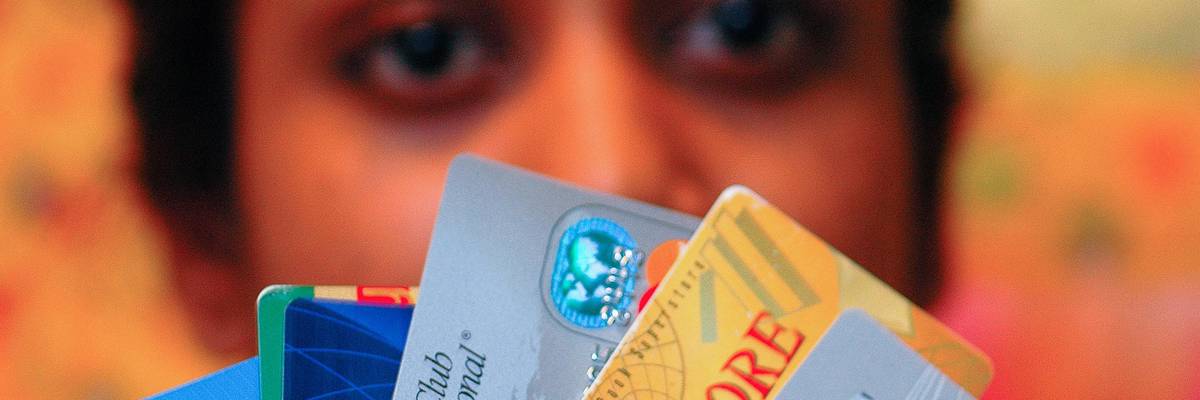
A woman holds a handful of credit cards.
"The U.S. Chamber got its way for now—ensuring families get price-gouged a little longer with credit card late fees as high as $41," one advocate said of the ruling.
A Trump-appointed judge on Friday delivered a win for big banks when he granted the U.S. Chamber of Commerce a temporary injunction halting a Biden administration rule that would cap credit card fees at $8.
The Consumer Financial Protection Bureau (CFPB) rule, which would have gone into effect May 14, could save U.S. consumers more than $10 billion each year. The decision to pause its implementation, issued by U.S. District of the Northern District of Texas Judge Mark Pittman, will cost ordinary Americans around $27 million each day it is in effect.
"In their latest in a stack of lawsuits designed to pad record corporate profits at the expense of everyone else, the U.S. Chamber got its way for now—ensuring families get price-gouged a little longer with credit card late fees as high as $41," Liz Zelnick, the director of the Economic Security and Corporate Power Program at Accountable.US, said in a statement.
"It's time the U.S. Chamber stops clogging the courts with baseless lawsuits designed to enrich corporate CEOs on the backs of working families—and it's time the judiciary stops legitimizing venue shopping from big industry."
The CFPB issued the rule on March 5 as part of the Biden administration's commitment to crack down on "junk fees." However, the Chamber of Commerce and other banking trade associations—including the American Bankers Association and the Consumer Bankers Association—quickly sued to block it. The executives of Bank of America, Capital One, Citibank, and JPMorgan Chase sit on the boards of the groups behind the suit, according to The Washington Post.
"Banks make billions in profits charging excessive late fees," Sen. Elizabeth Warren (D-Mass.) wrote on social media Saturday in response to the ruling. "Now a single Trump-appointed judge sided with bank lobbyists to block the Biden administration's new rule capping these junk fees."
Accountable.US also criticized the fact that the suit was before Pittman at all, arguing that the U.S. Chamber of Commerce filed the suit in Texas federal court so that it would end up under the jurisdiction of the 5th Circuit Court of Appeals, which has 19 Republican-appointed justices out of a total of 26. The chamber has filed nearly two-thirds of its lawsuits since 2017 with courts covered by the 5th Circuit.
"The U.S. Chamber and the big banks they represent have corrupted our judicial system by venue shopping in courtrooms of least resistance, going out of their way to avoid having their lawsuit heard by a fair and neutral federal judge," Zelnick said. "It's time the U.S. Chamber stops clogging the courts with baseless lawsuits designed to enrich corporate CEOs on the backs of working families—and it's time the judiciary stops legitimizing venue shopping from big industry."
The 5th Circuit's treatment of the case has also come under fire, as Trump-appointed Judge Don Willett has not recused himself despite the fact that he owns tens of thousands of dollars in Citigroup shares. While Willett has argued that Citigroup is not a party to the case, it belongs to trade groups that are, and any ruling on credit card fees would significantly impact the bank. Collectively, all the judges on the 5th Circuit have invested as much as $745,000 in credit card or credit issuing companies, according to the most recent publicly available information.
Donald Sherman, Gabe Lezra, and Linnaea Honl-Stuenkel of Citizens for Ethics in Washington wrote: "Judge Willett's refusal to recuse, and the lack of transparency about the rationale, reinforces the need for more judicial ethics reform to ensure that everyday Americans and government agencies have a level playing field when they go into court against corporate interests."
Dear Common Dreams reader, It’s been nearly 30 years since I co-founded Common Dreams with my late wife, Lina Newhouser. We had the radical notion that journalism should serve the public good, not corporate profits. It was clear to us from the outset what it would take to build such a project. No paid advertisements. No corporate sponsors. No millionaire publisher telling us what to think or do. Many people said we wouldn't last a year, but we proved those doubters wrong. Together with a tremendous team of journalists and dedicated staff, we built an independent media outlet free from the constraints of profits and corporate control. Our mission has always been simple: To inform. To inspire. To ignite change for the common good. Building Common Dreams was not easy. Our survival was never guaranteed. When you take on the most powerful forces—Wall Street greed, fossil fuel industry destruction, Big Tech lobbyists, and uber-rich oligarchs who have spent billions upon billions rigging the economy and democracy in their favor—the only bulwark you have is supporters who believe in your work. But here’s the urgent message from me today. It's never been this bad out there. And it's never been this hard to keep us going. At the very moment Common Dreams is most needed, the threats we face are intensifying. We need your support now more than ever. We don't accept corporate advertising and never will. We don't have a paywall because we don't think people should be blocked from critical news based on their ability to pay. Everything we do is funded by the donations of readers like you. When everyone does the little they can afford, we are strong. But if that support retreats or dries up, so do we. Will you donate now to make sure Common Dreams not only survives but thrives? —Craig Brown, Co-founder |
A Trump-appointed judge on Friday delivered a win for big banks when he granted the U.S. Chamber of Commerce a temporary injunction halting a Biden administration rule that would cap credit card fees at $8.
The Consumer Financial Protection Bureau (CFPB) rule, which would have gone into effect May 14, could save U.S. consumers more than $10 billion each year. The decision to pause its implementation, issued by U.S. District of the Northern District of Texas Judge Mark Pittman, will cost ordinary Americans around $27 million each day it is in effect.
"In their latest in a stack of lawsuits designed to pad record corporate profits at the expense of everyone else, the U.S. Chamber got its way for now—ensuring families get price-gouged a little longer with credit card late fees as high as $41," Liz Zelnick, the director of the Economic Security and Corporate Power Program at Accountable.US, said in a statement.
"It's time the U.S. Chamber stops clogging the courts with baseless lawsuits designed to enrich corporate CEOs on the backs of working families—and it's time the judiciary stops legitimizing venue shopping from big industry."
The CFPB issued the rule on March 5 as part of the Biden administration's commitment to crack down on "junk fees." However, the Chamber of Commerce and other banking trade associations—including the American Bankers Association and the Consumer Bankers Association—quickly sued to block it. The executives of Bank of America, Capital One, Citibank, and JPMorgan Chase sit on the boards of the groups behind the suit, according to The Washington Post.
"Banks make billions in profits charging excessive late fees," Sen. Elizabeth Warren (D-Mass.) wrote on social media Saturday in response to the ruling. "Now a single Trump-appointed judge sided with bank lobbyists to block the Biden administration's new rule capping these junk fees."
Accountable.US also criticized the fact that the suit was before Pittman at all, arguing that the U.S. Chamber of Commerce filed the suit in Texas federal court so that it would end up under the jurisdiction of the 5th Circuit Court of Appeals, which has 19 Republican-appointed justices out of a total of 26. The chamber has filed nearly two-thirds of its lawsuits since 2017 with courts covered by the 5th Circuit.
"The U.S. Chamber and the big banks they represent have corrupted our judicial system by venue shopping in courtrooms of least resistance, going out of their way to avoid having their lawsuit heard by a fair and neutral federal judge," Zelnick said. "It's time the U.S. Chamber stops clogging the courts with baseless lawsuits designed to enrich corporate CEOs on the backs of working families—and it's time the judiciary stops legitimizing venue shopping from big industry."
The 5th Circuit's treatment of the case has also come under fire, as Trump-appointed Judge Don Willett has not recused himself despite the fact that he owns tens of thousands of dollars in Citigroup shares. While Willett has argued that Citigroup is not a party to the case, it belongs to trade groups that are, and any ruling on credit card fees would significantly impact the bank. Collectively, all the judges on the 5th Circuit have invested as much as $745,000 in credit card or credit issuing companies, according to the most recent publicly available information.
Donald Sherman, Gabe Lezra, and Linnaea Honl-Stuenkel of Citizens for Ethics in Washington wrote: "Judge Willett's refusal to recuse, and the lack of transparency about the rationale, reinforces the need for more judicial ethics reform to ensure that everyday Americans and government agencies have a level playing field when they go into court against corporate interests."
A Trump-appointed judge on Friday delivered a win for big banks when he granted the U.S. Chamber of Commerce a temporary injunction halting a Biden administration rule that would cap credit card fees at $8.
The Consumer Financial Protection Bureau (CFPB) rule, which would have gone into effect May 14, could save U.S. consumers more than $10 billion each year. The decision to pause its implementation, issued by U.S. District of the Northern District of Texas Judge Mark Pittman, will cost ordinary Americans around $27 million each day it is in effect.
"In their latest in a stack of lawsuits designed to pad record corporate profits at the expense of everyone else, the U.S. Chamber got its way for now—ensuring families get price-gouged a little longer with credit card late fees as high as $41," Liz Zelnick, the director of the Economic Security and Corporate Power Program at Accountable.US, said in a statement.
"It's time the U.S. Chamber stops clogging the courts with baseless lawsuits designed to enrich corporate CEOs on the backs of working families—and it's time the judiciary stops legitimizing venue shopping from big industry."
The CFPB issued the rule on March 5 as part of the Biden administration's commitment to crack down on "junk fees." However, the Chamber of Commerce and other banking trade associations—including the American Bankers Association and the Consumer Bankers Association—quickly sued to block it. The executives of Bank of America, Capital One, Citibank, and JPMorgan Chase sit on the boards of the groups behind the suit, according to The Washington Post.
"Banks make billions in profits charging excessive late fees," Sen. Elizabeth Warren (D-Mass.) wrote on social media Saturday in response to the ruling. "Now a single Trump-appointed judge sided with bank lobbyists to block the Biden administration's new rule capping these junk fees."
Accountable.US also criticized the fact that the suit was before Pittman at all, arguing that the U.S. Chamber of Commerce filed the suit in Texas federal court so that it would end up under the jurisdiction of the 5th Circuit Court of Appeals, which has 19 Republican-appointed justices out of a total of 26. The chamber has filed nearly two-thirds of its lawsuits since 2017 with courts covered by the 5th Circuit.
"The U.S. Chamber and the big banks they represent have corrupted our judicial system by venue shopping in courtrooms of least resistance, going out of their way to avoid having their lawsuit heard by a fair and neutral federal judge," Zelnick said. "It's time the U.S. Chamber stops clogging the courts with baseless lawsuits designed to enrich corporate CEOs on the backs of working families—and it's time the judiciary stops legitimizing venue shopping from big industry."
The 5th Circuit's treatment of the case has also come under fire, as Trump-appointed Judge Don Willett has not recused himself despite the fact that he owns tens of thousands of dollars in Citigroup shares. While Willett has argued that Citigroup is not a party to the case, it belongs to trade groups that are, and any ruling on credit card fees would significantly impact the bank. Collectively, all the judges on the 5th Circuit have invested as much as $745,000 in credit card or credit issuing companies, according to the most recent publicly available information.
Donald Sherman, Gabe Lezra, and Linnaea Honl-Stuenkel of Citizens for Ethics in Washington wrote: "Judge Willett's refusal to recuse, and the lack of transparency about the rationale, reinforces the need for more judicial ethics reform to ensure that everyday Americans and government agencies have a level playing field when they go into court against corporate interests."