

5
#000000
#FFFFFF
To donate by check, phone, or other method, see our More Ways to Give page.
Daily news & progressive opinion—funded by the people, not the corporations—delivered straight to your inbox.

Collins has proved to be President Donald Trump’s worst VA Secretary ever; his main goal is faster privatization of the nation’s largest public healthcare system.
If any Trump appointees lose their posts, as part of a midterm cabinet reshuffling, Secretary of Veterans Affairs Doug Collins is not likely to be among them.
Unlike controversial former colleagues, already sacked as the heads of the Homeland Security, Justice, and Labor Departments—or Pete Hegseth, the next to go?—Collins keeps his own head down. He does the president’s bidding, without personal drama or political scandal.
This low-profile Air Force Reserve chaplain is a clean-living Southern Baptist minister, small-town lawyer, and former congressman from Georgia. When the Senate confirmed him last year, there was no need for a tie-breaking vote like the one JD Vance cast to push Pete across the finish line as secretary of defense.
VA defenders, inside and outside the Beltway, need a damage control agenda that will restrain—rather than enable—further White House attempts to defund and dismantle our best working model of socialized medicine.
The far more affable Collins won Senate approval with the bipartisan support of 22 Democrats! They included Richard Blumenthal (D-Conn.), a military veteran whose own son is a VA patient and, sadly, were joined by Bernie Sanders (I-Vt.), former chair of the Senate Veterans Affairs Committee (SVAC).
Collins has proved to be President Donald Trump’s worst VA Secretary ever; his main goal is faster privatization of the nation’s largest public healthcare system. The likelihood that he will control the third largest federal agency budget and second largest departmental workforce, for another two years, is not good news for 9 million VA patients.
By the time any Democrat replaces Trump in January, 2029, Collins will have diverted far more than $46 billion annually from the VA's direct-care budget to a network of 1.7 million private sector providers and four healthcare companies who administer it.
Just two months ago, he awarded new contracts to the latter worth $1 trillion, over the next decade (if not cancelled or curtailed by a future administration). As a result, industry giants like United Healthcare and Humana will be profiting from further outsourcing of VA care that is costly, unnecessary, and not favored by veterans themselves.
VA defenders, inside and outside the Beltway, need a damage control agenda that will restrain—rather than enable—further White House attempts to defund and dismantle our best working model of socialized medicine. Otherwise, more VA staffing and budget cuts, plus facility closings, in the VA’s own system of 1,380 public hospitals and clinics around the country will be happening soon.
Those most motivated to lead the charge against Secretary Collins on Capitol Hill in 2027 are newly elected pro-labor progressives, with personal experience in public healthcare systems, either as patients, their family members, caregivers, or administrators
Thanks to their successful campaigns against MAGA supporters, these VA defenders now include: former Army paratrooper Richard Ojeda in North Carolina; former Marine drill instructor JoAnna Mendoza in Arizona who has been treated for military sexual trauma at the VA; former Army surgeon Adam Hamaway, a Gaza war critic from New Jersey, who once operated on a helicopter pilot injured in Iraq named Tammy Duckworth, now Senator from Illinois; and Fred Wellman from Missouri, a West Point graduate who began rallying fellow vets against Trump six years ago through the Lincoln Project.
Last but not least is VA privatization critic Mitch Berman, “who spent over a decade serving veterans, active duty service members, and their families as a VA nurse”—and now represents conservative Republican Paul Ryan’s old district in Wisconsin. Any of the above could help energize a House Veterans Affairs Committee, where playing footsie with Collins (and his Biden administration predecessor) has gone on for too long, to the detriment of real agency oversight.
On the SVAC, the Democrats’ defense of our nation’s largest public healthcare system would be much improved by adding new Senators from either Michigan, Maine, and Iowa. Dr. Abdul El-Sayed, the just elected Michigan public health specialist and Medicare for All advocate, would be following in the footsteps of his big financial backer, Sen. Bernie Sanders.
Or El-Sayed could be joined by Troy Jackson, the former logger who ousted five-term Senator Susan Collins with Sanders’ support; as a state legislator, Jackson long championed the cause of Maine National Guard members who suffered Agent Orange exposure during their Vietnam-era training but were later deemed ineligible for compensation and healthcare.
In Iowa, its newly elected Sen. Josh Turek is not only the son of a Vietnam veteran but one who suffered birth defects due to his father’s Agent Orange exposure. As a wheelchair athlete, Turek played alongside disabled vets and worked with them in sports rehabilitation programs. He has pledged to “end unnecessary wars that put American lives at risk” and insure that “veterans exposed to toxic substances during their military service get the care and benefits they need.”
A recent report from Democracy Forward—by two former VA officials—provides plenty of ammo for new members of Congress to use in a long-overdue counteroffensive against Collins. As Josh Jacobs, a former VA undersecretary under former President Joe Biden, and Nicole Nedd, a past director of the agency’s national workforce management program, report:
The VA has lost approximately 30,000 employees through attrition, early retirements, deferred resignations, firings, and other departures. These staff had institutional knowledge and skills that cannot be quickly replaced. The staff who remain are bearing an unsustainable burden. Morale has deteriorated, and there is growing evidence that employees feel unable to raise safety concerns without fear of retaliation—a condition linked to more errors and worse patient outcomes.
In their indictment of Collins, entitled "Ready, Fire, Aim," the authors warn that “the choices being made now by the Trump-Vance administration—at the White House and within VA’s own leadership—will adversely shape veterans’ care for a generation.”
Nobody new or old inside the Beltway—whether in Congress or veterans’ advocacy organizations—will get much done by themselves, without the pressure of grassroots opposition to cuts in VA care and benefits.
Paul Reickhoff, an Iraq War veteran who helped found Iraq and Afghanistan Veterans of America (IAVA) two decades ago, believes that “both parties are looking for quiet ways to control VA disability spending, which now tops $118 billion a year for 5.1 million disabled veterans.”
This fall, Reickhoff’s new group, Independent Veterans of America (IVA), backed candidates like Navy Veteran and former National Guard member Dan Osborn, who distanced themselves from both major parties. Unfortunately, Osborn suffered a second narrow defeat running as a labor-backed independent candidate for the US Senate from Nebraska.
Reickhoff fears that “career political operatives” in Washington are still floating “budget options” which include “cutting benefits and raising minimum disability rating thresholds.” To stop these changes, veterans have to “build the media and organizing muscle to mobilize fast when veterans’ benefits are on the line.”
Fortunately, veterans’ groups, across the political spectrum, had a major victory earlier this year when they blocked the misleadingly named “Take Care of America’s Veterans Act” (TACVA). Veterans Service Organizations (VSOs) like the Veterans of Foreign Wars, Disabled American Veterans, and Progressive Veterans of America all sounded the alarm about this Collins-backed bill pushed by Republican House Speaker Mike Johnson (La.).
TACVA would have helped 50,000 former service members—whose careers were cut short due to medical problems—collect both their military pensions and VA disability benefits. But, as Common Defense political director Naveed Shah warned last summer, this multi-part bill was heavily booby trapped. If enacted, hundreds of thousands of other veterans would have been adversely affected.
According to Shah, an Army veteran who served in Iraq, it would have “cut $57 billion from our future tinnitus and sleep apnea claims, tripled the VA home loan fee, allow disability appeals to be decided in bulk rather than on the merits of each veteran’s record, enable more layoffs that threaten the quality of VA care, and lay the groundwork for handing VA facilities over to private operators.” (Lame-duck Republicans may make a second attempt to pass TACVA, in similarly problematic form, before January.)
Veterans for Peace (VFP) has long been the most reliable first responder whenever veterans’ care has been threatened. VFP’s “Save Our VA” campaign has generated thousands of letters to members of Congress about privatization-related problems, too often downplayed or ignored by VSOs which take healthcare industry donations. VFP members have personally lobbied many members of Congress or their staffers on VA issues.
A newer Common Defense campaign—called “VA Not For Sale”—has sponsored VA-focused lobby days in DC and town hall meetings in Iowa, Wisconsin, Illinois, and other states. CD and the Veterans Healthcare Policy Institute (VHPI) also collaborated on a just-issued report called "The Privatization Playbook," which documents the whole sorry history of bipartisan support for costly and unnecessary VA outsourcing since 2014.
In California, members of the Vietnam Veterans of America (VVA) and VFP have joined forces with active and retired VA caregivers to conduct weekly anti-privatization pickets and rallies at their local facility in Sonoma County.
Next year, there should be hundreds of events like this, in far more locations around the country. And, before it’s too late, more protests should target the costly and defective overhaul of VA medical recordkeeping hat’s occurring on Collins’ watch.
As Ace Allen, a now retired VA medical oncologist, warned last spring in The Kansas City Star, in every place where the VA’s existing system has been “modernized” by Oracle-Cerner, the result has been serious disruption of patient record handling and widespread demoralization among VA caregivers forced to use an inferior system. As a result, “huge numbers have quit or retired early.”
During the president’s first term, Trump’s son-in-law Jared Kushner helped Oracle-Cerner get a no-bid contract to replace what Allen calls a “custom built, publicly owned electronic health record (EHR) system that was refined over decades by VA clinician-coder teams to support clinical care, not maximize revenue.”
A contract originally estimated to cost $10 billion has now ballooned to $32 billion in the same “cost-over-run” fashion as infamous Pentagon projects like the F-35 Joint Strike Fighter. That’s why Steve Friday, an Air Force veteran, VFP member, and former VA social worker in Michigan, is helping to rally foes of Oracle-Cerner around the country through StopTheRollout.org.
According to Friday, this grassroots initiative “brings together clinicians, VA employees, veterans, advocates, union members, and others who understand what is happening and are willing to act.” They are scouring contracting records; publicizing inspector general and GAO reports on Oracle-Cerner system failures; and sharing whistleblower information, from patients and providers, with members of Congress willing to hold Collins responsible for already occurring patient safety threats.
As Friday explains his involvement—and the stakes for everyone—“the VA, for all its problems, still demonstrates that we can publicly fund and deliver healthcare rather than turning every patient into a source of profit. Losing that,” he says, “would hurt veterans, workers, and the larger struggle for healthcare as a human right.” Thanks to last week’s midterm election results, this caregiver perspective will soon be much better reflected on Capitol Hill.

If our next leaders can’t deliver as promised, the politics of scapegoating will come roaring back. It won’t be easy, but the voters are watching.
For years, Americans have been viciously divided according to race, religion, immigration status, and gender identity by politicians dead set on making us fight each other rather than them. In a year where real people’s struggles were impossible to ignore, that effort fell short.
It’s hard to overstate the scale of Democratic victories in this year’s midterm elections.
Voters broke for Democratic candidates by margins scarcely anticipated by even the party’s rosiest polls—often in deep red states and congressional districts that few seriously thought were competitive. Democrats will now control a commanding House majority and hold a significant edge in the Senate as well.
In the two years Trump has left, Democrats will need to be held accountable to claw back the enormous funds Trump and the GOP have set aside for ICE and Pentagon and put them back into programs to make sure struggling Americans have food and healthcare.
This was a decisive rejection of Trumpism—and it happened on a significantly tilted playing field.
Before the election, Trump-aligned justices on the Supreme Court gutted what remained of the Voting Rights Act, only the latest in a series of rulings limiting fair access to voting and representation. At President Donald Trump’s urging, Republican-led statehouses unleashed an unprecedented flurry of mid-decade gerrymanders designed to maximize their partisan advantage and disenfranchise their critics. Billionaires poured vast sums into races—and trillionaire Elon Musk spent over $400 million alone, more than George Soros has spent on elections his entire life.
And that’s not even getting into the concerns, often stoked by leading Republicans themselves, that the administration would try to cancel results, deploy National Guard or Immigration and Customs Enforcement (ICE) agents to cities, or otherwise meddle in the election.
None of it was enough for voters who’ve spent years now watching events in their lives spin out of control.
Trump’s tariffs made life miserable for farmers, manufacturers, and consumers while his allies slashed safety net programs to fund tax breaks for billionaires. The war in Iran, which Trump launched shortly after promising no new wars, sent the price of fuel skyrocketing.
Lawless ICE agents terrorized immigrants and citizens alike and shocked the conscience of people across the political spectrum. And a data center boom spiked power bills and disrupted communities across the country, all to power a technology CEOs vowed to use for replacing people’s jobs and surveilling their day to day life.
In the races that mattered most, populist candidates spoke to these concerns directly.
Candidates who backed data center restrictions and moratoria flipped red governorships and Senate seats in Ohio, Texas, Georgia, South Carolina, and beyond—while voters directly passed their own local moratoria in dozens of communities.
In Michigan, Abdul El-Sayed defeated a shockingly Islamophobic opposition by focusing relentlessly on taking US foreign and domestic policy alike back from billionaires. In Maine, Troy Jackson toppled longtime US Senator Susan Collins by embracing his working class identity and supporting Medicare for All. And in a state that became emblematic of ICE’s abuse, Peggy Flanagan ran away with a victory in Minnesota calling to “rip ICE apart.”
But to sustain these gains, these winners—and the leaders of their party—will need to follow through on the promises voters entrusted them with.
In the two years Trump has left, Democrats will need to be held accountable to claw back the enormous funds Trump and the GOP have set aside for ICE and Pentagon and put them back into programs to make sure struggling Americans have food and healthcare—areas which are only set to see further cuts as more provisions of the “Big Beautiful Bill” take effect.
They should embrace their powers of investigation not only to crack down on the administration’s unprecedented corruption, but also to make tech CEOs answer for foisting AI and data centers on Americans and to hold corporate price gougers accountable for raising the cost of groceries, healthcare, and rent. And they’ll need to rapidly repair our civic infrastructure to get money out of politics and put ordinary people back in it.
If our next leaders can’t deliver as promised, the politics of scapegoating will come roaring back. It won’t be easy, but the voters are watching. And this November they spoke loud and clear.

"Donald, if you're watching, we'll put your name on it. You get to be the American president who finally guaranteed health care for every single American."
Dr. Abdul El-Sayed, the Democratic Senator-elect from Michigan who ran on a progressive platform with Medicare for All at its center, said Friday that he doesn't care what the policy is called as long as it passes, even during President Donald Trump's lame-duck term, which begins in January.
Appearing on Zeteo with editor-in-chief Mehdi Hasan, El-Sayed was asked whether he agreed with Sen. Bernie Sanders (I-Vt.), who the night before said he wasn't so sure that if Democratic majorities in the US House and Senate passed a Medicare for All bill, Trump wouldn't sign it.
"If he wants to pass Trumpcare-for-All, I'm ok with it. He seems to like to put his name on things," said El-Sayed.
"That's a pretty good compromise—that's bipartisan," Hasan quipped. "You'll offer him the name, and everyone gets healthcare?"
"Yeah," responded El-Sayed. "Donald, if you're watching, we'll put your name on it. You get to be the American president who finally guaranteed health care for every single American—met the unmet promise of America. You get to be that guy, so let's talk about it."
“If he wants to pass Trumpcare-for-All, I'm ok with it.. Donald, if you're watching, we'll put your name on it. You get to be the American president who finally guaranteed health care for every single American."@AbdulElSayed to me today, lol.Full intv: https://t.co/W8g8V0efSF https://t.co/m4QC14saNE
— Mehdi Hasan (@mehdirhasan) November 7, 2026
In Sanders' remarks Thursday, which he made on MS-NOW with Chris Hayes, the Independent Senator from Vermont interrupted when Hayes said the chances of Trump ever signing Medicare for All into law were extremely low.
"Hold it, hold it, hooooold it," Sanders said, waving his hand. "Two points. Trump has the constitutional right to veto—if he wants to. But we have the constitutional right to represent the American people and to pass the damn thing and to show the American people that we are sick and tired of maintaining a broken [healthcare] system."
Hayes on Medicare for All: "The odds of Donald Trump signing that into law, pretty small--"Sen. Sanders: "Hold it, hold it, hold it... Our job is to produce it. He wants to veto it, Republicans want to sustain that veto, that is their responsibility, the American people will see it."
— NewsNewsNews (@RealCrookedNews) November 6, 2026
"Number two," Sanders continued. "Donald Trump may be a bit crazy, but he is not stupid. And he is a good politician. I mean this guy looks out all over the country, and he says, 'Everyone knows this system is broken. You know what, what do I gotta lose?' So I am not absolutely certain that Trump wouldn't sign it. But whether he would or not, our job is to produce it. He wants to veto it, and Republicans want to sustain that veto—that is their responsibility and the American people will see it."
Poll after poll have shown that Medicare for All—which would cover everyone in the country for less money overall than the current system dominated by for-profit insurers—is incredibly popular, not just among Democrats but also independents and increasing numbers of those who identify as Republican or conservative.
Many social media users applauded the idea. "I just had this discussion with someone," said one user in response to comments separate Sanders made about the subject earlier in the week. "Call it Trumpcare-for-All, who cares as long as we get it. People around him have been taking advantage of his narcissism for years; he doesn't have any real beliefs himself, it's worth a shot."
In response to El-Sayed's strategic idea of renaming "Medicare for All" to "Trumpcare-for-All," Hasan admitted that while he thought it was a "good move," he'd have a hard time seeking care if it meant invoking Trump's name at the doctor's office.
"I just want people to have healthcare," said El-Sayed.

"Affordability was top of mind for voters last night, and within that, healthcare is an enormous driver."
"WHO WANTS MEDICARE FOR ALL?"
US Sen. Ed Markey (D-Mass.) asked that question, in all caps, on social media late Tuesday as he won reelection and joined others from his party in trouncing President Donald Trump's Republicans across the country, securing majorities in both chambers of Congress thanks to voters frustrated by an affordability crisis under a GOP trifecta.
Although some races haven't yet been called, and key Democrats such as House Minority Leader Hakeem Jeffries, a New Yorker likely to become the next speaker, don't support shifting the United States to a universal public healthcare system, the Democratic "tsunami" on Tuesday still revived hope that the results could help the fight for Medicare for All.
Democrats reclaimed both the US Senate and House of Representatives after Trump and congressional Republicans last year used their budget package, the so-called One Big Beautiful Bill Act, to slash Medicaid spending and allow Affordable Care Act subsidies to expire—which has already led to millions of Americans losing health insurance coverage.
The wave of Democratic wins also came nearly five months after a coalition of over 325 organizations argued that "now is the time to organize" for Medicare for All, given that "we may face a once-in-a-generation opportunity to legislate on healthcare in 2029."
While—as the coalition suggested—passing federal Medicare for All legislation would likely require not only a Democrat-controlled Congress but also replacing Trump with a progressive president in 2028, the midterm results are still being seen by voters and elected officials alike as "a mandate to deliver big change" over the next two years.
"Wins by progressive candidates will jumpstart a national discussion of Medicare for All," said Larry Levitt, executive vice president for health policy at KFF. "Medicare for All isn't going to pass in the next two years. But, newly prominent advocates will have a platform to make sure it's part [of] the discussion, carrying through to the 2028 primaries."
Even without support from party leaders and the White House, Democrats may still push for congressional hearings or even votes on single-payer policies before the 2028 elections.
Rep. Pramila Jayapal (D-Wash.), lead sponsor of the Medicare for All Act in the House, told Punchbowl News this week that she wants to mark up the bill next year and fight for a vote on the floor: "I want to make sure we have the requisite number of co-sponsors, and I’m hoping that our leadership is part of helping to make that happen."
As Forbes reported:
Several Democrats who won seats in the US Senate and the US House of Representatives made Medicare for All or a public option key parts of their winning campaigns. Such ideas will likely get more airtime now that Democrats control both houses of Congress in a rebuke of Trump administration policies that have slashed healthcare spending.
Exactly what form a "public option" would take [is] unclear, but such a choice being offered to Americans alongside private and existing health insurance coverage would seem more achievable than replacing the existing health insurance system with Medicare for All.
The American Prospect pointed out that Medicare for All supporters who emerged victorious on Tuesday include Rep.-elects Claire Valdez, Brad Lander, and Darializa Avila Chevalier in New York's 7th, 10th, and 13th districts, along with "Democratic Georgia state Rep. Dr. Jasmine Clark, who won more than 81% of the vote to represent Georgia's 13th District; Democrat Melat Kiros, who beat nearly 30-year incumbent Republican US Rep. Diana DeGette to represent Colorado's 1st District; and Democratic socialist Janeese Lewis George, who will be Washington, DC’s first new mayor in more than a decade."
Among the victors in the US Senate were Democrats Abdul El-Sayed of Michigan and Troy Jackson of Maine, also both vocal backers of Medicare for All. Jayapal highlighted that "Abdul was up against millions of dollars in dark money from Republican donors—and today Michigan voters sent a clear message that their state and their votes are not for sale."
"Abdul ran a strong campaign on Medicare for All, refused corporate [political action committee] money, and stayed focused on working families from day one to Election Day," she added. "I am so proud to have stood with him throughout his campaign and I cannot wait to work with him in Washington to deliver for you."
From leading a border blockade to protect loggers' wages, to the state legislature and President of the Maine Senate, Troy has spent his life fighting for working Mainers. We look forward to organizing with Sen.-elect Jackson to pass Medicare For All and secure a federal right to abortion.
— Indivisible ❌👑 (@indivisible.org) November 4, 2026 at 1:01 AM
The leading voice for Medicare for All in the upper chamber, Sen. Bernie Sanders (I-Vt.), worked to elect both El-Sayed and Jackson, as well as several leftist House candidates who won. He wrote on social media Wednesday that "last night saw some of the greatest progressive victories in modern American history. All across the country, in rural and urban areas, Americans said NO to oligarchy, and YES to an agenda that fights for the working class."
Sanders, who caucuses with Democrats, is expected to chair the Senate Committee on Health, Education, Labor, and Pensions when the party takes over in January, and Sen. Ron Wyden (D-Ore.), another Medicare for All backer, will likely lead the Finance Committee, as STAT Washington correspondent John Wilkerson noted Wednesday—predicting that "the wins that Democrats amassed on Tuesday night could breathe life into efforts to create some type of a single-payer system."
Yale University researchers estimated in August that Sanders' related legislative proposal could save over 114,000 lives and $1 trillion annually. In response to those findings, the senator said that "at a time when 15 million Americans are being thrown off the healthcare they have and 20 million Americans have already seen their premiums double, on average, as a result of Trump's so-called 'Big Beautiful Bill,' we need Medicare for All now more than ever."
A KFF survey released last month found that 66% of Americans—including 84% of Democrats, 72% of independents, and 34% of Republicans—support Medicare for All, the highest level of support since the organization began tracking the proposal.
Sharing KFF data on how the average US family's health insurance premium has soared over the past quarter-century, The Tennessee Holler declared on social media Wednesday: "Medicare for All. Now. We can't afford not to do it. It isn't radical to support it. It's radical to oppose it."

"It’s unconscionable to force workers to choose between the care they need and keeping their job," said one reproductive health advocate, "which is why the Trump administration is waiting until after the election to roll this out."
In addition to renewing its war on abortion rights, the Trump administration is planning to roll back workplace protections for women dealing with a range of reproductive health conditions after Tuesday's midterm elections.
The New York Times reported on Monday, citing several people familiar with the plans, that the US Equal Employment Opportunity Commission (EEOC) was prepared to rewrite regulations issued under the 2022 Pregnant Workers Fairness Act (PWFA).
Signed by then-President Joe Biden, the bipartisan law was meant to fill in gaps in civil rights legislation that left pregnant women and others with reproductive health concerns at risk of being denied basic accommodations like bathroom and water breaks, exemptions from heavy lifting on the job, and time off for prenatal appointments.
The law requires employers to make reasonable accommodations for workers with limitations due to “pregnancy, childbirth, or related medical conditions,” language that has existed in antidiscrimination law for nearly half a century.
In 2024, the Biden administration enacted a rule interpreting the law to cover a wide range of conditions and procedures related to women’s reproductive health—including fertility treatments, abortion, and menstruation.
President Donald Trump’s EEOC, led by Andrea Lucas, a conservative employment lawyer, is reportedly leading the effort to narrow the scope of the rule.
In her dissent from the final rule, Lucas argued that it “errs in conflating pregnancy and childbirth accommodation with accommodation of the female sex, that is, female biology and reproduction.”
Republicans have objected to the rule’s requirement to accommodate workers seeking abortions. A federal judge in Louisiana struck down the rule’s requirement to accommodate elective abortions last year, though protections for other reproductive health conditions remained in place.
But Lucas’ argument went far beyond abortion. She said the law should exclude infertility and in vitro fertilization (IVF), menstruation and menopause, hormonal conditions, lactation-related conditions, contraception and its side effects, and other reproductive health issues she considered unrelated to pregnancy or immediate postpartum recovery.
According to the Times, Lucas is expected to shorten the list of “related medical conditions” covered by the rule and expand religious exemptions, which could allow employers to refuse accommodations they deem incompatible with their beliefs.
In May, 15 Democratic senators, including Elizabeth Warren (D-Mass.), Tammy Duckworth (D-Ill.), and Chuck Schumer (D-NY), sent a letter urging Lucas to abandon plans to scrap accommodations for workers undergoing IVF. They noted that Trump had dubbed himself “the fertilization president” and pledged to increase access to fertility treatments.
The senators, including Duckworth, who conceived her two daughters through IVF, described it as an intensive process with “serious impacts on women’s lives.” Treatment can involve daily injections, regular blood draws and ultrasounds, and egg retrieval and embryo transfer procedures that cannot easily be rescheduled. Side effects can include nausea, vomiting, and fatigue.
"The current regulation explicitly protects the right of workers undergoing IVF to request reasonable accommodations like short breaks to take medication, a schedule that accommodates daily monitoring appointments and medical procedures, or even access to a chair," the lawmakers said. "Removing them from this rule does not change the fact that these workers are owed these protections, but it does make it more likely that employers will illegally deny women undergoing IVF their rights under PWFA."
The EEOC is reportedly holding off on the changes until after the election. The US Department of Justice is also waiting until then to step up efforts to restrict access to abortion pills, potentially even in states where abortion is legal, according to reporting last month.
On Tuesday, Mini Timmaraju, president and CEO of Reproductive Freedom for All, said, “It’s unconscionable to force workers to choose between the care they need and keeping their job, which is why the Trump administration is waiting until after the election to roll this out.”
"Today’s elections," she added, "are a crucial opportunity to establish checks on a corrupt administration that continues to leave pregnant workers and working families behind.”

Our right to have a say in what comes next is on the line. We have an opportunity to demand a future that puts our families and caregivers first.
This country depends on caregivers, but too often it fails the very people holding our families and communities together. As we head into the midterms, we have the chance to make our voices heard on the policies that affect our lives and families’ futures.
A 2025 AARP and National Alliance for Caregiving survey found that 63 million Americans identify as caregivers—nearly 50% more than the decade prior. That’s millions of people raising children, caring for aging parents, supporting loved ones with disabilities, all while balancing that labor with jobs and bills of their own. Caregiver needs and experiences deserve to be represented in the decisions we make at the ballot box.
Both of us are parents (one of us is a mother to six beautiful children and leads an advocacy organization and the other is a father and maternal health advocate).
Caregivers deserve a voice in the decisions that shape our lives, but exercising that right can be difficult when we’re already stretched thin.
We understand personally and professionally that the burden of caregiving is not shared equally, that mamas are expected to do more with less. There is an absolute need for fathers to do more as engaged parents. Black mamas make up nearly 40% of caregivers in the US. Yet, Black women continue to die from pregnancy-related causes at three times the rate of our white counterparts. When mothers lack support, the whole family feels it.
These inequities are not inevitable. They reflect decisions about whose health, time, and communities our systems prioritize—and whose needs are overlooked. Those priorities are shaped by the people we elect as leaders and the policies they enact.
As we head into the midterm elections, we cannot afford to let confusion, misinformation, or intimidation efforts stop us from making our voices heard. For parents and caregivers, these are not abstract policy fights. They are about whether we have a say in the decisions that determine our access to affordable childcare, quality healthcare, and the support we deserve.
That’s what we mean when we say care is on the ballot this November. Our right to have a say in what comes next is on the line. We have an opportunity to demand a future that puts our families and caregivers first.
Care is about more than what happens in a doctor’s office. It is whether we can afford groceries, find childcare, and take time off for a sick loved one. It is whether moms receive support before, during, and after pregnancy, and whether dads have the resources to be the parents they want to be. And it is whether our children have the tools they need to not only survive, but thrive.
From pregnancy through postpartum, care should be full-spectrum, comprehensive, and supportive. It should protect maternal health, provide direct cash during and after pregnancy, offer support to fathers, and help care for our kids while we work to put food on the table.
Caregivers deserve a voice in the decisions that shape our lives, but exercising that right can be difficult when we’re already stretched thin. We should not have to navigate a maze just to exercise our right to vote while juggling the demands of caring for our families. And we cannot hold elected officials accountable if we are shut out of the process.
Yet, changing voting rules are making it harder to understand when, where, and how to cast a ballot. From new mail-in voting shifts and voter ID requirements to redistricting efforts and the gutting of federal protections under the Voting Rights Act, these changes create additional uncertainty for busy families and caregivers—especially Black voters and other historically marginalized communities who have long faced barriers to the ballot. We cannot allow these barriers to deepen or history to repeat itself.
Every eligible voter deserves to cast a ballot free from intimidation, with confidence that their vote is private, and that their voice will be counted. Our democracy works best when everyone has a free and fair chance to participate.
Moms and dads alike know what it takes to care for what matters. Now is the time to bring the same determination to the ballot box.

The public option is a fantasy solution for real healthcare problems that only single payer can solve.
Americans are discouraged about the state of healthcare in the United States. The “Public Option” has again emerged as a possible solution to our healthcare woes.
There are several different proposals labelled as being “the public option” but, at its core, the public option is a health insurance plan that would be placed side-by-side and would also compete with commercial health insurance offerings, for example on the Obamacare exchanges. While the “public” in public option suggests a Medicare-type administration structure, the public option in some formulations would actually be administered by private insurers.
The public option stands in stark contrast to single-payer plans which cover everyone and eliminate private insurance plans entirely. Single-payer plans are often termed Medicare-for-All and, critically, are based on Medicare rather than on Medicare Advantage plans which tend to be run by private insurers.
Americans had already been dissatisfied with the affordability of health insurance and healthcare in recent years, but the passage of H.R. 1, the “One Big Beautiful Bill Act,” has brought additional pain to Americans. This is due, in part, to the failure of H.R. 1 to extend healthcare subsidies that had previously been in place for individuals and families in the Exchanges. The full toll of H.R. 1 is not yet visible, but marketplace enrollment has dropped in 41 states. For example, North Carolina and Ohio saw declines of 22% and 20%, respectively.
Washington state and Colorado have both created public option experiments, and these experiments have not been very successful in lowering premiums or enrolling significant numbers of people.
Democratic politicians (including Washington Sen. Patty Murray) have touted the public option. Presidential candidate Joe Biden, an opponent of single payer, floated the public option. There is a center created at Georgetown University in 2022 with the explicit option of assisting policy makers in exploring the public option. A number of conservative groups have urged Republican legislators to support the creation of the public option.
Reforms aimed at reversing the healthcare in the US can be judged by examining the extent to which plans fulfill the following criteria: Does the proposed solution
Based on the four criteria outlined above, the public option fails to provide meaningful reform.
Health insurance companies provide NO actual healthcare services on their own. The widely accepted theory is that these companies control healthcare costs by means of gatekeeping, but these companies actually add to healthcare costs by creating an expensive insurance workforce that Americans pay for with premiums. Private insurance also installs a costly workforce in hospitals and doctors’ offices that is dedicated to dealing with and defending against the challenges created by the health insurance companies. These costs are ultimately borne by patients.
Insurance companies are savvy and constantly alter their coverage rules and processes with an eye to maximizing their bottom lines. These companies also try to attract patients who won’t cost them too much and shed those who are expensive. This latter tendency can be expected to persist under a public option system and could doom the entire project (see above).
Because the public option would graft another insurance plan on to an already complicated and expensive coverage system, the public option will not heal and can worsen our healthcare landscape by delaying definitive solutions and by damping enthusiasm for genuine effective reform.
The obvious solution is to remove the health insurance companies from the mix and join the rest of the industrialized Western world in enacting a single-payer system. Returning to the criteria used (above) to measure the public option, a single-payer system would
In a nutshell, this is because a single-payer system refers to a common coverage system that covers everyone equally and whose administration is modelled on classic Medicare. This universal coverage would allow for real negotiating power.
The public option bobs to the surface again and again as a possible solution and a putative viable alternative to a single-payer program as it allows politicians to express concerns about healthcare in a way that does not threaten campaign contributions from insurance companies and Big Pharma.
In so doing, these various advocates have often portrayed single payer as “too radical” or “too impractical” to merit serious consideration
I can credibly be accused of being favorably disposed to single payer. The Mercatus Institute cannot. When this libertarian, Koch-funded, free-market-oriented organization set out to study the cost of a single-payer health system, their data did not discredit the economics of single payer but instead provided evidence that single-payer policies would lower healthcare costs.
In contrast to the views of politicians, ordinary Americans in increasing numbers are reporting that they are in favor of single-payer plans and are dissatisfied both with the cost of coverage and the barriers to care embodied in current health insurance coverage. Tellingly, when even Sarah Longwell of The Bulwark (an organization staffed by former Republicans) gives single payer consideration and predicts movement in the direction of single payer, one can argue that the current healthcare crisis may be creating an increased appetite for meaningful change.
The public option cannot fix our healthcare woes. Moreover, adopting this “solution” has the potential to cause further damage to our healthcare mess. A public option is highly likely to prove fiscally unworkable. The failure of this shiny object to address the very real pain Americans are experiencing will delay consideration of solutions that can work. And, critically, a failure of the public option has the potential to extinguish a collective will to do the hard work of creating a healthcare system that works for all of us.

The Trump administration's priorities are all wrong: We want our veterans to have healthcare, our local hospitals to stay open, and our first responders to help in emergencies, not more reckless and poorly trained federal agents on our streets.
Since President Donald Trump took the oath of office for a second time, he got to work helping billionaires get richer, while families across southern Minnesota are stretched thin. They’ve struggled to feed their families, fill their gas tank, and pay for their healthcare. Instead of taking action to lower costs, Trump and federal officials invaded our communities and used our tax dollars to fund mass deportations.
As a United States Army and Military Police Corps veteran, I know what it means to uphold an oath to serve and protect. What I can’t understand is betraying that oath, which is what our president and too many leaders have done. That’s why I was especially angered learning how much we stand to lose because of these federal deportation policies, according to a new cost calculator. Across southern Minnesota. $374 million of our taxes, or $1,520 per taxpayer, could continue funding the mass deportations. Knowing that our tax dollars are fueling this, while we are getting by with less, makes me sick.
I dedicated my career to our country, serving 32 years in the criminal justice system as a deputy sheriff, a jail administrator, consultant trainer, and policy writer for the National Institute of Corrections. As a former administrator, I know the cost of public safety, the value of every taxpayer dollar, and right from wrong.
When the Trump administration chooses to spend $374 million on ICE operations, that decision takes money away from programs that can improve the lives of folks in southern Minnesota.
The actions from Immigration and Customs Enforcement (ICE) and Customs and Border Protection officers during “Operation Metro Surge” and the subsequent Department of Homeland Security proceedings should sicken every law enforcement and correctional officer who takes pride in upholding the law. Not since the insurrection on January 6, 2021 have I been so angry and disillusioned with our government. Our country watched as public servants who swore an oath condemned the attacks of January 6. But after a corrupt president pressured them, too many of our leaders changed their tune, blurred the lines between right and wrong, and seemingly forgot their oath entirely. Watching “Operation Metro Surge” resurfaced feelings of disappointment, disgust, and betrayal of trust I hadn’t felt since January 6.
Officers depriving anyone of their civil rights, including due process, is wrong.
Officers brandishing firearms without articulable cause is wrong.
Officers detaining people without the ability to communicate with legal counsel within a reasonable amount of time is wrong.
And forcing working Minnesotans to pay for this chaos is wrong.
When the Trump administration chooses to spend $374 million on ICE operations, that decision takes money away from programs that can improve the lives of folks in southern Minnesota. That’s 6,900 veterans who won't get their medical care paid for. That’s 1,260 teachers in our public schools and 2,053 firefighters in our communities.
These numbers, while disturbing, are consistent when it comes to how Donald Trump harms working families. The president’s “One Big, Beautiful Bill” slashed the budget for lifesaving programs like Medicaid, the Affordable Care Act, and the Supplemental Nutrition Assistance Program to provide massive tax cuts for billionaires and large corporations. While CEOs pick out their newest vacation home, more people have to forgo doctor’s visits to cover their electricity bill or car payment.
These priorities are all wrong. We want our veterans to have healthcare, our local hospitals to stay open, and our first responders to help in emergencies, not more reckless and poorly trained federal agents on our streets.
As taxpayers, we have a responsibility to speak up when lawmakers have betrayed our trust. I encourage everyone to speak to their friends and family about how Trump will always be in the business of helping the ultra wealthy while making us pay for it.
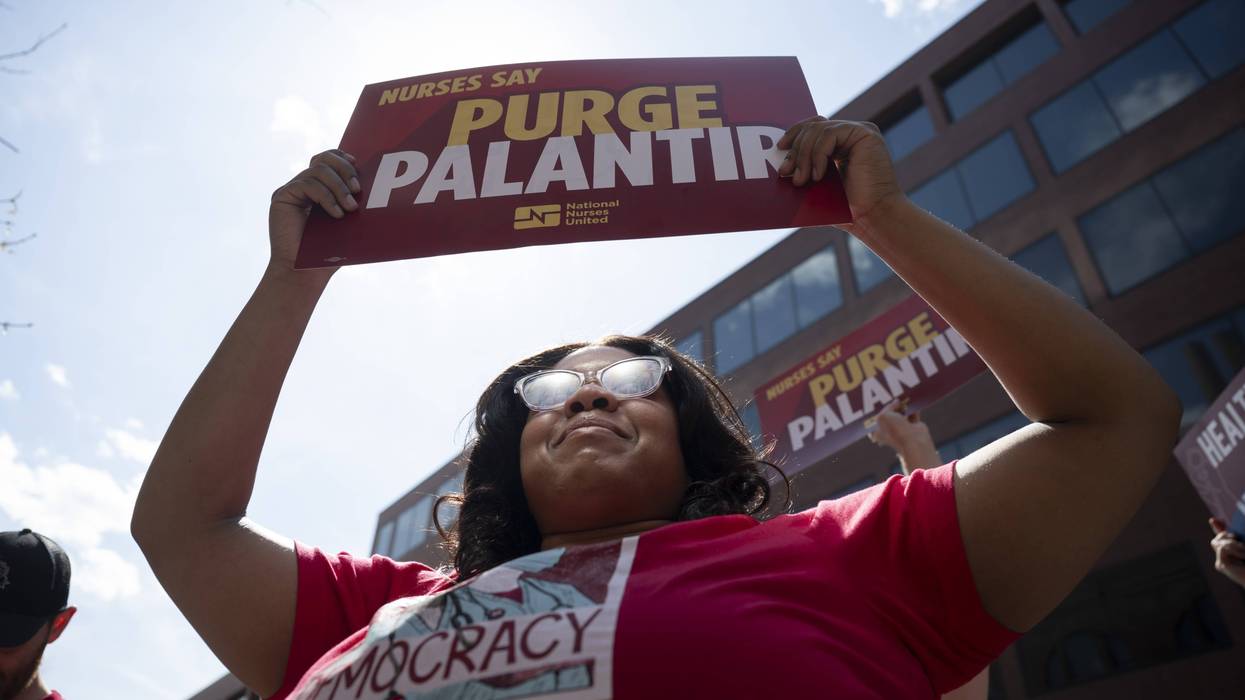
"I know how much these companies prefer to keep behind closed doors," said a former insurance industry executive. "Now we're learning that Palantir has been operating behind those doors, too."
The software firm Palantir has drawn scrutiny and recent public ire over its role in President Donald Trump's mass deportation campaign, the illegal US war in Iran, and Israel's genocidal assault on Gaza.
But a trove of documents obtained by the Electronic Frontier Foundation (EFF) reveals that the notorious tech company's tentacles have reached into the American healthcare system—including a widely criticized Medicare pilot program that uses AI models to review requests for medical services.
The documents include an application from Zyter, a healthcare technology company that the Centers for Medicare and Medicaid Services (CMS) chose to participate in the Medicare pilot program, formally known as the Wasteful and Inappropriate Service Reduction (WISeR) Model. Zyter's application mentions that Palantir "provides mission critical software infrastructure for CMS" and other government agencies, as well as "multiple" insurance companies. Zyter uses Palantir's software infrastructure, EFF noted.
Another document states that Palantir provides "AI-driven decision-making solutions" for "federal government entities and major payer customers such as Humana, Cigna, and Blue Shield of California."
The Center for Health and Democracy Education Fund, a nonprofit group founded by former health insurance executive turned whistleblower Wendell Potter, released a report Tuesday analyzing the documents unveiled by EFF, homing in on the "previously undisclosed claims of integration of Palantir Technologies’ products by major health insurers."
"As health insurers utilize AI more frequently, they are partnering with some of the nation’s largest technology corporations. Yet many of these relationships, including the technologies being used and the purposes they serve, remain largely unknown to the public," the report observed. "Given that these partnerships already exist, health insurers should immediately release to the public all vendor agreements involving the use of patient data."
The WISeR pilot debuted this year and has so far been rolled out in New Jersey, Ohio, Oklahoma, Texas, Arizona, and Washington state. News reports and internal documents show that the program was hastily implemented and has resulted in confusion and care delays for seniors. Vendors chosen to participate in the experiment earn a percentage of the estimated value of a denied claim, which critics say creates a perverse incentive to reject insurance claims.
The Center for Health and Democracy Education Fund demanded in its new report that insurance companies "immediately release to the public all vendor agreement involving the use of patient data." Without such information, the group warned, the public will not know key information such as the extent of AI involvement in coverage decisions.
"Patients should not have to wonder whether an undisclosed algorithm influenced their coverage determination, whether their medical information was shared with an outside technology company, or whether an automated system was evaluated for accuracy before affecting their care," the report concluded. "As AI becomes increasingly integrated into health insurance, it should not be allowed to make care-altering decisions, especially when it was designed by a company driven by profit rather than patient health."
Potter, a former Cigna executive who is now a vocal critic of the private insurance industry and supporter of Medicare for All, wrote in a series of social media posts on Tuesday that "I know how much these companies prefer to keep behind closed doors."
"Now we're learning that Palantir has been operating behind those doors, too," Potter wrote. "Is Palantir's technology helping insurers decide what medical care gets approved or denied? And why are we only learning about these relationships now?"
"Insurance companies chose to participate in a collaborative effort with the Trump administration to inject yet more chaos and damage into the ACA marketplace."
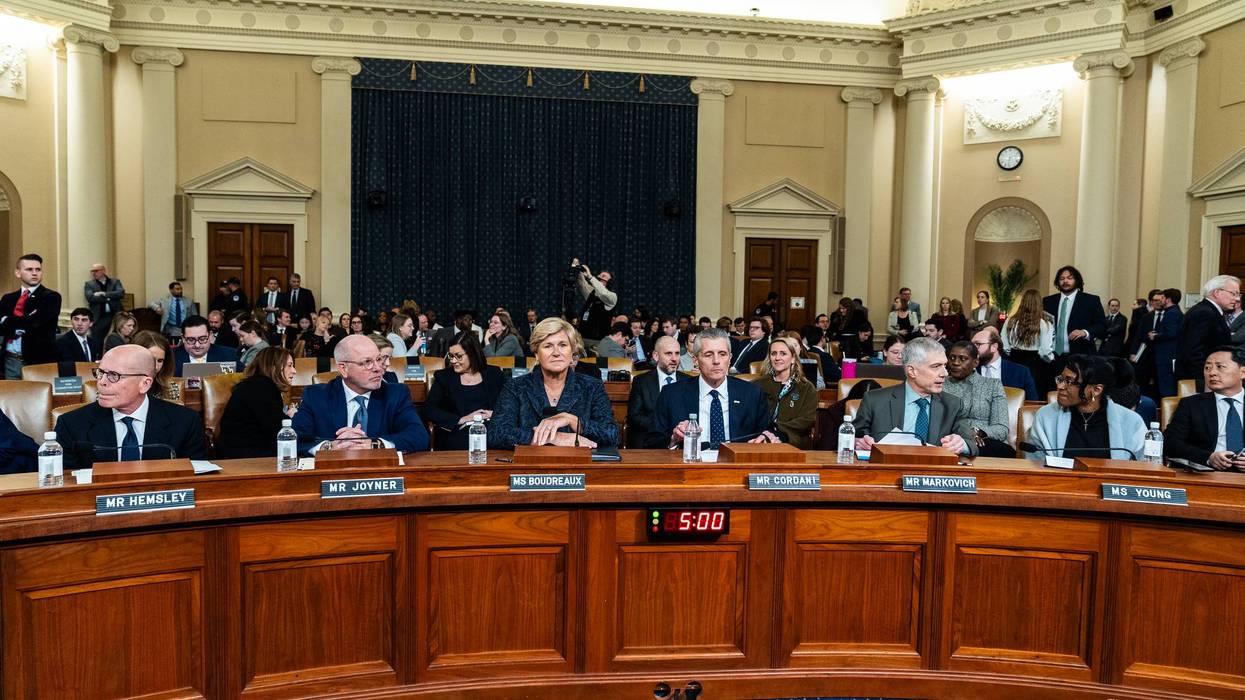
US Sen. Bernie Sanders and a dozen of his Democratic colleagues are investigating the roles that Cigna, UnitedHealthcare, and other leading private insurance companies are playing in the Trump administration's ongoing efforts to strip health coverage from millions of Americans.
On Monday, the lawmakers sent letters to the chief executives of 10 top insurance companies demanding answers on the firms' cooperation with the Trump administration in its recent removal of around 760,000 Affordable Care Act (ACA) enrollees, citing alleged fraud.
"Aligning with Republicans and their so-called ‘war on fraud,’ insurance companies chose to participate in a collaborative effort with the Trump administration to inject yet more chaos and damage into the ACA marketplace,” the senators wrote. “This year, nearly 3 million people have lost coverage while millions more are paying sky-high premiums and higher deductibles for insurance that covers less."
The lawmakers noted that the 760,000 coverage terminations "would not have been possible without the cooperation of insurance companies that have been quietly colluding with the Trump administration" for months. The senators disclosed in their letters that the ten largest insurance companies in the ACA marketplaces "received, and voluntarily complied with, a Centers for Medicare & Medicaid Services (CMS) data request designed to terminate coverage for hundreds of thousands of enrollees."
The letters characterize the CMS requests as "potentially unlawful" and take insurers to task for readily obeying the administration. The insurance companies that received letters from the senators are Cigna, UnitedHealthcare, AmeriHealth Caritas, Centene, Elevance, Florida Blue, Health Care Service Corporation, Imperial Insurance Companies, Oscar Health, and Molina Healthcare.
"Issuers, including Cigna, took specific steps to assist CMS in their efforts, including sending unsolicited communications to enrollees asking them to verify their Social Security numbers," the senators observed. "Issuers provided CMS with lists of enrollees who did not receive or respond to this unsolicited outreach asking for personally identifiable information. Those enrollees were deemed presumptively fraudulent, so-called 'phantom enrollees' and their coverage was terminated retrospectively, effective August 31, 2026."
The lawmakers added that "enrollees were identified as being subject to coverage termination based on metrics such as whether their projected income made them eligible for tax credits that cover the full premium of their plan, and whether they sought care during the 2026 plan year."
"As you know, there is no credible research or evidence in support of the longstanding Republican conspiracy theory that zero-dollar premium plans and zero-claims enrollment are reliable proxies for fraud," the senators wrote.
Analysts said in response to the administration's September announcement of mass coverage terminations that while fraud certainly exists in the ACA marketplaces, many of the people who lost coverage as part of the purge were likely enrolled legitimately. KFF Health News reported earlier this month that CMS has already "reinstated a small number of people whose coverage should not have been canceled."
"More could follow in the coming weeks if enrollees discover they are uninsured when they go to use their coverage," the outlet noted. "Overall, however, the administration is providing few details about the cancellations, such as how robust the outreach was to those it targeted, how long it takes for people to get reinstated after discovering their coverage was wrongly canceled, and how many such cancellations have been reversed."
The senators demanded answers from the 10 insurance company executives to a series of questions, including when the Trump administration first contacted them about its purported anti-fraud effort in the ACA marketplaces and what steps the firms took to ensure that eligible enrollees were not impacted.
The lawmakers contrasted the companies' voluntary cooperation with the Trump administration with their refusal to act on requests from Democrats last year to increase outreach to ACA enrollees amid relentless Republican attacks on the program.
"Insurance companies almost universally declined to perform any additional direct enrollee outreach, citing the cost and complexity associated with doing so outside the issuer renewal notice process," the senators wrote. "Issuers also expressed concern about being put at a competitive disadvantage should their enrollees choose to shop for more affordable coverage in light of rising premiums."