SUBSCRIBE TO OUR FREE NEWSLETTER
Daily news & progressive opinion—funded by the people, not the corporations—delivered straight to your inbox.
5
#000000
#FFFFFF
To donate by check, phone, or other method, see our More Ways to Give page.
Daily news & progressive opinion—funded by the people, not the corporations—delivered straight to your inbox.
The horror of DU is what happens after the battles are over.
Freedom’s just another word for... blowing up your children? Giving them cancer?
Militarism is obsolete, for God’s sake. Its technology is out of control. The latest shred of news that has left me stunned and terror-stricken is this, as reported by Reuters: “The Biden administration will for the first time send controversial armor-piercing munitions containing depleted uranium to Ukraine... It follows an earlier decision by the Biden administration to provide cluster munitions to Ukraine, despite concerns over the dangers such weapons pose to civilians.”
Russia’s war on Ukraine is a disaster at every level. Some 70,000 Ukrainians have died, according to The New York Times, and possibly another 120,000 have been wounded, with Russia’s casualty level actually far higher. The war (like all wars) has to stop, but NATO and the U.S., just like Russia itself, are looking not for peace and conflict resolution but victory. Killing the enemy is what matters, the more the better. War is humanity’s most horrific addiction. When it takes hold of a people’s soul, all environmental and human concerns vanish. And today—indeed, throughout the course of my lifetime—with the development of nuclear weapons, we’ve been at the brink of self-generated extinction. And we’re still playing with it, rather than trying to move beyond it.
DU stays in the environment, and has been linked to huge rises in cancer and birth defects in the conflict zones.
Depleted uranium—DU—is one of the playthings of war: At 1.6 times the density of lead, DU shells are the last word in penetration power: locomotives compressed to the size of bullets. The shells ignite the instant they’re fired and explode on impact.
I first started writing about depleted uranium in 2003, when I heard Doug Rokke (who died two and a half years ago) speak in Chicago. Doug, a career soldier, was involved in the first Gulf War, leading a team of soldiers whose job was to clean up the war zones in the aftermath of our bombing raids.
As I wrote then: Depleted uranium
Isn’t really depleted of anything. It’s dirty: U-238, the low-level radioactive byproduct of the uranium enrichment process. And when the ammo explodes, poof, it vaporizes into particles so fine—a single micron in diameter, small enough to fit inside red blood cells—that, well, ‘conventional gas mask filters are like a barn door...’
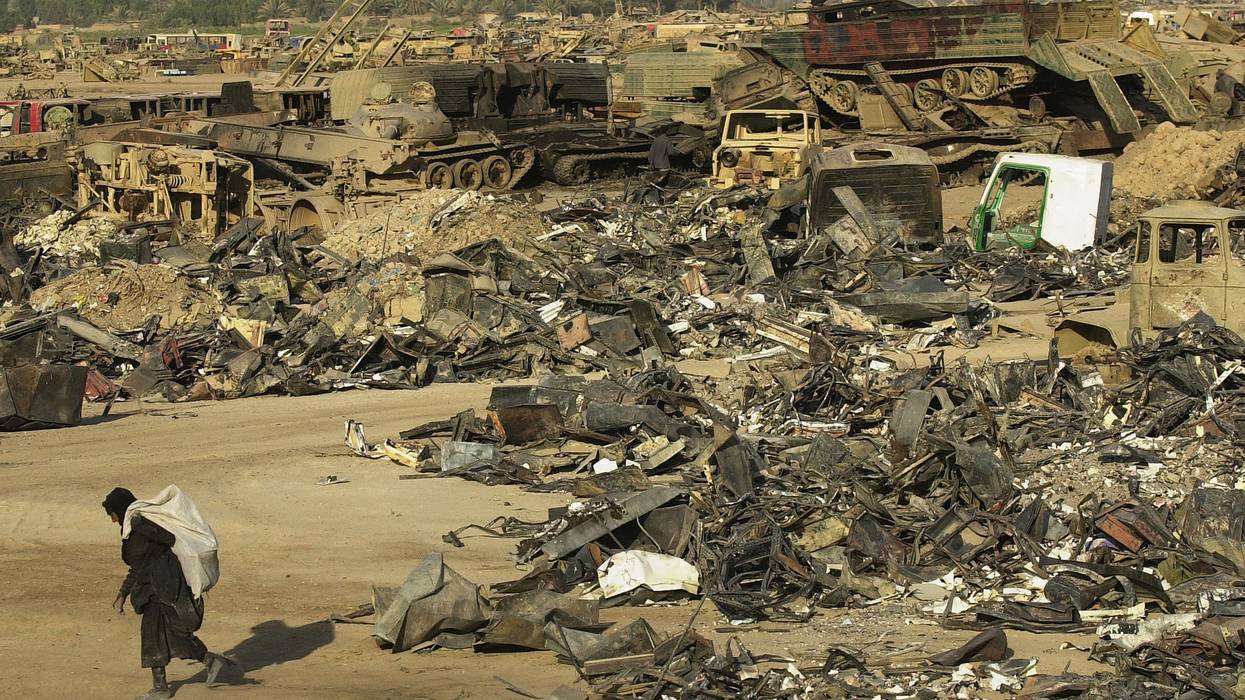
What’s not to love, if you’re the Pentagon? We pounded Saddam’s army with DU ammo in Gulf War 1 and destroyed it on the ground. Maybe you’ve seen pictures of what we did to it; GIs cleaning up afterward coined the term ‘crispy critters’ to describe the fried corpses they found inside Iraqi tanks and trucks.
But the horror of DU is what happens after the battles are over. DU stays in the environment, and has been linked to huge rises in cancer and birth defects in the conflict zones. As Doug Rokke said: “You can’t clean it up.”
But so what? According to Sydney Young, writing for the Harvard International Review:
In the past, leaders did not pay the necessary amount of attention to the risks of depleted uranium. Documents suggest that the United States may have known about the potential consequences of depleted uranium during conflicts in which it was used. The International Atomic Energy Agency (IAEA) published a 1991 report indicating that deploying depleted uranium in the Gulf War could have caused 500,000 cancer deaths.
However, the United States still used depleted uranium in the Middle East despite the risks, deeming that its military benefits outweighed the potential civilian impact. This calculus reflects a common trend in which Western countries justify human rights abuses under the guise of ‘national interest’ or military necessity.
Another tactic of the political militarists is to deny there’s any negative consequences to their actions. Young also notes:
Research also faces political barriers. Governments that use depleted uranium have a vested interest in preventing research that suggests it has negative effects on human health. For instance, the United States, United Kingdom, Israel, and France all opposed a 2001 United Nations resolution to document depleted uranium in war.
There’s a collective human addiction not simply to militarism and war, but to winning: to domination. A focus on winning in the moment obliterates any sense of the larger future. The creation of peace is not a simplistic game. It has no weapons to parade before the public, whose use will obliterate the enemy of the moment and make the world a better place once and for all.
Noting the horrific extent to which the Ukraine war has stalemated, Jeet Heer writes at The Nation: “The time is surely ripe for a diplomatic push. Unfortunately, the passions ignited by war always make negotiations difficult...” and, alas “a strong ‘taboo’ against public discussion of diplomacy pervades the NATO countries.”
This is understandable, he notes, considering the criminality of the Russian invasion and the horror it has inflicted on Ukraine: “But an interminable bloodbath on Ukrainian soil is also horrific.”
Humanity has to figure out how to talk to itself, not kill itself.
"Repeal of these authorizations would have no impact on current U.S. military operations and would support this administration's commitment to a strong and comprehensive relationship with our Iraqi partners."
As the U.S. Senate on Thursday teed up a vote to end the congressional authorizations for the Gulf and Iraq wars, President Joe Biden formally backed the bipartisan bill.
The progress on finally repealing the 1991 and 2002 authorizations for use of military force (AUMFs) comes just ahead of the 20th anniversary of the George W. Bush administration's costly and devastating invasion of Iraq.
The bill ( S. 316/H.R. 932) was reintroduced in February by Sens. Tim Kaine (D-Va.) and Barbara Lee (D-Calif.), and has GOP co-sponsors in both chambers. On Thursday, 19 Republican senators joined with all Democrats present to advance the measure.
The legislation has not yet been approved by the House of Representatives, which is narrowly controlled by the GOP. However, if it reaches the president's desk, he supports it, according to the statement of administration policy released Thursday.
While former Presidents Barack Obama and Donald Trump used the 2002 authorization to justify strikes against Islamic State in Iraq and Syria and Iranian Gen. Qasem Soleimani, respectively, the new Biden administration document notes that "the United States conducts no ongoing military activities that rely primarily on the 2002 AUMF, and no ongoing military activities that rely on the 1991 AUMF, as a domestic legal basis."
"Repeal of these authorizations would have no impact on current U.S. military operations and would support this administration's commitment to a strong and comprehensive relationship with our Iraqi partners," that policy statement adds. "President Biden remains committed to working with the Congress to ensure that outdated authorizations for the use of military force are replaced with a narrow and specific framework more appropriate to protecting Americans from modern terrorist threats."
Demand Progress Education Fund policy adviser Cavan Kharrazian said in a statement that "we are glad President Biden is supportive of getting these outdated AUMFs off the books, and that he is committed to work with Congress on presumably replacing the 2001 AUMF with a narrower framework."
"However, any serious attempt by President Biden to work with Congress on war powers reforms requires the administration to halt unauthorized participation of U.S. armed forces in hostilities that contravene the War Powers Act," Kharrazian stressed. "This includes ending U.S. support for the Saudi-led coalition's war on Yemen, ceasing the use of U.S. forces to protect Syrian oil fields and battling Iranian-backed militias, and putting an end to legally dubious military operations in the Horn of Africa."
The campaigner continued:
Moreover, the administration must commit to full legal transparency regarding the use of military force. Both this administration and previous administrations have failed to provide Congress with timely reporting on the 2001 AUMF, as required by 50 U.S. Code § 1550. Additionally, President Biden has failed to respond to lawmakers' inquiries about the administration's legal justifications for the expansive use of the 2001 AUMF and Article 2 authorities. Without such transparency, Congress is unable to fully exercise its oversight and legislative duties over war and peace.
It's encouraging to see an administration committed to addressing outdated AUMFs. However, a genuine commitment will involve respecting congressional authority over war by proactively ending unauthorized military activities and implementing comprehensive transparency measures.
In a series of tweets, the Quaker advocacy group Friends Committee on National Legislation (FCNL) welcomed the administration's position and highlighted fresh comments from Kaine and Sen. Todd Young (R-Ind.), a co-sponsor, who gathered outside the U.S. Capitol on Thursday with members of the American Legion.
"There's no reason—none—to have a war authorization against a strategic partner, and so that's the first reason why we need to do this," Kaine said of Iraq, adding that the repeal must also occur to honor U.S. service members.
Kaine called out previous failures by Congress to end the AUMFs, and noted that leaving them in place enables abuse. While confirming he has not spoken with House Speaker Kevin McCarthy (R-Calif.) about the bill, the senator expressed optimism that it will pass—saying of the lower chamber, "there's a wonderful bipartisan coalition there as well."
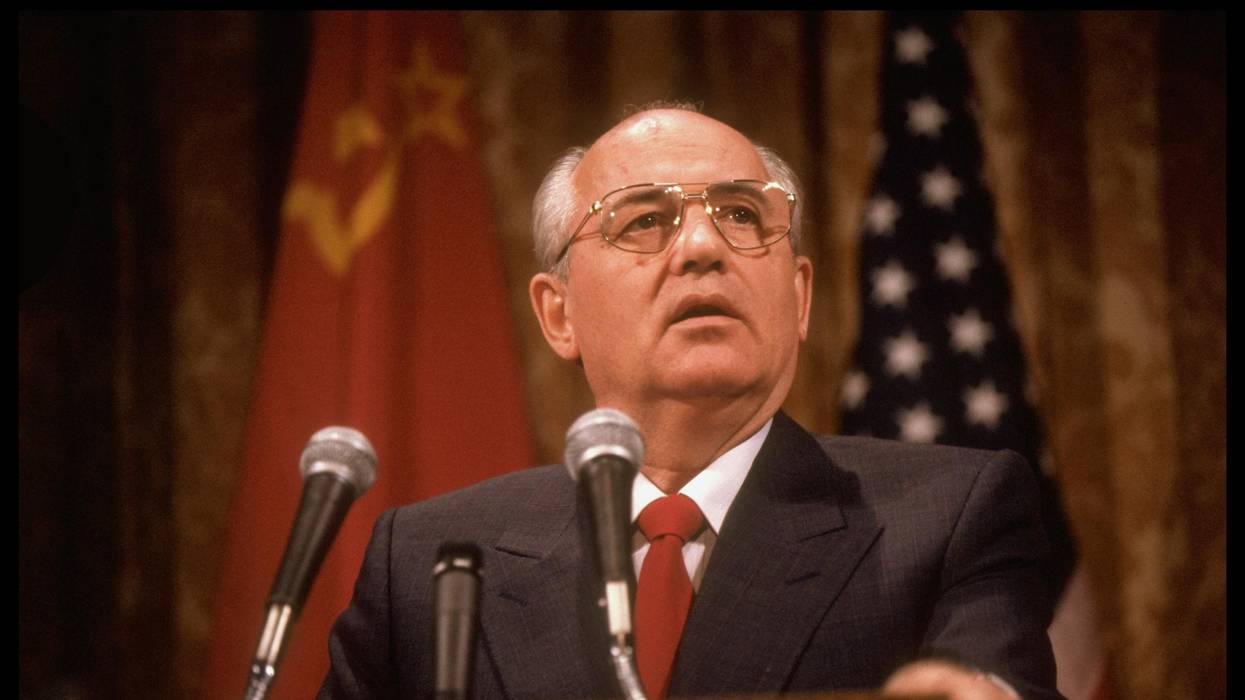
Mikhail Gorbachev, the former Soviet president whose gradual opening of his country paved the way for both the end of the Cold War and the collapse of the communist empire, died Tuesday at age 91.
"We could only solve our problems by cooperating with other countries... And therefore we needed to put an end to the Iron Curtain."
Gorbachev died following a "serious and long illness," officials at Moscow Central Clinical Hospital told Russian state media.
In a statement, United Nations Secretary-General Antonio Guterres said he was "deeply saddened" to learn of Gorbachev's passing, calling the former Soviet leader "a one-of-a kind statesman who changed the course of history."
"He did more than any other individual to bring about the peaceful end of the Cold War," Guterres added. "Receiving the 1990 Nobel Peace Prize, he observed that 'peace is not unity in similarity but unity in diversity.' He put this vital insight into practice by pursuing the path of negotiation, reform, transparency, and disarmament."
Following the deaths of three Soviet leaders in just over two years, Gorbachev took control of the Union of Soviet Socialist Republics (USSR) in March 1985 amid a moribund national economy and heightened Cold War tensions with the United States, then led by the ardently imperialist Reagan administration.
In an attempt to address his country's economic woes, Gorbachev implemented the policy of perestroika, or "restructuring," which sought to improve efficiency by decentralizing decision-making. He also ushered in the age of glasnost, or "openness," allowing for erstwhile unimaginable freedoms in what had for generations been a rigidly totalitarian state. Both of Gorbachev's grandfathers were imprisoned in gulags during the Stalinist repression of his youth, and he and his family also survived the 1932-33 engineered famine that killed millions in Ukraine and other parts of the Soviet Union.
Despite then-President Ronald Reagan condemning the Soviet Union as an "evil empire" and U.S. nuclear aggression epitomized by the placement of new nuclear missiles in Europe and research into the so-called "Star Wars" space-based missile defense system, Gorbachev chose to pursue a policy of rapprochement with the United States. This led to a series of bilateral summits between the two leaders that bore fruits in the form of the Intermediate-Range Nuclear Forces Treaty signed in December 1987.
Gorbachev also presided over the pullout of Soviet forces from Afghanistan, a costly war lasting nearly a decade that ended the same way every invasion of Afghanistan over the past 200 years has ended--in defeated withdrawal.
More importantly, Gorbachev--unlike his predecessors--did not intervene militarily when Soviet satellite states in Eastern Europe began asserting their independence from Moscow, culminating in the dramatic destruction of the Berlin Wall in 1989 that effectively marked the end of the Cold War.
He later explained: "On the day I became Soviet leader, in March 1985, I had a special meeting with the leaders of the Warsaw Pact countries and told them, 'You are independent, and we are independent. You are responsible for your policies, we are responsible for ours. We will not intervene in your affairs, I promise you.'"
In the end, the rot within the Soviet Union and the forces Gorbachev unleashed by opening its society proved too much and the once-mighty empire came crashing down in 1991. Many Russians blame Gorbachev for the loss of the power and prestige that came with being one of the world's two superpowers, and some observers view Russian President Vladimir Putin's aggressive policies and actions as an effort to regain lost Soviet glory--and territory.
By the time Gorbachev stepped down as the last Soviet leader on Christmas day 1991, relations with the West had been so thoroughly transformed that the USSR--which regularly used its veto power as a permanent member of the United Nations Security Council to thwart U.S. ambitions--voted in favor of the resolution authorizing the invasion of Saddam Hussein's Iraq.
"We could only solve our problems by cooperating with other countries. It would have been paradoxical not to cooperate," Gorbachev said of his policies. "And therefore we needed to put an end to the Iron Curtain, to change the nature of international relations, to rid them of ideological confrontation, and particularly to end the arms race."
The U.S. has been accused of running roughshod over Gorbachev's goodwill gestures during the post-Soviet era, especially by expanding NATO to Russia's borders by admitting former Warsaw Pact members into the alliance.
Contrary to popular belief, Gorbachev said he never made any agreement with James Baker, Reagan's secretary of state, to end the Cold War in exchange for a promise to not expand NATO.
"The topic of 'NATO expansion' was not discussed at all, and it wasn't brought up in those years," Gorbachev said in 2014. "Another issue we brought up was discussed: making sure that NATO's military structures would not advance and that additional armed forces would not be deployed on the territory of the then-[East Germany] after German reunification."
Last December, as Putin cited NATO provocation while preparing to invade Ukraine, Gorbachev accused the United States of growing "arrogant and self-confident" following the collapse of the Soviet Union.
"How can one count on equal relations with the United States and the West in such a position?" he asked.
"Americans have a severe disease--worse than AIDS," Gorbachev said earlier. "It's called the winner's complex."
International Conscientious Objectors' Day is observed annually on May 15. Thirty years ago this month, at the conclusion of the first Gulf War, Private First Class Sam Lwin and 24 other Marines were charged with desertion. They were among tens of thousands across the U.S. armed forces who applied for conscientious objector, or CO, status or otherwise resisted participation in a war that they came to realize was wrong. Lwin, a Burmese-American student and Marine reservist of Fox Company, led seven others in his unit to resist the U.S. Marine Corps, ultimately joining a mass exodus of the military in which soldiers deserted at higher percentages than even in the Vietnam War. The story of why these soldiers resisted, how and with whose help is lesser known but deserves greater recognition.
The first Gulf War had a few causes, but the most immediate was a disagreement about oil pricing in the Organization of Petroleum Exporting Countries, or OPEC, that came to a head in mid 1990. Iraq, still devastated from the nearly 8-year-long Iran-Iraq war that had only concluded a couple years earlier, desperately needed oil price stability to recover. Kuwait also held some significant Iraqi debt which, if they were to disappear, would hasten Iraq's recovery. When Sheikh Jaber al-Ahmad al-Sabah of Kuwait again refused to comply with OPEC production quotas, selling more oil than was agreed upon and thus dragging the price of oil down for the rest of OPEC, President Saddam Hussein of Iraq threatened a military response in early July 1990. The invasion began early the next month.
An international coalition largely led by the United States quickly formed to denounce and repel the Iraqi invasion. One major concern was that, after a rapid conquest of Kuwait, Iraq could invade and wrest control of the massive oil fields in U.S.-allied Saudi Arabia. Within days of Hussein's invasion into Kuwait, the U.S. soldiers were sent into Saudi Arabia. Although the initial objective of Operation Desert Shield, as it was known, was "wholly defensive," mission creep led U.S. forces to start bombing Iraq within months, starting in mid January 1991.
The military coalition that formed against Iraq justified intervention in the regional conflict with a number of reasons. Under Hussein, Iraq had a documented history of human rights abuses, including the use of chemical weapons, biological weapons and torture. Iraqi human rights abuses continued in Kuwait. But after the Iraqi invasion into Kuwait, the Kuwaiti government exaggerated and even invented Iraqi atrocities, specifically targeting the international and American public with this propaganda through the Hill & Knowlton public relations firm. The PR campaign successfully rallied the public and Congress against Iraq. Thus, much of the U.S. public was primed to view Iraqis as monstrous, and themselves as heroic liberators. This rhetoric strongly informed the U.S. military's vision of itself as well.
Many soldiers of color experienced racism during boot camp, but racist harassment increased significantly for those who came out as COs.
The resisters within the U.S. military saw things differently. Although Saddam Hussein's aggression was worth denouncing, many soldiers did not find it heroic to defend a foreign dictator across the world just to keep some oil fields in friendly hands. Many, including Sam Lwin, enlisted with the military as teenagers uncertain about their life paths or how they might pay for college. For many, and especially for people of color in the military, patriotism was less of a motivator than the desire for status, funding for education, and a decent paying job in the face of few other options.
Others joined genuinely wanting to do good in the world, but over time realized that, in the words of Major General Smedley D. Butler, "war is a racket" meant to benefit a small few. As West Point graduate, former Army career officer and CO David Wiggins put it, "I had been taught that anything below officer was for inferior types--minorities, bums, criminals in lieu of jail ... Their lives were pretty insignificant, and it was no great loss if a few of them died defending our freedom."
When soldiers applied for conscientious objector status, many faced various threats, docked pay, incarceration and isolation, and psychiatric evaluations. Many soldiers of color experienced racism during boot camp, but racist harassment increased significantly for those who came out as COs.
As the possibility of a U.S. military intervention around Kuwait increased, Lwin began to seriously consider what it would mean to participate in such a violent venture. He filed for CO status a few weeks before his unit was called to report for duty, and when his application was ignored, he went AWOL. He reached out to the War Resisters League, or WRL, which counseled him and hundreds of other COs around the country seeking help in getting out. Throughout the ordeal, Michael Marsh of WRL worked with Lwin and 29 other COs to have their status recognized and to reduce any penalties that may arise--and Marsh was just one out of dozens of WRL counselors working with COs.
Without Sam Lwin standing up for his conscience and thus demonstrating that that was even an option, the fates of seven other Marines could have been very different.
Lwin was a student at The New School at the time, and when he told his fellow students about his predicament, the students formed a grassroots group to support and defend Lwin's conscience. Hands Off Sam!, and later just Hands Off! as the group expanded, was composed of dozens of New School students who helped publicize Lwin's story, stood with him as he protested before the Marine armory in the Bronx, and packed the court rooms for his and his fellow COs' court-martials. These groups successfully convinced judges that the Marine Corps' treatment of COs like Lwin was systemic, abusive and illegal. Lwin initially faced seven years in prison; his civilian support had the sentence reduced to just four months.
It is often the case that soldiers with doubts about their military participation do not attempt to resist until a fellow soldier does. Sam Lwin was the one who suddenly revealed the possibility of resistance to his seven other fellow Marines in Fox Company. Without Lwin standing up for his conscience and thus demonstrating that that was even an option, the fates of the seven other Marines could have been very different.
But on the other hand, as Sam Lwin's story illustrates, soldiers within the military who come to realize their conscientious objections often have a very difficult time having their concerns acknowledged by their superiors. This is especially true in times when the military is actively engaged or preparing to engage in a conflict, a disturbing trend considering the fact that the U.S. armed forces have not seen peace in close to 20 years. And with President Biden's $13 billion dollar military budget increase over Trump's budget, the American war machine does not seem to be slowing or shrinking.
COs within the military often need the assistance of civilian groups to successfully resist. So, for the sake of fellow soldiers who may be inspired by a CO's resistance, for the sake of a world constantly threatened by the whims of its largest military, and for the sake of the COs themselves, let us do more to promote and honor those who refused to participate in war.
Human rights and anti-war activists marked the 18th anniversary of the second of three American-led invasions of Iraq by renewing calls for the U.S.--this time the Biden administration--to pay reparations for 30 years of nonstop aggression against the Iraqi people.
"We call on the Biden administration to finally provide remedies and reparations for generations of endless war."
--CCR
"Eighteen years after the United States invaded Iraq on a patently false basis, we uplift the work of Iraqi activists, civil society, and their partners building local and transnational social justice movements under extremely precarious conditions," the Center for Constitutional Rights (CCR) said in a statement.
CCR also condemned President Joe Biden--who voted for the Iraq war and who bombed the country just days after taking office--"for carrying on the legacy of illegal bombings."
Jared Keyel, a researcher whose work focuses on Iraqi refugee resettlement, wrote for Common Dreams that Biden must "end the American war against Iraq without precondition or caveat," bring the war's "planners and perpetrators" to justice, "vastly expand" financial support for refugee resettlement, and pay reparations to Iraqis.
"Reparation funding must be allocated to provide individual Iraqis with monetary compensation for the extreme pain and suffering we have caused them and to (re)build their lives however they see fit," wrote Keyel.
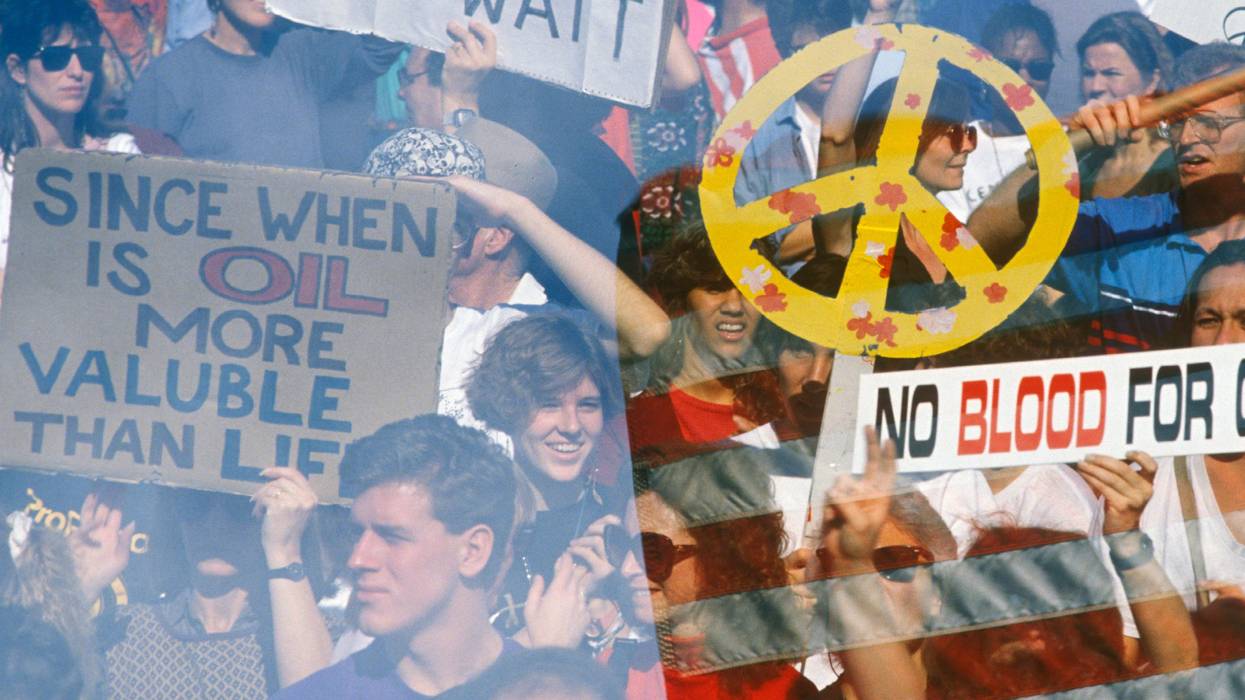
Waged on the bogus premise of weapons of mass destruction that didn't exist, the U.S. invasion of Iraq--originally dubbed Operation Iraqi Liberation (OIL) by the George W. Bush administration--began on March 20, 2003 with the seizure of oil terminals in the Persian Gulf. This was followed by a "shock-and-awe" bombing campaign that claimed the first few thousand of what would ultimately be at least 100,000 and perhaps as many as 500,000 Iraqi lives.
The eight-year U.S.-led war and occupation--during which the American invaders committed massacres, torture, rape, and numerous other atrocities--would leave Iraq largely in ruins. But that wasn't the end, or even the beginning, of the matter.
In 1991, the U.S.-led Gulf War not only killed thousands of Iraqi civilians, it also led to a U.S.-imposed sanctions regime that, according to a United Nations agency, was responsible for the premature deaths of 576,000 Iraqi children. Asked in 1996 whether she thought that was too high a price to pay, Madeleine Albright, then secretary of state under President Bill Clinton, said that "the price is worth it."
Twenty-three years later, and three years after he withdrew most U.S. troops from Iraq, then-President Barack Obama launched the U.S.-led war against Islamic State in Iraq and Syria (ISIS). Thousands of U.S. airstrikes under Obama and former President Donald Trump--who fulfilled his campaign promise to "bomb the shit out of" ISIS militants and "take out their families"--left thousands more Iraqi men, women, and children dead and entire cities in ruins.
Since 1991 the people of Iraq have been subjected to ceaseless U.S. invasion, occupation, bombardment, and sanctions. In addition to a wrecked infrastructure and devastated economy, less visible damage includes millions of Iraqis afflicted with psychological trauma and countless people--especially babies and children--suffering from a surge in cancers, birth defects, and other ailments believed to be caused by U.S. use of depleted uranium and other toxic weapons and materials.
Meanwhile, the corporations and their owners who make up the military-industrial complex have profited handsomely every step of the way.
"Americans can demonstrate contrition, and work to ameliorate... the suffering their government and military have caused by making that government make reparations to the people of Iraq."
--Jared Keyel
Advocates say that these are some of the wrongs that reparations can begin to right.
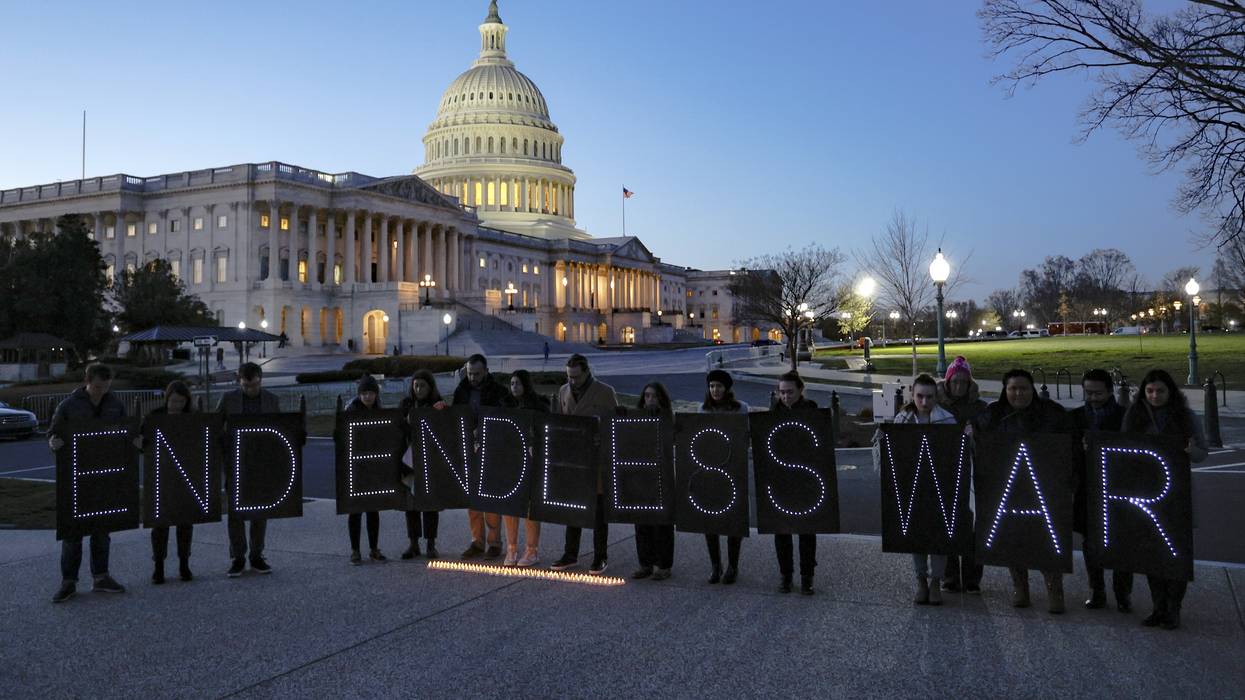
"We call on the Biden administration to finally provide remedies and reparations for generations of endless war," urged CCR. "Biden must lead a shift away from the unlawful policies of endless war and militarization toward rights-based policies and practices consistent with constitutional and international law obligations, centering those most impacted--Iraqis calling for justice and liberation from U.S. militarism and its legacies of sectarianism and violence."
"Americans owe a debt to the people of Iraq that can never be repaid in full," wrote Keyel. "However, it is incumbent and imperative that we try."
"No amount of money can ever fully heal the physical and psychic wounds that the American war against Iraq has caused," he added. "But, on the inauspicious 30th anniversary of this conflict, Americans can demonstrate contrition, and work to ameliorate, if only partially, the suffering their government and military have caused by making that government make reparations to the people of Iraq."
As frustration is building among federal lawmakers over President Joe Biden's recent retaliatory airstrikes on facilities in Syria that the administration said belonged to Iran-backed militia groups, a bipartisan group of senators on Wednesday introduced legislation to rein in some of the president's war powers.
Sens. Tim Kaine (D-Va.) and Todd Young (R-Ind.) reintroduced a resolution (pdf) to repeal the 1991 and 2002 Authorizations for Use of Military Force (AUMF) against Iraq. The measure--which notably leaves out the 2001 AUMF that passed after the 9/11 attacks--is co-sponsored by Sens. Tammy Duckworth (D-Ill.), Mike Lee (R-Utah), Chris Coons (D-Del.), Chuck Grassley (R-Iowa), Dick Durbin (D-Ill.), and Rand Paul (R-Ky).
"Last week's airstrikes in Syria show that the executive branch, regardless of party, will continue to stretch its war powers," Kaine said in as statement. "Congress has a responsibility to not only vote to authorize new military action, but to repeal old authorizations that are no longer necessary."
"The 1991 and 2002 AUMFs that underpinned the war against Iraq need to be taken off the books to prevent their future misuse," he added. "They serve no operational purpose, keep us on permanent war footing, and undermine the sovereignty of Iraq, a close partner. I call on Congress to promptly take up this measure and for the Biden administration to support it to finally show the American people that the Article I and II branches can work together on these issues."
The move came as Biden is facing criticism from lawmakers and legal scholars over the February 25 "revenge" bombing that served as an official response to a series of rocket attacks on Iraqi military bases that host U.S. troops. There was another rocket attack just hours before the resolution's introduction.
"If we assess a further response is warranted, we will take action again in a manner and time of our choosing and we reserve that option," White House Press Secretary Jen Psaki said Wednesday. "What we won't do is make a hasty or ill-informed decision that further escalates the [situation] or plays into the hands of our adversaries."
Duckworth, a veteran, said in a statement that "as a nation, we are long overdue to have a thorough and honest reckoning about responsibly exercising congressional war powers, which includes repealing outdated authorities like the 1991 and 2002 AUMFs. For decades, administrations of both parties have kept these authorizations on the books to justify military action in the region without returning to Congress to make their best legal case for the need for such action."
Politico reported Tuesday that some lawmakers--including Kaine--are frustrated that Biden did not notify them about Syria, ordered the strikes without seeking congressional approval, and still hasn't had a briefing for senators.
"I still need to be convinced that any president has the authorization required to take a retaliatory strike, especially outside of Iraq," said Sen. Chris Murphy (D-Conn.), who sat in on the briefing for Senate aides. "I didn't hear anything today that convinced me that there was justification that I'd apply to any administration."
Kaine, a member of the Senate Armed Services and Foreign Relations committees, told Politico that he learned about the strikes "on the news" and "I don't think I should be learning about it that way." He added that because Biden served as chairman of the Foreign Relations Committee, "he should understand more than most--more than just virtually anybody--that the Article I branch has got to have a role here."
Though Kaine and other co-sponsors referenced the Syria strikes in their comments about the proposal, Lawfare noted that Biden did not rely on any AUMF in his legally required report to Congress on the action--he only cited his constitutional authority as chief executive and commander in chief.
"This is not surprising," Lawfare added. "Although the Bush, Obama, and Trump administrations cited the 2001 and 2002 AUMFs as continuing authority to use force in Iraq and Syria (including against the Islamic State), members of Congress of both parties have grown increasingly uncomfortable as successive presidents have stretched the 2001 and 2002 authorizations beyond their original purposes--the latter authorization especially so."
While the Kaine-Young resolution doesn't address the 2001 AUMF, Congress faced mounting pressure to end that authorization even before Biden authorized airstrikes last week.
As Common Dreams reported in mid-February, an ideologically diverse coalition of 25 groups sent a letter calling on lawmakers to "reorient U.S. foreign policy away from the unaccountable, interventionist approach we've seen for nearly two decades" by sunsetting the 2001 AUMF and repealing the 2002 AUMF. Some of those same organizations backed a letter to Biden demanding an end to "endless wars."
The first letter specifically called on lawmakers to support legislation on those two authorizations from Rep. Barbara Lee (D-Calif.)--the only member of Congress who opposed the 2001 invasion of Afghanistan that led to the longest-ever U.S. war.
"The strike in Syria exemplifies why Congress must take action to repeal the 2001 and 2002 AUMF," Lee tweeted after the attack. "No single person should have the power to authorize military force. The era of forever wars must end."
Thirty years ago, when the United States launched Operation Desert Storm against Iraq, I was a member of the Gulf Peace Team. We were 73 people from fifteen different countries, aged 22 to 76, living in a tent camp close to Iraq's border with Saudi Arabia, along the road to Mecca.
We aimed to nonviolently interpose ourselves between the warring parties. Soldiers are called upon to risk their lives for a cause they may not know much about. Why not ask peace activists to take risks on behalf of preventing and opposing wars?
So we witnessed the dismal onset of the air war at 3:00 a.m. on January 17, 1991, huddled under blankets, hearing distant explosions and watching anxiously as war planes flew overhead. With so many fighter jets crossing the skies, we wondered if there would be anything left of Baghdad.
Ten days later, Iraqi authorities told us we must pack up, readying for a morning departure to Baghdad. Not all of us could agree on how to respond. Adhering to basic principles, twelve peace team members resolved to sit in a circle, holding signs saying "We choose to stay."
Buses arrived the next morning, along with two Iraqi civilians and two soldiers. Tarak, a civilian, was in charge, under orders to follow a timetable for the evacuation. Looking at the circle of twelve, Tarak seemed a bit baffled. He walked over to where I stood. "Excuse me, Ms. Kathy," he asked, "but what am I to do?"
"No one in that circle means you any harm," I assured him. "And no one wishes to disrespect you, but they won't be able board the bus on their own. It's a matter of conscience."
Tarak nodded and then motioned to the other Iraqis who followed him as he approached Jeremy Hartigan, the tallest person sitting in the circle. Jeremy, an elderly UK lawyer and also a Buddhist, was chanting a prayer as he sat with his sign.
Tarak bent over Jeremy, kissed him on the forehead, and said, "Baghdad!" Then he pointed to the bus.
Next, he, the other civilian and two Iraqi soldiers carefully hoisted Jeremy, still in his cross-legged position, and carried him to the top step of the bus. Gently placing him down, Tarak then asked, "Mister, you okay?!" And in this manner they proceeded to evacuate the remaining eleven people in the circle.
On February 13, 1991, two 2,000 lb. U.S. laser guided missiles killed 400 civilians, mostly women and children.
Another evacuation was happening as Iraqi forces, many of them young conscripts, hungry, disheveled and unarmed, poured out of Kuwait along a major highway, later called "the Highway of Death."
Boxed in by U.S. forces, many Iraqis abandoned their vehicles and ran away from what had become a huge and very dangerous traffic jam. Iraqis attempting to surrender were stuck in a long line of Iraqi military vehicles. They were systematically slaughtered.
"It was like shooting fish in a barrel," said one U.S. pilot of the air attack. Another called it "a turkey shoot."
Days earlier, on February 24th, the United States Army forces buried scores of living Iraqi soldiers in trenches. According to The New York Times, Army officials said "the Iraqi soldiers who died remained in their trenches as plow-equipped tanks dumped tons of earth and sand onto them, filling the trenches to ensure that they could not be used as cover from which to fire on allied units that were poised to pour through the gaps."
Shortly after viewing photos of gruesome carnage caused by the ground and air attacks, President George H.W. Bush called for a cessation of hostilities on February 27th, 1991. An official cease fire was signed on March 4.
It's ironic that in October of 1990, Bush had asserted that the U.S. would never stand by and let a larger country swallow a smaller country. His country had just invaded Grenada and Panama, and as President Bush spoke, the U.S. military pre-positioned at three Saudi ports hundreds of ships, thousands of aircraft, and millions of tons of equipment and fuel in preparation to invade Iraq.
Noam Chomsky notes that there were diplomatic alternatives to the bloodletting and destruction visited upon Iraq by Operation Desert Storm. Iraqi diplomats had submitted an alternative plan which was suppressed in the mainstream media and flatly rejected by the U.S.
The U.S. State Department, along with Margaret Thatcher's government in the United Kingdom, were hell-bent on moving ahead with their war plans. "This was no time to go wobbly," U.K. Prime Minister Margaret Thatcher famously warned Bush.
The resolve to attack and punish Iraqis never ceased.
After the "success" of Operation Desert Storm, the bombing war turned into an economic war, which lasted through 2003. As early as 1995, United Nations documents clarified that the economic war, waged through continued imposition of U.N. economic sanctions against Iraq, was far more brutal than even the worst of the 1991 aerial and ground war attacks.
In 1995, two Food and Agriculture Organization scientists estimated that more than half a million Iraqi children under age five had likely died due to economic sanctions.
In February, 1998, while visiting a hospital in Baghdad, I watched two friends from the United Kingdom trying to absorb the horror of seeing children being starved to death because of policy decisions made by governments in the UK and the U.S. Martin Thomas, himself a nurse, looked at mothers sitting cross legged, holding their limp and dying infants, in a ward where helpless doctors and nurses tried to treat many dozens of children.
"I think I understand," said Thomas. "It's a death row for infants." Milan Rai, now editor of Peace News and then the coordinator of a U.K. campaign to defy the economic sanctions, knelt next to one of the mothers. Rai's own child was close in age to the toddler the mother cradled. "I'm sorry," Rai murmured. "I'm so very sorry."
Those six words whispered by Milan Rai, are, I believe, incalculably important.
If only people in the U.S. and the UK could take those words to heart, undertaking to finally pressure their governments to echo these words and themselves say, "We're sorry. We're so very sorry."
We're sorry for slaughtering hundreds of thousands of your children through economic sanctions and then expecting you to thank us for liberating you.
We're sorry for coldly viewing your land as a "target rich environment" and then systematically destroying your electrical facilities, sewage and sanitation plants, roads, bridges, infrastructure, health care, education, and livelihood. We're sorry for believing we somehow had a right to the oil in your land, and we're sorry many of us lived so well because we were consuming your precious and irreplaceable resources at cut rate prices.
We're sorry for slaughtering hundreds of thousands of your children through economic sanctions and then expecting you to thank us for liberating you. We're sorry for wrongfully accusing you of harboring weapons of mass destruction while we looked the other way as Israel acquired thermonuclear weapons.
We're sorry for again traumatizing your children through the 2003 Shock and Awe bombing, filling your broken down hospitals with maimed and bereaved survivors of the vicious bombing and then causing enormous wreckage through our inept and criminal occupation of your land.
We're sorry. We're so very sorry. And we want to pay reparations.
From March 5 - 8, Pope Francis will visit Iraq. Security concerns are high, and I won't begin to second guess the itinerary that has been developed. But knowing of his eloquent and authentic plea to end wars and stop the pernicious weapons trade, I wish he could kneel and kiss the ground at the Ameriyah shelter in Baghdad.
There, on February 13, 1991, two 2,000 lb. U.S. laser guided missiles killed 400 civilians, mostly women and children. Another 200 were severely wounded. I wish President Joe Biden could meet the Pope there and ask him to hear his confession.
I wish people around the world could be represented by the Pope as a symbol of unity expressing collective sorrow for making war after hideous war, in Iraq, against people who meant us no harm.
A version of this article first appeared at The Progressive.org
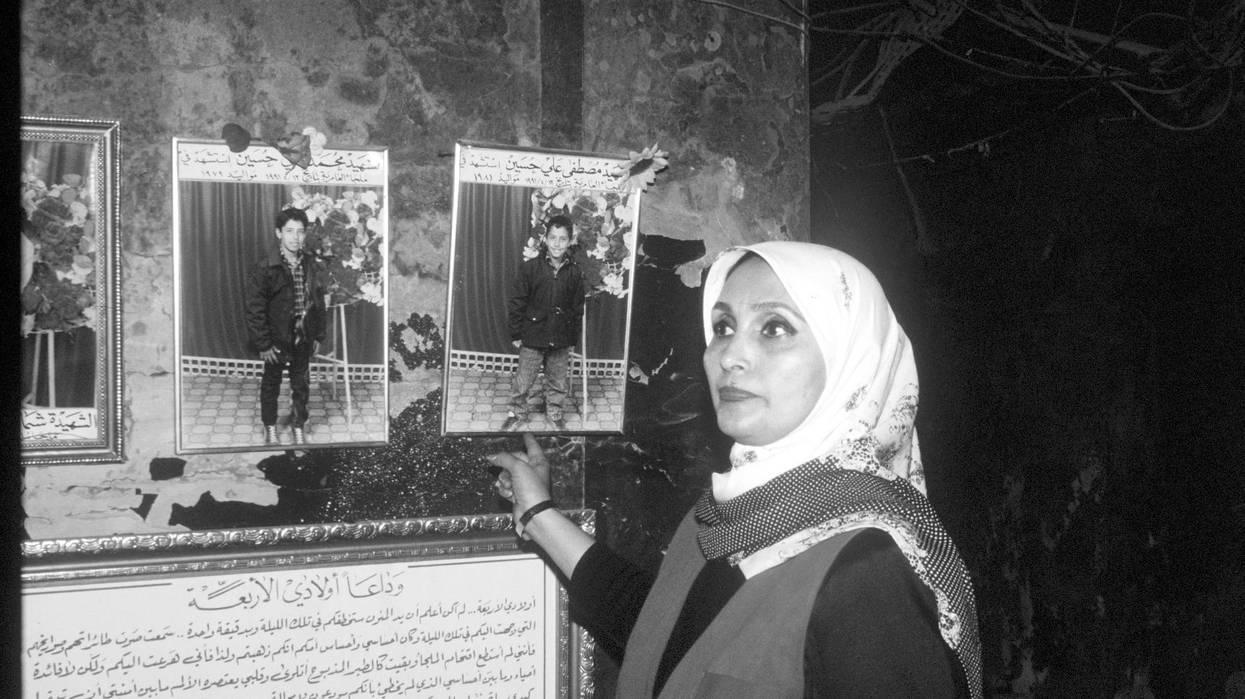
The traces of the attack were visible everywhere. There was a large hole in the solid concrete roof. The rebars had been torn apart. On the walls there were pictures in long lines. Pictures of children, who should have had their lives ahead of them. Pictures of burnt bodies. Their lives ended abruptly in the very place where they thought they would be safe.
Intesar Ahmed showed me around in the shelter in al-Amiriya on the western outskirts of Baghdad. She told me what happened at four o'clock in the morning on February 13, 1991.
"Every night during the war, people sought refuge here. They were civilians, innocent people. US bombs killed our neighbors and friends. 52 of the dead were children under the age of five, twelve were infants. This was where their life ended..."
When I visited al-Amiriya, more eleven years had passed since that dramatic night. But during the visit in October 2012, it felt so close.
Hundreds of people had huddled in the shelter. Some of them were probably asleep when the first missile blew up the hole in the roof. Four minutes later, the next missile penetrated into the shelter. What did they think during those minutes?
I try to imagine the fear, the panic, the anxiety of death. But I think it is impossible to understand. 408 people lost their lives that night.
When the attack on the shelter was carried out, the Gulf War had been going on for almost a month. The coalition led by U.S. had begun its airstrikes against Iraq on January 17, 1991. The official aim was said to be to save Kuwait and enforce the Iraqi army to leave Iraq's small neighbour to the south.
A quarter of a million Iraqis lost their lives during the six weeks of the war. That can be compared to the fact that 148 Americans were killed.
In the tv news, the Gulf War was portrayed as some kind of video game. The viewers got to see video clips with cool light effects when the missiles hit their targets. "Smart bombs" became a concept.
The reality on the ground was different.
Ramsey Clark, former U.S. Secretary of Justice, traveled to Iraq shortly after the war. What he saw -- the result of 42 days of bombings - shocked him. He drew the conclusion that this was not a war. It was rather "a planned, systematic genocide of a defenseless population, almost without setting a foot on Iraqi soil".
A quarter of a million Iraqis lost their lives during the six weeks of the war. That can be compared to the fact that 148 Americans were killed.
Something that also brings you to mind genocide was the systematic destruction of infrastructure. Denis Halliday, U.N. Vice Secretary-General 1997-1998, told the world that the coalition attacked water treatment plants, sewage systems, schools, railways and oil refineries.
One who experienced the horrors himself was Murtada Hassan, chief physician at the al-Mansour Children's Hospital in the Iraqi capital. I met him in October 2002.
"During the Gulf War, the United States shut down the electricity supply. Without electricity, neither the water supply nor the air conditioning will work. A hospital gets hot and dirty," he said during the tour of hos work place.
"We had to perform surgeries with only candle light. Vaccine and blood were destroyed in the heat. They bombed hospitals, health clinics and shelters."
In October 2002, the memories from 1991 had been brought to life again. The Iraqis were well aware that they would soon be hit by a new hellish war led by George W Bush and Tony Blair. The Iraqis feared that it would be even worse than the Gulf War.
The anxiety and abandonment was also felt during the visit in al-Amariya.
"Why is the United States planning to start a new war? I can assure you that we are not terrorists. I think it's about the United States wanting our oil. The entire Iraqi people are victims," Intesar Ahmed said.
At the end of the tour, I remember her raising her eyes, pointing to the pictures of two smiling children who were killed during the attack:
"This is exactly what will happen if the US attacks us again..."
She was right. The Gulf War 30 years ago was only the beginning of a long period of death, suffering and looting in Iraq. A period which has not yet ended.
This article (in Swedish) was first published in Swedish weekly Proletaren (proletaren.se).
The struggle against Covid-19 has often been compared to fighting a war. Much of this rhetoric is bombast, but the similarities between the struggle against the virus and against human enemies are real enough. War reporting and pandemic reporting likewise have much in common because, in both cases, journalists are dealing with and describing matters of life and death. Public interest is fueled by deep fears, often more intense during an epidemic because the whole population is at risk. In a war, aside from military occupation and area bombing, terror is at its height among those closest to the battlefield.
The nature of the dangers stemming from military violence and the outbreak of a deadly disease may appear very different. But looked at from the point of view of a government, they both pose an existential threat because failure in either crisis may provoke some version of regime change. People seldom forgive governments that get them involved in losing wars or that fail to cope adequately with a natural disaster like the coronavirus. The powers-that-be know that they must fight for their political lives, perhaps even their physical existence, claiming any success as their own and doing their best to escape blame for what has gone wrong.
My First Pandemic
I first experienced a pandemic in the summer of 1956 when, at the age of six, I caught polio in Cork, Ireland. The epidemic there began soon after virologist Jonas Salk developed a vaccine for it in the United States, but before it was available in Europe. Polio epidemics were at their height in the first half of the twentieth century and, in a number of respects, closely resembled the Covid-19 experience: many people caught the disease but only a minority were permanently disabled by or died of it. In contrast with Covid-19, however, it was young children, not the old, who were most at risk. The terror caused by poliomyelitis, to use its full name, was even higher than during the present epidemic exactly because it targeted the very young and its victims did not generally disappear into the cemetery but were highly visible on crutches and in wheelchairs, or prone in iron lungs.
Parents were mystified by the source of the illness because it was spread by great numbers of asymptomatic carriers who did not know they had it. The worst outbreaks were in the better-off parts of modern cities like Boston, Chicago, Copenhagen, Melbourne, New York, and Stockholm. People living there enjoyed a good supply of clean water and had effective sewage disposal, but did not realize that all of this robbed them of their natural immunity to the polio virus. The pattern in Cork was the same: most of the sick came from the more affluent parts of the city, while people living in the slums were largely unaffected. Everywhere, there was a frantic search to identify those, like foreign immigrants, who might be responsible for spreading the disease. In the New York epidemic of 1916, even animals were suspected of doing so and 72,000 cats and 8,000 dogs were hunted down and killed.
The illness weakened my legs permanently and I have a severe limp so, even reporting in dangerous circumstances in the Middle East, I could only walk, not run. I was very conscious of my disabilities from the first, but did not think much about how I had acquired them or the epidemic itself until perhaps four decades later. It was the 1990s and I was then visiting ill-supplied hospitals in Iraq as that country's health system was collapsing under the weight of U.N. sanctions. As a child, I had once been a patient in an almost equally grim hospital in Ireland and it occurred to me then, as I saw children in those desperate circumstances in Iraq, that I ought to know more about what had happened to me. At that time, my ignorance was remarkably complete. I did not even know the year when the polio epidemic had happened in Ireland, nor could I say if it was caused by a virus or a bacterium.
So I read up on the outbreak in newspapers of the time and Irish Health Ministry files, while interviewing surviving doctors, nurses, and patients. Kathleen O'Callaghan, a doctor at St. Finbarr's hospital, where I had been brought from my home when first diagnosed, said that people in the city were so frightened "they would cross the road rather than walk past the walls of the fever hospital." My father recalled that the police had to deliver food to infected homes because no one else would go near them. A Red Cross nurse, Maureen O'Sullivan, who drove an ambulance at the time, told me that, even after the epidemic was over, people would quail at the sight of her ambulance, claiming "the polio is back again" and dragging their children into their houses or they might even fall to their knees to pray.
The local authorities in a poor little city like Cork where I grew up understood better than national governments today that fear is a main feature of epidemics. They tried then to steer public opinion between panic and complacency by keeping control of the news of the outbreak. When British newspapers like the Times reported that polio was rampant in Cork, they called this typical British slander and exaggeration. But their efforts to suppress the news never worked as well as they hoped. Instead, they dented their own credibility by trying to play down what was happening. In that pre-television era, the main source of information in my hometown was the Cork Examiner, which, after the first polio infections were announced at the beginning of July 1956, accurately reported on the number of cases, but systematically underrated their seriousness.
Headlines about polio like "Panic Reaction Without Justification" and "Outbreak Not Yet Dangerous" regularly ran below the fold on its front page. Above it were the screaming ones about the Suez Crisis and the Hungarian uprising of that year. In the end, this treatment only served to spread alarm in Cork where many people were convinced that the death toll was much higher than the officially announced one and that bodies were being secretly carried out of the hospitals at night.
My father said that, in the end, a delegation of local businessmen, the owners of the biggest shops, approached the owners of the Cork Examiner, threatening to withdraw their advertising unless it stopped reporting the epidemic. I was dubious about this story, but when I checked the newspaper files many years later, I found that he was correct and the paper had almost entirely stopped reporting on the epidemic just as sick children were pouring into St. Finbarr's hospital.
The Misreporting of Wars and Epidemics
By the time I started to research a book about the Cork polio epidemic that would be titled Broken Boy, I had been reporting wars for 25 years, starting with the Northern Irish Troubles in the 1970s, then the Lebanese civil war, the Iraqi invasion of Kuwait, the war that followed Washington's post-9/11 takeover of Afghanistan, and the U.S.-led 2003 invasion of Iraq. After publication of the book, I went on covering these endless conflicts for the British paper the Independent as well as new conflicts sparked in 2011 by the Arab Spring in Libya, Syria, and Yemen.
As the coronavirus pandemic began this January, I was finishing a book (just published), War in the Age of Trump: The Defeat of Isis, the Fall of the Kurds, the Confrontation with Iran. Almost immediately, I noticed strong parallels between the Covid-19 pandemic and the polio epidemic 64 years earlier. Pervasive fear was perhaps the common factor, though little grasped by governments of this moment. Boris Johnson's in Great Britain, where I was living, was typical in believing that people had to be frightened into lockdown, when, in fact, so many were already terrified and needed to be reassured.
I also noticed ominous similarities between the ways in which epidemics and wars are misreported. Those in positions of responsibility -- Donald Trump represents an extreme version of this -- invariably claim victories and successes even as they fail and suffer defeats. The words of the Confederate general "Stonewall" Jackson came to mind. On surveying ground that had only recently been a battlefield, he asked an aide: "Did you ever think, sir, what an opportunity a battlefield affords liars?"
This has certainly been true of wars, but no less so, it seemed to me, of epidemics, as President Trump was indeed soon to demonstrate (over and over and over again). At least in retrospect, disinformation campaigns in wars tend to get bad press and be the subject of much finger wagging. But think about it a moment: it stands to reason that people trying to kill each other will not hesitate to lie about each other as well. While the glib saying that "truth is the first casualty of war" has often proven a dangerous escape hatch for poor reporting or unthinking acceptance of a self-serving version of battlefield realities (spoon-fed by the powers-that-be to a credulous media), it could equally be said that truth is the first casualty of pandemics. The inevitable chaos that follows in the wake of the swift spread of a deadly disease and the desperation of those in power to avoid being held responsible for the soaring loss of life lead in the same direction.
There is, of course, nothing inevitable about the suppression of truth when it comes to wars, epidemics, or anything else for that matter. Journalists, individually and collectively, will always be engaged in a struggle with propagandists and PR men, one in which victory for either side is never inevitable.
Unfortunately, wars and epidemics are melodramatic events and melodrama militates against real understanding. "If it bleeds, it leads" is true of news priorities when it comes to an intensive care unit in Texas or a missile strike in Afghanistan. Such scenes are shocking but do not necessarily tell us much about what is actually going on.
The recent history of war reporting is not encouraging. Journalists will always have to fight propagandists working for the powers-that-be. Sadly, I have had the depressing feeling since Washington's first Gulf War against Saddam Hussein's Iraq in 1991 that the propagandists are increasingly winning the news battle and that accurate journalism, actual eyewitness reporting, is in retreat.
Disappearing News
By its nature, reporting wars is always going to be difficult and dangerous work, but it has become more so in these years. Coverage of Washington's Afghan and Iraqi wars was often inadequate, but not as bad as the more recent reporting from war-torn Libya and Syria or its near total absence from the disaster that is Yemen. This lack fostered misconceptions even when it came to fundamental questions like who is actually fighting whom, for what reasons, and just who are the real prospective winners and losers.
Of course, there is little new about propaganda, controlling the news, or spreading "false facts." Ancient Egyptian pharaohs inscribed self-glorifying and mendacious accounts of their battles on monuments, now thousands of years old, in which their defeats are lauded as heroic victories. What is new about war reporting in recent decades is the far greater sophistication and resources that governments can deploy in shaping the news. With opponents like longtime Iraqi ruler Saddam Hussein, demonization was never too difficult a task because he was a genuinely demonic autocrat.
Yet the most influential news story about the Iraqi invasion of neighboring Kuwait in 1990 and the U.S.-led counter-invasion proved to be a fake. This was a report that, in August 1990, invading Iraqi soldiers had tipped babies out of incubators in a Kuwaiti hospital and left them to die on the floor. A Kuwaiti girl reported to have been working as a volunteer in the hospital swore before a U.S. congressional committee that she had witnessed that very atrocity. Her story was hugely influential in mobilizing international support for the war effort of the administration of President George H.W. Bush and the U.S. allies he teamed up with.
In reality it proved purely fictional. The supposed hospital volunteer turned out to be the daughter of the Kuwaiti ambassador in Washington. Several journalists and human rights specialists expressed skepticism at the time, but their voices were drowned out by the outrage the tale provoked. It was a classic example of a successful propaganda coup: instantly newsworthy, not easy to disprove, and when it was -- long after the war -- it had already had the necessary impact, creating support for the U.S.-led coalition going to war with Iraq.
In a similar fashion, I reported on the American war in Afghanistan in 2001-2002 at a time when coverage in the international media had left the impression that the Taliban had been decisively defeated by the U.S. military and its Afghan allies. Television showed dramatic shots of bombs and missiles exploding on the Taliban front lines and Northern Alliance opposition forces advancing unopposed to "liberate" the Afghan capital, Kabul.
When, however, I followed the Taliban retreating south to Kandahar Province, it became clear to me that they were not by any normal definition a beaten force, that their units were simply under orders to disperse and go home. Their leaders had clearly grasped that they were over-matched and that it would be better to wait until conditions changed in their favor, something that had distinctly happened by 2006, when they went back to war in a big way. They then continued to fight in a determined fashion to the present day. By 2009, it was already dangerous to drive beyond the southernmost police station in Kabul due to the risk that Taliban patrols might create pop-up checkpoints anywhere along the road.
None of the wars I covered then have ever really ended. What has happened, however, is that they have largely ended up receding, if not disappearing, from the news agenda. I suspect that, if a successful vaccine for Covid-19 isn't found and used globally, something of the same sort could happen with the coronavirus pandemic as well. Given the way news about it now dominates, even overwhelms, the present news agenda, this may seem unlikely, but there are precedents. In 1918, with World War I in progress, governments dealt with what came to be called the Spanish Flu by simply suppressing information about it. Spain, as a non-combatant in that war, did not censor the news of the outbreak in the same fashion and so the disease was most unfairly named "the Spanish Flu," though it probably began in the United States.
The polio epidemic in Cork supposedly ended abruptly in mid-September 1956 when the local press stopped reporting on it, but that was at least two weeks before many children like me caught it. In a similar fashion, right now, wars in the Middle East and north Africa like the ongoing disasters in Libya and Syria that once got significant coverage now barely get a mention much of the time.
In the years to come, the same thing could happen to the coronavirus.
In a letter to the editor published Tuesday by the journal Nature, two dozen scientists from around the world urged the United Nations' International Law Commission to adopt a Fifth Geneva Convention that creates protections for the environment in armed conflicts.
"We call on governments to incorporate explicit safeguards for biodiversity, and to use the commission's recommendations to finally deliver a Fifth Geneva Convention to uphold environmental protection during such confrontations."
--24 scientists
The four existing Geneva Conventions and their three additional protocols are globally recognized treaties that establish standards under international humanitarian law for the treatment of wounded troops in the field, soldiers shipwrecked at sea, prisoners of war, and civilians during armed conflicts. Violating the treaties amounts to a war crime.
"Despite calls for a fifth convention two decades ago, military conflict continues to destroy megafauna, push species to extinction, and poison water resources," notes Tuesday's letter. "The uncontrolled circulation of arms exacerbates the situation, for instance by driving unsustainable hunting of wildlife."
The letter--entitled "Stop Military Conflicts From Trashing Environment"--was spearheaded by Sarah M. Durant of the Zoological Society of London and Jose C. Brito of the University of Porto in Portugal. The 22 additional signatories (pdf) are affiliated with organizations and institutions in Egypt, France, Hong Kong, Mauritania, Morocco, Niger, Libya, Portugal, Spain, the United Kingdom, and the United States.
"We call on governments to incorporate explicit safeguards for biodiversity, and to use the commission's recommendations to finally deliver a Fifth Geneva Convention to uphold environmental protection during such confrontations," says the letter, which recognizes that the U.N. commission is meeting this month to discuss expanding on the principles it has drafted (pdf) about protecting the environment in war zones.
Adopting an environment-focused convention "would provide a multilateral treaty that includes legal instruments for site-based protection of crucial natural resources," the letter explains. It also highlights the importance of companies and governments collaborating to regulate weapons transfers, and holding the military industry accountable for its impact on the environment.
"The brutal toll of war on the natural world is well documented, destroying the livelihoods of vulnerable communities, and driving many species, already under intense pressure, towards extinction."
--Sarah M. Durant, Zoological Society of London
Zoological Society of London's Durant told The Guardian in an interview published Wednesday that "the brutal toll of war on the natural world is well documented, destroying the livelihoods of vulnerable communities, and driving many species, already under intense pressure, towards extinction."
"We hope governments around the world will enshrine these protections into international law," she said. "This would not only help safeguard threatened species, but would also support rural communities, both during and post-conflict, whose livelihoods are long-term casualties of environmental destruction."
Durant's co-author Brito added that "the impacts of armed conflict are causing additional pressure to imperiled wildlife from the Middle East and North Africa. Global commitment is needed to avoid the likely extinction of emblematic desert fauna over the next decade."
A 2008 article from Worldwatch Institute--a U.S.-based environmental research group--details how "widespread concern about the environmental effects of warfare began with the American war in Vietnam," when soldiers infamously used the powerful herbicide known as Agent Orange to wipe out forest cover and crops.
Global concerns over the environmental effects of war arose again in the 1990s, when Iraqi forces burned Kuwaiti oil fields, and the United States used bombs and missiles that contained depleted uranium on Iraq. As The Guardian reported in 2014, "researchers have suggested the radiation from these weapons has poisoned the soil and water of Iraq, making the environment carcinogenic."
The letter in Nature is not the first demand that international rules of war be crafted to protect the environment. In 2007, the Chartered Institution of Water and Environmental Management (CIWEM), a U.K.-based charity, issued one such call.
CIWEM's then-executive director Nick Reeves said at the time that "long-term environmental damage is an inevitable consequence of war. The environment may seem a minor casualty but combined with the destruction of democratic informed decision-making, war prolongs human suffering and undermines the foundation for social progress and economic security."
"CIWEM demands a convention to examine the establishment of U.N. protocols for the protection of the environment," said Reeves. "We also need to acknowledge that fighting occurs where resources are scarce due to over population, meaning we need sensible population policies. We must treat the environment and each other with more respect."
Read the full letter published by Nature Tuesday below:
The United Nations' International Law Commission is meeting this month to push forward a 2013 programme to protect the environment in regions of armed conflict (go.nature.com/2ewdyj). We call on governments to incorporate explicit safeguards for biodiversity, and to use the commission's recommendations to finally deliver a Fifth Geneva Convention to uphold environmental protection during such confrontations.
Despite calls for a fifth convention two decades ago, military conflict continues to destroy megafauna, push species to extinction and poison water resources (see, for example, J. C. Brito et al. Conserv. Lett. https://doi.org/gfhst9; 2018). The uncontrolled circulation of arms exacerbates the situation, for instance by driving unsustainable hunting of wildlife.
A Fifth Geneva Convention would provide a multilateral treaty that includes legal instruments for site-based protection of crucial natural resources. Companies and governments need to work together to regulate arms transfer (see go.nature.com/2lgtfx). And the military industry must be held more accountable for the impact of its activities.