

SUBSCRIBE TO OUR FREE NEWSLETTER
Daily news & progressive opinion—funded by the people, not the corporations—delivered straight to your inbox.
5
#000000
#FFFFFF
To donate by check, phone, or other method, see our More Ways to Give page.
Daily news & progressive opinion—funded by the people, not the corporations—delivered straight to your inbox.

Anne Hawke
ahawke@nrdc.org
Sarah Street
sstreet@nrdc.org
The Biden administration approved a massive expansion of oil drilling in Alaska, giving ConocoPhillips permission to begin its Willow project in the state’s western Arctic.
Christy Goldfuss, chief policy impact officer at NRDC (Natural Resources Defense Council), made the following statement:
“This is a grievous mistake. It green-lights a carbon bomb, sets back the climate fight and emboldens an industry hell-bent on destroying the planet. It’s wrong on climate and wrong for the country.
“Willow is a project out of time. With science demanding an end to fossil fuels, this locks in decades more dependence on oil. With the climate crisis worsening by the day, this has the same yearly carbon footprint of roughly 1.1 million homes—more than are in Chicago. With clean energy investment driving a heartland manufacturing renaissance, this stakes our future on the fuels of the past.
“We will consider every appropriate tool in our continuing fight to stop the Willow climate bomb.”
NRDC works to safeguard the earth--its people, its plants and animals, and the natural systems on which all life depends. We combine the power of more than three million members and online activists with the expertise of some 700 scientists, lawyers, and policy advocates across the globe to ensure the rights of all people to the air, the water, and the wild.
(212) 727-2700
"This victory means that others can join us in challenging these crimes without fear of punishment for exercising their First Amendment rights."
A federal district judge this week delivered another blow to US President Donald Trump's war on the International Criminal Court, blocking the administration from punishing Americans who provide evidence to or otherwise engage with the ICC, as well as a United Nations expert and Palestinian human rights groups.
"This landmark ruling dismantles a core part of Trump's ICC draconian sanctions regime," Omar Shakir, executive director at Democracy for the Arab World Now (DAWN), declared Tuesday. "The court has affirmed that every American has the constitutional right to advocate for justice on Palestine without fear of reprisal."
DAWN and Taxpayers Alliance Against Genocide (TAAG) sued over Trump's February 2025 Executive Order 14203, which allows sanctions against foreigners who support ICC probes into US and Israeli nationals, and bars the provision or receipt of "services by, to, or for the benefit of" a targeted entity or person.
Under the order, the administration has sanctioned the ICC as well as its prosecutors and judges; the groups Al-Haq, al-Mezan, and the Palestinian Center for Human Rights (PCHR); and Francesca Albanese, the UN special rapporteur on the situation of human rights in the Palestinian Territory occupied since 1967.
Last month, Judge Jesse Furman, appointed to the Southern District of New York by former President Barack Obama, found that the "services" ban violates the First Amendment to the US Constitution and blocked the Trump administration from enforcing that prohibition against DAWN and TAAG—which convinced the judge to expand his injunction on Monday.
"The court holds that plaintiffs are entitled to an injunction that bars enforcement of the services prohibition against anyone who provides or receives speech-based services, thereby engaging in First Amendment-protected speech and association," Furman wrote, noting that the government tried to use a 2025 US Supreme Court decision to prevent the expansion.
In Trump v. CASA, the majority "held that a federal court generally may grant injunctive relief only to the parties before it," but that "does not necessarily overrule its earlier precedents approving of broader injunctions where, as here, a First Amendment facial overbreadth challenge succeeds," the judge explained.
Earlier this month, after Furman's first ruling, TAAG held a press conference during which American taxpayers, including human rights activists and lawyers, formally submitted video footage, firsthand eyewitness accounts, and other evidence to the ICC, and called on the court to issue arrest warrants for Trump, Secretary of State Marco Rubio, and other top US officials over their alleged complicity in Israel's ongoing genocide in the Gaza Strip.
"We challenged Trump's executive order on the ICC because we refused to let his regime intimidate us into silence while it used our tax dollars to fund crimes against humanity," Anna Marie Stenberg of TAAG said Tuesday. "This victory means that others can join us in challenging these crimes without fear of punishment for exercising their First Amendment rights."
"Ordinary people have a right to seek justice, and our government cannot take that right away," she added. "We must always stand up to a bully!"
DAWN said Tuesday that it will "hold a press conference in The Hague on December 1, 2026 to announce its next steps as ICC member states meet there under a US ultimatum to rein in the court."
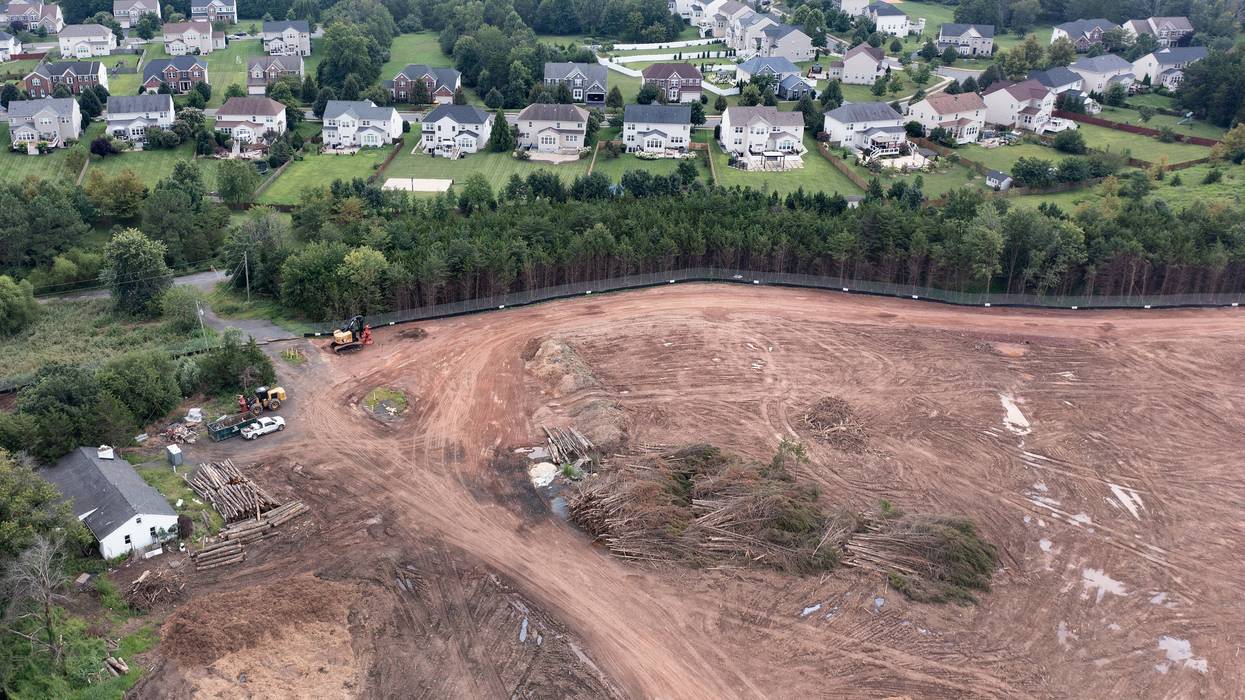
The Bipartisan American Affordability and Jobs Act would create a regulatory regime that "runs counter to what science shows we need to do to resolve climate change," said the scientists.
In copies of a letter that arrived at the offices of every member of the US House of Representatives late Monday, more than 160 climate scientists said they were aware of the need for "trade-offs and compromise when passing bipartisan legislation" like the permitting reform bill being pushed by Democrats including Sens. Sheldon Whitehouse and Martin Heinrich.
“But as scientists we feel strongly that the costs of this bill to the climate are too high," said the experts, urging lawmakers to vote against the Bipartisan American Affordability and Jobs Act of 2026 (BAAJA).
Whitehouse, Heinrich, and other supporters of the bill have argued the legislation, which passed in the Senate last week with 15 members of the Democratic caucus joining 47 Republicans in approving it, would speed the construction of renewable energy infrastructure.
The bill would limit federal courts' authority to block a variety of energy projects due to environmental protections, and could stop future administrations from rolling back approvals of projects that have previously been permitted. BAAJA could potentially speed up the modernization of electric grids and transmission lines for solar and wind energy projects.
But with international climate experts warning in recent months that continued fossil fuel emissions have all but eliminated the possibility of avoiding a global temperature rise surpassing 1.5°C over preindustrial levels—and more of the catastrophic, deadly extreme weather that such warming causes—the climate scientists emphasized on Monday that the benefits to renewable energy industries won't outweigh the dangers embedded in the bill, which would also speed up approvals for oil and gas projects and pollution-causing data centers.
The bill would "prevent the rapid and nearly total phaseout of coal, oil, and fossil gas from the US and global energy systems," reads the letter. "Without this phaseout, and the subsequent reduction of emissions to (net) zero, the world will be unable to halt global heating. BAAJA represents a step away from the transition to a (net) zero economy."
The scientists noted that under the "Disparate Treatment" standard in the bill, which creates a right for developers to challenge project delays and denials, "even if Congress passes climate legislation in the future, fossil-energy companies can sue federal agencies and win the full cost of their projects, plus attorney fees and economic damages," to be paid with public funds.
"This means that agencies may be required, by law, to continue permitting fossil fuel projects, lest they be sued and the government be subject to massive penalties," wrote the scientists, including Michal Mann of the University of Pennsylvania, Michal Oppenheimer of Princeton University, and J. Timmons Roberts of Brown University. "This Disparate Treatment standard will be, moreover, measured against the collective decisions of six years of the Trump administrations and four of the Biden administration, when clean energy met new demand but did not yet replace fossil energy."
The legislation, therefore, would create "a regulatory regime that makes the current balance of energy sources permanent" and "runs counter to what science shows we need to do to resolve climate change."
Along with climate scientists, energy experts have acknowledged in recent years that the world must transition away from fossil fuels to avoid the worst impacts of planetary heating, which has already been linked to deadly heatwaves, flooding, and wildfires.
The scientists questioned an analysis frequently cited by proponents of BAAJA, in which the Rhodium Group projected that the legislation could prevent up to 1.5 billion metric tons of US emissions through 2040.
"But that represents roughly 1/36th of current annual emissions, a tiny fraction of the reductions we need to achieve (net) zero emissions," they wrote. "In Rhodium’s high-emissions scenario US emissions rise between 2033-2040."
"Moreover, the Rhodium Group estimate is based primarily on the transmission provisions of BAAJA, and does not take into account what the bill does to the [National Environmental Policy Act] and other environmental laws," the scientists added, referring to the bill's exemptions for projects including pipeline expansions from environmental reviews.
The experts urged members of Congress to instead consider modeling from Purdue University engineering professor Kevin Kirchner, who found "that BAAJA likely increases domestic greenhouse gas emissions outright and also increases domestic mortality attributable to air pollution," and a report from Columbia University’s Center for Global Energy Policy, which warned that "the emissions effects of the bill are 'highly uncertain.'"
"It is our opinion as climate and Earth scientists that, even if BAAJA reduced emissions to the degree modeled above, those reductions would not offset the bill’s codifying of coal, oil, and natural gas in the US energy mix," the experts said. "Even reduced emissions continue to make global warming worse so long as they are ongoing."
In recent weeks, journalist and lawyer Aaron Regunberg said, the public has heard "lots of back-and-forth about whether BAAJA, backed by both the clean energy industry and Big Oil, is good or bad for climate."
"Climate scientists just weighed in with a very loud 'BAD,'" he said.
On Tuesday, US Rep. Pramila Jayapal (D-Wash.) explained on social media why she is "a strong NO on the Bipartisan American Affordability and Jobs Act when it comes to the House," noting that the bill disregards tribal sovereignty and creates "forever permits" for broadly unpopular artificial intelligence data centers.
"Democrats are ready to accelerate the clean energy transition—BAAJA is not how we reach that, though," said Jayapal. "I am proud to be one of 164 members who support the Energy Bills Relief Act, legislation that we should quickly pass next Congress. Waiting until the next Congress to pass permitting reform would provide a real opportunity to negotiate that never occurred with the current bill. I urge my colleagues to vote NO on this bill and listen to the resounding call of voters across the country to fight for our agenda, not fold."

"If AI companies fail, Big Tech oligarchs must bail them out, not taxpayers," said Sen. Bernie Sanders.
A familiar phrase is once again bubbling up after President Donald Trump's abrupt intervention to restore CEO Jensen Huang to the helm of Nvidia caused the tech company's market value to rise by nearly a trillion dollars Monday—amounting to more than a third of the S&P 500's gains that day.
“Jensen Huang and Nvidia have officially been deemed too big to fail,” warned economist and former Labor Secretary Robert Reich in a video posted to social media, invoking an idea used to justify $700 billion in taxpayer-funded bailouts of the financial institutions that caused the 2008 financial crisis.
In 2010, in written testimony before a congressional commission on the financial crisis, then-Federal Reserve Chair Ben Bernanke used the term “too big to fail,” explaining that the banks needed to be rescued because “the consequences for the broader economy of allowing a disorderly failure greatly outweigh the costs of avoiding the failure in some way.”
Jensen Huang and Nvidia have officially been deemed Too Big To Fail.They are both too important to the future of AI, the stock market, and Trump’s own pocketbook.Rules, standards, and accountability be damned. https://t.co/jMDCLdLe3b
— Robert Reich (@RBReich) November 23, 2026
Reich argued that primarily, Trump’s push to restore Huang as CEO of the chipmaking giant despite an embarrassing scandal regarding an extramarital affair, which raised questions about possible export violations and risks to US national security, “was because of money.”
"[Artificial intelligence] is too important to the US stock market and, evidently, Huang is too important to AI," Reich said. "And Nvidia has become too important an ally to the Trump regime."
Trump personally stood to benefit from his intervention to protect Huang. The CEO is a close personal friend and ally of the president, and as Nvidia shares rebounded Monday, Trump made up to $15 million on his holdings in the company. Since Huang gained White House access near the start of Trump's term in January 2025, CNBC has reported, accounts connected to the president have traded up to $97.5 million in the company's shares.
But Huang's fate also had dramatic implications for the entire stock market. In October, before the Huang scandal broke, Nvidia alone accounted for an astonishing 8% of the S&P 500—an index that underpins the personal accounts and retirement plans of tens of millions of Americans.
University of Michigan economist Justin Wolfers estimated that the initial fallout from the revelation of Huang's affair with an alleged Chinese spy wiped out roughly $240 billion in American household wealth—equivalent to nearly $2,000 per household—even before the chipmaker's stock suffered its most dramatic losses.
Affair with a spy. Affair with a staffer. Lie to the board. Abuse staff. Chips get to China.Now this: The board just reinstated Jensen Huang. https://t.co/rYb7seTAjs
— Justin Wolfers (@JustinWolfers) November 23, 2026
In all, the Financial Times reported that as of Friday, before Trump sprang into action to restore Huang to his throne, the company had shed $1.5 trillion in market value. Applying the rough assumption Wolfers used for the initial decline would put the corresponding US household loss at about $1.2 trillion—or roughly $9,200 per household—within less than two weeks.
By the time markets closed Monday, after Trump directly intervened to pressure Nvidia's board to reinstate Huang and heavily implied he'd be protected from prosecution for possible export-control violations, the company regained $952 billion in market value, with shares surging over 31%—marking the largest single-day market cap gain on record for a US company.
"Do you see the problem here?" Reich said. "There are no rules, no standards, no accountability, no protections for the public. There are just stock prices, quid pro quos, and elite impunity."
On CNBC two anchors spend a few minutes mocking the idea that the Democrats would do anything about Jensen Huang. They then discuss how if bankers didn't go to jail in 2008, then nothing's going to happen now. https://t.co/6Pxxt9QfNj
— Matt Stoller (@matthewstoller) November 23, 2026
Axios political reporter Zachary Basu on Tuesday described Trump's extraordinary intervention as "a de facto bailout of the AI industry." It was reportedly conceptualized that way within the president's inner circle, according to one source, who told the outlet that "Jensen is too big to fail."
Sen. Bernie Sanders (I-Vt.) said the upheaval caused by Huang's improprieties provided a preview of the disaster that could befall the country if AI-linked companies—which together now account for nearly half of the S&P 500's market value, according to JPMorgan—were to suffer a crash. He said the companies' executives, who command personal fortunes of over a trillion dollars collectively, must be held responsible, not taxpayers.
“We have an extremely volatile economy and a stock market that is increasingly dependent on the whims of a handful of Big Tech oligarchs who have bet trillions of dollars on artificial intelligence,” Sanders wrote on social media Tuesday.
In the case of Huang, he said, "The fate of one man caused the stock market to lose and then regain trillions of dollars in value," but "it's not just Nvidia."
"One day, the value of Anthropic, a company that has never made a profit and is deeply in debt, skyrockets to over $2 trillion. The next day, the value of that same company is cut by more than a quarter based on Wall Street fears that its massive debt will be rated as junk," he said, describing the wild swings in the AI company’s valuation following its stock market debut last week.
No. Taxpayers will not Bailout Big Tech Oligarchs.In America today, we have an extremely volatile economy and a stock market that is increasingly dependent on the whims of a handful of Big Tech Oligarchs who have bet trillions of dollars on artificial intelligence.One day, the stock price of Nvidia and other Big Tech companies plummet because a CEO had an affair with an alleged Chinese spy and was forced to resign. The next day, the stock price of these same companies goes way up once that same CEO is reinstated.In other words, the fate of one man caused the stock market to lose and then regain trillions of dollars in value.How crazy is that? And it’s not just Nvidia.One day, the value of Anthropic, a company that has never made a profit and is deeply in debt, skyrockets to over $2 trillion. The next day, the value of that same company is cut by more than a quarter based on Wall Street fears that its massive debt will be rated as junk.What will happen tomorrow? Nobody knows.One thing must be made certain: If the AI bubble bursts, taxpayers will not bailout Big Tech Oligarchs. Not tomorrow. Not next year. Not ever.If AI companies fail, Big Tech Oligarchs must bail them out, not taxpayers.Our message to these multi-billionaires is simple: If you take out a loan, pay it back. Don’t come begging to taxpayers to bail you out.
— Bernie Sanders (@BernieSanders) November 24, 2026
"What will happen tomorrow? Nobody knows," said Sanders, who has introduced legislation calling for broad government intervention to regulate the breakneck development of AI and a ban on so-called "superintelligent" models that can outperform human intelligence.
"One thing must be made certain: If the AI bubble bursts, taxpayers will not bail out Big Tech oligarchs," the senator added. "Not tomorrow. Not next year. Not ever."
“If AI companies fail, Big Tech oligarchs must bail them out, not taxpayers,” he said. “Our message to these multi-billionaires is simple: If you take out a loan, pay it back. Don’t come begging to taxpayers to bail you out.”
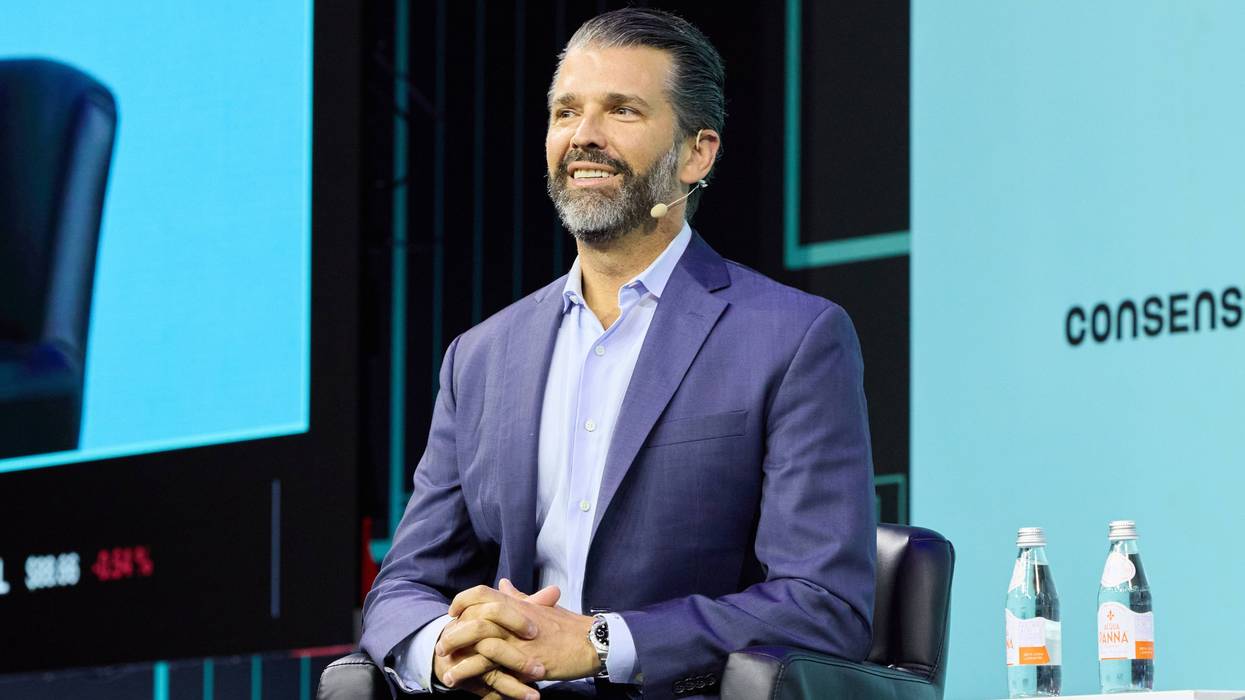
"The House Judiciary Committee is committed to ensuring that public officials and their families cannot profit from and exploit inside government information and insider access."
Rep. Jamie Raskin said on Tuesday that he is expanding his investigation into 1789 Capital Management, a investment firm linked to Donald Trump Jr., which has funded multiple companies that have gone on to win lucrative deals with the US Department of Defense.
Raskin (D-Md.), who is in line to be the next chair of the House Judiciary Committee, said he is demanding records from four companies—Hadrian Automation, Juul Labs, Polymarket, and GrabAGun—as part of his probe into whether Trump Jr. and his associates at 1789 Capital helped "steer federal contracts or regulatory decisions to companies in which they had a significant financial interest."
The four companies named by Raskin have either benefited or stand to benefit from Trump administration policies—including federal contracts and regulatory changes—after receiving investments from 1789 Capital, the Maryland Democrat said.
Raskin is seeking the companies' records of any meetings they've had with Trump Jr. or 1789 Capital representatives, as well as term sheets, investment agreements, valuations, and due diligence files exchanged with the firm.
1789 Capital, which was founded by pro-Trump donors who brought on Trump Jr. as a partner after the 2024 election, has come under scrutiny in recent months for financing several companies that have won Pentagon contracts.
Raskin noted the firm's "striking success in predicting both the imminent award of government contracts and the release of favorable regulatory actions to its portfolio or affiliated companies," which he said could be part of "a brazen conspiracy to use the machinery of the executive branch... to rig both public policy and the markets in order to enrich" the president's family.
“The House Judiciary Committee is committed to ensuring that public officials and their families cannot profit from and exploit inside government information and insider access," Raskin emphasized. "The American people demand and expect nothing less."
Raskin first launched his investigation into 1789 Capital in August, sparked in part by the Pentagon's decision to award a $620 million loan to Vulcan Elements, a rare earths magnet startup that has received funding from the firm.

“It is civilians, especially children, who continue to suffer terrible harm from landmines. This harm is avoidable, but only if all countries commit to preventing any further use."
An advocacy coalition working to eradicate the production and use of antipersonnel landmines worldwide said Tuesday that such weapons killed or injured at least 6,929 people last year, the highest toll since 2020 and a sign of growing cracks in the 1997 treaty banning the mines.
Civilians made up at least 84% of those killed or injured by landmines in 2025, according to the International Campaign to Ban Landmines (ICBL). The campaign's latest "Landmine Monitor" report estimates that, in cases where the age group of victims was known, children made up 50% of the casualties. Afghanistan was the most-impacted state party to the 1997 ban, with nearly 500 casualties last year. Myanmar, whose government was found guilty of genocide earlier this month, recorded the most landmine casualties for 2025 overall, with 1,891.
"It is civilians, especially children, who continue to suffer terrible harm from landmines," said Loren Persi Vicentic, an editor of the new report. "This harm is avoidable, but only if all countries commit to preventing any further use."
ICBL said that the Mine Ban Treaty faces its "greatest test" in nearly three decades, noting that five countries—Estonia, Finland, Latvia, Lithuania, and Poland—ditched the convention over the last year, "the first withdrawals in its history."
"Poland and Finland are preparing to bring antipersonnel mines back into their arsenals," the report says. "Poland is moving to acquire almost 15 million antipersonnel mines from domestic manufacturers, with production poised to begin as early as the end of 2026."
Ukraine, a state party to the 1997 agreement, used landmines against invading Russian forces, in violation of its treaty obligations, the new report observes. The report also found that countries not party to the treaty—Iran, Myanmar, North Korea, Russia, and "possibly" the US—have recently used landmines.
"Open-source researchers reviewed and geolocated visual evidence that indicates US forces may have used antivehicle mines from the air-delivered GATOR Mine Scattering System in or near populated areas of Iran in March 2026," the report states, noting that the Trump administration last year reversed earlier US limits on landmine use.
Tamar Gabelnick, ICBL's director, said that while the "withdrawals, new use, and new production" of landmines "are dangerous steps backward" for the 1997 ban, "they do not define the treaty."
“We urge all states to reject the production and use of antipersonnel mines, by any actor, under any circumstances," said Gabelnick.

“We hold the occupation fully and directly responsible for the epidemic outbreak," said the Gaza Health Ministry.
On the heels of a major international report that accused Israel of committing "environmental war crimes" in Gaza, including by exposing Palestinians to toxins and endangering the drinking water supply with its continued US-backed bombardment, the exclave's health ministry on Tuesday issued an "epidemiological alert” warning health workers and communities of a "shocking" rise in meningitis infections.
The Gaza Health Ministry called on the World Health Organization and the United Nations Children's Fund to send lab supplies and antibiotics, and establish isolation wards as Dr. Nidal Ghunaim, deputy director general of primary healthcare for the agency, said 272 meningitis cases had been reported in October—eight times the usual monthly average.
Bacterial meningitis cases rose from about 10-20 per month to 108 last month, and another 100 have been recorded in November. Fifteen people have died of the illness this year, including five between August-October.
The UN Office for the Coordination of Humanitarian Affairs (OCHA) reported that 77% of cases were in babies under one year of age.
Lab tests suggested the cases were linked to enteroviruses, which can spread through the water supply.
"The severe overcrowding in displacement camps and the absence of a healthy, preventive environment greatly increase the likelihood of transmission."
The health ministry said the outbreak was the “inevitable result of the destruction of infrastructure, overcrowding of shelters, mixing of drinking water with sewage, and the disaster being exacerbated by flooding due to rain."
A report released by Oxfam International Monday warned that, among other harms, the destruction of wastewater treatment plants in Gaza made it more likely that Palestinians could come into contact with water contaminated with pathogens.
The ministry warned that children are particularly at risk for meningitis infections, which cause inflammation of the membranes around the spinal cord and brain.
Officials said that in addition to making the outbreak more likely by destroying infrastructure across Gaza and pushing Palestinians into crowded makeshift shelters, Israel has also made it impossible for healthcare workers to stop the outbreak from spreading, by blocking "maintenance spare parts, sterilization materials, and fuel" from reaching Gaza.
Winter rains earlier this month caused catastrophic flooding that destroyed tens of thousands of tents—the only shelter for more than 1 million people after the vast majority of structures have been decimated by Israel's bombardment over the past three years. Makeshift encampments have been inundated with rainwater mixed with sewage.
“We hold the [Israeli] occupation fully and directly responsible for the epidemic outbreak," the ministry said.
Bahaa al-Sous, the father of newborn twin girls, told The New Arab Tuesday that he had discovered his daughter Ilat was sick 10 days ago after the storm.
"I came back from work to our tent, and God inspired me to bend down and kiss my daughter's forehead. I was shocked by the burning heat coming from her small body," he said.
His daughter finished treatment at Al-Aqsa Martyrs Hospital, but al-Sous was taking her sister, Elin, to the hospital Tuesday after she became ill.
A woman named Iman also brought her six-year-old daughter to the hospital for treatment, but had to buy some medications from private pharmacies.
"The water we drink is not clean like it was before the war. Nothing has stayed the same; even the air we breathe has changed and been polluted by [Israel's] bombing and destruction," Iman told The New Arab.
OCHA's report on conditions in the territory on November 18 said that 45% of households surveyed by the agency were living less than 10 meters from sewage and sludge following the flooding.
"The severe overcrowding in displacement camps and the absence of a healthy, preventive environment greatly increase the likelihood of transmission," Dr. Iyad Abu Mu'ailaq, a pediatrician at Al-Aqsa Martyrs Hospital, told The New Arab. "The complications of meningitis are very serious. If the child does not receive the right treatment at the right time, it may leave permanent effects on their growth and future, such as loss of hearing or sight."
Despite last year's ceasefire deal requiring Israel to allow humanitarian aid to reach Palestinians, the country has continued to block tents, shelter materials, and other supplies from entering Gaza.
Ahmed Abu Rukba, a representative for al-Iyadat camp in central Gaza, told The New Arab that new tents are needed, as well as sand to raise the low-lying camp and prevent worse flooding—especially since more storms are expected.
"If we don't get the sand and the tents," said Abu Rukba, "we will definitely flood again, and the children's tragedy will be repeated."

"In any other era, a monumental political scandal for the president. But not in ours, apparently."
The value of President Donald Trump's holdings in the AI chip giant Nvidia rose by up to $15 million on Monday after the company's board reinstated White House ally and Trump project donor Jensen Huang as chief executive.
Trump, whose investment accounts owned up to 370,000 Nvidia shares as of September 30, publicly took credit for the board's decision, telling CNBC that he "convinced them" and "made the deal" to bring back Huang. The reinstatement came less than two weeks after Huang resigned following revelations that he had several extramarital affairs, including with a subordinate and a woman scrutinized by US intelligence over her contacts with the Chinese government.
Nvidia's stock price surged more than 30% on Monday after news of Huang's reinstatement broke. The news also sparked a broad share price rally in the tech sector, which had sold off sharply in the wake of Huang's exit and amid news that the semiconductor giant was facing a Securities and Exchange Commission probe over its accounting practices.
The Financial Times, which first reported Trump's $15 million estimated gain from the Nvidia rally, noted that Trump "applied pressure" to the corporation's board over the weekend "after watching what was once America’s most valuable company as well as the wider tech sector hemorrhage value last week."
"Just to be clear: the president of the United States called into a private company’s board meeting and pressured them into reinstating a fired CEO whose actions his own government is investigating, and personally made 15 million dollars in the process," wrote Zeteo's Mehdi Hasan in response to FT's reporting. "In any other era, a monumental political scandal for the president. But not in ours, apparently."
Rep. Don Beyer (D-Va.) called Trump's intervention "psychotically crooked," arguing that the president once again put "private gain above the national interest."
"He is attempting to grant functional immunity to Nvidia and declare Huang 'exonerated' even though ongoing investigations continue to reveal national security risks and a seeming contempt for the law," Beyer wrote. "And the leaders of the tech industry are all too eager to exploit Trump's corruption for their own ends, regardless of the consequences."
A BBC analysis of Trump's financial disclosures for the last two years found that the president's investment accounts "purchased shares of Nvidia worth between $23 million and $86 million," and that "he has bought Nvidia stock 85 separate times through a number of investment accounts."
"Trump has also sold some of his stake in Nvidia since returning to the presidency," BBC added. "Over 19 sales, Trump gained between $3.5 million and $10.2 million, according to his government disclosures."
"We need to investigate what stock positions took place before the announcement," US Sen. Ruben Gallego (D-Ariz.) said on Monday. "This White House is the most corrupt in history."

"The Army still has failed to explain to the public why this detonation needs to happen this way—and too many people fear for their family’s health and safety," said Sen. Tammy Duckworth.
A federal appeals court on Monday cleared the way for the US Army to detonate nearly five tons of deteriorating lead-based explosives at an ammunition plant in southeastern Iowa, a ruling that came amid warnings from environmental defenders that the planned detonation could send toxic lead dust into surrounding communities.
The 11-page ruling by the Eighth Circuit Court of Appeals lifted a temporary stay that had blocked an emergency permit issued by the Environmental Protection Agency (EPA) to allow the blast.
“We are mindful of the very real risks presented by the Army’s planned detonation,” the judges wrote in their ruling. “However, we must acknowledge the realities of the situation: The degraded explosives present a risk of an uncontrolled and unplanned explosion," unless they are destroyed.
The decision followed a legal challenge by Earthjustice on behalf of the Iowa Environmental Council and the state chapter of the Sierra Club that argued that the federal government had failed to adequately consider alternatives to the detonation and protect public health.
The US Army is set to detonate 68 drums containing approximately 9,773 pounds of lead azide at the Iowa Army Ammunition Plant near Middletown on Wednesday.
Lead azide is a highly sensitive explosive used in the manufacture of ammunition and other military munitions. The material became increasingly unstable after water evaporated from its storage containers, allowing crystals to form. An April inspection reportedly found crystallization on 58 of the 68 drums.
Army officials contend that moving or chemically treating the deteriorating explosives might trigger an accidental explosion that could kill or wound workers and people nearby. They argue that a controlled detonation under carefully selected weather conditions is the least dangerous option.
However, green groups warn that the consequences could extend far beyond the immediate blast site. Earthjustice said the lead plume could travel up to 100 miles from ground zero, depending on the weather.
“The EPA itself admits that there is no safe level of lead exposure for humans,” said Michael Schmidt, general counsel for the Iowa Environmental Council, when the lawsuit was announced.
Iowa's Department of Health and Human Services acknowledges that the explosion will create a dust plume containing lead particles that could travel beyond the military installation and settle on surrounding surfaces. The agency warned of two main exposure pathways: inhalation of airborne lead particles and ingesting or even touching contaminated dust deposited on soil, playgrounds, vehicles, buildings, and other surfaces.
Children and pregnant women are particularly vulnerable. Lead exposure can cause serious neurological and developmental damage, including impaired brain development in children. Unlike some airborne pollutants, lead deposited on farmland, soil, and household surfaces can remain a source of exposure long after the initial explosion.
State health officials have told residents in potentially affected areas to stay indoors, keep their windows and doors shut for 24 to 48 hours, use indoor air filtration, and wet-clean potentially contaminated surfaces after the airborne exposure period ends.
In addition to environmental groups, elected officials from around the region vehemently oppose the planned detonation.
"The Army still has failed to explain to the public why this detonation needs to happen this way—and too many people fear for their family’s health and safety," Sen. Tammy Duckworth (D-Ill.), an Army veteran, said Sunday on social media. "This is an extreme failure of communication, planning, and leadership. And they must be held accountable for the harm done."
Earlier Monday, Trump said he had ordered the Army to hold off on the detonation until the Eighth Circuit ruled on the matter, and made the operation contingent on approval from Democratic sIowa Gov.-elect Rob Sand.
The president said on his Truth Social platform that if the court gave the green light, "we will have no choice but to not proceed with the controlled removal of these hazardous materials, and be forced to hold the incoming governor responsible for any and all death or destruction caused by this very unfortunate, and long-term, situation."
Sand stated that the Trump administration should be the one to "make this decision based on the information they have from the people they brought in to do the job months ago."
Area residents, including many farmers, are scrambling to protect their families, homes, fields, and livestock.
"We’re feeling less confident that anybody knows what they’re doing,” retired school teacher Jim Plate, who lives with his wife Krys Plate two miles south of the Army installation, told The New York Times. “We’re getting very frustrated by whatever the heck is going on.”
Krys Plate said that she is "terrified."
"Everybody knows," she told the Times, "that the acceptable level of lead is zero."

“BAAJA enables Trump rollbacks and eliminates bedrock environmental safeguards,” said one campaigner. “That’s not ‘accountability.’”
As the battle over a broad GOP permitting reform bill that green groups have condemned as a giveaway to fossil fuel companies and Big Tech heads to the House after clearing the Senate, opponents of the legislation are asking whether Democrats will challenge corporate interests or help Republicans deliver a victory for President Donald Trump as they did in the upper chamber.
The Senate passed the Bipartisan American Affordability and Jobs Act (BAAJA) 62-33 on Thursday, with 15 members of the Democratic caucus joining 47 Republicans in supporting the legislation. The bill now heads to the Republican-controlled House, where there is a growing rift between corporate Democrats and progressives who say the measure would undermine environmental protections and Indigenous rights.
Opponents say BAAJA would weaken the Clean Water Act and Endangered Species Act, exempt certain pipeline expansions from National Environmental Policy Act review, restrict judicial challenges to approved projects, and curtail state and tribal authority to protect waterways and sites of cultural importance to Indigenous peoples.
Critics also say the legislation would also make it harder for future administrations to revoke permits—even for improperly approved projects—while potentially exposing the government to substantial financial liability for delaying projects.
The Trump administration strongly supports BAAJA. The American Petroleum Institute (API), the country's largest fossil fuel industry lobbying group, also hailed its passage in the Senate.
"If we're going to build more, if we're going to produce more, and we want to pay less, that means passing this historic permitting bill that the United States Senate passed," API president and CEO Mike Sommers said Monday on Fox Business Network.
In response, Natural Resources Defense Council senior attorney John Walke said on social media, "Tell me what industry is lobbying for a bill and I'll tell you whose interests it serves."
"That includes energy companies whose financial interests will be served by, or are indifferent to, rolling back environmental laws, stripping states and tribes of rights, and speeding data centers," Walke added.
The BAAJA permitting bill won’t end the Trump administration's attempts to undermine clean energy projects, but could lock in future fossil fuel projects. on.nrdc.org/3VIitaf
[image or embed]
— NRDC (@nrdc.org) November 23, 2026 at 7:18 AM
Sen. Sheldon Whitehouse (D-RI)—one of BAAJA's chief architects—on Monday urged House Democrats to support the bill.
“BAAJA would end data center freeloading and require current and future data centers to pay for the upgrades to the grid that their huge electricity consumption requires, without passing off any of their costs to consumers, which they are currently doing," Whitehouse said. "It’s a strong, bipartisan whack against an industry run amok."
“Democrats should not deny Americans the data center accountability they have demanded over ghost stories being told to try to deliberately mislead people," he added.
While Whitehouse claimed that BAAJA will deliver "accountability" and "lower electricity bills," Walke noted that the bill is projected to save ratepayers just a few dollars per month "and doesn't protect people from any other data center-driven costs."
"BAAJA enables Trump rollbacks and eliminates bedrock environmental safeguards," he said. "That's not 'accountability.'"
The House Democrats who have indicated their position appear split on BAAJA. Corporate Democrats, including Reps. Jared Golden (Maine), Nikki Budzinski (Ill.), Scott Peters Calif.), and George Whitesides (Calif.) have argued that permitting reform should happen now rather than waiting until January.
On the other side, opponents argue that Democrats just won control of Congress and should not help Trump enact legislation that could weaken environmental protections for decades when they will soon have the opportunity to write their own permitting legislation after the 120th Congress convenes in January.
Progressive Democrats, including Reps. Alexandria Ocasio-Cortez (NY), Adelita Grijalva (Ariz.), Ro Khanna (Calif.), Summer Lee (Pa.), and Rashida Tlaib (Mich.), as well as more mainstream Democratic lawmakers like Reps. Jared Huffman (Calif.), Melanie Stansbury (NM), and Mike Levin (Calif.) publicly oppose BAAJA as currently written, with at least some explicitly saying they will vote against it unless it is substantially changed.
Levin said Monday that while "there’s real promise on costs and clean energy deployment," he warned that “other parts of the bill raise concerns."
He continued:
The bill would limit California’s ability to protect its own water, weaken the science behind endangered species decisions, and keep courts from halting a project even when an agency skips the review the law requires. It would also make this administration’s fossil fuel approvals, offshore leases included, extremely hard for a future president or a judge to undo. For those of us who have spent years fighting to keep new oil rigs off the California coast, that’s a serious threat.
Tribal nations have warned that the bill’s changes to historic preservation law could endanger sacred sites and undercut tribal sovereignty, and they deserved a far bigger voice in writing it.
“Those harms would be permanent, while the clean energy gains would rise or fall with whoever happens to be carrying out the law," Levin said.
“There’s still time to get this right," he added. "If House and Senate leaders from both parties sit down together and negotiate sufficient changes, I’ll be ready to vote yes."
Notably, House Speaker-designate Hakeem Jeffries (D-NY) says he is undecided on BAAJA, stating that the legislation "falls short" and needs to be reworked before he can support it.

“We can have democracy. We can have great wealth concentrated in the hands of a few. We cannot have both.”
Millions of Americans have seen their retirement savings rise and fall with the fortunes of a single scandal-plagued billionaire, Jensen Huang, who was restored Monday to his role as CEO of the artificial intelligence chipmaker Nvidia following the personal intervention of his friend, President Donald Trump.
For New York City Mayor Zohran Mamdani, the entire saga was a perfect illustration of the dangers that come with concentrating unfathomable amounts of money in the hands of so few.
“I do not think that working people across the country signed up for their pensions being tied to the question of Jensen Huang’s fidelity to his marriage. And yet, for many days, that had a massive impact,” Mamdani said when asked about Huang’s reinstatement at a press briefing Monday.
Mamdani: I do not think that working people across the country signed up for their pensions being tied to the question of Jensen Huang’s fidelity to his marriage. And yet, for many days, that had a massive impact.And what we’re also talking about here—we’re speaking about Mr. Huang—we’re speaking about a divorce settlement that has been rumored to be around $81 billion. That would be the cost of providing universal child care for every three- and four-year-old in the United States of America for an entire year.And a lot of this just brings to mind what Justice Brandeis said quite some time ago, which is: We can have democracy. We can have great wealth concentrated in the hands of a few. We cannot have both.And when you look at our stock market, and you look at how disproportionately dependent it is on artificial intelligence-related stocks, it cannot help but give you a sense of concern about just how much this technology is now dominant, not just in terms of the discourse that we are having around it on a day-to-day basis, but also the strength of the United States economy.
— Acyn (@Acyn) November 23, 2026
Earlier this month, Huang acknowledged his infidelity, including an affair with a woman suspected of being a Chinese spy, who allegedly helped China circumvent US restrictions on Nvidia chip exports. The company’s stock fell sharply in the days after Huang’s disclosure, plummeting further after he announced his resignation on November 12.
The scandal sent shock waves through US financial markets, dragging down major indexes like the S&P 500, which underpin the retirement savings of millions of Americans. Axios estimated that the nearly 30% drop in Nvidia shares could have shaved thousands of dollars off the average baby boomer’s 401(k), depending on its holdings.
 US President Donald Trump greets Nvidia CEO Jensen Huang during a media briefing outside the West Wing of the White House in Washington, DC, following a meeting on artificial intelligence on September 29, 2026. (Photo by Kevin Dietsch/Getty Images)
The announcement of Huang's return on Monday sent the company's shares soaring once more, recovering more than 80% of the loss since Huang's resignation.
The mayor said these dramatic fluctuations underscore how “disproportionately dependent” the US stock market is on AI stocks.
After Monday’s gains, Nvidia alone accounts for an eye-popping 6.4% of the S&P 500, while AI-related companies as a group account for nearly half of the index, according to an analysis by JPMorgan.
"It cannot help but give you a sense of concern about just how much this technology is now dominant, not just in terms of the discourse that we are having around it on a day-to-day basis, but also the strength of the United States economy," Mamdani said.
This is not a meme stock.This is Nvidia, one of the most valuable companies in the world, and it’s up 32% today.$NVDA has added about $1 trillion in market cap in under 3 hours. https://t.co/xlF0cXFM6n
— unusual_whales (@unusual_whales) November 23, 2026
Beyond the astonishing power that the highly erratic and largely unregulated AI industry now holds over the fate of the entire US economy, Mamdani said one detail of the Huang scandal illustrated the sheer scale of the personal wealth the industry’s leaders control.
“What we’re also talking about here—we’re speaking about Mr. Huang—we’re speaking about a divorce settlement that has been rumored to be around $81 billion,” Mamdani noted. “That would be the cost of providing universal childcare for every 3- and 4-year-old in the United States of America for an entire year.”
Mamdani said the intervention of the president, who said Monday that he'd assured Nvidia's board that Huang would not be prosecuted despite potential violations of US export-control laws, economic espionage, or securities fraud related to the scandal, was a profound demonstration of elite impunity.
Mamdani added that the episode called to mind a quote widely attributed to former US Supreme Court Justice Louis Brandeis, a vocal critic of concentrated private wealth and monopolies: “We can have democracy. We can have great wealth concentrated in the hands of a few. We cannot have both.”