

SUBSCRIBE TO OUR FREE NEWSLETTER
Daily news & progressive opinion—funded by the people, not the corporations—delivered straight to your inbox.
5
#000000
#FFFFFF
To donate by check, phone, or other method, see our More Ways to Give page.
Daily news & progressive opinion—funded by the people, not the corporations—delivered straight to your inbox.
Health campaigners have reacted to Jeremy Corbyn's announcement of a range of policies to tackle the failings in the pharmaceutical sector in his speech to the Labour Party conference this afternoon.
Health campaigners have reacted to Jeremy Corbyn's announcement of a range of policies to tackle the failings in the pharmaceutical sector in his speech to the Labour Party conference this afternoon.
Christina Walker, mother to Luis (9) who has cystic fibrosis has been campaigning with Just Treatment for access to a medicine called Orkambi which is currently priced too high for the NHS in England, said:
"My child's future is being put in jeopardy by the behaviour of one pharmaceutical company - Vertex. But it's not the first or the last time that excessive profits have been put above patients' health, and with 7,000 rare diseases currently without an effective treatment or cure, our situation could be replicated many times over in the future if the government doesn't intervene now. Across the NHS the high price of new medicines is causing huge strain, affecting the lives of patients with conditions ranging from cancer to hepatitis. Most people recognise that major reforms are needed. Quite clearly drugs don't work if patients can't take them. I'm pleased to see that Labour are willing to explore every alternative to tackle this access to medicine crisis. I call on the government and other parties to do the same."
Heidi Chow, campaigns manager at Global Justice Now said:
"This could be the beginning of the end of Big Pharma's stranglehold over our medicines. We cannot go on with patients suffering needlessly without vital drugs, as medicine prices skyrocket and the pharmaceutical industry makes billions. This is a global scandal. We are delighted at Labour's pledge to tackle the broken system for researching and developing medicines head-on. Labour's policy will put public health before corporate profits and enable people here in the UK and around the world to access the effective treatments they need."
Mike Podmore, director of STOPAIDS, said:
"Big Pharma have ripped off the NHS and patients around the world for years by charging excessive, ever-escalating prices for new medicines. In developing countries, patients either have no access to key drugs or they are so expensive that they are forced to choose between food or medicine. As a result, countless patients have died without access. We therefore hugely welcome Labour's announcement that they are willing to break Big Pharma's grip on our health by ensuring that the UK's model for researching and developing medicines is fit for public health needs, not private wealth. This is essential in the fight to achieve universal health coverage and ending global epidemics, such as AIDS and tuberculosis."
Prof Mariana Mazzucato, Director and Founder of the UCL Institute for Innovation and Public Purpose said:
"It is welcome that the Labour Party is addressing key failures of the pharmaceutical sector. When the government funds the development of new medicines it must do so in a systematic way to make sure that the benefits reach the patients that need them. Instead, we currently have a system where the risks of innovation are socialised, while the benefits are privatised through dysfunctional uses of intellectual property rights, a financialised business model, and a pricing system that does not recognise taxpayer investment. At the UCL Institute for Innovation and Public Purpose we have been working with global leaders, from all sides of the political spectrum, to change this, and are happy that it is becoming central to the Labour Party's platform."
Notes
For further reaction and interview contact:
Global Justice Now is a democratic social justice organisation working as part of a global movement to challenge the powerful and create a more just and equal world. We mobilise people in the UK for change, and act in solidarity with those fighting injustice, particularly in the global south.
020 7820 4900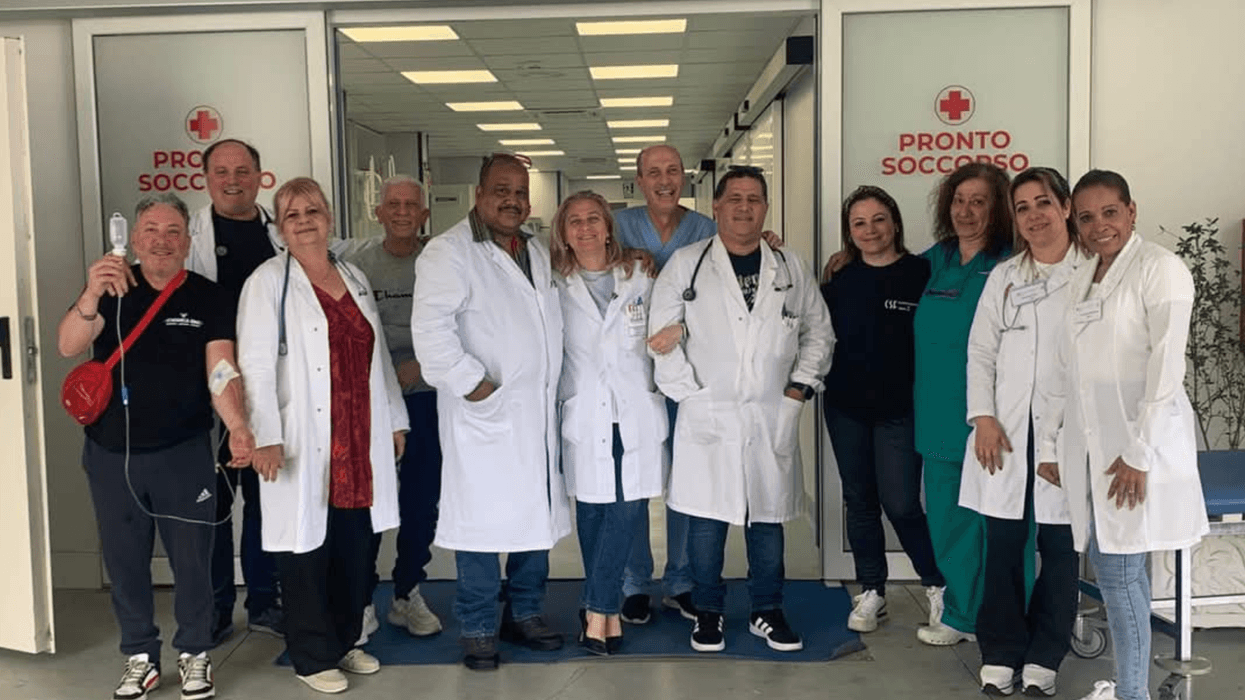
"Italy is indebted to Cuba," the letter states. "Every day of silence has a cost in human lives."
As of Wednesday, more than 8,000 Italian medical and scientific professionals have signed an open letter acknowledging their indebtedness to Cuban doctors and condemning the tightening of the 65-year US embargo on Cuba by President Donald Trump as he threatens "take" the island.
"Over the decades, Cuba has built a health system that was considered an international model, capable of guaranteeing universal access to care even in limited resource conditions. Since 1963, more than 600,000 Cuban health workers have served in more than 160 countries, including Italy," states the letter addressed to Italian Prime Minister Giorgia Meloni and Health Minister Orazio Schillaci.
"That system is currently in a state of collapse," the letter continues. "Survival in childhood cancers has fallen from 80% to 65% due to the lack of first-line drugs."
The publication notes that "96,000 people—almost 1% of the population—including 11,000 children are on the waiting list for surgery. If the situation does not change, the list could affect 160,000 patients by the end of 2026. Over 300 pediatric surgeries per week are compromised by shortages of drugs, oxygen, anesthetics, and consumables."
"The crisis has its roots in a combination of factors that have progressively worsened," the letter continues. "The tightening of the economic embargo during the first Trump administration, Covid-19, and, since January 2026, the near-total blockade of energy supplies following the Venezuelan crisis have deprived the island of fuel, electricity, and access to international drug and medical device markets."
A report published in April by researchers at the Center for Economic Policy and Research confirmed an “unprecedented increase” in Cuba’s infant mortality rate, which soared 148% between 2018 and 2025.
Report co-author Joe Sammut said that “the blockade has had a particularly dire effect on Cuba’s healthcare infrastructure, with frequent power outages" exacerbated by the US oil blockade "interrupting the use of critical equipment for the treatment of patients, including incubators for premature babies, and ventilators to help sick newborns breathe."
The United Nations General Assembly has overwhelmingly condemned the broader US embargo—which Cuba’s government says has cost the island's economy more than $1 trillion over seven decades—33 times.
"The collapse of a health system is not just a local tragedy: It is a violation of fundamental human rights that requires a response from the global community, beyond any political assessment of the Cuban regime," the Italian letter argues.
"Italy cannot remain indifferent or silent, also because it is indebted to Cuba for the help received during the Covid-19 pandemic and for the current work of Cuban doctors in the Calabria Region to guarantee the functioning of the local health service," the publication adds.
The Trump administration has been pressuring Italy to curb its use of Cuban doctors, who are essential to Calabria's healthcare system.
"It is the duty of the global health community—doctors, researchers, institutions, scientific journals—but also of the civil community to act without ambiguity, in compliance with the fundamental principles of humanitarian law," the letter concludes. "Every day of silence has a cost in human lives."
"What is particularly alarming is that this harm has become persistent across conflicts worldwide, risking the normalization of civilian suffering on a massive scale," said the report's lead author.
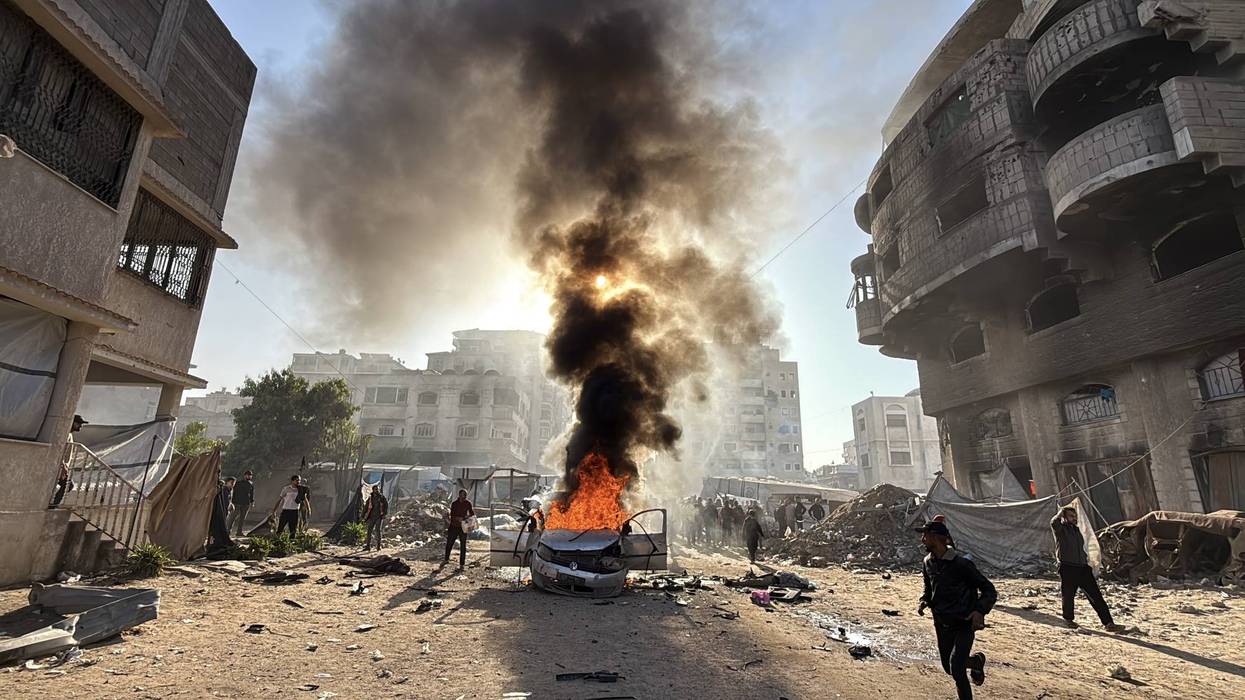
While the overall number of civilians killed by explosive weapons decreased by 21% last year, largely due to Israel scaling back attacks on the Gaza Strip and Lebanon in response to ceasefire deals, "the majority—56%—of all global civilian fatalities in 2025 could be attributed to Israeli armed forces, most of which occurred in Palestine," according to an annual report released Wednesday.
The report is the latest publication from the Explosive Weapons Monitor, a research initiative of the International Network of Explosive Weapons, whose members include nongovernmental organizations around the world such as Action on Armed Violence, Center for Civilians in Conflict, Human Rights Watch, Humanity & Inclusion (HI), PAX, and Save the Children.
Based on data from Armed Conflict Location & Event Data as well as Insecurity Insight, the monitor found that there were at least 22,616 civilian fatalities from explosive weapons across 65 countries and territories last year.
In addition to Lebanon and Palestine, the Democratic Republic of Congo, Ethiopia, Iran, Iraq, Myanmar, Somalia, South Sudan, Sudan, Syria, Ukraine, and Yemen were "heavily impacted," the publication says. Countries' armed forces were responsible for the vast majority—85%—of all incidents that reportedly affected civilians or civilian infrastructure last year.
"The number of attacks in which explosive weapons affected humanitarian aid operations, aid workers, and camps increased by 52%," to 2,541, last year—and while they were documented in 17 countries and territories, "about 90% of all incidents were recorded in Palestine," the report notes.
Attacks on education increased by 64%, to 1,416; they occurred in 27 places, but were most common in Myanmar, Palestine, and Ukraine. The report also highlights continued attacks on healthcare facilities and workers (1,272 incidents in 22 places), and on food and water systems (1,082 incidents in 15 places).
"Every destroyed school, hospital, market, water system, or humanitarian convoy represents far more than damaged infrastructure—it represents opportunities lost, futures disrupted, and communities pushed further from recovery," said Alma Taslidžan, HI's disarmament advocacy manager, in a statement.
"Long after the explosions end, civilians continue to live with the consequences of disrupted healthcare, interrupted education, damaged livelihoods, and the daily challenge of rebuilding their lives," Taslidžan emphasized. "For many, the consequences of explosive weapons become part of everyday life and suffering for years to come."
Explore the report's data and view country-specific analysis in a new interactive dashboard:➡️ explosiveweaponsmonitor.org/global-figur...
[image or embed]
— Explosive Weapons Monitor (@weaponsmonitor.bsky.social) June 10, 2026 at 8:29 AM
The report argues that "it remains a critical humanitarian priority" to bring the 2022 Political Declaration on Strengthening the Protection of Civilians from the Humanitarian Consequences Arising From the Use of Explosive Weapons in Populated Areas into greater effect.
The publication also calls out eight countries—Cambodia, Kenya, Morocco, Nigeria, Somalia, South Korea, Turkey, and the United States—that endorsed the declaration but whose armed forces reportedly used explosive weapons that caused civilian harm in 2025.
"The devastating impact of explosive weapons on civilians is both foreseeable and preventable. Yet across numerous conflicts, their continued use has entrenched a pattern of civilian harm that is increasingly treated as routine rather than exceptional," said Katherine Young, the report's lead author and the monitor's research and monitoring manager, in a statement.
"When explosive weapons are used in populated areas, civilians suffer," Young stressed. "What is particularly alarming is that this harm has become persistent across conflicts worldwide, risking the normalization of civilian suffering on a massive scale."
The release of the report comes amid renewed Israeli attacks on Lebanon—which intensified after the United States and Israel launched an illegal war on Iran in February, and have continued despite a new ceasefire agreed to in April—as well as on Palestinians in Gaza and the occupied West Bank.
"This weekend, eight children were reported killed and a further 17 injured in five different locations in the Gaza Strip, while in the West Bank, a 7-month-old boy died after being shot by Israeli forces in the Tel Rumeida area of Hebron," said Edouard Beigbeder, the United Nations Children's Fund (UNICEF) regional director for the Middle East and North Africa, on Wednesday.
"We cannot let this become the new normal—children losing their lives to violence should cause global outrage and must be condemned at every level," he continued. "UNICEF calls on the Israeli authorities to take decisive action to protect all Palestinian children. Authorities must ensure transparent, credible, and robust investigations, as well as accountability whenever children are killed or maimed."
Since the Hamas-led October 7, 2023 attack on Israel, Israeli forces have slaughtered at least 72,991 Palestinians in Gaza—an assault widely condemned as genocide. That includes 981 people killed since the ceasefire reached last October, according to local health officials. Israeli attacks on Lebanon have left thousands more dead, including at least 3,666 since early March, per the Lebanese Ministry of Public Health.
"This is not the work of rogue actors," said the human rights group's secretary general. "What we are witnessing is deliberate, state-led annexation."
The international community is allowing the Israeli government to carry out an explicit policy of "ethnic cleansing" against Palestinians in the West Bank that is rapidly accelerating, according to a report out Wednesday from Amnesty International.
The human rights group said the world must intervene to stop what it described as a campaign of forcible displacement, rampant state-backed violence by Israeli settlers, demolitions of Palestinian homes, and tightening restrictions on Palestinian access to land and water.
Using United Nations data, Amnesty determined that at least 117 predominantly Bedouin and herding communities faced full or partial displacement between January 2023 and April 2026, with about 45 communities totally depopulated.
Nearly 6,000 people were forced from their homes during that time, roughly 17% of the Palestinian population in the Israeli-controlled Area C's Bedouin and herding communities.
Amnesty found that Israeli authorities demolished more than 3,400 Palestinian homes and structures in Area C during that time, displacing more than 3,000 Palestinians.
The group describes this systematic displacement as explicit Israeli state policy. The government advanced plans for more than 50,000 settler housing units from 2023-25 and authorized 102 new settlements by April 2026, the largest number ever approved by an Israeli government.
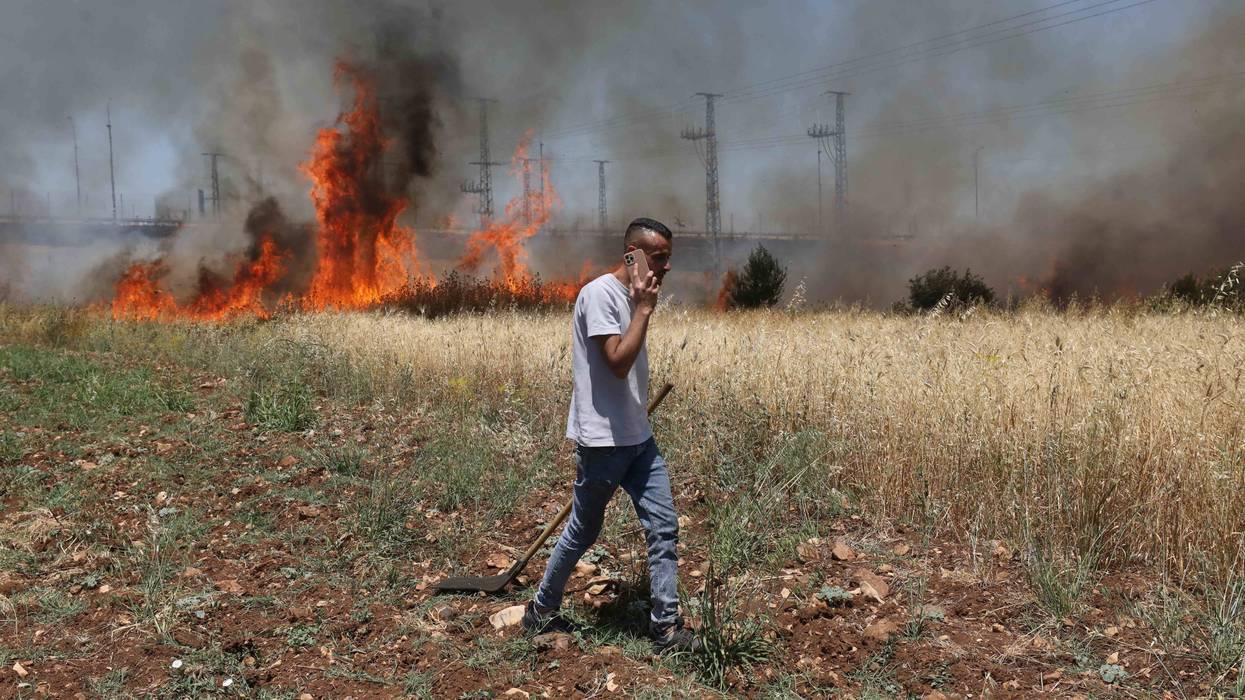
This has coincided with a dramatic increase in violence by armed Israeli settlers, who have set fire to homes and farmlands, vandalized schools and agricultural equipment, cut electricity lines and dumped water tanks, and beaten and killed Palestinian residents.
The UN's Office on the Coordination of Humanitarian Affairs calculated that four settler attacks have occurred per day on average in the roughly two years following October 7, 2023, and have only grown more frequent this year, particularly after Israel and the US's joint attack on Iran, which was followed by an invasion of Lebanon that has also entailed mass destruction of homes and the forced displacement of over a million residents.
In several documented cases, armed settler attackers have been escorted or accompanied by Israeli soldiers, who have at times taken part in the destruction.
“Over the past three and a half years, Israeli authorities have accelerated a state-sponsored campaign of ethnic cleansing in the West Bank, uprooting, dispossessing, and forcibly transferring Palestinian communities," said Agnès Callamard, Amnesty International’s secretary general.
"This is not the work of rogue actors or what the international community has repeatedly labeled as extremist settlers, organizations or one or two ministers," she said. "What we are witnessing is deliberate, state-led annexation, in complete violation of international law unfolding before the eyes of the entire world."
The report comes just a day after a group of Western nations—including the UK, Canada, France, Australia, New Zealand, and Norway—announced coordinated sanctions against Israeli individuals and organizations accused of financing and enabling settler violence in the West Bank.
However, Amnesty argued that these measures were too narrow.
"These limited measures are woefully insufficient to address the state campaign of ethnic cleansing and the systemic violations that have been rapidly increasing before the eyes of the international community,” Callamard said.
She said states, "particularly those with influence over Israel," including the US, the UK, Germany, Italy, and other European Union and Arab States, needed to "ban all trade, investment, and any form of cooperation or financial assistance that contribute to Israel’s unlawful occupation, system of apartheid, and ethnic cleansing of Palestinians."
Callamard added that states "must impose targeted sanctions, including travel bans and asset freezes, against Israeli officials directly implicated in these acts." She included Prime Minister Benjamin Netanyahu and far-right settler politicians like Finance Minister Bezalel Smotrich and National Security Minister Itamar Ben-Gvir, as well as settlers who have allegedly committed acts of murder, like Yinon Levi, who was filmed last year shooting and killing human rights activist Awda al-Hathaleen and was released from custody after a day.
Callamard said, "Without accountability, Palestinian communities across the West Bank will vanish before our eyes."