March, 05 2019, 11:00pm EDT

GAO Report Concludes Climate Change Will Cost Taxpayers Even More if Government Fails to Act
Statement by Rachel Cleetus, Union of Concerned Scientists
WASHINGTON
The nonpartisan Government Accountability Office (GAO) today released its 2019 "High Risk" report, which--like previous reports--concluded that climate change is a major threat to taxpayer-funded federal programs and that the government must do more to address this ever-worsening problem. Produced every two years, the report identifies federal agencies and programs that need transformative changes, as well as those at risk due to fraud, waste, abuse or mismanagement. The GAO will present the report's findings to Congress today at hearings in the House and the Senate.
Below is a statement by Rachel Cleetus, policy director and lead economist in the Climate and Energy Program at the Union of Concerned Scientists (UCS).
"The GAO has once again affirmed that climate change is a significant threat to the public, the economy and taxpayer-backed federal programs and assets. Citing the Fourth National Climate Assessment, the new report reiterates that the federal government's financial exposure will continue to grow unless it acts--and acts quickly--to invest in climate resilience and curb carbon emissions.
"Notably, the GAO has singled out the federal government's exposure to climate risks as an area of regression since the prior report was issued in 2017, citing among other things the Trump administration's rollback of the Federal Flood Risk Management Standard.
"The report cites the failure to reform the national flood insurance and federal crop insurance programs and account for climate risks to federally funded infrastructure as evidence that the U.S. government urgently needs to develop an adequate, comprehensive response to climate change. Leadership at the national level is vital and can encourage progress at state and local levels. Continuing to in the wrong direction will not only impose mounting costs on taxpayers, but could also jeopardize the health, safety and livelihoods of people around the country.
"On the plus side, the report calls out the National Defense Authorization Act of 2018, which requires the Department of Defense to report on climate risks to its installations, as a sign of progress.
"As the GAO points out, in light of growing extreme weather and climate-related disaster costs, the federal government must invest ahead of time to help communities prepare instead of just picking up the pieces after disasters strike. A recent study shows the nation can save $6 in future disaster costs, for every $1 spent on pre-hazard mitigation. Investing in climate resilience would help reduce future costs of climate impacts and cutting global warming emissions would help limit the magnitude of those impacts. President Trump, Congress and government agencies must take this repeated call for climate action seriously for the sake of communities on the frontlines of climate risks."
The Union of Concerned Scientists is the leading science-based nonprofit working for a healthy environment and a safer world. UCS combines independent scientific research and citizen action to develop innovative, practical solutions and to secure responsible changes in government policy, corporate practices, and consumer choices.
LATEST NEWS
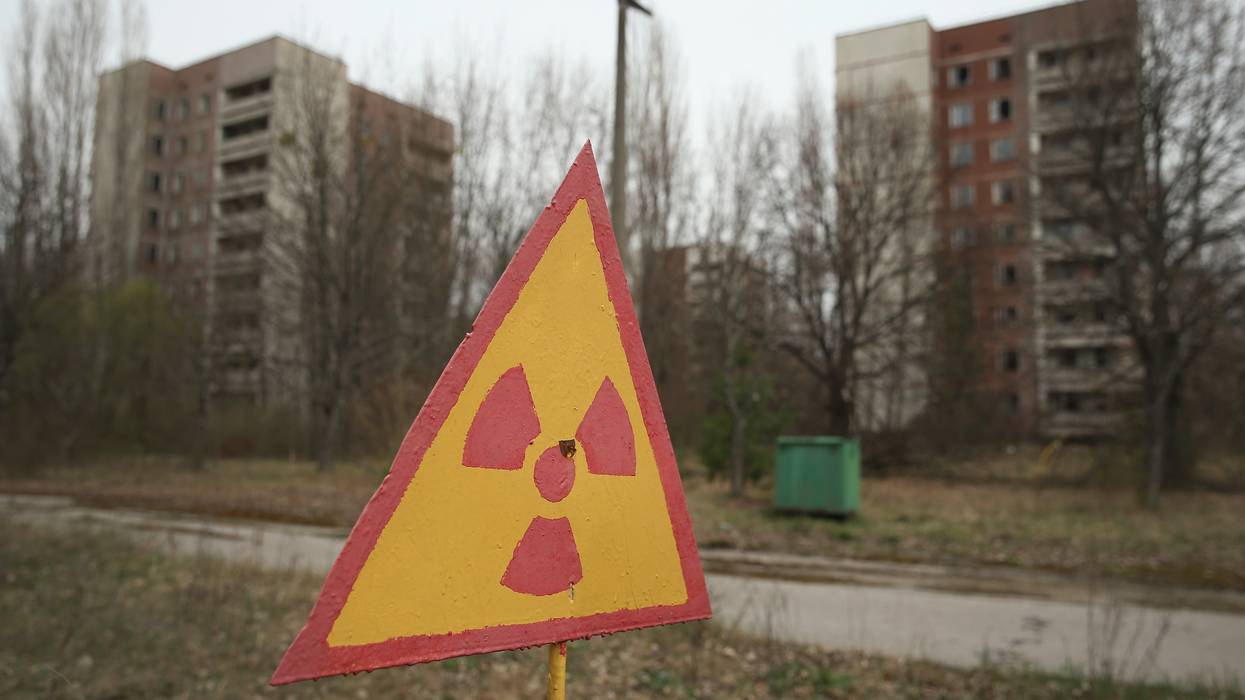
Nuclear Disaster Threat Posed by War in Sharp Relief 40 Years After Chernobyl
"Nuclear power stations have inherent risks," said an official at Greenpeace Ukraine. "In a world at war, with massive geopolitical tension and climate extremes, those risks are increasing."
Apr 27, 2026
The continuing conflict between Russia and Ukraine is once again raising concerns about a nucelar disaster in the region on the 40th anniversary of the catastrophic accident at the Chernobyl power plant.
Reuters reported on Monday that a Ukrainian drone the struck a transport department at the Zaporizhzhia Nuclear Power Plant, which has been under Russian control since March 2022, shortly after its armed forces invaded Ukraine.
The Russian government said that an employee at the Zaporizhzhia plant was killed in the attack, and International Atomic Energy Agency Director General Rafael Mariano Grossi reiterated in a social media post that "strikes on or near [nuclear power plants] can endanger nuclear safety and must not take place."
Russia has also engaged in dangerous attacks around nuclear power infrastructure over the last four years, and a report released this month by Greenpeace Ukraine found that the New Safe Confinement (NSC) at Chernobyl, which contains the ruins of the plant's reactor unit 4, was significantly compromised after being struck by a high-explosive warhead from a Russian drone last year.
"The Russian drone strike... destroyed the main functions of the [NSC]," the report states. "The impact of the drone on the northwest side of the NSC caused an opening... which penetrated both the outside and inside arch shells. Critical structural elements of the NSC have been deformed and damaged including the Main Crane System, making their load-bearing capability impossible to assess."
The drone strike also burned the membrane layer inside the NSC, which has taken out the ability to control humidity at the site and could lead to accelerated corrosion of the NSC's steel components.
"The NSC was designed to last 100 years on the basis that its low humidity control was maintained," notes the report. "Accelerated corrosion may reduce the 100-year design life of the structure if humidity control is not restored by 2030."
Greenpeace Ukraine nuclear expert Shaun Burnie described the damage done to the NSC as "a Russian-made war crime," and lamented it will mean "years of repairs and further delays before the sarcophagus can be safely dismantled."
Polina Kolodiazhna, senior campaigner from Greenpeace Ukraine, said on Sunday that Russia's invasion of Ukraine had added new urgency for her country to end its dependence on nuclear power given the massive environmental and human risks.
"Nuclear power stations have inherent risks, and those risks are escalating," Kolodiazhna said. "Russia, for the first time in the history of warfare, has systematically attacked and occupied nuclear plants, showing how they can be used as military and political tools. In a world at war, with massive geopolitical tension and climate extremes, those risks are increasing."
Keep ReadingShow Less
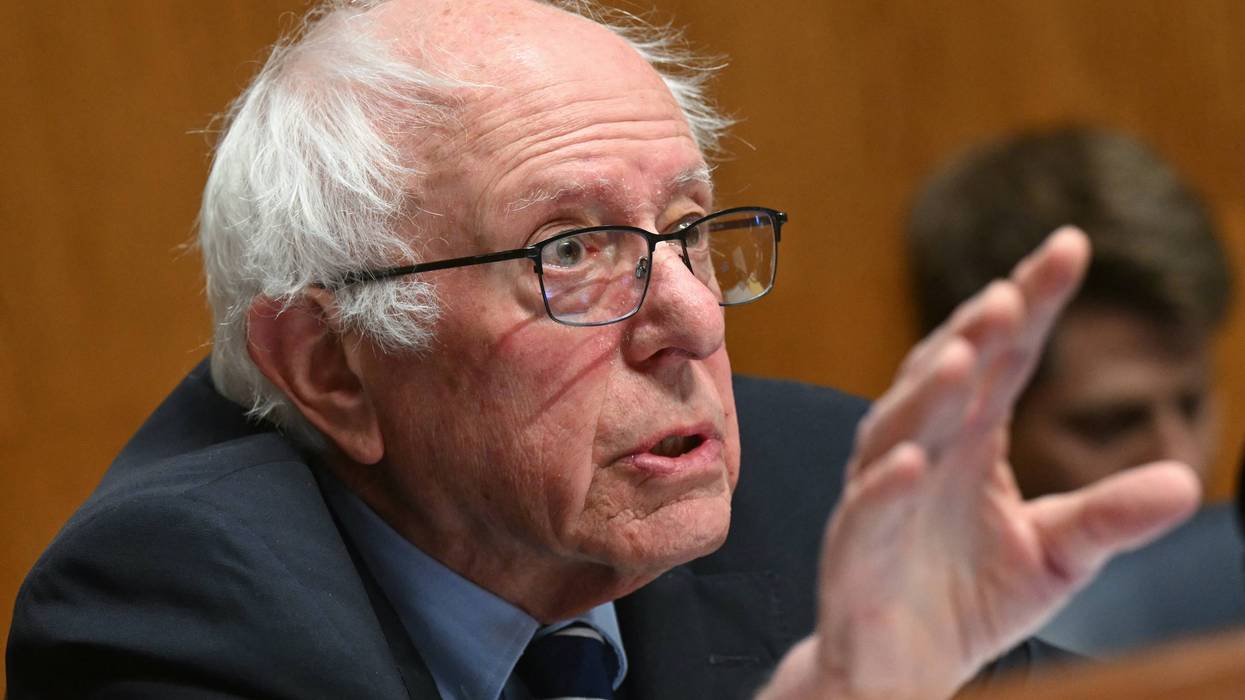
Bernie Sanders Leads Senators in Demand to End Super PACs in Democratic Primaries
“We cannot allow unlimited outside spending to distort our elections or drown out the voices of working people."
Apr 27, 2026
Sen. Bernie Sanders is leading a coalition of Democratic senators pushing for the party's leaders to require candidates to swear off billionaire- and corporate-backed super PACs, or political action committees, in this year's primary elections.
Sens. Jeff Merkley (D-Ore.), Tina Smith (D-Minn.), Elizabeth Warren (D-Mass.), Peter Welch (D-Vt.), and Chris Van Hollen (D-Md.) joined the independent senator from Vermont to send a letter to Senate Minority Leader Chuck Schumer (D-NY) and Democratic National Committee (DNC) Chair Ken Martin on Sunday.
Five of the senators are members of a group of Senate Democrats known as the "Fight Club" that has formed to oppose Schumer's preferred candidates in contested Democratic primaries, many of whom are closely aligned with the party's traditional corporate backers.
While the senators applauded the DNC's resolution last month broadly condemning the influence of dark money in party elections, calling it an "important first step," they said Democratic leaders needed to take more "concrete steps to curb the influence of dark money," particularly the artificial intelligence and cryptocurrency industries and the American Israel Public Affairs Committee (AIPAC).
"Corporate-funded super PACs are shaping the 2026 elections as we speak, and the scale of their resources is unprecedented," the senators said. "Crypto-aligned groups are preparing to spend $200 million, and AIPAC-affiliated groups already control more than $90 million. The AI industry has already spent over $185 million this year alone. These sums are being deployed to influence Democratic primaries and overwhelm candidates who rely on grassroots support."
April's broad anti-dark money resolution was passed by the DNC in lieu of one that directly singled out “the growing influence” of AIPAC, specifically over its more than $100 million spending blitz in 2024 to oust progressive candidates. Despite a dramatic shift toward opposition to Israel among Democratic voters over the past three years, that resolution was voted down by a DNC panel.
AIPAC continues to dump massive amounts of money behind its preferred candidates. The senators' letter notes that "in Illinois alone, outside groups spent over $50 million in recent Democratic primaries." Nearly half of that money was spent by AIPAC, which secretly funneled money to support its candidates using shell groups that appeared to be unaffiliated.
The group has used similar tactics in New Jersey and Pennsylvania. Ala Stanford, a candidate for Pennsylvania's 3rd District in Philadelphia, was recently revealed to have received $500,000 worth of backing from AIPAC through a super PAC despite claiming to have received no support from the Israel lobby.
Meanwhile, in Maine, a clique of Republican billionaires who back Sen. Susan Collins (R-Maine)—including Blackstone CEO Stephen Schwarzman and Palantir CEO Alex Karp—also recently dropped $2 million to fund an ad campaign seeking to hamper the chances of the Democratic Senate primary front-runner Graham Platner.
"We cannot allow unlimited outside spending to distort our elections or drown out the voices of working people," the senators said in Sunday's letter.
The senators noted Schumer's past statement that overturning the Supreme Court's 2010 ruling in Citizens United v. Federal Election Commission, which opened the door for the flood of corporate money into elections by allowing individuals to independently spend unlimited amounts in support of candidates, was "probably more important than any other single thing we could do to preserve this great and grand democracy.”
They said that while reversing the ruling remained a "critical long-term goal," the party "has the authority—and the responsibility—to act now with clear, enforceable rules."
"National and state parties should require all Democratic candidates to sign a pledge opposing billionaire- and corporate-backed super PAC spending on their behalf in Democratic primaries," they said. "The DNC, state parties, and committees working to elect Democrats to the House and Senate have many potential tools at their disposal to enforce that pledge, including withholding endorsements for those who make endorsements in the primary, and they should use whatever tools necessary to do so."
Sanders has said that simply requiring candidates to take a pledge is not enough and that party leaders need to be diligent about holding them to it.
“If the Democrats are going to be honest and consistent in terms of their concerns about money and politics, they’ve got to clean up, in my view, their own house immediately,” he said in an interview on Saturday. “That means getting super PACs out of Democratic primaries, congressional as well as presidential.”
Keep ReadingShow Less

'Death on the Job' Report Details Workplace Safety Decline Under Trump
"From the dismantling of critical federal agencies and laws to the expansion of unregulated, untested AI technology, the protections that workers fought and died for are under serious threat," said the AFL-CIO president.
Apr 27, 2026
Since returning to the White House last year, President Donald Trump has revived his war on workers and their labor unions, including by making US workplaces less safe, according to an annual report released Monday by the AFL-CIO.
The AFL-CIO published its 35th annual "Death on the Job: The Toll of Neglect" report on the eve of Workers Memorial Day on Tuesday, and in the lead-up to International Workers' Day, or May Day, on Friday—for which organizers have already planned more than 3,000 events demanding an economy that serves "workers over billionaires" across the United States.
"Over the last 35 years of this report, job safety agencies' resources have diminished dramatically, even as their responsibilities have grown immensely," the publication notes. "For instance, the Occupational Safety and Health Administration (OSHA) is now in charge of 85% more establishments, 44% more workers, and new hazards and technologies, yet Congress has reduced its budget by 10% and staffing by 26%, including a 16% reduction in inspectors."
"These percentages have massive impacts on such a tiny agency and very real personal effects on workers and their families," the report continues. "Agencies now have a paltry number of staff to write standards, analyze data, conduct inspections, perform oversight on states, orchestrate needed research on important hazards, and respond to emerging threats. The number of OSHA inspectors has now hit a new low, and the Mine Safety and Health Administration (MSHA) does not have enough inspectors to meet its statutory requirement to inspect each mine multiple times a year."
While "more than 735,000 workers now can say their lives have been saved since the passage" of the Occupational Safety
and Health (OSH) Act, "too many workers remain at serious risk of injury, illness, or death as chemical plant explosions, major fires, construction collapses, infectious disease outbreaks, workplace assaults, toxic chemical exposures, and other preventable tragedies continue to permeate the workplace," the document stresses.
"Workplace hazards still kill approximately 140,000 workers each year in the United States—including 5,070 from traumatic injuries in 2024 and an estimated 135,000 from occupational diseases each year," the report states. "That is more than 380 workers each day. Job injury and illness numbers continue to be severe undercounts of the real problem."
The publication points out that "Black and Latino workers are more likely to die on the job," while older workers and minors are also "at serious risk." According to the data, the deadliest industries in the United States are: agriculture, forestry, and fishing and hunting; mining, quarrying, and oil and gas extraction; transportation and warehousing; construction; and wholesale trade.
"It is a disgrace that in 2026, being Black, Latino, or an immigrant can still be a death sentence on the jobsite," declared AFL-CIO secretary-treasurer Fred Redmond, in a statement. He specifically called out the president's attacks on diversity, equity, and inclusion (DEI), as well as those on immigrant communities.
"Our new report makes it terrifyingly clear that the Trump administration's anti-DEI, mass deportation agenda will only make this crisis worse," Redmond said. "When workers are afraid that reporting threats to their safety could result in their work permits being revoked and their families being ripped apart, and when employers fear that reporting workplace data will hurt their bottom line, we are all less safe: workers of color and white workers, immigrant workers and US-born workers. We must fight the Trump administration's attacks on communities of color like our fellow workers' lives are on the line—because they are."
Faced with these "preventable" deaths, as AFL-CIO put it, the second Trump administration has taken an ax to job safety oversight and enforcement. Specifically, the report details, the administration has:
- Pushed out so many staff that job safety agency staffing is at new lows, leaving fewer inspectors than ever to cover a growing workforce;
- Instructed its OSHA and MSHA inspectors to focus on employer outreach and assistance, taking time and resources away from inspections with citations;
- Expanded OSHA penalty reductions for employers when they violate the law;
- Proposed twice to eliminate worker safety and health training grants, even though Congress has rejected these cuts so far;
- Proposed to eliminate the Chemical Safety and Hazard Investigation Board, in charge of independent, nonregulatory investigations after an industrial explosion, leak, or other major incident;
- Stopped conducting MSHA impact inspections, a critical enforcement tool for focusing on mines with a poor history of compliance with MSHA standards, high numbers of injuries, illnesses or fatalities, or other indicators of unsafe mines;
- Issued zero criminal referrals for violations of the OSH Act;
- Indefinitely halted the enforcement of the silica standard in coal and metal/nonmetal mining;
- Extended deadlines for companies to comply with important Environmental Protection Agency (EPA) chemical regulations that specifically protect workers, such as methylene chloride; and
- Proposed to remove dozens of OSHA and MSHA standards from the books and supported efforts to dismantle the regulatory process.
"Every worker should be able to go home safe and healthy at the end of their shift—but 55 years after the founding of the Occupational Safety and Health Administration, that fundamental right is in danger," warned AFL-CIO president Liz Shuler.
"From the dismantling of critical federal agencies and laws to the expansion of unregulated, untested AI technology, the protections that workers fought and died for are under serious threat," Shuler said, as the Trump administration lobbies against legislation that would regulate artificial intelligence in Republican-led states.
"The labor movement refuses to go backward," she added. "More than five decades after a Republican signed the landmark Occupational Safety and Health Act into law, we urge all members of Congress—from both sides of the aisle—to join us in this fight."
Both chambers of Congress are currently controlled by Trump's Republican Party, and recent votes on various war powers resolutions have demonstrated how most GOP lawmakers are unwilling to stand up to the president, even when he defies the US Constitution.
Keep ReadingShow Less
Most Popular