April, 04 2012, 10:48am EDT

Public Citizen Condemns WTO Attack on U.S. Efforts to Reduce Teen Smoking
In Final Appeals Ruling, Global Commerce Agency Orders U.S. to Drop, Change Landmark Obama Youth Anti-Smoking Law
WASHINGTON
The World Trade Organization's (WTO) final ruling today against U.S. efforts to reduce teen smoking shows that our current trade regime is simply incompatible with basic public health regulation, Public Citizen said. With today's ruling, the WTO Appellate Body has now ordered the U.S. to water down or get rid of a key plank of its landmark Family Smoking Prevention and Tobacco Control Act of 2009 (FSPTCA), one of the few policy achievements of the Obama administration's first term. The act banned sale of candy and other sweet-flavored cigarettes used to attract children to smoking.
"The Obama administration and Congress must not bow to yet another ruling from a so-called trade agreement tribunal demanding that the U.S. get rid of yet another important health or environmental policy," said Lori Wallach, director of Public Citizen's Global Trade Watch. "The Obama administration must stand with the thousands of Americans who have signed a Consumer Rights Pledge calling on the U.S. to not comply with these illegitimate trade pact rulings and to stop the Trans-Pacific Partnership (TPP) trade negotiations that would greatly intensify this problem.
"Countries should not be weakening their public health laws to comply with the anti-health, anti-environmental WTO rules. This case underscores why countries must insist that WTO rules be altered and that no new agreements use the same corporate backdoor deregulation model," said Wallach. "If there is any silver lining to today's ruling, it is that it will confirm the views of growing numbers of consumers, citizens and governments that the WTO must be shrunk or sunk.
The Obama administration is considering expanding some of these anti-consumer rules in the first trade deal it is negotiating - the nine-nation TPP. This latest WTO ruling, along with two others in 2011 against country-of-origin labels on meat and dolphin-safe labels on tuna, show that a new approach to trade policy is needed - one that puts consumers, the environment and communities first, said Public Citizen.
Background
The WTO Appellate Body's decision today upheld the major conclusions of a September 2011 WTO ruling from a panel of three diplomats from Costa Rica, Japan and Uruguay, who ruled that the U.S. ban on sweet-flavored cigarettes (which are used to entice teenagers into smoking) violated a never-before interpreted provision of the WTO's Agreement on Technical Barriers to Trade (TBT). Public health experts have concluded that these narrowly targeted bans help stop smoking before it starts.
But the panel reasoned that the ban discriminated against Indonesian clove cigarettes, even though both U.S. and foreign tobacco companies were prohibited from selling clove cigarettes in the U.S., and even though other sweet flavors like chocolate and cola also were banned. In its WTO attack on the FSPTCA, Indonesia successfully argued that the ban as it applied to clove cigarettes violated the WTO TBT rules because the U.S. did not ban all flavored cigarettes (menthol-flavored cigarettes were exempted from the ban).
While the FSPTCA actually does contemplate extending the ban to menthol cigarettes, U.S. lawmakers advocated for a gradual approach to menthols, which are smoked (unlike other sweet cigarettes) primarily by adults. Policymakers had concerns that banning cigarettes primarily smoked by adults would have created dangerous black market activities and would not target teenage smoking. The WTO panel and Appellate Body gave little weight to these science-backed arguments and effectively concluded that imports have to be carved out from nations' regulatory schemes.
Of nearly 200 rulings in 16 years, this was the first time that the WTO ever found a violation under this WTO provision, which has long been of concern to consumer advocates, given the threat that it could be interpreted in the all-encompassing way that it was in this final ruling. Today's was one of the first rulings under the TBT, which is one of 17 agreements administered by the WTO.
Public Citizen is a nonprofit consumer advocacy organization that champions the public interest in the halls of power. We defend democracy, resist corporate power and work to ensure that government works for the people - not for big corporations. Founded in 1971, we now have 500,000 members and supporters throughout the country.
(202) 588-1000LATEST NEWS
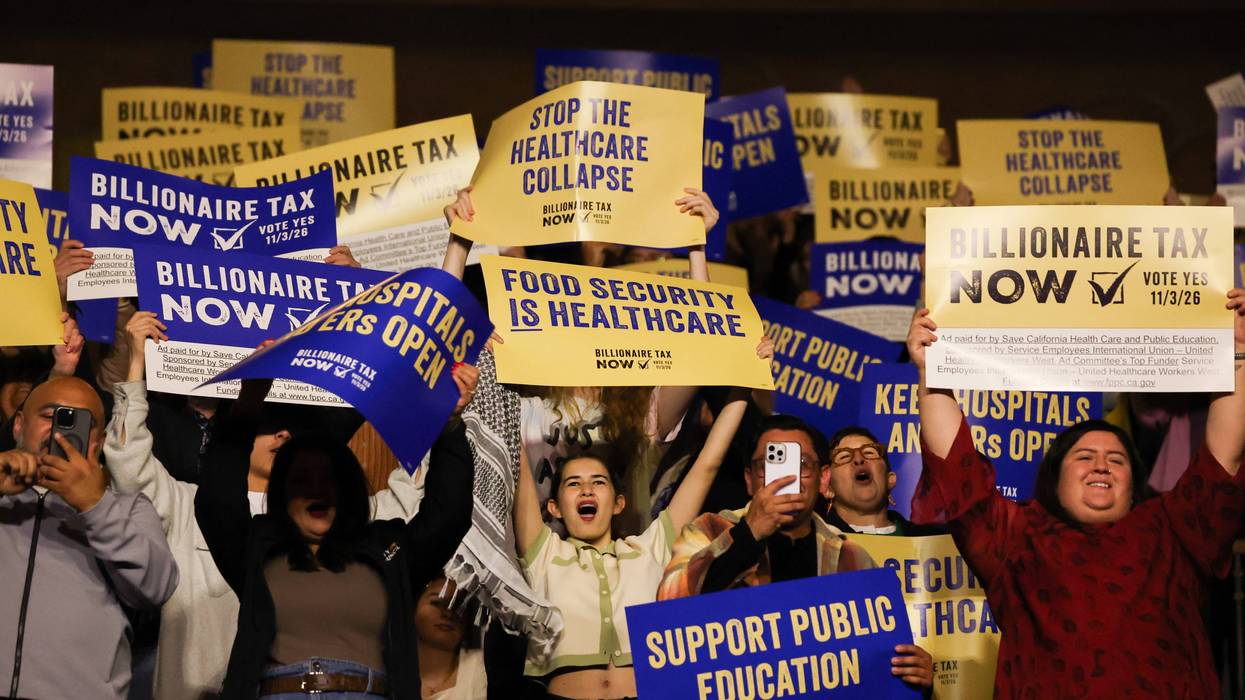
'We Intend to Win': California Billionaire Tax Officially Certified for November Ballot
"The fact that the ultra-wealthy and billionaire-backed politicians like Gov. Newsom nearly succeeded in killing it is the single best argument for why we need to tax billionaires in the first place."
Jun 26, 2026
Organizers said late Thursday that a proposed one-time wealth tax on California billionaires has been certified to appear on state ballots in November, advancing despite efforts by Democratic Gov. Gavin Newsom and billionaire-funded groups to tank the measure ahead of the June 25 deadline.
"Today we’re making it clear that we aren’t backing down–the billionaire tax will be on the ballot this November, and we intend to win,” said Debru Carthan, a radiologic technologist and spokesperson for Billionaire Tax Now, the healthcare union-led coalition leading the ballot initiative.
If approved by California voters, the proposal would tax billionaires' wealth at a rate of 5%, raising an estimated $100 billion to shore up the state's healthcare system amid devastating federal cuts to Medicaid. Revenue from the tax would also be used for food aid and education, according to the initiative's text.
Last week, organizers offered to withdraw their proposal if Newsom agreed to push a 2% tax on billionaire wealth in California's Legislature. Newsom, who is widely seen as a 2028 presidential hopeful, rejected the compromise and privately told a major Democratic donor that he was confident the billionaire tax would not appear on California's ballot in November.
Organizers emphasized Thursday that despite Newsom's opposition and fearmongering from billionaires and other opponents, the proposed tax is popular among California voters, who are facing an affordability crisis as the wealthiest see their fortunes soar. From 2023 to 2025, the wealth of California billionaires surged by 144%, according to a recent paper co-authored by leading economists.
"Voters consistently support the billionaire tax by large, double-digit margins, and the growing campaign has brought on thousands of volunteers," organizers said in a statement. "Supporters of the measure submitted over 1.6 million signatures, more than double the number needed to secure a spot on the general election ballot."
To succeed, proponents of the billionaire tax must secure enough votes to pass their initiative while also defeating separate ballot measures that would effectively cancel out the wealth levy. One of the competing initiatives was pushed by a group bankrolled by Google co-founder Sergey Brin, who has spent tens of millions of dollars trying to defeat the billionaire tax and who left California in late 2025 to avoid the potential levy.
The competing ballot measures—the Retirement and Personal Savings Protection Act of 2026 and the Improving Transparency, Effectiveness, and Efficiency in California Government Act of 2026—are titled in ways that could lead some voters to support both the wealth tax and proposals that would counteract it.
Igor Volsky, director of the Tax the Greedy Billionaires campaign, said in a statement that "when billionaires can erase democratic initiatives that threaten their fortunes, they have too much power."
"The fact that the ultra-wealthy and billionaire-backed politicians like Gov. Newsom nearly succeeded in killing it is the single best argument for why we need to tax billionaires in the first place," Volsky added.
US Rep. Ro Khanna (D-Calif.), a vocal supporter of the proposed billionaire wealth tax, said Thursday that "this issue couldn’t be more simple."
"There are 250 billionaires in a state of 40 million people," said Khanna. "What we’re saying is, tax these 250 billionaires so that millions of Californians can have healthcare."
Keep ReadingShow Less
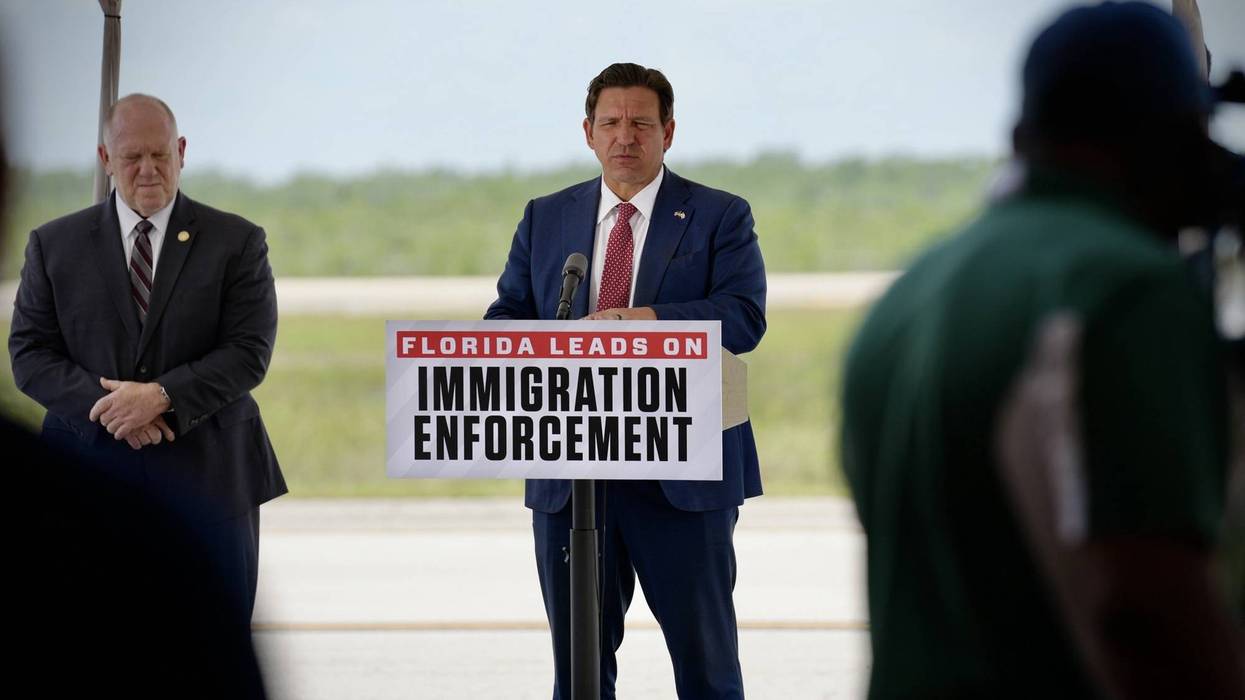
'Ruinous Venture' Alligator Alcatraz Closes, But Systemic Abuse of Immigrants Continues
"The fact that this site ever existed is a travesty, given the cruelty behind it, horrific conditions, and blatant violations of due process," said the deputy director of the ACLU's National Prison Project.
Jun 25, 2026
While welcoming Republican Florida Gov. Ron DeSantis' confirmation on Thursday that the immigrant detention center dubbed "Alligator Alcatraz" has closed, rights advocates also renewed criticism of how immigrants are being treated across the country as President Donald Trump continues his deadly push for mass detention and deportations.
The facility in the Everglades opened last summer despite concerns about both human rights and the environmental impact. DeSantis said Thursday that "Florida led the way in increasing much-needed detention capacity and working with our federal partners to streamline deportations, removing thousands of the most dangerous criminal aliens from our country."
Despite claims from the president and his allies, federal data have shown that most immigrants detained during his second term lack criminal convictions. In addition to flooding US streets with agents from Customs and Border Protection as well as Immigration and Customs Enforcement, Trump has repeatedly demanded that Congress give CBP and ICE more funding.
"Our detention operations support has led to nearly 30,000 additional deportations, and Florida accounts for more than 40% of all state/local immigration arrests nationwide," DeSantis added Thursday. "Alligator Alcatraz has fulfilled this mission. Detainees who are still awaiting deportation have been transferred to other federal facilities, and demobilization efforts are underway."
Responding to the governor on social media, Thomas Kennedy of the Florida Immigrant Coalition said: "You wasted more than $1 billion of Florida's emergency response fund on a failed PR stunt that hurt people and destroyed families. You should never be anywhere near public office again."
As The Associated Press noted Thursday:
Immigration advocates said the center’s tents were never safe or humane for holding people. Detainees at the facility have talked about their difficulty accessing lawyers and described poor physical conditions, including worms in the food, toilets that didn't flush, floors flooded with fecal waste, and mosquitoes and other insects everywhere.
They described large white tents with rows of and rows of bunk beds surrounded by chain-link cages. The air conditioning could shut off abruptly in the sweltering Florida heat. Detainees could go days without showering or getting prescription medicine.
The state and national ACLU as well as Americans for Immigrant Justice (AIJ) had sued over the facility last year.
"The fact that this site ever existed is a travesty, given the cruelty behind it, horrific conditions, and blatant violations of due process. We challenged the Trump administration and the state of Florida over the facility, and now celebrate its closure," Carmen Iguina González, deputy director for immigration detention with the ACLU's National Prison Project, said Thursday.
Keisha Mulfort, deputy executive director and strategy officer of the ACLU of Florida, declared that "with its official closure, 'Alligator Alcatraz' seals its reputation as a ruinous venture. This detention center stands as a monument to what happens when a state government abandons its conscience in service of a federal cruelty agenda."
"The DeSantis administration deliberately built a detention facility in the middle of the Everglades—not despite the harsh conditions, but because of them—and spent over $1 billion of Florida taxpayers' money to do it," she pointed out. "That is not governance; that is cruelty dressed up as policy, and complicity dressed up as leadership. In spite of this, hundreds of thousands of Floridians protested, organized, called their legislators, and refused to look away. They made this moment possible, and we should name that clearly: This is what accountability looks like when the government won't hold itself accountable."
Mulfort also stressed that "as people are transferred to other facilities, the abuses do not disappear—they relocate." She and Iguina González pledged that the state and national ACLU will not stop tracking abuses of immigrants across the country.
"The nightmarish scene found at 'Alligator Alcatraz' is not wholly unique and reflects systemic patterns of abuse at other ICE detention facilities nationwide," Iguina González said. "We remain very concerned that people may be transferred to other sites with sordid and dangerous conditions, and we will continue to monitor this situation."
Paul Chavez, director of litigation and advocacy at AIJ, also emphasized that "closing this facility is an important step, but the government's obligation to respect due process does not end at the facility gates. Constitutional rights must follow every person wherever they are detained."
"We remain deeply concerned that people transferred out of this facility will continue to face mistreatment and civil rights violations in other detention centers," he said. "Americans for Immigrant Justice will continue to defend due process, offer free legal representation to low-income immigrants, and stand strong with our immigrant neighbors, friends, and their families."
After using $1 billion to brutalize immigrants, the concentration camp known as "Alligator Alcatraz" has been emptied. Its victims still need justice.truthout.org/articles/flo...
[image or embed]
— UAINE (@mahtowin1.bsky.social) June 22, 2026 at 10:36 PM
As for the environmental impact, The New York Times reported that after the Trump administration announced that detainees had been relocated, Paul J. Schwiep, an attorney for groups suing over Alligator Alcatraz, promised last week to continue the lawsuit against what he called the "secret gulag in the Everglades."
"They hope that they can slink away in the middle of the night without explaining to anyone what they did, why they did it, or how they proposed to clean up the mess that they've made," said Schwiep. "And we don't intend to let them get away with it."
Ripping the facility as an "internment camp," Congressman Maxwell Frost (D-Fla.) similarly asserted on Thursday that "the fight isn't over. We need accountability for the billions of taxpayer dollars wasted, the abuse and harm inflicted on detainees, and the damage done to one of Florida's most sacred ecosystems."
Keep ReadingShow Less
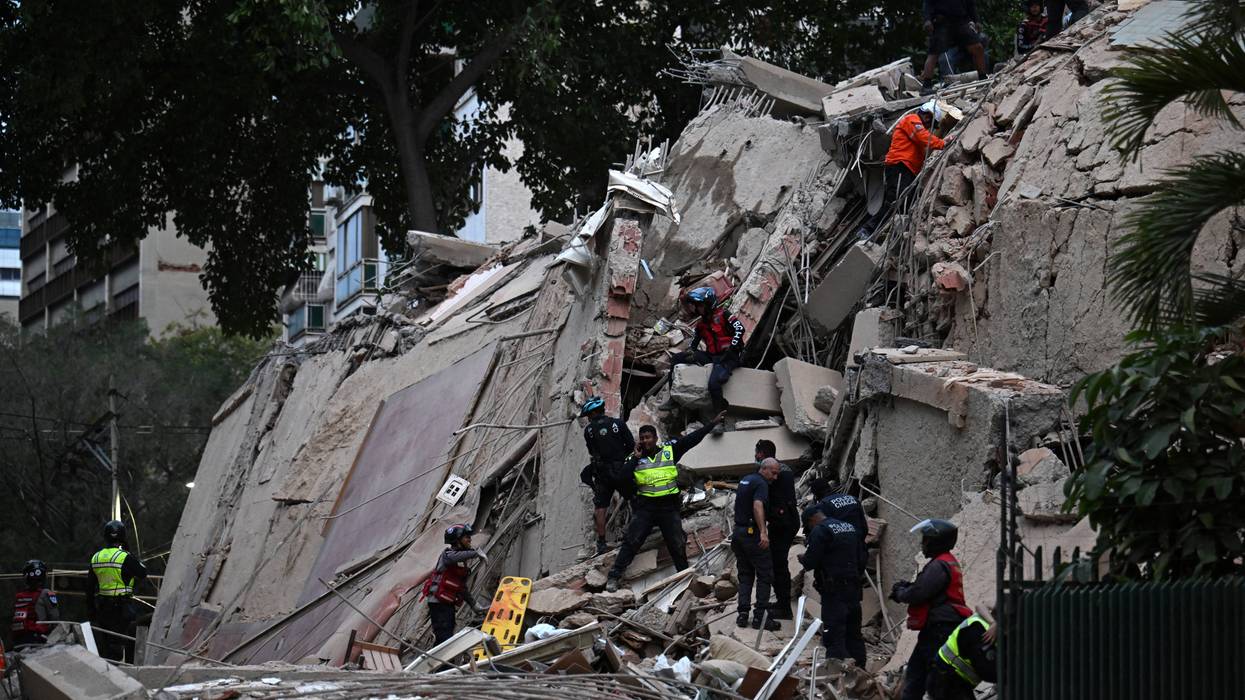
Advocates Renew Call for End to US Sanctions After Devastating Venezuela Earthquakes
"This is the time for cooperation, compassion, and respect for Venezuela’s sovereignty," said CodePink.
Jun 25, 2026
Human rights groups on Thursday implored the United States and allied countries to lift all sanctions against Venezuela—which experts say have already killed tens of thousands of people—as the beleaguered South American country reels from Wednesday's devastating earthquakes.
At least 188 people are dead and over 1,500 others injured, with those figures almost certain to rise, following a 7.2-magnitude temblor centered in San Felipe, Yaracuy—about 100 miles west of Caracas—and a 7.5-magnitude quake that struck less than a minute later, also in centered in Yaracuy.
US President Donald Trump, who authorized the illegal invasion of Venezuela and adbuction of President Nicolás Maduro earlier this year, wrote on social media after the earthquakes that his administration “stands ready, willing, and able to help."
“We will be there for our new and great friends," Trump claimed.
Delcy Rodríguez, Maduro's vice president and acting president since his ouster, thanked the Trump administration for "offering support and solidarity to the people of Venezuela in the face of this tragedy that has plunged us into mourning."
However, US sanctions—first imposed during then-President George W. Bush's second term while Hugo Chávez was leading Venezuela and ramped up under the Obama, Trump, and Biden administrations—remain in place, complicating relief efforts after one of the country's worst-ever natural disasters.
While the Trump administration has issued narrow exemptions from sanctions to companies looking to profit from Venezuela's crisis and copious natural resources, primarily oil, these waivers have not delivered broad relief to the people who need it most.
"Today’s catastrophe makes clear what we have long argued: When a country is deliberately weakened through economic warfare, its ability to prepare for, respond to, and recover from disasters is also weakened," the US-based peace group CodePink said in a statement. "The United States has a responsibility to help address the humanitarian consequences of the policies it has imposed."
🇻🇪 CODEPINK extends our deepest condolences to the people of Venezuela following the devastating earthquakes that have taken hundreds of lives, injured thousands, and left entire communities in urgent need of assistance.Our full statement: buff.ly/QzYcQ3p
[image or embed]
— CODEPINK (@codepink.bsky.social) June 25, 2026 at 2:22 PM
CodePink continued:
Too often, we’ve seen the US and other Western countries exploit natural disasters like this in order to deepen foreign control. In Haiti, the US and its allies have repeatedly pushed militarization and politically conditioned aid instead of genuine recovery led by the country itself. In this moment, the world must refuse to allow Venezuela to be forced down the same path.
We also call on the administration to immediately lift all US sanctions on Venezuela and release Venezuelan funds under US jurisdiction so they can be used for emergency relief, reconstruction, and recovery.
"This is the time for cooperation, compassion, and respect for Venezuela’s sovereignty," CodePink added. "We urge the international community to support relief efforts and stand with the Venezuelan people as they rebuild their homes, their communities, and their future."
The Center for Economic and Policy Research (CEPR), a Washington, DC-based think tank, said Thursday that "while the Trump administration has issued a series of general licenses to allow foreign businesses and banks to operate in Venezuela in spite of US sanctions, the continued existence of these sanctions significantly discourages international economic and financial actors from expanding operations there."
CEPR co-director Mark Weisbrot said that “we must remember that Venezuela suffered the worst depression in the history of the world, without a war, due to illegal US economic sanctions."
"This deadly destruction was not a mistake, but an expected result that would happen to any country that was cut off by sanctions from the international financial system, and also from the vast majority of its foreign exchange earnings from exports," he continued.
According to a 2019 CEPR report, as many as 40,000 Venezuelans died due to sanctions during the previous two years. The sanctions ostensibly targeted Maduro's government, but made it much more difficult for millions of people to obtain food, medicine, and other necessities.
“Tens of thousands, and more likely hundreds of thousands, of Venezuelans died as a result of those sanctions," Weisbrot said Thursday. "The United States is therefore obligated to help prevent further loss of life in Venezuela."
Keep ReadingShow Less
Most Popular