SUBSCRIBE TO OUR FREE NEWSLETTER
Daily news & progressive opinion—funded by the people, not the corporations—delivered straight to your inbox.
5
#000000
#FFFFFF
To donate by check, phone, or other method, see our More Ways to Give page.
Daily news & progressive opinion—funded by the people, not the corporations—delivered straight to your inbox.
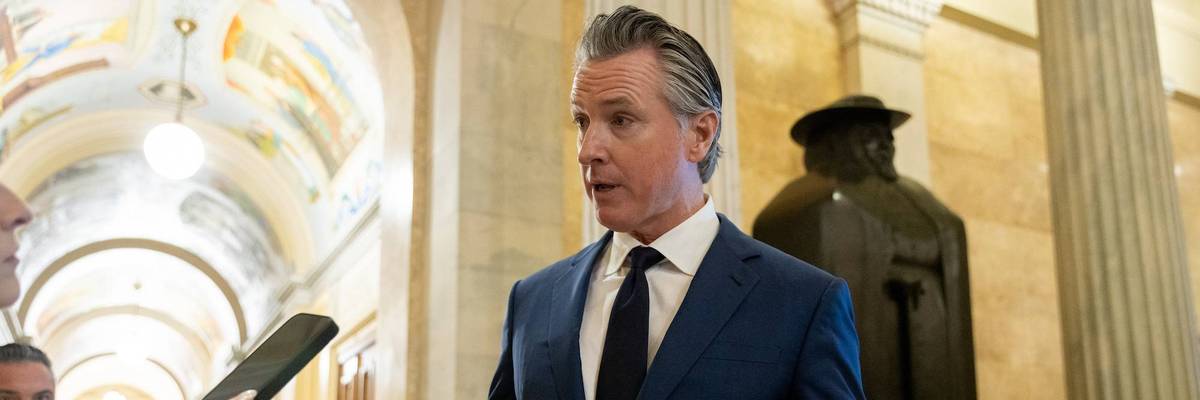
California Gov. Gavin Newsom speaks to reporters inside the US Capitol in Washington, DC on May 20, 2026.
"You have chosen to protect California's billionaires at the expense of Californians' health," said Gabriel Zucman.
A world-renowned economist and expert on wealth inequality castigated California Gov. Gavin Newsom on Monday for working to kill a proposed tax on billionaire fortunes in the Golden State, warning that the Democratic leader and likely 2028 candidate appears bent on handing President Donald Trump "an unexpected ideological and political victory."
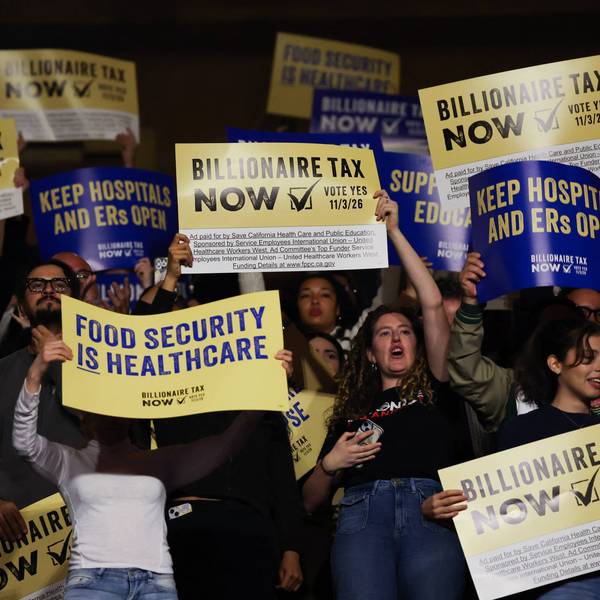
Gabriel Zucman, a research professor of economics at the University of California, Berkeley, pointed to a recent Bloomberg story detailing Newsom's "last-ditch pressure campaign" to prevent a healthcare union-led initiative from appearing on California voters' ballots in November. Last week, organizers announced that they had collected the number of signatures required to get the initiative—a one-time, 5% tax on the wealth of California billionaires—on the ballot ahead of the June 25 deadline.
In a lengthy thread posted to X on Monday, Zucman wrote that he is "shocked" by Newsom's "efforts to defend Peter Thiel and Mark Zuckerberg at the expense of Californians' health," referring to two of the state's most prominent billionaires. Thiel has donated millions to an industry group looking to defeat the ballot initiative, which would use revenue from the wealth tax to offset the impacts of federal Medicaid cuts approved last year by Trump and congressional Republicans.
"Yet you are now devoting all your energy to preventing this ballot initiative from taking place and denying Californians the opportunity to express their democratic will this November," Zucman wrote. "You have chosen to protect California's billionaires at the expense of Californians' health."
By stridently opposing the proposed billionaire tax in California, the economist warned, Newsom is lending credence to "familiar conservative arguments against taxing great fortunes: the threat of capital flight, tax avoidance, harm to growth, etc."
"Instead of reinforcing these arguments, you could have chosen to challenge them. Take the risk of tax flight, a classic objection. It is effectively nonexistent," Zucman wrote. "Beyond the ideological victory you risk handing Trump, you may also be giving him a political victory."
Politically, Zucman warned Newsom that his opposition to the proposed wealth tax—which has proven extremely popular among likely Democratic voters—risks giving Trump and his right-wing allies a political victory by blunting momentum for a wealth tax not only in California, but beyond as well.
"If the 'Yes' prevails, California's tax could quickly inspire similar efforts in other states," Zucman argued. "Ultimately, that process could pave the way for a federal tax on extreme wealth. This is precisely what happened more than a century ago with the progressive income tax."
"The world is watching," the economist added. "In the struggle between democracy and oligarchy, one must choose a side. I hope you will choose ours."
Zucman has been outspoken in support of the proposed wealth tax in California, writing in The New York Times' op-ed pages last month alongside fellow economist Emmanuel Saez that the proposed levy would "be tiny relative to billionaires’ recent wealth gains."
"In the past three years alone, the total wealth of California’s billionaires grew by a staggering 144%, to over $2 trillion," the economists wrote. "Critics of the ballot measure have voiced concerns that even a small number of billionaires leaving the state would lead to lower state tax revenues overall. Their math doesn’t add up. California’s billionaires currently pay such a low tax rate that even if all of them left the state, it would take 25 years for the loss of their tax payments under the current set of rules to surpass the amount the state would raise if the one-time tax succeeds this fall."
"Defending 200 billionaires at the expense of the millions of Californians who will lose healthcare absent the passage of a billionaire tax is not a tenable position for the governor or the state of California."
Last week, organizers of the wealth tax initiative offered to withdraw its proposal if Newsom threw his support behind legislation imposing a 2% tax on California's billionaires—a compromise plan that the governor swiftly rejected.
"The governor supports making the wealthiest Americans pay their fair share, but this poorly designed state-only measure will defund teachers, schools, clinics, and public safety," said Newsom spokesperson Tara Gallegos. "Changing the tax rate doesn't change this measure's fundamental flaws that harm working Californians."
Suzanne Jimenez, chief of staff for the Service Employees International Union-United Healthcare Workers West—the union leading the ballot initiative—hit back, accusing Newsom's office of "engaging in Trump-like misinformation tactics, which is sad and indefensible."
"The billionaire tax explicitly funds clinics, hospitals, schools, teachers, and food assistance to the tune of billions," Jimenez said in an emailed statement. "All objective reports have shown that the wealth tax raises billions to fund healthcare, education, and food assistance—and the revenue that will be raised far surpasses any potential income tax erosion—in no small part because billionaires pay very little relative income tax."
"Defending 200 billionaires at the expense of the millions of Californians who will lose healthcare absent the passage of a billionaire tax is not a tenable position for the governor or the state of California," Jimenez added.
Dear Common Dreams reader, It’s been nearly 30 years since I co-founded Common Dreams with my late wife, Lina Newhouser. We had the radical notion that journalism should serve the public good, not corporate profits. It was clear to us from the outset what it would take to build such a project. No paid advertisements. No corporate sponsors. No millionaire publisher telling us what to think or do. Many people said we wouldn't last a year, but we proved those doubters wrong. Together with a tremendous team of journalists and dedicated staff, we built an independent media outlet free from the constraints of profits and corporate control. Our mission has always been simple: To inform. To inspire. To ignite change for the common good. Building Common Dreams was not easy. Our survival was never guaranteed. When you take on the most powerful forces—Wall Street greed, fossil fuel industry destruction, Big Tech lobbyists, and uber-rich oligarchs who have spent billions upon billions rigging the economy and democracy in their favor—the only bulwark you have is supporters who believe in your work. But here’s the urgent message from me today. It's never been this bad out there. And it's never been this hard to keep us going. At the very moment Common Dreams is most needed, the threats we face are intensifying. We need your support now more than ever. We don't accept corporate advertising and never will. We don't have a paywall because we don't think people should be blocked from critical news based on their ability to pay. Everything we do is funded by the donations of readers like you. When everyone does the little they can afford, we are strong. But if that support retreats or dries up, so do we. Will you donate now to make sure Common Dreams not only survives but thrives? —Craig Brown, Co-founder |
A world-renowned economist and expert on wealth inequality castigated California Gov. Gavin Newsom on Monday for working to kill a proposed tax on billionaire fortunes in the Golden State, warning that the Democratic leader and likely 2028 candidate appears bent on handing President Donald Trump "an unexpected ideological and political victory."
Gabriel Zucman, a research professor of economics at the University of California, Berkeley, pointed to a recent Bloomberg story detailing Newsom's "last-ditch pressure campaign" to prevent a healthcare union-led initiative from appearing on California voters' ballots in November. Last week, organizers announced that they had collected the number of signatures required to get the initiative—a one-time, 5% tax on the wealth of California billionaires—on the ballot ahead of the June 25 deadline.
In a lengthy thread posted to X on Monday, Zucman wrote that he is "shocked" by Newsom's "efforts to defend Peter Thiel and Mark Zuckerberg at the expense of Californians' health," referring to two of the state's most prominent billionaires. Thiel has donated millions to an industry group looking to defeat the ballot initiative, which would use revenue from the wealth tax to offset the impacts of federal Medicaid cuts approved last year by Trump and congressional Republicans.
"Yet you are now devoting all your energy to preventing this ballot initiative from taking place and denying Californians the opportunity to express their democratic will this November," Zucman wrote. "You have chosen to protect California's billionaires at the expense of Californians' health."
By stridently opposing the proposed billionaire tax in California, the economist warned, Newsom is lending credence to "familiar conservative arguments against taxing great fortunes: the threat of capital flight, tax avoidance, harm to growth, etc."
"Instead of reinforcing these arguments, you could have chosen to challenge them. Take the risk of tax flight, a classic objection. It is effectively nonexistent," Zucman wrote. "Beyond the ideological victory you risk handing Trump, you may also be giving him a political victory."
Politically, Zucman warned Newsom that his opposition to the proposed wealth tax—which has proven extremely popular among likely Democratic voters—risks giving Trump and his right-wing allies a political victory by blunting momentum for a wealth tax not only in California, but beyond as well.
"If the 'Yes' prevails, California's tax could quickly inspire similar efforts in other states," Zucman argued. "Ultimately, that process could pave the way for a federal tax on extreme wealth. This is precisely what happened more than a century ago with the progressive income tax."
"The world is watching," the economist added. "In the struggle between democracy and oligarchy, one must choose a side. I hope you will choose ours."
Zucman has been outspoken in support of the proposed wealth tax in California, writing in The New York Times' op-ed pages last month alongside fellow economist Emmanuel Saez that the proposed levy would "be tiny relative to billionaires’ recent wealth gains."
"In the past three years alone, the total wealth of California’s billionaires grew by a staggering 144%, to over $2 trillion," the economists wrote. "Critics of the ballot measure have voiced concerns that even a small number of billionaires leaving the state would lead to lower state tax revenues overall. Their math doesn’t add up. California’s billionaires currently pay such a low tax rate that even if all of them left the state, it would take 25 years for the loss of their tax payments under the current set of rules to surpass the amount the state would raise if the one-time tax succeeds this fall."
"Defending 200 billionaires at the expense of the millions of Californians who will lose healthcare absent the passage of a billionaire tax is not a tenable position for the governor or the state of California."
Last week, organizers of the wealth tax initiative offered to withdraw its proposal if Newsom threw his support behind legislation imposing a 2% tax on California's billionaires—a compromise plan that the governor swiftly rejected.
"The governor supports making the wealthiest Americans pay their fair share, but this poorly designed state-only measure will defund teachers, schools, clinics, and public safety," said Newsom spokesperson Tara Gallegos. "Changing the tax rate doesn't change this measure's fundamental flaws that harm working Californians."
Suzanne Jimenez, chief of staff for the Service Employees International Union-United Healthcare Workers West—the union leading the ballot initiative—hit back, accusing Newsom's office of "engaging in Trump-like misinformation tactics, which is sad and indefensible."
"The billionaire tax explicitly funds clinics, hospitals, schools, teachers, and food assistance to the tune of billions," Jimenez said in an emailed statement. "All objective reports have shown that the wealth tax raises billions to fund healthcare, education, and food assistance—and the revenue that will be raised far surpasses any potential income tax erosion—in no small part because billionaires pay very little relative income tax."
"Defending 200 billionaires at the expense of the millions of Californians who will lose healthcare absent the passage of a billionaire tax is not a tenable position for the governor or the state of California," Jimenez added.
A world-renowned economist and expert on wealth inequality castigated California Gov. Gavin Newsom on Monday for working to kill a proposed tax on billionaire fortunes in the Golden State, warning that the Democratic leader and likely 2028 candidate appears bent on handing President Donald Trump "an unexpected ideological and political victory."
Gabriel Zucman, a research professor of economics at the University of California, Berkeley, pointed to a recent Bloomberg story detailing Newsom's "last-ditch pressure campaign" to prevent a healthcare union-led initiative from appearing on California voters' ballots in November. Last week, organizers announced that they had collected the number of signatures required to get the initiative—a one-time, 5% tax on the wealth of California billionaires—on the ballot ahead of the June 25 deadline.
In a lengthy thread posted to X on Monday, Zucman wrote that he is "shocked" by Newsom's "efforts to defend Peter Thiel and Mark Zuckerberg at the expense of Californians' health," referring to two of the state's most prominent billionaires. Thiel has donated millions to an industry group looking to defeat the ballot initiative, which would use revenue from the wealth tax to offset the impacts of federal Medicaid cuts approved last year by Trump and congressional Republicans.
"Yet you are now devoting all your energy to preventing this ballot initiative from taking place and denying Californians the opportunity to express their democratic will this November," Zucman wrote. "You have chosen to protect California's billionaires at the expense of Californians' health."
By stridently opposing the proposed billionaire tax in California, the economist warned, Newsom is lending credence to "familiar conservative arguments against taxing great fortunes: the threat of capital flight, tax avoidance, harm to growth, etc."
"Instead of reinforcing these arguments, you could have chosen to challenge them. Take the risk of tax flight, a classic objection. It is effectively nonexistent," Zucman wrote. "Beyond the ideological victory you risk handing Trump, you may also be giving him a political victory."
Politically, Zucman warned Newsom that his opposition to the proposed wealth tax—which has proven extremely popular among likely Democratic voters—risks giving Trump and his right-wing allies a political victory by blunting momentum for a wealth tax not only in California, but beyond as well.
"If the 'Yes' prevails, California's tax could quickly inspire similar efforts in other states," Zucman argued. "Ultimately, that process could pave the way for a federal tax on extreme wealth. This is precisely what happened more than a century ago with the progressive income tax."
"The world is watching," the economist added. "In the struggle between democracy and oligarchy, one must choose a side. I hope you will choose ours."
Zucman has been outspoken in support of the proposed wealth tax in California, writing in The New York Times' op-ed pages last month alongside fellow economist Emmanuel Saez that the proposed levy would "be tiny relative to billionaires’ recent wealth gains."
"In the past three years alone, the total wealth of California’s billionaires grew by a staggering 144%, to over $2 trillion," the economists wrote. "Critics of the ballot measure have voiced concerns that even a small number of billionaires leaving the state would lead to lower state tax revenues overall. Their math doesn’t add up. California’s billionaires currently pay such a low tax rate that even if all of them left the state, it would take 25 years for the loss of their tax payments under the current set of rules to surpass the amount the state would raise if the one-time tax succeeds this fall."
"Defending 200 billionaires at the expense of the millions of Californians who will lose healthcare absent the passage of a billionaire tax is not a tenable position for the governor or the state of California."
Last week, organizers of the wealth tax initiative offered to withdraw its proposal if Newsom threw his support behind legislation imposing a 2% tax on California's billionaires—a compromise plan that the governor swiftly rejected.
"The governor supports making the wealthiest Americans pay their fair share, but this poorly designed state-only measure will defund teachers, schools, clinics, and public safety," said Newsom spokesperson Tara Gallegos. "Changing the tax rate doesn't change this measure's fundamental flaws that harm working Californians."
Suzanne Jimenez, chief of staff for the Service Employees International Union-United Healthcare Workers West—the union leading the ballot initiative—hit back, accusing Newsom's office of "engaging in Trump-like misinformation tactics, which is sad and indefensible."
"The billionaire tax explicitly funds clinics, hospitals, schools, teachers, and food assistance to the tune of billions," Jimenez said in an emailed statement. "All objective reports have shown that the wealth tax raises billions to fund healthcare, education, and food assistance—and the revenue that will be raised far surpasses any potential income tax erosion—in no small part because billionaires pay very little relative income tax."
"Defending 200 billionaires at the expense of the millions of Californians who will lose healthcare absent the passage of a billionaire tax is not a tenable position for the governor or the state of California," Jimenez added.