SUBSCRIBE TO OUR FREE NEWSLETTER
Daily news & progressive opinion—funded by the people, not the corporations—delivered straight to your inbox.
5
#000000
#FFFFFF
To donate by check, phone, or other method, see our More Ways to Give page.
Daily news & progressive opinion—funded by the people, not the corporations—delivered straight to your inbox.
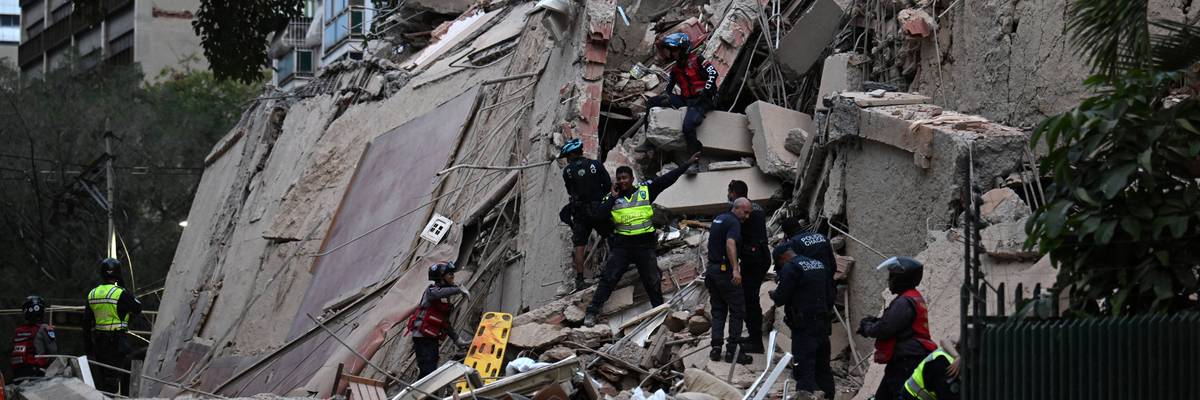
Rescuers search for victims in a collapsed building in Caracas following two massive earthquakes that rocked Venezuela on June 24, 2026.
"This is the time for cooperation, compassion, and respect for Venezuela’s sovereignty," said CodePink.
Human rights groups on Thursday implored the United States and allied countries to lift all sanctions against Venezuela—which experts say have already killed tens of thousands of people—as the beleaguered South American country reels from Wednesday's devastating earthquakes.
At least 188 people are dead and over 1,500 others injured, with those figures almost certain to rise, following a 7.2-magnitude temblor centered in San Felipe, Yaracuy—about 100 miles west of Caracas—and a 7.5-magnitude quake that struck less than a minute later, also in centered in Yaracuy.
US President Donald Trump, who authorized the illegal invasion of Venezuela and abduction of President Nicolás Maduro earlier this year, wrote on social media after the earthquakes that his administration “stands ready, willing, and able to help."
“We will be there for our new and great friends," Trump claimed.
Delcy Rodríguez, Maduro's vice president and acting president since his ouster, thanked the Trump administration for "offering support and solidarity to the people of Venezuela in the face of this tragedy that has plunged us into mourning."
However, US sanctions—first imposed during then-President George W. Bush's second term while Hugo Chávez was leading Venezuela and ramped up under the Obama, Trump, and Biden administrations—remain in place, complicating relief efforts after one of the country's worst-ever natural disasters.
While the Trump administration has issued narrow exemptions from sanctions to companies looking to profit from Venezuela's crisis and copious natural resources, primarily oil, these waivers have not delivered broad relief to the people who need it most.
"Today’s catastrophe makes clear what we have long argued: When a country is deliberately weakened through economic warfare, its ability to prepare for, respond to, and recover from disasters is also weakened," the US-based peace group CodePink said in a statement. "The United States has a responsibility to help address the humanitarian consequences of the policies it has imposed."
🇻🇪 CODEPINK extends our deepest condolences to the people of Venezuela following the devastating earthquakes that have taken hundreds of lives, injured thousands, and left entire communities in urgent need of assistance.Our full statement: buff.ly/QzYcQ3p
[image or embed]
— CODEPINK (@codepink.bsky.social) June 25, 2026 at 2:22 PM
CodePink continued:
Too often, we’ve seen the US and other Western countries exploit natural disasters like this in order to deepen foreign control. In Haiti, the US and its allies have repeatedly pushed militarization and politically conditioned aid instead of genuine recovery led by the country itself. In this moment, the world must refuse to allow Venezuela to be forced down the same path.
We also call on the administration to immediately lift all US sanctions on Venezuela and release Venezuelan funds under US jurisdiction so they can be used for emergency relief, reconstruction, and recovery.
"This is the time for cooperation, compassion, and respect for Venezuela’s sovereignty," CodePink added. "We urge the international community to support relief efforts and stand with the Venezuelan people as they rebuild their homes, their communities, and their future."
The Center for Economic and Policy Research (CEPR), a Washington, DC-based think tank, said Thursday that "while the Trump administration has issued a series of general licenses to allow foreign businesses and banks to operate in Venezuela in spite of US sanctions, the continued existence of these sanctions significantly discourages international economic and financial actors from expanding operations there."
CEPR co-director Mark Weisbrot said that “we must remember that Venezuela suffered the worst depression in the history of the world, without a war, due to illegal US economic sanctions."
"This deadly destruction was not a mistake, but an expected result that would happen to any country that was cut off by sanctions from the international financial system, and also from the vast majority of its foreign exchange earnings from exports," he continued.
According to a 2019 CEPR report, as many as 40,000 Venezuelans died due to sanctions during the previous two years. The sanctions ostensibly targeted Maduro's government, but made it much more difficult for millions of people to obtain food, medicine, and other necessities.
“Tens of thousands, and more likely hundreds of thousands, of Venezuelans died as a result of those sanctions," Weisbrot said Thursday. "The United States is therefore obligated to help prevent further loss of life in Venezuela."
Dear Common Dreams reader, It’s been nearly 30 years since I co-founded Common Dreams with my late wife, Lina Newhouser. We had the radical notion that journalism should serve the public good, not corporate profits. It was clear to us from the outset what it would take to build such a project. No paid advertisements. No corporate sponsors. No millionaire publisher telling us what to think or do. Many people said we wouldn't last a year, but we proved those doubters wrong. Together with a tremendous team of journalists and dedicated staff, we built an independent media outlet free from the constraints of profits and corporate control. Our mission has always been simple: To inform. To inspire. To ignite change for the common good. Building Common Dreams was not easy. Our survival was never guaranteed. When you take on the most powerful forces—Wall Street greed, fossil fuel industry destruction, Big Tech lobbyists, and uber-rich oligarchs who have spent billions upon billions rigging the economy and democracy in their favor—the only bulwark you have is supporters who believe in your work. But here’s the urgent message from me today. It's never been this bad out there. And it's never been this hard to keep us going. At the very moment Common Dreams is most needed, the threats we face are intensifying. We need your support now more than ever. We don't accept corporate advertising and never will. We don't have a paywall because we don't think people should be blocked from critical news based on their ability to pay. Everything we do is funded by the donations of readers like you. When everyone does the little they can afford, we are strong. But if that support retreats or dries up, so do we. Will you donate now to make sure Common Dreams not only survives but thrives? —Craig Brown, Co-founder |
Human rights groups on Thursday implored the United States and allied countries to lift all sanctions against Venezuela—which experts say have already killed tens of thousands of people—as the beleaguered South American country reels from Wednesday's devastating earthquakes.
At least 188 people are dead and over 1,500 others injured, with those figures almost certain to rise, following a 7.2-magnitude temblor centered in San Felipe, Yaracuy—about 100 miles west of Caracas—and a 7.5-magnitude quake that struck less than a minute later, also in centered in Yaracuy.
US President Donald Trump, who authorized the illegal invasion of Venezuela and abduction of President Nicolás Maduro earlier this year, wrote on social media after the earthquakes that his administration “stands ready, willing, and able to help."
“We will be there for our new and great friends," Trump claimed.
Delcy Rodríguez, Maduro's vice president and acting president since his ouster, thanked the Trump administration for "offering support and solidarity to the people of Venezuela in the face of this tragedy that has plunged us into mourning."
However, US sanctions—first imposed during then-President George W. Bush's second term while Hugo Chávez was leading Venezuela and ramped up under the Obama, Trump, and Biden administrations—remain in place, complicating relief efforts after one of the country's worst-ever natural disasters.
While the Trump administration has issued narrow exemptions from sanctions to companies looking to profit from Venezuela's crisis and copious natural resources, primarily oil, these waivers have not delivered broad relief to the people who need it most.
"Today’s catastrophe makes clear what we have long argued: When a country is deliberately weakened through economic warfare, its ability to prepare for, respond to, and recover from disasters is also weakened," the US-based peace group CodePink said in a statement. "The United States has a responsibility to help address the humanitarian consequences of the policies it has imposed."
🇻🇪 CODEPINK extends our deepest condolences to the people of Venezuela following the devastating earthquakes that have taken hundreds of lives, injured thousands, and left entire communities in urgent need of assistance.Our full statement: buff.ly/QzYcQ3p
[image or embed]
— CODEPINK (@codepink.bsky.social) June 25, 2026 at 2:22 PM
CodePink continued:
Too often, we’ve seen the US and other Western countries exploit natural disasters like this in order to deepen foreign control. In Haiti, the US and its allies have repeatedly pushed militarization and politically conditioned aid instead of genuine recovery led by the country itself. In this moment, the world must refuse to allow Venezuela to be forced down the same path.
We also call on the administration to immediately lift all US sanctions on Venezuela and release Venezuelan funds under US jurisdiction so they can be used for emergency relief, reconstruction, and recovery.
"This is the time for cooperation, compassion, and respect for Venezuela’s sovereignty," CodePink added. "We urge the international community to support relief efforts and stand with the Venezuelan people as they rebuild their homes, their communities, and their future."
The Center for Economic and Policy Research (CEPR), a Washington, DC-based think tank, said Thursday that "while the Trump administration has issued a series of general licenses to allow foreign businesses and banks to operate in Venezuela in spite of US sanctions, the continued existence of these sanctions significantly discourages international economic and financial actors from expanding operations there."
CEPR co-director Mark Weisbrot said that “we must remember that Venezuela suffered the worst depression in the history of the world, without a war, due to illegal US economic sanctions."
"This deadly destruction was not a mistake, but an expected result that would happen to any country that was cut off by sanctions from the international financial system, and also from the vast majority of its foreign exchange earnings from exports," he continued.
According to a 2019 CEPR report, as many as 40,000 Venezuelans died due to sanctions during the previous two years. The sanctions ostensibly targeted Maduro's government, but made it much more difficult for millions of people to obtain food, medicine, and other necessities.
“Tens of thousands, and more likely hundreds of thousands, of Venezuelans died as a result of those sanctions," Weisbrot said Thursday. "The United States is therefore obligated to help prevent further loss of life in Venezuela."
Human rights groups on Thursday implored the United States and allied countries to lift all sanctions against Venezuela—which experts say have already killed tens of thousands of people—as the beleaguered South American country reels from Wednesday's devastating earthquakes.
At least 188 people are dead and over 1,500 others injured, with those figures almost certain to rise, following a 7.2-magnitude temblor centered in San Felipe, Yaracuy—about 100 miles west of Caracas—and a 7.5-magnitude quake that struck less than a minute later, also in centered in Yaracuy.
US President Donald Trump, who authorized the illegal invasion of Venezuela and abduction of President Nicolás Maduro earlier this year, wrote on social media after the earthquakes that his administration “stands ready, willing, and able to help."
“We will be there for our new and great friends," Trump claimed.
Delcy Rodríguez, Maduro's vice president and acting president since his ouster, thanked the Trump administration for "offering support and solidarity to the people of Venezuela in the face of this tragedy that has plunged us into mourning."
However, US sanctions—first imposed during then-President George W. Bush's second term while Hugo Chávez was leading Venezuela and ramped up under the Obama, Trump, and Biden administrations—remain in place, complicating relief efforts after one of the country's worst-ever natural disasters.
While the Trump administration has issued narrow exemptions from sanctions to companies looking to profit from Venezuela's crisis and copious natural resources, primarily oil, these waivers have not delivered broad relief to the people who need it most.
"Today’s catastrophe makes clear what we have long argued: When a country is deliberately weakened through economic warfare, its ability to prepare for, respond to, and recover from disasters is also weakened," the US-based peace group CodePink said in a statement. "The United States has a responsibility to help address the humanitarian consequences of the policies it has imposed."
🇻🇪 CODEPINK extends our deepest condolences to the people of Venezuela following the devastating earthquakes that have taken hundreds of lives, injured thousands, and left entire communities in urgent need of assistance.Our full statement: buff.ly/QzYcQ3p
[image or embed]
— CODEPINK (@codepink.bsky.social) June 25, 2026 at 2:22 PM
CodePink continued:
Too often, we’ve seen the US and other Western countries exploit natural disasters like this in order to deepen foreign control. In Haiti, the US and its allies have repeatedly pushed militarization and politically conditioned aid instead of genuine recovery led by the country itself. In this moment, the world must refuse to allow Venezuela to be forced down the same path.
We also call on the administration to immediately lift all US sanctions on Venezuela and release Venezuelan funds under US jurisdiction so they can be used for emergency relief, reconstruction, and recovery.
"This is the time for cooperation, compassion, and respect for Venezuela’s sovereignty," CodePink added. "We urge the international community to support relief efforts and stand with the Venezuelan people as they rebuild their homes, their communities, and their future."
The Center for Economic and Policy Research (CEPR), a Washington, DC-based think tank, said Thursday that "while the Trump administration has issued a series of general licenses to allow foreign businesses and banks to operate in Venezuela in spite of US sanctions, the continued existence of these sanctions significantly discourages international economic and financial actors from expanding operations there."
CEPR co-director Mark Weisbrot said that “we must remember that Venezuela suffered the worst depression in the history of the world, without a war, due to illegal US economic sanctions."
"This deadly destruction was not a mistake, but an expected result that would happen to any country that was cut off by sanctions from the international financial system, and also from the vast majority of its foreign exchange earnings from exports," he continued.
According to a 2019 CEPR report, as many as 40,000 Venezuelans died due to sanctions during the previous two years. The sanctions ostensibly targeted Maduro's government, but made it much more difficult for millions of people to obtain food, medicine, and other necessities.
“Tens of thousands, and more likely hundreds of thousands, of Venezuelans died as a result of those sanctions," Weisbrot said Thursday. "The United States is therefore obligated to help prevent further loss of life in Venezuela."