March, 28 2012, 02:13pm EDT
For Immediate Release
Contact:
Jim Gerritsen
(207) 429-9765
Farmers Determined to Defend Right to Grow Food File Appeal in OSGATA vs. Monsanto
Battle over Farmers' Rights Against Monsanto Continues to Brew
NEW YORK
Today, in Federal District Court in Manhattan, family farmers filed their Notice of Appeal to Judge Naomi Buchwald's February 24th ruling dismissing Organic Seed Growers and Trade Association et al v. Monsanto. The United States Court of Appeals for the Federal Circuit will hear the farmers' appeal, seeking to reinstate the case, which has received worldwide attention. The farmers are determined to move forward with their lawsuit challenging Monsanto's patents on genetically engineered seed technologies in order to continue their pursuit of Declaratory Judgment Act court protection from Monsanto's claims of patent infringement should their crops become contaminated by Monsanto's seed.
"Farmers have the right to protect themselves from being falsely accused of patent infringement by Monsanto before they are contaminated by Monsanto's transgenic seed," said Dan Ravicher, Executive Director of the Public Patent Foundation (PUBPAT), a not-for-profit legal services organization based at Benjamin N. Cardozo School of Law that represents the plaintiffs. "Judge Buchwald erred by denying plaintiffs that right and they have now initiated the process of having her decision reversed."
The original complaintin OSGATA et al v. Monsanto was filed on March 29, 2011. In July, Monsanto filed a motion to dismiss. Plaintiff lawyers at PUBPAT then filed a rebuttal brief on August 11, 2011. Judge Buchwald called for oral argument on the motion to dismiss, which was held in Manhattan on January 31, 2012. The judge's dismissal ruling was issued February 24th and plaintiffs were given thirty days in which to file their Notice of Appeal.
"Farmers are under threat. Our right to farm the way we choose, and to grow pure organic seed and healthy food on our farms for our families and for our customers is under assault," said Maine organic seed farmer Jim Gerritsen, President of lead Appellant OSGATA. "We are honor-bound to challenge an erroneous ruling which denies family farmers the protection the law says we deserve. We're not asking for one penny from Monsanto. Ultimately, our fight is for justice and is waged to defend the right of the people to have access to good and safe food."
The Plaintiff/Appellant group is comprised of individual family farmers, small and family-owned seed companies and agricultural organizations. They are all organic or committed to farming without using genetically engineered seeds, and have no desire to ever farm with Monsanto's patented GMO technology. However, they are fearful that Monsanto seed will trespass onto their farms and that the resulting contamination of their crops will be viewed by Monsanto as illegal 'possession' resulting in patent infringement allegations. Monsanto's harassment of family farmers is well known in farm country, the biotech seed and chemical giant has one of the most aggressive patent assertion agendas in U.S. history. Between 1997 and 2010, Monsanto admits to filing 144 lawsuits against America's family farmers, while settling another 700 cases out of court for undisclosed amounts and imposing gag orders on farmers. The farmers' fears were heightened when Monsanto refused to provide a legally binding covenant not to sue, signaling Monsanto's intention to maintain their option to sue innocent family farmers in the future.
"America's farmers deserve to be protected under the law from the unwanted genetic contamination of their crops by Monsanto's flawed genetically engineered seed technology," said David Murphy, founder and Executive Director of Food Democracy Now!, an Iowa-based national advocacy organization of more than 300,000 members. "These farmers have no desire to use Monsanto's GMO seeds, yet they are forced into the untenable position of losing their right to farm in the manner in which they choose, face legal intimidation and the loss of economic livelihood, all because America's legal system has failed to adequately protect them from the real threat of genetic trespass that is inherent as a result of Monsanto's patented GMO seeds and the natural biological functions of cross pollination from wind, insects or animals."
The Appellants in the suit represented by PUBPAT are: Organic Seed Growers and Trade Association; Organic Crop Improvement Association International, Inc. (OCIA); Food Democracy Now!; The Cornucopia Institute; Demeter Association, Inc.; Navdanya International; Maine Organic Farmers and Gardeners Association; Northeast Organic Farming Association/Massachusetts Chapter, Inc.; Northeast Organic Farming Association of Vermont; Rural Vermont; Ohio Ecological Food & Farm Association; Southeast Iowa Organic Association; Mendocino Organic Network (California); Northeast Organic Dairy Producers Alliance; Canadian Organic Growers; Family Farmer Seed Cooperative; Sustainable Living Systems (Montana); Global Organic Alliance; Farm-to-Consumer Legal Defense Fund; Weston A. Price Foundation; Center for Food Safety; Beyond Pesticides; Northeast Organic Farming Association of Rhode Island; Northeast Organic Farming Association of New Hampshire; Northeast Organic Farming Association of Connecticut; Northeast Organic Farming Association of New York; Western Organic Dairy Producers Alliance; Michael Fields Agricultural Institute (Wisconsin); Midwest Organic Dairy Producers Alliance; Florida Organic Growers; Peace River Organic Producers Association (Alberta and British Columbia); FEDCO Seeds, Inc. (Maine); Adaptive Seeds, LLC (Oregon); Sow True Seed (North Carolina); Southern Exposure Seed Exchange (Virginia); Mumm's Sprouting Seeds (Saskatchewan); Baker Creek Heirloom Seed Co., LLC (Missouri); Comstock, Ferre & Co. LLC (Connecticut); Seedkeepers, LLC (California); Siskiyou Seeds (Oregon); Countryside Organics (Virginia); Cuatro Puertas (New Mexico); Seed We Need (Montana), Wild Garden Seed (Oregon); Alba Ranch (Kansas); Wild Plum Farm (Montana); Gratitude Gardens (Washington); Richard Everett Farm, LLC (Nebraska); Philadelphia Community Farm, Inc. (Wisconsin); Genesis Farm (New Jersey); Chispas Farms, LLC (New Mexico); Midheaven Farms (Minnesota); Koskan Farms (South Dakota); California Cloverleaf Farms; North Outback Farm (North Dakota); Taylor Farms, Inc. (Utah); Ron Gargasz Organic Farms (Pennsylvania); Abundant Acres (Missouri); T & D Willey Farms (California); Quinella Ranch (Saskatchewan); Nature's Way Farm, Ltd. (Alberta); Levke and Peter Eggers Farm (Alberta); Frey Vineyards, Ltd. (California); Bryce Stephens (Kansas); Chuck Noble (South Dakota); LaRhea Pepper (Texas); Paul Romero (New Mexico); Donald Wright Patterson, Jr. (Virginia); Common Good Farm; LLC (Nebraska); American Buffalo Company (Nebraska; Full Moon Farm, Inc. (Vermont); Radiance Dairy (Iowa); Brian L. Wickert (Wisconsin); Bruce Drinkman (Wisconsin); and Murray Bast (Ontario).
The Organic Seed Growers and Trade Association (OSGATA) develops, protects and promotes the organic seed trade and its growers, and assures that the organic community has access to excellent quality organic seed, free of contaminants and adapted to the diverse needs of local organic agriculture.
LATEST NEWS
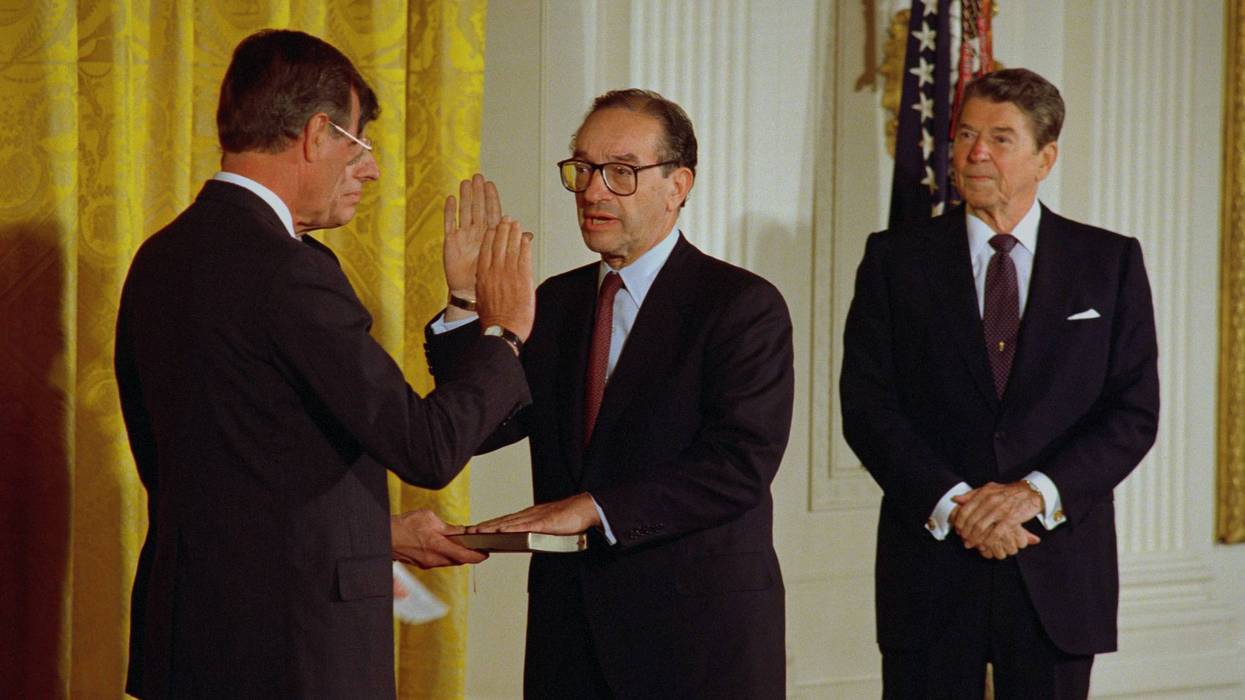
Alan Greenspan, Longtime Fed Chair and Ayn Rand Disciple, Meets Ultimate ‘Invisible Hand’
"For decades, he preached that the self-interest of the predator was the invisible hand of the common good," Yanis Varoufakis said after the man who led the US central bank under four presidents died aged 100.
Jun 22, 2026
Alan Greenspan, whose policies during nearly 20 years as US Federal Reserve chair fueled soaring economic inequality and helped create the conditions for multiple economic crashes, died Monday at age 100 after a long battle with Parkinson's disease.
While many corporate media outlets published hagiographic obituaries lionizing the "Maestro" who presided over nearly two decades of low inflation, rising stock prices, and American economic confidence, critics focused on Greenspan's role in promoting dangerous deregulation and "easy money" policies that inflated financial bubbles, with sometimes disastrous results.
Robert Reich—who served as US labor secretary under President Bill Clinton during all of Greenspan's tenure—called him "in many ways the most powerful person in America" during that era.
"If any single person was responsible for the financial crisis of 2008, it was Greenspan."
"He maintained an iron grip over the Fed, and almost single-handedly decided on interest rates," Reich wrote. "He essentially fired George H. W. Bush by raising interest rates so high (ostensibly to ward off the inflation then threatening the economy) that the economy took a dive, and voters blamed Bush. This was enough to convince my boss, Bill Clinton, to do exactly what Greenspan wanted—which was to reduce the federal budget deficit and thereby destroy much of the agenda Clinton ran on (and I helped create)."
"I don’t want to speak ill of anyone who has passed. Greenspan was an extremely charming, intelligent, and thoughtful man," Reich added. "But the truth must be told: If any single person was responsible for the financial crisis of 2008, it was Greenspan. That crisis—the worst collapse since 1929, which led to the worst recession in decades, in which millions of Americans lost their jobs, savings, and even their homes—resulted from the deregulation of Wall Street that Greenspan advocated."
Former Greek Finance Minister Yanis Varoufakis wrote on X: "His epitaph? A singular, glorious confession, 'I found a flaw in my model of the world.' A flaw, he said, as though it were a leaky pipe, not a total collapse of the intellectual architecture that anointed him Oracle. For decades, he preached that the self-interest of the predator was the invisible hand of the common good.
"Then, in 2008, the beast devoured the table, and to his credit, he blinked, admitting that his entire worldview—the one that central bankers canonized and the world swallowed—was a fairy tale for rentiers," Varoufakis added. "He did not, of course, admit to culpability. That would require a moral compass, a device notably absent from his Ayn Randian toolbelt. No, he merely noted the flaw, as a meteorologist might note a gust of wind, and returned to his well-earned silence."
Born 10 miles from Wall Street in Manhattan's Washington Heights during one of the most infamous economic bubbles of all time, Greenspan was a protégé of libertarian writer and philosopher Ayn Rand and was influenced by the Atlas Shrugged author's moral defense of capitalism, her fierce advocacy of deregulation, and her insidious insistence that self-interest was socially beneficial.
Their relationship cooled as Greenspan embraced more mainstream economic policies despised by Rand and gradually became a leading steward of the very sort of state-shepherded system she deeply distrusted.
After heading President Gerald Ford's Council of Economic Advisers, Greenspan was appointed chair of the Fed by President Ronald Reagan in 1987. He would remain in the post well into George W. Bush's second term.
Greenspan generally favored low interest rates, especially after crises like the 1987 stock market crash, the 1998 Long-Term Capital Management crisis, and the 2001 recession. His fame grew after he suggested that the economy might be experiencing a tech-driven “productivity miracle," language that many investors took as validation that traditional valuation limits were obsolete.
Critics would later call it a "productivity mirage."
Staunch devotion to low interest rates by Greenspan's Fed boosted stock prices and real estate values under "easy money" policies. Many investors came to believe that the Fed would intervene aggressively whenever markets fell sharply—the so-called "Greenspan Put."
However, since ownership of financial assets (and the firms that sell and promote them) is concentrated among the wealthy, it was the rich who benefited most from Greenspan's polices. When bubbles burst, as they did after the dot-com boom that ended in early 2000 and during the 2008 global financial crisis, the rich bounced back thanks to their diversified portfolios and bailouts, while middle- and lower-income households were wiped out through asset devaluation, foreclosures, and job losses.
"It is no exaggeration to say the global financial crisis of 2008 had an enormous and lasting impact on American life and the way ordinary people view elites," New York Times global economic correspondent Peter S. Goodman said on social media. "It is also no exaggeration to say that Alan Greenspan has as much responsibility for the crisis as an individual can."
"For those not old enough to remember, it is difficult to state his aura during his time of greatest influence," Goodman continued. "When he told Americans that they should buy houses and use variable-rate mortgages to do it, they listened. Much is made of his econ jargon-laden vernacular that went over the heads of nearly all listeners."
"That was central to the mystique," he added. "When he went to the Hill and spoke to Congress, most people had no idea what he was talking about but assumed that smarter kids did. And so his quasi-religious faith in the efficiency of markets as the ultimate insurance against risk went unchallenged and became dogma, and the risks kept building."
Keep ReadingShow Less
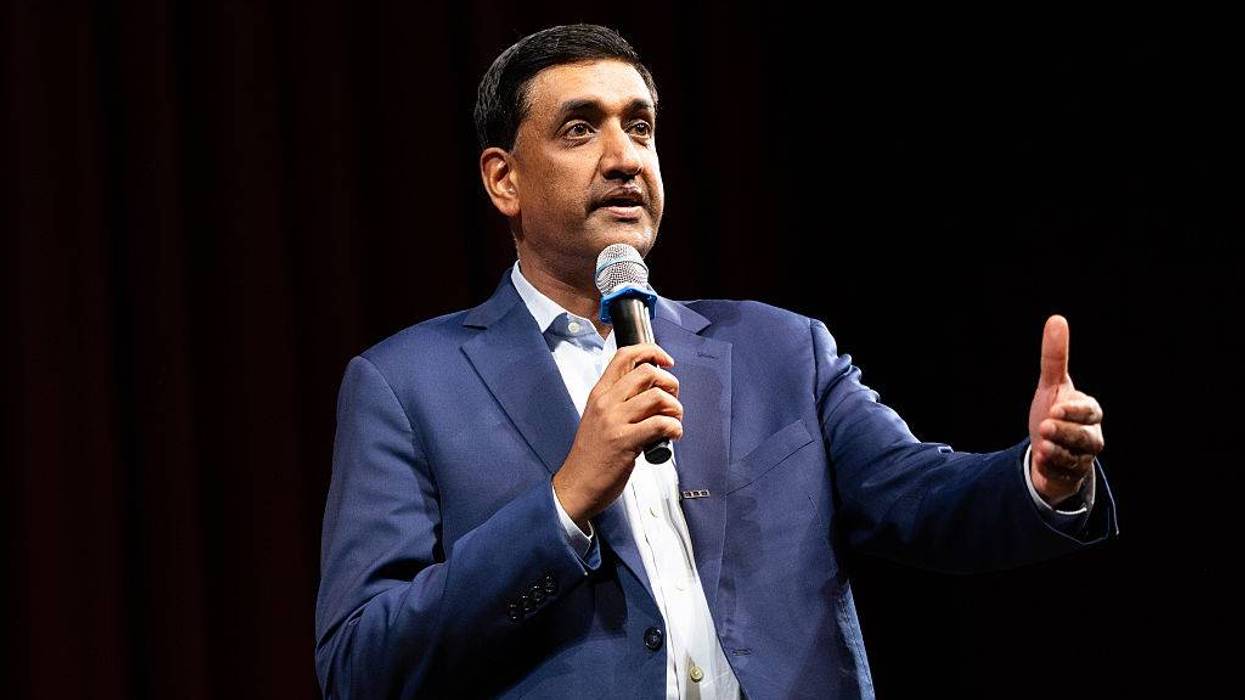
‘Time to Sue This Liar’: Trillionaire Elon Musk Threatens Ro Khanna for Warning of 4.5 Million Child Deaths From DOGE Cuts
"The Dems should have a leader who Elon Musk is threatening to sue and wants imprisoned," said one political observer. "That's the right guy."
Jun 22, 2026
The recently crowned world's first trillionaire Elon Musk threatened Rep. Ro Khanna with legal action on Monday after the California Democrat pointed out the life-ending potential of foreign aid cuts made by the Department of Government Efficiency.
During an appearance on the "I've Had It" podcast on Saturday, Khanna (D-Calif.) said that there must be consequences for Musk, who in February 2025 used DOGE to curtail programs and cut funding for the United States Agency for International Development (USAID).
"There needs to be accountability for Elon Musk," Khanna emphasized. "You know, they’re celebrating that he created 4,400 millionaires, but they don’t talk about the 4.5 million children around the world who he possibly sentenced to death by dismantling USAID.”
A peer-reviewed study published by The Lancet in July 2025 estimated that proposed cuts to USAID could lead to as many as 14 million preventable deaths by 2030 worldwide, including the deaths of 4.5 million children under the ages of five years old.
Musk, who earlier this month became the world's first trillionaire, wrote in response to Khanna's interview that it was "time to sue this liar."
It's not clear how Khanna's statement could be defamatory given that it was based on research published by a prestigious medical journal.
Musk, in a separate reaction to Khanna's remarks about USAID, later added that the US lawmaker "should be in prison."
On Monday afternoon, Khanna posted a video in which he challenged Musk to debate him on the impact the DOGE cuts have had on people throughout the Global South who had previously benefited from USAID.
"The world's richest person has spent all day... going after me," Khanna said. "Why? Because I cited an academic study that his DOGE cuts may lead to the deaths of millions of children overseas. You know, Elon, I thought you were a free speech guy. Why not debate me on these issues instead of threatening lawfare?"
"You're not going to be able to intimidate me," Khanna added.
.@elonmusk let's debate. You game?
I am for free speech, not lawfare. pic.twitter.com/gThLggxiOW
— Ro Khanna (@RoKhanna) June 22, 2026
Mehdi Hasan, editor-in-chief of Zeteo News, said that Khanna’s willingness to directly take on Musk exhibited qualities that Democrats could use more of in leadership positions.
"He is picking/making the right enemies on the right, and really pissing them off," Hasan wrote of Khanna. "The Dems should have a leader who Elon Musk is threatening to sue and wants imprisoned. That's the right guy."
Keep ReadingShow Less
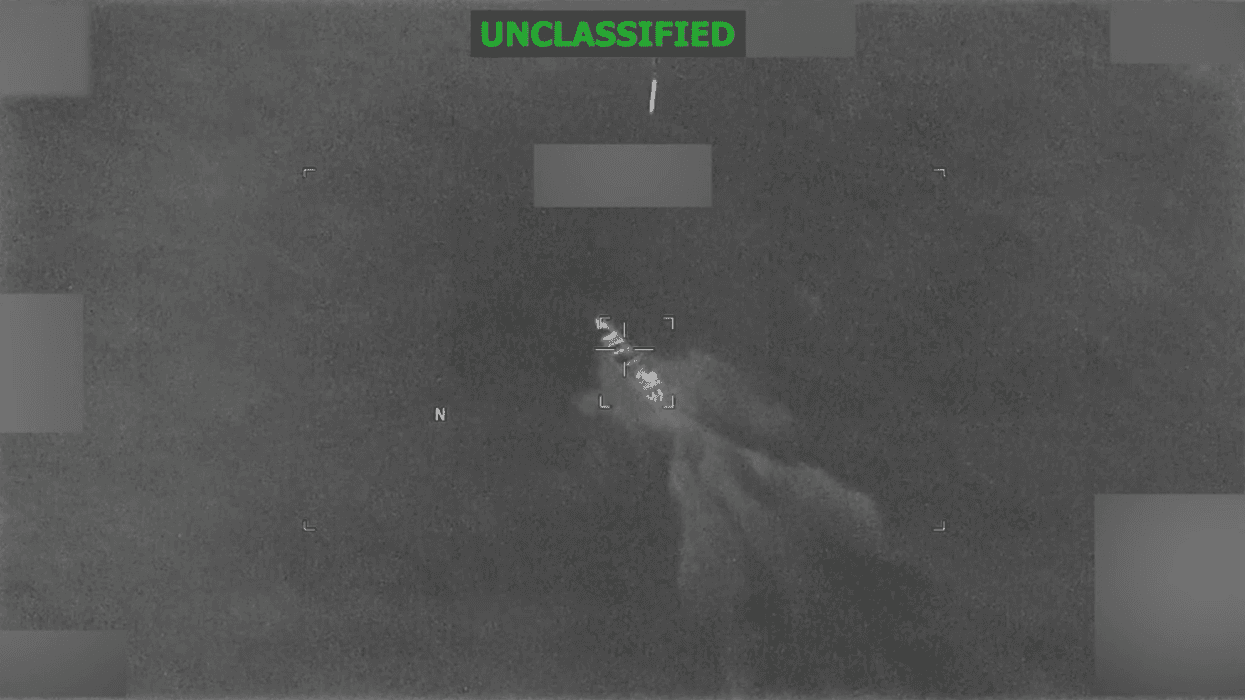
'There Will Come a Day When He Faces Prosecution': Trump Condemned After US Murders Two More at Sea
"The summary execution of two more in an alleged drug boat brings the number of murders ordered by Trump to more than 210," noted one human rights defender.
Jun 22, 2026
Two people were killed, and six others survived, a strike on Sunday that the US military claimed—without providing evidence—targeted a boat full of "narco-terrorists," but that human rights defenders called another summary execution worthy of prosecution.
"On June 21, at the direction of the commander of US Southern Command, Gen. Francis L. Donovan, Joint Task Force Southern Spear conducted a lethal kinetic strike on a vessel operated by Designated Terrorist Organizations," USSOUTHCOM said in a statement. "Intelligence confirmed the vessel was transiting along known narco-trafficking routes in the Caribbean and was engaged in narco-trafficking operations."
"Two male narco-terrorists were killed during this action, and there were six male survivors," the statement added. "Following the engagement, USSOUTHCOM immediately notified US Coast Guard to activate the Search and Rescue system for the survivors."
More lawless killing in the Trump administration’s boat bombing campaign.Real killing in a phony armed conflict with “narco-terrorists.”This strike reportedly left 6 survivors.US record for rescuing survivors alive is…not great.
[image or embed]
— Brian Finucane (@bcfinucane.bsky.social) June 21, 2026 at 11:28 PM
According to The Intercept's Nick Turse, who has tracked all of the reported US boat bombings in the Caribbean Sea and Pacific Ocean, there have now been 66 such strikes, which have killed 215 people and left 12 survivors, based on USSOUTHCOM data.
The fate of previous boat strike survivors is not completely clear. After one April bombing, the US Coast Guard told UPI that search-and-rescue operations were called off after no signs of survivors were found. Last October, President Donald Trump said two strike survivors were repatriated to their home countries of Ecuador and Colombia, where they faced prosecution.
Survivors of some of the strikes have accused US forces of torturing them.
Relatives of people killed in previous US boat bombings, as well as officials in Venezuela and Colombia, have said that numerous victims were fishers who were not involved in the illicit drug trade.
In January, relatives of two Trinidadian fishers killed in the strikes filed a federal wrongful death lawsuit in Massachusetts.
"The summary execution of two more in an alleged drug boat brings the number of murders ordered by Trump to more than 210," former Human Rights Watch executive director Kenneth Roth said on social media. "There will come a day when he faces prosecution for these crimes."
Keep ReadingShow Less
Most Popular