SUBSCRIBE TO OUR FREE NEWSLETTER
Daily news & progressive opinion—funded by the people, not the corporations—delivered straight to your inbox.
5
#000000
#FFFFFF
To donate by check, phone, or other method, see our More Ways to Give page.
Daily news & progressive opinion—funded by the people, not the corporations—delivered straight to your inbox.
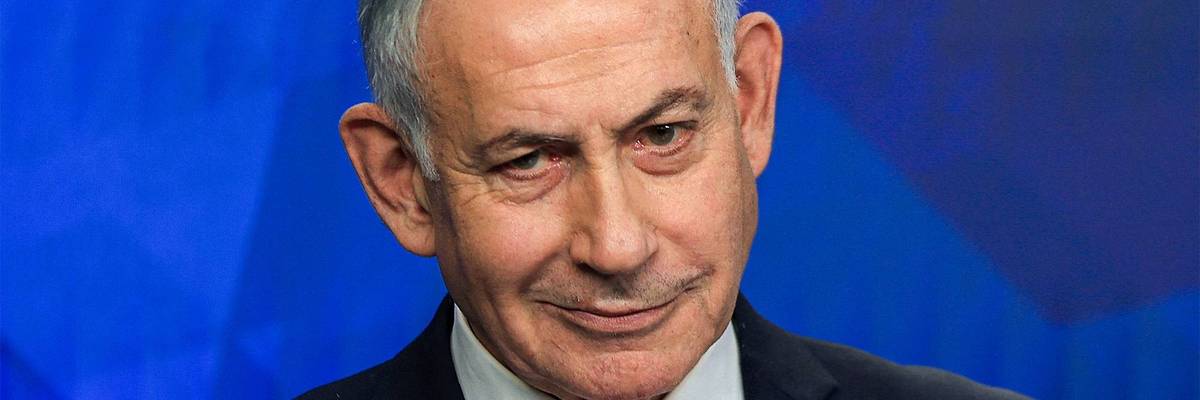
Israel's Prime Minister Benjamin Netanyahu gives a news conference in Jerusalem on June 15, 2026.
"When will Trump impose consequences for this obstructionism?"
Israel’s attempts to sabotage the peace agreement between the United States and Iran appear to be working again, with its relentless attacks on Lebanon reportedly prompting Iran to once again close the Strait of Hormuz on Saturday, mere days after it reopened.
"In light of the United States' clear bad faith and breach of its commitment to implement the first clause of the memorandum of understanding (MOU) for ending the war, and in response to the continuous and ongoing violations of the ceasefire by the Zionist regime in southern Lebanon, it is hereby announced that the Strait of Hormuz will be closed to maritime traffic," said the Khatam al-Anbiya central headquarters of the Iranian armed forces on Saturday.
US Central Command claimed that traffic through the strait had continued, with 55 commercial ships traveling through it, though it was unclear when those crossings took place.
The announcement that the strait had once again closed came after days of escalating attacks by Israel despite the memorandum of understanding signed this week, which included terms for a ceasefire “on all fronts, including in Lebanon.”
🇮🇷 Iranian Foreign Ministry spokesperson Esmaeil Baghaei said Israel’s continued violations of the Lebanon ceasefire have placed the entire U.S.-Iran memorandum of understanding in jeopardy, with Washington failing to uphold its commitment to restrain Israel.
Baghaei said the… pic.twitter.com/kDDXLg2wZK
— Drop Site (@DropSiteNews) June 20, 2026
A ceasefire mediated by the US and Qatar between Israel and Hezbollah went into effect on Friday afternoon despite continuing bombardments by Israel earlier in the day that killed 47 people and wounded 97 after Hezbollah killed four Israeli soldiers occupying Lebanese territory.
Within an hour of the agreement taking effect, Israel began carrying out additional attacks across southern Lebanon and the Bekaa Valley that continued through the night and into Saturday. One strike, on a three-story apartment building in the town of Barish in the Tyre district, reportedly killed a mother, father, and their two children, while wounding 12 others and leaving seven trapped beneath rubble.
Israel said its continued attacks were in response to Hezbollah’s firing of projectiles at Israeli forces in southern Lebanon, which Hezbollah said it launched as Israel attempted to further expand its occupation toward the strategically important Ali al-Taher hills “under the cover of the ceasefire.”
JD Vance on Fox & Friends this morning: "One of the things the president has set us out to do as a high priority is to open the straits. That's now happened." (The strait has since been closed lol) pic.twitter.com/iulcWtvUdR
— Aaron Rupar (@atrupar) June 20, 2026
Israel’s leaders have explicitly stated in recent days that they have no intention of abiding by any ceasefire reached between the US and Iran, leading President Donald Trump and Vice President JD Vance to issue uncommonly blunt criticism of Israel’s tactics.
Quoting a senior Trump adviser on Friday, Zeteo reported that behind the scenes, the president is "madder at the Israelis than the Iranians," believing that Prime Minister Benjamin Netanyahu is trying to drag him back into a war that has brought his popularity to new lows and sparked a global economic crisis.
Just as it has for months, Israel’s tried-and-true tactic of raining hell upon Lebanon every time a US-Iran ceasefire appears close seems to be working once again. The wave of attacks earlier this week led peace talks in Switzerland planned for Friday to be postponed.
As Iranian negotiators departed for Switzerland on Saturday, Esmaeil Baghaei, a spokesperson for the Iranian Foreign Ministry, said little was likely to happen there unless there was evidence that the US would “fulfill its obligations.”
Those obligations include stopping Israel’s occupation and ethnic cleansing campaign in southern Lebanon, which has now killed more than 4,000 people, wounded nearly 12,000, and led to the forced expulsion of more than 1.2 million Lebanese civilians by Israeli forces.
"Israel is still trying to sabotage the ceasefire with Iran by continuing to launch attacks in Lebanon," said Kenneth Roth, the former executive director of Human Rights Watch. "When will Trump impose consequences for this obstructionism?"
Iran’s military says it has closed the Strait of Hormuz over Israel’s attacks on southern Lebanon that have killed at least 32 people since dawn.
Al Jazeera's Mohamed Vall joins live from Tehran. pic.twitter.com/bwyOo65QBX
— Al Jazeera English (@AJEnglish) June 20, 2026
The renewed closure of the Strait of Hormuz raises the stakes considerably for the Trump administration, which has described opening it and restoring economic normalcy as a core objective, with Trump warning of “bedlam” in a matter of weeks if the deal fails and the critical oil shipping route remains closed.
James Bays, the diplomatic editor for Al Jazeera, explained that as Iranian diplomats prepare to negotiate with the US, they feel that "now is a time of maximum leverage" and that they are "using that weapon now" to try to force the US to restrain Israel.
While Trump has had no shortage of angry words and is reportedly “swearing a lot” about Netanyahu behind closed doors, Joe Kent, Trump’s former counterterrorism chief—who resigned earlier this year because of his vocal opposition to the Iran war—argued that unless the US exerts material pressure on Israel, the prime minister has no incentive to stop attacking Lebanon.
"For the MOU to hold and result in a lasting peace, we must restrict aid to Israel immediately and make it clear that we will not defend them should Iran opt to strike in response to Israel’s attacks in Lebanon," he said. "Israel has not responded to our verbal and written demands—that is not going to change, unless we change it by taking action."
Dear Common Dreams reader, It’s been nearly 30 years since I co-founded Common Dreams with my late wife, Lina Newhouser. We had the radical notion that journalism should serve the public good, not corporate profits. It was clear to us from the outset what it would take to build such a project. No paid advertisements. No corporate sponsors. No millionaire publisher telling us what to think or do. Many people said we wouldn't last a year, but we proved those doubters wrong. Together with a tremendous team of journalists and dedicated staff, we built an independent media outlet free from the constraints of profits and corporate control. Our mission has always been simple: To inform. To inspire. To ignite change for the common good. Building Common Dreams was not easy. Our survival was never guaranteed. When you take on the most powerful forces—Wall Street greed, fossil fuel industry destruction, Big Tech lobbyists, and uber-rich oligarchs who have spent billions upon billions rigging the economy and democracy in their favor—the only bulwark you have is supporters who believe in your work. But here’s the urgent message from me today. It's never been this bad out there. And it's never been this hard to keep us going. At the very moment Common Dreams is most needed, the threats we face are intensifying. We need your support now more than ever. We don't accept corporate advertising and never will. We don't have a paywall because we don't think people should be blocked from critical news based on their ability to pay. Everything we do is funded by the donations of readers like you. When everyone does the little they can afford, we are strong. But if that support retreats or dries up, so do we. Will you donate now to make sure Common Dreams not only survives but thrives? —Craig Brown, Co-founder |
Israel’s attempts to sabotage the peace agreement between the United States and Iran appear to be working again, with its relentless attacks on Lebanon reportedly prompting Iran to once again close the Strait of Hormuz on Saturday, mere days after it reopened.
"In light of the United States' clear bad faith and breach of its commitment to implement the first clause of the memorandum of understanding (MOU) for ending the war, and in response to the continuous and ongoing violations of the ceasefire by the Zionist regime in southern Lebanon, it is hereby announced that the Strait of Hormuz will be closed to maritime traffic," said the Khatam al-Anbiya central headquarters of the Iranian armed forces on Saturday.
US Central Command claimed that traffic through the strait had continued, with 55 commercial ships traveling through it, though it was unclear when those crossings took place.
The announcement that the strait had once again closed came after days of escalating attacks by Israel despite the memorandum of understanding signed this week, which included terms for a ceasefire “on all fronts, including in Lebanon.”
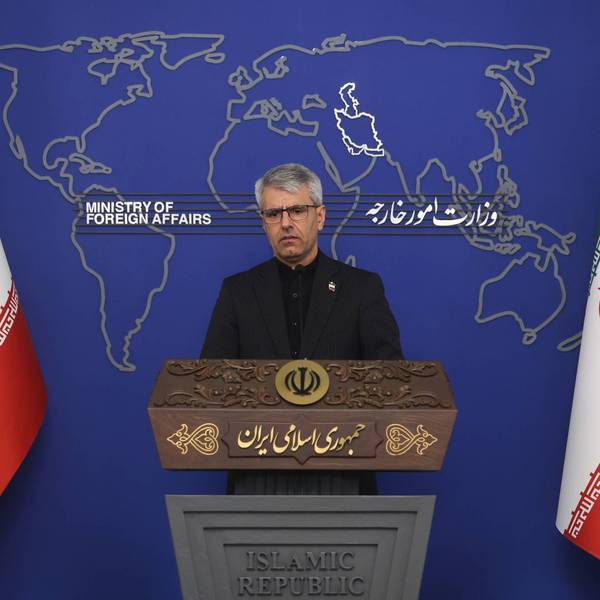
🇮🇷 Iranian Foreign Ministry spokesperson Esmaeil Baghaei said Israel’s continued violations of the Lebanon ceasefire have placed the entire U.S.-Iran memorandum of understanding in jeopardy, with Washington failing to uphold its commitment to restrain Israel.
Baghaei said the… pic.twitter.com/kDDXLg2wZK
— Drop Site (@DropSiteNews) June 20, 2026
A ceasefire mediated by the US and Qatar between Israel and Hezbollah went into effect on Friday afternoon despite continuing bombardments by Israel earlier in the day that killed 47 people and wounded 97 after Hezbollah killed four Israeli soldiers occupying Lebanese territory.
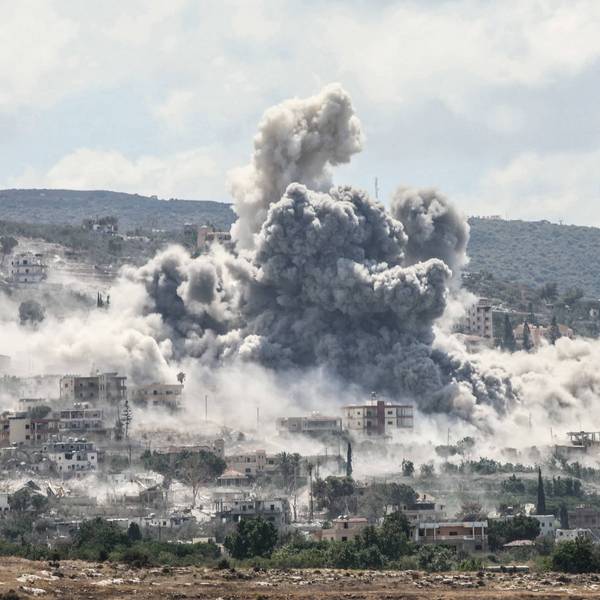
Within an hour of the agreement taking effect, Israel began carrying out additional attacks across southern Lebanon and the Bekaa Valley that continued through the night and into Saturday. One strike, on a three-story apartment building in the town of Barish in the Tyre district, reportedly killed a mother, father, and their two children, while wounding 12 others and leaving seven trapped beneath rubble.
Israel said its continued attacks were in response to Hezbollah’s firing of projectiles at Israeli forces in southern Lebanon, which Hezbollah said it launched as Israel attempted to further expand its occupation toward the strategically important Ali al-Taher hills “under the cover of the ceasefire.”
JD Vance on Fox & Friends this morning: "One of the things the president has set us out to do as a high priority is to open the straits. That's now happened." (The strait has since been closed lol) pic.twitter.com/iulcWtvUdR
— Aaron Rupar (@atrupar) June 20, 2026
Israel’s leaders have explicitly stated in recent days that they have no intention of abiding by any ceasefire reached between the US and Iran, leading President Donald Trump and Vice President JD Vance to issue uncommonly blunt criticism of Israel’s tactics.
Quoting a senior Trump adviser on Friday, Zeteo reported that behind the scenes, the president is "madder at the Israelis than the Iranians," believing that Prime Minister Benjamin Netanyahu is trying to drag him back into a war that has brought his popularity to new lows and sparked a global economic crisis.
Just as it has for months, Israel’s tried-and-true tactic of raining hell upon Lebanon every time a US-Iran ceasefire appears close seems to be working once again. The wave of attacks earlier this week led peace talks in Switzerland planned for Friday to be postponed.
As Iranian negotiators departed for Switzerland on Saturday, Esmaeil Baghaei, a spokesperson for the Iranian Foreign Ministry, said little was likely to happen there unless there was evidence that the US would “fulfill its obligations.”
Those obligations include stopping Israel’s occupation and ethnic cleansing campaign in southern Lebanon, which has now killed more than 4,000 people, wounded nearly 12,000, and led to the forced expulsion of more than 1.2 million Lebanese civilians by Israeli forces.
"Israel is still trying to sabotage the ceasefire with Iran by continuing to launch attacks in Lebanon," said Kenneth Roth, the former executive director of Human Rights Watch. "When will Trump impose consequences for this obstructionism?"
Iran’s military says it has closed the Strait of Hormuz over Israel’s attacks on southern Lebanon that have killed at least 32 people since dawn.
Al Jazeera's Mohamed Vall joins live from Tehran. pic.twitter.com/bwyOo65QBX
— Al Jazeera English (@AJEnglish) June 20, 2026
The renewed closure of the Strait of Hormuz raises the stakes considerably for the Trump administration, which has described opening it and restoring economic normalcy as a core objective, with Trump warning of “bedlam” in a matter of weeks if the deal fails and the critical oil shipping route remains closed.
James Bays, the diplomatic editor for Al Jazeera, explained that as Iranian diplomats prepare to negotiate with the US, they feel that "now is a time of maximum leverage" and that they are "using that weapon now" to try to force the US to restrain Israel.
While Trump has had no shortage of angry words and is reportedly “swearing a lot” about Netanyahu behind closed doors, Joe Kent, Trump’s former counterterrorism chief—who resigned earlier this year because of his vocal opposition to the Iran war—argued that unless the US exerts material pressure on Israel, the prime minister has no incentive to stop attacking Lebanon.
"For the MOU to hold and result in a lasting peace, we must restrict aid to Israel immediately and make it clear that we will not defend them should Iran opt to strike in response to Israel’s attacks in Lebanon," he said. "Israel has not responded to our verbal and written demands—that is not going to change, unless we change it by taking action."
Israel’s attempts to sabotage the peace agreement between the United States and Iran appear to be working again, with its relentless attacks on Lebanon reportedly prompting Iran to once again close the Strait of Hormuz on Saturday, mere days after it reopened.
"In light of the United States' clear bad faith and breach of its commitment to implement the first clause of the memorandum of understanding (MOU) for ending the war, and in response to the continuous and ongoing violations of the ceasefire by the Zionist regime in southern Lebanon, it is hereby announced that the Strait of Hormuz will be closed to maritime traffic," said the Khatam al-Anbiya central headquarters of the Iranian armed forces on Saturday.
US Central Command claimed that traffic through the strait had continued, with 55 commercial ships traveling through it, though it was unclear when those crossings took place.
The announcement that the strait had once again closed came after days of escalating attacks by Israel despite the memorandum of understanding signed this week, which included terms for a ceasefire “on all fronts, including in Lebanon.”
🇮🇷 Iranian Foreign Ministry spokesperson Esmaeil Baghaei said Israel’s continued violations of the Lebanon ceasefire have placed the entire U.S.-Iran memorandum of understanding in jeopardy, with Washington failing to uphold its commitment to restrain Israel.
Baghaei said the… pic.twitter.com/kDDXLg2wZK
— Drop Site (@DropSiteNews) June 20, 2026
A ceasefire mediated by the US and Qatar between Israel and Hezbollah went into effect on Friday afternoon despite continuing bombardments by Israel earlier in the day that killed 47 people and wounded 97 after Hezbollah killed four Israeli soldiers occupying Lebanese territory.
Within an hour of the agreement taking effect, Israel began carrying out additional attacks across southern Lebanon and the Bekaa Valley that continued through the night and into Saturday. One strike, on a three-story apartment building in the town of Barish in the Tyre district, reportedly killed a mother, father, and their two children, while wounding 12 others and leaving seven trapped beneath rubble.
Israel said its continued attacks were in response to Hezbollah’s firing of projectiles at Israeli forces in southern Lebanon, which Hezbollah said it launched as Israel attempted to further expand its occupation toward the strategically important Ali al-Taher hills “under the cover of the ceasefire.”
JD Vance on Fox & Friends this morning: "One of the things the president has set us out to do as a high priority is to open the straits. That's now happened." (The strait has since been closed lol) pic.twitter.com/iulcWtvUdR
— Aaron Rupar (@atrupar) June 20, 2026
Israel’s leaders have explicitly stated in recent days that they have no intention of abiding by any ceasefire reached between the US and Iran, leading President Donald Trump and Vice President JD Vance to issue uncommonly blunt criticism of Israel’s tactics.
Quoting a senior Trump adviser on Friday, Zeteo reported that behind the scenes, the president is "madder at the Israelis than the Iranians," believing that Prime Minister Benjamin Netanyahu is trying to drag him back into a war that has brought his popularity to new lows and sparked a global economic crisis.
Just as it has for months, Israel’s tried-and-true tactic of raining hell upon Lebanon every time a US-Iran ceasefire appears close seems to be working once again. The wave of attacks earlier this week led peace talks in Switzerland planned for Friday to be postponed.
As Iranian negotiators departed for Switzerland on Saturday, Esmaeil Baghaei, a spokesperson for the Iranian Foreign Ministry, said little was likely to happen there unless there was evidence that the US would “fulfill its obligations.”
Those obligations include stopping Israel’s occupation and ethnic cleansing campaign in southern Lebanon, which has now killed more than 4,000 people, wounded nearly 12,000, and led to the forced expulsion of more than 1.2 million Lebanese civilians by Israeli forces.
"Israel is still trying to sabotage the ceasefire with Iran by continuing to launch attacks in Lebanon," said Kenneth Roth, the former executive director of Human Rights Watch. "When will Trump impose consequences for this obstructionism?"
Iran’s military says it has closed the Strait of Hormuz over Israel’s attacks on southern Lebanon that have killed at least 32 people since dawn.
Al Jazeera's Mohamed Vall joins live from Tehran. pic.twitter.com/bwyOo65QBX
— Al Jazeera English (@AJEnglish) June 20, 2026
The renewed closure of the Strait of Hormuz raises the stakes considerably for the Trump administration, which has described opening it and restoring economic normalcy as a core objective, with Trump warning of “bedlam” in a matter of weeks if the deal fails and the critical oil shipping route remains closed.
James Bays, the diplomatic editor for Al Jazeera, explained that as Iranian diplomats prepare to negotiate with the US, they feel that "now is a time of maximum leverage" and that they are "using that weapon now" to try to force the US to restrain Israel.
While Trump has had no shortage of angry words and is reportedly “swearing a lot” about Netanyahu behind closed doors, Joe Kent, Trump’s former counterterrorism chief—who resigned earlier this year because of his vocal opposition to the Iran war—argued that unless the US exerts material pressure on Israel, the prime minister has no incentive to stop attacking Lebanon.
"For the MOU to hold and result in a lasting peace, we must restrict aid to Israel immediately and make it clear that we will not defend them should Iran opt to strike in response to Israel’s attacks in Lebanon," he said. "Israel has not responded to our verbal and written demands—that is not going to change, unless we change it by taking action."