July, 30 2009, 02:17pm EDT
For Immediate Release
Contact:
Brad Luna 202/216.1514 Cell: 202/812.8140
Trevor Thomas 202/216.1547 Cell: 202/250.9758
Harvey Milk, Billie Jean King, Sen. Edward Kennedy to Receive Presidential Medal of Freedom
“These individuals are each champions of equality and icons of our movement’s history,” said HRC President Joe Solmonese
WASHINGTON
The Human Rights Campaign, the nation's largest lesbian, gay, bisexual and transgender (LGBT) civil rights organization, today applauded the announcement by President Barack Obama naming Harvey Milk, Billie Jean King, Sen. Edward Kennedy as recipients of the 2009 Presidential Medal of Freedom. The HRC Religion and Faith Program also recognized Archbishop Desmond Tutu and Rev. Joseph Lowery for their work on equality issues. America's highest civilian honor, the Medal of Freedom is awarded to individuals who make an especially meritorious contribution to the security or national interests of the United States, world peace, cultural or other significant public or private endeavors.
"These individuals are each champions of equality and icons of our movement's history," said Human Rights Campaign President Joe Solmonese. "Harvey Milk took the first leap into the foray of politics and represented what we didn't imagine possible: an openly gay elected official. Billie Jean King not only shattered tennis records, she opened up new possibilities for women and became a role model for both LGBT players and fans. And Sen. Ted Kennedy, a lion of the Senate, has taken leadership in fighting discrimination and hate violence, standing up for our families, and keeping our Constitution safe from bigotry. Our community continues to be grateful for his decades of service."
"Archbishop Desmond Tutu and Rev. Joseph Lowery exemplify what is best about religion," said Harry Knox, director of the Human Rights Campaign's Religion & Faith Program and member of the White House Council on Faith and Neighborhood Partnerships. "Not only are they heroes in the worldwide movement for racial equality and reconciliation but they continue to be prophetic leaders for LGBT equality. Their life work and ministry exemplifies the fundamental truth that none of us can be free until all of us are free."
"These outstanding men and women represent an incredible diversity of backgrounds," said President Barack Obama. "Their tremendous accomplishments span fields from science to sports, from fine arts to foreign affairs. Yet they share one overarching trait: Each has been an agent of change. Each saw an imperfect world and set about improving it, often overcoming great obstacles along the way. Their relentless devotion to breaking down barriers and lifting up their fellow citizens sets a standard to which we all should strive. It is my great honor to award them the Medal of Freedom."
President Obama will present the awards at a ceremony on Wednesday, August 12. Additional biographical information provided by the White House:
Harvey Milk:
Harvey Milk became the first openly gay elected official from a major city in the United States when he was elected to the San Francisco Board of Supervisors in 1977. Milk encouraged lesbian, gay, bisexual, and transgender (LGBT) citizens to live their lives openly and believed coming out was the only way they could change society and achieve social equality. Milk, alongside San Francisco Mayor George Moscone, was shot and killed in 1978 by Dan White, a former city supervisor. Milk is revered nationally and globally as a pioneer of the LGBT civil rights movement for his exceptional leadership and dedication to equal rights.
Billie Jean King:
Billie Jean King was an acclaimed professional tennis player in the 1960s and 1970s, and has helped champion gender equality issues not only in sports, but in all areas of public life. King beat Bobby Riggs in the "Battle of the Sexes" tennis match, then the most viewed tennis match in history. King became one of the first openly lesbian major sports figures in America when she came out in 1981. Following her professional tennis career, King became the first woman commissioner in professional sports when she co-founded and led the World Team Tennis (WTT) League. The U.S. Tennis Association named the National Tennis Center, where the US Open is played, the Billie Jean King National Tennis Center in 2006.
Sen. Edward Kennedy:
Senator Edward M. Kennedy has served in the United States Senate for forty-six years, and has been one of the greatest lawmakers - and leaders - of our time. From reforming our public schools to strengthening civil rights laws and supporting working Americans, Senator Kennedy has dedicated his career to fighting for equal opportunity, fairness and justice for all Americans. He has worked tirelessly to ensure that every American has access to quality and affordable health care, and has succeeded in doing so for countless children, seniors, and Americans with disabilities. He has called health care reform the "cause of his life," and has championed nearly every health care bill enacted by Congress over the course of the last five decades. Known as the "Lion of the Senate," Senator Kennedy is widely respected on both sides of the aisle for his commitment to progress and his ability to legislate.
Archbishop Desmond Tutu:
Desmond Tutu is an Anglican Archbishop emeritus who was a leading anti-apartheid activist in South Africa. Widely regarded as "South Africa's moral conscience," he served as the General Secretary of the South African Council of Churches (SACC) from 1978 - 1985, where he led a formidable crusade in support of justice and racial reconciliation in South Africa. He received a Nobel Peace Prize for his work through SACC in 1984. Tutu was elected Archbishop of Cape Town in 1986, and the Chair of the South Africa Truth and Reconciliation Commission in 1995. He retired as Archbishop in 1996 and is currently Chair of the Elders.
Rev. Joseph Lowery:
Reverend Lowery has been a leader in the U.S. civil rights movement since the early 1950s. Rev. Lowery helped organize the Montgomery bus boycott after Rosa Parks was denied a seat, and later co-founded the Southern Christian Leadership Conference, a leading civil rights organization, with Dr. Martin Luther King, Jr. Rev. Lowery led the march from Selma to Montgomery in 1965. Rev. Lowery is a minister in the United Methodist Church, and has continued to highlight important civil rights issues in the U.S. and worldwide, including apartheid in South Africa, since the 1960s.
The Human Rights Campaign represents a grassroots force of over 750,000 members and supporters nationwide. As the largest national lesbian, gay, bisexual and transgender civil rights organization, HRC envisions an America where LGBT people are ensured of their basic equal rights, and can be open, honest and safe at home, at work and in the community.
LATEST NEWS
‘Unconscionable, Immoral, and Illegal’: Lawsuit Targets Trump Approval of Cancer-Causing Forever Chemical
“While everyone’s distracted by the Trump administration’s erratic actions on the world stage, it keeps approving dangerous forever pesticides right here on our own soil."
Aug 31, 2026
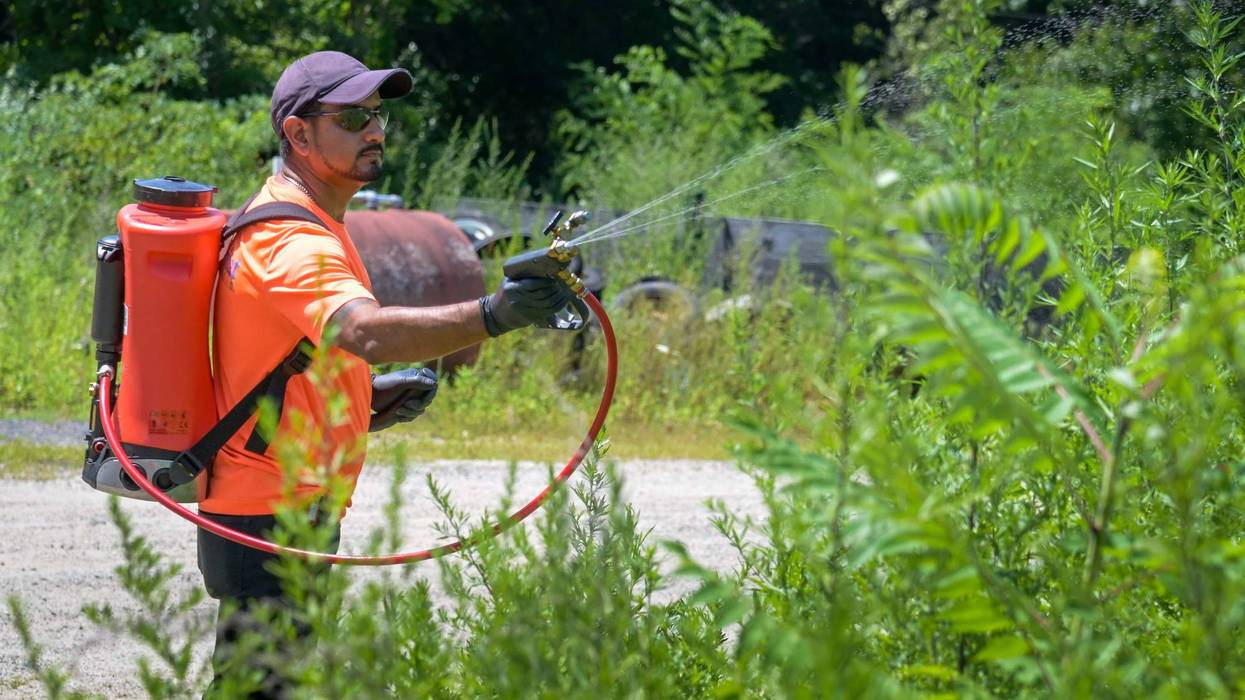
Environmental groups have sued the Trump administration, alleging the Environmental Protection Agency approved a potentially cancer-causing "forever chemical" for use as an herbicide without fully assessing the risk.
The petition was filed Friday in the US Court of Appeals for the 9th Circuit by the Center for Food Safety, the Center for Biological Diversity, and Pesticide Action & Agroecology Network North America, who asked the court to throw out the EPA's June 30 approval of trifludimoxazin and six products containing it for use on a wide range of crops including corn, wheat, soybeans, and apples.
Trifludimoxazin is part of the family of per- and polyfluoroalkyl substances, synthetic chemicals with strong carbon-fluorine bonds that can take years to fully break down, earning them the nickname "forever chemicals."
The trifludimoxazin was initially approved in 2021 during the Biden administration. But the company agreed to stop selling the product the following year after environmental groups sued, citing its potential to cause cancer and harm to threatened and endangered fish. But the Trump EPA last year proposed registering it again for widespread use and issued a final approval in June.
The groups argue that the EPA approved the use of trifludimoxazin without accounting for evidence that the pesticide could cause cancer and harm wildlife and ecosystems.
The EPA itself has acknowledged that the chemical could harm many endangered and threatened species, including posing chronic risks to bees and other invertebrates. Meanwhile, rodent studies have found that at high doses, the chemical can cause thyroid tumors and adverse effects on the liver and reproductive systems.
The chemical, which blocks an enzyme in plants needed for growth, has been described as 10 times as potent as dicamba, another weedkiller used on soybeans and cotton, whose products have caused millions of acres of unintended crop damage since its approval in 2017.
But though the EPA's own guidance states that carcinogenic effects in animals could point to human risk, the agency stated that its final risk assessment found “no human health risks of concern."
The plaintiffs argue that the EPA did not take all the proper steps to reach this conclusion, having failed to quantify the chemical's danger, especially when combined with exposure to other approved chemicals.
“Trifludimoxazin is a likely human carcinogen that belongs to a family of weedkillers that also causes reproductive harm, birth defects, and neurological deficits in animal studies,” said Bill Freese, science director at the Center for Food Safety. “As if the health threats weren’t enough, this incredibly potent herbicide can drift to stunt crops and wild plants hundreds of yards from a sprayed field, while runoff threatens wetland plants. Potent biocides like this have no business on the American landscape.”
The lawsuit also notes that two of the approved trifludimoxazin products combine it with another toxic herbicide called saflufenacil, meaning that farmworkers who apply the chemicals could be exposed to the effects of both at once. The plaintiffs said the EPA did not evaluate the risk that would be posed to farmworkers who are exposed to these chemicals.
“While everyone’s distracted by the Trump administration’s erratic actions on the world stage, it keeps approving dangerous forever pesticides right here on our own soil,” said Nathan Donley, environmental health science director at the Center for Biological Diversity. “It’s unconscionable, immoral, and illegal. Our kids and grandkids deserve better than to be saddled with pollution that never goes away.”
Keep ReadingShow Less
Out-of-Touch Trump Says Communities That Reject AI Data Centers Will Be 'Backwards and Poor'
"Donald Trump is actively trying to help as many Democratic senators as possible get elected," said one polling expert.
Aug 31, 2026
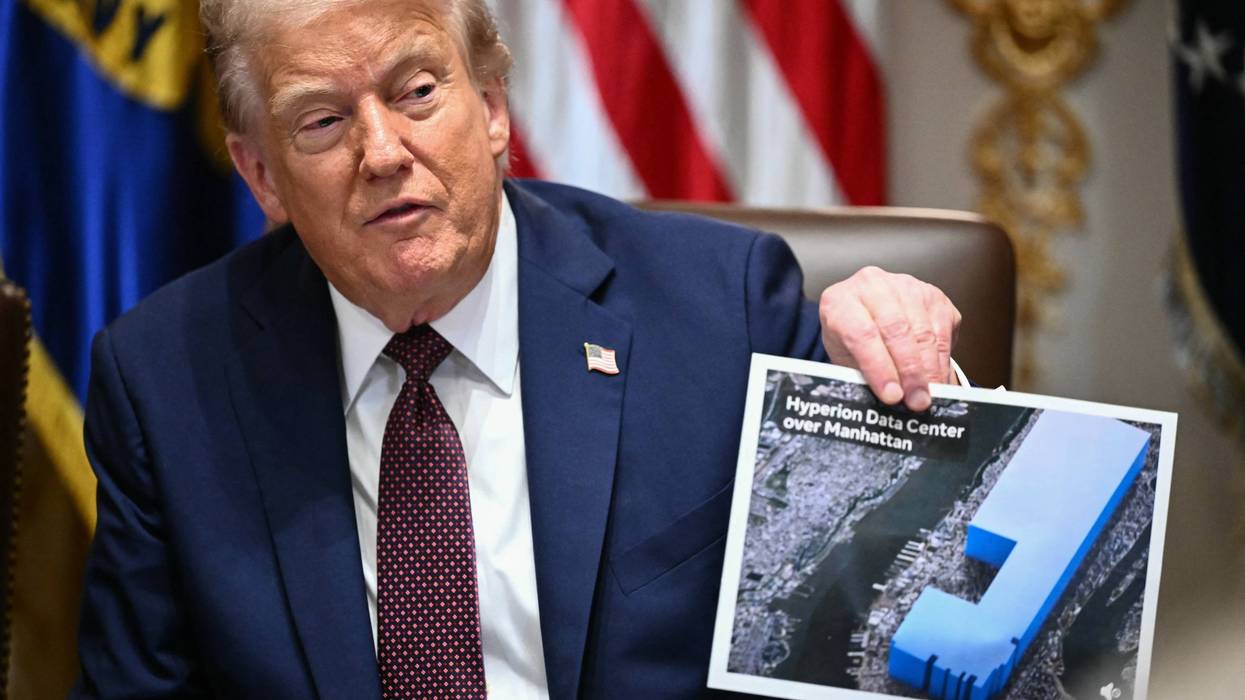
President Donald Trump on Monday warned Americans that they risk becoming "backwards and poor" unless they allow Big Tech companies to build artificial intelligence data centers in their communities.
In a social media post, the president expressed indignation that any town or city wouldn't welcome data centers, which have drawn nationwide opposition for generating pollution and jacking up utility bills.
"The only reason that communities throughout the USA should not want Data Centers is if they want to end up being backwards and poor," Trump wrote. "If they want to be successful and rich, with far lower taxes and jobs all over the place, let Data Reign."
In reality, AI data centers create very few jobs once they are completed, as most of their functions are fully automated.
Trump then said that Americans "will only have yourselves to blame" if they "kill the Golden Goose" that is AI data centers.
"China could not be happier with this anti Data Center movement," Trump wrote. "Actually, they can't believe it is happening!"
Building AI data centers has become massively unpopular throughout the US.
A poll conducted by Embold Research and published by Heatmap Pro earlier this month shows that 75% of Americans now oppose building AI data centers in their area, including 61% registering strong opposition.
While Republicans polled in the survey were more supportive of data centers than Democrats and independent voters, it nonetheless found that opposition among Republicans outweighed support by 43 points.
Polling analyst G. Elliott Morris marveled at how politically tone deaf the president sounds when it comes to data centers, commenting that "Donald Trump is actively trying to help as many Democratic senators as possible get elected."
Longtime GOP operative Frank Luntz similarly noted data centers' unpopularity, citing a recent Gallup poll showing 63% of Republican voters oppose having one of the facilities built in their communities.
"We’re about to see whether President Trump can sway those voters to support them, as he’s done on many issues before," Luntz remarked.
Democratic US Senate hopeful Abdul El-Sayed wasted no time tying the president's position on data centers to his opponent, Republican Mike Rogers.
"Make no mistake—this is Mike Rogers' position on data centers," wrote El-Sayed. "He's got up to $2.6 million invested in companies cashing in on the data center boom, all while Michiganders watch their utility bills soar. You can't trust a word out of Mike's mouth because he's only out for himself, for Donald Trump, and for Big Tech—not Michigan."
Faiz Shakir, a longtime adviser to US Sen. Bernie Sanders (I-Vt.), observed that Trump is merely "sharing the perspective of Wall Street and Big Tech" and is showing "no interest... in grappling with the mass revolt across American communities, or to learn anything from them."
Screenwriter David Simon, creator of the acclaimed television series The Wire, accused Trump of brazenly lying about data centers' economic benefits.
"If data centers are a geographic benefit to communities, you can be sure they'd be siting and building them in affluent and politically connected environs," wrote Simon. "Curiously, they're dumped in poorer, less influential places. Go fucking figure."
Republican Kentucky state Rep. Savannah Maddox took issue with the president disparaging communities opposed to data centers, which include many of the rural communities that voted for him in three presidential elections.
"Rural doesn’t mean 'backwards and poor' and development doesn’t always equate to being 'successful and rich,'" wrote Maddox. "President Trump wouldn't be president without the rural voters who inhabit America’s heartland. It is not wrong of us to question the sudden and wide-scale effort to convert arable land into data centers. We are not stupid for wanting to protect our rural way of life."
Keep ReadingShow Less
As Trump Resumes Boat Strikes, Amnesty Says 'Congress Must Stop Murderous Yearlong Campaign'
"We look forward to the day when the architects and perpetrators of this campaign of extrajudicial killings are investigated and face justice, including the people who ordered these operations."
Aug 31, 2026
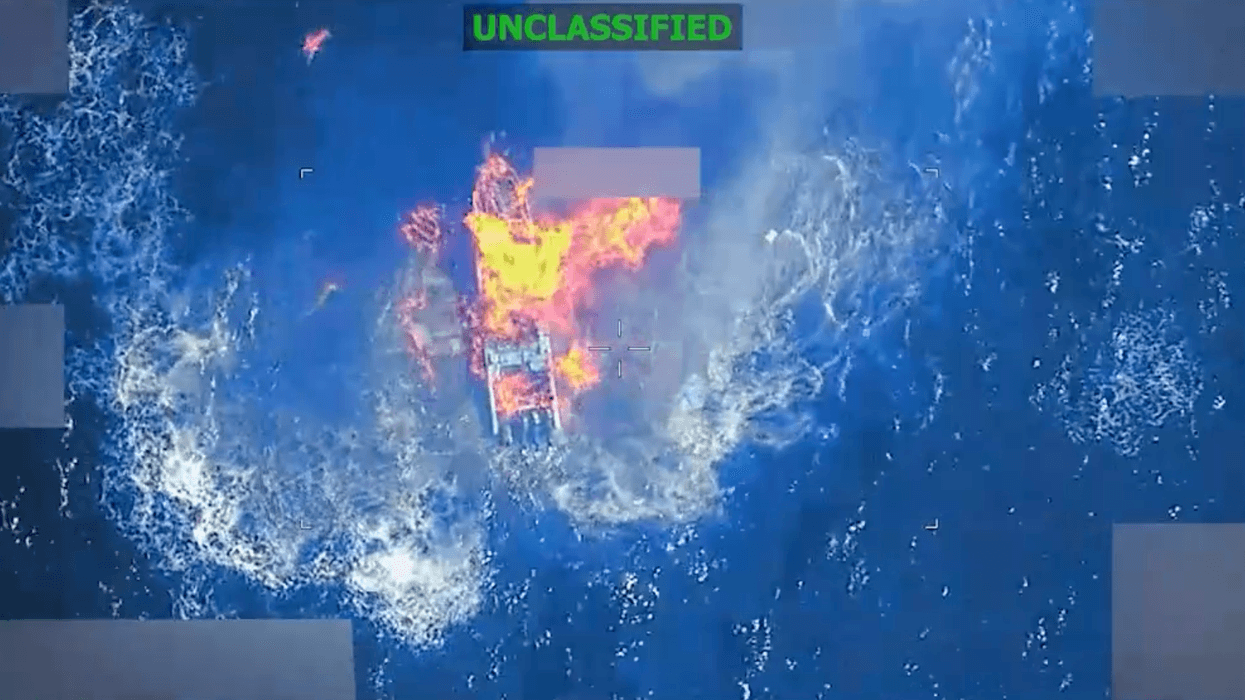
In anticipation of Wednesday, which will mark one year since the Trump administration launched its recently revived bombing campaign against boats allegedly trafficking drugs in the Caribbean Sea and Pacific Ocean, Amnesty International USA on Monday renewed its call for congressional action.
"For one year, the US military has carried out a campaign of extrajudicial killings at sea that has left more than 225 people dead, with the most recent four deaths just six days ago," said Amanda Klasing, Amnesty International USA's national director for government relations, in a statement. "For just as long, we have called on Congress to take meaningful action to stop these killings, which are illegal under both international and US law."
Both chambers of Congress are narrowly controlled by Republicans, who have refused to advance war powers resolutions intended to stop the strikes. The US military has confirmed 68 bombings, with at least 227 deaths and 3 survivors, including two attacks last week—though there have been at least three other suspicious attacks on Ecuadorian fishing boats.
All of the attacks have been denounced by legal experts worldwide as "war crimes, murder, or both." While the Trump administration has tried to justify the deadly campaign by claiming that the United States is in an armed conflict with drug-smuggling cartels, many experts and members of Congress disagree.
"War crimes are violations of the law of armed conflict that take place in armed conflict," Sarah Elaine Harrison, nonresident fellow in the Stimson Center's Conventional Defense Program, wrote for Lawfare last week. "By contrast, all of these boat strikes conducted by the US military... are extrajudicial killings. That is, they are deliberate killings that are outside the law: That means murder under domestic criminal statutes, and now likely crimes against humanity under international law."
Amnesty's Klasing similarly noted Monday that "US authorities have yet to offer a shred of evidence to support their claims against the people they have killed. They have not even named the dead. But even if the victims were transiting narcotics as the administration alleges, international law absolutely prohibits summary killings of criminal suspects."
"Unfortunately, with a few notable exceptions, lawmakers have done little to try to halt this horrific campaign of murder at sea," she continued. "And let us be clear: Extrajudicial killings are a form of murder. How many more people will die at sea from this administration’s illegal actions before Congress does its job?"
Klasing said that "we look forward to the day when the architects and perpetrators of this campaign of extrajudicial killings are investigated and face justice, including the people who ordered these operations: President Donald Trump, Secretary of State Marco Rubio, and Secretary of Defense Pete Hegseth."
"Until then, we will continue pushing Congress to do its job to stop this ongoing policy of murder, and we urge people to call their representatives and do the same," she stressed. "But the blame does not solely rest on US authorities."
Amid the boat bombings overseen by US Southern Command, Trump in March sent American troops to Ecuador for a joint effort to combat "narco-terrorists" in the South American nation. Earlier this month, SOUTHCOM announced an expanded operation dubbed Joint Task Force Western Hemisphere, with an aim to "defeat all threats" across Latin America.
Klasing declared Monday that "any authorities in Latin America who have aided these killings with equipment or intelligence must stop collaborating in this illegal airstrike campaign and likewise face justice."
Keep ReadingShow Less
Health Aid Cuts in Secret Trump Deals Will Inflict 'Preventable' Death, Disease on Global South: Report
"It will be patients who will pay the ultimate price," said one global health advocate.
Aug 31, 2026
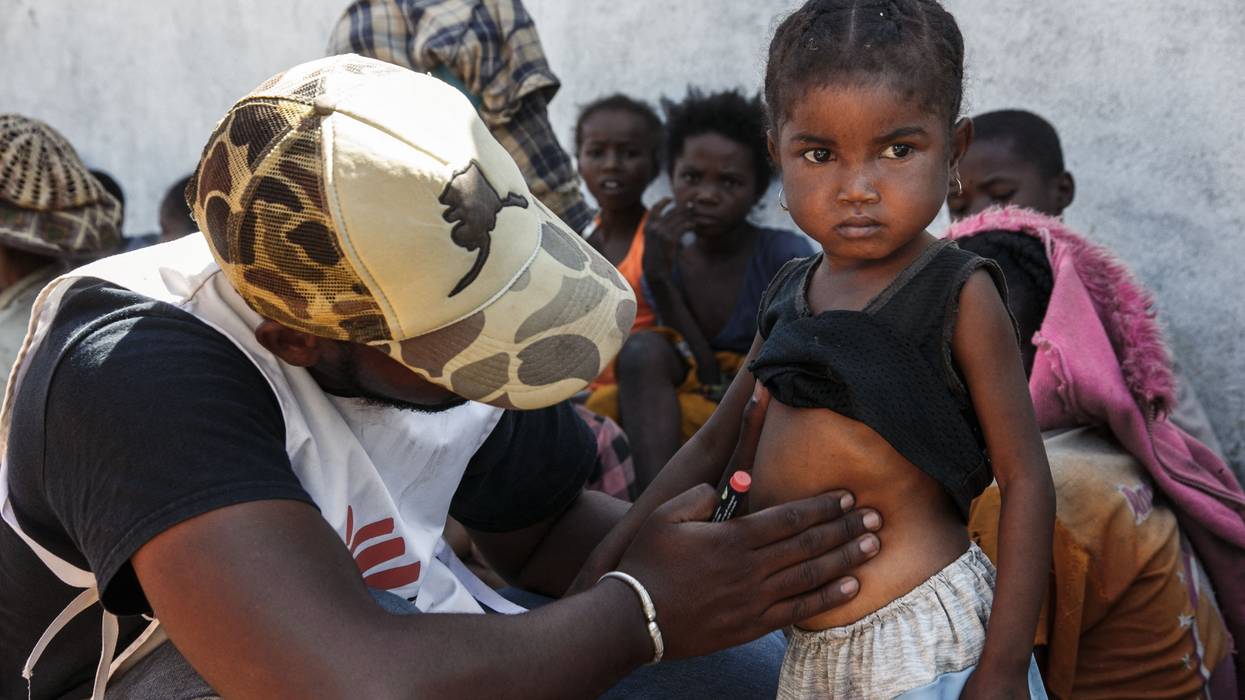
The US Congress has pushed back against President Donald Trump's efforts to slash foreign aid, which has long been supported by Democrats and Republicans alike—but a new report on more than a dozen Memoranda of Understanding that the White House has reached with countries that have long relied heavily on healthcare assistance shows that the administration is underspending "congressionally appropriated global health funds by potentially billions of dollars," as it pushes its "America First Global Health Strategy."
That's according to Public Citizen, which on Sunday joined Partners In Health in releasing an analysis of documents that the two nonprofits obtained after suing the Trump administration and filing a Freedom of Information Act (FOIA) request.
The groups reviewed the MOUs that have been signed for 18 out of 34 countries whose agreements have been negotiated by the US State Department, including Rwanda, Liberia, Burundi, and Madagascar.
Although Congress has voted to keep foreign aid levels relatively constant—rejecting a budget that called to slash global health spending by $6.2 billion before approving one that proposed a $615 million decrease in spending—the report finds that the MOUs cut foreign health aid by about $2 billion by 2030, compared to 2024 levels.
“These documents suggest that the Trump administration is on course to underspend on global health by billions of dollars compared to what Congress has ordered, risking lives and allowing diseases to spread,” said Peter Maybarduk, director of the Access to Medicines program at Public Citizen. “The administration must answer how and when it intends to invest the missing billions for health.”
Overall, funding for programs that aim to prevent the spread of diseases including HIV/AIDS, tuberculosis, and Ebola—which is currently spreading in the Democratic Republic of Congo's fastest-spreading outbreak on record—is set to be reduced by 59% from historical spending, according to the MOUs viewed by Public Citizen and Partners in Health.
Some countries would see their health assistance from the US plummet even more, with Rwanda's MOU stipulating a 97% reduction in US health aid. Liberia is set to receive 84% less funding for health initiatives by 2030, and Burundi is set to lose 78% of its aid.
"Partners In Health provides direct care in Rwanda, Liberia, and Sierra Leone, along with seven other countries, and expects under-spending of these funds to impact patients’ access to care," said Public Citizen.
The MOUs also demand that the countries meet strict co-financing requirements to make up for their lost funding, and governments in poor countries across Africa could face penalties "which could worsen funding cuts" if they miss the co-financing targets.
"The planned decreases in US funding are larger for several countries than the funding increases from partner governments," reads the report. "For more than half of countries (11 out of 18), co-financing commitments fall short of the US government’s cuts over five years compared to baseline US government funding."
Countries are likely to struggle to meet the co-financing requirements in the MOUs, warned Public Citizen and Partners In Health.
Malawi would be required to secure new healthcare funding equal to 56% of the country's total health expenditure, the report found. With Uganda also facing co-financing requirements from international health organizations including the Global Fund and Gavi, the East African country would be required to mobilize funds equal to 44% of its total health budget.
"These funding cuts will cause death and disease that is preventable,” said Vincent Lin, associate director of health policy and advocacy for Partners In Health. “The State Department is setting up other countries for failure with the co-financing requirements outlined in these agreements, but it will be patients who will pay the ultimate price.”
Maybarduk told The Washington Post that Sierra Leone will be required under its MOU to fill a 71% health funding gap by 2030.
“It’s going to be very difficult, and if a country like that falls behind, and then is punished for that, then of course the health problems compound," said Maybarduk.
The State Department denied to the Post that the Trump administration will not spend all the foreign health assistance funds appropriated by Congress; it suggested that more of the money than usual may go to religious organizations as well as an "innovation fund" to support US technology that aims to fight disease.
Last week, Public Citizen sued the Trump administration under FOIA to obtain the rest of the MOUs that remain hidden from the public.
The White House, said the group, "has kept the public in the dark about the full details of its plans for the future of US support for global health."
"The State Department has negotiated these bilateral agreements," the group said, "on rushed timelines with limited participation from civil society and affected communities."
Keep ReadingShow Less
Talarico Protests as Texas Swing County Plans to Close 92 Polling Places
“The most powerful people in this county, the most powerful people in this country, don’t want us to be able to vote easily."
Aug 31, 2026
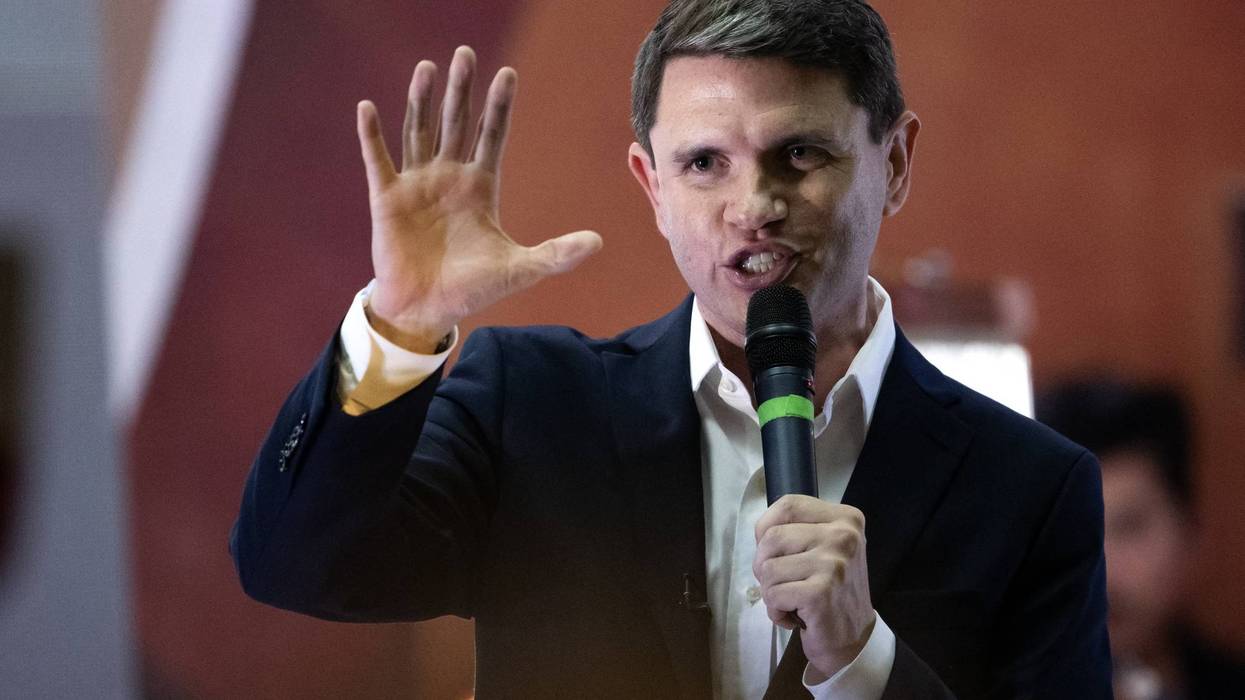
Texas Democratic Senate nominee James Talarico is pushing for one of Texas' most important swing counties to drop plans to close nearly a third of its polling places before November's midterms.
Amid public outcry, the Commissioners Court for Tarrant County—which contains Fort Worth and borders Dallas—plans to hold a vote on Tuesday on whether to shutter 92 of the polling places used in the 2022 election, many of which serve the city's poorer and minority populations.
If Democrats flip the Senate this November, the road to that outcome will almost certainly run through Texas. A Democrat has not won a statewide election there since 1994, but Talarico may be in a position to break the trend—leading Republican Attorney General Ken Paxton in most polls.
Tarrant County narrowly supported then-Rep. Collin Allred, the Democratic challenger to Sen. Ted Cruz (R-Texas) in 2024. Talarico said the closure of polling places was meant to suppress turnout and help Republicans cling to their advantage in the state.
“The most powerful people in this county, the most powerful people in this country, don’t want us to be able to vote easily,” Talarico said at a press event Sunday, during which he argued that the closures would result in longer travel for voters and lower turnout, especially in heavily Black and Latino communities.
"We're here fighting for the rights of everybody," Talarico added. "The problem is when we let voting rights become a partisan issue. That's when we walk down a very dangerous path in this country."
Proponents of the closures have described them as a way for the county to save money, rather than a political tactic.
“We’re clearly not trying to suppress the vote,” state Rep. Matt Shaheen (R-66), the chairman of the Texas House Elections Committee, told the Associated Press. “That’s a silly accusation.”
But Republican officials in Tarrant County have, in the past, explicitly tied closures of certain voting locations to partisan aims. In 2024, Republican County Judge Tim O'Hare attempted, unsuccessfully, to remove several early voting sites on college campuses, a move that the county's GOP chairman said would have been "a serious win for Republicans in Tarrant County."
In 2025's off-year elections, Republicans voted 3-2 to reduce the number of polling locations by more than a third and cut funding for free bus rides to the polls for low-income residents. The previous year, they introduced new rules blocking what they derided as "left-wing" groups from registering voters inside county buildings.
At the state level, meanwhile, Texas has carried out unprecedented mid-decade redistricting to hand more US House seats to Republicans at the behest of President Donald Trump. And following Trump's false assertions that his loss in the 2020 election was marred by fraud, Texas introduced several new restrictions on mail-in voting that were found to have significantly reduced turnout.
Tuesday's scheduled vote in Tarrant County comes after commissioners opted to table an earlier proposal that would have shuttered nearly half the county's polling places.
An analysis of that plan showed that the lowest-income third of ZIP codes would lose nearly 58% of their Election Day polling sites, while the highest-income third would lose just under 22%. Majority-minority ZIP codes would have lost nearly 52% of their polling places, while majority-white ones would have lost just a third of theirs.
A similar analysis has not yet been conducted for the new proposal. But civil rights groups still argue that the proposal will disenfranchise many voters.
"Cutting the number of poll sites, especially at such a large scale, will harm Tarrant County voters and their right to participate in the democratic process—and cause particular harm to Black, Latino, and [Asian American and Pacific Islander] voters who already face significant barriers to exercising that fundamental right," wrote groups including the ACLU, the Legal Defense Fund, and the Texas Civil Rights Project, in a letter to the Commissioners' Court on Friday.
They emphasized that the polling places slated to close under the new proposal were clustered in areas such as south and southeast Fort Worth and central and eastern Arlington, which have predominantly nonwhite populations.
Tarrant County Commissioner Alisa Simmons, a Democrat who is running to unseat O'Hare as county judge and spoke alongside Talarico on Sunday, argued that while it was an improvement on the earlier proposal, "dropping 92 Election Day polling places is crazy."
"We should not compare this proposal to the worst proposal," she said. "We should compare it to the access that Tarrant County voters actually had in 2022."
Keep ReadingShow Less
'This Is Ethnic Cleansing': Retired Israeli Generals Decry Settler Terrorism Against West Bank Palestinians
"Once a society behaves this way, that society is doomed."
Aug 31, 2026
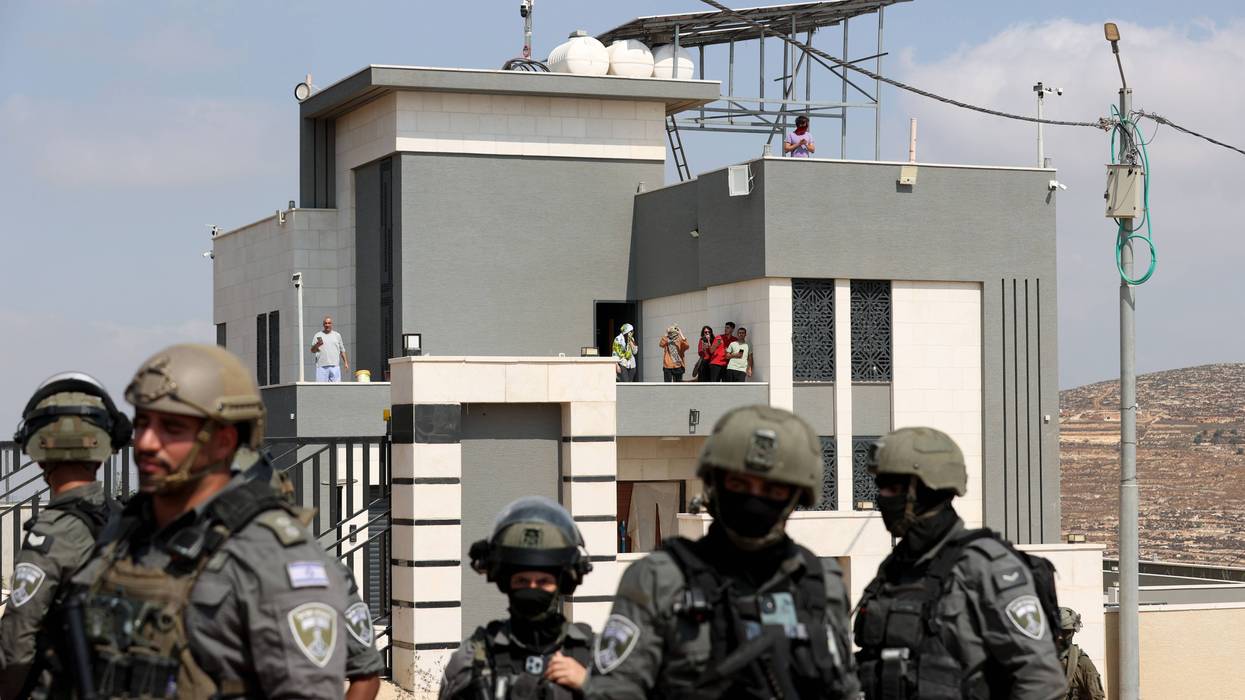
Several retired Israel Defense Forces generals are publicly denouncing their own government for permitting settlers living in the illegally occupied West Bank to wage a campaign of violence against the Palestinian population.
As The New York Times reported on Monday, the retired generals have been touring the West Bank in recent days to witness first-hand the damage that has been done to Palestinians' livelihoods by the Israeli settlers, whose violent actions have grown so outrageous that even US Ambassador to Israel Mike Huckabee described them as "terrorists."
Ephraim Sneh, retired brigadier general and former minister of health, did not mince words in describing the settlers' campaign of attacking Palestinian villages.
"This is ethnic cleansing, to put it simply," said Sneh.
Asaf Agmon, a retired Air Force general, likened the attacks on Palestinians to the kinds of pogroms once suffered by Jews living in Europe.
Agmon also said that the Israeli government's tacit support of these attacks bodes ill for the future of Israel.
“Once a society behaves this way,” said Agmon, “that society is doomed.”
The tours of the West Bank are being organized by Yaakov Or, a retired Israeli general who spent much of his career working inside the occupied territory.
According to the Times, Or begins every tour with a speech where he emphasizes the importance of speaking out against what he says are indefensible atrocities.
"When I take you to see what is happening in the West Bank, you will have two choices," Or said during the start of a recent tour. "You can stay silent, and be complicit, or you can speak out, and tell everyone you know about what is happening."
Israeli Prime Minister Benjamin Netanyahu over the weekend once again downplayed the significance of settler attacks on Palestinians, describing them as rogue actions taken by troubled individuals.
"We are talking about a very small handful of people," Netanyahu said, "usually young people who come with all kinds of distress and problems, often from home, and I am determined to stop this."
The Israeli prime minister also said that attacking Palestinian villages "harms the settlement movement" and "gives us a bad name around the world."
Netanyahu on "settler" terrorism:
We are talking about a very small handful of people, usually young people who come with all kinds of distress and problems, often from home, and I am determined to stop this.
You want to enter a village? You will not enter. That is not your… pic.twitter.com/MlnKxlaxlB
— Clash Report (@clashreport) August 30, 2026
Palestinian Christian theologian Munther Isaac pointed out that the Israeli government itself has been actively working to push Palestinians out of their homes in the West Bank, pointing to recent Israeli demolitions of homes in the town of Birzeit.
"This is what ethnic cleansing looks like in Palestine," wrote Isaac.
Birzeit: Israeli occupation forces demolished two inhabited residential buildings. Each was four stories high, with every floor covering 250 square meters.
This is what ethnic cleansing looks like in Palestine. pic.twitter.com/XsYu92VUFw
— Munther Isaac منذر اسحق (@MuntherIsaac) August 31, 2026
Human rights organizations for months have been sounding the alarm about the situation in the West Bank, where Israeli settlers have routinely attacked Palestinians at their own homes.
An analysis published by the Carter Center last month found that “settler attacks are now the leading cause of Palestinian injuries in the West Bank,” as “more than 3,200 Palestinians have been displaced by settler attacks and home demolitions this year—double the daily rate of the previous three years.”
Keep ReadingShow Less

'The President of the United States Is Mentally Unwell': Deranged Trump Posts AI Slop of Iran Bombing
The chief executive of Iran's government-run oil company dismissed the US president's social media posts "laughable."
Aug 31, 2026
US President Donald Trump published a string of unhinged posts to his social media platform overnight and into Monday morning, including an artificial intelligence-generated video attempting to depict American forces bombing Kharg Island—Iran's primary oil export terminal.
The post, which drew mockery from Iranian officials and alarm from observers concerned about Trump's increasingly erratic behavior, came after US forces attacked Larak Island, which is located hundreds of miles east of Kharg in the Strait of Hormuz.
"Kharg Island being blown to smithereens!!!" Trump wrote in the caption of his post. It is unclear whether Trump, who frequently shares inane AI-generated videos with his 13 million Truth Social followers, confused Larak Island with Kharg Island, which the president has repeatedly threatened to invade.
An unnamed US official confirmed to Reuters in the wake of Trump's post that American forces did not target Kharg Island during their Sunday attacks.
Trump posts AI slop with the caption, “Kharg Island being blown to smithereens!!!” pic.twitter.com/HVTF9xFC6B
— Aaron Rupar (@atrupar) August 31, 2026
Hamid Bovard, the chief executive of Iran's government-run oil company, called Trump's posts "laughable" and described conditions on Kharg Island as "calm and appropriate."
Iran retaliated for the US strike on Larak with a drone attack on two American military installations in Jordan and condemned the Trump administration's ongoing aggression as an "obvious violation" of the United Nations Charter.
"It is obvious that full responsibility for the consequences of America’s new aggressive actions, as well as the continuation of the maritime blockade and economic war against Iran, rests with the US regime and all parties that in any way cooperate or participate in preparing and implementing the US’ illegal and unlawful actions," the Iranian Foreign Ministry said in a statement.
The military exchange between the US and Iran was the first in weeks amid stalled efforts to achieve a lasting solution to the historically unpopular war that Trump and his Israeli counterpart, Prime Minister Benjamin Netanyahu, launched in late February, sparking a global energy crisis that has jacked up gas prices in the US and prompted fears of a global food emergency.
In a separate Truth Social post on Monday morning, Trump declared that Iran is "officially a Failed Nation," adding in all-caps, "IT IS DEAD!"
"They have no Navy, they have no Air Force, they have no currency, they are not paying their soldiers or police, Inflation is at 300%, and their leadership is in total disarray and incapable of properly representing the country" Trump wrote.
"They must be tried for war crimes against humanity!" added the US president, who has been credibly accused of committing war crimes in Iran and elsewhere.
Trump's attempt to convey overwhelming and unflagging US military superiority conflicts with internal assessments by top American officials, who reportedly warned Pentagon Secretary Pete Hegseth earlier this month that "prolonging large-scale operations against Iran is unsustainable and risks weakening their ability to confront threats elsewhere, including the US homeland." US intelligence assessments have also found that, despite Trump's claims, Iran's government is still intact after six months of American bombing.
"The president of the United States is mentally unwell and has been for quite some time," Rep. Ted Lieu (D-Calif.), who has supported congressional efforts to end Trump's illegal war, wrote in a social media post on Monday. "He fantasized blowing up Iran’s Kharg Island. Except it didn’t happen."
"And why would Trump need to blow it up if, as Trump claims, the US has total control of the Strait," Lieu asked.
Keep ReadingShow Less
Trump Accused of Using Iran War Energy Crisis as 'Cover for a Resource Grab' in Venezuela
"Oil reserves in Venezuela will do nothing to lower families’ bills today," said one campaigner.
Aug 31, 2026
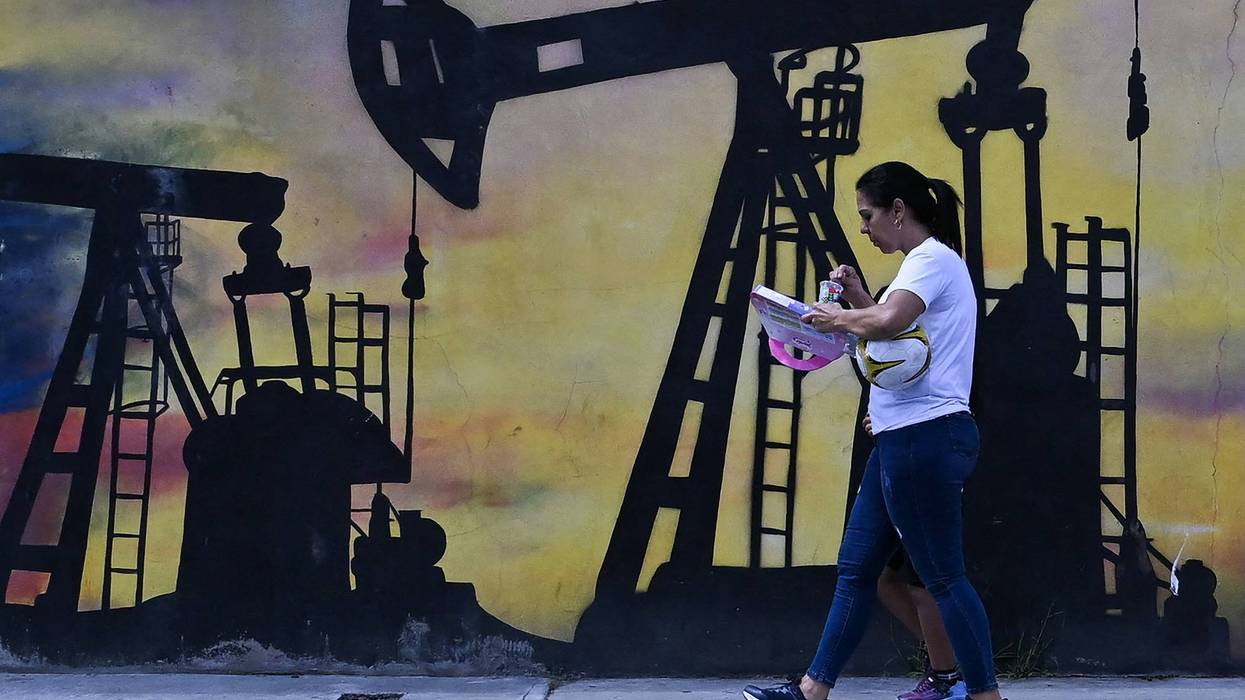
President Donald Trump was accused over the weekend of exploiting an energy crisis of his own creation to make the case for what he dubiously characterized as "the biggest oil deal in world history" with Venezuela, a country that the US illegally attacked earlier this year in an operation to abduct its then-president, Nicolás Maduro.
“Trump drove up gas prices by launching a devastating war with Iran. Now he is using the energy crisis he created as cover for a resource grab of Venezuela’s oil," Allie Rosenbluth, US program manager at Oil Change International, said in a statement on Sunday. "The announcement confirms his aggression against Venezuela was about securing power, profits, and fossil fuels."
The newly announced agreement—which Trump and Venezuela's acting president, Delcy Rodríguez, said involved the development of fields with potentially 65 billion barrels of oil—came as gas prices in the US remained above $4 per gallon. According to AAA, this month is "poised to set a new record as the most expensive August at the pump," as the national average price for a gallon of gas has been above $4 every day of the month for the first time.
Rosenbluth, like other analysts, questioned the impact of Trump's deal with Venezuela on the US energy crisis, which has become a major political problem for the president and his Republican Party heading into the midterms.
Trump, who has significant fossil fuel company holdings, claimed the deal would "substantially lower gas prices" and help replenish the US Strategic Petroleum Reserve, which is at its lowest level in decades after the president ordered the release of 172 million barrels following Iran's closure of the Strait of Hormuz in response to US aggression.
Trump tries to retroactively justify his war of aggression against Venezuela by saying he will use its oil to replenish America's strategic reserves, which are depleted because of his aggressive war of choice against Iran. What is wrong with this "logic"? https://t.co/Grh3ov8Jhw
— Kenneth Roth (@KenRoth) August 30, 2026
Trump announced the deal with Venezuela on Friday, which marked six months since the US and Israel started bombing Iran.
"Oil reserves in Venezuela will do nothing to lower families’ bills today," said Rosenbluth. "Increasing production of this extremely heavy and dirty crude would take years and billions of dollars. A bet on new Venezuelan oil production that may take a decade or more to materialize is a bet against solving the climate crisis already destroying lives and livelihoods every day. The immediate winners are the oil companies and private investors given access to Venezuela’s resources, while Venezuelans lose sovereignty, and communities in Venezuela and along the US Gulf Coast face more pollution and harm."
“Trump’s attacks on Iran and Venezuela expose the vicious cycle of fossil fuel dependence: Wars secure access to oil, oil fuels violence and militarization, prices become more volatile, and fossil fuel companies profit while ordinary people pay," Rosenbluth added. "Real energy security comes from phasing out fossil fuels and investing in affordable, renewable energy.”
Gerald Kepes, president of the consultancy firm Competitive Energy Strategies, noted in an interview with NPR that the US has no "government-owned operational capability per se in the oil and gas sector," raising the question of "who's going to operate on the ground?"
Chevron is currently the only US oil company actively producing in Venezuela. NPR reported that "there's a private Venezuelan company involved in the deal," but the details remain murky.
Keep ReadingShow Less
'Mobster Language': Trump Says Venezuelan Oil Will Replenish US Reserves
"I used to spend so much time trying to prove that the US was not interested in promoting democracy and just preferred autocratic governments that give us whatever we want. And now he just posts this every day on social media," one journalist wrote.
Aug 30, 2026
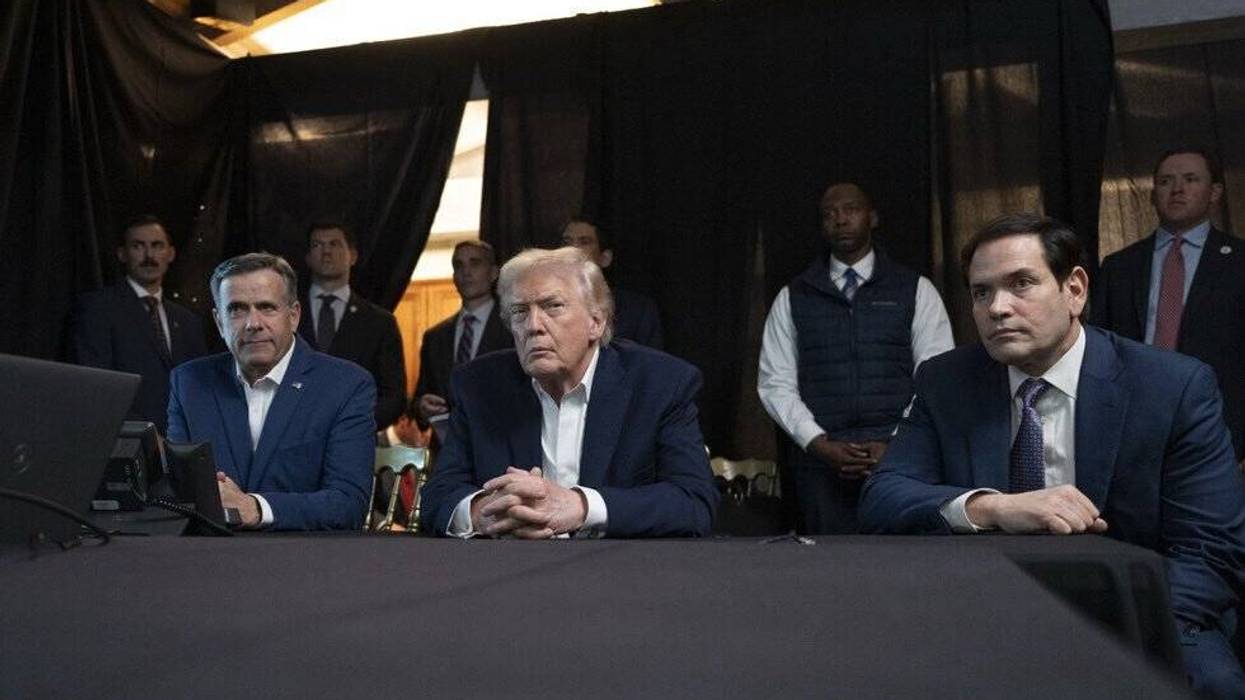
President Donald Trump was accused of naked gangsterism and revisionist history on Sunday when he announced that Venezuelan oil would be used to refill the US Strategic Petroleum Reserve.
"One of the things I am going to do with the Venezuelan Oil is fill up the Strategic National Reserves which, because of Sleepy Joe Biden, has been virtually emptied. The 'topping out' process will begin very shortly, and is a Gift from Venezuela to the People of the United States," Trump wrote on Truth Social.
The oil in question comes from a deal announced between the governments of Trump and acting Venezuelan President Delcy Rodriguez on Friday, which would allow the US to take majority control of 65 billion barrels worth of Venezuelan oil preserves. While Rodriguez has spoken favorably of the arrangement, it is hard to know how freely she speaks and acts given that her predecessor Nicolás Maduro was kidnapped by US forces in January.
"Describing oil you are looting by force as a 'Gift from Venezuela to the People of the United States' is straight mobster language," Drop Site News journalist Ryan Grim wrote on social media in response to Trump's statement on Sunday.
"No one told the demented jerk that he drained over 100 million barrels from the Strategic Reserves?"
Nathan J. Robinson, editor-in-chief of Current Affairs, also commented on the imperialism inherent in Trump's remarks, writing: "I feel like I used to spend so much time trying to prove that the US was not interested in promoting democracy and just preferred autocratic governments that give us whatever we want. And now he just posts this every day on social media."
In an article on Sunday entitled "Trump’s Venezuela Oil Grab Reprises Industry’s Neocolonial Past," Bloomberg reported that the oil deal reminded some analysts of 20th century US colonialism in Latin America.
Venezuelan economist Francisco Rodríguez told Bloomberg that Venezuela is “functioning as a protectorate of the US in all but name,” and that the current deal “isn’t furthering the interests of Venezuelans. It’s about securing the economic and security interests of the United States.”
New York University associate history professor Alejandro Velasco, meanwhile, compared today's Venezuela with the Central American "Banana Republics" that were heavily influenced by the US-based United Fruit Company during the first half of the 20th century.
The Venezuelan people “are entirely at the whims of whatever the US government, by way of these companies, is going to give to them,” he told Bloomberg. “Venezuela is a client state now.”
Both Rodriguez, the economist, and Robinson questioned whether the deal would survive a change in Venezuela's government.
“If I were an investor in Venezuela right now, I would be asking myself if there’s going to be a government in the future that will repudiate the contracts,” Rodriguez told Bloomberg.
Robinson, meanwhile, wrote on social media, "It's obvious that a democratic Venezuela would never hand over its oil to the US, so the US actually strongly opposes democracy in Venezuela."
Other experts pointed out that Trump lied about how the Strategic Petroleum Preserve (SPR) was depleted in the first place. While President Joe Biden did drawn upon the reserve in response to Russia's invasion of Ukraine, Trump has also relied on reserves to offset the impact of his war on Iran and the subsequent closure of the Strait of Hormuz. As of August 21, the SPR held 289.7 million barrels, a 30% decrease from the start of the year, according to the Energy Information Administration. It is supposed to fall further to 243 million barrels per Trump's orders, Drop Site News reported.
"No one told the demented jerk that he drained over 100 million barrels from the Strategic Reserves?" Dean Baker, senior economist at the Center for Economic and Policy Research, asked on social media.
It is also unclear how quickly any Venezuelan oil could top out the SPR, given that Venezuela's oil industry has been weakened by sanctions and mismanagement and needs substantial investment and work before it can increase production, according to Reuters.
At the same time, Drop Site pointed out that Delcy Rodriguez made no mention of gifting the US oil when she laid out more details of the deal on Saturday night. According to the acting Venezuelan leader, the deal would last 25 years and the country would maintain “ownership of and sovereignty” over the oil “while leveraging capital, technology, and operational expertise to support the recovery of a strategic industry that has been severely affected by sanctions," as Reuters reported.
In response, Francisco Rodriquez outlined a series of questions about the deal, including how Delcy Rodriguez's remarks compared with Trump's.
"President Trump has also said that with immediate effect, the United States' strategic oil reserve will begin to be supplied through a gift from Venezuela. Can you explain under what conditions this gift is being made?" the economist asked the Venezuelan leader on social media on Sunday. "Which articles of the law or Constitution allow you to give away Venezuelan oil property? And if that flow begins immediately, as President Trump says, does that mean it will be supplied from current production, and therefore imply lower revenues for the national treasury in the immediate term?"
Keep ReadingShow Less
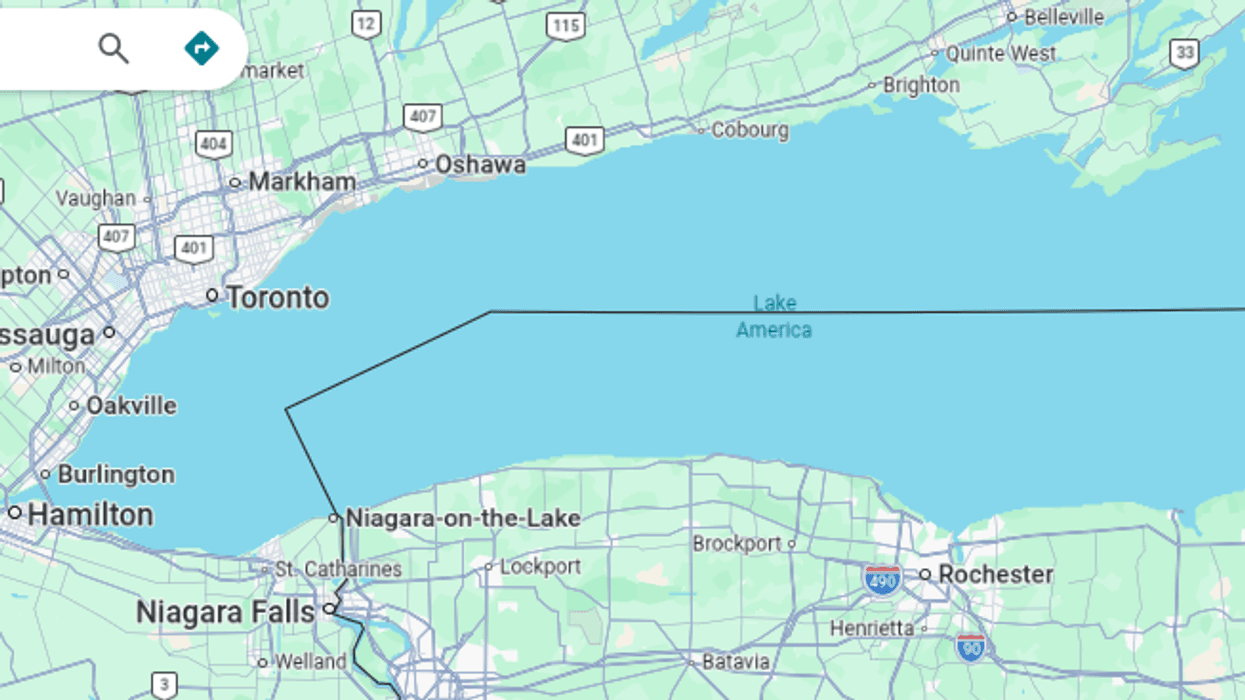
'Embarrassing': Google Maps Renames 'Lake Ontario' as 'Lake America' in US
The name change followed President Donald Trump's executive order and "served as a reminder that billionaires will always side with authoritarians, because authoritarians will always protect billionaires at the expense of democracy and the working class."
Aug 30, 2026
Tech giant Google faced widespread criticism over the weekend for becoming the first major online map provider to change the name of "Lake Ontario" to "Lake America" for its US users, after President Donald Trump ordered the name change in an executive order on Thursday.
Google presented the decision as a procedural one in its statement on Saturday:
The US Geographic Names Information System (GNIS) has formally changed the name for "Lake Ontario" to "Lake America" in the United States. Since we update Google Maps to reflect name changes in official government sources, which is GNIS for the US, people using Maps in the US will see "Lake America," those in Canada will continue to see "Lake Ontario," and those outside of the US and Canada will see both names. These updates follow our long-standing policy for bodies of water with names that vary from country to country, and are starting to roll out now.
However, advocates, lawmakers, and commenters saw the shift as another example of Big Tech in general, and Google in particular, caving to Trump's whims. Notably, the CEO of Google's parent company Alphabet, Sundar Pichai, attended Trump's inauguration with a host of other Silicon Valley moguls.
"This is so embarrassing for @Google and served as a reminder that billionaires will always side with authoritarians, because authoritarians will always protect billionaires at the expense of democracy and the working class," Melanie D'Arrigo, executive director of the Campaign for New York Health, wrote on social media.
Zero integrity over at @Google.
Resign, @sundarpichai.
Fuck you, @googlemaps. pic.twitter.com/ERxPc5sZ88
— Killed by Google (@killedbygoogle) August 30, 2026
Rep. Mark Pocan (D-Wis.) threatened the company with congressional questioning for its capitulation, writing on social media: "Hey @Google, how about an option for thinking people vs. cultish sheep? I don’t wanna have to see your brown lips from Trump. How about calling it what it is? Don’t forget, when the Majority changes in the House and Senate, you might have some answering to do. Correction. WILL."
Sen. Ruben Gallego (D-Ariz.), in response to another social media post about the change, wrote sarcastically, "That's definitely going to make food more affordable."
Kenneth Roth, the former head of Human Rights Watch, asked, "Is Google really so terrified of Trump that it has to play along with his childishness?"
Is Google really so terrified of Trump that it has to play along with his childishness? pic.twitter.com/tHOrwJoiCy
— Kenneth Roth (@KenRoth) August 30, 2026
Trump biographer Seth Abramson chastised the company, writing, "Thing #1 that you *do not do* for a psychopath: appease them."
While Google was the first digital map provider to make the change, it will not be the last, according to Wired, which reported that Apple and Bing are expected to follow suit. All three companies changed the name of the Gulf of Mexico to the Gulf of America following Trump's redesignation at the start of his second term.
Trump did receive pushback from other quarters at the time, with The Associated Press losing access to presidential events because it refused to change its style guide to prefer "Gulf of America."
This new name change, which Trump issued as part of an ongoing trade war with Canada, has also met with resistance both within and beyond the US.
On the day of Trump's order, MapQuest announced simply, "We're not changing it."
We’re not changing it. pic.twitter.com/NdeE9v2BNO
— MapQuest (@MapQuest) August 27, 2026
Canadian Prime Minister Mark Carney rejected the name change in a social media post on Thursday, pointing to the Indigenous origins of the name Ontario.
"The name Lake Ontario comes from the Wendat word Ontari’io, which, appropriately, means 'the lake is beautiful, the lake is big.' The name is more than 400 years old, predating both the Confederation of Canada and the Declaration of Independence of the United States of America," he wrote. "We know that America is changing. Their trading relationships, their foreign policies, their national monuments, their hydronyms. Canadians also know that naming reality means calling it Lake Ontario—then, now, and always."
The upstate New York-based Seneca Nation on Friday asked Trump to rescind the order, saying it violated an over 225-year-old treaty signed by President George Washington and the Haudenosaunee confederacy, of which the Seneca are a member.
Seneca Nation President J. Conrad Seneca said the name change showed "blatant disrespect" to Indigenous groups, adding, "The President cannot assert ownership over our culture or erase it through irresponsible political action."
On Saturday, Ontario Premier Doug Ford unveiled a billboard on the lake's edge that reads, "Lake Ontario, now and always" in English and French.
It’s Lake Ontario, now and always. pic.twitter.com/KNahtPAMeJ
— Doug Ford (@fordnation) August 29, 2026
"President Trump can call it whatever he wants, but I can tell you the rest of the world will always call it Lake Ontario," Ford said.
Keep ReadingShow Less
See More
Most Popular