SUBSCRIBE TO OUR FREE NEWSLETTER
Daily news & progressive opinion—funded by the people, not the corporations—delivered straight to your inbox.
5
#000000
#FFFFFF
To donate by check, phone, or other method, see our More Ways to Give page.


Daily news & progressive opinion—funded by the people, not the corporations—delivered straight to your inbox.

Expert contacts:
Lisa Archer, Friends of the Earth, (510) 900-3145, larcher@foe.org
Beatrice Olivastri, Friends of the Earth Canada, (613) 724 8690, beatrice@foecanada.org
Susan Baker, Trillium Asset Management, (617) 532-6681, sbaker@trilliuminvest.com
Adam Kanzer, Domini Social Investments, (212) 217-1027, akanzer@domini.com
Larisa Ruoff, Sustainability Group of Loring, Wolcott & Coolidge, (617) 622-2213, lruoff@lwcotrust.com
Susan Kegley, Pesticide Research Institute, (510) 759-9397, skegley@pesticideresearch.com
Communications contacts:
Kate Colwell, Friends of the Earth, (202) 222-0744, kcolwell@foe.org
Randy Rice, Trillium Asset Management, (617) 515-6889, rrice@trilliuminvest.com
Home Depot (NYSE: HD), the world's largest home-improvement chain, has announced that it has removed neonicotinoid pesticides, a leading driver of global bee declines, from 80 percent of its flowering plants and that it will complete its phase-out in plants by 2018. This announcement follows an ongoing campaign and letter by Friends of the Earth and allies urging Home Depot to stop selling plants treated with neonicotinoids and remove neonic pesticides from store shelves.
"Home Depot's progress in removing neonics shows it is listening to consumer concerns and to the growing body of science telling us we need to move away from bee-toxic pesticides," said Lisa Archer, Food and Technology program director at Friends of the Earth U.S. "However, we know that Home Depot and other retailers can do even more to address the bee crisis. Along with allies, we will continue to challenge retailers to engage in a race to the top to move bee-toxic pesticides off their shelves and out of garden plants as soon as possible. Bees are the canary in the coal mine for our food system and everyone, including the business community, must act quickly to protect them."
A study released by Friends of the Earth and Pesticide Research Institute, Gardeners Beware 2014, showed that 51 percent of garden plants purchased at Lowe's (NYSE: LOW), Home Depot (NYSE: HD) and Walmart (NYSE: WMT) in 18 cities in the United States and Canada contained neonicotinoid pesticides at levels that could harm or even kill bees. Following the release of this report, Home Depot announced it would require its suppliers to label all plants treated with neonicotinoid pesticides, which have been shown to harm and kill bees, by the fourth quarter of 2014. It also committed to "find alternative insecticides for protecting live goods and bees."
Friends of the Earth and allies have called on Home Depot to strengthen its existing commitments to protecting bees and other pollinators and nursery workers by immediately disclosing the progress it has made to date in phasing out neonicotinoid pesticides in all of its plants and off-the-shelf products. The coalition also called on the retailer to make a public commitment to complete its phase-out of neonicotinoids in all plants and off-the-shelf products, while transitioning to least-toxic alternatives that are benign to human health and the environment, by December 2016.
"Home Depot's public commitment will better position the company to meet the demands of an increasingly environmentally-conscious consumer base. And, it sends an important market signal that restricting the use of bee-harming pesticides is essential to stemming chronic bee declines," said Susan Baker, Vice President of Trillium Asset Management. Trillium and partners in the Investor Environmental Health Network, Domini Social Investments and the Sustainability Group of Loring, Wolcott and Coolidge, have been in active dialogue with management on this issue.
"Home Depot's progress in removing neonicotinoids from the majority of its flowering plants shows how fast a corporation can move when it needs to respond to consumer pressure and science," said Beatrice Olivastri, CEO, Friends of the Earth Canada. "We expect all garden retailers, big and small, to be specifying right now to their suppliers to stop use of neonics for 2016 flowering plants."
"We welcome Home Depot's announcement that it has removed 80% of bee-killing pesticides from its plants. Together, over 750,000 SumOfUs members told Home Depot to stand up for the bees, and together we will be watching closely to make sure that Home Depot phases out these bee-killing pesticides as quickly as possible," said Angus Wong, campaigner, SumOfUs.
"It's important that retailers like Home Depot begin to make the switch towards safer products for bees, butterflies, and other beneficial insects. By phasing out neonicotinoid products, Home Depot is helping consumers break away from a dependency on the use of toxic pesticides in their homes and gardens," said Jay Feldman, executive director, Beyond Pesticides.
In the past year, more than thirty nurseries, landscaping companies and retailers have taken steps to eliminate bee-killing pesticides from their stores. A growing body of scientific evidence has continued to mount that neonicotinoids are a major contributor to both wild bee and honey bee declines and that they are contaminating the environment, harming a variety of other organisms essential to healthy ecosystems and sustainable food production.
"Even though Home Depot has taken these steps in the right direction, it's important for gardeners to be aware that many plants in stores today still contain neonicotinoids. We look forward to the day when we can all buy home garden plants without worrying about harming pollinators. In the meantime, gardeners should choose organic and neonic-free starts, seeds and soil," said Katherine Paul, associate director, Organic Consumers Association.
"It's time for other retailers, such as Ace and True Value, to take a stand against toxic, bee-killing neonicotinoids by making a full-fledged, public commitment to eliminate bee-killing pesticides from store shelves," said Laurel Hopwood, Sierra Club's pollinator protection program coordinator.
Earlier in 2015, Friends of the Earth and Pesticide Research Institute surveyed nurseries and released the report Growing Bee Friendly Garden Plants: Profiles in Innovation, to find out how growers and retail stores were working to meet consumer demand for neonicotinoid-free plants.
"The survey showed that many growers are stepping up to the plate to ensure that their plants are safe for pollinators," said Dr. Susan Kegley, principal scientist at Pesticide Research Institute. "These growers are using innovative approaches to control pests such as application of beneficial insects or fungi that eat or disable pest insects, as well as tried and true common-sense pest prevention methods like proper sanitation, frequent monitoring for pests, and selection of pest-resistant plants. Their success shows that harmful systemic insecticides are not necessary to grow bee-friendly plants."
Greenhouse Grower magazine surveyed the one hundred largest greenhouse growers in the industry, and found 31 percent of the growers surveyed are not using neonicotinoids at all, and 38 percent have eliminated neonicotinoid use for some of their plant products.
Last April, the EPA placed a moratorium on new and expanded uses of neonicotinoids. In September, the 9th Circuit Court suspended the EPA's approval of sulfoxaflor, a neonicotinoid.
In November, the U.S. Geological Survey released a reconnaissance study demonstrating native bees collected in an agricultural landscape are exposed to multiple pesticides and of the bees tested, 70 percent contained pesticides, including neonicotinoids.
*Organizations partnering with Friends of the Earth U.S. in the campaign to urge garden retailers including Home Depot to phase out the use and sale of neonicotinoids include: American Bird Conservancy, Atlanta Audubon Society, Beyond Pesticides, Beyond Toxics, Center for Biological Diversity, Center for Environmental Health, Center for Food Safety, CREDO Action, Ecology Center, Endangered Species Coalition, Environment New York, Environment Texas, Environmental Youth Council, Farmworker Association of Florida, Friends of the Earth Canada, Georgia Organics, GMO Inside, Green America, Maine Organic Farmers and Gardeners Association, Maryland Pesticide Network, Mercola.com, Natural Resources Defense Council, Northwest Center for Alternatives to Pesticides, Olympia Beekeepers Association, Organic Consumers Association, Pesticide Action Network North America, Planet Rehab, Save our Environment, Sierra Club, Smart on Pesticides Maryland, SumOfUs, Toxics Action Center, Toxic Free North Carolina, Turner Environmental Law Clinic and The Xerces Society for Invertebrate Conservation.

Friends of the Earth fights for a more healthy and just world. Together we speak truth to power and expose those who endanger the health of people and the planet for corporate profit. We organize to build long-term political power and campaign to change the rules of our economic and political systems that create injustice and destroy nature.
(202) 783-7400Ocasio-Cortez recently met with families in Morgan County, Georgia who said a nearby Meta data center had degraded their local wells and "now rely on bottled water to drink and prepare meals."
Rep. Alexandria Ocasio Cortez on Wednesday confronted a Trump Environmental Protection Agency official about the impact of artificial intelligence data centers on Americans' drinking water.
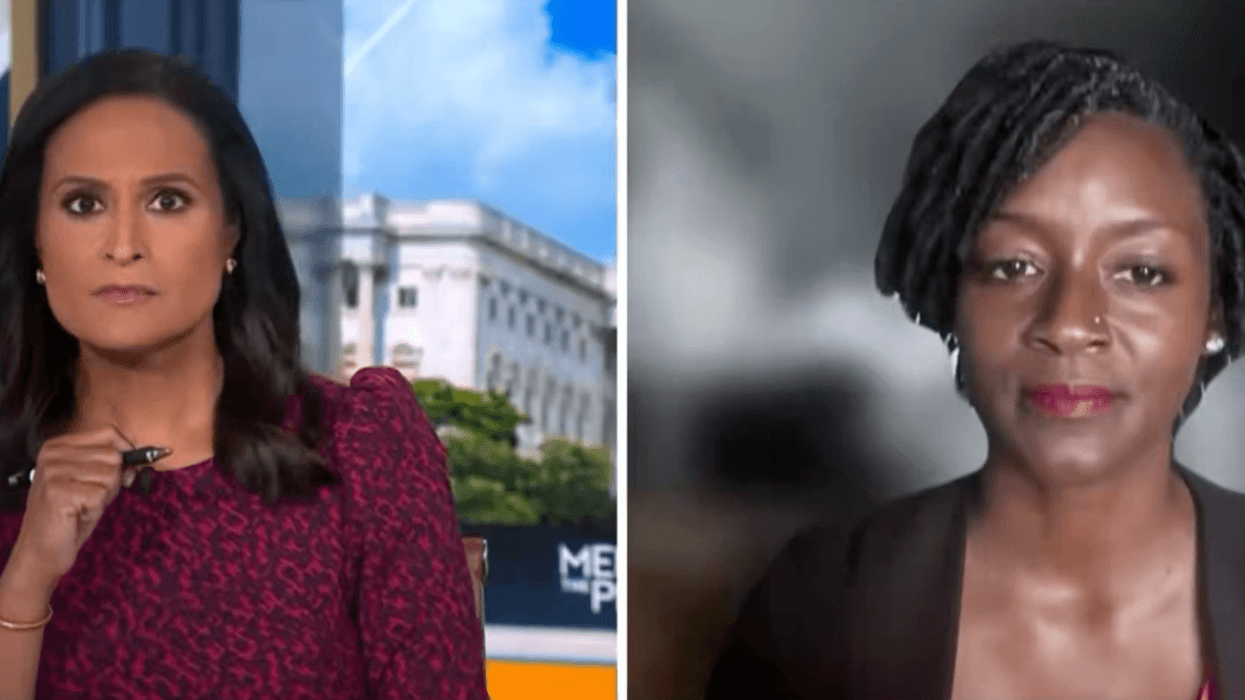
During a hearing held by the House Committee on Energy and Commerce, Ocasio-Cortez (D-NY) grilled EPA Assistant Administrator for Water Jessica Kramer about whether the Trump administration had looked into complaints from communities across the US about nearby data centers causing a decline in water quality.
Kramer indicated that she was aware of the complaints being made about data centers' water usage, but said she hadn't heard anything about their negative impact on water quality.
At this point, the New York Democrat discussed a recent trip she made to Morgan County, Georgia, where local residents said that their tap water had turned brown since tech giant Meta began building a massive data center campus nearby.
"They are clear-cutting forests and began heavy construction, including blasting," Ocasio-Cortez said. "And families in the area are starting to see not only their water pressure decrease... but their appliances have all stopped working because it is decimating their water quality. They now rely on bottled water to drink and prepare meals, and nearby residents' water bills are expected to increase by 33%."
Ocasio-Cortez then pulled out a jar of brown water that she had taken from a local tap in Morgan County to demonstrate the severe decline in quality.
"The only difference between clear water and this was that data center," she said. "This wasn't just one well. This wasn't just one family's situation. This is what the drinking water now looks like next to that data center."
EXCLUSIVE: @AOC calls for a congressional investigation into the impact of data centers.
We took her to meet residents in a Trump +50 county in Georgia whose well water was polluted by Meta’s massive data center.
“That absolutely merits...national congressional investigation." pic.twitter.com/VS7I38MzAB
— More Perfect Union (@MorePerfectUS) May 18, 2026
Ocasio-Cortez pressed Kramer about whether the Trump EPA was planning to investigate whether data centers were causing mass degradation of water throughout the country.
"As soon as I get back into my office, I will be looking into exactly what you just talked about," replied Kramer. "Because anywhere, whatever type of construction it is, it is a priority to ensure that water quality standards established by EPA are being met. So we'll be looking into that."
Earlier this year, Ocasio-Cortez joined with Sen. Bernie Sanders (I-Vt.) to introduce a bill that would impose a nationwide moratorium on AI data center construction "until strong national safeguards are in place to protect workers, consumers, and communities, defend privacy and civil rights, and ensure these technologies do not harm our environment."
At the same time, Leading the Future—a super political action committee backed by venture capital firm Andreessen Horowitz, Palantir co-founder Joe Lonsdale, and other AI heavyweights—is spending at least $100 million in the 2026 midterm elections to elect lawmakers who aim to pass legislation that would set a single set of AI regulations across the US, overriding any restrictions placed on the technology by state governments.
"In the Trump administration, money beats MAHA every time."
It was already known that President Donald Trump pressured top health officials to allow flavored vapes to hit the market after being leaned on by Big Tobacco executives earlier this month.
But The New York Times has revealed that the decision came just over a week after a massive super political action committee (PAC) donation from one of the cigarette companies looking to have the regulations lifted.
Kenneth Vogel and Christina Jewett reported for the Times that on April 30, a subsidiary of the tobacco company Reynolds Americans—which owns Camel and Lucky Strike cigarettes—donated $5 million to the Trump-backed super PAC MAGA Inc., according to a financial report filed on Wednesday. It brought the total amount donated to the PAC up to $8 million.
The donation came just two days before tobacco industry executives held their sit-down with Trump at his golf club in Jupiter, Florida, where they told the president they were displeased with the FDA's ban on flavored vapes, which was enacted in light of evidence that they were driving an epidemic of youth vaping.
According to a youth survey by the Centers for Disease Control and Prevention (CDC), the vast majority of middle- and high school-aged e-cigarette users prefer fruit and candy-flavored vapes.
The Times reported earlier this month that immediately after receiving an earful from executives at Reynolds and Philip Morris owner Altria, Trump rang Secretary of Health and Human Services Robert F. Kennedy, Jr., and Centers for Medicare and Medicaid Services head Mehmet Oz to complain about the FDA's ban on e-cigarettes.
In the days that followed the meeting, Trump reportedly berated then-FDA Commissioner Marty Makary, who hesitated to reverse the policy due to the potential impact on children. Makary ultimately resigned less than a week later, along with RFK Jr.'s chief spokesperson, Rich Danker, citing disagreement about the e-cigarette policy change as the ultimate reason.
Within a week of the meeting with executives, the FDA announced it was dropping the ban on fruit-flavored vapes and authorizing the sale of mango and blueberry flavors by the Los Angeles-based company Glas Inc., which could pave the way for major cigarette makers to launch their own products on store shelves. It also allowed companies to add greater amounts of nicotine to pouches, which smokers often use in order to quit the habit.
Kush Desai, a spokesperson for the White House, told the Times that Reynolds' $5 million donation to the MAGA Inc. PAC had nothing to do with the administration's sudden shift in policy surrounding flavored vapes. He said "the only guiding factor behind the Trump administration’s health policymaking is gold standard science," as well as "recent evidence that has found [vapes] can help adults quit smoking.”
A spokesperson for MAGA Inc. said his organization “is pleased to accept legal contributions from those who agree with President Trump’s America First agenda and his goal to make America great again.”
The $5 million donation is far from the only contribution Big Tobacco has made to Trump. As Common Dreams reported earlier this month:
Trump, who ran in 2024 on a pledge to “save vaping” as part of an effort to appeal to young voters, has raked in huge sums of money from the tobacco industry. According to data from OpenSecrets, his inaugural committee took over $3 million from vaping special interests, including $1.25 million from the Vapor Technology Association, and $1 million apiece from Altria and Breeze Smoke.
Altria, which owns Marlboro maker Philip Morris, and Reynolds American, which owns Lucky Strike and Camel, have also offered donations to Trump’s $400 million White House ballroom project. Reynolds, the biggest producer of menthol cigarettes, also gave $10 million to the super PAC backing Trump in 2024.
The Times also reported on Wednesday that a Reynolds executive was invited to a dinner hosted by Trump at the White House in October for donors who gave $2.5 million or more.
The open, shameless grift.www.nytimes.com/2026/05/20/u...
[image or embed]
— Wajahat Ali (@wajali.bsky.social) May 21, 2026 at 1:21 AM
Critics described the $5 million donation as effectively a legal "bribe" to Trump and the latest example of the White House's "open, shameless grift."
It comes amid what seem to be endless reports of blatant self-dealing by Trump allies, most recently exemplified by the Trump-controlled Department of Justice's settlement of a lawsuit from Trump against the Internal Revenue Service, which handed the president $1.8 billion in taxpayer funds that he plans to disperse to his allies as part of a so-called “weaponization fund,” which critics have dubbed a “slush fund.”
It's also the latest example of Trump appearing to take actions in direct service of rich corporate donors—particularly in the fossil fuel, artificial intelligence, and cryptocurrency industries—or members of his family or personal inner circle.
Rep. Seth Magaziner (D-RI) also described the FDA's policy change on vaping as a betrayal by the administration's overseer, Kennedy. Though the HHS secretary has built his brand on pledges to "Make America Healthy Again" by decoupling corporate interests from health policy, he has been accused of bending to industry pressure on everything from food regulation to cancer-causing pesticides.
"In the Trump administration," Magaziner said, "money beats MAHA every time."
"The administration will continue to claim that their actions serve the freedom of Cubans, but history has shown us that peace and democracy has never been realized through US imperialism or unilateral military intervention," said Rep. Delia Ramirez.
A five-minute address to the people of Cuba by US Secretary of State Marco Rubio, a longtime advocate of regime change in the communist country, was called "Orwellian" by one former Obama administration staffer as the diplomat claimed the "unimaginable hardships" Cubans now face are the fault of their own government—not the US blockade on oil that began nearly four months ago.
On the country's 124th Independence Day, Rubio—the son of Cuban immigrants who left the island for the US several years before Fidel Castro took power—said he wanted to "share with you the truth about the reason for your suffering. And I want to tell you what we, in the US, are offering to help you not only alleviate the current crisis, but also to build a better future."
Rolling blackouts have been a frequent occurrence since the Trump administration cut off Cuba's main oil supply after it invaded Venezuela in January, followed by a threat to impose tariffs on any country that supplied Cuba with energy. Rubio insisted that the blackouts are "not due to an oil 'blockade' by the US" and said that Cubans know "better than anyone" that the island has suffered from energy shortages "for years."
The secretary of state didn't mention the embargo the US has imposed on Cuba for more than six decades, exacerbating the country's struggles with its power infrastructure.
🇺🇸🇨🇺 pic.twitter.com/nwEePVJ1lX
— Secretary Marco Rubio (@SecRubio) May 20, 2026
"The real reason you don’t have electricity, fuel, or food is because those who control your country have plundered billions of dollars, but nothing has been used to help the people," said Rubio—echoing comments he made in April about Iran's government, which he said has spent "billions of dollars, supporting terrorists or weapons," instead of "helping the people of Iran."
At the time, Rubio's accusations were ridiculed by progressives who noted the Trump administration had already spent billions of dollars on the Iran War as Americans struggled with rising grocery, healthcare, and gas prices.
On Wednesday, the Republican Party appeared to have adopted Rubio's recycled talking point as tensions with Cuba grew following the US government's indictment of former Cuban President Raúl Castro. On Fox News, Sen. John Kennedy (R-La.) said Cuban officials "take all their money and they give it to the military and the police and themselves, and to hell with the good people."
Rep. Delia Ramirez (D-Ill.) said late Thursday that President Donald Trump and Rubio "are pulling straight from the imperialists' playbook to justify another unauthorized and unlawful military invasion–just as they did in Venezuela and Iran."
"The administration will continue to claim that their actions serve the freedom of Cubans, but history has shown us that peace and democracy has never been realized through US imperialism or unilateral military intervention," said Ramirez.
As Common Dreams reported Wednesday, Rubio also took aim at Grupo de Administración Empresarial S.A. (GAESA), a company founded by Castro which controls an estimated 40-70% of Cuba's economy.
"President Trump is offering a new relationship between the US and Cuba. But it must be directly with you, the Cuban people, not with GAESA," said Rubio, adding that the administration is offering $100 million in food and medicine with the stipulation that it be distributed by the Catholic Church "or other trusted charitable groups."
"In the US we are ready to open a new chapter in the relationship between our people and our countries," said Rubio. "And, currently, the only thing standing in the way of a better future are those who control your country."
Ben Rhodes, who served as deputy national security adviser under former President Barack Obama, noted that the secretary of state "works for a guy who has looted far more billions of dollars for himself and his cronies than even the most corrupt Cuban officials," and condemned his claim that the US oil blockade is not behind Cuba's energy crisis, which has caused a healthcare crisis as hospitals have struggled to provide services.
Democrats on the US House Foreign Affairs Committee noted that as a senator, Rubio worked to "make every effort" to block Obama's push to normalize relations with Cuba—only to claim that he wants to forge a new path with the country after strangling its energy supply.
"Sen. Rubio made it his mission to block every serious effort to build a new relationship with the Cuban people," said the Democrats. "Now, as secretary of state, he's peddling disingenuous rhetoric of a ‘new relationship' while the administration's Cuba policies exacerbate the humanitarian crisis there."