

SUBSCRIBE TO OUR FREE NEWSLETTER
Daily news & progressive opinion—funded by the people, not the corporations—delivered straight to your inbox.
5
#000000
#FFFFFF
To donate by check, phone, or other method, see our More Ways to Give page.
Daily news & progressive opinion—funded by the people, not the corporations—delivered straight to your inbox.
Vesna Jaksic Lowe, deputy director of communications, Physicians for Human Rights (PHR); vjaksiclowe@phrusa.org; 917.679.0110
Physicians for Human Rights (PHR) today called for a federal criminal probe into the American Psychological Association's (APA) role in the U.S. torture program following the release of a damning new report that confirms the APA colluded with the Bush administration to enable psychologists to design, implement, and defend a program of torture. In light of the 542-page independent report first reported by The New York Times, PHR again called for a full investigation by the U.S. Department of Justice.
"The corruption of a health professional organization at this level is an extraordinary betrayal of both ethics and the law, and demands an investigation and appropriate prosecutions," said Donna McKay, PHR's executive director. "Rather than uphold the principle of 'do no harm,' APA leadership subverted its own ethics policies and sabotaged all efforts at enforcement."
The APA commissioned an independent review by David Hoffman, a former federal prosecutor, in November 2014 after detailed allegations of complicity emerged in New York Times reporter James Risen's book, "Pay Any Price: Greed, Power, and Endless War." The book documented secret coordination between APA and U.S. officials to support the spurious legal and ethical justification for the Bush administration's torture program, which relied on health professional monitoring of abusive interrogations to claim that they were "safe, effective, and legal."
Hoffman's report, based on extensive interviews and review of internal emails and documents, found overwhelming evidence of criminal activity by APA staff and officials, including:
1) Colluding with the U.S. Department of Defense, the CIA, and other elements of the Bush administration to enable psychologists to design, implement, and defend the post-9/11 torture program;
2) Allowing military and intelligence personnel to write APA ethics policies regulating their own conduct to ensure they were "covered" for their roles in the torture program;
3) Engaging in a coordinated campaign to cover up the collusion and blocking attempts to oppose these policies within the APA; and
4) Obstructing and manipulating ethics investigations into psychologists involved in the torture program.
PHR said the new report confirms findings from a decade of PHR investigations into the illegal and unethical participation of health professionals in the U.S. torture program. Since 2005, PHR has campaigned for the reform of APA policies and governance, and has repeatedly called for a federal investigation into the role of psychologists and other health professionals in this program.
"As mental health professionals, our first obligation must be to our patients," said Dr. Kerry Sulkowicz, psychiatrist and vice chair of the PHR board of directors. "The APA's collusion with the government's national security apparatus is one of the greatest scandals in U.S. medical history. Immediate action must be taken to restore health professional ethics and to ensure this never happens again."
PHR said that the disturbing new revelations require full investigation by law enforcement into potential criminal wrongdoing by APA staff and officials. PHR called for a federal commission into the role that the APA, individual psychologists, and other health professionals played in the torture program, with full subpoena powers and the authority to refer individuals for criminal investigation and prosecution. PHR said that all APA staff involved in the ethics scandal should have their employment terminated, that all APA members involved should be banned from governance positions, and that all those implicated should face state ethics charges. In addition, PHR echoed calls for the APA to initiate an independent analysis of the internal structures and processes that led to collusion, and to adopt policies prohibiting psychologist involvement in interrogations and other activities that are inconsistent with the profession's "do no harm" ethic.
PHR was founded in 1986 on the idea that health professionals, with their specialized skills, ethical duties, and credible voices, are uniquely positioned to investigate the health consequences of human rights violations and work to stop them. PHR mobilizes health professionals to advance health, dignity, and justice and promotes the right to health for all.
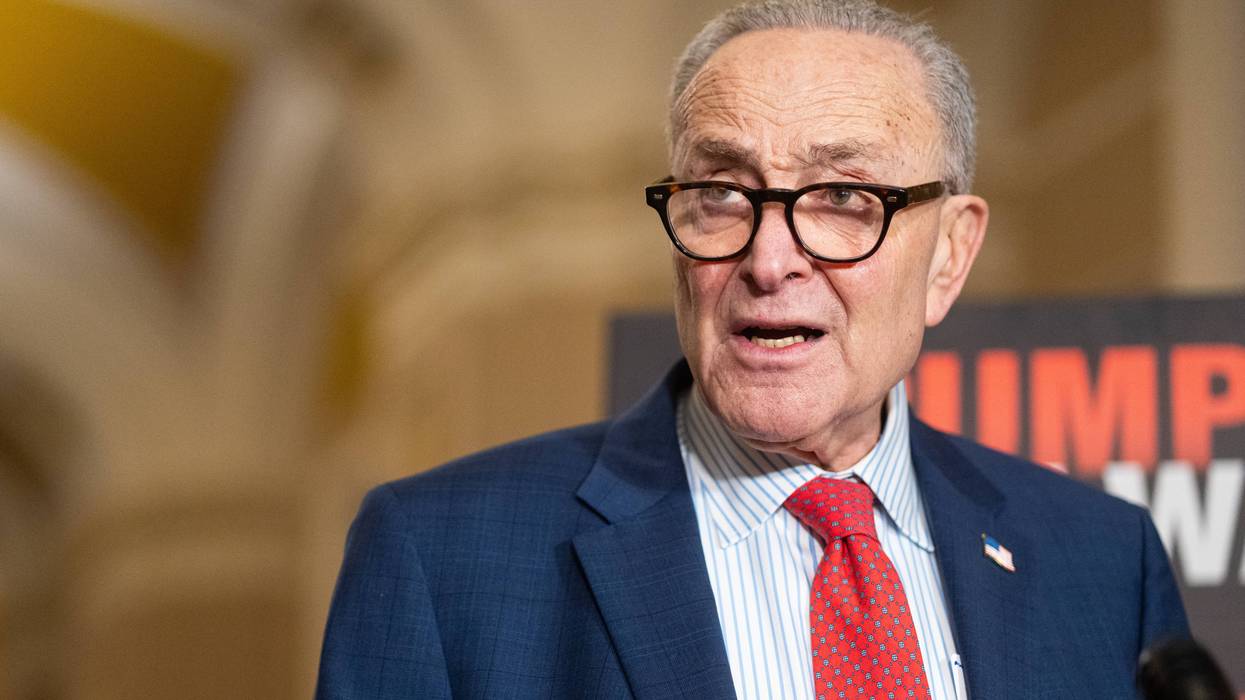
“If current party leadership is unwilling to represent their own voters and the majority of Americans, then it is time for new leadership."
A poll released Monday shows that around 80% of Democratic voters in New York oppose US weapons transfers to Israel, putting Senate Minority Leader Chuck Schumer—a stalwart supporter of Israel—way out of step with his voter base.
The survey, conducted by Data for Progress and published by the Institute for Middle East Understanding (IMEU) Policy Project, found that 82% of New York Democrats—and 60% of the state's voters overall—believe the US "should restrict taxpayer-funded weapons to Israel until it stops attacking civilians in Gaza." The poll also found that 76% of Democratic voters in the state would favor the US Senate voting to halt the transfer of US bombs to Israel, which has repeatedly used American weaponry to commit grave war crimes.
The poll was conducted roughly a month after Schumer and Sen. Kirsten Gillibrand (D-NY) broke with the overwhelming majority of their Democratic colleagues in voting against two resolutions aimed at blocking Trump administration sales of 1,000-pound bombs and bulldozers to the Israeli government.
The resolutions were spearheaded by Sen. Bernie Sanders (I-Vt.), who polled more favorably than Schumer among New York voters overall—as did New York City Mayor Zohran Mamdani and Rep. Alexandria Ocasio-Cortez (D-NY), who has been floated as a possible primary challenger to Schumer in 2028.
"New York State voters, especially Democrats, aren’t being represented by their senators," the IMEU Policy Project wrote on social media, adding that "Schumer is far out of touch with New York voters on funding Israel."
A majority of New York voters (51%), and 70% of Democrats, believe Israel is committing genocide in Gaza, according to the new poll, a position that Schumer has rejected—putting him in conflict with both his own constituents and leading Holocaust scholars and human rights organizations.
“When Sens. Chuck Schumer and Kirsten Gillibrand voted against blocking the bombs and bulldozers Israel is using to destroy Palestinian and Lebanese homes, they were not just voting against the vast majority of their own Senate caucus and Democratic voters, but they were voting against the majority of New Yorkers they’re elected to represent,” Margaret DeReus, the IMEU Policy Project's executive director, said in a statement. “If current party leadership is unwilling to represent their own voters and the majority of Americans, then it is time for new leadership."
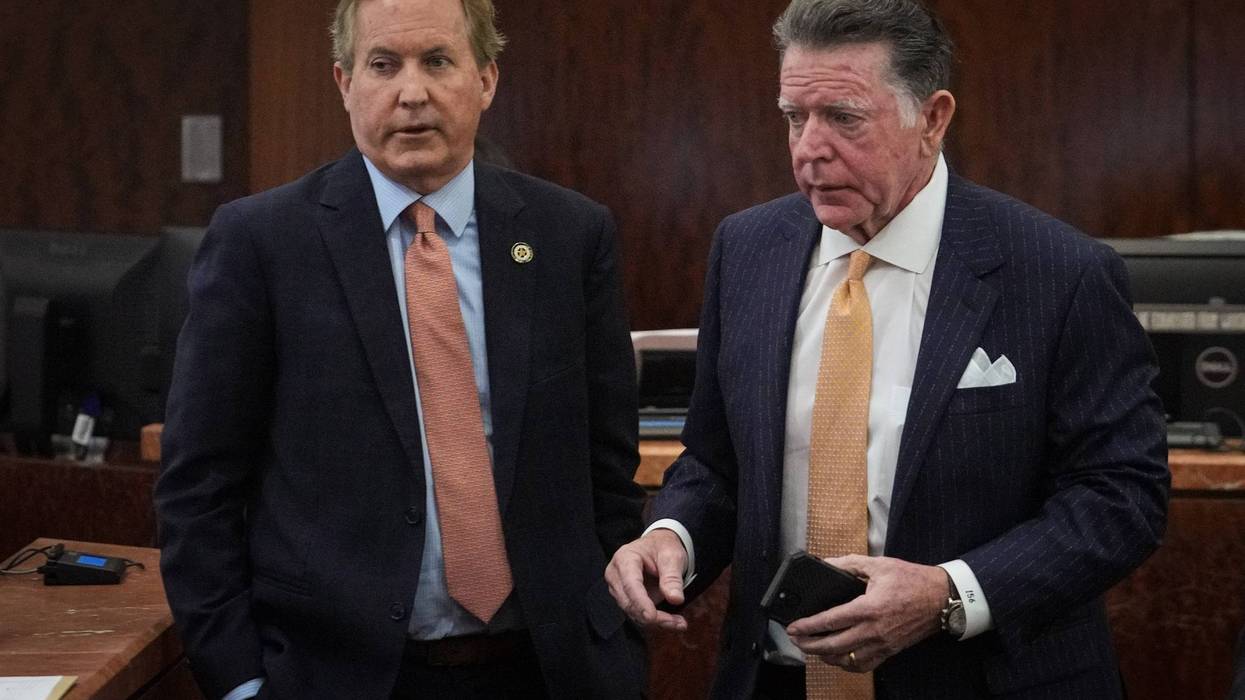
“Republicans have had control of Texas for 30 years,” said lawyer Dan Cogdell. "We are last in the country in healthcare, bottom for education, first in school shootings, first in most uninsured.”
James Talarico, the Democratic Texas state representative hoping to flip Sen. John Cornyn's seat blue this November, just received the endorsement of a rather unlikely figure: his opponent’s longtime defense lawyer.
Dan Cogdell, the Houston attorney who represented Texas Attorney General Ken Paxton for nearly a decade, said on Monday that his former client was too focused on serving President Donald Trump and had "lost sight" of the goal to serve Texans.
Cogdell defended Paxton in 2023 when he was impeached by the GOP-controlled Texas House of Representatives for allegedly accepting bribes from a campaign donor, and in a separate securities fraud case that began in 2015 and lasted nearly a decade.
“I defended Ken Paxton for years in the impeachment trial and in state criminal cases. But in my view, respectfully, I think Ken has lost sight of his core mission, which is to represent the people of Texas,” Cogdell said on his podcast, where he hosted Talarico, the 37-year-old state representative, who won the Democratic primary in March.
“Unlike Ken, I believe to my core that James Talarico believes in unity over division and that he knows how to assemble not only Democrats, but Independents and Republicans, and we need that right now,” Cogdell continued.
According to NOTUS, which first reported on Cogdell's endorsement, the attorney had donated $6,500 to Paxton's Senate campaign last year, but turned around to give Talarico a $1,000 donation in March.
Paxton won the Republican Senate primary last month after Trump intervened to support him over Cornyn.
Cogdell has, in recent years, broken with Trump, referring to him last year as “the greatest threat to democracy our country’s ever seen," comments that were used in anti-Paxton attack ads.
But as he's pursued a Senate run, Paxton—who attempted to help the president overturn his loss in the 2020 election—has only doubled down on his Trump loyalty. In the president's second term, the attorney general has directed Texas law enforcement to help with his national mass deportation campaign, backed his efforts to carry out ruthless partisan redistricting, and pursued legal action against the Democratic fundraising platform ActBlue.
Talarico is hoping to become the first Democrat to win a statewide election in Texas in over 30 years. Cogdell said he would represent a much-needed change.
“Republicans have had control of Texas for 30 years. Enough is enough. We are last in the country in healthcare, bottom for education, first in school shootings, first in most uninsured,” he said. “We are in a war we shouldn’t be in. Gas is so expensive, I literally can’t fill up my truck because most pumps shut off at $125.00, and at over $5.00 a gallon, that’s not even a full tank.”
Talarico, who is tied or slightly leading Paxton in recent polls, seized on Cogdell’s endorsement to welcome disgruntled Cornyn supporters into the Democratic tent after a bitter primary.
“If you voted for John Cornyn, you have a place in this campaign,” Talarico said. “If you’re a Republican tired of the corruption you’re seeing in government, you have a place in this campaign. Even if you’re Ken Paxton’s impeachment lawyer, you have a place in this campaign. We are building a people-powered movement that welcomes Republicans, Democrats, and independents alike.”
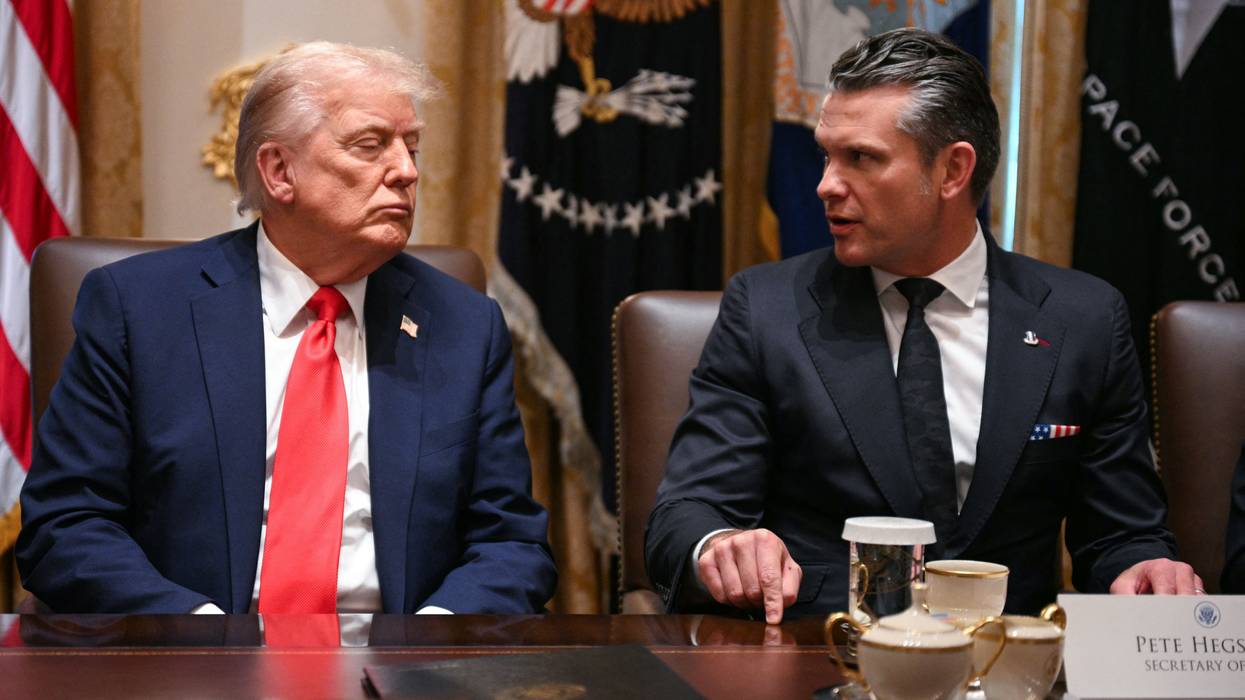
Jennifer Kavanagh, senior fellow and director of military analysis at Defense Priorities, said US military retrenchment is needed on a global scale.
President Donald Trump's illegal war with Iran has gone so poorly that it portends the end of the American-led global order, foreign policy scholar Jennifer Kavanagh wrote in an analysis published Monday by The American Conservative.
Despite Trump's repeated declarations of a total US victory over Iran, Kavanagh wrote that the continued closure of the Strait of Hormuz has revealed the limits of the American military, which in 2025 had a budget of nearly $1 trillion.
Kavanagh, senior fellow and director of military analysis at Defense Priorities, argued that the Iran war has been particularly damaging to US power because it has drained US munitions supplies and has still achieved none of the major objectives Trump outlined at the start of the conflict.
"Some estimates suggest the United States has burned through 1,000 Tomahawk missiles, nearly 50% of its Patriot and THAAD stockpiles, and significant portions of advanced stand-off weapons like PRSM and JASSM missiles," Kavanagh wrote. "The constraints on US military power created by these shortages will be consequential and enduring."
In practical terms, Kavanagh said, this means the US simply cannot meet key commitments for the foreseeable future, such as supporting the defense of Taiwan in the case of an attack by China.
Kavanagh emphasized that American policymakers should reduce US military commitments around the world and not cling to a global order that is no longer sustainable.
"The period of US military dominance—and of American empire—is over," Kavanagh wrote. "The resulting future will be less comfortable for the United States, but its changes are overdue and its challenges manageable. With the right moves today, American retrenchment can leave the United States, and the world, better off."
This retrenchment, wrote Kavanagh, would refocus American defense strategy solely on defending US territory and "ensuring access to key economic markets." In practice, this would mean closing military bases and ending deployments in Europe and the Middle East, a "narrowing" of security guarantees to NATO allies, and explicitly stating that it would not defend Taiwan in the face of an attack from China, which Kavanagh said would "reduce the risk of a war with China that at this point the United States is unprepared to fight."
"These changes in posture and alliance commitments would amount to a massive transformation of American foreign policy," Kavanagh acknowledged, "but the result would be a sustainable military position, consistent with US capabilities and resources and tailored to protecting US interests."