
SUBSCRIBE TO OUR FREE NEWSLETTER
Daily news & progressive opinion—funded by the people, not the corporations—delivered straight to your inbox.
5
#000000
#FFFFFF
To donate by check, phone, or other method, see our More Ways to Give page.


Daily news & progressive opinion—funded by the people, not the corporations—delivered straight to your inbox.
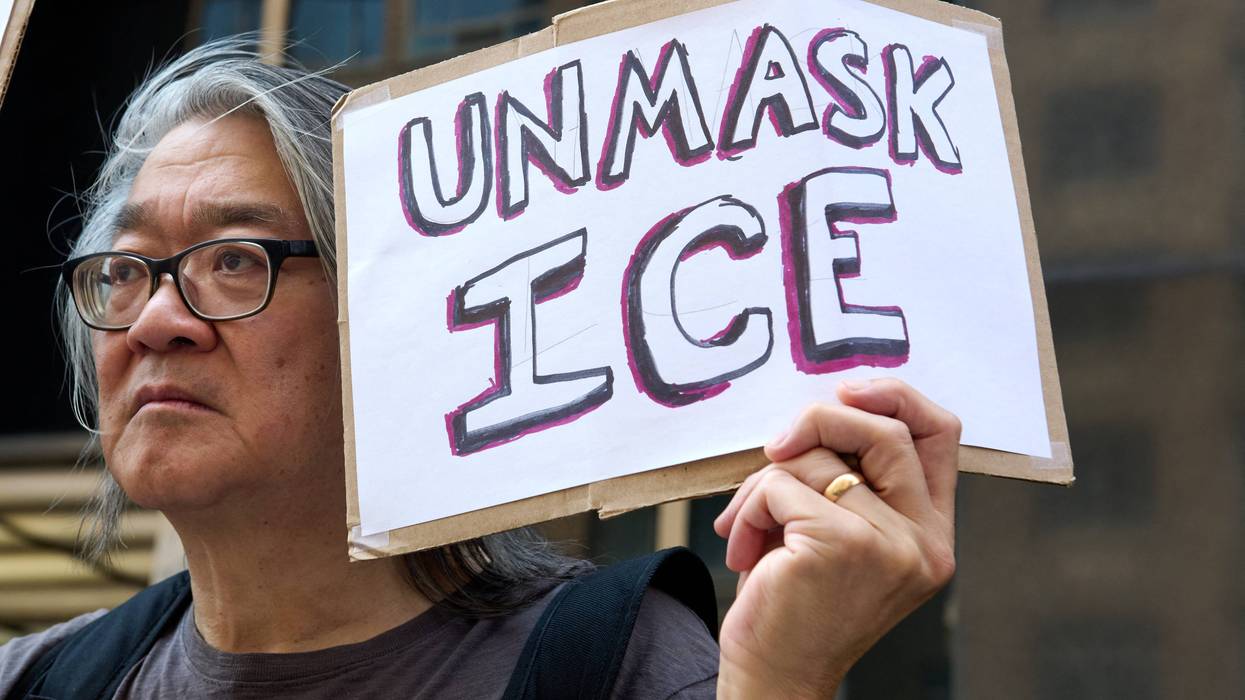
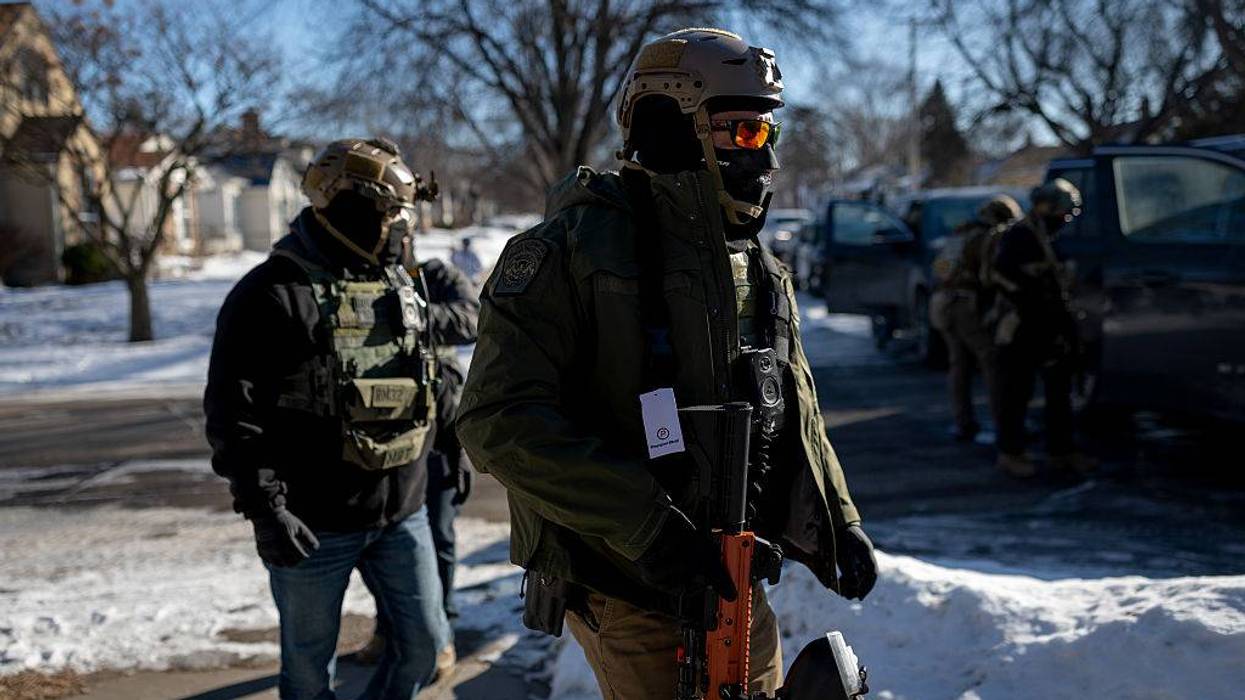
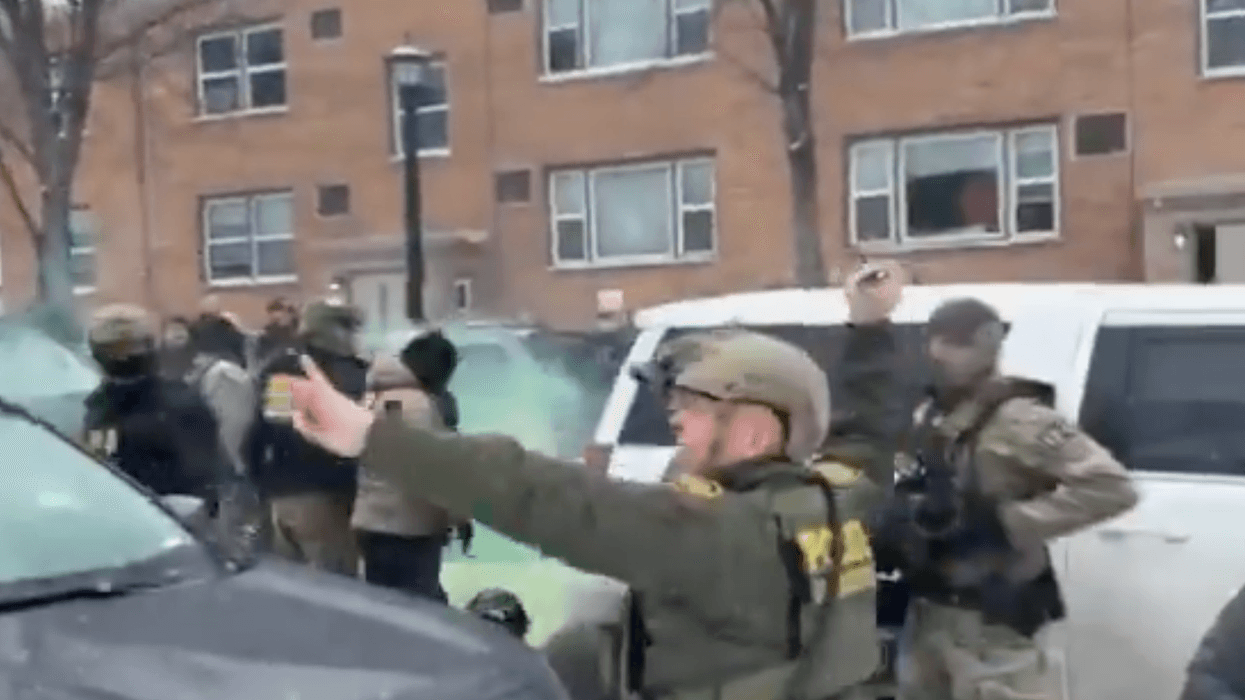
ICE and the Border Patrol are concealing their faces to try and protect themselves—from accountability.
Mardi Gras arrives, and masked federal agents continue their lawless violence under the false flag of "law enforcement." Meanwhile a federal judge has temporarily blocked the Trump administration's latest anti-Haitian effort because, among other things, its racist foundation violates the law.
All of that is why phrases from Haitian singer Manno Charlemagne (1948-2017) have been coming to mind.
In one song, Charlemagne praises those who "unmask the wrongdoers" (demaske malpwopwete). In another, he scoffs at the bands of thinly disguised paramilitary cowards (yon bann fov mal maske). He might have been riffing on the Declaration of Independence's complaint about a king who sends "Swarms of Officers to harass our People," quoted last month by the federal judge who ordered the release of a 5-year-old boy and his father from Immigration and Customs Enforcement (ICE) detention in Texas.
Manno, as everyone called him, was Haiti's best-known singer-songwriter and a leading activist in his own country's fight for democracy. I was fortunate to have met him when I worked at Miami's Haitian Refugee Center in the 1990s, and we later translated some of his songs from Haitian Kreyòl to English.
Behind the masks are not just racists, but bullies, and bullies are cowards.
Manno's 1989 "Lamayòt" was written for Carnival, which in Haiti as elsewhere brings new political songs. As Edwidge Danticat explains, "A lamayòt is a mysterious box whose contents are known only to its owner, and which others can see only after they have paid some kind of price. In politics, lamayòt can refer to, among other things, trickery, a sleight of hand, and broken promises."
In "Lamayòt," Manno mocks the military oppressors who promote themselves and make up their own rules, thinking that guns and the power to intimidate make them right. But their masks and smirking, sings Manno, are the only flag they carry, and people see right through their pathetic Mardi Gras disguise: "Lan fè grimas se drapo nou pote... Pou mwen nou pa menm madigra k mal maske."
Despite a push from activists, and with Democrats following their lead, agents are sure to keep their masks on. Yes, it's to protect themselves—from accountability. ICE and the Border Patrol have always aspired to lawlessness, and under President Donald Trump they have moved further than ever in that direction.
In California this month, a judge ruled against a state prohibition on federal agents hiding behind masks, but only because the law doesn't also apply to state law enforcement. In response, State Sen. Scott Wiener has said he will push for a law that covers all officers. Wiener's statement could be from a Carnival song: "We will unmask these thugs and hold them accountable." The Field Office Director for ICE Enforcement and Removal (ERO) in San Francisco had told the court that the law should be struck down because"DHS does not intend to comply" with it.
Agents claiming to enforce the law—even when they actually do so—are violating federal law by refusing to identify themselves: "At the time of the arrest, the designated immigration officer shall, as soon as it is practical and safe to do so, identify himself." The city of Santa Ana has actually passed a resolution suggesting that the federal government follow federal law.
The Trump administration also claims that federal agents can give themselves permission to break down your door and check your papers or abduct you, though that's not how "permission" or warrants work. The Associated Press reports that the latest in Department of Homeland Security (DHS) "ruses" includes the use of false license plates in violation of Minnesota law, and the impersonation of local police, construction workers, and utility workers.
Behind the masks are not just racists, but bullies, and bullies are cowards. That's why their bosses keep saying how brave they are while whining about their victimhood. In the first Trump administration, DHS Secretary John Kelly complained that his agents "are often ridiculed and insulted... and frequently convicted in the court of public opinion on unfounded allegations." In November, a deputy chief of Border Patrol told a California court that agents wear masks and "remove their badges, nameplates, or unique identifiers" because "incidents across the nation have created an atmosphere of fear and uncertainty" for them.
A Burmese-American named Ba Zan Lin spent 18 years "living under dictatorship and tyranny" in his native country. Last year he told a Buffalo (New York) audience, writes Geoff Kelly in the Investigative Post, "that the measures taken by ICE agents to conceal their identities—unmarked vehicles, face masks, no badges or name-tags—indicates their authority is vulnerable to challenges by ordinary citizens."
"'As long as they're still wearing masks, they're still afraid of us,'" Lin said.
"What you do to scare me only excites me," sang Manno Charlemagne. "Masked man, I'm not afraid of you. You're only a person."
"You don’t see evidence of gang association," said one legal expert. "It just feels like a dirtying up of the defendant."
After a US Border Patrol Agent shot two Venezuelan immigrants in Portland, Oregon in January, the Department of Homeland Security claimed that the two victims were "vicious Tren de Aragua gang members" who "weaponized their vehicle" against federal agents, who had no choice but to open fire in self-defense.
However, court records obtained by the Guardian reveal that a Department of Justice prosecutor subsequently told a judge the government was "not suggesting" that one of the victims, Luis Niño-Moncada, was a gang member.
The Guardian also obtained an FBI affidavit contradicting DHS claims about the second victim, Yorlenys Zambrano-Contreras, being "involved" in a shooting in Portland last year, when in reality she was a "reported victim of sexual assault and robbery."
Attorneys representing Niño-Moncada and Zambrano-Contreras, who both survived the shooting and were subsequently hospitalized, told the Guardian that neither of them have any prior criminal convictions.
Legal experts who spoke with the Guardian about the shooting said it appeared that DHS was waging a "smear campaign" against the victims.
Sergio Perez, a civil rights lawyer and former US prosecutor, noted in an interview that prosecutors filed criminal charges against Niño-Moncada and Zambrano-Contreras just two days after they were shot, even before it had obtained crucial video evidence of the incident.
"This government needs to go back to the practice of slow and thorough investigations," he told the Guardian, "rather than what we consistently see in immigration enforcement activities—which is a rush to smear individuals."
Carley Palmer, a former federal prosecutor, told the Guardian that the court records obtained by the paper don't show DOJ presenting any of the usual evidence that prosecutors use to establish defendants' alleged gang membership.
"What’s interesting about the filings is that you don’t see evidence of gang association," said Palmer. "It just feels like a dirtying up of the defendant."
DHS in recent months has made a number of claims about people who have been shot or killed by federal immigration officers that have not held up to scrutiny.
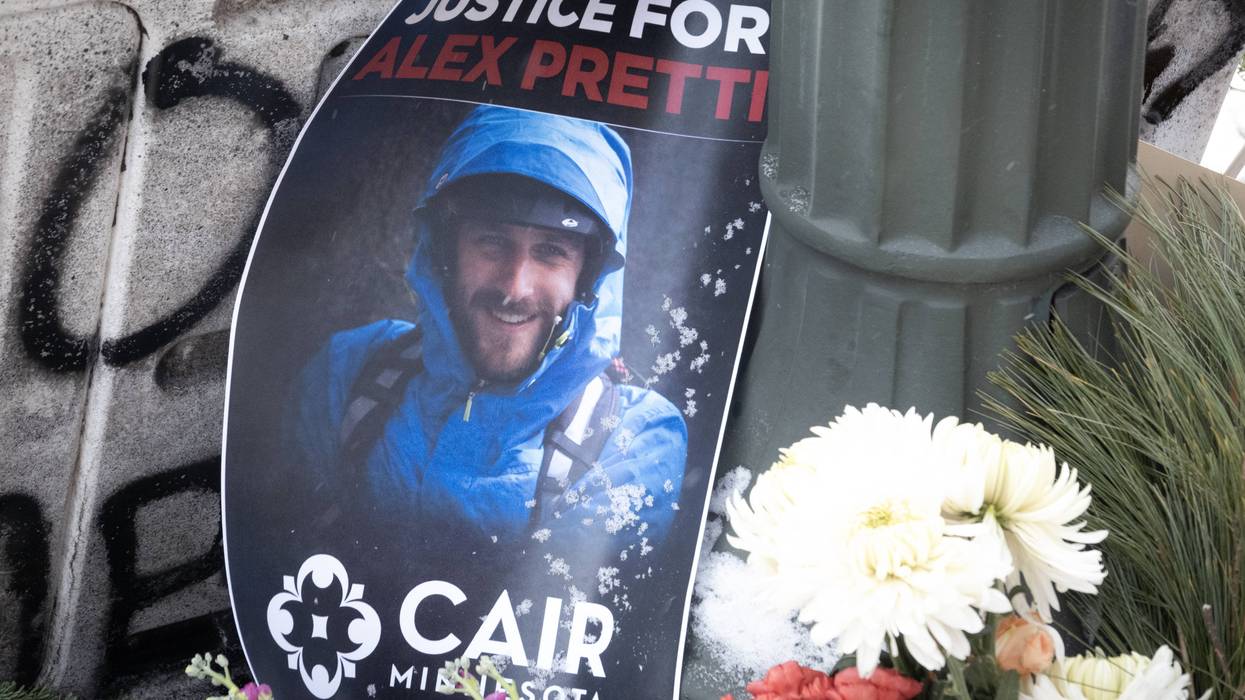
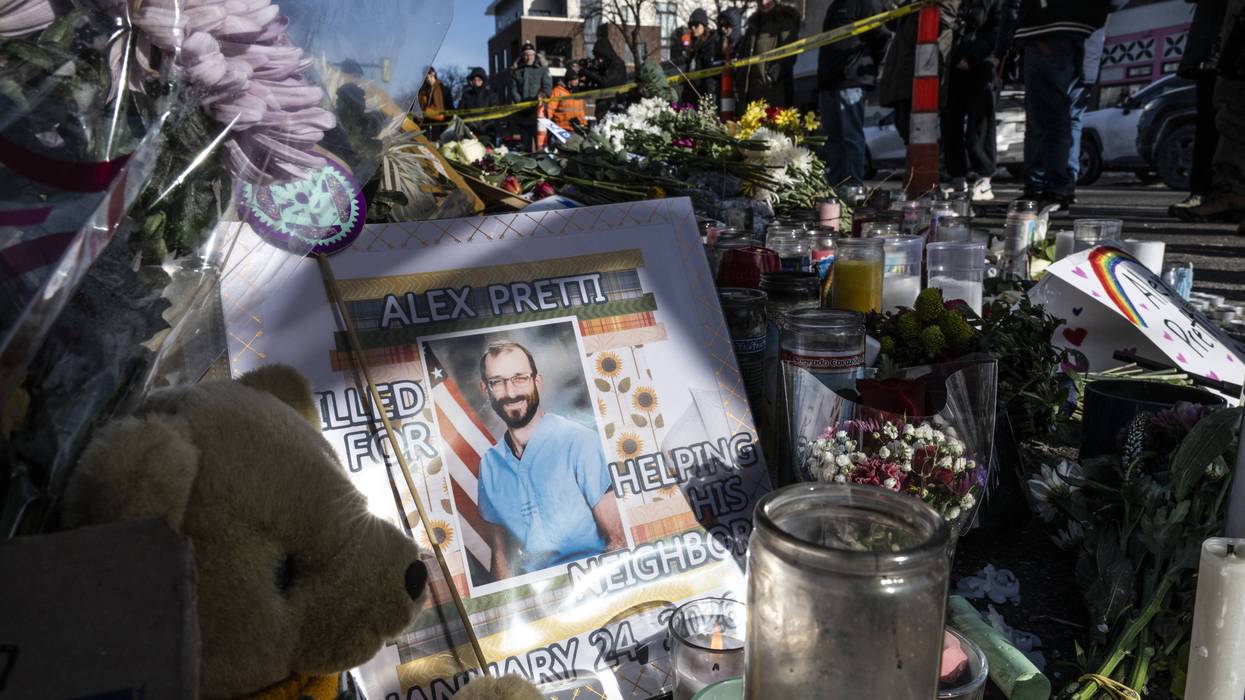
Most recently, Homeland Security Secretary Kristi Noem claimed that slain Minneapolis intensive care nurse Alex Pretti was a "domestic terrorist" intent on inflicting "maximum damage" on federal agents, when video clearly showed that Pretti was swarmed by multiple federal agents and was disarmed before two agents opened fire and killed him.
Noem also openly lied about the circumstances and actions that resulted in the shooting death of Renee Nicole Good by a federal agent weeks earlier.
In November, federal prosecutors abruptly dropped charges against Marimar Martinez, a woman who was shot multiple times by a US Border Patrol agent in October in Chicago’s Brighton Park neighborhood.
In the indictment filed against Martinez, prosecutors said that the Border Patrol agent who shot her had been acting in self-defense, and that he had only opened fire after Martinez’s car collided with his vehicle.
However, uncovered text messages showed the Border Patrol agent apparently bragging about shooting Martinez, as he boasted that he “fired five rounds and she had seven holes” in a message sent to fellow agents.
An attorney representing Martinez also claimed that he had seen body camera footage that directly undermined DHS claims about how the shooting unfolded.
No explanation was provided for why charges against Martinez were dropped.
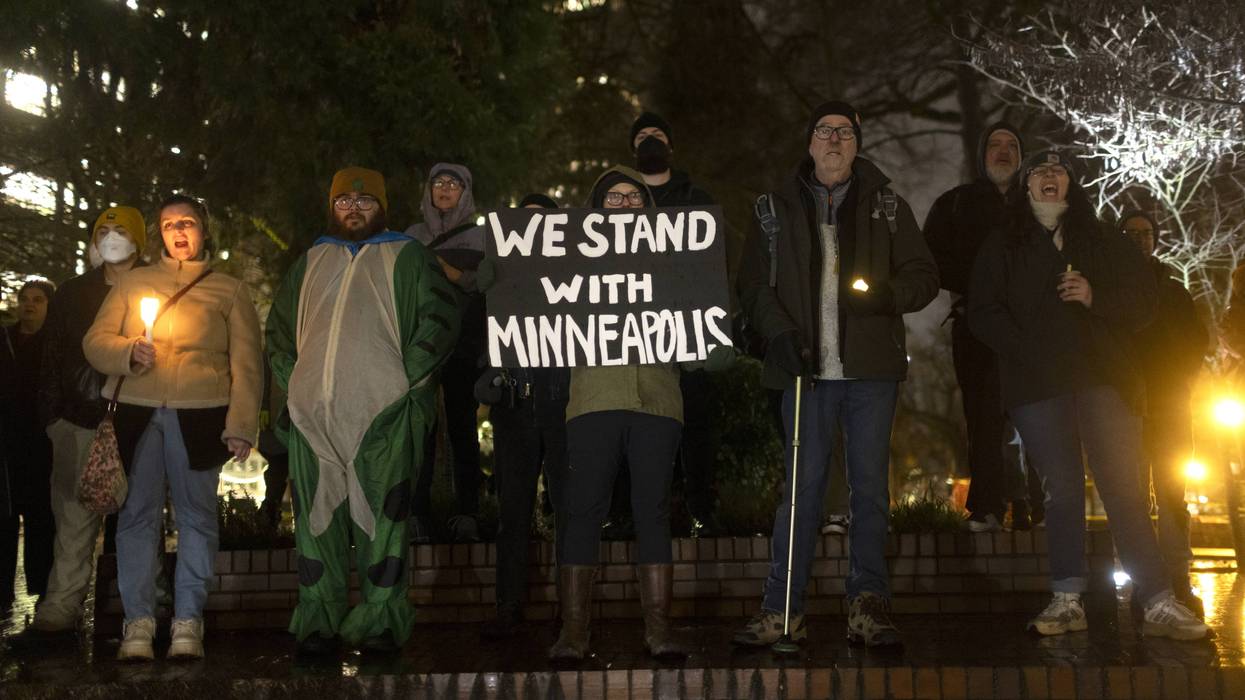
After Border Patrol agent Jesus Ochoa and Customs and Border Protection officer Raymundo Gutierrez were identified Sunday as the two masked federal officers who shot and killed ICU nurse Alex Pretti in Minneapolis on Jan. 24, immediate calls for their arrest and prosecution went out alongside demands for the heavy-handed operations ordered by the Trump administration to come to an immediate end.
ProPublica named Ochoa and Gutierrez, both from Texas but deployed for operations in Minnesota prior to the shooting, based on government documents the nonprofit news outlet obtained.
According to ProPublica:
Both men were assigned to Operation Metro Surge, an immigration enforcement dragnet launched in December that sent scores of armed and masked agents across the city.
CBP, which employs both men, has so far refused to release their names and has disclosed few other facts about the deadly incident, which came days after a different immigration agent shot and killed another Minneapolis protester, a 37-year-old mother of three named Renee Good.
Protests erupted in Minneapolis and nationwide following the homicides of Good and Pretti, both captured on video from various angles by bystanders for all the world to see. Sunday's reporting notes that both Ochoa and Gutierrez were seasoned officers with the Border Patrol, joining the agency in 2018 and 2014 respectively.
"The two CBP federal agents who murdered Alex Pretti have been on the job for 11 and 7 years, respectively," said Melanie D'Arrigo, executive director of the New York Health Campaign, in response to the reporting. "It’s not a lack of training issue, it’s a culture of violence and lawlessness issue. If you’re still voting to fund this, you’re condoning it."
Many lawmakers have argued that the killings of Pretti and Good—as well as the near-endless list of violence, intimidation, unconstitutional searches, and unlawful behavior of immigration enforcement officers under the direction of Homeland Security Secretary Kristi Noem—are attributable to a wave of new recruits and inadequate training. But critics have said that the argument provides a smokescreen for the Trump administration, which has encouraged such tactics as a matter of policy.
"ICE has much more than a training problem—it has a culture problem," said Rep. Pramila Jayapal (D-Wash.) during a news interview on Sunday. "The lack of accountability for their violence and lawless actions corrupts the entire agency, and our communities are forced to pay the consequences."
ICE has much more than a training problem – it has a culture problem.
The lack of accountability for their violence and lawless actions corrupts the entire agency, and our communities are forced to pay the consequences. pic.twitter.com/hO0eMQ04uh
— Pramila Jayapal (@PramilaJayapal) February 1, 2026
Social justice activists like Lance Cooper were among those demanding, now that the identities are known, for the arrest and prosecution of the two agents named in the reporting.
"These killers are being protected by the US government," said Lance, "and we must continue to demand their arrest and prosecution."
State and local law enforcement in Minnesota been allowed to participate in the investigation following Pretti's shooting, and both agents were quickly taken away from the scene and then out of the state.
While the Trump administration has withheld the names of the agents from public disclosure, the editors at ProPublica said in a note that the public has an overriding interest in learning more about the masked men behind the killing of Pretti.
"The policy of shielding officers’ identities, particularly after a public shooting, is a stark departure from standard law enforcement protocols, according to lawmakers, state attorneys general and former federal officials," the outlet stated. "Such secrecy, in our view, deprives the public of the most fundamental tool for accountability."