

SUBSCRIBE TO OUR FREE NEWSLETTER
Daily news & progressive opinion—funded by the people, not the corporations—delivered straight to your inbox.
5
#000000
#FFFFFF
To donate by check, phone, or other method, see our More Ways to Give page.
Daily news & progressive opinion—funded by the people, not the corporations—delivered straight to your inbox.

EWG Public Affairs: 202.667.6982 Alex Formuzis: alex@ewg.org or Sara Sciammacco: ssciammacco@ewg.org
Environmental Working Group has released the eighth edition of its Shopper's Guide to Pesticides in Produce with updated information on 45 popular fruits and vegetables and their total pesticide loads. EWG highlights the worst offenders with its new Dirty Dozen Plus(tm) list and the cleanest conventional produce with its list of the Clean Fifteen(tm).
"The explosive growth in market share for organic produce in recent years testifies to a simple fact that pesticide companies and the farmers who use their products just can't seem to grasp: people don't like to eat food contaminated by pesticides," said EWG president Ken Cook. "Our shopper's guide to pesticides in produce gives consumers easy, affordable ways to eat a diet rich in fruits and vegetables while avoiding most of the bug killers, fungicides and other chemicals in produce and other foods."
"This year's guide will also give new parents pause," Cook added. "Government scientists have found disturbing concentrations of pesticides in some baby foods. And the U.S. Department of Agriculture has found weed killers widespread in finished tap water. Environmentalists have had important successes in forcing pesticides that presented unacceptably high dietary risks off the market. The latest USDA tests show we have much more work to do."
EWG researchers analyzed annual pesticide residue tests conducted by the USDA and federal Food and Drug Administration between 2000 and 2010. The samples were first washed or peeled prior to being tested so the rankings reflect the amounts of the crop chemicals likely present on the food when is it eaten.
The USDA and FDA tests have produced hard evidence of widespread presence of pesticide residues on conventional crops. The most recent round of tests show that as late as 2010, 68 percent of food samples had detectable pesticide residues. EWG found striking differences between the number of pesticides and amount of pesticides detected on the Dirty Dozen Plus(tm)and Clean Fifteen(tm) foods.
Notable findings:
Some 98 percent of conventional apples have detectable levels of pesticides.
Domestic blueberries tested positive for 42 different pesticide residues.
Seventy-eight different pesticides were found on lettuce samples.
Every single nectarine USDA tested had measurable pesticide residues.
As a category, grapes have more types of pesticides than any other fruit, with 64 different chemicals.
Thirteen different pesticides were measured on a single sample each of celery and strawberries.
New to the Shopper's Guide: The Dirty Dozen Plus
For the past eight years, EWG has scrutinized pesticide testing data generated by scientists at USDA and FDA and has created its signature Dirty Dozen(tm) list of foods most commonly contaminated with pesticides. As well, we publish our Clean Fifteen(tm) list of the foods least likely to be pesticide-tainted.
This year we have expanded the Dirty Dozen(tm) with a Plus category to highlight two crops -- green beans and leafy greens, meaning, kale and collard greens - that did not meet traditional Dirty Dozen(tm) criteria but were commonly contaminated with highly toxic organophosphate insecticides. These insecticides are toxic to the nervous system and have been largely removed from agriculture over the past decade. But they are not banned and still show up on some food crops. For this reason, EWG lists these on the new Dirty Dozen Plus(tm) as foods to avoid or to buy organic.
"Organophosphate pesticides are of special concern since they are associated with neurodevelopmental effects in children," said EWG toxicologist Johanna Congleton. "Infants in particular should avoid exposure to these pesticides since they are more susceptible to the effects of chemical insult than adults."
The American Academy of Pediatrics advises parents to "minimize using foods in which chemical pesticides or herbicides were used by farmers."
Pesticides in Baby Food
For the first time since the inception of its pesticide testing program in 1991, USDA looked at pesticide residues on baby food. Department scientists analyzed about 190 samples each of prepared baby food consisting of green beans, pears and sweet potatoes.
Green beans prepared as baby food tested positive for five pesticides, among them, the organophosphate methamidiphos, which was found on 9.4 percent of samples, and the organophosphate acephate, on 7.8 percent of samples. EWG analyzed baby food samples in 1995 and found the two organophosphates in surprisingly similar concentrations.
Pears prepared as baby food showed significant and widespread contamination. Fully 92 percent of the pear samples tested positive for at least one pesticide residue, with 26 percent of samples containing 5 or more pesticides and 15 different pesticides on all samples. Disturbingly, the pesticide iprodione, which EPA has categorized as a probable human carcinogen, was detected on three baby food pear samples. Iprodione is not registered with the EPA for use on pears. Its presence on this popular baby food constitutes a violation of FDA regulations and the federal Food, Drug, and Cosmetic Act.
"Federal testing of pesticide residue in baby food was long overdue, as infants are especially vulnerable to toxic compounds," said Andrew Weil, MD, Founder and Director, Arizona Center for Integrative Medicine and a renowned medical expert on natural health and wellness. "Now that it has begun, the results are highly disturbing. It is bad enough that baby food contains pesticides at all; the fact that pears contain a likely human carcinogen is an outrage. Parents should purchase organic baby foods, or better yet, prepare their own by putting organic foods through a simple hand-turned food mill (search the internet for "baby food mill"). It is vital that an infant's developing brain and nervous system receive only uncontaminated, nutrient-dense foods."
Sweet potatoes sold as baby food, a Clean Fifteen(tm) crop, had virtually no detectable pesticide residues.
The extent of pesticide contamination document by USDA's baby food tests highlight the need for the department to accelerate testing of baby foods and for EPA to reduce further the organophosphate pesticide exposures allowed for Americans, especially infants.
Pesticides in Drinking water
In 2010 USDA analyzed samples from 12 community drinking water systems that use surface water such as reservoirs, lakes and rivers as their water sources. Tests of 284 samples taken after treatment detected 65 pesticides or their metabolites. The toxic herbicide atrazine or its metabolites were found in every single sample. The herbicides 2,4-D and metolachlor were detected in more than 70 percent of the samples. Six other pesticides were found in at least half the samples.
Clean Fifteen(tm)
The footprint of pesticide residues for those items placed on the Clean Fifteen(tm) looked much better.
The produce least likely to test positive for pesticides were asparagus, avocado, cabbage, grapefruit, watermelon, eggplants, pineapples, mushrooms, onions, frozen peas and sweet potatoes.
More than 90 percent of cabbage, asparagus, sweet peas, eggplant and sweet potato samples had one or fewer pesticides detected. Of the Clean Fifteen(tm) vegetables, no single sample had more than 5 different chemicals, and no single fruit sample from the Clean Fifteen(tm) had more than 5 types of pesticides detected.
The EWG's Shopper's Guide is not built on a complex assessment of pesticide risks but instead reflects the overall pesticide loads of common fruits and vegetables. This approach best captures the uncertainties of the risks of pesticide exposure. Since researchers are constantly developing new insights into how pesticides act on living organisms, no one can say that concentrations of pesticides assumed today to be safe are, in fact, harmless.
The Shopper's Guide aims to give consumers confidence that by following EWG's advice, they can buy foods with consistently lower overall levels of pesticide contamination.
The Environmental Working Group is a community 30 million strong, working to protect our environmental health by changing industry standards.
(202) 667-6982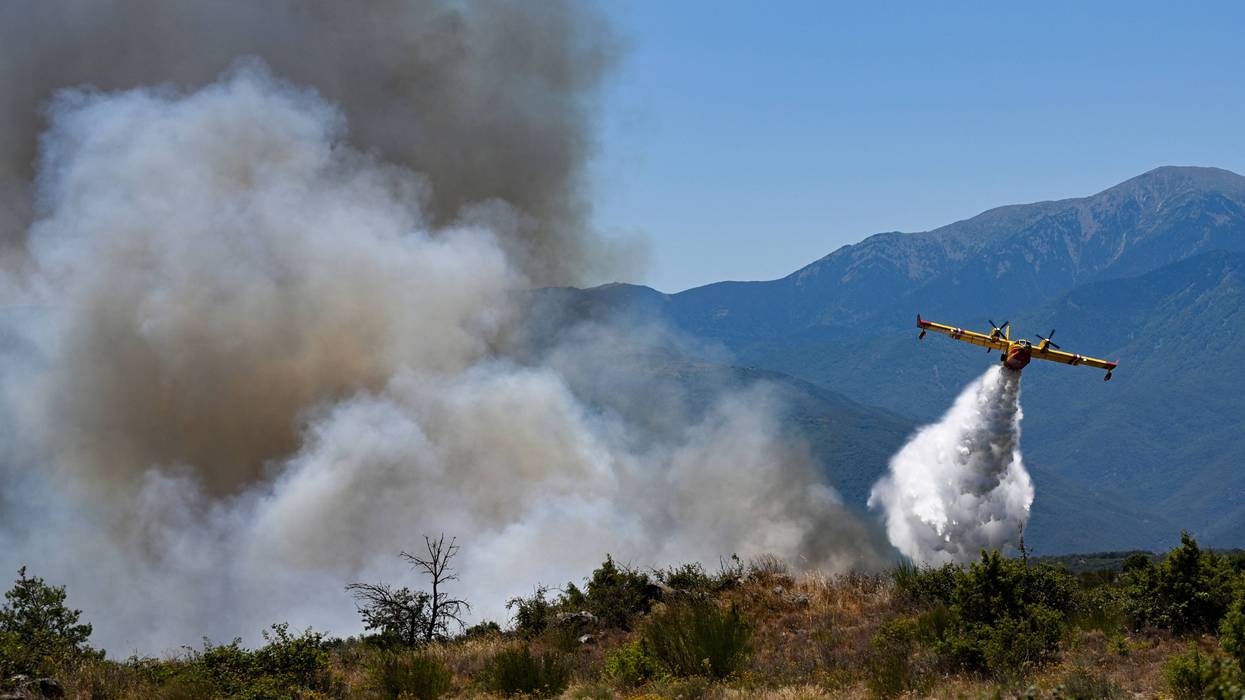
Blazes mobilized hundreds of firefighters over the weekend and scorched a total of 42,000 acres in Spain, France, and Portugal alone—an area two times the size of Manhattan.
On the heels of a deadly European heatwave, fierce fires erupted in Greece, Spain, Portugal, and France over the weekend, raising fears for a summer of extremes as the effects of the climate emergency become ever more apparent.
The blazes mobilized hundreds of firefighters and scorched a total of 42,000 acres as of Sunday in Spain, France, and Portugal alone—an area two times the size of Manhattan.
" Climate change is here, we are living the consequences and it is only the start of July," French fire service Colonel Eric Belgioino told the public, as Agence France-Presse reported.
Multiplication des #wildfire🔥(feux de forêt) ce dimanche en France.
Quatre foyers, dont trois hors de contrôle, sont désormais visibles simultanément depuis les satellites. À eux seuls, ils ont déjà parcouru l'équivalent d'environ 3.500 terrains de football. @zoom_earth pic.twitter.com/qpdrct7AmA
— Guillaume Jauseau (@GJauseau) July 5, 2026
One of the fires raging in the South of France forced organizers of the Tour de France to close the third stage of the race to the public on Monday, as Reuters reported.
The fire has consumed 6.18 square miles in Southern France and put two people in critical condition.
"An exceptional fire calls for exceptional measures for the tour," race director Christian Prudhomme said, according to Reuters.
As of Sunday, seven departments in France faced "very high risk” for fires, as temperatures were expected to reach highs of 100-104°F across the south, as Anadolu Agency reported.
🇪🇸 🔥 Firefighters tackle wildfires menacing Spanish tourist hotspot
Wildfires in Catalonia have burned over 2000 hectares of forest, prompting regional authorities to ask residents of 10 municipalities to stay at home, including in popular tourist hotspots such as the Platja… pic.twitter.com/Dal7mlAJlu
— AFP News Agency (@AFP) July 5, 2026
Across the border in Spain, a fire in Costa Brava burned through over 5,400 acres in a 48-hour period, according to AFP. The flames led to shelter-in-place or evacuation orders for nearly 50,000 people.
The Catalunya fire service said on Sunday that firefighters "worked tirelessly throughout the night to consolidate the perimeter of the La Bisbal d'Empordà forest fire, which is now stabilized."
A large wildfire near Vouzela in central Portugal spread overnight across three municipalities, burning over 2,400 hectares, injuring six people and forcing village evacuations, with nearly 1,000 firefighters and eight aircraft deployed to tackle the blaze https://t.co/GzfxgDSGiq pic.twitter.com/v5KgKj9IPt
— Reuters (@Reuters) July 3, 2026
Another blaze ignited in Portugal's central Vouzela area on Thursday.
It burned through 30,000 acres and required the work of 1,200 firefighters before it was partially contained as of Sunday.
🇬🇷🔥 Not only are Europeans dealing with deadly heat, there is also a fire threat.
Check out this video from an overnight fire in the Oreokastro area of northern Greece.
So far, 2 factories have been destroyed, and evacuations have been ordered near Thessaloniki.
Writer:…
— Mario Nawfal (@MarioNawfal) July 5, 2026
In Greece, two fires erupted on Saturday and Sunday.
The first, in the Oraiokastro suburb of the country's second-largest city of Thessaloniki, compelled evacuations and shelter-in-place orders when it overtook a recycling plant and released dangerous smoke into the air, The Associated Press reported.
“The smoke contains volatile organic compounds that irritate the eyes and throat, as well as carcinogenic substances such as benzene, dioxins, and furans,” Dimosthenis Sarigiannis, professor of environmental engineering at the Aristotle University of Thessaloniki, told ekathimerini.com.
The inferno also damaged multiple homes and businesses, Oraiokastro Mayor Pandelis Tsakiris told the country's state broadcaster.
The second blaze ignited on Sunday west of Athens, according to AP, and 210 firefighters worked hard to control it before the sun set and firefighting planes would be grounded.
The European fires follow a heatwave that scientists said would have been "virtually impossible" without climate change caused by the burning of fossil fuels, and spark concerns that the continent could see a devastating summer for fires.
French Interior Minister Laurent Nunez noted that the fire season had started one month early, according to AFP.
As fire Colonel Belgioino said: "The season is going to be long for the soldiers fighting fires. You have to help us."
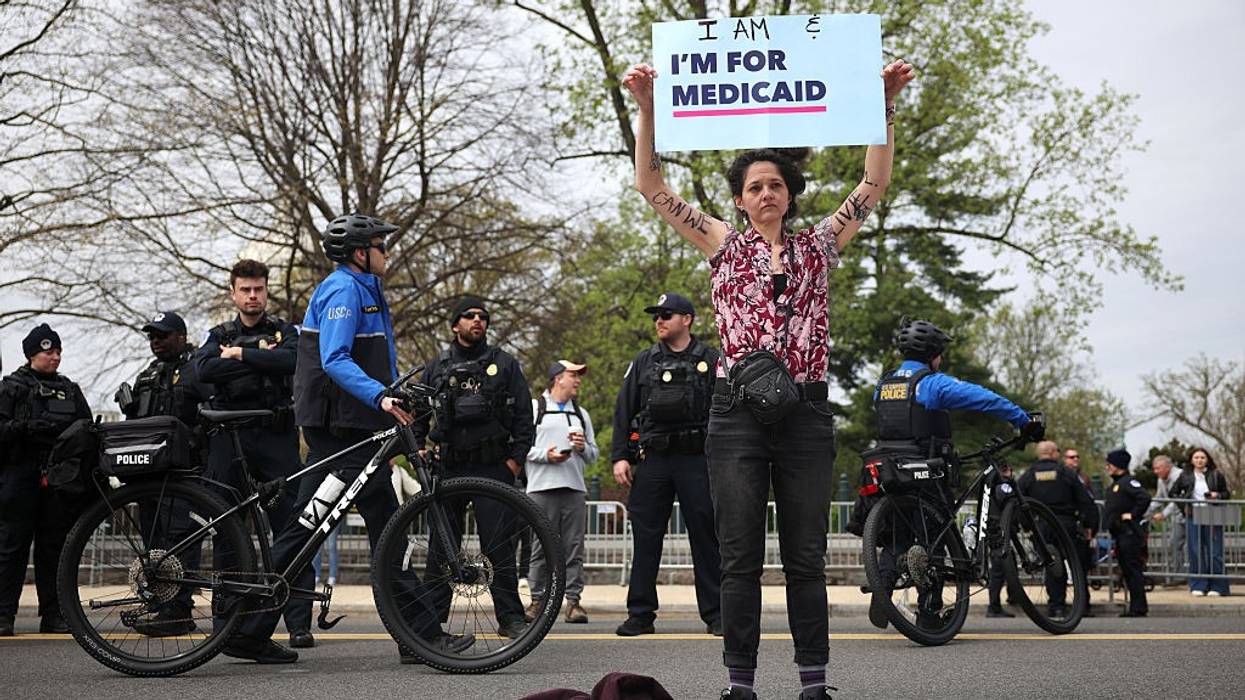
Reproductive healthcare advocates vowed to keep up the fight as conservative activists pressure Congress to make the funding ban permanent.
Planned Parenthood and other reproductive health clinics regained access to Medicaid funding on Saturday after a provision in the One Big Beautiful Bill Act defunding the organizations expired.
The provision depriving Planned Parenthood was touted as a major victory for the anti-abortion movement when the bill was signed on July 4, 2025, but, due to Senate rules, the defunding only lasted for one year, and Congress failed to renew it before their summer recess.
While this means that Planned Parenthood, Health Imperatives in Massachusetts, and Maine Family Planning can once again bill Medicaid for non-abortion related healthcare, it doesn't reverse the damage caused by a year-long lack of access to funds totaling more than $800 million per year for Planned Parenthood alone.
“Tens of thousands of patients have been denied access to services like cancer screenings and birth control and STI testing and treatment. These are things that just can’t be undone,” Nora Walsh-DeVries, vice president of political and legislative affairs at Planned Parenthood Action Fund, told The Hill.
"Patients have totally borne the cost of this politically motivated attack on care."
In a report published July 1, Planned Parenthood and Planned Parenthood Action Fund said that the defunding had led to the closure of almost 30 health centers, two-thirds of which were in rural areas, or locations that had a shortage of medical services or healthcare professionals. In addition, all of the closed centers were in "contraceptive deserts." Overall, the number of Medicaid visits to the organization decreased by 25% compared with the year before.
“By deliberately targeting Planned Parenthood, President [Donald] Trump and his allies in Congress worsened a public health crisis, making it harder for people to get the essential and lifesaving care they needed at their trusted provider," Alexis McGill Johnson, president and CEO of Planned Parenthood Federation of America and Planned Parenthood Action Fund, said in a statement.
Olivia Pennington, a spokesperson for Maine Family Planning, told NPR, "It's been devastating to see this defund and to see the impacts that it's had across the nation."
As Walsh-DeVries further told The Hill, “I think it’s just really clear that patients have totally borne the cost of this politically motivated attack on care."
Despite the restoration of funding, uncertainty lingers. Walsh-DeVries said that it wasn't clear how clinics could obtain the restored funds, and states can now block Medicaid funds to Planned Parenthood on their own, thanks to a Supreme Court ruling last year. To date, 13 states have blocked or tried to block funds.
What's more, conservative and anti-abortion advocates have expressed outrage at Congress' failure to extend the funding ban, and are determined to pressure it do so via a reconciliation bill.
"This failure must be corrected immediately. President Trump and Congress must act as fast as possible to restore and extend the defunding of Planned Parenthood and every organization that commits abortion," Lila Rose, founder and president of anti-abortion group Live Action, said in a statement.
However, 65% of Americans oppose congressional efforts to defund Planned Parenthood, according to polling by the organization, and it is unclear if Republicans as a whole have the political will to renew the ban ahead of the midterm elections. Planned Parenthood Action Fund is currently mobilizing to unseat House republicans who voted for the ban last year.
“We have to really continue to do the work that we’re doing to make this as politically toxic as possible,” Walsh-DeVries told Politico.
McGill Johnson affirmed: "Anti-abortion lawmakers are trying to make ‘defund’ permanent because Planned Parenthood health centers provide abortion care where it’s legal. They are willing to sacrifice the lives and health of people across the country if it gets them closer to their goal of banning abortion everywhere and shutting down Planned Parenthood."
She continued: "We’re in a fight for survival—not just for Planned Parenthood health centers, but for everyone to get high-quality, affordable healthcare from their trusted provider. And know this: Planned Parenthood will never stop fighting to ensure everyone can get the care they need.”

"How we confront the climate crisis will determine a lot about the next 250 years of American history, including if we make it that long," one climate advocate said. "The revolution we need today is the clean energy revolution."
The US reliance on and promotion of fossil fuels is interfering with its ability to celebrate its 250th birthday, as several July 4 events were canceled due to a dangerous, record-breaking heatwave in the Central and Eastern US that scientists say would have been "virtually impossible" without the climate emergency.
As millions of people sweltered under heat alerts, extreme heat and humidity led to the cancellation of both Washington, DC and Philadelphia's Independence Day parades. Nearly 30 other events in states including Alabama, Delaware, New Jersey, New York, Pennsylvania, Maryland, and Virginia were modified, postponed, or canceled, according to USA Today.
I'm just saying, it seems like a signwww.cbsnews.com/philadelphia...
[image or embed]
— Bill McKibben (@billmckibben.bsky.social) July 3, 2026 at 1:12 PM
"The US having to cancel major 4th of July celebrations because of extreme heat is almost too spot on as a metaphor for the country’s failure to combat global warming," Fossil Free Media director Jamie Henn told Common Dreams. "How we confront the climate crisis will determine a lot about the next 250 years of American history, including if we make it that long. The revolution we need today is the clean energy revolution so we can finally declare our independence from fossil fuels."
Happy Independence Day!🇺🇸🎆
A prolonged, dangerous heat wave will persist through the Independence Day weekend across the Ohio Valley, Midwest, and Mid-Atlantic. Numerous temperature records are expected. 🥵
Clusters of severe thunderstorms will move across parts of the… pic.twitter.com/hz4vSz40Z4
— National Weather Service (@NWS) July 4, 2026
Temperature records were tied or broken in 22 locations on Thursday and 17 on Friday, according to CNN, with DC breaking a 120-year record on both days with temperatures above 102°F.
The heat forced the temporary closure Friday afternoon of the Great American State Fair on the National Mall, and seven attendees required "advanced life support," probably due to heat exposure, according to CNN.
Matt Rein, the Democratic National Committee's influencer and creative partnerships director, reported from the state fair on Saturday that local emergency workers said guests were "dropping like flies" due to the heat.
This is the scene here at one of the cordoned off medical area inside a main tent.
They keep having to make more space as more people are brought in.
There is no AC. https://t.co/eVVpqwHiMJ pic.twitter.com/Rmyg4YW1r2
— Matt Rein (@MatthewARein) July 4, 2026
Meanwhile, one group who tried to draw attention to the climate emergency at a July 4 event was evicted for its efforts by the US Coast Guard, as the Times Union reported. The nonprofit Hudson River Sloop Clearwater had attempted to join Saturday's Sail4th 250 parade of tall ships to New York Harbor when its sailboat was removed by the guard. The Coast Guard later said it was due to banners the boat was displaying reading, "Save the Clean Water Act” and “Indigenous rights, racial justice, climate solutions,” despite the fact that the group had the event organizer's permission to participate.
A sailboat, the Hudson River Sloop Clearwater, was removed from the Sail4th 250 Parade of Ships for displaying banners about climate justice and clean water.
Source: ig/jackiemarieburton, ig/sloopclearwater pic.twitter.com/kJoS4RLgAQ
— Dr. Lucky Tran (@luckytran) July 4, 2026
The heat dome that has settled over the Central and Eastern US over the July 4 weekend is so dangerous in part because it includes high humidity along with high heat, with heat indexes of 105-115°F expected in some places. This corresponds with a Wet Bulb Global Temperature (WBGT)—a measurement that accounts for heat, humidity, and air flow—of 28-30°C, at which point it is dangerous for even healthy people to be physically active outdoors. According to World Weather Attribution, the current heatwave broke regional records for WBGT.
"It is still a relatively rare event even in today’s climate, that has warmed by 1.4°C due to the burning of fossil fuels. In a 1.4°C cooler climate, WBGTs as high as those forecast in early July 2026 would have been so extreme as to be virtually impossible," the group wrote on Friday.
Friederike Otto, a professor of climate science at Imperial College London, told CNN, “When a historic 4th of July celebration is disrupted, and World Cup matches are played in conditions that are unsafe for players and fans, it shouldn’t take another scientific study to wake people up."
Otto continued, "Climate change is here, it’s already impacting the things we enjoy in our everyday lives, and it will continue to get worse the longer we drag out the inevitable transition to net zero emissions.”
Climate scientist and communicator Katharine Hayhoe encouraged people to use this opportunity to talk about the climate emergency to their friends and family:
Heatwaves aren't new. But I'm a climate scientist, and I can tell you heatwaves like this are virtually impossible without fossil fuel pollution. Not only that, but when extreme weather hits, research shows that connecting it to climate change helps people understand why it matters. And you know who the most trusted people to do that are? Not scientists. You! Yes, people we know are the most effective messengers to have these conversations. So if you're worried about what's happening and how extreme heat puts us at risk—talk about it!
While the US is the world's leading historical emitter of greenhouse gas emissions, and its military is the No. 1 institutional climate polluter, the Trump administration in particular has taken steps to accelerate the climate emergency by increasing oil, gas, and coal production while hindering the development of renewable energy.
"Trump’s promotion of coal burning and cancellation of wind turbines make him the Benedict Arnold of America’s current struggle, not its George Washington."
Just two days before the nation's birthday, Energy Secretary and fracking CEO Chris Wright bragged on social media that the Trump administration would end subsidies for new wind and solar on July 4.
Climate scientist Rebekah Jones shot back: "During a record heatwave, no less. Fossil fuel industries have received $549 BILLION in direct subsidies, and $7 TRILLION in tax benefits. They average $30 billion per year in upfront taxpayer money. All of renewable energy recieved $400 million per year from 1994-2009."
Tennessee state Sen. Heidi Campbell (D-20) also called out the move: "Talk about 'slugs for salt’—it's 119 degree heat index in the Eastern US this week—these guys are all in on the rapture."
In a July 4 post, scholar Juan Cole argued that President Donald Trump's climate policies were tantamount to treason.
"Since 2018, some 13,000 Americans have died from heat," he said. "Trump’s promotion of coal burning and cancellation of wind turbines make him the Benedict Arnold of America’s current struggle, not its George Washington."
Cole pointed out that the current heatwave was part of a pattern of hotter summers in the nation's capital due to the climate emergency, noting that the last decade was its hottest on record.
He continued:
The bad news is that this is only the beginning. Summers in the capital are going to be more dangerous every decade unless we halt dangerous carbon emissions.
The average summer temperature in DC could be 97°F in the 2080s if we go on farting out CO2 at our current rate. Humidity will also increase, as the Atlantic heats up and puts more water vapor in the atmosphere. The ability of the atmosphere to hold water vapor increases 7% with every 1°C increase in temperature.
That combined with more frequent storms and sea-level rise opens up the possiblity that DC "will be unlivable in the summers within the lifetime of my younger readers," he wrote.
"Trump is helping climate change accomplish what British military might could not, putting in question the future of America in places like Washington, DC and Baltimore, at least in the summers," Cole said.