

SUBSCRIBE TO OUR FREE NEWSLETTER
Daily news & progressive opinion—funded by the people, not the corporations—delivered straight to your inbox.
5
#000000
#FFFFFF
To donate by check, phone, or other method, see our More Ways to Give page.
Daily news & progressive opinion—funded by the people, not the corporations—delivered straight to your inbox.
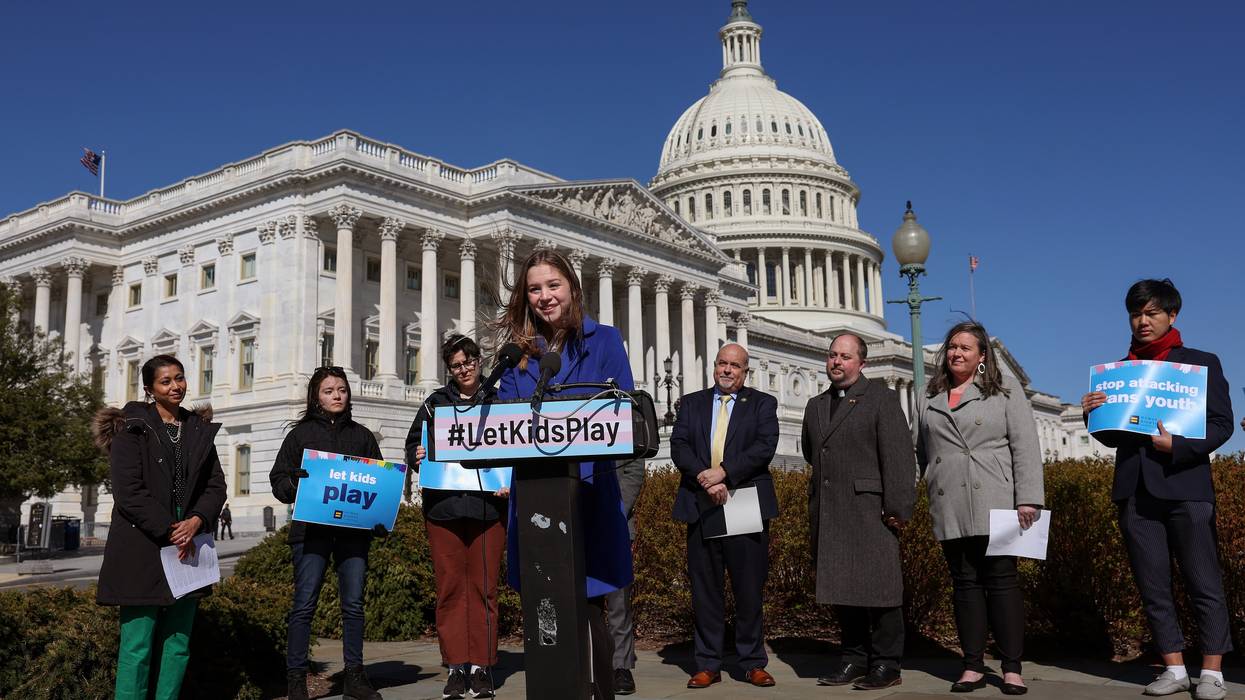
The decision codifies transphobic language and opens the potential for the sex testing of youth athletes.
In one of its final decisions of the 2025-26 term, the Supreme Court of the United States solidified its place in the onslaught of eradicating trans rights, in a ruling that revolved largely around whether state bans of transgender athletes violated Title IX and the Equal Protection clause of the 14th Amendment.
In response to the question placed before the court of whether states could implement bans on transgender athlete participation in girls’ and women’s sports, 6 of the 9 justices said, “Yes.”
Outside of patchy citations and contradicting interpretations of legal precedents, the rationale behind the majority opinion of the court, written by Justice Brett Kavanaugh, echoed three key premises in the “sports context.” First, female bodies are inherently physiologically different from male bodies, which map onto sex-based athletic advantages for males. Second, regardless of these differences, girls and women should have equal opportunities to boys and men. And third, because of these differences and because of equal guarantees between the sexes, “competitive fairness” and “safety” look different for the female category as compared with the male category. Consequently, the only way to ensure equal sporting opportunities for girls and women is to keep transgender girls and women, or “biological males,” out of the female category.
Anti-transgender advocates in the broader “save women’s sports” movement frequently draw from these rationales, but also ignore the underlying deeply problematic and troubling considerations. On an ethical level, this approach undermines inclusive efforts and further stigmatizes transgender individuals. On a public health level, this reasoning deprives an exceptionally vulnerable population from enjoying the social, mental, and physical benefits from physical activity that should be enjoyed by all. And on a pragmatic level, these declarations overlook the minimal number of out transgender youth, of which even fewer participate in high school level sports.
Notably, of all the documented issues in and across women’s sports, there is no evidence demonstrating that transgender athletes, in any way, contribute to these inequalities.
Beyond parroting this tired transphobic logic, the majority opinion also points to other sports governing bodies, such as the National Collegiate Athletic Association (NCAA) and the US Olympic and Paralympic Committee, who have “drawn a biological line” to ensure safe and fair competition by banning transgender athletes. What Justice Kavanaugh omits, however, is that both organizations abruptly changed their policies following President Donald Trump’s Executive Order No. 14201, rather than in response to any scientific evidence or domination of transgender athletes (in response to a Senate hearing question about how many transgender athletes compete in the NCAA, NCAA President Charlie Baker infamously responded that of the more than 500,000 athletes competing, he knew of “only 10”).
While this ruling itself does not necessarily come as a surprise to those who have followed along with the US’ steady rollback of transgender rights, perhaps the most shocking element of the SCOTUS’ majority opinion is the brazen use of transphobic and misogynistic language in their ruling. “Biological males” and “biological females,” which are used 64 and 31 times respectively in Justice Kavanaugh’s 29-page majority opinion, are not rooted in medical terminology. Instead, these are terms that have become popularized and mobilized by anti-transgender advocates to reinforce a binary model of sex difference. This type of sex segregation is premised on patriarchal beliefs of male athletic superiority and female athletic inferiority, and has historically led to harmful body policing, racial discrimination, and erasure of intersex persons.
There is also reference to an “ongoing medical and scientific debate” surrounding whether transgender athletes maintain athletic and performative advantages after transitioning. What is absent from this brief discussion of science, however, is the concrete evidence that has shown the abundant health disparities experienced by the transgender community, particularly transgender youth. In 2024, the US Centers for Disease Control and Prevention (CDC) reported that, compared with their cisgender counterparts, transgender youth are more likely to report violence, victimization, unstable housing, and suicidal thoughts and behaviors. Similarly, a 2024 study in Nature Human Behavior found that anti-transgender state laws, including transgender sport participation bans, directly increased incidents of suicide attempts among transgender and nonbinary youth by as much as 72%.
The (mis)direction of attention to abstract ideas of “competitive fairness” and unsettled science also disregards the rampant incompliance of institutions with Title IX. In 2023, Florida State University (FSU) agreed to add women’s lacrosse as a varsity sport after threats of a sexual discrimination lawsuit from its women’s club lacrosse team. The threat came on the heels of an 18-month USA TODAY investigation, which revealed that the university was egregiously out of Title IX compliance. FSU was far from the exception, however, as the investigation exposed how hundreds of colleges and universities manipulated their roster numbers for women’s sports to create a mirage of compliance. These Title IX transgressions emerged under the backdrop of several systemic issues in women’s sports, such as the decline in the number of women coaches for women’s sports, consistent underfunding, disproportionate rates of harassment and abuse experienced by girls and women, and media underrepresentation. Notably, of all the documented issues in and across women’s sports, there is no evidence demonstrating that transgender athletes, in any way, contribute to these inequalities.
Despite these relevant considerations, and as Justice Sonia Sotomayer wrote in her dissent, “to the Court, the facts do not matter, even though the consequences are serious.”
In addition to the immediate impact on transgender athletes, this decision prompts questions around how girls’ and women’s sports will now be policed to “catch” athletes who do not fit within normative assumptions or understandings of female bodies. International sports governing organizations, such as World Athletics and the International Olympic Committee, have recently paired bans on transgender athlete participation with implementations of sex testing via chromosome tests, which has long been established as a fraught, unethical, and discriminatory practice.
The impacts on youth and high school sports are, and will be, more pronounced. Organizations at these levels lack the same resources and financial capacities, meaning that, for high school athletic associations, sex testing would most likely involve some type of genital or physical examination. While these might be conducted by medical personnel (though the Larry Nassar sex abuse scandal is evidence that this does not guarantee safeguarding minors), depending on access or finances, these could also be conducted by coaches, other parents, or officials, which prompts further questions and justified concerns surrounding training, confidentiality, consent, and protections of minors. These practices not only impact transgender athletes, but all athletes, regardless of gender identity or, to borrow from Justice Kavanaugh, “biological sex.”
The ruling closes with a half-hearted remark that “no student-athlete on either side of the issue, whether a biological female or transgender, deserves to be ostracized or vilified.” What the SCOTUS fails to recognize, however, is that their ruling is predicated on the misguided vilification of transgender athletes, with impacts that will continue to ostracize transgender people in sports and broader society.

"We have entered a period when the legal recognition and legal protections for trans and intersex people are at an all-time low," said the Center for Constitutional Rights.
In a ruling that defenders of LGBTQ+ rights say clears the way for discrimination, the US Supreme Court upheld state laws banning transgender girls and women from participating on school and college athletic teams.
In a decision that will likely supercharge attacks on transgender people by red states and the Trump administration, the court said that state-level bans on transgender athletes did not violate either the 14th Amendment of the Constitution or Title IX, the federal law prohibiting sex discrimination in education.
The court's six conservatives ruled that Idaho and West Virginia did not violate the equal protection clause because the laws were made in the interest of athletic fairness.
"Biological males generally possess inherent physical advantages in sports," wrote Justice Brett Kavanaugh for the majority, describing it as a topic where there is still "medical and scientific uncertainty."
He dismissed equal protection claims from two athletes: 16-year-old shot put champion Becky Pepper-Jackson of West Virginia and 25-year-old Boise State student Lindsey Hecox, who failed to make her school's cross-country team because she was "too slow" but played in club-level sports.
The athletes argued that they took puberty-blocking medication that would have blunted their advantages, but Kavanaugh wrote that states were under no obligation to "grant individualized exemptions to specific athletes or subclasses."
The court ruled unanimously that West Virginia's state ban did not violate Title IX. But the court's three liberals disagreed on the question of equal protection.
Justice Sonia Sotomayor said that the scientific uncertainty surrounding the question was precisely why states should proceed with caution rather than enact categorical bans.
“In the end, to the court, the facts do not matter, even though the consequences are serious,” she wrote in her dissent.
She added that state bans will be harmful to trans people seeking friendship and community through sports. She said because of the court's decision, a state can deny young people "these experiences simply because it thinks they have an inherent athletic advantage, even if the facts show that they do not."
Sasha Buchert, senior attorney and director of the Non-Binary and Transgender Rights Project at Lambda Legal—which represented Pepper-Jackson—said the ruling was "deeply harmful for transgender women and girls who only asked for the ability to participate in sports with their peers."
"Countless studies have demonstrated the myriad benefits that come with participation in team sports," she added. "Now, one population, transgender youth and collegians, are targeted for specific and baseless discrimination."
The decision effectively legitimizes efforts in more than two dozen Republican-led states that have adopted bans on transgender athletes. However, Shannon Minter, the legal director of the National Center for LGBTQ Rights (NCLR), noted that the decision did not go as far as it could have, allowing other states to leave intact policies that let trans students participate.
"This is a disappointing decision, but also a narrow one that leaves the door open for the many states and schools that have adopted reasonable policies that protect both fairness and inclusion with respect to transgender students," Minter said. "Today’s limited decision means that states and schools across the country still have the power to make reasonable rules to ensure fairness without banning all transgender girls."
NCLR staff attorney Rachel Berg said that the ruling still "ignores clear discrimination and political attacks against transgender girls" and invites "invasive policing of young people's bodies."
"Blanket bans on transgender girls playing school sports invite anyone to call for a ‘gender check’ on any girl who wants to play sports if they think she is ‘too tall’ or ‘too strong,’” she warned.
Lambda Legal listed several cases in which young people in states with bans have been singled out and targeted with aggressive physical scrutiny by state officials:
In Florida, a 15-year-old junior varsity volleyball player was the subject of a police investigation after an anonymous accusation, prompting local officials to draft a 500-page report investigating her medical history, body weight, and anatomy. In Utah, a teenage basketball player was accused of being transgender by a member of the state board of education, leading to threats of violence against her and her family, and a teenager in Maine faced a similar attack from a state senator. In May, President Donald Trump similarly targeted a 16-year-old transgender girl for participating in a high school track meet. Under an Arizona ban, a cisgender male student was prohibited from participating on the boys’ team at his high school because of a clerical error that listed him as female on his original birth certificate.
Tuesday's decision comes amid an onslaught of other state-level legislation attacking transgender people, including bans on gender-affirming care for youth, bathroom bans, restrictions and invalidations of legal documents, and laws prohibiting schools from respecting students' preferred gender identities.
Karla Gonzales Garcia, the gender, sexuality, and identity director at Amnesty International USA, said the decision also "comes at a time of rising authoritarian practices under the Trump administration, which use gender and sexuality as a cultural battle for political gain."
The administration has threatened to investigate, sue, and strip funding from schools that accept trans athletes; attempted to throttle medical funding for hospitals that provide gender-affirming care; banned transgender people from the military; and pushed to force transgender women into men's prisons where they are at severe risk of sexual assault.
The Center for Constitutional Rights said that Tuesday's ruling "confirms what trans and intersex advocates have known for some time: we are in the Plessy v. Ferguson/Bowers v. Hardwick era of trans rights," referring to Supreme Court cases that upheld Jim Crow segregation and state bans on homosexuality.
"We have entered a period when the legal recognition and legal protections for trans and intersex people are at an all-time low," the group continued. "Anti-trans policymakers and activists have, through their actions and rhetoric, made their goal clear: to terrorize trans people and remove them from public life."
Several Democratic members of Congress expressed solidarity with the transgender community following the ruling.
"The Supreme Court’s ruling to allow states to ban trans kids from playing in sports is discriminatory and opens the door to incredibly invasive examinations of children to determine who can play on what team," said Rep. Pramila Jayapal (D-Wash.), whose adult daughter is trans. "This decision targets a tiny population of athletes and further emboldens Republicans’ anti-trans crusade."
Rep. Brittany Pettersen (D-Colo.) warned that the decision "hands Trump yet another weapon to strip protections and funding from schools across our nation," and said Republicans were "weaponizing our most vulnerable kids as pawns in a fight they did not choose."
Sen. Ed Markey (D-Mass.) said: "We will keep fighting. Discrimination and hate will not win."
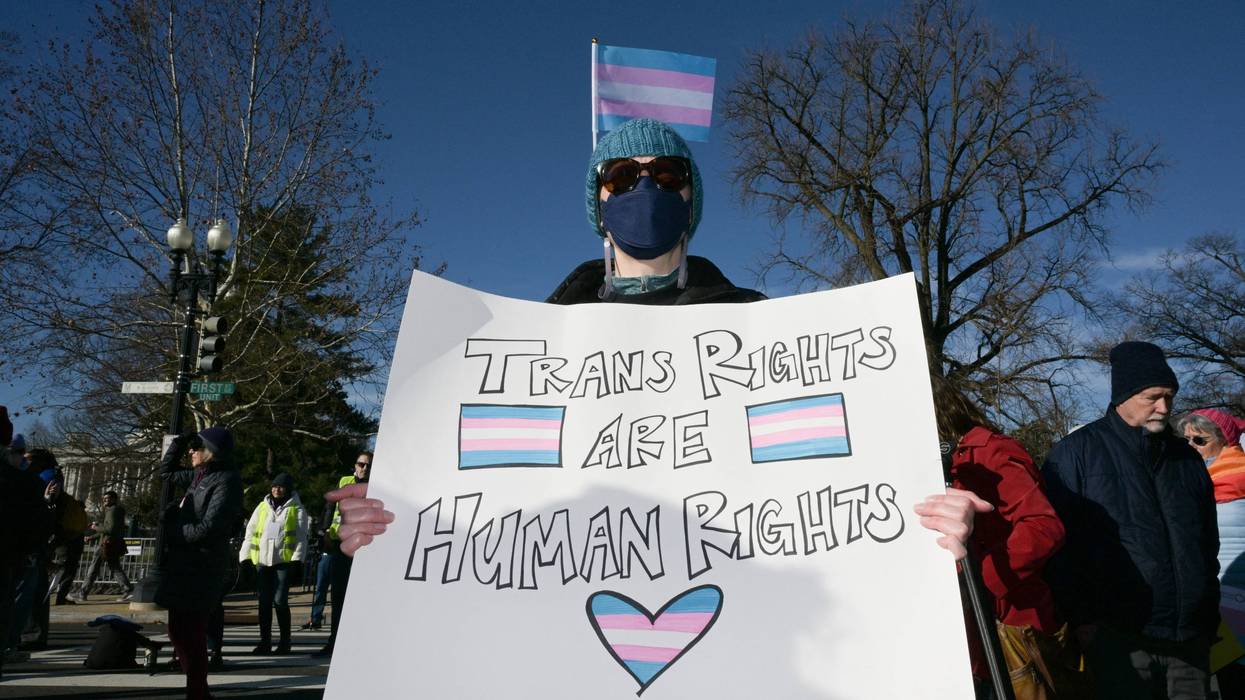
As the defense teams in Hecox and BPJ seek to police the bodies of transgender women and girls, all women and girls who don’t adhere to society’s rigid standard of femininity will feel the impact.
The power politicians have over women’s bodies is one of the oldest tools of control in American history. Throughout that history, the promise of protecting women has been the longtime excuse for excluding women from civic life and limiting our freedom. That history isn’t over.
The Supreme Court will soon decide Little v. Hecox and West Virginia v. BPJ—legal cases out of Idaho and West Virginia that will determine whether transgender athletes will be allowed to compete on women’s and girls’ school sports teams.
Idaho’s attorney general has argued that the bans ensure “women’s spaces and sports remain fair, safe, and dedicated to empowering female athletes.” Or, in other words, that we must allow politicians to pass these bans to “protect” women. Although the court’s decision is expected any day now, I have already made mine. Transgender sports bans are not and never have been about protecting women.
I have spent my career fighting to protect the bodily autonomy and legal protections of all women and girls. When people ask me, whether genuinely or in bad faith, why transgender women are unequivocally included in my organization’s work, I tell them the truth: Our fight is the same.
If you have been in the business of fighting for women’s rights and protections as long as I have, you know that women face many threats to their safety and autonomy, but not one of those threats includes transgender people.
The tactics being used to exclude transgender athletes are similar to those once used to keep women from casting a ballot, having a credit card, or getting the healthcare they need.
In 1776, a woman couldn’t own the clothes on her back, much less the home she built. Proponents of the practice said it was “intended for her protection.” One 100 years later, when women were shut out of the legal profession, the Supreme Court ruled in favor of such paternalism, even stating that “man is, or should be, woman’s protector.” And when women were later fighting for the right to abortion, we were told that our bodies are not our own.
It is no wonder, then, that the red herring of protecting women is being deployed in the Trump administration’s executive orders and in the Hecox and BPJ cases. It is the same excuse being used in a flurry of sports bans and anti-transgender bills that have been introduced and implemented around the country over the past six years. Ultimately, transgender sports bans fail to address the real threats women face in sports, like unfair pay and unequal access to training and facilities.
The great irony is that bans against transgender women in women’s sports, women’s bathrooms, and other areas of public life actually endanger all women. The Idaho law that the Hecox case is challenging, for example, requires women and girl student-athletes whose sex is disputed to undergo invasive sex testing, including physical examinations. Athletes in men’s sports are not subject to the same degradation.
For as long as women and girls have been allowed to participate in sports, their bodies have been scrutinized. From non-white women who do not conform to white beauty standards, to girls with short hair or baggy clothes, to those who are deemed too strong, women athletes who do not perform femininity as some deem correctly have been harassed, punished, and forced to face humiliating tests to prove their gender.
It is no accident that Project 2025 and its supporters are pushing both anti-transgender legislation and a rollback of women’s protections against sexual harassment and assault, their right to reproductive healthcare, and even their ability to vote. Today, as the defense teams in Hecox and BPJ seek to police the bodies of transgender women and girls, all women and girls who don’t adhere to society’s rigid standard of femininity will feel the impact.
If you have been in the business of fighting for women’s rights and protections as long as I have, you know that women face many threats to their safety and autonomy, but not one of those threats includes transgender people.
It remains to be seen if the Supreme Court’s decision in Hecox and BPJ will reaffirm what I already know to be true: We women, including transgender women, must be in the fight for liberation together.
"It is a document of unconditional surrender," one professor said of a compact "urging campus leaders to pledge support for President Trump's political agenda to help ensure access to federal research funds."
President Donald Trump's war on academia continued this week with letters pressuring the leaders of top universities across the United States to sign his "Compact for Academic Excellence in Higher Education" for priority access to federal funding and other "positive benefits."
The New York Times reported that "letters were sent on Wednesday to the University of Arizona, Brown University, Dartmouth College, Massachusetts Institute of Technology, the University of Pennsylvania, the University of Southern California, the University of Texas, Vanderbilt University, and the University of Virginia."
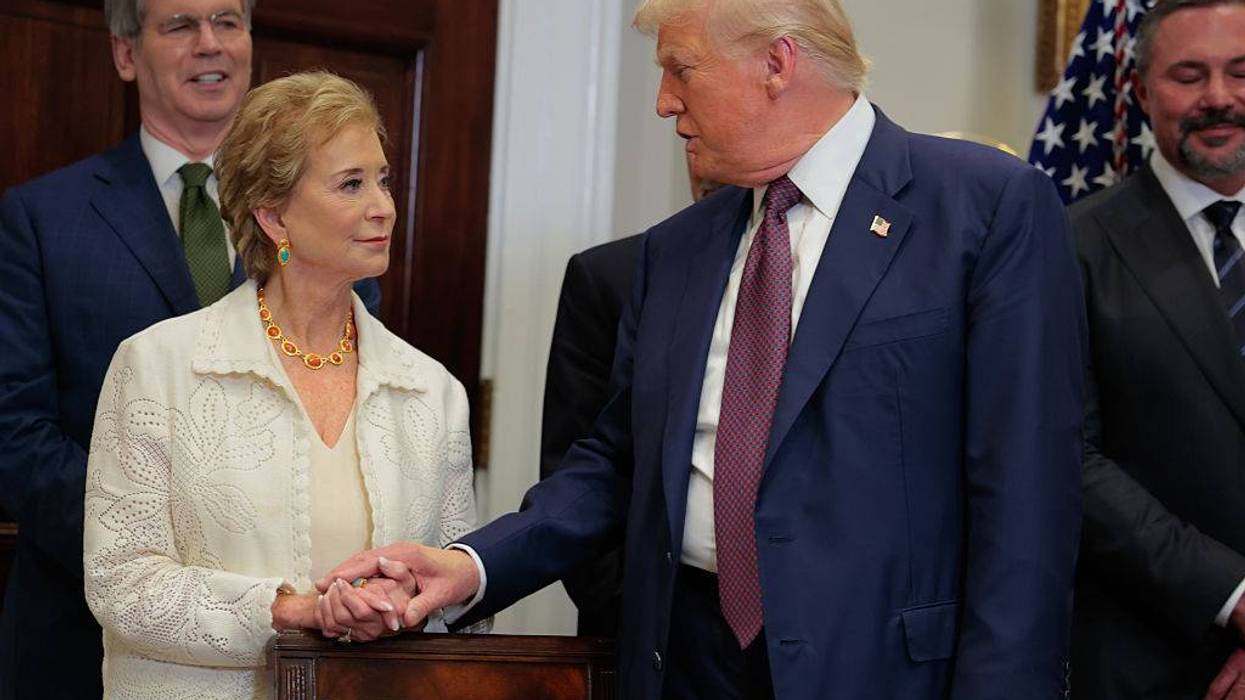
The letters "urging campus leaders to pledge support for President Trump's political agenda to help ensure access to federal research funds" were signed by Education Secretary Linda McMahon and two key White House officials, according to the Times.
The compact, published by the Washington Examiner, states that "no factor such as sex, ethnicity, race, nationality, political views, sexual orientation, gender identity, religious associations, or proxies for any of those factors shall be considered, explicitly or implicitly, in any decision related to undergraduate or graduate student admissions or financial support, with due exceptions for institutions that are solely or primarily comprised of students of a specific sex or religious denomination."
"Signatories commit themselves to revising governance structures as necessary to create such an environment, including but not limited to transforming or abolishing institutional units that purposefully punish, belittle, and even spark violence against conservative ideas," the 10-page document continues.
In an apparent response to campus protests against US complicity in Israel's ongoing genocide in the Gaza Strip, the compact adds:
Universities shall be responsible for ensuring that they do not knowingly: (1) permit actions by the university, university employees, university students, or individuals external to the university community to delay or disrupt class instruction or disrupt libraries or other traditional study locations; (2) allow demonstrators to heckle or accost individual students or groups of students; or (3) allow obstruction of access to parts of campus based on students’ race, ethnicity, nationality, or religion. Signatories commit to using lawful force if necessary to prevent these violations and to swift, serious, and consistent sanctions for those who commit them.
The compact also requires strict definitions of gender, including for sports, as well as limits on the enrollment of international students. Transgender athletes and foreign scholars have been key targets of the Trump administration.
While Kevin P. Eltife, chair of the University of Texas Board of Regents, told the Times that the school system "is honored" that its flagship in Austin was "selected by the Trump administration for potential funding advantages" and "we enthusiastically look forward to engaging with university officials and reviewing the compact immediately," the other eight schools declined to comment.
The president has already used federal funding to push for changes at major institutions, waging battles over admission policies, trans athletes, and campus protests against US government support for Israel's genocide in the Gaza Strip. Brown and UPenn are two of the schools that have already reached agreements with the administration, while others have fought back.
Critics were swift to condemn the Trump administration's effort as "blackmail," "extortion," and a "shakedown."
"This administration is extorting universities to sign away academic freedom—nothing meritocratic or 'small government' about it," said Salomé Viljoen, an assistant professor at the University of Michigan Law School, on social media.
The compact was decried as a "loyalty oath" and "political bribe." Damon Kiesow, the Knight chair for journalism innovation at the Missouri School of Journalism, said that "it is a document of unconditional surrender."
Edward Swaine, a professor at the George Washington University Law School, warned that "this steps boldly toward a scheme in which the federal government's role in relation to all colleges and universities, public and private, is akin to how state governments presently govern state institutions."
"Federalism aside, at what point does every school become a state actor?" he asked.
Despite Republican officials' long-standing opposition to student debt relief and tuition-free higher education, the compact also calls for a five-year tuition freeze and free tuition for students studying "hard sciences" if a school's endowment exceeds $2 million per undergraduate student.
Richard W. Painter, the chief White House ethics counsel under former President George W. Bush and now a University of Minnesota law professor, said Thursday that "the Trump administration is absolutely right that universities must freeze tuition."
"Price gouging of students and wasteful spending must stop," he added. "The administration's obsession over 'definition of gender' is a silly sideshow undermining higher ed reform."
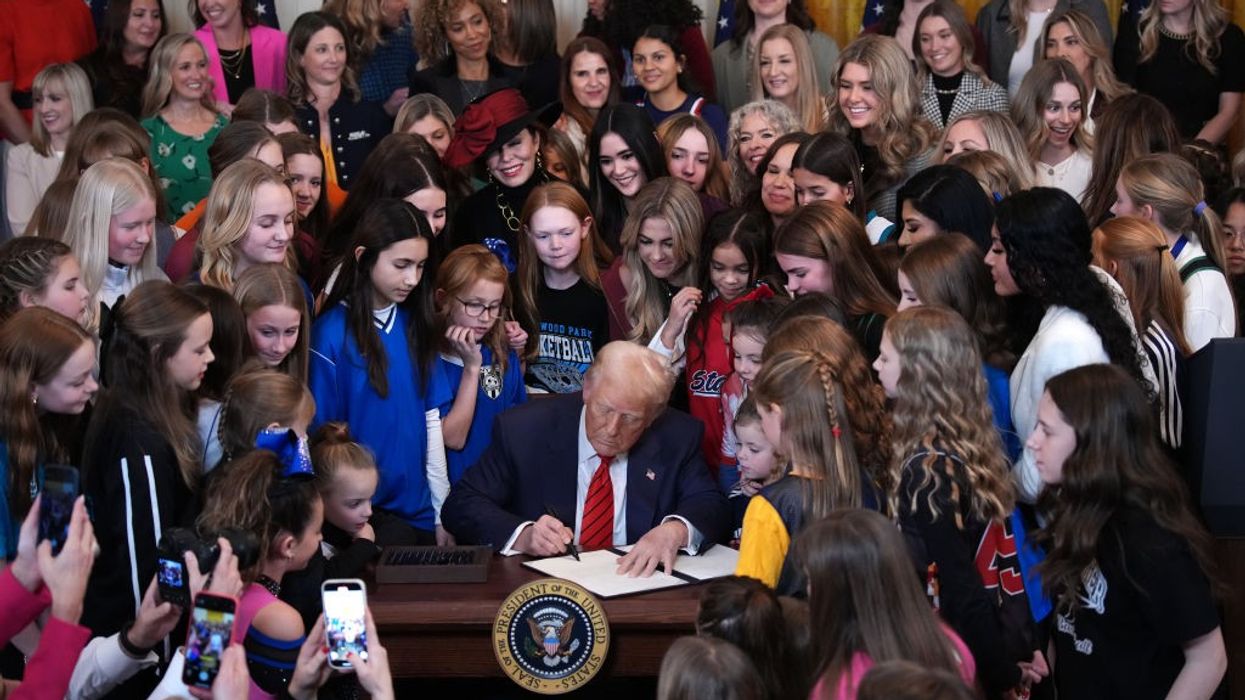
As political mayhem continues to unfold across the country and wider world, it is vital to remember that trans rights are human rights. Full stop.
During his recent speech to U.S. Congress, President Donald Trump turbocharged his manufactured moral panic targeting the trans community. “I signed an order making it the official policy of the United States government that there are only two genders: male and female,” he gloated. “I also signed an executive order to ban men from playing in women’s sports.” Banishing trans people from public life was just “common sense,” he declared.
Trump’s bilious spectacle was to be expected, but California Gov. Gavin Newsom only made things worse when, days later, he claimed during conversation with neofascist MAGA cretin Charlie Kirk that the participation of transgender athletes in women’s sports was “deeply unfair.” Newsom added that “the issue of fairness is completely legit. So, I completely align with you.” He concluded, “That’s easy to call out: the unfairness.”
As with so many things that gush from Trump’s gullet, his remarks were brutish bunk. But Newsom, who often tries to shield himself with the fact that he supported marriage equality as far back as 2004, also stood on shaky factual ground. Moreover, in his cringey conversation with Kirk, Gov. Newsom let slip the reason why both he and Trump are so willing to sacrifice the human rights of trans people: electoral politics. In public polling, Newsom said of Democrats, “We’re getting crushed on it.”
Political messaging should be based on shared values, not the short-term political whims of the opportunistic.
In this political environment, so much that passes for “common sense” argument is just evidence-free, anti-science vibes. But facts still matter, or at least they should. “To abandon facts is to abandon freedom,” writes historian Timothy Snyder in his pithy book On Tyranny.
When it comes to any supposed advantages that trans women athletes may have, the actual facts are quite different from the “common-sense” hype. The scientific evidence has repeatedly shown that trans women who have undergone hormone replacement therapy for more than a year actually do not have an advantage. One in-depth review of existing scientific literature on transgender athlete participation in competitive sport published between 2011 and 2021 found that “trans women who have undergone testosterone suppression have no clear biological advantages over cis women in elite sport.”
Another study found that transgender women athletes could actually be disadvantaged: “Compared with cisgender women,” the study found, “transgender women have decreased lung function, increasing their work in breathing.” Douglas Oberlin, an exercise physiologist who reviewed the scientific evidence related to transgender athletes’ performance, notes that “the limited information available does not suggest that trans men and trans women have much, if any, athletic advantage post-transition.” Oberlin also highlights that sport federations focus on average differences between cis and trans athletes but overlook performance variations within cis athletes.
Clearly, more research is needed before creating exclusionary policies. But given the small number of transgender athletes, Oberlin cautions that excluding them from sports solely due to concerns about inequality or injury risk “may be a solution in search of a problem.”
Back in the terfy, moral-panic fantasyland, such rational caution is nowhere to be found. In their own ways, Trump and Newsom treat trans people as if they were mere political chits to be swapped and bartered. This despite the fact that experts from the United Nations have asserted, “Categoric exclusions of trans and intersex women from women’s sports is a prima facie violation of human rights.” As sports writer Frankie de la Cretaz told The Nation, “Denying a group of people their basic human rights is morally reprehensible and illegal, regardless of the size of that community.”
Forming political values based on polling numbers is bereft of ethics. After all, interracial marriage didn’t surpass 50% approval in the United States until the mid-1990s. In 2005, 68% of those polled thought same-sex marriage should not be recognized as valid whereas today the very opposite is the case. Political messaging should be based on shared values, not the short-term political whims of the opportunistic.
Let’s be absolutely clear: The stakes are sky-high. The endgame of this bipartisan, anti-trans witch hunt is twofold. On the practical side, it enables the bracing possibility of raving randos demanding genital checks from the sidelines of youth sports events for kids who don’t conform to their strict versions of gender. (In West Virginia, Republicans have already voted through legislation green-lighting healthcare providers’ ability to perform genital checks on children without parental consent). But more broadly, the endgame is trans banishment. As journalist Dave Zirin put it, “The ‘pro-trans in everything but sports’ position can metastasize into… a broader anti-trans stance, the forcible erasure of transgender people from society.”
The push to expel trans women from elite sport, aided and abetted by Democrats like Gavin Newsom, is stoked by what Judith Butler calls “fascist passions.” As M. Gessen recently wrote, “The message, consistent and unrelenting, is that trans people are a threat to the nation. The subtext is that we are not of this nation.”
Fortunately, despite Trump and Newsom’s craven political opportunism, not all elected officials are singing from their grim hymnal. Democrats in the U.S. Senate recently scuppered a Republican bill that would have banned transgender athletes from competing in women’s sports. In Montana, elected officials went further, with more than two dozen Republicans flipping the Trumpain script and voting against a slew of anti-trans bills.
As political mayhem continues to unfold across the country and wider world, it is vital to remember that trans rights are human rights. Full stop. One day a thriving trans community will be as normalized as interracial or same-sex marriage. But this won’t happen automatically. It’s time to stand up. This battle is far from over.
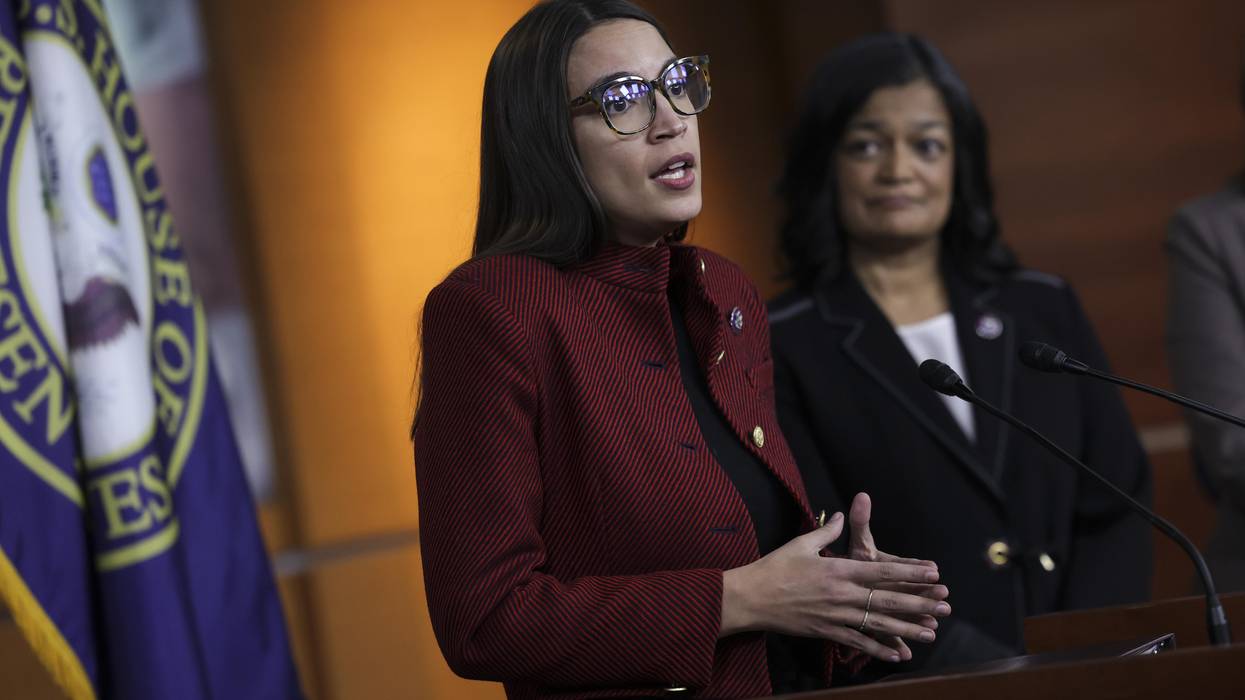
"Los Angeles is on fire right now, and this is the number one priority this majority has," said the congresswoman.
While Republicans claimed a bill restricting transgender girls' participation in school sports was aimed at protecting "our culture and civilization" on Tuesday, U.S. Rep. Alexandria Ocasio-Cortez said the legislation benefits the corporate class as it distracts from true life-threatening emergencies faced by communities across the country.
"Thank you for your concern about women for the first time that I've seen," said the New York Democrat on the House floor, noting that Republicans have consistently voted against the Violence Against Women Act and backed abortion bans that have stripped women of the ability to control their own bodies proven deadly.
But contrary to the GOP's claims that barring transgender girls and women from playing on sports teams that align with their gender will protect girls from assault, Ocasio-Cortez suggested, the biggest beneficiaries of the legislation include corporate executives whose companies do far more harm to American families than transgender athletes.
"I know who loves this bill," said the congresswoman. "Yes, bigoted folks love this bill. Assaulters love this bill. But also, CEOs love this bill. Because Los Angeles is on fire right now, and this is the number one priority this majority has."
The bill passed 218-206, with the entire Republican caucus supporting it and all but two Democrats voting no. If the legislation is signed into law, schools that receive federal funding would be barred from allowing transgender girls from playing on girls' sports teams.
Republicans have poured $111 million on political ads regarding the issue in the past year, as communities in the Southeast have suffered catastrophic hurricane damage and homelessness has soared by 18%.
Rep. Suzanne Bonamici (D-Ore.) agreed with Ocasio-Cortez's comments about the distraction caused by the transgender sports bill.
"Republicans fearmonger about the trans community to divert attention from the fact they have no real solutions to help everyday Americans," said Bonamici. "Transgender students, like all students, they deserve the same opportunity as their peers to learn teamwork, to find belonging and to grow into well-rounded adults through sports."
Ocasio-Cortez added that the bill, which lacks an enforcement mechanism, would open the door to "genital examinations" of student athletes as it would force schools to confirm the sex assigned at birth of each member of a school sports team.
"What this also opens the door for is for women to try to perform a very specific kind of femininity for the very kind of men who are drafting this bill, and to open up questioning of who is a woman because of how we look, how we present ourselves, and yes, what we choose to do with our bodies," said Ocasio-Cortez.
The so-called Protection of Women and Girls in Sports Act was the subject of a letter signed by more than 400 civil society groups on Monday, who urged members of Congress to reject the "discriminatory proposal."
"Although the authors of the legislation represent themselves as serving the interests of cisgender girls and women, this legislation does not address the longstanding barriers all girls and women have faced in their pursuit of athletics," said the groups, led by the Leadership Conference on Civil and Human Rights. "We firmly believe that an attack on transgender youth is an attack on civil rights."
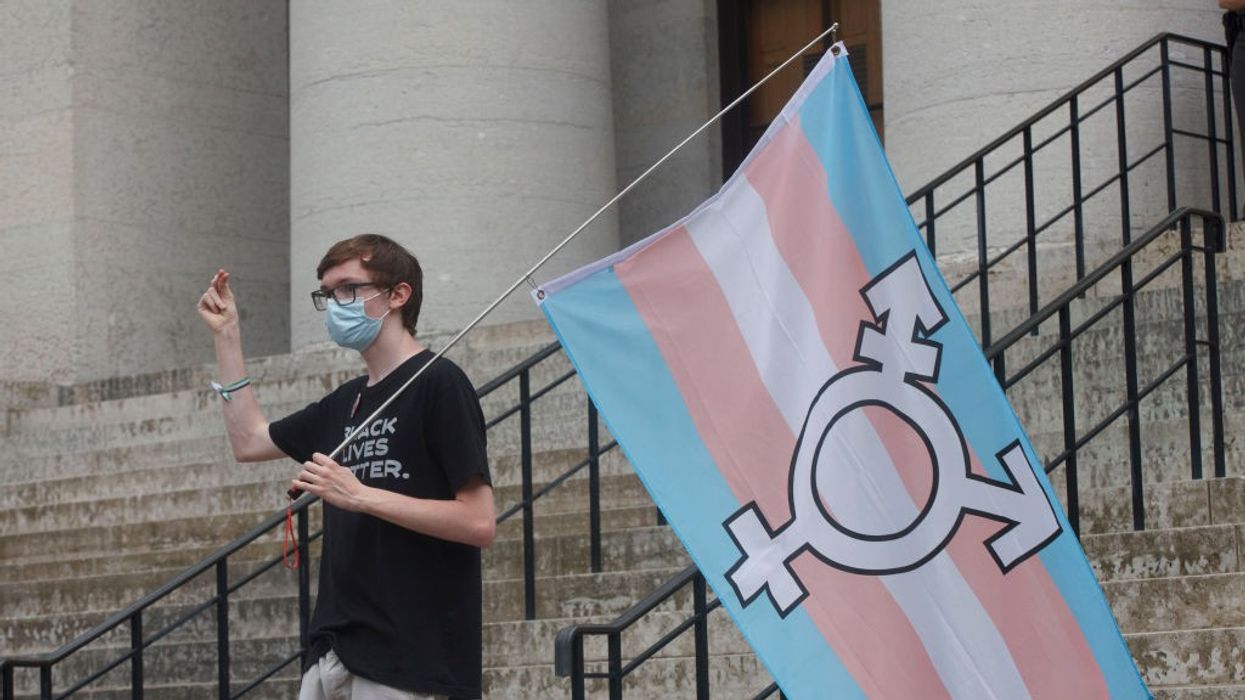
"To make matters worse, Ohio is now considering adopting sweeping new rules that would restrict the care that Ohio providers can provide to all transgender patients of all ages," one group noted.
In another blow to LGBTQ+ rights, Republicans in the Ohio House of Representatives voted Wednesday to overturn GOP Gov. Mike DeWine's recent veto of legislation that would ban gender-affirming healthcare for transgender youth and prohibit them from playing on school sports teams that match their identity.
While announcing his veto of House Bill 68 last month, DeWine—who spoke with families that would be affected by the bill—said, "Many parents have told me that their child would not have survived, would be dead today, if they had not received the treatment they received from one of Ohio's children's hospitals."
Rights groups and impacted families similarly highlighted the stakes after the Ohio House's 65-28 vote on Wednesday, which is expected to be followed by a vote in the state Senate on January 24.
As The Columbus Dispatch reported:
Betty Elswick of Marysville traveled to Columbus on Wednesday to protest the vote with her 16-year-old son, Parker, who has been receiving hormone therapy for four months. Elswick said the family will likely leave Ohio if House Bill 68 becomes law so Parker can access the healthcare he needs.
"If this gets passed through, it's going to kill kids," Parker Elswick said.
"We are extremely disappointed that the Ohio House continued their crusade against transgender youth and their families by returning early for an emergency session to override the governor's veto on H.B. 68," declared the ACLU of Ohio. "This state-sponsored vendetta against some of Ohio's most vulnerable young people is beyond cruel."
"The ACLU of Ohio stands in solidarity with all transgender youth and their families," the organization stressed. "This measure may force families to leave the state, disrupting communities and other deep ties to Ohio's history and economy."
The ACLU of Ohio also noted Wednesday that "to make matters worse, Ohio is now considering adopting sweeping new rules that would restrict the care that Ohio providers can provide to all transgender patients of all ages."
"These proposed restrictions, if finalized, would make Ohio the most restrictive state in the country with respect to evidence-based healthcare, imposing disastrous burdens on providers untethered from any medical guidelines," the group warned. "Ohioans do not want government officials involved in private medical decisions, these matters should be reserved for parents, children, and doctors."
While DeWine won widespread praise for his veto, "late Friday, the governor announced a new executive order and a set of rules from the state's health department that could threaten access to gender-affirming care across the state, even for trans adults," MSNBC columnist Katelyn Burns, the first openly transgender Capitol Hill reporter, explained Wednesday.
"Trans people used to die from secretive, underground bottom surgeries, and health issues frequently popped up among those who got black-market hormones with self-prescribed dosages," Burns noted. "We must avoid returning to a world where trans people are forced to turn to dark-market providers for their lifesaving medical needs, and that means we must vigorously and vocally oppose DeWine's onerous government overreach into the private lives of trans people. The quality of transition care depends on it."
In addition to battling over gender-affirming healthcare and sports teams, Ohio Republicans are considering House Bill 183, which would prevent trans students at public K-12 schools and universities from using bathrooms and locker rooms that align with their identity.
During an Ohio House Higher Education Committee hearing for the bathroom bill on Wednesday, one of the sponsors, Rep. Beth Lear (R-61), used a Bible verse to justify the bill and suggested supporters of trans students should be executed.
"If I had a child who thought he was a bird, am I going to take him to a doctor who tells him the best thing to do is to let him explore being a bird?" Lear also said, according to The Enquirer. "And oh, by the way, there's a five-story building next door—why don't you jump off and see if you can fly?"
Meanwhile, Planned Parenthood Advocates of Ohio argued Wednesday that "trans people deserve equal accommodations. Going to the bathroom is a normal bodily function and trans people should be able to do so in the bathroom that corresponds with their gender identity."
"Make no mistake—bathroom bills are part of a larger dehumanization campaign against the trans community," the group added. "There are so many other initiatives the Legislature could be focused on instead of perpetuating unnecessary surveillance and harm to the trans community."
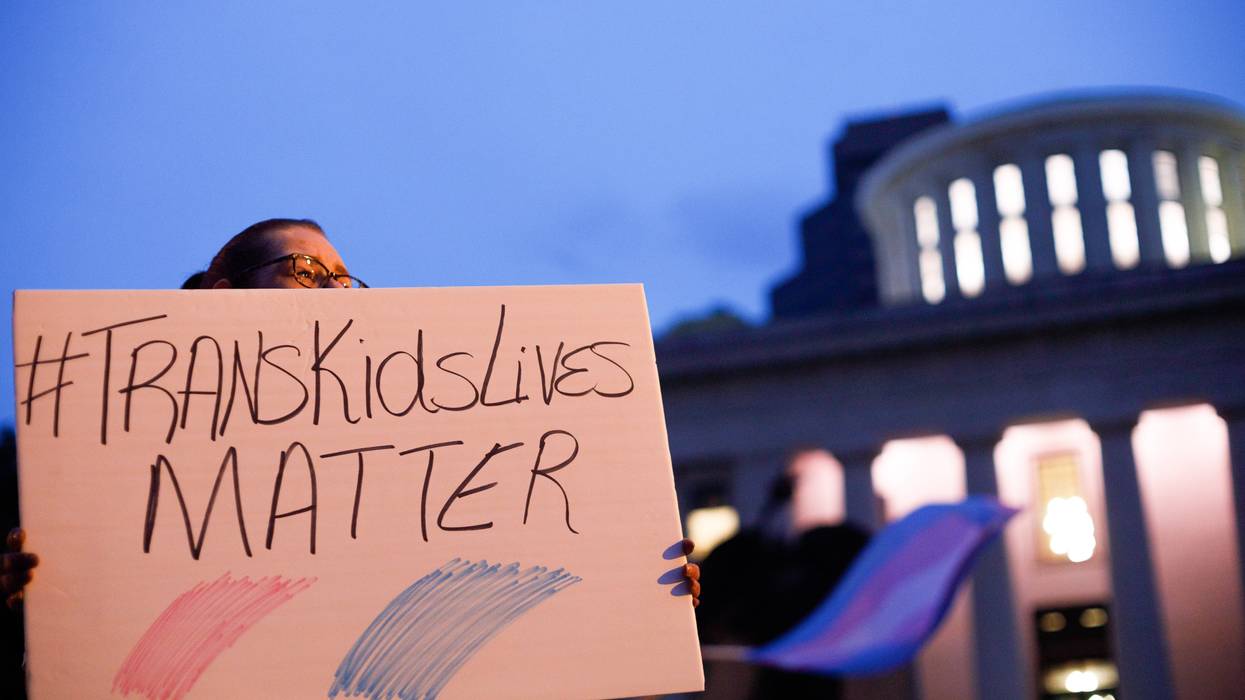
"Thank you to Gov. DeWine for listening to the people of his state and making the right decision for young trans Ohioans," said one advocate.
LGBTQ+ rights advocates on Friday praised Republican Ohio Gov. Mike DeWine for vetoing a bill that would ban gender-affirming healthcare for transgender youth and bar them from participating in school sports teams that match their identity.
"Ohio families don't want politicians meddling in decisions that should be between parents, their kids, and their doctors," said Human Rights Campaign president Kelley Robinson in a statement.
"Instead, parents, schools, and doctors should all do everything they can to make all youth, including transgender youth, feel loved and accepted, and politicians should not be making it harder for them to do so," she added. "Thank you to Gov. DeWine for listening to the people of his state and making the right decision for young trans Ohioans."
Thanking DeWine on social media, ACLU of Ohio executive director J. Bennett Guess stressed that "lives will be saved because of this critically important veto!"
Also welcoming the veto, the Ohio Chapter of the National Association of Social Workerssaid: "This is the result of advocacy of trans folks and their families, providers, and advocates. Thank you all for taking action. Our advocacy action steps continue. Now we need to contact our Ohio legislators to urge them not to overturn the veto."
Some Republican state lawmakers expressed disappointment with the governor's decision and teased an override effort. The Associated Press reported Friday that "GOP lawmakers hold enough seats to override DeWine's veto, but if or when they would do so was not immediately clear. Both within and between chambers, Republican legislators have not been in lockstep this year."
Several GOP-dominated states have recently moved to restrict gender-affirming care, especially for minors. In 2021, then-Republican Arkansas Gov. Asa Hutchinson vetoed a healthcare ban targeting youth. State lawmakers overrode his veto, but a federal judge struck down the law in June. Earlier this week, another judge blocked a similar law in Idaho.
As for athletics, two dozen states have enacted laws or regulations preventing students from participating in sports consistent with their gender identity, often targeting trans girls, according to the Movement Advancement Project. Some of those bans are currently blocked—including one in Utah, where Republican Gov. Spencer Cox vetoed the bill last year but state lawmakers swiftly overrode the veto. Cox notably signed a ban on gender-affirming care for youth earlier this year.
After the Ohio Legislature passed House Bill 68 earlier this month, Nick Lashutka, president and CEO of the Ohio Children's Hospital Association, pointed out that "we do not perform any surgeries on minors for the condition of gender dysphoria."
"If this bill becomes law," he warned, "it will be devastating to kids and their families who are already at their most vulnerable and will place an insurmountable barrier between patients and their medical professionals for often lifesaving care."
DeWine, who visited children's hospitals and spoke with families before announcing the veto, echoed medical professionals on Friday. As The Washington Post reported:
"This bill would impact a very small number of Ohio's children. But for those children who face gender dysphoria, the consequences of this bill could not be more profound. Ultimately I believe this is about protecting human life," DeWine said Friday during a news conference announcing the decision. "Many parents have told me that their child would not have survived, would be dead today, if they had not received the treatment they received from one of Ohio's children's hospitals."
"These are gut-wrenching decisions that should be made by parents and should be informed by teams of doctors who are advising them," DeWine continued. "Were I to sign House Bill 68, or were House Bill 68 to become law, Ohio would be saying that the state, that the government, knows better what is medically best for a child than the two people who love that child the most: the parents."
The Columbus Dispatch noted that DeWine "said his administration will draft rules to ban surgery for patients under 18, collect data on transgender medical care for adults and children, and restrict pop-up clinics that don't provide adequate mental health counseling."
While welcoming the veto as "crucial" and "extraordinary," trans activist and content creator Erin Reed also highlighted the caveats, saying that "the most concerning aspect of Gov. DeWine's announcement was the potential for increased scrutiny of transgender adults in Ohio."

While pushing state legislators to "do the right thing," said one campaigner, "we remain clear-eyed that families should take steps to prepare if anti-LGBTQ+ legislation is enacted."
LGBTQ+ rights advocates on Wednesday celebrated after Democratic North Carolina Gov. Roy Cooper vetoed a trio of discriminatory bills while also warning that Republican state legislators could ultimately force them through.
Cooper has vetoed dozens of bills, but thanks to Democrat-turned-Republican state Rep. Tricia Cotham (112), the GOP has a three-fifths majority in both chambers of the North Carolina General Assembly (NCGA), enabling lawmakers to override the governor.
"For campaign purposes only, Republicans are serving up a triple threat of political culture wars using government to invade the rights and responsibilities of parents and doctors, hurting vulnerable children, and damaging our state's reputation and economy like they did with the harmful bathroom bill," Cooper said in a statement confirming his three widely anticipated vetoes.
"We don't need politicians inflaming their political culture wars by making broad, uninformed decisions about an extremely small number of vulnerable children that are already handled by a robust system that relies on parents, schools, and sports organizations," he said of House Bill 574, which would bar transgender youth from participating in althetic teams that align with their gender identity.
"This slate of anti-LGBTQ+ legislation is unacceptable—and we're grateful that Gov. Cooper made the right choice by vetoing."
The governor also vetoed House Bill 808, which would ban gender-affirming care for minors. He asserted that "a doctor's office is no place for politicians, and North Carolina should continue to let parents and medical professionals make decisions about the best way to offer gender care for their children. Ordering doctors to stop following approved medical protocols sets a troubling precedent and is dangerous for vulnerable youth and their mental health."
The American Medical Association, the American Psychiatric Association, the American Academy of Pediatrics, and at least hundreds of medical professionals across North Carolina support gender-affirming care for minors.
Cooper's third target, Senate Bill 49, is a "Don't Say Gay" measure that he argued would "scare teachers into silence by injecting fear and uncertainty into classrooms," and hamper "the important and sometimes lifesaving role of educators as trusted advisers when students have nowhere else to turn."
"The rights of parents are well established in state law," Cooper said, "so instead of burdening schools with their political culture wars, legislators should help them with better teacher pay and more investments in students."
Kendra R. Johnson, executive director of Equality North Carolina, said that "this slate of anti-LGBTQ+ legislation is unacceptable—and we're grateful that Gov. Cooper made the right choice by vetoing. Now we implore the NCGA to do the right thing and recognize that this entire package of bills is dangerous, cruel, and deeply unpopular."
"These bills would tarnish North Carolina's reputation as an inclusive and welcoming place to live, work, and visit—and they would cause immense damage to transgender and queer youth, who already experience significant disparities," Johnson continued. "Anti-LGBTQ+ attacks have no place in North Carolina and the vetoes must be sustained."
Campaign for Southern Equality executive director Rev. Jasmine Beach-Ferrara emphasized that "even as we will advocate tirelessly for the NCGA to do the right thing by sustaining Gov. Cooper’s veto, we remain clear-eyed that families should take steps to prepare if anti-LGBTQ+ legislation is enacted.
"Our team is at the ready to support families through our Southern Trans Youth Emergency Project to ensure that North Carolina youth have uninterrupted access to the healthcare they need and deserve," Beach-Ferrara added. "Each of these bills is flatly discriminatory and we are confident they will ultimately be struck down. We want LGBTQ+ youth across the state to know we are with them every step of the way and will never stop fighting for their equality."
North Carolina is far from the only state where the LGBTQ+ community—particularly young people—is facing such attacks.
Noting the hundreds of bills that GOP state lawmakers are pushing across the country, Liz Barber, senior policy counsel at the ACLU of North Carolina, said Wednesday that "legislators are using their power to bully an already vulnerable community, and Gov. Cooper has taken an important step by vetoing these bills."
"Trans youth deserve to have the same rights as their cisgender peers," Barber declared, stressing the need to continue to stand up for them.
According to the ACLU's tracker, during this year's legislative session, 77 of 491 anti-LGBTQ+ proposals have passed into law in 21 states, while 202 bills have been defeated, for now.
Such bills are expected to continue to come up in the 2024 Republican presidential primary race, given the positions of former President Donald Trump and GOP Florida Gov. Ron DeSantis. While there are several other candidates already in the contest, Trump continues to dominate polls, followed at a distance by DeSantis.

"I think there is intent from the Biden administration to protect trans athletes," said a Montana lawmaker, "but you can't reconcile that intent with the fact that this policy opens the potential pathway for discrimination."
Both the Biden administration and Republicans in the U.S. House of Representatives are facing criticism this week for proposals related to restricting transgender athletes from participating in sports teams and events that align with their gender identity.
While the House GOP's bill is explicitly designed to exclude trans women and girls, the Biden administration's pending rule aims to "provide needed clarity, in response to questions from stakeholders, on how recipients can ensure that students have equal opportunity to participate on male and female athletic teams as required by Title IX."
Title IX is a 1972 federal law prohibiting sex-based discrimination in education programs and activities that receive federal funding.
As a U.S. Department of Education fact sheet on the administration's proposal details:
Under the proposed regulation, schools would not be permitted to adopt or apply a one-size-fits-all policy that categorically bans transgender students from participating on teams consistent with their gender identity.
Instead, the department's approach would allow schools flexibility to develop team eligibility criteria that serve important educational objectives, such as ensuring fairness in competition or preventing sports-related injury. These criteria would have to account for the sport, level of competition, and grade or education level to which they apply. These criteria could not be premised on disapproval of transgender students or a desire to harm a particular student. The criteria also would have to minimize harms to students whose opportunity to participate on a male or female team consistent with their gender identity would be limited or denied.
"What I would say is think about intent versus impact," Montana state Rep. Zooey Zephyr (D-100) told VICE. "I think there is intent from the Biden administration to protect trans athletes but you can't reconcile that intent with the fact that this policy opens the potential pathway for discrimination."
Zephyr is among 14 transgender and nonbinary state legislators who on Monday sent a letter to President Joe Biden highlighting legislative attacks on trans athletes—20 states have passed sports bans and over 450 anti-trans bills have been put forth this year—and detailing their concerns with his administration's proposed changes to Title IX.
"While we understand the administration may have been attempting to provide legal protections and clarity, in actuality these proposed rule changes will simply provide those who seek to deny us our rights a roadmap for how to do so," the lawmakers wrote. "To put it plainly, there is not such thing as an acceptable 'compromise' that limits transgender Americans access to equal rights."
"Trans athletes belong in sports," they argued. "When discussing questions around fairness in sports, rather than granting credence to false narratives around the supposed advantages of trans athletes, we should instead be asking why trans people are so deeply underrepresented—in their participation, in their successes, and in athletic scholarships."
The lawmakers called on the administration to work with transgender legislators, lawyers, and activists "to revise this proposed policy in a way that allows trans people to fully participate in the sports of their choosing, and does not perpetuate unfounded and harmful claims about trans athletes."
As state legislators from Colorado, Delaware, Massachusetts, Michigan, Minnesota, Montana, New Hampshire, Oklahoma, Pennsylvania, and Vermont wrote to Biden, professional, Olympic, and Paralympic athletes on the same day took aim at the House GOP bill.
The so-called Protection of Women and Girls in Sports Act (H.R. 734) was reintroduced by Rep. Greg Steube (R-Fla.) in February and received a hearing by the GOP-led House Committee on Education and the Workforce last month.
The new letter from critics of the bill was organized by Athlete Ally, which works to end homophobia and transphobia in sports.
"As professional, Olympic, and Paralympic athletes, we have dedicated our lives to sports," the letter states. "Sports have given us our greatest friends, taught us incredible life lessons, and given us the confidence and drive to succeed in the world. Those of us who love sport know that its value goes far beyond the playing field, to developing a sense of self and identity, and reflecting what we value as a community. Sport is a tremendous outlet for physical and mental health, teaches valuable lessons on teamwork and discipline, and has brought us lifelong community. Every single child should have access to the lifesaving power of sports."
If H.R. 734 passes, "transgender and intersex girls and women throughout the country will be forced to sit on the sidelines, away from their peers and their communities," the athletes warned. "Furthermore, the policing of who can and cannot play school sports will very likely lead to the policing of the bodies of all girls, including cisgender girls. This will deter girls from participating in sports and create additional barriers. Denying children access to a place where they can gain significant mental and physical health benefits, and learn lifelong lessons that come from being part of a team and working hard towards your goals does not protect women in sports."
"We believe that gender equity in sport is critical, which is why we urge policymakers to turn their attention and effort to the causes women athletes have been fighting for decades, including equal pay, an end to abuse and mistreatment, uneven implementation of Title IX, and a lack of access and equity for girls of color and girls with disabilities, to name only a few," the letter concludes. "Our deepest hope is that transgender and intersex kids will never have to feel the isolation, exclusion, and othering that H.R. 734 is seeking to enshrine into law."
Signatories include Abby Dunkin, a Paralympic gold medalist in wheelchair basketball; Olympic and professional soccer player Megan Rapinoe; Olympic and professional basketball player Sue Bird; trans powerlifter JayCee Cooper; Patricio Manuel, the first trans boxer to compete professionally; and CeCe Telfer, who as a track and field athlete at Franklin Pierce University was the first trans person to win a National Collegiate Athletic Association title.
"I'm proud to have signed onto this open letter in support of trans and intersex youth and against H.R. 734," Telfer tweeted. "Every child deserves the right to play the sport they love."