

SUBSCRIBE TO OUR FREE NEWSLETTER
Daily news & progressive opinion—funded by the people, not the corporations—delivered straight to your inbox.
5
#000000
#FFFFFF
To donate by check, phone, or other method, see our More Ways to Give page.
Daily news & progressive opinion—funded by the people, not the corporations—delivered straight to your inbox.
"The Trump administration is pulling out all the stops to let tech companies build massive data centers on our public lands. This tremendous victory proves communities have the power to fight back and win.”
Environmental groups are celebrating on Tuesday after a federal panel halted construction of what would be the first artificial intelligence data center to be built on US public lands.
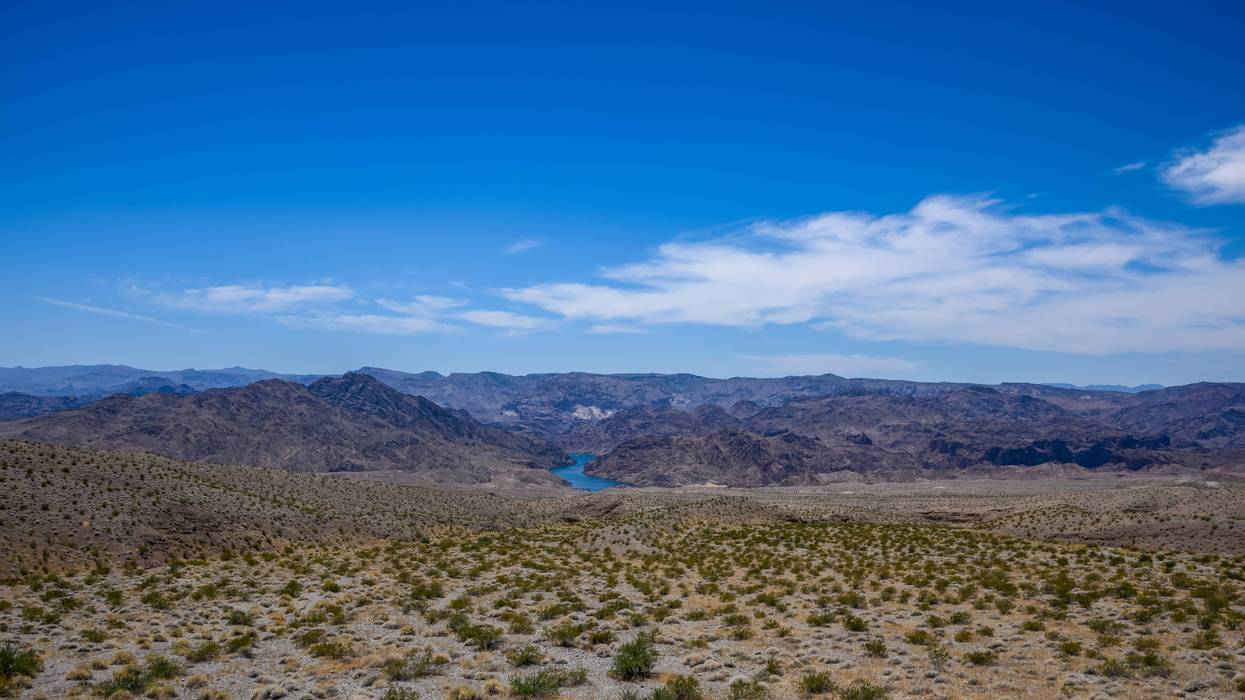
The Interior Board of Land Appeals, an appellate body within the US Department of the Interior, put a temporary stay on the Bureau of Land Management's (BLM) approval of the proposed 80-acre Townsite Data Center near Boulder City, Nevada, which environmental groups warned would jack up electricity demand and water usage and threaten local species.
The board sided with the Sierra Club, the Center for Biological Diversity (CBD), and the local government of Boulder City, which argued that the BLM had not conducted the legally required review of the plan's environmental impacts.
The BLM had approved the site based on a review of a proposed solar power plant, but had not reevaluated the impacts of a data center.
The board said that the environmental groups were "likely to prevail" in their case that the BLM had acted illegally "because the two projects are not ‘substantially the same.’” It also ruled that continuing the project without a proper review was likely to cause "irreparable harm" to the landscape—including soil disruption, habitat loss for species like the Mojave desert tortoise, and construction activities that pollute the air.
The temporary stay blocks the data center project from continuing while the board considers the environmental groups' appeal.
While it was not a final ruling on whether the project will be built at all, Patrick Donnelly, Great Basin director at the CBD, said the group was "thrilled that this data center has been stopped dead in its tracks."
Townsite has been described as a test case as BLM considers approving other data center proposals on federal lands, including in Nevada, where 80% of the land is federally managed.
Building data centers on federal lands is a major priority of the Trump administration's "AI Action Plan," which was published by the White House in 2025 and directs US agencies to identify public lands “well-situated for large-scale data centers."
Under the plan, the US Department of Energy announced in July 2025 that it had identified at least four other sites around the country for potential development, including the Idaho National Laboratory, the Oak Ridge Reservation in Tennessee, the Paducah Gaseous Diffusion Plant in Kentucky, and the Savannah River Site in South Carolina.
Donnelly said Tuesday's ruling had shown BLM would not be able to approve these and other sites without conducting the appropriate environmental reviews.
"The Trump administration is pulling out all the stops to let tech companies build massive data centers on our public lands," he said. "This tremendous victory proves communities have the power to fight back and win.”
Boulder City is one of many locales around the country where plans for large data centers have received public backlash. For months, the project faced protests at City Hall from residents who raised concerns about energy and water use, light pollution, and impacts on the local desert habitat.
Public anger ultimately led the Boulder City Planning Commission to turn against the project, voting in May against adding data centers to the city's land management process. To bypass the city, BLM approved the same project on adjacent federal lands. Boulder City responded by joining environmental groups' appeal against the project.
“The BLM essentially, sweepingly, approved a new land use without following processes in federal law, which include a meaningful engagement process with the city," City Attorney Brittany Walker told the Nevada Current in July, after the City Council unanimously voted to appeal.
Olivia Tanager, director of the Sierra Club Toiyabe chapter, called Tuesday's ruling "a victory for democracy, public participation, and the principle that our public lands should serve the public."
"The people of Boulder City have made clear that they do not want a data center on public lands, and this ruling gives their voices the weight they deserve," she said. "Data centers do not belong on public lands, and we will continue to fight unfettered data center development.”
Townsite is just one of several data center proposals being considered on federal lands in Nevada. In June, BLM officials told local leaders that it had received four applications for data centers on public lands around Silver Springs, a small community east of Reno in Lyon County, which has eight facilities planned in total, according to the US Data Center Map.
The sudden explosion of data center planning in the area has led many residents to push for a moratorium on new data center approvals.
Brynn deLorimier, a Boulder City resident who joined the appeal, said she hopes her city's victory will help to protect neighboring communities from unaccountable data center growth.
“We love our community and our desert, and we’re so grateful to our friends and neighbors for working hard to protect both,” she said. “We’re also grateful to the Interior Board of Land Appeals for recognizing that this case matters far beyond Boulder City and could set an important precedent for public lands in Nevada and across the country.”
"Extreme heatwaves like the one impacting the Western US this month are one of the catastrophic disasters these companies predicted their conduct would bring about," said Public Citizen.
Spring has not yet even begun, but as science journalist Rebecca Boyle wrote Thursday for The Atlantic, "it feels like we skipped right to summer" across the Western United States, which is facing record temperatures this week.
As of Monday, 39 million people across California, Nevada, and Arizona were under heat alerts. Temperatures in Los Angeles are reaching "25-35 degrees above normal," records are being "rewritten" in Las Vegas, and Phoenix is facing temperatures of 105°F two months earlier than usual, according to warnings issued by the National Weather Service (NWS) this week.
"This is not normal. Or at least it wasn’t normal in the past," said Boyle, who explained that it was the result of hot air being trapped by "a bizarrely strong ridge of high pressure in Earth’s atmosphere," the kind that would be uncommonly strong even in the summer.
Citing a model created by the nonprofit group Climate Central, she said that human-caused climate change had made these extreme temperatures five times more likely.
The NWS warned that a heatwave in March is "very dangerous, particularly for those not acclimated to the heat and/or traveling from cooler climates.”
Counts by the US Centers for Disease Control and Prevention (CDC) show that 1,600-2,400 Americans die each year from heat-related causes, and they've more than doubled since 1999.
Meanwhile, a report from the Federation of American Scientists last year found that "the combined effects of extreme heat cost [the US] over $162 billion in 2024—equivalent to nearly 1% of the US GDP."
The Western United States has recently experienced its warmest winter on in recorded history, leading to a record snow drought. Scientists say this has depleted water supplies and will make the region more vulnerable to wildfires and drought later this year.
Climate scientist Daniel Swain told ABC News 10 of Northern California that this is only the beginning of how the climate crisis will impact the state in the coming decades.
"The hottest hots are already getting hotter, and they will continue to get hotter. We haven't seen the hottest temperatures that we're going to see in the next 20 or 30 years," Swain said. "We'll see an increasing number of years with severe wildfire conditions... We will also see increased risk of major flood events, either as snowmelt becomes more rapid in the spring or as winter storms drop even more rainfall more quickly."
The consumer advocacy group Public Citizen said heatwaves like this one are unfolding "just as Big Oil predicted."
"A relatively small number of major fossil fuel companies are responsible for the majority of all greenhouse gas emissions generated by humanity. Just 100 companies are responsible for 71% of all global greenhouse gas emissions generated since 1854, and just 57 companies are responsible for 80% of the emissions generated since 2016," explained a report published by the group Thursday.
"These companies didn’t just contribute to this heatwave—they did so knowingly," the report said. "For decades, Big Oil companies were internally forecasting exactly these kinds of climate disasters."
However, the report explains, the industry "developed and orchestrated a multidecade, coordinated campaign to defraud the public about the dangers of climate change, and blocked solutions that could have prevented these disasters."
A study published earlier this month by Geophysical Research Letters showed that as more carbon has been pumped into the atmosphere over the past 10 years, the rate at which the climate is warming has doubled.
Following this trend, it may be as soon as 2030 that the globe surpasses 1.5°C above preindustrial averages, at which point many climate risks, such as heatwaves, biodiversity loss, and food insecurity, are expected to be dramatically amplified, according to the Intergovernmental Panel on Climate Change.
"Big Oil companies have, indeed, cost this country and the world," Public Citizen said. "Extreme heatwaves like the one impacting the Western US this month are one of the catastrophic disasters these companies predicted their conduct would bring about. They should be made to pay."
"The election deniers are back at it, laying the groundwork to run the Big Lie playbook once again," warned one swing-state campaigner.
At least 1 in 5 potential battleground state electors for former U.S. President Donald Trump are linked to the Republican nominee's attempt to subvert the 2020 election, according to an analysis published Monday.
Politico reported that "of the 93 Republicans designated as prospective presidential electors for Trump from the seven battleground states, eight are facing felony charges for signing false Electoral College certificates in 2020."
Five additional possible electors signed similar documents in 2020 but were not criminally charged, according to the reporting, while at least half a dozen others "played notable roles in challenging the results of the 2020 election or promoting election conspiracy theories."
"These people continued to peddle and push not misinformation, which is accidental, but disinformation, which is intentional."
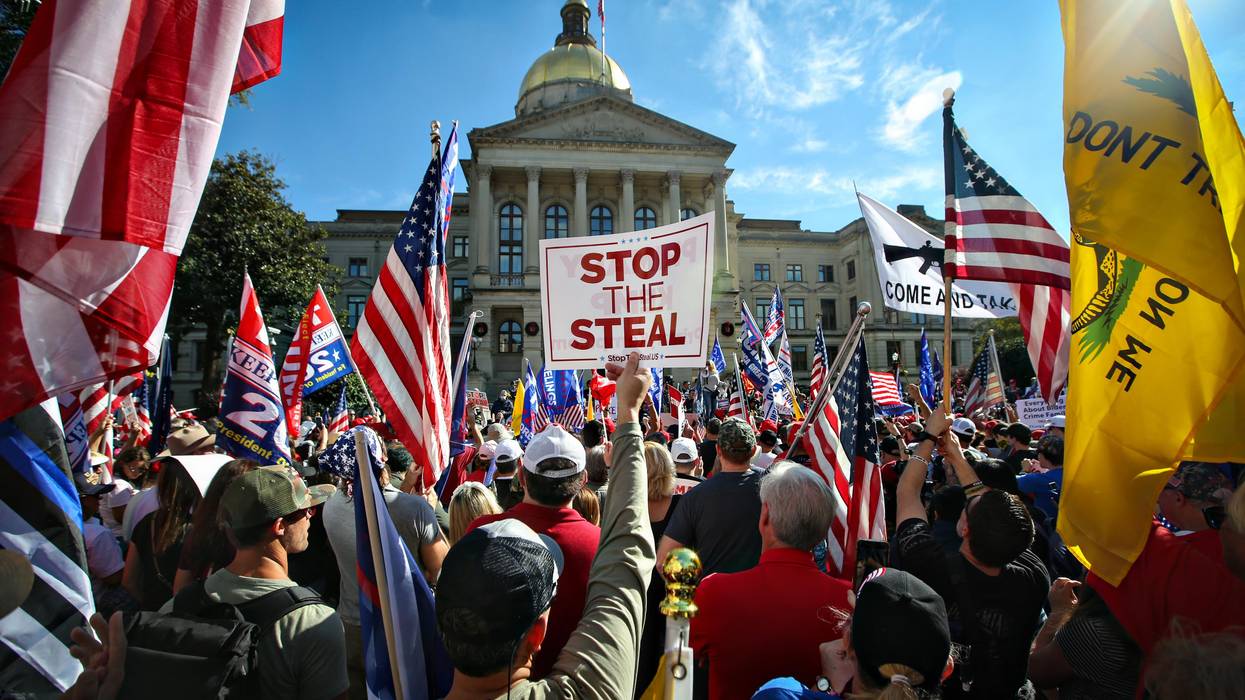
With numerous Trump aides and GOP officials facing criminal charges for their alleged roles in the former president's bogus "Stop the Steal" scheme, experts say it is somewhat less likely that the Republican nominee or his allies would attempt another such plot. However, Trump and his boosters have recycled similar claims of election fraud in what critics say is a bid to spread misinformation and sow doubt about the outcome of Tuesday's contest if the 2020 loser is defeated by Democratic Vice President Kamala Harris.
"It does show a lack of regard for the criminal and ethical problems with doing this," Mary McCord, a Georgetown law professor and executive director of the Institute for Constitutional Advocacy and Protection, told Politico.
As Politico notes:
Six of the returning fake electors hail from Michigan. John Haggard, Hank Choate, Timothy King, Meshawn Maddock, Amy Facchinello, and Marian Sheridan were among the group of Michiganders who signed a document in 2020 purporting to be official electoral certificates claiming the state’s electoral votes went to Donald Trump, despite Biden winning Michigan by more than 150,000 votes. Michigan Attorney General Dana Nessel, a Democrat, brought felony charges against them, including forgery-related crimes punishable by up to 14 years. Those cases are ongoing and all have pleaded not guilty.
In the battleground state of Wisconsin—where President Joe Biden defeated Trump by less than 21,000 votes, or 0.63%, in 2020—"election deniers are back at it, laying the groundwork to run the Big Lie playbook once again through actions designed to attack the electoral process, sow seeds of chaos set to bloom post-election, and further undermine confidence in our democracy," warned Wisconsin Democracy Campaign executive director Nick Ramos in a Sunday opinion piece in the Cap Times.
"That is exactly what their antics wrought after the 2020 election—chaos resulting in the January 6 insurrection and years of baseless conspiracy theories that did not, and will not, succeed in changing a single election result but did succeed in undermining the confidence of millions of Americans in our democracy," he continued.
"The bullies are back again, continuing their strategy to interfere in Wisconsin's elections," Ramos added.
While some observers claim that would-be election subversives are likely to tread gingerly in light of the potential criminal consequences for alleged Big Lie conspirators, McCord said that "it would appear that the party leadership in the states where there are fraudulent electors serving as electors again are not taking seriously things like the criminal charges that have been brought against these fraudulent electors."
Amy Tarkanian, a former chair of the Nevada Republican Party, told Politico that "these people continued to peddle and push not misinformation, which is accidental, but disinformation, which is intentional."
"It's definitely disappointing," she lamented.
In Arizona—where former state GOP chief Kelli Ward and 11 other Republican officials have been criminally charged in connection with the alleged fake electors scheme—current Republican Party Chair Gina Swoboda has been pushing spurious election fraud claims. This, even as Loraine Pellegrino, a past president of a right-wing women's group who falsely attested that Trump won Arizona in 2020, earlier this year became the first person convicted in the state's fake electors case.
Democracy defenders have sounded the alarm on the potential for violence fueled by baseless claims of election fraud.
The Global Project Against Hate and Extremism said last week that it is "seeing the same warning signs of political violence based on election denialism combined with violent language across fringe platforms that we saw in the weeks before the 2020 election and before the January 6, 2021 insurrection at the Capitol."
According to a YouGov poll published Saturday, just over two-thirds of respondents—including more than 80% of surveyed Democrats and 55% of Republicans— believe it is either "somewhat" or "very likely" that Trump will refuse to concede if he loses to Harris.
The Latino electorate will prove decisive in securing reproductive freedom and abortion access through ballot measures around the country, particularly in states where Latinos are a significant portion of the electorate.
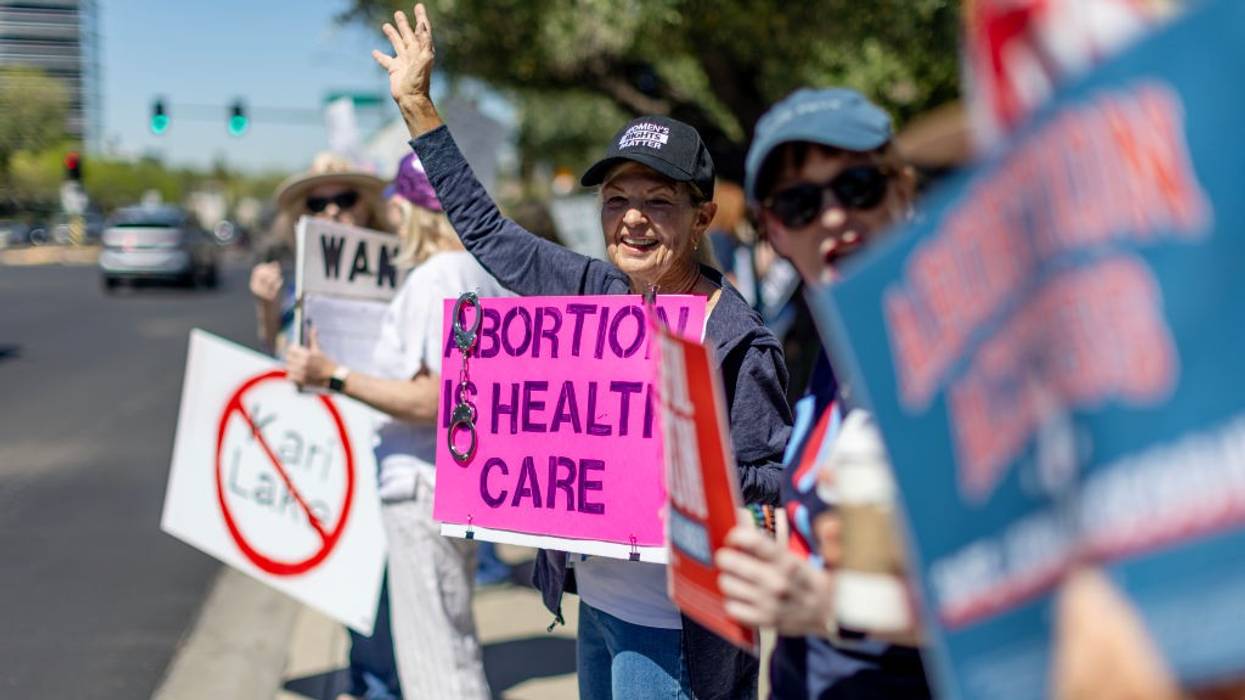
In November, abortion rights measures will appear on ballots across ten states, including Arizona, Colorado, Florida, Nevada, and New York, where Latinos make up a significant portion of the electorate. For decades, pundits and politicians have recycled long-held misconceptions about Latino voters and abortion access, citing our conservative and religious beliefs. Anti-abortion extremists have long fueled these misconceptions through misinformation and disinformation campaigns targeting Latino communities with egregious lies and inflammatory rhetoric about abortion. Yet, polling, focus groups, and direct interactions with Latino communities have debunked these outdated tropes. The Latino electorate will prove decisive in securing reproductive freedom and abortion access through ballot measures around the country, particularly in states where Latinos are a significant portion of the electorate.
For Latinos, the freedom to decide, a pillar of our American democracy, is critical. Meanwhile, Latinos are being hit directly with anti-abortion efforts that take away that freedom such as the six-week abortion ban put into effect by the Florida Supreme Court and the 1864 abortion ban upheld by the Arizona Supreme Court. In the wake of the Dobbs decision, people of color and Latinas have felt the impact of a lack of abortion access, an element of basic healthcare. A 2023 report by the National Partnership for Women and Families estimated that nearly 6.5 million Latinas, or 42% of all Latinas of reproductive age in the country, live in a state that either had or was likely to ban abortion.
Ironically, it will be abortion access and anti-choice efforts to restrict freedom of choice that will mobilize Latino voters this election. In a poll conducted by three national reproductive justice organizations, 87% of Latinas named abortion and women’s rights as one of their top priorities as they head to the polls. Another battleground poll conducted by Somos PAC and BSP Research found that 61% of Latino registered voters expressed a more positive/favorable view of Kamala Harris after hearing that she will protect abortion rights, versus only 19% of Latinos who said they had a more negative view of Harris after hearing that. In key states to secure the White House and both chambers, Latinos make up large chunks of the electorate: Arizona (25%), Colorado (15%), Florida (20%), Nevada (20%), and New York (12%).” In the face of unprecedented attacks on basic healthcare access and targeted attempts by extremists to mislead and divide our community on this issue, this November Latinos will be key deciders on abortion access across the country.
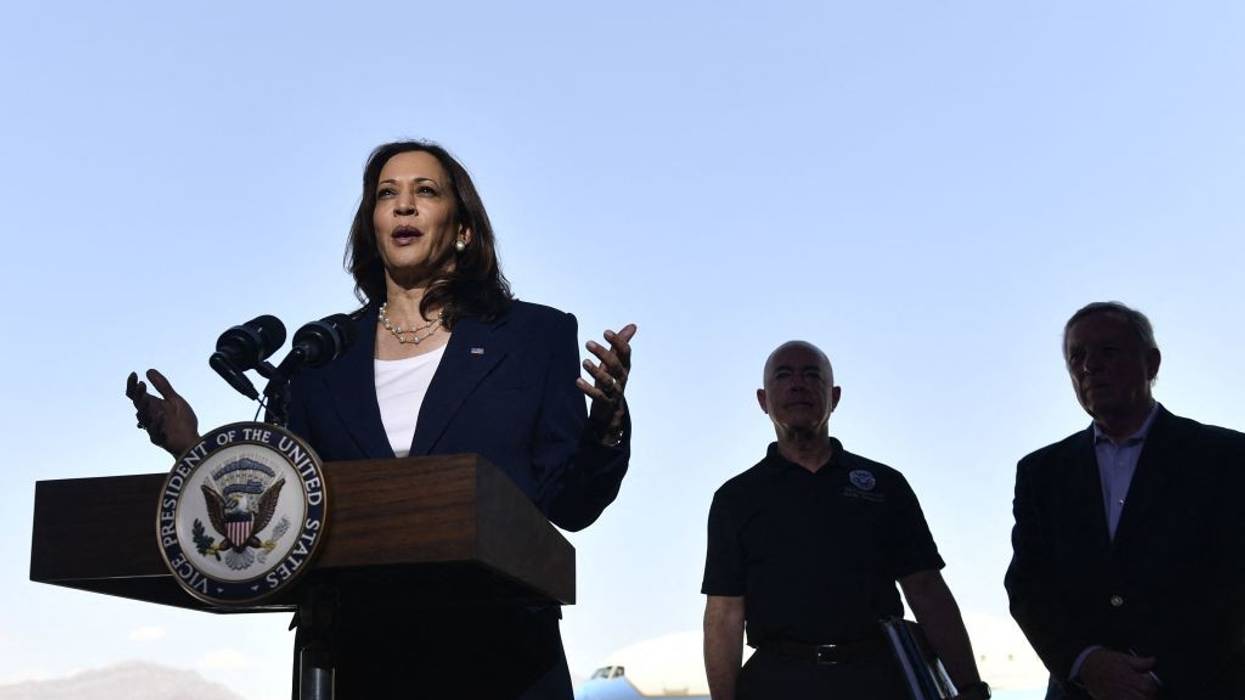
Facing the specter of draconian policies including mass deportations of undocumented immigrants under a potential second term for former U.S. President Donald Trump, a major progressive Latine-led advocacy group on Thursday announced its first-ever general election presidential endorsement, for Democratic Vice President Kamala Harris.
"Our democracy is at a crossroads. Former President Trump and extremist politicians have promised mass deportations, the erosion of fundamental rights, and four more years of white supremacist ideology," said Theo Oshiro, executive director of Make the Road Action, in a statement announcing the group's endorsement.
"In the face of this assault on freedom, equality, and dignity, Vice President Kamala Harris is the clear choice for voters this November," Oshiro continued. "This election is about our collective vision of what this country can become. We are working toward a future where all people have the freedom to stay with their loved ones, the freedom to transform their lives, and the freedom to thrive."
"That vision is only possible under a President Harris," he stressed. "We will fight to ensure that she is elected and will hold her accountable to deliver for immigrant and working-class communities."
Latine Americans could play a decisive role in key swing states including Nevada, where they make up nearly 1 in 5 of all voters, and Pennsylvania, where an estimated 615,000 Latine residents are eligible to vote. President Joe Biden won Nevada by fewer than 50,000 votes in 2020 and Pennsylvania by 80,000 votes.
Human rights defenders fear a second Trump term could be even more harmful to undocumented immigrants than his previous White House tenure, during which the Republican president—who launched his 2016 campaign by calling Mexicans rapists and drug dealers—enacted policies including ramped-up deportations; migrant family separation; imprisonment of children in cages; and banning people from several Muslim countries, Venezuela, and North Korea from entering the United States.
"I firmly believe this endorsement marks a pivotal moment for our membership," said Antonio Garcia of Make the Road Action Nevada. "The stakes couldn't be higher as we endorse Vice President Kamala Harris and her running mate [Minnesota Gov.] Tim Walz, signifying a bold step forward."
"This election isn't merely about individuals; it's a watershed moment in history that will profoundly influence our community's future," Garcia continued. "It compels us to choose unity over division, to take a stand on the right side of history."
"Electing the first woman of color as president of the United States fills me with immense pride, knowing my vote contributes to this historic change," he added. "More than responding to the times, being part of this movement means we are actively forging a better future. We are committed to holding our leaders accountable, ensuring they uphold their promises to our immigrant and working-class communities."
In an effort to blunt attacks by Trump and other Republicans over what they falsely claim are the Biden administration's "open borders" policies, Harris has positioned herself as a border hawk. The narrator of a new Harris campaign ad titled "Tougher" says that "as vice president, she backed the toughest border control bill in decades, and as president, she will hire thousands more border agents and crack down on fentanyl and human trafficking. Fixing the border is tough. So is Kamala Harris."
According to a YouGov-Statista Research poll published last month, immigration is the second-most important issue to U.S. voters after inflation and prices.
Last week, the League of United Latin American Citizens, the nation's largest and oldest Latine civil rights organization, endorsed Harris—the first time the group has endorsed a presidential candidate since its founding in 1929.
Harris has also been endorsed by Latine advocacy groups including Mi Familia Vota, Voto Latino, and UnidosUS Action Fund.
Another group making its first-ever presidential endorsement for Harris is the youth-led gun control campaign March for Our Lives.
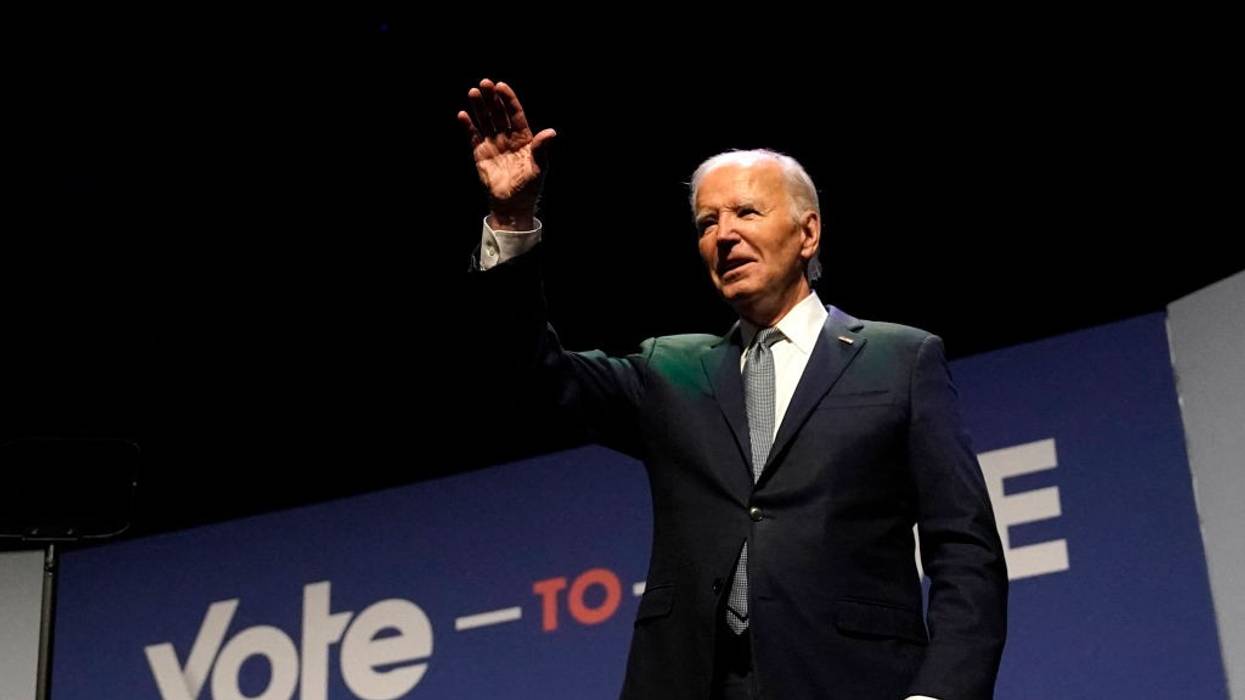
"President Biden is vaccinated, boosted, and he is experiencing mild symptoms following a positive Covid-19 test," the White House said.
U.S. President Joe Biden has contracted Covid-19 for the second time and is heading to his home in Delaware to self-isolate, the White House said Wednesday evening.
"President Biden is vaccinated, boosted, and he is experiencing mild symptoms following a positive Covid-19 test," the White House said on social media.
A statement attributed to Biden's doctor said that "the president presented this afternoon with upper respiratory symptoms, to include rhinorrhea (runny nose) and nonproductive cough, with general malaise."
.@POTUS is back on Air Force One and we’re headed to Delaware pic.twitter.com/SLGfL8pcN1
— Nandita Bose (@nanditab1) July 17, 2024
"He felt okay for his first event of the day, but given that he was not feeling better, point-of-care testing for Covid-19 was conducted, and the results were positive for the Covid-19 virus," the statement continued. "Given this, the president will be self-isolating in accordance with [U.S. Centers for Disease Control and Prevention] guidance for symptomatic individuals."
The doctor said that Biden—who is 81 years old—is taking the antiviral drug Paxlovid.
Biden previously contracted Covid-19 in July 2022. In what doctors call a "rebound" positive test that affects some people who take Paxlovid, he actually tested positive twice within a two-week period.
The president—who is facing mounting calls to step aside for another Democratic candidate amid concerns over his mental fitness—was scheduled to speak at the UnidosUS Annual Conference in Las Vegas before attending a community event in the important swing state of Nevada.
Biden's positive test comes as the Republican National Convention is happening in Wisconsin, another swing state. Former President Donald Trump this week secured enough delegates to become the GOP nominee and announced Sen. JD Vance (R-Ohio) as his running mate.
"The number of signatures gathered in just over three months shows how deeply Nevadans believe in abortion rights," said one campaigner.
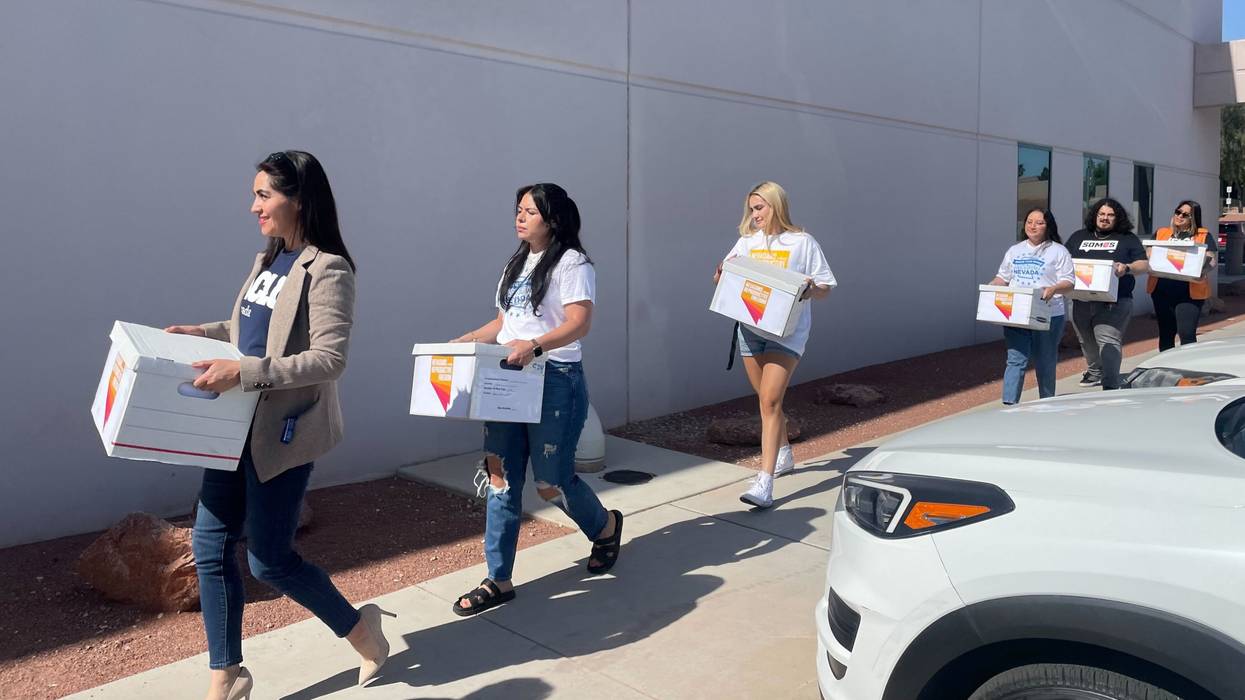
An amendment to enshrine abortion rights in Nevada's Constitution moved one step closer to appearing on this November's ballot Monday as reproductive rights defenders submitted nearly twice the number of required signatures to state election officials.
Nevadans for Reproductive Freedom, the coalition spearheading the ballot measure, said it submitted more than 200,000 signatures from every county in the state—where abortion is legal up to 24 weeks of pregnancy—supporting the Nevada Right to Reproductive Freedom Amendment. Proposed 2024 Nevada ballot questions need 102,362 verified signatures to qualify; campaigners generally aim to collect double the required number of signatures, as many are disqualified for various reasons.
"This is a true testament to the volunteers, supporters, and coalition partners who recognize the importance of codifying abortion rights into our state constitution," Nevadans for Reproductive Freedom said on social media. "We're officially one step closer."
"The number of signatures gathered in just over three months shows how deeply Nevadans believe in abortion rights and its importance to this moment in our nation's history."
Speaking to supporters outside the Clark County Courthouse in Las Vegas on Monday, Nevadans for Reproductive Freedom president Lindsey Harmon said that "the majority of Nevadans agree that the government should stay out of their personal and private decisions... about our bodies, our lives, and our futures."
"The number of signatures gathered in just over three months shows how deeply Nevadans believe in abortion rights and its importance to this moment in our nation's history," Harmon added.
Nevada constitutional amendments must be approved by voters twice. If the proposed abortion rights amendment qualifies for the ballot and is approved by voters this November, it will appear again on the 2026 statewide ballot.
Last November, Carson City District Court Judge James Russell sided with right-wing advocacy groups who argued that the proposed amendment violates Nevada law by covering more than one subject. After Nevadans for Reproductive Freedom subsequently narrowed the proposal's focus, Russell ruled the coalition could proceed with signature gathering. In April, the Nevada Supreme Court affirmed the proposed ballot measure's original language.
Four states—Florida, Kansas, Maryland, and New York—have abortion rights measures on November's ballot, while Arizona, Arkansas, Colorado, Missouri, Montana, Nebraska, and Nevada have proposed such initiatives.
Since the right-wing U.S. Supreme Courtvoided half a century of federal abortion rights nearly two years ago in Dobbs v. Jackson Women's Health Organization, seven states have let voters weigh in on the issue. People in all seven states—including conservative Kansas, Kentucky, and Montana—have voted to either protect and expand abortion rights or defeat measures seeking to restrict access to the procedure.
Meanwhile, 14 states have enacted total abortion bans, while 27 have legislated restrictions on the procedure based on duration of pregnancy,
according to the Guttmacher Institute.
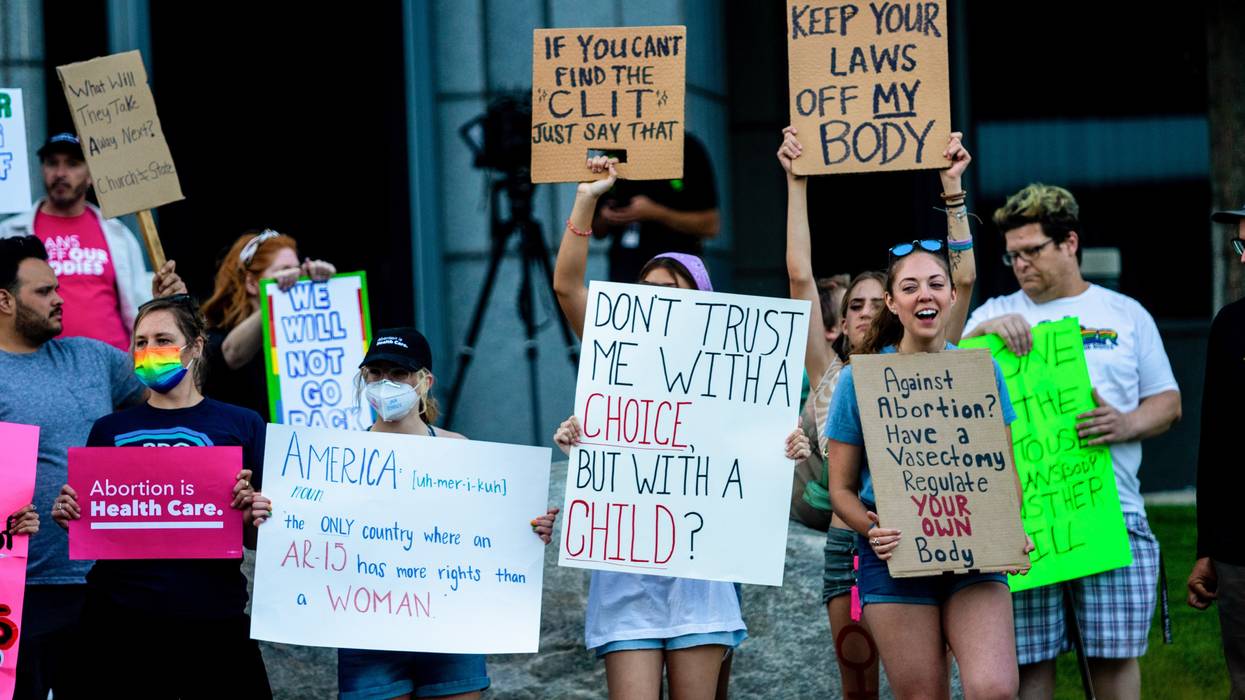
"Nevadans overwhelmingly support putting reproductive rights into our state constitution," said one abortion rights campaigner.
Abortion rights advocates said this week that they would appeal a decision by a Nevada judge to reject a 2024 ballot initiative to enshrine reproductive rights in the state constitution.
Carson City District Court Judge James Russell sided Tuesday with the Coalition for Parents and Children PAC, which last month filed a lawsuit claiming the ballot measure—which would guarantee the "fundamental right to reproductive freedom"—violates Nevada law by covering more than one subject. The petition mentions abortion, birth control, prenatal care, and post-partum care, which advocates note all fall under the umbrella of "reproductive freedom."
However, Russell said that "it is clear to me this is probably the clearest case I have seen that I think there is a violation of the single-subject rule."
"We are optimistic about the ballot initiative as a whole, and you know, we plan to appeal this."
Nevadans for Reproductive Freedom—a coalition including Planned Parenthood, Reproductive Freedom for All Nevada, and Indivisible Northern Nevada that filed the petition in September—disagreed with Russell's ruling and vowed to appeal to the Nevada Supreme Court.
"We are optimistic about the ballot initiative as a whole, and you know, we plan to appeal this," said Lindsey Harmon with Nevadans for Reproductive Freedom. "And we know that in fact, these are all a single subject."
"Nevadans overwhelmingly support putting reproductive rights into our state constitution, and voters should be aware that anti-abortion advocates still have plenty of state government allies who are willing to help them undermine reproductive freedom," Harmon asserted, adding that the coalition would not "let one judge's misguided ruling deter us."
Voters in seven states—most recently Ohio—have passed ballot measures protecting reproductive rights in the wake of the U.S. Supreme Court's cancellation of half a century of federal abortion rights in last year's Dobbs v. Jackson Women's Health Organization decision.
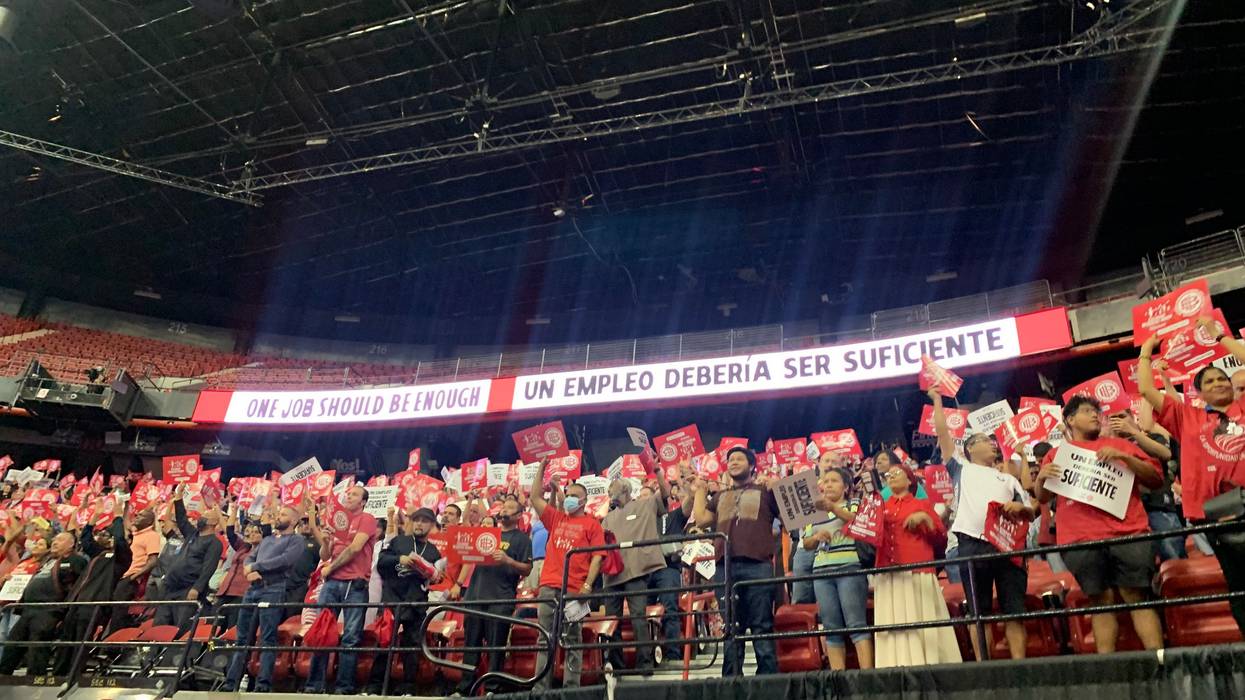
"Companies are generating record profits and we demand that workers aren't left behind and have a fair share of that success," said one Culinary Union leader.
Members of two Nevada labor unions—including the state's largest—on Tuesday overwhelmingly voted to authorize a citywide strike at 22 Las Vegas casinos, while continuing to negotiate a new contract "in good faith" with gaming companies.
Chanting "one job should be enough," tens of thousands of cocktail and food servers, bartenders, cooks, porters, and other non-gaming hotel employees in the Culinary Union Local 226 and Bartenders Union Local 165—affiliates of the Unite Here—packed the Thomas and Mack Center at the University of Nevada, Las Vegas, where they voted by 95% during two sessions to approve a work stoppage at Las Vegas Strip properties owned by MGM Resorts, Caesars Entertainment, and Wynn/Encore Resorts.
The affiliated unions—which represent 60,000 Nevada workers, including 53,000 in Las Vegas—can now call a strike at any time. It would be the first citywide strike in the resort industry in nearly 40 years.
Since September 15, 40,000 union members have been working under an expired contract. The Culinary Union said it remains in "active negotiations" with employers over a new five-year contract.
"Today, Culinary and Bartenders union members have sent the strongest message possible to the casino industry to settle a fair contract as soon as possible," Culinary Union secretary-treasurer Ted Pappageorge said in a statement. "We have negotiations scheduled next week with MGM Resorts, Caesars Entertainment, and Wynn/Encore Resorts and it's up to the three largest employers in Las Vegas to step up and do the right thing."
"If these gaming companies don't come to an agreement, the workers have spoken and we will be ready to do whatever it takes—up to and including a strike," Pappageorge added. "Companies are generating record profits and we demand that workers aren't left behind and have a fair share of that success."
Las Vegas set an all-time record for gaming revenue for the second straight year last year, despite the Covid-19 pandemic. The city's casino resorts reported $14.8 billion in 2022 revenue, a 10.5% increase over the previous year.
The unions' objectives include:
"I voted yes to authorize a strike because I'm fighting for my family and for our future," said Maria Sanchez, a Culinary Union member who works as a guest room attendant at the Bellagio. "The workload since the pandemic has been intense and when I get home I'm so tired and I don't have energy to take my two kids to the park or play with them. I feel sad like I'm just living to work and it's not right."
"I feel sad like I'm just living to work and it's not right."
"I was thinking about getting a second job, but I'm already doing more than one job at work right now and I believe that one job should be enough," she added. "I voted yes to win the best contract ever so that I can work one job and come home to spend time with my children."
In 2018, members of the Culinary and Bartenders unions voted to authorize a strike. A new contract was negotiated shortly after the vote, averting a work stoppage.
Last year, members of the Local 54 chapter of the Unite Here union—which represents hospitality industry employees in Atlantic City, New Jersey—negotiated new contracts that included the workers' largest-ever raise.
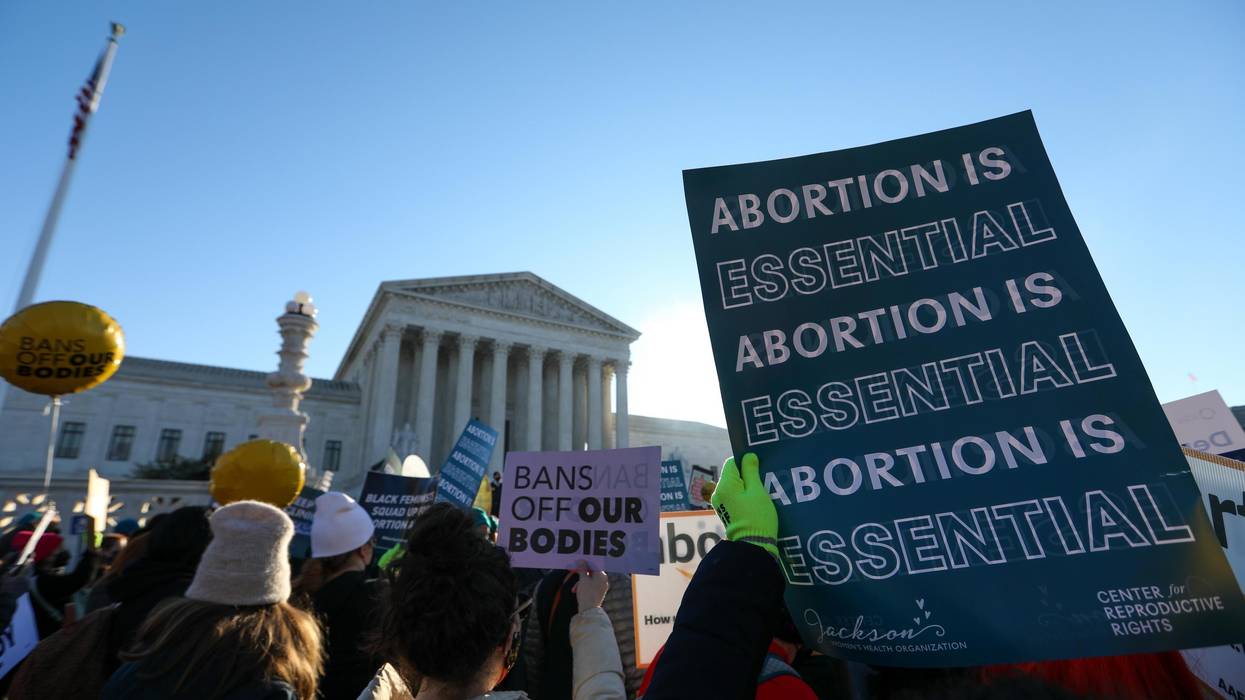
A coalition called Nevadans for Reproductive Freedom filed a petition to place a proposed constitutional amendment on 2024 ballots.
Reproductive rights groups in Nevada said Thursday that they plan to make the state one of a growing number where voters will make their voices heard on abortion in 2024, in the face of bans that have been passed by Republican-controlled state legislatures since Roe v. Wade was overturned last year by the U.S. Supreme Court.
Nevadans for Reproductive Freedom—a coalition including Planned Parenthood, NARAL Pro-Choice Nevada, and Indivisible Northern Nevada—said it filed a petition with the secretary of state's office to include on 2024 election ballots a referendum that would enshrine abortion access in the state constitution.
Nevada is not among the 22 states that have passed severe restrictions or bans on abortion care since Roe was overturned in June 2022, but advocates want to make it harder to weaken the state law that protects abortion access up to 24 weeks of pregnancy.
The constitutional amendment proposed by the coalition would say the state "may not penalize, prosecute, or take adverse action against any individual based on the outcome of a pregnancy of the individual, or against any licensed healthcare provider who acts consistent with the applicable scope and practice of providing reproductive healthcare services to an individual who has granted their voluntary consent."
It would also ban any abortion restrictions before the point in pregnancy when physicians determine a fetus is viable, generally around 23 to 24 weeks of pregnancy.
"The fallout of the Supreme Court's overturning of Roe v. Wade has shown us that we have already suffered one year too long without the guaranteed right to reproductive freedom, and we simply cannot afford to stand by and allow any further encroachment on the fundamental right of Nevadans to determine their own reproductive lives and care," Lindsey Harmon, the executive director of Planned Parenthood Votes Nevada, told NBC News.
The coalition has until June 26, 2024 to gather 103,000 signatures from registered voters in support of placing the proposed amendment on ballots. It would need to pass with a simple majority next year to appear again on 2026 ballots, as two separate votes are needed to amend the constitution.
Recent polling by the Pew Research Center found that 62% of adults in Nevada believe abortion care should be legal in most or all cases.
Referendum votes in states including Montana, Kansas, and Kentucky last year showed that voters in states across the country—including those that lean Republican—also back abortion rights. Voters in those states rejected proposals that would have allowed their legislatures to ban or restrict abortion, sparking a new strategy among pro-abortion rights groups.
This November, voters in Ohio will vote on whether to codify the right to abortion care in the state constitution, and residents already demonstrated support last month for pro-choice campaigners who urged them to reject a measure which would have raised the threshold needed for the constitutional amendment to pass. Ohioans decisively voted against the proposal.
Organizers in Arizona, Florida, Missouri, Nebraska, Colorado, Idaho, and South Dakota have also launched campaigns to give voters a say on abortion care by placing referendums on 2024 ballots, with some facing opposition from GOP officials.
The ACLU of Missouri sued Republican Secretary of State Jay Ashcroft last month after he wrote in official ballot language that the proposed constitutional amendment would "allow for dangerous, unregulated, and unrestricted abortions, from conception to live birth."
In Nevada, campaigners said Thursday they aim to "make sure Nevada voters can say for themselves that they support reproductive freedom."