SUBSCRIBE TO OUR FREE NEWSLETTER
Daily news & progressive opinion—funded by the people, not the corporations—delivered straight to your inbox.
5
#000000
#FFFFFF
To donate by check, phone, or other method, see our More Ways to Give page.

Daily news & progressive opinion—funded by the people, not the corporations—delivered straight to your inbox.
"The Trump administration is trying to write us out of that history," said one transgender writer. "We will not let them."
They were on the front lines of the most famous uprising for LGBTQ+ civil rights in history, but the Trump administration has erased mention of transgender and queer people from the official website of the national monument marking the event.
The National Park Services' (NPS) website for Stonewall National Monument in New York City now welcomes visitors with the lines: "Before the 1960s, almost everything about living openly as a lesbian, gay, bisexual (LGB) person was illegal. The Stonewall Uprising on June 28, 1969 is a milestone in the quest for LGB civil rights and provided momentum for a movement."
Previously, the site said "lesbian, gay, bisexual, transgender, or queer (LGBTQ+) person."
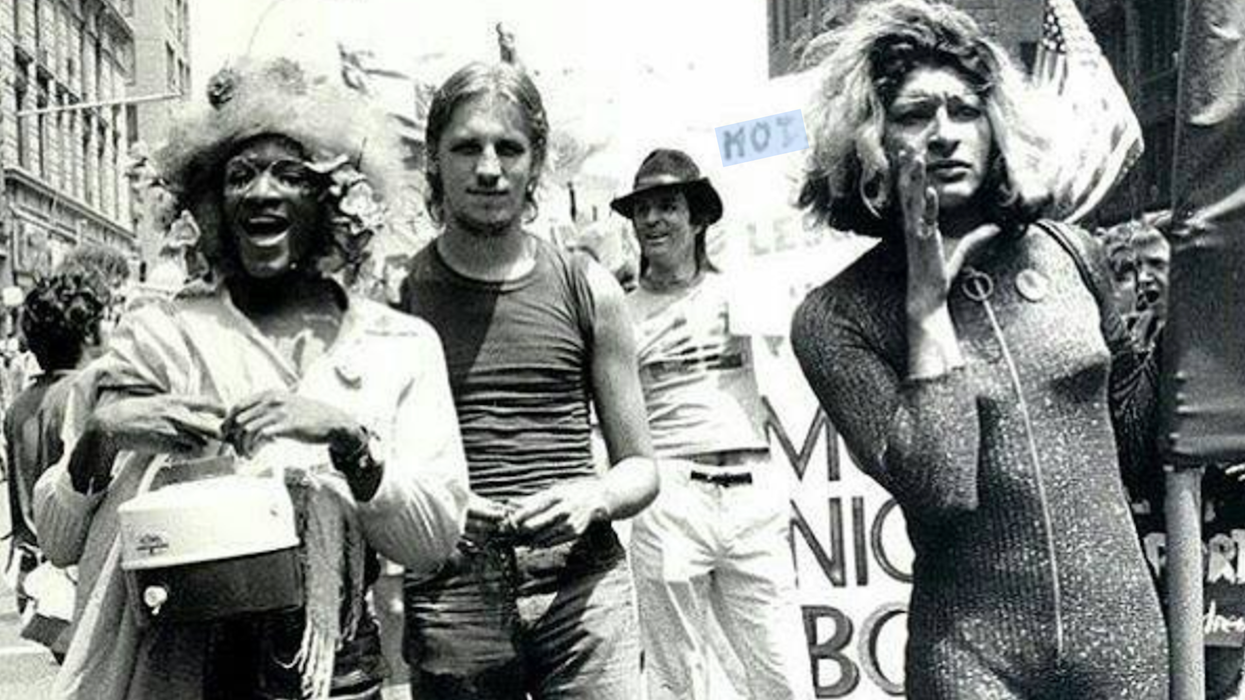
This, despite the fact that queer and transgender people including Marsha P. Johnson and Sylvia Rivera—who, according to a still-standing NPS web page, threw the second Molotov cocktail at police—were front-and-center during the six-day uprising at the Stonewall Inn gay bar on Christopher Street in Greenwich Village.
In a statement posted on Instagram, the Stonewall Inn and its Stonewall Gives Back Initiative said they are "outraged and appalled" by the NPS move, adding that "this blatant act of erasure not only distorts the truth of our history, but it also dishonors the immense contributions of transgender individuals—especially transgender women of color—who were at the forefront of the Stonewall Riots and the broader fight for LGBTQ+ rights."
The statement continues:
Let us be clear: Stonewall history is transgender history. Marsha P. Johnson, Sylvia Rivera, and countless other trans and gender-nonconforming individuals fought bravely, and often at great personal risk, to push back against oppressive systems. Their courage, sacrifice, and leadership were central to the resistance we now celebrate as the foundation of the modern LGBTQ+ rights movement.
The decision to erase the word "transgender" is a deliberate attempt to erase our history and marginalize the very people who paved the way for many victories we have achieved as a community. It is a direct attack on transgender people, especially transgender women of color, who continue to face violence, discrimination, and erasure at every turn.
Also gone from the NPS site is a page previously containing an interactive "Pride Guide" for visitors "to explore the legacy and history of lesbian, gay, bisexual, transgender, and queer (LGBTQ) people and places."
Stonewall National Monument—which was dedicated by then-President Barack Obama in 2016—commemorates the 1969 Stonewall Uprising at and around the Stonewall Inn, a gay bar in Greenwich Village.
Police raids of LGBTQ+ spaces were a frequent fact of life during a time when consensual same-sex sexual relations, cross-dressing, and even dancing with members of the same sex were illegal. On the night of June 28, 1969 New York City police raided the mafia-owned Stonewall Inn, ostensibly to investigate illegal alcohol sales and find "three-article rule" violators to arrest, provoking the six-day uprising that is widely credited with sparking the LGBTQ+ rights movement.
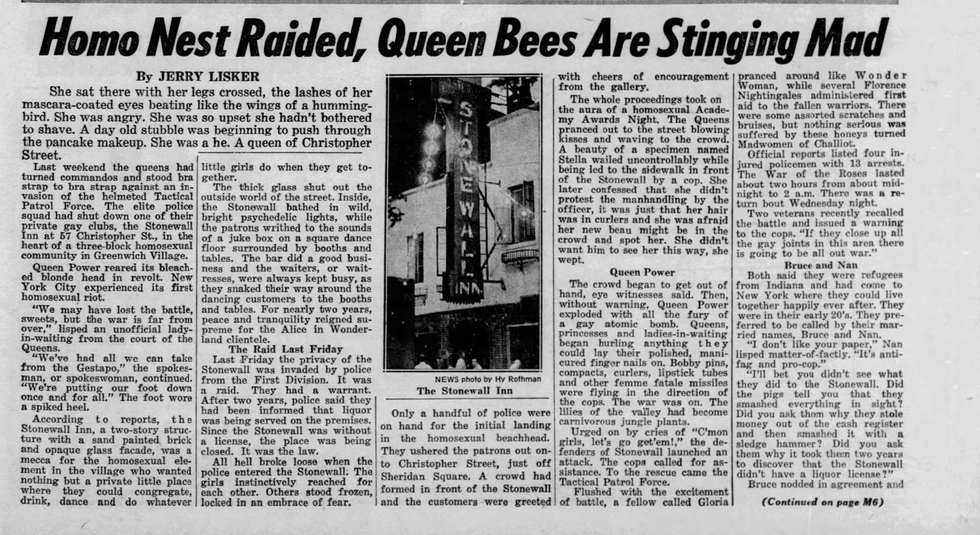
Although there were earlier uprisings—like the 1966 trans-led Compton's Cafeteria Riot in San Francisco—Stonewall became synonymous with the ongoing struggle for LGBTQ+ equality.
While attempts to marginalize and separate the fight for transgender rights from the wider LGBTQ+ movement are nothing new—Rivera lamented this "gay liberation but transgender nothing" ethos a generation ago—such efforts have accelerated in recent years, fueled by the far-right and prominent figures in the "trans-exclusionary radical feminist" (TERF) movement, author J.K. Rowling, anti-trans gay activists, and others.
The NPS' move is part of Trump's wider war on transgender people that began during his first administration and continues today with the president's executive orders aimed at delegitimizing transgender identity, cutting off federal support for gender-affirming healthcare, pushing for a ban on trans women and girls from female sports, renewing his first-term prohibition on trans military enlistment, and other insidiously discriminatory and dangerous moves.
Transgender activists and their allies aren't taking the Trump's administration's latest move sitting down. A protest took place at the monument site on Friday afternoon, with others vowing future action.
#Stonewall today
[image or embed]
— bonnjny.bsky.social (@bonnjny.bsky.social) February 14, 2025 at 9:42 AM
"The Trump administration is trying to write us out of that history," Media Matters LGBTQ program director Ari Drennen asserted on social media. "We will not let them."
Lamenting that "the federal government is attempting to erase us and take away our history," researcher and self-described "transgender menace" Allison Chapman said on the social platform Bluesky, "This Pride, we riot."
"Today we said enough is enough of the anti-trans rhetoric and laws," said event co-organizer and ACLU attorney Chase Strangio.
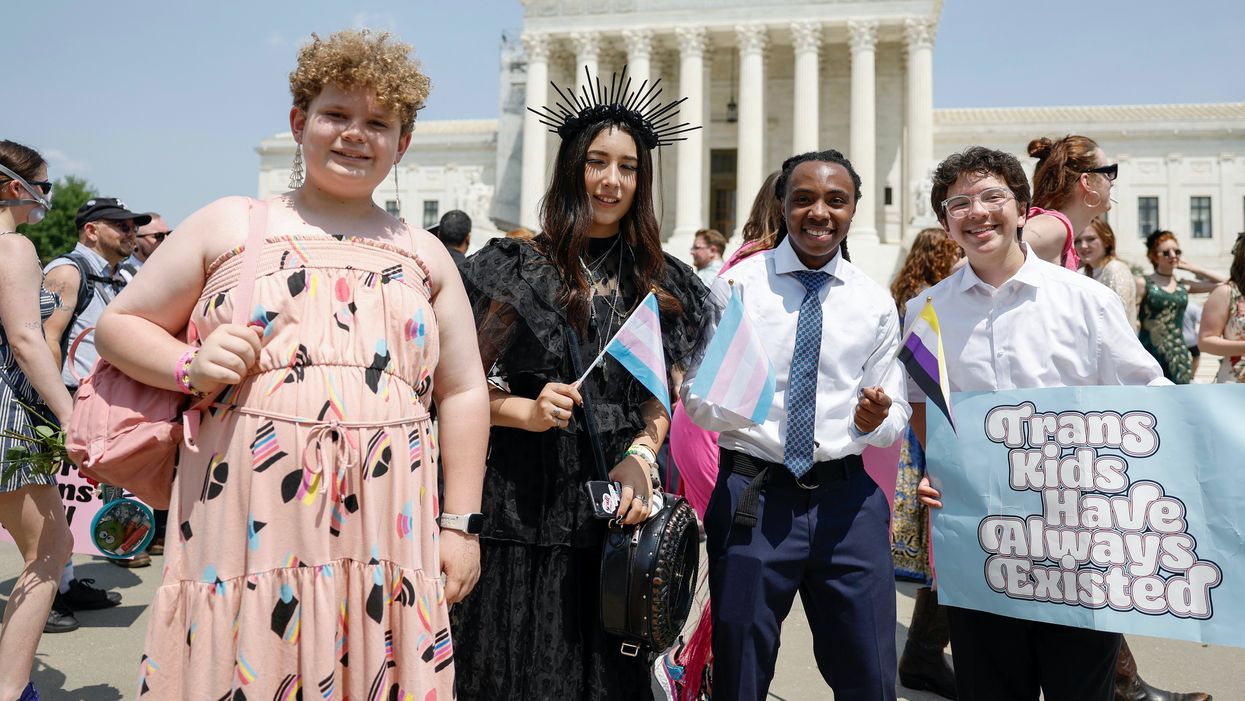
Amid relentlessly rising attacks on the rights and even the very existence of transgender people in the United States, a group of trans students and their supporters on Monday held a prom on the National Mall within sight of the U.S. Capitol.
Around 150 youth from 16 states—along with parents, friends, and other allies—attended the first-ever Trans Prom, according to Vice.
As Time reports, the event was organized by activists including students Libby Gonzales, age 13; Daniel Trujillo, 15; Grayson McFerrin, 12 ; and Hobbes Chukumba, 16.
"The Trans Prom is meant to emphasize the pride and joy and happiness that is within the trans community that cannot be broken," Chukumba, who's from New Jersey, told Time. "We're trying to show that trans people can and will continue to be brilliant and great. And really, it's meant to be a space that lets trans kids be kids."
The teens worked with co-organizers including Chase Strangio, the deputy director for transgender justice with the ACLU's LGBT & HIV Project, whom some attendees called their "trans-fairy godfather."
"These young people are here with the families and trans adults who love and care for them," Strangio was quoted by Democracy Now! "Today we are choosing to build on the legacies of our transcestors, embracing the possibilities of our futures, and refocusing our collective imagination on the freedom, beauty, and joy that we represent."
"Our joy is ours. You may not see it. You may not think it exists. You may try to take it away. But it is ours," he added. "And today, and every day, we celebrate, cultivate, and embrace it."
Guests on Monday entered the prom through a "tunnel of love" replete with the colors of the trans flag before being treated to live music, a drag performance by MC Stormie Daie, and decor inspired by the trans-led 1969 Stonewall revolt that catalyzed the nascent LGBTQ+ rights struggle in the United States and beyond.
Trujillo—who is from Arizona and says he's been an activist since age 9—told Vice that "Trans Prom is a big statement of what schools and public life would be like if trans people were celebrated and protected."
The organizers enjoyed the support of their parents. Stephen Chukumba, Hobbes' father, told Vice that he's trying to empower his son "to understand what's happening and to not feel defeated or not feel afraid."
"Because at the end of the day, the reality is that there have been marginalized people fighting for equality since the inception of this country," he added. "That's just a fact. And so those communities that have achieved any level of equality have done so by fighting tooth-and-nail."
Lizette Trujillo, Daniel's mother, told Vice that "in a moment where they're trying to strip you of all of your rights and access to care and being able to participate in school sports like your peers, or being able to use your pronouns in the classroom, like it's transgressive to say, 'I'm going to be joyous regardless and I'm going to exist whether you want me to or not.'"
The idea for the prom was born when Daniel Trujillo and Gonzales—who met on a camping trip in 2019—were discussing their angst over the nearly 500 anti-LGBTQ+ bills that Republicans have introduced in state legislatures so far this year.
"Having to sit through testimonies for people who are saying that I'm mentally ill, it's really hurtful and frustrating," Trujillo told Time. "My GPA dropped from going [to the state capitol] consistently, and it threw all of us into a really stressful space because my parents had to keep working [and then] drop what they were doing to drive to Phoenix."
According to a January survey by the Trevor Project, which focuses on preventing LGBTQ+ youth suicides, 86% of transgender and nonbinary youth said their mental health has been harmed by Republicans' anti-trans legislation and rhetoric.
"Even though I'm not directly struggling, I still feel overwhelmed by it every now and again," Hobbes Chukumba told Vice. "I feel the pain and the struggle that the rest have to go through, because that's what it means to be part of a community. It means [having] that connection."
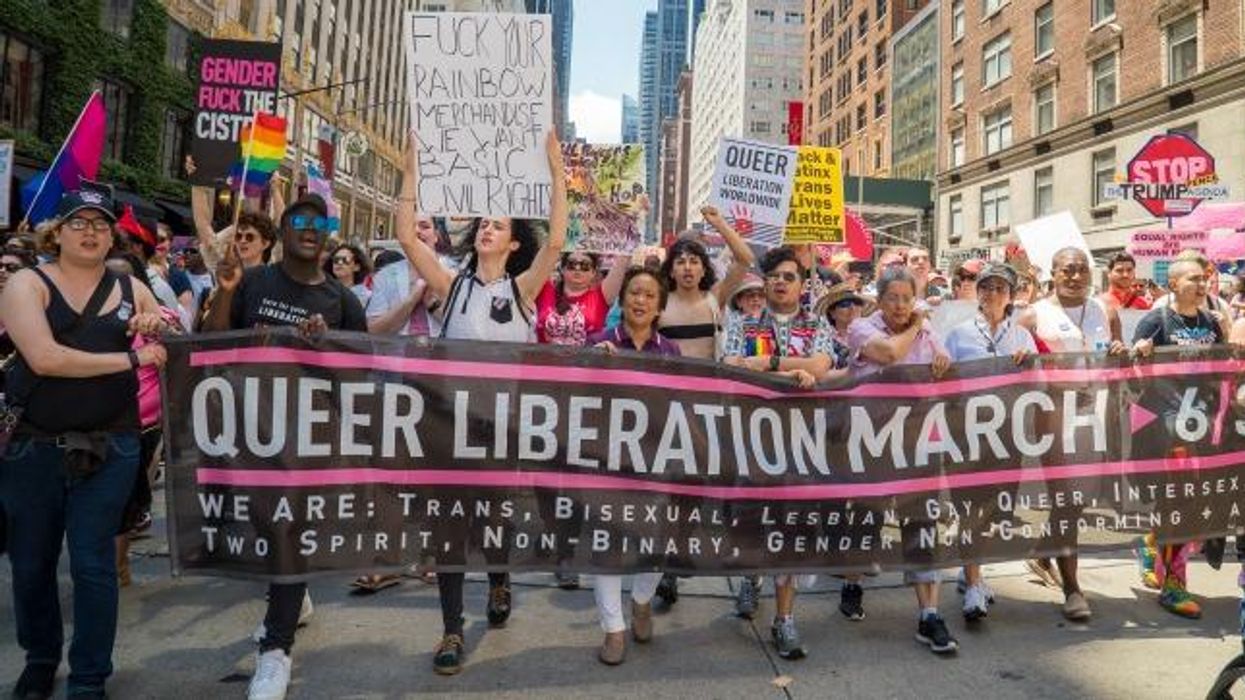
Embracing queer pride while also rejecting corporate involvement and police violence, tens of thousands of people marched in New York City on Sunday as part of the Queer Liberation March.
The march was an alternative to and rebuke of the NYC Pride March, though both marches, as well as other World Pride events across the globe, commemorated the 50th anniversary of the uprising at the Stonewall Inn.
The Queer Liberation March's path flowed in the opposite direction of the corporate-captured march, and followed the same route as the original Christopher Street Liberation Day March of 1970, which took place on the one-year anniversary of the Stonewall uprising.
Among the alternate march's backers was currently imprisoned U.S. Army whistleblower Chelsea Manning, who shared a message with particpants.
"Today, I hope you will look around you and see this world," she said in a message read at the rally. "It is not a utopia in the far-away future. It is here. It is our community. It is us. We got this."
The Reclaim Pride Coalition organized the Queer Liberation March, which said that 45,000 people took part. The coalition described the event as "a people's political march--no corporate floats, and no police in our march," and explained that it seeks to recleaim "the NYC Pride March so it better represents the TBLGQIATSNBGNC+allies."
The coalition summed up the differences between its march and mainstream one on social media:
Marchers highlighted those points with signs with displaying messages like "Queer Liberation not rainbow capitalism" and "End the murder of black and latinx trans women."
"The current Pride Parade is shameful--a corporate extravaganza that completely ignores the profound fights we're still waging all over the world," said Larry Kramer, author and LGBTQIATS+ rights activist, in a press statement earlier this year. "We must send a powerful message to the homophobic, racist Trump administration and regimes and corporations everywhere that are killing our brothers and sisters."
Sunday's march featured two moments of silence. One honored those whose lives were "lost to homophobia, transphobia, racism and sexism, to HIV/AIDS, and to violence in all its forms." The second paid "special tribute to the trans women of color murdered throughout the country merely for proudly being truly themselves," as well as "those killed by police or while incarcerated, those who have died by gun violence or by lack of access to housing and medical care."
Images such as these from participants captured the event as it happened:
"I've seen first-hand the violence the vast militarized police state has done to our queer and trans communities," Manning said in an earlier statement. "Our history is one of rebellion and solidarity. We must stand united and refuse to march with police, corporations, and the systemic violence they continue to inflict on immigrants, people of color, and marginalized folks across the queer and trans spectrum."
As activist Evan Greer said recently, "the struggle is not over," and neither corporations nor politicians nor law enforcement are "going to protect us."
In a video op-ed published last month at the Washington Post, she asked, "Do we simply want to be included in a fundamentally broken and unjust system?"
"Or," she said, "do we want to return to the roots of what people were fighting for at Stonewall and work to dismantle that system and replace it with one that takes care of everyone?"
On the night of June 27, 1969, police raided the Stonewall Inn, a seedy mob-controlled gay bar on Christopher Street in New York City. It was one of thousands of such raids that routinely took place in American cities and towns. But the response was anything but routine. For the first time ever, patrons fought back, setting off three days of rioting and proving the spark that ignited the modern gay rights movement. Inspired by the movements of the 60s, the moment of revolt turned into a wave of organizing.
From the days of the early Gay Liberation Front formed right after the Stonewall Riots and the offshoot Gay Activist Alliance, the "movement" has never been one movement but always a multiplicity of organizations, groups, strategies and actions. The spotlight has usually been on more privileged LGBTQI people, those with more resources, and their agendas have set most of the political priorities for queer people in the decades since. Thus it's especially important and appropriate to stop and remember that the people who helped start it all that night in Greenwich Village were among the most marginalized members of our community: drag queens, prostitutes, homeless youth.
As we await the Supreme Court's ruling on marriage equality, it's important to reaffirm the urgent needs of all LGBTQI people and communities. In addition to legal recognition of our relationships, we need civil rights protection in employment and housing. We need to address the crises our youth face - bullying and homelessness, and all the mental health and substance abuse risks that come with them. Queer and especially trans people face rising hate violence, and the lethal assault on trans women of color is staggering. We also need to look beyond our own borders: the rising tide of queer rights in the U.S. has a counterpart, which is the growing exportation of homophobic agendas by U.S. conservatives to other areas of the world.
The Center for Constitutional Rights will celebrate LGBTQ Pride and march in the annual Pride March this Sunday. We will be joined by our partners from Sexual Minorities Uganda. CCR is suing anti-gay extremist Scott Lively, one of the key figures behind the persecution of LGBTQI Ugandans, on behalf of SMUG, and we are working with LGBTQI organizations and allies in multiple countries where LGBTQI people are under attack as a result of interference by U.S.-based extremists. Our historic case against the NYPD for its unconstitutional and racially discriminatory stop-and-frisk program also affects the rights of LGBTQI New Yorkers. While most people know that the NYPD illegally targets Black and Brown people, many don't realize that they also target transgender and gender non-conforming people, especially people of color, and LGBTQI communities more broadly.
On Sunday, we'll be handing out information about these two cases to the millions of people who come out to watch the march. It's a fitting tribute to the poor and marginalized queers who fought back at the Stonewall 46 years ago. After all, it's the anniversary of that night that the Pride March commemorates.
Nearly 46 years after powerful protests there galvanized the modern gay rights movement, New York City's historic Stonewall Inn has been granted official landmark status.
The designation, unanimously agreed to on Tuesday by the city's Landmarks Preservation Commission, also comes just days before the annual Pride celebration, held annually in commemoration of what became known as the Stonewall Riots of 1969.
It was June 28, 1969, when police raided the Greenwich Village bar that served gay clientele in an era of intolerance toward homosexuality.
As Center for Constitutional Rights (CCR) communications director Dorothee Benz writes in a blog post about the incident, "It was one of thousands of such raids that routinely took place in American cities and towns. But the response was anything but routine. For the first time ever, patrons fought back, setting off three days of rioting and providing the spark that ignited the modern gay rights movement. Inspired by the movements of the 60s, the moment of revolt turned into a wave of organizing."
Meenakshi Srinivasan, chairwoman of the Landmark Preservation Commission, acknowledged Stonewall's place in history in a speech before the vote. "New York City's greatness lies in its inclusivity and diversity," she said. "The events at Stonewall were a turning point in the LGBT rights movement and in the history of our nation."
The vote, according to the New York Observer, "was swift, unanimous, met with loud support, and even tears."
The Observer reported:
Men and women who rioted 46 years ago recalled their experiences in detailed testimonies. Others told stories of how Stonewall was a comforting and accepting place when they struggled to come to terms with their sexualities. Some Council Members shared stories of how granting the bar landmark status was personally significant.
Martin Boyce, who was 21 years old on the first night of the riots, described his experience that night to the Observer. "It was frustration, it was release, it was catharsis," he recalled. "You don't know how much they made me shake in my boots back then."
CCR's Benz said Stonewall's legacy has as much to do with who was involved as with what they accomplished, writing: "It's especially important and appropriate to stop and remember that the people who helped start it all that night in Greenwich Village were among the most marginalized members of our community: drag queens, prostitutes, homeless youth."
To that end, CCR will be handing out information during Sunday's Pride march about both "the growing exportation of homophobic agendas by U.S. conservatives to other areas of the world" and how the New York Police Department (NYPD) targets transgender and gender non-conforming people, especially people of color, and LGBTQI communities more broadly.
To do so, Benz declared, is "a fitting tribute to the poor and marginalized queers who fought back at the Stonewall 46 years ago."