

SUBSCRIBE TO OUR FREE NEWSLETTER
Daily news & progressive opinion—funded by the people, not the corporations—delivered straight to your inbox.
5
#000000
#FFFFFF
To donate by check, phone, or other method, see our More Ways to Give page.
Daily news & progressive opinion—funded by the people, not the corporations—delivered straight to your inbox.
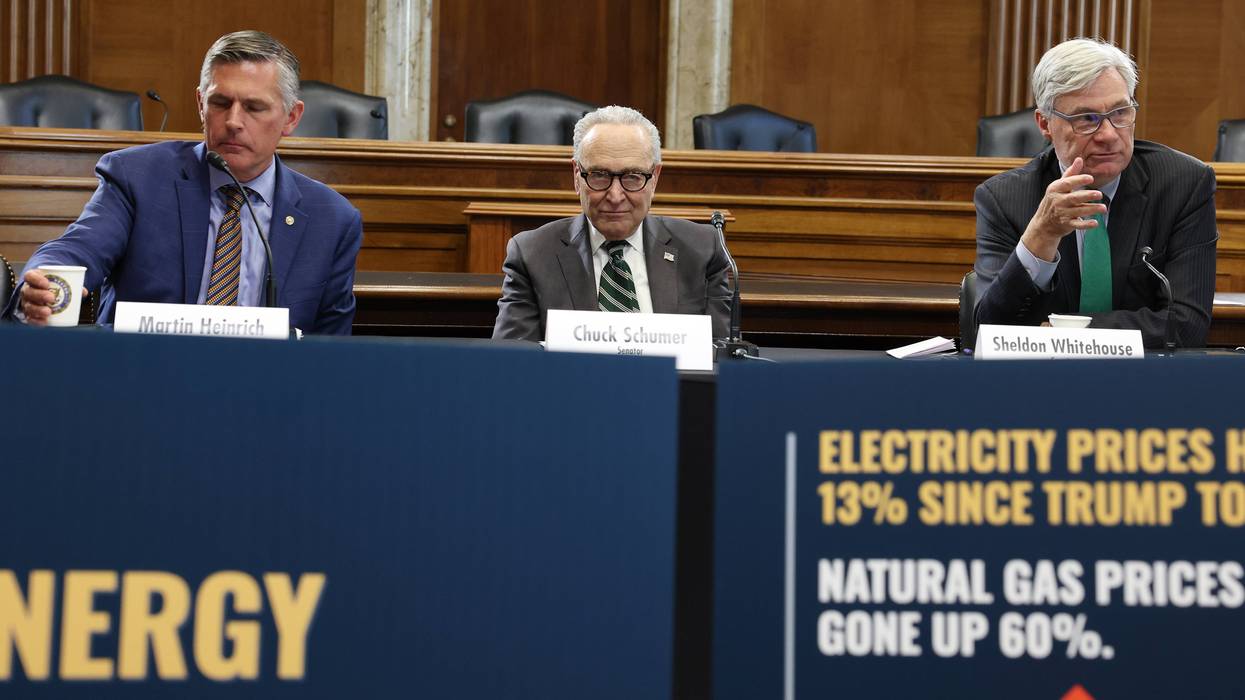
The coalition organizer called on party leaders "to withdraw from negotiations and stand with us and the public lands, waters, and wildlife of the West to build momentum for a progressive permit reform effort."
Amid permitting reform negotiations and votes in the Republican-led Congress this week, dozens of organizations from the US West on Thursday urged Democratic leaders to reject "a reactive capitulation to energy and technology industry demands and the Trump administration's deliberately engineered regulatory chaos."
"There is simply no precedent for what this administration has wrought, and permitting reform proposals under consideration—which scapegoat environmental laws—will only deepen the harm," warned 73 community, conservation, faith, and Indigenous groups in a letter to the top Democrats in each chamber, Sen. Chuck Schumer (D-NY) and Rep. Hakeem Jeffries (D-NY), as well as those on two relevant Senate panels.
In December, 11 Democrats came under fire for voting with nearly all Republicans in the US House of Representatives to advance the Standardizing Permitting and Expediting Economic Development (SPEED) Act. Led by retiring Rep. Jared Golden (D-Maine) and Committee on Natural Resources Chair Bruce Westerman (R-Ark.), it would amend the crucial National Environmental Policy Act, a frequent target of climate polluters and their allies in Congress.
With the SPEED Act pending in the Senate—where the GOP generally needs some Democratic support to advance legislation, due to its narrow majority and the filibuster rule—House Committee on Energy and Commerce Chair Brett Guthrie (R-Ky.) took to the chamber's floor on Wednesday to promote three other bills. The FENCES Act, FIRE Act, and RED Tape Act, he said, "are an essential part of the committee's broader efforts on permitting reform and align with White House permitting priorities."
The House passed the FENCES and RED Tape bills on Thursday. Golden and Democratic Reps. Jim Costa (Calif.), Henry Cuellar (Texas), Don Davis (NC), Adam Gray (Calif.), and Marie Gluesenkamp Perez (Wash.) joined Republicans in backing the former. Those Democrats, plus Rep. Vicente Gonzalez (Texas), also voted with the GOP for the latter.
Meanwhile, in the upper chamber, Republicans on Thursday passed a House-approved resolution to reverse a 20-year moratorium on mining in the watershed of the Boundary Waters Canoe Area Wilderness. Still, Senate Environment and Public Works Ranking Member Sheldon Whitehouse (D-RI) told Politico's E&E News earlier this week that "we're making steady progress" on permitting reform talks, "and it would not be unreasonable to have something to show our caucuses by the August recess."
The coalition of Western groups argued Thursday that "given Congress' ideological composition and alignment with the Trump administration's agenda, any permitting legislation that could conceivably emerge from this Congress and be signed into law by the president would unacceptably erode bedrock community and environmental safeguards, exclude the public from federal decision-making, and diminish the transparency and accountability now demanded of government agencies by federal law."
The groups pointed to various examples, including what critics called President Donald Trump's recent $1 billion "taxpayer-funded bribe" to get TotalEnergies to cancel its planned wind farms in favor of oil and gas projects, as well as his so-called God Squad's unprecedented exemption allowing fossil fuel operations in the Gulf of Mexico to ignore policies intended to protect endangered species. The letter also stresses that "Congress has not checked this abuse—it has enabled it."
"Rather than press forward with ill-fated legislation in this fraught moment, we therefore ask that you stand with us in defense of climate action and the public lands, waters, and wildlife, and communities of the West," the coalition wrote to Whitehouse, Schumer, Jeffries, and Senate Energy and Natural Resources Committee Ranking Member Martin Heinrich (D-NM).
"It is this fight—in this moment—that can build shared trust and set the conditions for constructive legislation that strengthens and revitalizes the federal government's capacity to serve the public interest," the coalition continued. "This means, to us, the build-out, protection, and restoration of green infrastructure (built or natural) and the full integration of ecological and community considerations into climate and energy policy as a precondition of our ability to thrive in kinship with an abundant world."
The letter urging "no deal with [the] devil on permit reform" was authored by Western Environmental Law Center executive director Erik Schlenker-Goodrich, who stressed in a statement that "the first rule of negotiation is that it's impossible to reach workable solutions with bad-faith actors."
"Today's Republican Congress has shown unprecedented hostility to climate, environmental, and community protections," he said. "It is glaringly obvious that any changes to our bedrock environmental laws signed by President Trump would sacrifice far too much and compromise the imperative to foster a just and equitable transition to an economy powered by renewable energy."
Schlenker-Goodrich called on Heinrich and Whitehouse "to withdraw from negotiations and stand with us and the public lands, waters, and wildlife of the West to build momentum for a progressive permit reform effort with stronger bargaining power after the midterm elections" in November.
Other signatories include leaders at the Center for Biological Diversity, Climate Justice Alliance, Friends of the Shasta River, GreenLatinos of New Mexico, Orange County Coastkeeper, Oregon Wild, Sierra Club Montana Chapter, Southeast Alaska Conservation Council, Umpqua Watersheds, Western Watersheds Project, WildEarth Guardians, Wyoming Wilderness Association, and more.
"Deregulatory permitting reform right now only means the fossil fuel industry will be forever dominant in this nation, which is why they are the biggest cheerleader for making a deal now," said Brett Hartl, government affairs director at the Center for Biological Diversity. "Democrats must focus on fighting the lawless Trump administration and the fossil fuel industry, not cut deals with people that only seek to destroy clean energy and a livable future."
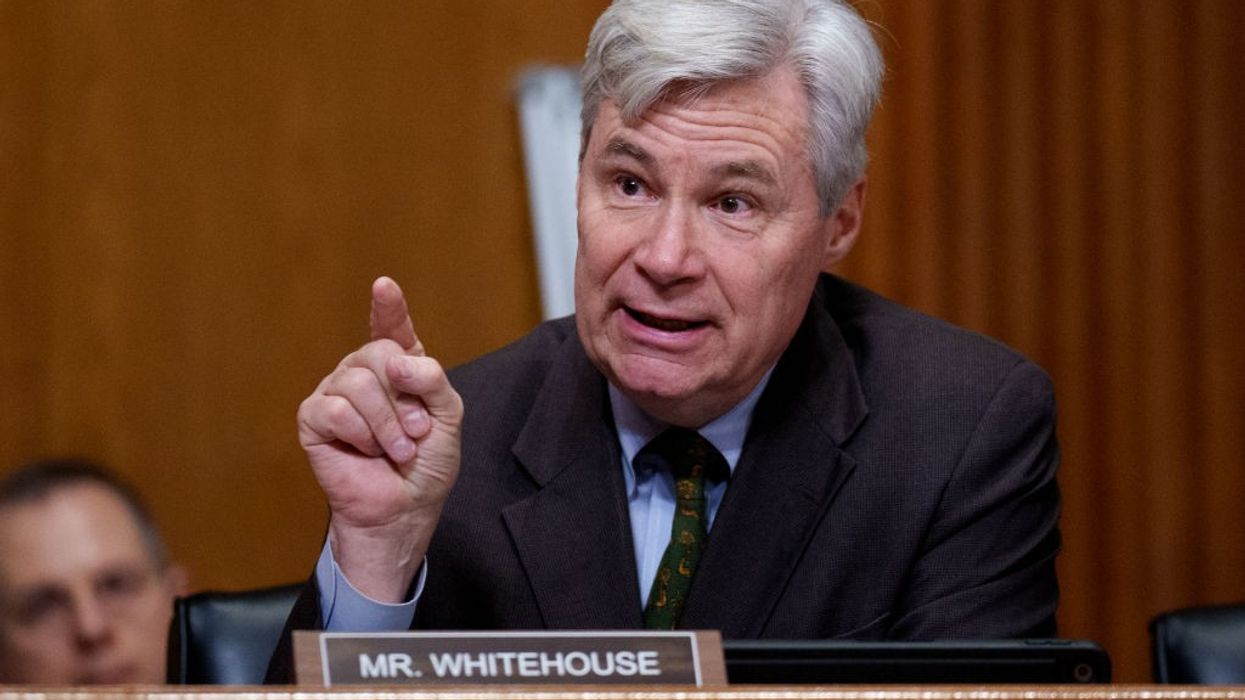
"By sabotaging US energy innovation and killing American jobs, the Trump administration has made clear that it is not interested in permitting reform," said Sens. Sheldon Whitehouse and Martin Heinrich.
The top Democrats on a pair of key US Senate panels ended negotiations to reform the federal permitting process for energy projects in response to the Trump administration's Monday attack on five offshore wind projects along the East Coast.
Senate Environment and Public Works Committee Ranking Member Sheldon Whitehouse (D-RI) and Energy and Natural Resources Committee Ranking Member Martin Heinrich (D-NM) began their joint statement by thanking the panels' respective chairs, Sens. Shelley Moore Capito (R-W.Va.) and Mike Lee (R-Utah), "for their good-faith efforts to negotiate a permitting reform bill that would have lowered electricity prices for all Americans."
"There was a deal to be had that would have taken politics out of permitting, made the process faster and more efficient, and streamlined grid infrastructure improvements nationwide," the Democrats said. "But any deal would have to be administered by the Trump administration. Its reckless and vindictive assault on wind energy doesn't just undermine one of our cheapest, cleanest power sources, it wrecks the trust needed with the executive branch for bipartisan permitting reform."
Earlier Monday, the US Department of the Interior halted Coastal Virginia Offshore Wind off Virginia, Empire Wind 1 and Sunrise Wind off New York, Revolution Wind off Rhode Island and Connecticut, and Vineyard Wind 1 off Massachusetts, citing radar interference concerns.
Governors and members of Congress from impacted states, including Whitehouse and Senate Minority Leader Chuck Schumer (D-NY), condemned the announcement, with Whitehouse pointing to a recent legal battle over the project that would help power Rhode Island.
"It's hard to see the difference between these new alleged radar-related national security concerns and the radar-related national security allegations the Trump administration lost in court, a position so weak that they declined to appeal their defeat," he said.
This looks more like the kind of vindictive harassment we have come to expect from the Trump administration than anything legitimate.
— Senator Sheldon Whitehouse (@whitehouse.senate.gov) December 22, 2025 at 12:59 PM
Later, he and Heinrich said that "by sabotaging US energy innovation and killing American jobs, the Trump administration has made clear that it is not interested in permitting reform. It will own the higher electricity prices, increasingly decrepit infrastructure, and loss of competitiveness that result from its reckless policies."
"The illegal attacks on fully permitted renewable energy projects must be reversed if there is to be any chance that permitting talks resume," they continued. "There is no path to permitting reform if this administration refuses to follow the law."
Reporting on Whitehouse and Heinrich's decision, the Hill reached out to Capito and Lee's offices, as well as the Interior Department, whose spokesperson, Alyse Sharpe, "declined to comment beyond the administration's press release, which claimed the leases were being suspended for national security reasons."
Lee responded on social media with a gif:
Although the GOP has majorities in both chambers of Congress, Republicans don't have enough senators to get most bills to a final vote without Democratic support.
The Democratic senators' Monday move was expected among observers of the permitting reform debate, such as Heatmap senior reporter Jael Holzman, who wrote before their statement came out that "Democrats in Congress are almost certainly going to take this action into permitting reform talks... after squabbling over offshore wind nearly derailed a House bill revising the National Environmental Policy Act last week."
That bill, the Standardizing Permitting and Expediting Economic Development (SPEED) Act, was pilloried by green groups after its bipartisan passage. It's one of four related pieces of legislation that the House advanced last week. The others are the Mining Regulatory Clarity Act, Power Plant Reliability Act, and Reliable Power Act.
David Arkush, director of the consumer advocacy group's Climate Program, blasted all four bills as "blatant handouts to the fossil fuel and mining industries" that would do "nothing to help American families facing staggering energy costs and an escalating climate crisis."
"We need real action to lower energy bills for American families and combat the climate crisis," he argued. "The best policy response would be to fast-track a buildout of renewable energy, storage, and transmission—an approach that would not just make energy more affordable and sustainable, but create US jobs and bolster competitiveness with China, which is rapidly outpacing the US on the energy technologies of the future.
Instead, Arkush said, congressional Republicans and President Donald Trump "are shamefully pushing legislation that would only exacerbate the energy affordability crisis and further entrench the dirty, dangerous, and unaffordable energy of the past."
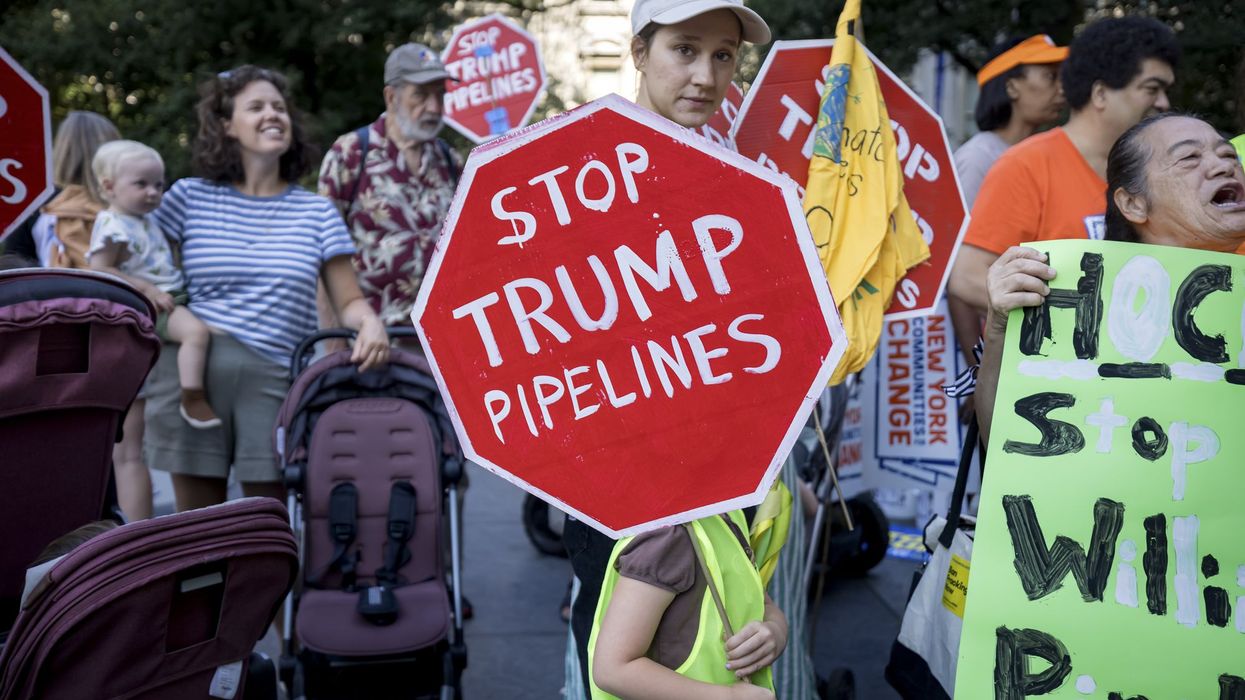
"The SPEED Act protects corporate interests, not the public, and it should be rejected by any senator who claims to stand with the people," said one campaigner.
Eleven Democrats on Thursday voted with nearly all Republicans in the US House of Representatives to advance a permitting reform bill that climate and frontline organizations warn is a "disastrous" attack on a landmark environmental protection law.
Democratic Reps. Jim Costa (Calif.), Henry Cuellar (Texas), Don Davis (NC), Chris Deluzio (Pa.), Lizzie Fletcher (Texas), Jared Golden (Maine), Vicente Gonzalez (Texas), Adam Gray (Calif.), John Mannion (NY), Marie Gluesenkamp Perez (Wash.), and Marc Veasey (Texas) voted with all Republicans present expect Rep. Brian Fitzpatrick (Pa.) to pass the bill.
The Standardizing Permitting and Expediting Economic Development (SPEED) Act, spearheaded by Golden and House Committee on Natural Resources Chair Bruce Westerman (R-Ark.), would amend the National Environmental Policy Act (NEPA), which "is often called the 'Magna Carta' of federal environmental laws."
In a statement after the vote, Food & Water Watch legal director Tarah Heinzen said that "for decades, NEPA has ensured logical decision-making and community involvement when the federal government considers projects that could harm people and the environment. The SPEED Act would eviscerate NEPA's protections."
The group detailed key ways in which the SPEED Act attacks NEPA:
"Today's absurd House vote is yet another handout to corporate polluters at the expense of everyday people who have to live with the real-world impacts of toxic pollution from dirty industries like fossil fuels and factory farms," Heinzen argued. "This nonsense must be dead on arrival in the Senate."
Other campaigners also looked to the upper chamber after the vote. Erik Schlenker-Goodrich, executive director of the Western Environmental Law Center, said that "renewable energy and climate advocates in the Senate must hold the line against the SPEED Act's evisceration of our bedrock environmental and community protection law."
Allie Rosenbluth, Oil Change International's US campaign manager, stressed that "our senators must stand up against the SPEED Act's attempts to undermine democratic decision-making, pollute our communities, and threaten our collective future."
For a Better Bayou's James Hiatt similarly said that "the SPEED Act protects corporate interests, not the public, and it should be rejected by any senator who claims to stand with the people."
Anthony Karefa Rogers-Wright, co-coordinator of Black Alliance for Peace's Climate, Environment, and Militarism Initiative, warned that the bill "represents yet another assault on the health of frontline, Black, Brown, Indigenous, and poor white communities that have been designated as sacrifice zones by big polluters who bribe lawmakers with big money to continue a culture of extract, slash, burn, and emit at the expense of oppressed and marginalized peoples."
"Rather than speeding up the approval of dirty projects, Congress should increase funding for federal agencies and grassroots organizations accountable to frontline communities to carry out legally defensible and accurate environmental analyses," he continued, pointing to the Environmental Justice for All Act, previously led by the late Democratic Congressmen Raúl Grijalva (Ariz.) and Donald McEachin (Va.).
Mar Zepeda Salazar, legislative director at Climate Justice Alliance, also pointed to that alternative: "The SPEED Act fast-tracks harmful fossil fuel and polluting projects, not the community-led clean energy solutions families and Indigenous peoples across the country have long called for. Instead of pushing the SPEED Act—a bill that would strip away what few legal protections communities still have, weaken safeguards for clean air, land, and water near new industrial development, and sidestep meaningful consultation with federally recognized tribal nations—Congress should be advancing real, community-driven permitting reform."
"Examples include the Environmental Justice for All Act, which lays out meaningful public engagement, strong public health protections, respect for tribal sovereignty and consultation obligations, and serious investments in agencies and staff," she said.
Representatives from the Institute for Policy Studies, Sacred Places Institute for Indigenous Peoples, and Unitarian Universalists for Social Justice also spoke out against what David Watkins, director of government affairs for the Climate and Energy Program at the Union of Concerned Scientists, condemned as "a sizable holiday gift basket for Big Oil and Gas." He, too, urged the Senate to "reject this retrograde legislation and stand up to the deep-pocketed, polluting industries lobbying for it."
Lauren Pagel, policy director at Earthworks, pointed out that passing the SPEED Act wasn't the only way in which the House on Thursday "chose corporate interests over people, Indigenous Peoples' rights, and our environment." It also passed the Mining Regulatory Clarity Act, which "will remove already-scarce protections for natural resources and sacred cultural sites in US mining law."
"Today's House votes are a step backwards for our nation, but we continue to stand firm for the rights of the people and places on the frontlines of oil, gas, and mining," Pagel said. "Communities and ecosystems shouldn't pay the price while corporations rush to profit off extraction—with a helping hand from our elected officials."
Along with those two pieces of legislation, Public Citizen pointed to the House's approval of the Power Plant Reliability Act and Reliable Power Act earlier this week. David Arkush, director of the consumer advocacy group's Climate Program, said that the bills advancing through Congress "under the guise of 'bipartisan permitting reform' are blatant handouts to the fossil fuel and mining industries."
"We need real action to lower energy bills for American families and combat the climate crisis," Arkush asserted, calling on congressional Republicans and President Donald Trump "to fast-track a buildout of renewable energy, storage, and transmission—an approach that would not just make energy more affordable and sustainable, but create US jobs and bolster competitiveness with China, which is rapidly outpacing the US on the energy technologies of the future."

The fossil fuel lobby has now supersized their hostage demands with the single-minded goal of guarding against an incoming Harris administration by mandating a steady stream of fossil fuel leases and permits.
The hardest lesson I have learned over my career working on climate policy is to never underestimate the power and craftiness of the fossil fuel lobby. The evidence of their success: global fossil fuel consumption and emissions were higher in 2023 than at any time in history. That, in a nutshell, is how we are losing the fight against climate change.
This is why I grew alarmed when U.S. Sen. Joe Manchin (I-W.Va.), the fossil fuel industry’s strongest champion in Congress, rushed a new energy deal through his committee late last month before it could be properly scrutinized. Manchin will give up his energy gavel when he retires this year. This is his last hurrah, and it’s a doozy.
The Energy Permitting Reform Act combines significant reforms in electricity transmission—potentially unlocking big gains in renewable energy—with coal, oil, and gas boons that would be big wins for the fossil fuel lobby.
The permitting laws surrounding oil, gas, and coal leases and permits may be an arcane abstraction to most analysts, but they are the keys to the energy kingdom to fossil fuel industries intent on expanding production for decades to come.
Now energy analysts are in the hot seat as they are asked to validate whether this energy bargain is a good deal for the planet.
The lessons from a similar energy deal in 2015 should give anyone pause before joining the Manchin parade. The 2015 budget deal paired renewable energy tax credits with a provision to lift the decades-old ban on exporting U.S. crude oil. Energy analysts rushed to validate the bargain. Those clean energy provisions would “dwarf the impact on carbon emissions of allowing oil exports,” wrote Michael Levi in an analysis widely quoted at the time.
To quell fears about the oil provisions, Rep. Nancy Pelosi (D-Calif.) sent a letter, writing: “While lifting the oil export ban remains atrocious policy, the wind and solar tax credits in the omnibus will eliminate around 10 times more carbon pollution than the exports of oil will add.”
Her appeal worked. The bill passed. Contrary to the assurances of energy experts, the oil export floodgates opened. Crude exports surged from zero to 4 million barrels a day today. This growth in exports was 20 times higher than the worst-case scenario forecasted in 2015 by Levi, the U.S. Energy Information Administration (EIA), and others.
As I said at the start, the oil lobby is smart. They knew that fracking technology was going to transform oil and gas production, but they needed new markets.
The 2015 experience should caution everyone to step back and look more closely at what the fossil fuel lobby helped Manchin write behind closed doors. The permitting laws surrounding oil, gas, and coal leases and permits may be an arcane abstraction to most analysts, but they are the keys to the energy kingdom to fossil fuel industries intent on expanding production for decades to come.
There is ample cause for concern. Sen. John Barrasso (R-Wyo.), Manchin’s co-author, gloats that the bill “guarantee[s] future access to oil and natural gas resources on federal lands and waters” in ways that not even former U.S. President Donald Trump could do under current law. Further, he says that “it will permanently end President Joe Biden’s reckless ban on new liquefied natural gas (LNG) exports.”
The Wall Street Journal editorial board agrees, urging Trump to “steal a march on Kamala Harris by endorsing” Manchin’s energy bill.
Changing the law in order to expedite new fossil fuel infrastructure can directly threaten global climate goals. The IPCC, the world’s leading authority on climate science, warned in their 2022 report that “cancellation of plans for new fossil fuel infrastructures” is needed to avoid “significant carbon lock-ins, stranded assets, and other additional costs” and potentially putting the Paris climate goals “out of reach” (p. 267).
Similarly, the International Energy Agency, the world’s leading tracker of global energy trends, concluded in their 2023 World Energy Outlook that “investment in oil and gas today is almost double the level required in the [net zero emissions scenario] in 2030, signaling a clear risk of protracted fossil fuel use that would put the 1.5°C goal out of reach” (p. 19).
Every energy bill ever passed by Congress has some degree of “hold your nose” compromise. Even the 2022 Inflation Reduction Act, the most important piece of climate legislation ever enacted, gave some ground, tying oil and gas leases together with offshore wind leases in a Beltway version of a shotgun wedding.
But the fossil fuel lobby has now supersized their hostage demands with the single-minded goal of guarding against an incoming Harris administration by mandating a steady stream of fossil fuel leases and permits.
In a separate analysis (update available here), I calculated the energy and greenhouse gas impacts of the LNG portion of the Manchin bill. The five LNG liquefaction plants expedited by the bill are designed to produce up to 77 trillion cubic feet of natural gas through 2050 (10.6 Bcf/day).
This long-lived fossil fuel infrastructure is far more likely to dampen investment in renewable energy, electrification, and energy conservation than displace other fossil fuels.
Liquefying gas, which must be cooled to 260°F below zero, requires significant energy. According to EIA, 14% of the gas used to produce LNG is consumed during liquefaction. That means that up to 13 trillion additional cubic feet of natural gas through 2050 (1.7 Bcf/day) will be consumed to produce the LNG from these five projects.
The total volume of natural gas consumed and processed by these LNG projects (94 trillion cubic feet through 2050) is enough to meet almost all of the gas needs for homes across America (99 trillion cubic feet) over the same timeframe. It is also equivalent to 62% of the total amount of gas (152 trillion cubic feet) EIA forecasts will be used by the electric power sector from 2030-2050.
The lifecycle greenhouse gas emissions of all LNG produced by these five plants would be 616 million metric tons annually (13 gigatons through 2050), equivalent to 165 coal-fired power plants.
Using government estimates of the economic damage caused by greenhouse gas emissions, we can put a dollar estimate to these emissions: $1.7 trillion (cumulatively through 2050).
Keep in mind this only accounts for the LNG section of the Manchin bill and does not include the impacts of the bill’s oil, coal, and gas leasing mandates.
Assumptions used in greenhouse gas analysis can have profound effects on policymaking. It’s impossible to achieve numerical science targets without good measurements.
One set of assumptions in particular can make or break assessments of fossil fuel infrastructure. Energy substitution analysis looks at what happens to energy markets when new energy sources are added or removed, which in turn shapes how greenhouse gas emissions are calculated.
This is where some energy analyses get sloppy, relying on outdated, simplified assumptions to minimize the climate impact of fossil fuel infrastructure. The federal government is particularly bad at this. It can be awkward to approve projects after finding they superchage global warming. My analysis of seven major environmental impact statements across five federal agencies found that the agencies erased 98% of the greenhouse gas emissions from oil and gas projects, on average, obscuring $1 trillion in climate damages.
The pertinent question when assessing the substitution effects of energy infrastructure is whether the energy helps or hurts in achieving deep decarbonization pathways. This question is kept firmly in sight when analysts assess clean energy supply policies but can fade into the background when people argue that fossil fuel supplies don’t matter because the emissions aren’t any worse than current pollution sources.
Someone can claim a punch to your right arm won’t hurt more than a punch to your left arm, but the reality is that the punch still hurts. You can claim that LNG doesn’t increase emissions because it’s substituting for other fossil fuels, but the reality is that the planet is still getting cooked.
The theoretical argument that U.S. LNG coming online in five years will replace coal in China is especially unrealistic in light of global and regional trends toward renewable electricity. According to the Institute for Energy Economics and Financial Analysis (IEEFA): “Evidence from China, the world’s largest coal consumer, shows that LNG is unlikely to materially displace coal-fired power generation.”
Keep in mind that these LNG plants won’t come online until about 2030, and the billions of dollars invested are dependent on decades of LNG production thereafter. This long-lived fossil fuel infrastructure is far more likely to dampen investment in renewable energy, electrification, and energy conservation than displace other fossil fuels.
The oil and gas industry has a particularly long and successful history of creating and defending markets to absorb supply. Consider, for example, the oil lobby’s successful efforts to keep fuel economy standards, and how they have pushed fossil fuel-based plastics across the world. Now that America is shifting off gas, they have turned their sights to shifting those emissions overseas.
There are many factors that go into assessing the impacts of Manchin’s energy bill, with valid grounds for different approaches and results. I suggest the following principles as potential common ground and a worthwhile test for any analysis:

One campaigner called the Energy Permitting Reform Act "a shameless attempt by Sen. Joe Manchin to line the pockets of his fossil fuel donors, sacrifice communities, and endanger our climate."
A bipartisan energy permitting reform bill introduced last week in the U.S. Senate—and described by one campaigner as "the biggest giveaway in decades to the fossil fuel industry"—advanced Wednesday in a key vote that came over the objections of hundreds of green groups.
The Senate Energy and Natural Resources Committee passed the Energy Permitting Reform Act of 2024 in a 15-4 vote. Sens. Josh Hawley (R-Mo.), Mazie Hirono (D-Hawaii.), Bernie Sanders (I-Vt.), and Ron Wyden (D-Ore.) voted against advancing the bill.
The bill's co-sponsors, Sens. Joe Manchin (I-W.Va.) and John Barrasso (R-Wyo.), claim the proposal will "strengthen American energy security by accelerating the permitting process for critical energy and mineral projects of all types in the United States."
Critical lawmakers and climate campaigners warn that "this proposal includes a litany of fossil fuel giveaways, undermining potential climate benefits that might be attained by bringing renewable energy sources to the grid more quickly," as Tyson Slocum, director of Public Citizen's Energy Program, said in a statement Wednesday.
Echoing warnings from last week, Slocum stressed that the bill "is nothing short of the first steps to implement the radical corporate giveaway agenda espoused in 'Project 2025,'" a sweeping far-right initiative led by the Heritage Foundation.
"That agenda essentially calls for automatic approvals of liquefied natural gas (LNG) exports regardless of the impact on climate change, frontline communities suffering with environmental and health problems, and on prices for American families," he said. "The bill would also make it harder to build renewable energy on public lands, while making it easier to drill for oil and gas and to dump mining waste."
"Some Democrats who voted for the bill claim 'this is the best deal we can get,'" Slocum noted. "That is false. This legislation will only get worse if it advances to the floor and then heads to the GOP House. We call on Senate leadership to stop this misguided legislation."
Public Citizen was among the over 360 groups that sent a letter to senators on Tuesday urging them "to reject this proposal and instead, put forward real solutions to build a clean energy economy, and not pair those reforms with giveaways to the fossil fuel industry."
The letter has sections on LNG exports, the fossil fuel industry, federal mining law, and judicial review, emphasizing that the bill "guts bedrock environmental protections, endangers public health, opens up tens of millions of acres of public lands and hundreds of millions of acres of offshore waters to further oil and gas leasing, gives public lands to mining companies, and would defacto rubberstamp gas export projects that harm frontline communities and perpetuate the climate crisis."
Wyden was similarly critical in his comments to the committee on Wednesday. He acknowledged that the bill contains "useful provisions," specifically endorsing the transmission language, the encouragement of geothermal energy development, and the creation of the hardrock mining cleanup fund.
"If the bill contained these provisions alone, I'd give my support and recommend a parade down Main Street," Wyden said. "The big problem is the improvements in law I've just described are held hostage in this legislation to the outdated fossil fuel status quo that existed before our reforms of 2022 were enacted."
Two years ago, Biden signed the Inflation Reduction Act—a watered-down but still historic climate package that only got through Congress because Manchin, then a Democrat, had a backroom deal with Senate Majority Leader Chuck Schumer (D-N.Y.) to vote for it in exchange for passing permitting reforms.
Since then, climate-conscious campaigners and lawmakers have repeatedly blocked related proposals from Manchin, a longtime fossil fuel industry ally who leads the panel that voted Wednesday and is set to retire when this congressional session ends.
"The Senate Energy & Natural Resources Committee should be ashamed that it voted to advance the Energy Permitting Reform Act, a blatant, dirty deal to fast-track fossil fuels at any cost," declared Allie Rosenbluth, United States program manager at Oil Change International. "This outrageous bill would unleash more oil and gas drilling on federal lands and waters and recklessly rush the review of proposed LNG export projects equivalent to the greenhouse gas pollution of 165 new coal plants."
Rosenbluth highlighted that "the International Energy Agency and scientists worldwide have made it clear: No new fossil fuel project is compatible with a livable future. The United States, already the world leader in oil and gas production and expansion, is failing miserably to meet its climate commitments."
"We thank Sens. Ron Wyden, Bernie Sanders, and Mazie Hirono for voting 'no' and voicing their strong opposition to the fossil fuel giveaways in this bill," she added. "This bill is a shameless attempt by Sen. Joe Manchin to line the pockets of his fossil fuel donors, sacrifice communities, and endanger our climate. We demand the Senate reject this disastrous proposal and commit to real action to protect frontline communities from the devastating impacts of fossil fuel development and the ongoing climate crisis."
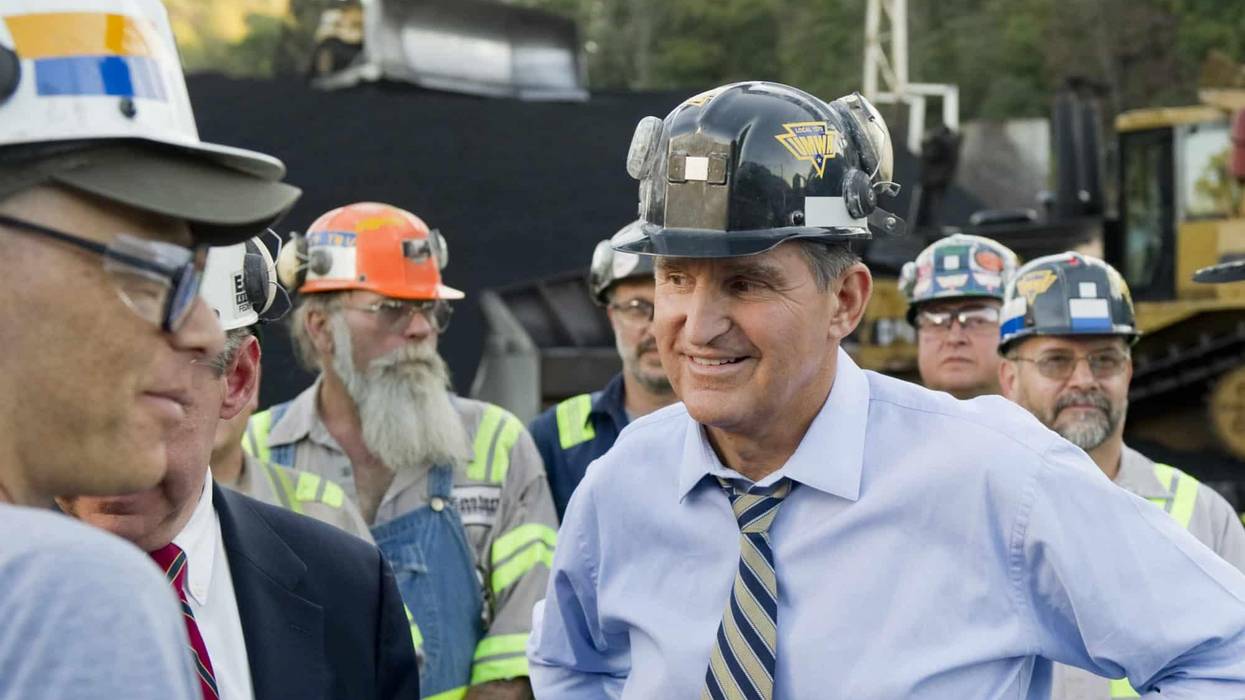
Manchin’s latest attempt at permitting reform would try and force the approval of huge new LNG export terminals along the Gulf Coast, which are both environmental justice nightmares and major carbon bombs.
A story. In December of 2015, everyone who worked on climate issues was in Paris for the white-knuckled final negotiations of the historic accords. While that was going on, Big Oil’s friends in Congress passed—almost without debate—an end to the longstanding ban on oil exports from the U.S. I cobbled together—with the help of the Sierra Club’s Mike Brune—what may have been the only op-ed opposing the measure, in a Paris cafe fueled by pain au chocolat. But the Democratic Senators I reached out to back home laughed—it wasn’t a big deal, they said, and anyway they were getting a production tax credit for wind energy in return. They were wrong: America in a decade has gone from not exporting oil and gas to becoming the world’s biggest producer. Bigger than Russia and the Saudis.
The moral of the story is: Big Oil is sneaky, and they will use moments when attention is diverted (say, by the advent of a truly powerful new presidential candidate) to advance their agenda. And the point of the story is: They’re trying it again.
A couple of days ago—while all of us were paying attention to Brat Summer, heterosectionality, and the general splendor of Kamala Harris’ first week (huge thanks to the members of the climate community who came together online last night to raise huge money for the campaign)—Sen. Joe Manchin (I-W.Va.) announced he had cobbled together a new proposal for “permitting reform.” On the face of it, some of the new proposal makes real sense: Among other things, it would ease the process of approving the badly needed transmission lines for moving solar and wind power back and forth across the continent.
This week saw the hottest temperatures on our planet in at least the last 125,000 years. Get real.
But remember: Joe Manchin has taken more money from the fossil fuel industry than anyone else in D.C. (Which is saying something—he’s the Simone Biles of corruption). And so it’s not surprising that there’s a huge cost for this sane policy change: The bill will also try and force the approval of huge new liquefied natural gas (LNG) export terminals along the Gulf Coast. This is not only disgusting on environmental justice grounds (watch Roishetta Ozane explain the cost to her community) but it is also the single biggest greenhouse gas bomb on planet Earth.
Jeremy Symons, the veteran climate analyst who has supplied the most relevant climate analyses throughout the LNG fight, came up with these numbers last night. If enacted, he said, the LNG portion of the Manchin bill would “lock in new greenhouse gas emissions equivalent to 165 coal-fired power plants or more” and “erase the climate benefits of building 50 major renewable electricity transmission lines.” It is exactly, to the letter, what Project 2025 has called for.
And yet it has some actual chance of passing. Martin Heinrichs, the Democratic senator from New Mexico, endorsed it on Wednesday—which makes a certain amount of local sense, since the state derives an outsized share of its government revenues from taxes on gas production. But Heinrichs is selling out the planet to help his state. The question is, how many of his fellow Democrats will go along? Enough to allow this legislation to move through the upper chamber?
Because remember: The ultimate goal of climate policy is not to rewire America so it can use more renewable energy. That is a good goal, and it will make money for solar and wind developers which is why many of them will support this bill. But the goal of climate policy is to prevent the planet from overheating. And if you make renewable energy easier in America at the cost of addicting developing Asian economies to exported American LNG, you have taken an enormous step backward. (You’ve also screwed over the American consumers who still depend on natural gas and will now pay more, which is one reason senators like Ed Markey (D-Mass.) have taken a dim view of this proposed law).
The big green groups have come out strongly against it. Here’s the position of the League of Conservation Voters, and the Natural Resources Defense Council, and EarthJustice, and the Sierra Club, and Oil Change International. And here’s mine: This week saw the hottest temperatures on our planet in at least the last 125,000 years. Get real.
This week saw the explosion of joy that comes when politicians stand up to business as usual. Don’t undermine all of it with a “deal” whose main beneficiary is Big Oil. Don’t give Joe Manchin a gift on his way out the door. Don’t do what you did in 2015, when you opened the door to the oil and gas export boom. Don’t turn off the same young voters that U.S. President Joe Biden turned off by approving the Willow oil complex. Don’t get in the way of the momentum we’re trying to build as November approaches.
And on top of all that political reality, there’s reality reality as well. Physics doesn’t get a vote in Congress, but it gets the only vote that matters in the real world. Pay attention to it for once!
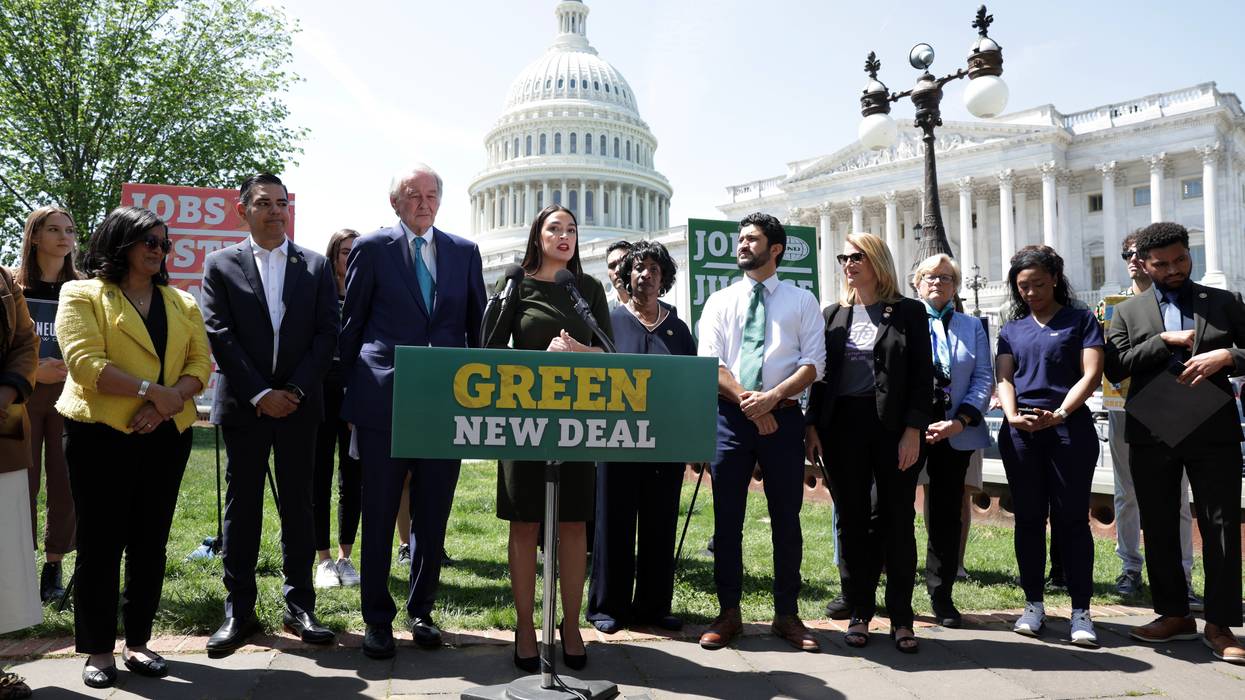
"To run on green energy, we have to build green infrastructure," said Sen. Ed Markey. "The clean energy revolution is here—but we need a 21st-century electric grid to support it."
U.S. Reps. Alexandria Ocasio-Cortez and Greg Casar joined Sen. Ed Markey on Thursday to reintroduce legislation that aims to "lay the groundwork for America's clean energy revolution by advancing critical electric infrastructure to strengthen reliability and lower costs for consumers."
Previously put forward by Markey (D-Mass.) last year, the Connecting Hard-to-Reach Areas With Renewably Generated Energy (CHARGE) Act would mandate reforms through the Federal Energy Regulatory Commission (FERC) to accelerate the energy transition by supporting the development of transmission networks.
The bill comes amid fierce debates over permitting reforms—with Republicans and right-wing Democrats trying to gut federal environmental protections and serve fossil fuel giants while claiming that their proposals will boost clean energy. It also comes as much of the Northern Hemisphere endures soaring temperatures, one consequence of humanity continuing to heat up the planet.
"For the United States to run on green energy, we first need to build green infrastructure," said Markey, who co-chairs the Senate Climate Change Task Force and has long led the fight for Green New Deal legislation with Ocasio-Cortez (D-N.Y.). "Right now, the United States relies on two-lane roads for our electricity traffic when we need a renewable energy superhighway."
"The CHARGE Act lays the groundwork for an energy grid that can support an explosion of electric-powered vehicles and buildings, while also improving energy reliability, lowering costs for consumers, and spurring economic competition," Markey explained. "My legislation will supply America with the tools and guidance needed to turn the clean energy revolution up a notch, accelerating our shift to true energy independence that breaks our nation's reliance on foreign oil from countries like Russia."
As a statement from Markey's office detailed, the bill would:
Ocasio-Cortez highlighted that "our patchwork transmission system is blocking billions of dollars in new renewable deployment," and it is "also increasingly vulnerable to widespread power outages in nearly every part of the country."
The combination of power outages and extreme temperatures can be deadly. British meteorologist Laura Tobin said during a Wednesday broadcast that Phoenix, Arizona has had a record-breaking 19 consecutive days of temperatures hitting at least 110°F and "is one of the first cities in the world to become uninhabitable unless they have air conditioning."
As the Phoenix-based KJZZ noted Wednesday, a study published in May in the journal Environmental Science & Technology found that if an extended blackout cut off AC for everyone in the city of about 1.6 million people during a heatwave, almost half of them would need emergency care and nearly 13,000 would die.
"In hot cities, air conditioning is a critical lifeline in the summer," study co-author David Hondula, director of Phoenix's Office of Heat Response and Mitigation, told the radio station. He also stressed that an event like the study warns of is unlikely—as he put it, "We're talking about slivers of a fraction of a percent of possibility."
Still, the dangers of the current high temperatures in many places have fueled fresh calls for climate action—including and especially rapidly switching from fossil fuels to renewable energy.
"As the climate crisis worsens, we must do everything we can to increase grid reliability across the country. That's why we must pass the CHARGE Act," said Casar (D-Texas). "Every single family should be able to rely on their utilities."
Groups backing the measure—including the Center for Biological Diversity, Clean Energy Grid Action (CEGA), Earthjustice, Natural Resources Defense Council, and Public Citizen—concurred.
"Our clean energy transition depends on building new high-capacity transmission lines," said CEGA executive director Christina Hayes. "We need legislation that will accelerate this development, unlocking new domestic energy resources and making sure the lights stay on during severe weather episodes like the intense heatwaves we've experienced across America this summer."

"As we envision a clean energy future, we must actively ensure that the build-out sacrifices none and serves all," said one advocate.
As the United States ramps up clean energy production, the growing recognition that the nation's electricity grid currently lacks the capacity required to fully integrate renewables has prompted calls from across the political spectrum for so-called "permitting reforms" that proponents say are necessary to expedite the construction of transmission lines and related infrastructure.
On Thursday, a coalition of environmental justice groups staunchly opposed to those calls—on the grounds that the reforms proposed so far amount to discarding hard-won regulations—published a white paper outlining how to "address the transmission bottleneck and rapidly scale up infrastructure that advances an equitable clean energy future... while preventing harm to impacted communities and without eroding bedrock environmental protections."
The new blueprint for a just acceleration of transmission capacity was developed by WE ACT for Environmental Justice, Earthjustice, Environmental Defense Fund, Center for American Progress, League of Conservation Voters, National Hispanic Medical Association, Natural Resources Defense Council, Sierra Club, and Union of Concerned Scientists.
Building on principles the nine groups released in December, the white paper provides "clear, actionable steps for policymakers," including some "that can be implemented under existing legal authorities and others that require legislative action."
Before recommending solutions, the coalition spells out the problem:
To accelerate the essential transition from fossil fuel-fired power plants to renewable energy, we need to build more transmission to move clean energy across the country in addition to scaling up local, distributed clean energy resources. Transmission is also critical to ensuring grid reliability and resilience, particularly as we face extreme weather events caused by climate change.
However, we are not building transmission at the pace and scale needed today: The current annual growth rate of transmission infrastructure is just 1%. The result is a backlog of roughly 8,000 generators waiting to connect to the grid and significant uncertainty for clean energy developers about whether and when their projects will be able to provide power to homes and businesses. The transmission bottleneck leaves huge climate benefits on the table, including those made possible through the Inflation Reduction Act. To fully realize the IRA's emissions reductions benefits and transition to a clean grid, we need to at least double current transmission capacity by the end of this pivotal decade.
The problem has also been detailed by The Washington Post in December and by the National Bureau of Economic Research in a working paper published this month. Even though rapidly "electrifying everything" and cleaning up electricity by replacing coal, oil, and gas with wind, solar, and other carbon-free energy sources is key to averting the worst consequences of the climate crisis, insufficient transmission capacity is leading to "interconnection queues," increasing the "curtailment"—or temporary dropping from the grid—of power supplied by renewables, and otherwise hindering lifesaving decarbonization efforts.
A wide range of political actors have endorsed the need for so-called "permitting reform." Not all of them are champions of green energy generation. For instance, congressional Republicans and right-wing Democratic Sen. Joe Manchin (D-W.Va.) have pushed to weaken rules around building infrastructure of all kinds because the fossil fuel industry they are beholden to stands to benefit from deregulation.
"Urgency cannot become a pretext for gutting the requirements of environmental review and public engagement as we embark on what could be the greatest U.S. infrastructure build-out in nearly a century."
But even some clean energy advocates have argued that "environmental laws are used to kill climate-friendly development," as University of California Davis law professor Chris Elmendorf put it earlier this year in Mother Jones. Meanwhile, Democratic California Gov. Gavin Newsom—currently embroiled in a fight with progressive activists who warn that his proposal to expedite the construction of green infrastructure ignores the need for democratic deliberation and transparency—recently told The New York Times' Ezra Klein that "we need to build. You can't be serious about climate and the environment without reforming permitting and procurement in this state."
The coalition agrees that "we urgently need policy reform," stating in its white paper: "We need to modify and improve the rules of the road for planning, paying for, and siting transmission. And we need to create a federal pathway for siting transmission lines that are essential to bringing new renewable generators online."
However, "we must also reject the false choice between quickly ramping up transmission and protecting communities from harmful permitting decisions," the paper continues. "Urgency cannot become a pretext for gutting the requirements of environmental review and public engagement as we embark on what could be the greatest U.S. infrastructure build-out in nearly a century. To build transmission faster and more fairly, we need smart reforms that target the drivers of the transmission bottleneck while preserving critical environmental, health, and community protections and enhancing community engagement."
The "smart reforms" identified in the coalition's roadmap include:
"To cut emissions and save lives, we need to shift swiftly and equitably to a 100% clean electricity grid," Jill Tauber, vice president of litigation for climate and energy at Earthjustice, said in a statement. "Transmission plays a key role in this essential transition, but we face serious barriers to building clean energy infrastructure at the speed and scale needed."
"The key reforms outlined in this paper—many of which the federal government can implement today—will help build the backbone of a zero-emissions economy, while preserving and strengthening community and environmental protections," said Tauber. "We must do both to build a clean energy future that leaves no one behind."
Tauber's sentiment was echoed by Jasmine Jennings, an attorney at WE ACT for Environmental Justice.
"We must build infrastructure necessary to transmit clean, renewable energy and transition beyond dirty, polluting fossil fuel infrastructure," said Jennings. "It is equally important that the build-out is just, equitable, and sustainable and that communities are not harmed in the process."
"Early and ongoing engagement with impacted communities, increased grid reliability and resilience, sustainable pathways for interregional transmission projects, and cost allocation are key to this transition," Jennings added. "As we envision a clean energy future, we must actively ensure that the build-out sacrifices none and serves all."

The senator appeared at the summit days after pushing through language in the debt ceiling bill that will expedite the permitting process for the Mountain Valley Pipeline.
Organizers of a summit on so-called "permitting reform" hosted by the fossil fuel-linked news outlet Semafor were forced to delay the event on Tuesday when several climate campaigners interrupted Sen. Joe Manchin's remarks to protest the Mountain Valley Pipeline, a pet project of the right-wing West Virginia Democrat.
About two dozen protesters assembled on the stage at the event just as Manchin began speaking about his desire to speed up the approval of projects like the Mountain Valley Pipeline (MVP), a $6.6 billion fracked gas project that would run from the senator's home state to Virginia, passing through wetlands and waterways.
"Dirty deal, MVP, Manchin, you are killing me!" chanted the demonstrators, who Bloomberg Law reported were representing the direct action group Climate Defiance. The group also sang the song "Take Me Home, Country Roads."
The demonstration came days after President Joe Biden signed into law debt ceiling legislation over the objections of climate campaigners as well as economic justice groups. The so-called Fiscal Responsibility Act includes a requirement that federal agencies approve all remaining permits for the MVP, which has been stalled in the courts as opponents have challenged its threats to the environment in the region the pipeline will pass through. The law also shields the permits from judicial review.
The pipeline is also projected to emit the equivalent of more than 89 million metric tons of carbon at a time when climate scientists and energy experts have warned that fossil fuel emissions must be rapidly drawn down to limit planetary heating to below 2°C above preindustrial levels.
Manchin secured the MVP language in the debt ceiling bill after his previous attempts to include the "dirty deal" regarding expedited permitting in the National Defense Authorization Act and in a stopgap funding bill last year.
The senator left the stage during the protest and claimed the protesters' actions would help him "tremendously" in his state, although polls have shown that West Virginians support a transition to clean energy.
Campaigners who have fought the MVP for years have said they will not back down following the passage of the Fiscal Responsibility Act. The People vs. Fossil Fuels coalition is planning a rally in front of the White House on Thursday, and the local group Preserve Bent Mountain in Virginia said Monday that "it is not yet clear whether the stench of the MVP/debt limit deal will surpass legal scrutiny."
"Even if some of these permits are issued and initially shielded from judicial review, that's not necessarily the end of the line," Jason Rylander, senior attorney with the Center for Biological Diversity," told the independent outlet Cardinal News on Monday. "The pipeline still has to cross some of the most difficult terrain along the route, through the Jefferson National Forest and other areas, and there will be opportunities to hold them accountable for the damage they are continuing to do."
"These dangerous and dirty permitting deals are a matter of life and death for millions of people across our country who are already overburdened by decades of fossil fuel pollution," warned one campaigner.
Climate action advocates responded with outraged alarm Thursday to reporting that U.S. President Joe Biden and congressional Republicans may try to strike a "dirty deal" on permitting reforms as part of an agreement to raise the debt ceiling.
The deliberations continue as fears of an economically catastrophic default are growing, with just a week until the U.S. government could run out of money to pay its bills if Congress doesn't increase the debt limit, according to Treasury Secretary Janet Yellen.
"We should not be throwing people and the planet under a gas-guzzling bus just so that polluters can more easily build destructive projects."
Citing two unnamed sources close to the talks, The Washington Post reported:
The emerging deal would ease the process of building the interstate transmission lines needed to carry clean electricity across the country—a top priority for Democrats and a boon for President Biden's climate agenda, said the two individuals, who spoke on the condition of anonymity to describe the private negotiations.
To sweeten the deal for Republicans, the agreement would make modest changes to the National Environmental Policy Act, a 1970 law that requires the federal government to analyze the environmental impact of its proposed actions. GOP lawmakers have long blamed the bedrock environmental law for the yearslong delays that plague new highways, pipelines, and other infrastructure projects nationwide.
The transmission policy would be based on the forthcoming Building Integrated Grids With Inter-Regional Energy Supply (BIG WIRES) Act from Rep. Scott Peters (D-Calif.) and Sen. John Hickenlooper (D-Colo.), the newspaper noted, adding that the agreement "would include only incremental changes" sought by House Speaker Kevin McCarthy (R-Calif.) and fellow Republicans.
House Republicans notably included H.R. 1—their fossil fuel-friendly energy package—in the so-called Limit, Save, Grow Act, the "debt ceiling scam" the GOP passed last month and which established the party's priorities for the ongoing negotiations.
In response to the Post's reporting, Friends of the Earth government and political affairs director Ariel Moger said that "once again, lawmakers are expected to make the unconscionable decision to tack unpopular and environmentally harmful policies onto a must-pass bill. This deal will put communities already suffering from environmental racism at further risk by gutting essential laws."
"We should not be throwing people and the planet under a gas-guzzling bus just so that polluters can more easily build destructive projects," Moger argued. "Biden and congressional Democrats should stand up for environmental justice, reject this dirty deal, and pass a clean debt limit increase."
Oil Change International U.S. program co-manager Allie Rosenbluth stressed that "these dangerous and dirty permitting deals are a matter of life and death for millions of people across our country who are already overburdened by decades of fossil fuel pollution, the impacts of climate change, and compromised public health."
"The increased exposure to oil spills, gas leaks, air pollution, and water contamination would exacerbate existing environmental injustices and the climate crisis," Rosenbluth continued. "We must draw a red line and say no to Republicans taking our economy hostage to line the pockets of the fossil fuel industry."
“President Biden must enforce a clean debt ceiling package that does not allow for any rollbacks to National Environmental Policy Act (NEPA) or other bedrock environmental laws," she added. "While his recent climate track record has been nothing short of disastrous, it is not too late for him to turn it around and hold true to his environmental justice campaign promises."
The Biden administration has recently come under fire for backing ConocoPhillips' Willow oil project and a liquified natural gas (LNG) proposal, both in Alaska, as well as the incomplete Mountain Valley Pipeline (MVP) in Virginia and West Virginia.
The MVP is a longtime priority of Sen. Joe Manchin (D-W.Va.), a "coal baron" and recipient of fossil fuel industry campaign cash who only supported the Inflation Reduction Act last year in exchange for Senate Majority Leader Chuck Schumer (D-N.Y.) agreeing to push through permitting reforms friendly to the coal, gas, and oil companies.
Although opposition from frontline communities and progressives in Congress blocked versions of Manchin's "dirty deal" three times last year, he has since renewed his effort, introducing the Building American Energy Security Act—which calls for completing the MVP—earlier this month. A Biden aide said the White House backs the bill.
House Natural Resources Committee Democrats and the League of Conservation Voters highlighted Thursday that 83 lawmakers have signed a letter urging Biden, Schumer, and House Minority Leader Hakeem Jeffries (D-N.Y.) "to oppose ongoing attempts to attach H.R. 1 or any other extreme proposals that gut our bedrock environmental and public laws to must-pass legislation."
The panel's ranking member, Rep. Raúl Grijalva (D-Ariz.), led the letter and congressional opposition to last year's dirty deals.
"The growing list of my Democratic colleagues and I couldn't be more clear: Our environment and health are not the GOP's bargaining chips," Grijalva said in a statement Wednesday. "Gutting our bedrock environmental laws isn't permitting reform—it's a polluter payout. Speaker McCarthy and his extremist faction need to end this reckless scheme to force their MAGA-manufactured, polluters-over-people agenda on the American people now."
Though Jeffries is on the receiving end of the letter, he made clear Thursday that his caucus won't automatically support a Biden-backed deal, telling reporters that "it's a miscalculation to assume that simply any agreement that House Republicans are able to reach will, by definition, trigger a sufficient number of Democratic votes—if that agreement undermines our values."
Meanwhile, the Roosevelt Institute this week published an issue brief by Jamie Pleune, associate professor of law at the University of Utah, debunking the claim that reviews required by NEPA are hampering the transition to renewable energy.
"After examining 41,000 NEPA decisions conducted by the Forest Service over 16 years, we found limited correlation between the intensity of the NEPA process in question and the existence of delays," said Pleune. "Furthermore, some projects that were eligible for expedited analyses encountered delays, while some intensely studied projects were completed quickly. This indicated that the true causes of delay were external to the regulatory requirements of NEPA."
"Reducing analytical rigor or weakening environmental standards, which are some of the permitting reforms on the table in debt ceiling talks, won't address the true blockages to the buildout of renewables," she added. "In my brief, I provide progressive permitting reform, with demonstrated effectiveness, that will strengthen and improve NEPA processes while preserving community engagement and environmental protections."