

SUBSCRIBE TO OUR FREE NEWSLETTER
Daily news & progressive opinion—funded by the people, not the corporations—delivered straight to your inbox.
5
#000000
#FFFFFF
To donate by check, phone, or other method, see our More Ways to Give page.
Daily news & progressive opinion—funded by the people, not the corporations—delivered straight to your inbox.
From noose to needle to nitrogen, our constant search for a more acceptable way to administer the death penalty is a story of failure—not moral progress.
As a long-time death penalty abolitionist, I’ve often compared the death penalty in America to a train with no brakes: Once the machinery starts moving, it becomes extraordinarily difficult to stop.
But the real problem is that the train should never have been built.
Today, Alabama, Louisiana, Mississippi, Oklahoma, and Arkansas are experimenting with nitrogen gas executions, a method officials claim is more humane. But from noose to needle to nitrogen, our constant search for a more acceptable way to kill is a story of failure—not moral progress.
There’s no acceptable way to practice a form of state killing that, for Black Americans especially, has long been intertwined with terror.
History should make us skeptical whenever governments begin searching for new technologies to make killing appear more acceptable.
Take my home state of Arkansas. Within a year of becoming a state in 1836, Arkansas adopted laws establishing a racial hierarchy by which even civilian whites could dispossess or punish a Black person. These codes even designated certain offenses as capital crimes when committed by Black people but lesser crimes when committed by white people.
The message was clear: Some lives were worth less than others.
That message echoed through the decades that followed. Between 1877 and 1950, Arkansas recorded 493 documented lynchings—the highest per capita rate in the nation. In Arkansas and throughout the South, these killings were not hidden crimes. They were public spectacles—acts of terror meant to reinforce social hierarchy.
Eventually, lynching became politically unacceptable. But state killing did not disappear—it simply changed form. The spectacle moved behind prison walls, and the language became more clinical. But the act of killing remained the same.
George Hays, who served two terms as governor of Arkansas, wrote in 1927 that “if the death penalty were to be removed from our statute-books, the tendency to commit deeds of violence would be heightened owing to the Negro problem. The greater number of the race do not maintain the same ideals as the whites.”
Since the Civil War, Arkansas has executed nearly 500 people—and 68% of those executed were Black or Native American. This is not distant history. Black inmates make up about 50% or more of the state’s death row today, despite Black Arkansans comprising less than 16% of the state’s total population.
Nor is Arkansas an outlier. Nationally, over half the people on death row today are Black or Hispanic.
Modern executions are often carried out by lethal injection, presented as sterile and humane. The condemned is strapped to a gurney while witnesses sit behind glass and chemicals stop the heart. But as these chemicals become less available, Arkansas and some other states have replaced lethal injection with nitrogen gas executions.
They claim the method is painless, but it is death by suffocation. Even veterinarians are forbidden from euthanizing cats and dogs with nitrogen hypoxia because it takes too long to lose consciousness and amounts to torture.
History should make us skeptical whenever governments begin searching for new technologies to make killing appear more acceptable. During the Holocaust, Nazi Germany constructed gas chambers designed to turn mass death into a technical process. This process was bureaucratic, hidden from public view, and deemed “efficient.”
Today, the death penalty follows a disturbingly similar logic. Each generation promises that the newest method will finally make execution humane. The noose. The electric chair. The gas chamber. Lethal injection. Now nitrogen gas.
Yet the fundamental act has never changed. The state still kills. The train keeps moving. Even when jurors change their minds. Even when victims’ families plead for mercy. Stopping the train requires courage—especially from elected leaders who have the power to do it.
Our history tells us what happens when a society accepts killing as justice. The death penalty has evolved for nearly two centuries, but there is only one real measure of moral progress: not how we kill, but whether we finally choose to stop.
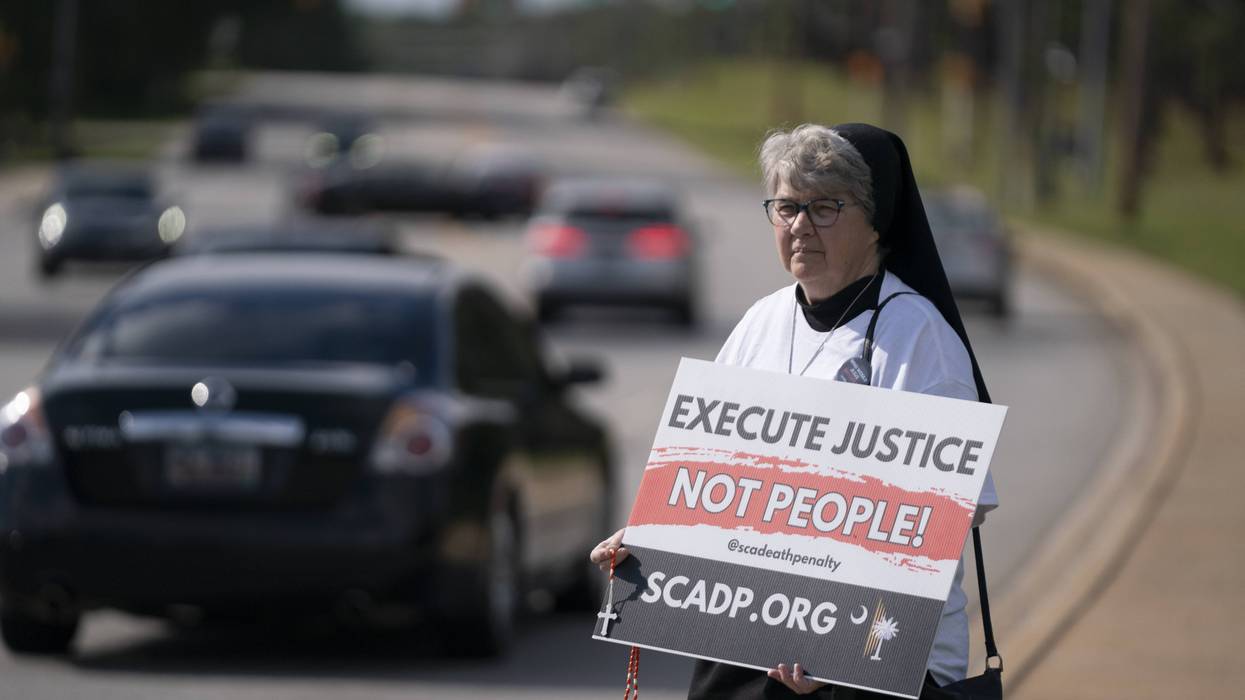
"Expanding the federal death penalty will be a stain on our history," said Sen. Dick Durbin.
The US Department of Justice said on Friday that it was planning to bring back several long-abandoned methods of execution—including firing squads, gas asphyxiation, and electrocution—as part of President Donald Trump's effort to expand the use of the federal death penalty.
Trump has vowed to restore the death penalty at the federal level, reversing the moratorium imposed by former President Joe Biden, who downgraded the sentences of nearly all 40 people on death row to life in prison without parole.
"The prior administration failed in its duty to protect the American people by refusing to pursue and carry out the ultimate punishment against the most dangerous criminals, including terrorists, child murderers, and cop killers," said acting Attorney General Todd Blanche on Friday. "Under President Trump's leadership, the Department of Justice is once again enforcing the law and standing with victims."
The federal government has never in modern history used the firing squad as a method of execution. And with the exception of Utah and South Carolina—the latter of which only revived the practice in 2025—it has not been used in state executions in the modern era.
The chair, which was the most common method of execution in the 20th century, was gradually phased out beginning in the 1980s because it came to be widely viewed as violent and cruel.
Meanwhile, execution by poison gas was carried on in the US for decades after the Nazis used it to murder millions of victims during the Holocaust, with states mostly abandoning it because it was viewed as expensive and impractical. However, Alabama and Louisiana have recently brought it back using nitrogen gas.
Nearly all executions at the state level are now carried out with lethal injections, which, despite being considered more "humane," are known to cause intense pain and suffocation and are frequently botched.
Blanche, who has authorized the government to seek the death penalty against nine people, said reviving old methods is necessary to ensure that the department "is prepared to carry out lawful executions even if a specific drug is unavailable."
According to data from the Death Penalty Information Center, nearly 1 in 8 people convicted and sentenced to death have later been exonerated. Meanwhile, more than 550 capital convictions, over 5% of them, have been overturned due to prosecutorial misconduct.
Efforts to revive antiquated methods are likely to draw challenges from civil rights groups like the American Civil Liberties Union, which have called the death penalty a form of "cruel and unusual punishment" forbidden by the US Constitution and one that disproportionately harms people of color.
"This isn’t justice. It’s cruel, immoral, and discriminatory," said Sen. Dick Durbin (D-Ill.). "Expanding the federal death penalty will be a stain on our history."
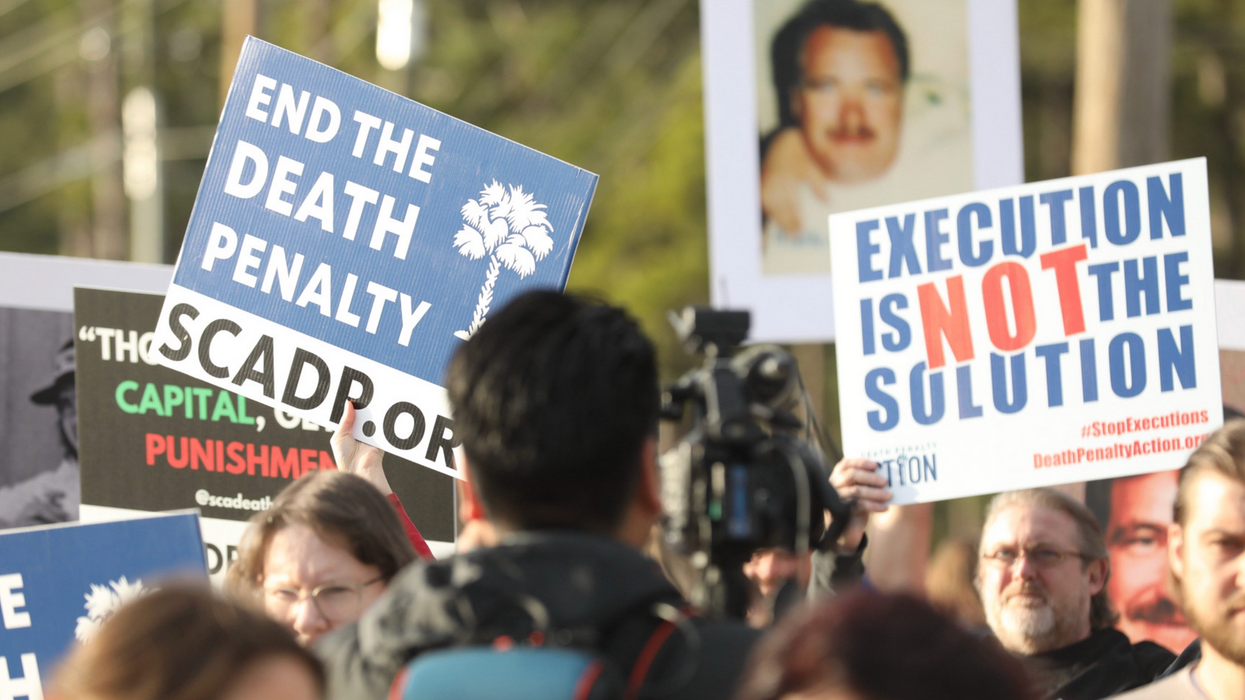
"By executing Brad Sigmon, South Carolina has also executed the possibility of redemption," said one critic. "Our state is declaring that no matter what you do to make up for your wrongdoing, we reserve the right to kill you."
South Carolina executed Brad Keith Sigmon by firing squad on Friday evening, drawing international attention to a method that hasn't been used for 15 years in the United States and prompting renewed calls to abolish capital punishment.
Sigmon, 67—who was convicted of beating his ex-girlfriend's parents, David and Gladys Larke, to death with a baseball bat in 2001—was shot by a firing squad consisting of three volunteers at the Broad River Correctional Institution in Columbia, the state capital, at 6:05 p.m. local time Friday, according to a statement from the South Carolina Department of Corrections. He was pronounced dead by a physician three minutes later.
Gerald "Bo" King, an attorney representing Sigmon, read his client's final statement shortly before his execution.
"I want my closing statement to be one of love and a calling to my fellow Christians to help us end the death penalty," Sigmon wrote. "An eye for an eye was used as justification to the jury for seeking the death penalty."
"At that time, I was too ignorant to know how wrong that was," he added. "Why? Because we no longer live under the Old Testament law but now live under the New Testament. Nowhere does God in the New Testament give man the authority to kill another man."
A hood was then placed over Sigmon's head and a bullseye over his heart. The three volunteers then fired their rifles from an opening in a wall 15 feet (4.5 meters) away.
"There was no warning or countdown," wrote witness and journalist Jeffrey Collins. "The abrupt crack of the rifles startled me. And the white target with the red bullseye that had been on his chest, standing out against his black prison jumpsuit, disappeared instantly as Sigmon's whole body flinched... A jagged red spot about the size of a small fist appeared where Sigmon was shot."
"I've now watched through glass and bars as 11 men were put to death at a South Carolina prison," Collins noted. "None of the previous 10 prepared me for watching the firing squad death of Brad Sigmon on Friday night."
King, who also witnessed Sigmon's killing, described the execution as "horrifying and violent."
"He chose the firing squad knowing that three bullets would shatter his bones and destroy his heart," said King. "But that was the only choice he had, after the state's three executions by lethal injection inflicted prolonged and potentially torturous deaths on men he loved like brothers."
"He chose the firing squad knowing that three bullets would shatter his bones and destroy his heart."
A desire to resume executions during a 10-year pause due to a shortage of lethal injection drugs prompted Republican state lawmakers to pass and GOP South Carolina Gov. Henry McMaster in 2021 to sign legislation forcing the state's death row inmates to choose between the electric chair, firing squad, or lethal injection (if available) as their method of execution.
King said state officials failed to provide information about lethal injection drugs.
"Brad only wanted assurances that these drugs were not expired, or diluted, or spoiled—what any of us would want to know about the medication we take, or the food we eat, much less the means of our death," the attorney explained.
Sigmon's legal team had unsuccessfully argued that brain damage and mental illness should have spared him from execution.
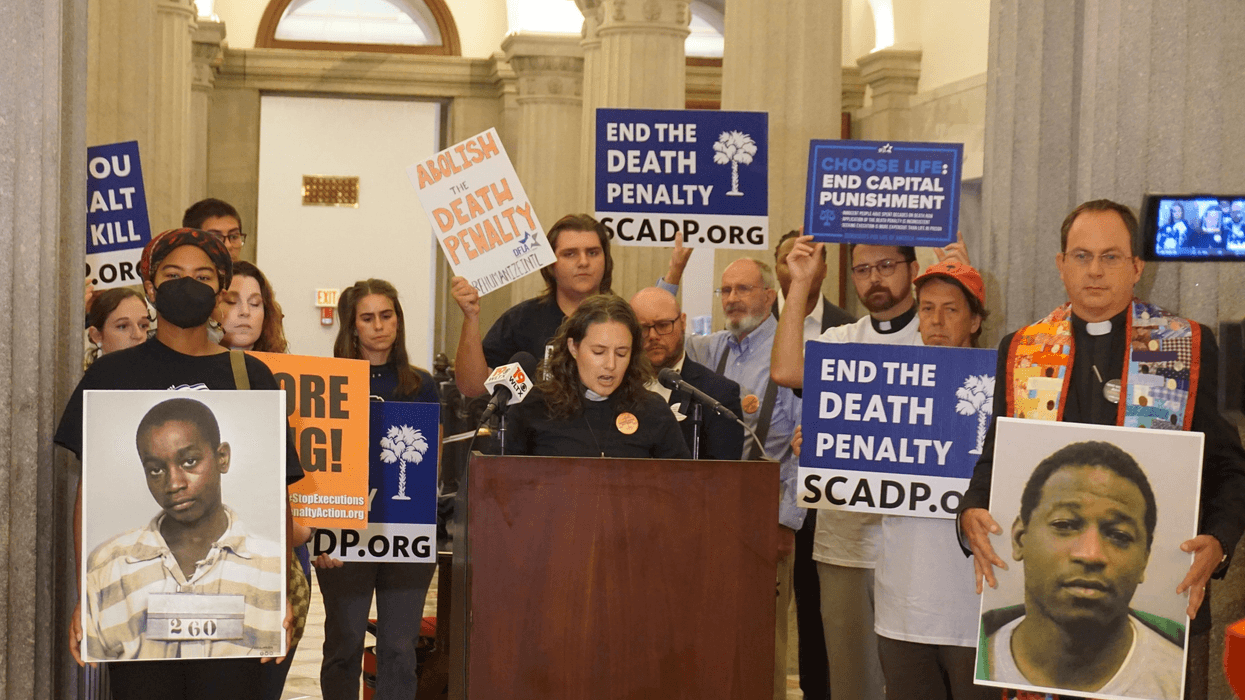
Rev. Hillary Taylor, executive director of the advocacy group South Carolinians for Alternatives to the Death Penalty (SCADP), said in a
statement Friday that "by executing Brad Sigmon, South Carolina has also executed the possibility of redemption."
"As Brad's spiritual advisor, I can personally attest to the fact that he is a different man today than the person he was more than 20 years ago, when he harmed the Larke family," she continued. "Our state is declaring that no matter what you do to make up for your wrongdoing, we reserve the right to kill you."
"But the question is not whether Brad deserved to die: The question is whether we deserved to kill," Taylor asserted. "In John 8, Jesus had very pointed instructions about which people can kill other people: 'Only those without sin can cast the first stone."
"The last time I checked, no person on this Earth fits that description, not even Gov. Henry McMaster, whose hardened heart remains the reason why executions continue in the first place," she added.
South Carolina has been executing condemned inmates at a rate described by ACLU of South Carolina communications director Paul Bowers as an "assembly line." The state has put four people to death since last September: Freddie Eugene Owens, killed by lethal injection last September 20; Richard Bernard Moore, killed by lethal injection (after changing his choice from firing squad) last November 1; Marion Bowman Jr., killed by lethal injection on January 31; and Sigmon.
State records show 28 inmates on South Carolina's death row.
Across the United States, there are five more executions scheduled this month, according to the Death Penalty Information Center.
This is the first of six executions scheduled in six states this month. From the Death Penalty Information Center, one is scheduled for next week and then a horrifying four the week after that. This appears, however, to be more confluence than some big change. deathpenaltyinfo.org/executions/u...
[image or embed]
— Chris Geidner (@chrisgeidner.bsky.social) March 7, 2025 at 3:52 PM
Addressing the issue of capital punishment in South Carolina, SCADP's Taylor said Friday that "despite national and international media news coverage, most South Carolinians will go to bed tonight unaware that we have executed another person—let alone with a firing squad."
"That's how little this issue impacts our citizens," she continued. "South Carolina should be known by other states and countries for its radical care of its citizens. Instead, we are known for our state-sponsored violence."
"If executions made us safer, we would be the 9th-safest state in the country," Taylor argued. "But they don't, and we aren't. It is not the state leaders who will reap the consequences of the death penalty: it is the everyday South Carolina citizens themselves. As long as we have the death penalty, we will fail to address the true causes of violence, including poverty, abuse, and neglect."
South Carolina carries out execution by firing squad, first in USA since 2010. A reminder that these 6 MAGA men also intro'd a bill to codify abortion as murder—enabling the horrific scenario that a woman who gets an abortion could be executed by firing squad. www.qasimrashid.com/p/s-carolina...
[image or embed]
— Qasim Rashid, Esq. (@qasimrashid.com) March 8, 2025 at 5:38 AM
Yet instead of curtailing executions, many South Carolina Republicans want to expand the category of crimes that qualify for capital punishment. In 2023, more than 20 Republican state lawmakers backed a bill to make people who obtain abortion care eligible for execution.
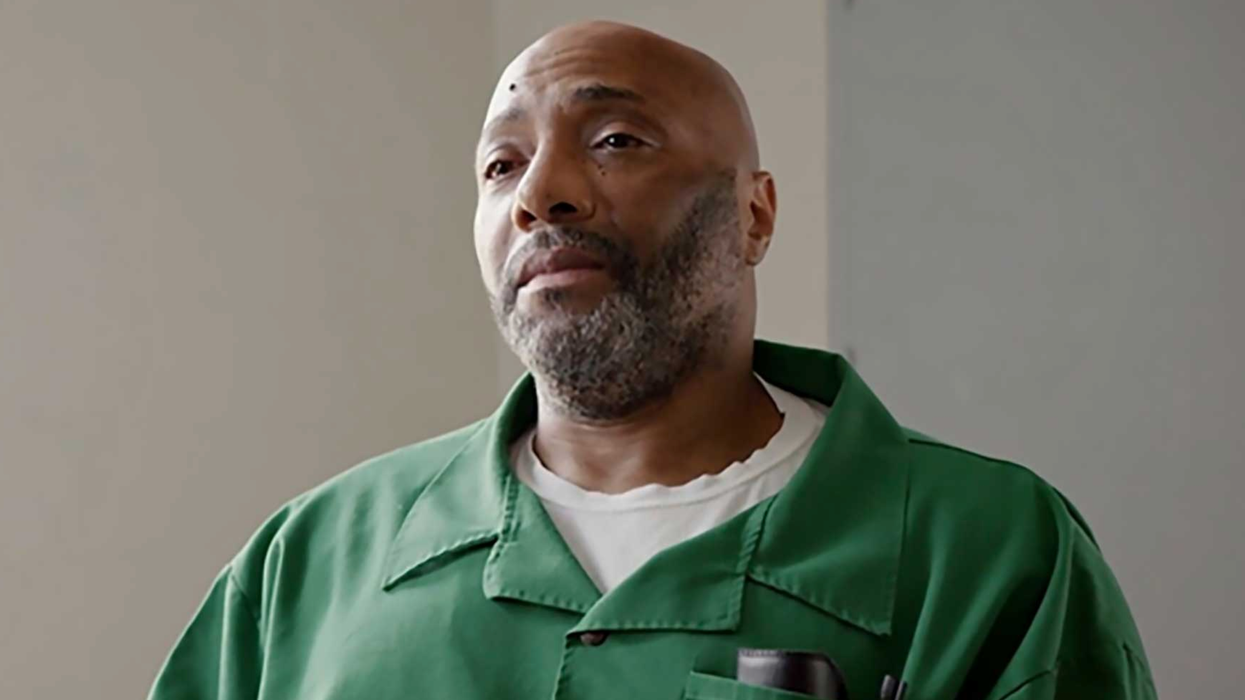
"The state is motivated to kill condemned people as quickly as possible, and they do that despite evidence that might change their minds," said one anti-death penalty campaigner.
Despite pleas from his sentencing judge, jurors in his trial, and the former head of the state Department of Corrections, South Carolina executed Richard Moore by lethal injection Friday evening after Republican Gov. Henry McMaster and the U.S. Supreme Court declined to intervene in the latest in a series of state-sanctioned killings.
The Charleston Post and Courier reported that Moore was pronounced dead at 6:24 pm local time, 21 minutes after the lethal injection was administered.
"Tonight, the state of South Carolina needlessly took the life of Richard Moore—a loving father and grandfather, a loyal friend, and a devoted follower of Christ," the criminal justice reform group Justice 360 said in a statement. "He was not a danger to anyone, and the state eliminated a glowing example of reform and rehabilitation."
Moore, 59, was convicted of the 1999 murder of convenience store clerk James Mahoney. Moore—who was unarmed when he entered the store—argued that he shot Mahoney in self-defense after the clerk pulled out a gun during an argument over correct change. An all-white jury found Moore guilty of murder and armed robbery.
"This is definitely part of my life I wish I could change. I took a life. I took someone's life. I broke the family of the deceased," Moore said in a video accompanying his clemency petition. "I pray for the forgiveness of that particular family."
Death penalty opponents said Moore's case underscores capital punishment's literally fatal flaws.
"Richard Moore's case, like those of so many others on death row, was tainted with racial bias, including as the two prospective Black jurors were peremptorily dismissed, resulting in an all-white jury," Amnesty International USA researcher Justin Mazzola said in a statement after the execution.
"In addition to the racial bias, the crime that Moore committed was not premeditated, which raised serious concerns as to whether it rose to the level for which the death penalty is reserved in U.S. constitutional law," Mazzola added. "It's shameful that racial bias and lack of premeditation were not enough to convince Gov. McMaster to grant clemency to Richard Moore. Gov. McMaster could have used his clemency power instead of overseeing yet another execution in his state."
Moore was initially forced to choose whether he would be killed by electric chair or firing squad following the 2021 passage by South Carolina's Republican-led Legislature of a new capital punishment law amid a shortage of the lethal injection drug pentobarbital. Moore chose the firing squad.
In 2022, the South Carolina Supreme Court temporarily stayed Moore's execution. He subsequently changed his choice of execution method after the state restocked pentobarbital.
Advocates for Moore pointed to his flawless prison behavior and mentorship to other inmates. Among those urging clemency for Moore were Retired Circuit Court Judge Gary Clary, who sentenced Moore to die.
"Over the years I have studied the case of each person who resides on death row in South Carolina," Clary wrote to McMaster on Tuesday. "Richard Bernard Moore's case is unique, and after years of thought and reflection, I humbly ask that you grant executive clemency to Mr. Moore as an act of grace and mercy."
Jon Ozmint, director of the South Carolina Department of Corrections (SCDC) from 2003 to 2011, wrote, that that Moore "has proven himself to be a reliable, consistent force for good on death row."
However, McMaster informed SCDC Director Bryan Stirling Friday that he had "carefully reviewed and thoroughly considered" Moore's application and "declined to grant executive clemency in this matter."
Moore is the second person executed in South Carolina since it resumed executions. In September, the state killed 46-year-old Freddie Owens. Four more South Carolina death row inmates have exhausted their appeals. They are likely to be executed in the coming months.
"It's like an assembly line," Paul Bowers of the ACLU of South Carolina told The Guardian. "The state is motivated to kill condemned people as quickly as possible, and they do that despite evidence that might change their minds."
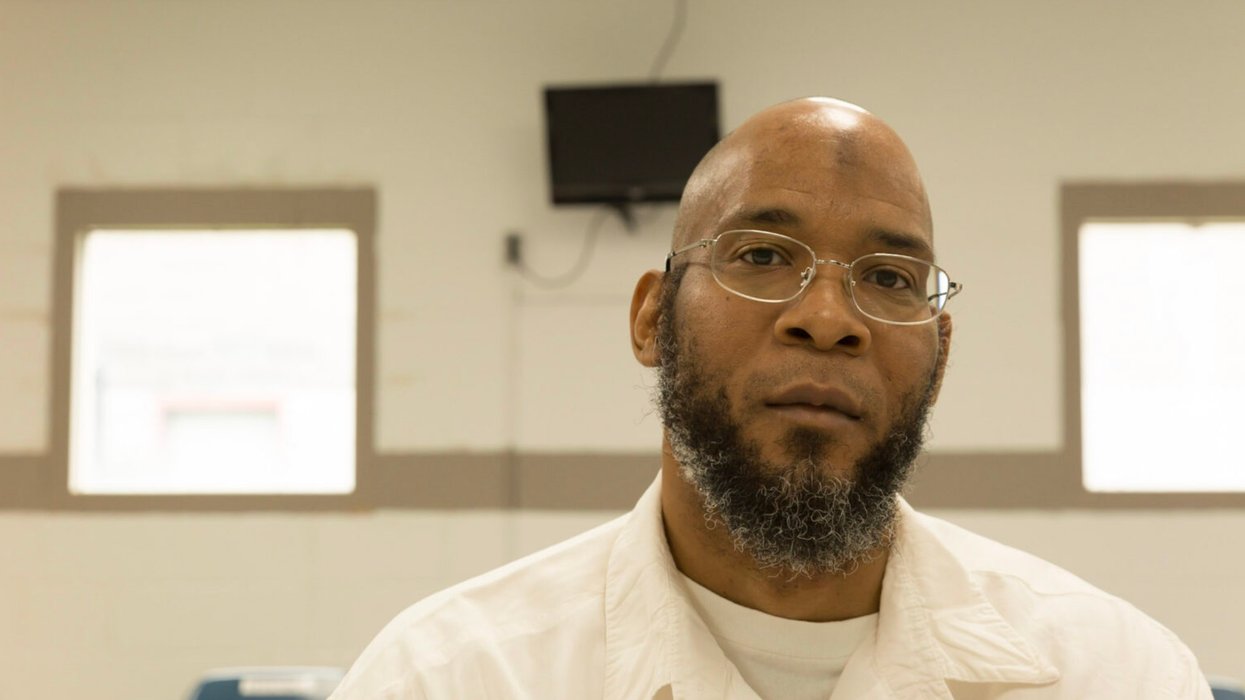
"We must abolish this flawed, racist, inhumane practice once and for all," Congresswoman Cori Bush said of the death penalty.
Update: The state of Missouri executed Marcellus Williams by lethal injection Monday evening over the objections of his prosecutor and the murder victim's relatives, The Associated Press reported.
Earlier:
Advocates for a man set to be executed by the state of Missouri on Tuesday lodged desperate pleas for Republican Gov. Mike Parson to change course and grant an eleventh-hour reprieve in a case with such serious red flags that even the office that prosecuted the defendant wants his conviction overturned.
On Tuesday, the U.S. Supreme Court denied a stay for Williams, one day after both Parson and the Missouri Supreme Court said they would not halt Williams' killing by lethal injection—a method associated with botched executions—barring a last-minute change of heart by the governor.
"We wish we had better news. But as of now, Marcellus Williams is still scheduled to be executed by Missouri tonight at 6:00 pm Central for a crime he is totally innocent of," the Innocence Project—which works to exonerate wrongfully convicted people—said in a social media post.
Williams, who is Black, was convicted in 2001 of murdering Felicia Gayle, a white woman, during a 1998 robbery. DNA found on the knife used to kill Gayle matched another man. However, Williams was convicted by a nearly all-white jury after St. Louis County prosecutors were permitted to preemptively strike half a dozen Black prospective jurors from service.
Earlier this year, St. Louis County Prosecutor Wesley Bell, a Democrat running for Congress, asked to vacate Williams' conviction, citing "clear and convincing evidence" of his innocence including evidence contamination and the revelation that at least one potential juror was excluded because he was Black.
However, the Missouri Supreme Court unanimously ruled against stopping the execution, asserting that Williams' lawyers "failed to demonstrate by clear and convincing evidence Williams' actual innocence or constitutional error at the original criminal trial that undermines the confidence in the judgment of the original criminal trial."
Following the ruling, Parson said that Williams "has exhausted due process and every judicial avenue, including over 15 hearings attempting to argue his innocence and overturn his conviction."
Congresswoman Cori Bush (D-Mo.)—a death penalty opponent who was recently defeated by Bell in their district's Democratic House primary—joined civil and human rights defenders in appealing to Parson to reconsider.
"A system that rules that an innocent man can be executed by the hands of the state is anything but just," Bush said on social media. "Gov. Parson must reverse his disgraceful decision not to stop this inhumane execution and act now to save Marcellus Williams' life."
As NAACP Legal Defense and Educational Fund president and director-counsel Janai Nelson noted:
There is a groundswell of voices calling for either commutation or a temporary reprieve. As you know, these voices include the family of Felicia Gayle... Gayle's family had communicated their "desire that the death penalty not be carried out in this case." Mr. Williams has presented compelling evidence that he is innocent of Ms. Gayle's murder. The perpetrator of this horrific crime left behind significant forensic evidence, including fingerprints, footprints, hair, and trace DNA on the murder weapon. None of this evidence matches Mr. Williams. The St. Louis County prosecuting attorney has recognized that Mr. Williams' capital trial was marred by constitutional errors and the prosecution's presentation of unreliable evidence, which undermine confidence in the judgment against him.
"I implore you to use your gubernatorial authority to grant Mr. Williams clemency, or, at a minimum, grant a reprieve until the underlying conviction can be investigated further and applicable law can be determined," Nelson said.
As Amherst College law professor Austin Sarat noted in Slate Monday, the United States is currently "witnessing the worst execution spree in three decades."
Republican-led states are set to carry out four state-sanctioned killings in addition to last week's lethal injection of Freddie Owens in South Carolina, despite the key prosecution witness' bombshell claim that the convicted man did not commit the murder for which he was put to death.
"This week's execution spree should unsettle all Americans, whether or not they support the death penalty," Sarat wrote. "It will offer further reasons for why capital punishment should be abolished everywhere in this country."
As the Death Penalty Information Center (DPIC) notes on its website, capital punishment "carries the inherent risk of executing an innocent person."
"Since 1973, at least 200 people who had been wrongly convicted and sentenced to death in the U.S. have been exonerated," the group says, adding that it is "clear that innocent defendants will be convicted and sentenced to death with some regularity as long as the death penalty exists."
The witness—who claims he falsely identified Owens as the killer because he feared for his life—said that barring a stay, the condemned man "will die for a crime that he did not commit."
Barring an unlikely 11th-hour reprieve from South Carolina's governor or U.S. Supreme Court, correctional officials are set to carry out the state's first execution in 13 years after its attorney general brushed off a key prosecution witness' bombshell claim that the convicted man did not commit the murder for which he is condemned to die.
Freddie Owens—who legally changed his name to Khalil Divine Black Sun Allah while imprisoned—was convicted and sentenced to die by lethal injection for the shooting death of convenience store cashier Irene Graves, a 41-year-old mother of three, during a 1997 robbery.
Although there was no forensic evidence linking the then-19-year-old man to the murder, state prosecutors relied upon the testimony of co-defendant Steven Golden, who pleaded guilty and agreed to testify against Owens as part of a plea deal to spare his own life.
On Wednesday Golden filed an affidavit in the South Carolina Supreme Court in which he declared that he lied about the identity of Graves' killer.
"If this court does not grant a stay, Freddie will die for a crime he did not commit," he wrote.
However, on Thursday the state's highest court rejected Owens' bid.
"Freddie Owens is not the person who shot Irene Graves at the Speedway on November 1, 1997," Golden's filing stated. "Freddie was not present when I robbed the Speedway that day."
"The detectives told me they knew Freddie was with me when I robbed the Speedway," wrote Golden, who was 18 years old at the time of the crime. "They told me I might as well make a statement against Freddie because he already told his side to everyone and they were just trying to get my side of the story."
"I was scared that I would get the death penalty if I didn't make a statement," he continued. "I signed a waiver of rights form and then signed a statement on November 11, 1997."
"In that statement, I substituted Freddie for the person who was really with me in the Speedway that night," Golden claimed. "I did that because I knew that's what the police wanted me to say, and also because I thought the real shooter or his associates might kill me if I named him to the police. I am still afraid of that. But Freddie was actually not there."
Golden—who said he did not name the person who he says killed Graves for fear of his life—added: "I'm coming forward now because I know Freddie's execution date is September 20 and I don't want Freddie to be executed for something he didn't do. This has weighed heavily on my mind and I want to have a clear conscience."
The office of Republican South Carolina Attorney General Alan Wilson responded to Golden's affidavit on Thursday, calling his claim "inherently suspect" and stating that he "has now made a sworn statement that is contrary to his multiple other sworn statements over 20 years."
The attorney general's statement came after a federal judge on Wednesday declined to halt Owens' execution over his legal team's concerns about the provenance of South Carolina's supply of pentobarbital, which is used in lethal injections.
South Carolina unofficially paused executions in 2011 as lethal injection drugs became increasingly difficult to obtain because pharmaceutical companies enacted bans on their use for capital punishment. The state subsequently passed a law protecting the identity of drug suppliers, resulting in renewed stocks.
Additionally, the state Supreme Court ruled in July that executions by firing squad and electrocution do not violate the U.S. Constitution's ban on cruel and unusual punishment, validating a law signed in 2021 by Republican Gov. Henry McMaster that forces condemned inmates to choose between the two methods of execution at a time when lethal injection drugs were still scarce.
Anti-death penalty campaigners on Wednesday submitted a petition with more than 10,000 signatures asking McMaster to grant Owen clemency.
Although the number of U.S. executions has been steadily decreasing from 85 in 2000 to 24 last year, a flurry of impending state killings has raised alarm among human rights activists. Amnesty International says that in addition to Owens, seven men are scheduled to be put to death in the coming month.
"No government should give itself the power to execute people," Amnesty said Thursday on social media. "It is past time for the U.S. to align with other countries that no longer carry out this cruel and inhuman punishment."
A 2014 study determined that at least 4% of people on U.S. death rows were likely innocent.

"There's no humane method of execution," said one human rights group.
The three liberal justices on the U.S. Supreme Court said the right-wing majority was allowing Alabama to use a death row inmate as a "guinea pig" early Friday when the court denied an emergency request to halt James Barber's execution, making him the first person killed by the state since Gov. Kay Ivey suspended capital punishment last year.
Barber, age 64, was pronounced dead just before 2:00 am local time on Friday at the William C. Holman Correctional Facility in Atmore, Alabama, less than two hours after the Supreme Court denied the stay of execution.
Lawyers for Barber, who was convicted of murdering 75-year-old Dorothy Epps in 2001, argued that the inmate's rights under the Eighth Amendment—which forbids cruel and unusual punishment—would be violated if he was put to death via lethal injection in Alabama, where several executions were botched before Ivey halted the death penalty and ordered a review.
The program was suspended following outcry over the executions of Doyle Lee Hamm, who was punctured with needles for two-and-a-half hours as executioners struggled to access a vein in 2018, and Joe Nathan James Jr., whose execution last year took more than three hours.
Two more executions last year were cancelled in the state after prison officials could not access veins.
The "top-to-bottom" review ordered by Ivey, a Republican, resulted in a change in the personnel who work in the death chamber at Holman and an extension of the time given for killing an inmate—neither of which "constitute[s] serious efforts to fix [Alabama's] pattern of botched execution after botched execution," said lawyers for Barber.
In a dissent authored by Justice Sonia Sotomayor and signed by Justices Elena Kagan and Ketanji Brown Jackson, the court's liberals said the Eighth Amendment "demands more than the state's word that this time will be different."
"The court should not allow Alabama to test the efficacy of its internal review by using Barber as its 'guinea pig'," wrote Sotomayor, adding that the conservative justices were allowing Ivey's government "to experiment again with human life."
The human rights organization Reprieve said the state "shouldn't be resuming executions, it should be ending them once and for all."
Judge Jill Pryor of the 11th Circuit Court of Appeals also accused the Alabama Department of Corrections (ADOC) of using Barber "as its guinea pig" in a dissent on Wednesday as the court handed down a 2-1 ruling allowing the state to execute the man.
Pryor noted that Ivey's review was "conducted entirely internally, entirely outside the scope of any court's or the public's scrutiny, and without saying what went wrong or what it fixed as a result."
"Three botched executions in a row are three too many," Pryor wrote. "Each time, ADOC has insisted that the courts should trust it to get it right, only to fail again."
"Mr. Barber has raised a serious and substantial Eighth Amendment claim that the pattern will continue to repeat itself," Pryor added.
The ACLU of Alabama pointed out that Barber was sentenced to death by a non-unanimous jury, a practice permitted only in Alabama and Florida.
"That alone should be reason to question his death sentence," said the group.
Barber was the 15th person executed in the U.S. this year, according to the Death Penalty Information Center.