

SUBSCRIBE TO OUR FREE NEWSLETTER
Daily news & progressive opinion—funded by the people, not the corporations—delivered straight to your inbox.
5
#000000
#FFFFFF
To donate by check, phone, or other method, see our More Ways to Give page.
Daily news & progressive opinion—funded by the people, not the corporations—delivered straight to your inbox.

"I've never seen a more dangerous and purposeful attempt to make people sick and hungry," said one Pennsylvania state lawmaker.
Last week marked the first anniversary of President Donald Trump signing H.R. 1, known as the One Big Beautiful Bill Act.
But a new report from the progressive advocacy group Defend America Action, obtained exclusively by Common Dreams, demonstrates that while the bill has indeed been beautiful for the richest households, it has been anything but for working-class Americans.
"Republicans sacrificed the American people's financial future, healthcare, and food security to pay for massive tax breaks for big corporations and the ultrawealthy," the report said. "The richest people on the planet got a handout, and working families got the bill."
According to an analysis by the Institute on Taxation and Economic Policy (ITEP), the richest 1% of Americans will see $117 billion in net tax cuts in 2026, an average windfall of roughly $66,000 each and more than the entire bottom 60% will receive combined.
At the same time, the law contained the largest cuts to federal healthcare funding in US history, slashing over $1 trillion from Medicaid and the Affordable Care Act (ACA) over the next decade.
The report found that as of March 2026, less than a year after the bill passed, enrollment in Medicaid and the Children's Health Insurance Program (CHIP) had already fallen by 3.8 million.
And after Republicans allowed ACA marketplace subsidies to expire, insurance premiums are projected to increase 114% on average, leading one in five enrollees—over 4.2 million people—to drop their coverage entirely.
Additionally, 11 million low-income Americans no longer receive zero-dollar premiums through the marketplace, while deductibles rose an average of 37% for those buying insurance on their own.
In total, more than 8 million people are estimated to have lost insurance coverage due to cuts to these programs, according to Protect Our Care. The nonpartisan Congressional Budget Office has projected that as many as 15 million could lose insurance by 2034 as a result of the law and other policy changes over the next decade.
US Rep. Dina Titus (D) said that the cuts have hit her state of Nevada especially hard, as many people work in the service industry and don't receive employer-sponsored insurance.
"An estimated 100,000 Nevadans are impacted by this, [could be] kicked off Medicaid, including 22,000 just in my one congressional district, and it's children, it's seniors, and it's people with disabilities who are going to be impacted so directly."
"The failure to continue the [ACA] tax credits... has knocked more people off," she said. "Then people who do have it pay higher rates to cover that. So it doesn't just impact the people who are on Obamacare. It impacts everybody."
According to an analysis by Protect Our Care, more than 1,000 hospitals, nursing homes, maternity wards, and other critical care facilities around the country have either shut down, are at risk of closing, or have cut essential services since the law went into place.
"In my more than 25 years as a practicing physician and now a legislator for the last four years, I've never seen a more dangerous and purposeful attempt to make people sick and hungry," said Pennsylvania state Rep. Arvind Venkat (D-30), an emergency physician who represents the suburbs outside Pittsburgh.
"There are a number of hospitals in Pennsylvania that have closed or are under threat to close as a result of the devastation that's being caused by this legislation," he said.
After $187 billion was cut from the Supplemental Nutrition Assistance Program (SNAP), more than 4 million low-income people—10 % of enrollees—no longer receive food assistance, according to the Center on Budget and Policy Priorities.
Millions more are expected to also lose benefits as stringent new work requirements go into effect. This includes 3 million people aged 18-24, according to a report from the Urban Institute, which noted that young adults often have greater difficulty finding stable jobs that allow them to meet the work requirements.
An analysis from ProPublica last month found that across just 12 states that break down data based on age, at least 776,000 children are no longer appearing on SNAP rolls.
"I think when we're talking about SNAP, we should start from the fact that the average benefit per person is [less than] $3 per meal," said Jared Bernstein, who served as the chair of the United States Council of Economic Advisers under former President Joe Biden.
"Nobody's getting rich off of SNAP," he said. "What's happening is people, including a lot of children, are getting fed."
"There's a long line of careful research showing long-term benefits for not just the beneficiaries themselves, but for the broader society," he said, noting that receiving benefits early in life is associated with "better academic performance, long-run health, educational attainment, and economic self-sufficiency."
The report from Defend America Action also said the Trump budget law squashed "an unprecedented American clean energy and manufacturing boom" that began during the Biden years, which created hundreds of thousands of jobs.
The law eliminated clean energy tax credits and led hundreds of projects to be canceled. Citing an analysis by Climate Power, the report said that over 140,000 clean energy jobs have been lost, are at risk, or have been delayed due to H.R. 1, stemming from 382 canceled or delayed projects that represented $69 billion in investment.
This has also contributed to the $92 billion spike in energy bills since Trump took office, the report said. Those canceled projects could have powered more than 17 million homes.
The law also killed the $7,500 electric vehicle (EV) tax credit, which has locked consumers into driving gas-powered cars that cost more to power, especially as Trump's war with Iran has sent gas prices soaring.
Bernstein noted that EV sales "fell off a cliff" after the tax credits were canceled.
"I can't begin to describe how shortsighted this is," he said. "Not just in terms of the environment, but also in terms of the US ever having a chance to capture market share in what I believe already is a do-or-die product development for the auto sector."
He noted that the US abandonment of clean energy, even as its use grows worldwide, has led China to dominate the market.
"This isn't China just eating our lunch," Bernstein said. "This is us serving our lunch to them."
Defend America Action's report notes that at the time of its passage, H.R. 1 was the most unpopular piece of legislation to pass through Congress since at least 1990, with just 31% approving and 55% disapproving, according to an average of four major polls.
Just months before the midterm elections, the bill remains equally unpopular, with only 33% of Americans saying they favor it and 48% opposing it, according to a recent survey by Navigator Research.
Titus told Common Dreams that one year ago, her colleagues in the GOP were very excited to pass H.R. 1.
Now, she said, "They don't really talk about it."
"They always are up for cutting programs," Titus said. "They call it fraud, waste, and abuse, but it's not. It's benefits that people needed."
"I think as you get closer to the election, there will be more concern about it," Titus said. "You know they cleverly made some of these cuts not go into effect until after the election, so they had to have been aware that they weren't very popular."
"I think we need to get the message out as much and as often as we can," she said, "and that's been kind of focused on affordability because all these different programs that we mentioned tie together."
"It's not just one little hit," Titus said. "It's across-the-board hits."
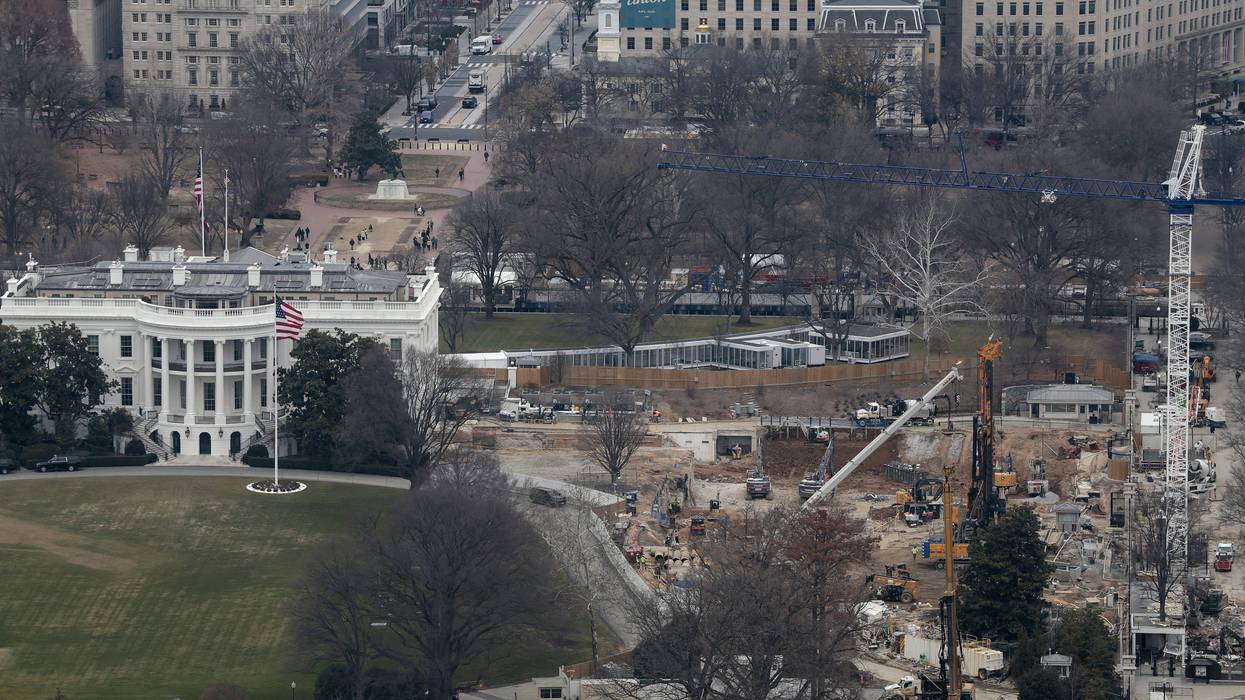
Fifty state legislators across the country, from Maine and Missouri to Oklahoma and Oregon, are condemning President Donald Trump's attempt to spend $1 billion in taxpayer money on his White House ballroom project in a letter reported exclusively Wednesday by Common Dreams.
"Across America, families are being squeezed from every direction," the legislators wrote to the president. "Housing costs have put homeownership out of reach for millions. Healthcare premiums are skyrocketing after Republicans killed the Affordable Care Act's enhanced premium tax credits. Gas prices, groceries, utilities, and basic necessities cost more than ever."
"The affordability crisis is the defining challenge facing our constituents, and they sent us to our state capitals to fight for relief," the lawmakers stressed in the letter, organized by Defend American Action. "That is why we are appalled that you are demanding $1 billion in taxpayer money for a personal White House ballroom."
The ballroom is the feature of a project that has already involved "demolishing the historic East Wing and ripping out Jacqueline Kennedy's Rose Garden," as the letter notes. "It began as a privately funded $200 million proposal, ballooned to $400 million, and is now being billed to taxpayers at $1 billion."
The White House has claimed the $1 billion in taxpayer funding is necessary for security-related enhancements to the ballroom project, including a subterranean bunker. On Tuesday, standing outside the construction site, Trump said the roof of the new wing would be home to a "drone empire," an element not previously disclosed.
Trump's GOP narrowly controls both chambers of Congress and is trying to use the budget reconciliation process to secure the funding. After Senate Parliamentarian Elizabeth MacDonough ruled against Republicans' initial plan on Saturday, Majority Leader John Thune (R-SD) pledged to try "a new approach," and is also reportedly under pressure from the president to fire MacDonough.
The president and his allies in Congress have ramped up their push for the ballroom project since a shooting last month at the White House Correspondents' Dinner in Washington, DC, for which a man has been charged with attempting to assassinate Trump.
"Your administration claims that your personal ballroom is a national security investment and a major priority. The reality is that it is a vanity project for the wealthiest man to ever occupy the Oval Office, and it will not put a single dollar back in the pockets of working families," the state legislators wrote to Trump. "A clear majority of Americans oppose it, by a two-to-one margin. Not one of your working constituents, not a nurse in Ohio, not a factory worker in Michigan, not a single mother in Arizona, will benefit from this ballroom. Only billionaire donors and well-connected insiders will ever stand inside."
By speaking out against Trump spending $1 billion on this project, Maryland state Del. Adrian Boafo (D-23) told Common Dreams, state legislators are sending a message that "we're trying to focus on how we actually help people live comfortably here in Maryland—and frankly, not just in Maryland, but all across the country."
"His actions have made life harder on everyday American people," Boafo said of Trump. The president's war on government employees has hit Maryland particularly hard, with residents of the state having lost an estimated 25,000 federal jobs.
At the national level, Trump's tariffs and war on Iran have driven up prices of necessities, from gasoline to groceries, as working familes continue to feel the pain of the Republican Party's last budget reconciliation package—the so-called One Big Beautiful Bill Act, which gave more tax cuts to the rich while cutting healthcare and food assistance for Americans in need.
"Your budget reflects your values, and what you fight for reflects your values," said Boafo. "And clearly, all this president really cares about is himself and the cronies who are in his administration, and nobody else."
"Reject this $1 billion boondoggle and instead direct those resources toward the affordability crisis your policies have created. Govern for working families, Mr. President, not for yourself and your ultrawealthy donors."
The letter calls on Trump "to reject this $1 billion boondoggle and instead direct those resources toward the affordability crisis your policies have created. Govern for working families, Mr. President, not for yourself and your ultrawealthy donors."
The lawmakers also pointed out how the money could be better used:
That $1 billion could replace more than 200,000 lead pipes in America's drinking water supply, protecting millions of families from lead poisoning. It could fund home heating and cooling assistance for around 1.5 million American families struggling with utility bills. It could cover a full year of food assistance for more than 400,000 working people, low-income families, and disabled Americans. It could buy over 200 million free school lunches for lower-income children, or eliminate waiting lists for WIC food assistance to infants and pregnant women entirely.
Before joining the Pennsylvania House of Representatives, Rep. Arvind Venkat (D-30), another letter signatory, was an emergency physician at a Pittsburgh hospital. He told Common Dreams that he has two problems with spending $1 billion of taxpayer funds on the White House ballroom. "The first is that the White House is the people's house. It's not President Trump's to decide what the architecture or structure should be, and clearly, he disagrees with that—and I think that is very dangerous, in terms of what it means for our governance and democracy."
"The second is with all the challenges we have—and I'm a physician, and I've seen, here in Pennsylvania, over 150,000 people who've lost health insurance," he continued. "I don't think we should be spending $1 billion to put a congressional imprint on what is a vanity project, when that money could be used in so many more productive ways, including to help get people health insurance that they've lost."
While the letter is directed at Trump, with federal lawmakers considering whether to give the president $1 billion for the project, Venkat said that "congressional Republicans should grow a spine. It's not their job to simply be a rubber stamp for the president. It's their job to represent their communities and to be a separate co-equal branch of government. Unfortunately, the Senate Republicans and the House Republicans in DC don't seem to feel that way."
Boafo—one of the Democrats running for the seat currently held by retiring former US House Majority Leader Steny Hoyer (D-Md)—also said that "the Republican Congress should do their job."
"This president hasn't done anything to try to raise wages, neither has the Congress. They have totally just turned their back on the American people. And instead, put all their effort into a foreign war in Iran, and put their effort into White House renovations," he added. "It is just ridiculous. And frankly, this letter and this message is kind of the message I think Democrats need as we head into the midterms in the next couple months."
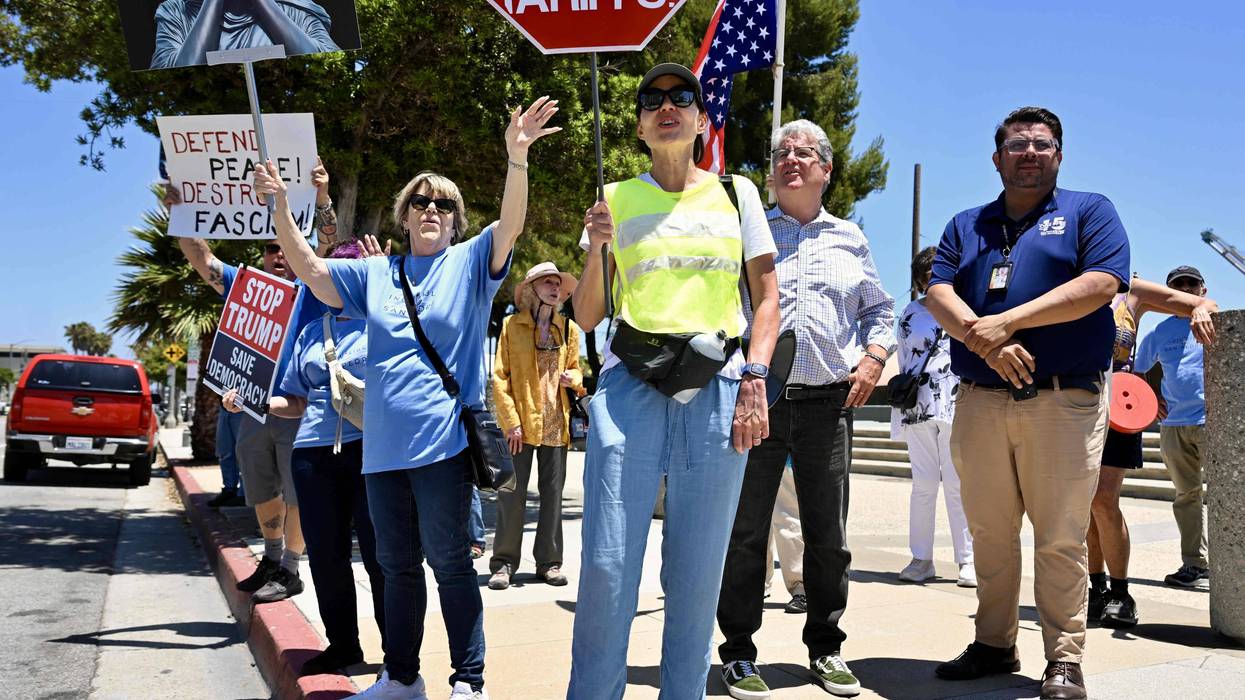
As President Donald Trump plows ahead with his controversial and legally contested tariffs, he faces mounting pressure to refund Americans for duties struck down last week by the US Supreme Court, including in a letter from 21 Democratic state legislators, first reported Tuesday by Common Dreams.
Lawmakers from Colorado, Illinois, Iowa, Maine, Michigan, New Hampshire, New York, Pennsylvania, Tennessee, Texas, and Vermont called for a swift response to the high court's "definitive ruling" last Friday that the president's imposition of tariffs under the International Emergency Economic Powers Act (IEEPA) "is illegal, unconstitutional, and amounts to an unauthorized tax on the American people."
"Your illegal tariff taxes have created an unprecedented affordability crisis, spiking prices for groceries, cars, clothes, electronics, and countless other household necessities," the lawmakers noted. "Families across our states have been forced to make impossible choices between paying for food, keeping the heat on, and affording clothing for their children."
"Farmers have lost markets, small businesses have been stretched to the breaking point, manufacturing hasn't returned as you promised, job growth flatlined, layoffs rose, and the economy has slowed to a crawl," they continued. "Your illegal tariffs have been an unmitigated disaster."
The legislators demanded that Trump "work with Congress immediately to provide a refund to American families for the illegal tariff taxes you imposed on them through higher prices on everything, from clothes and cars to electronics and groceries, and which cost families at least $1,700 each last year alone."
"These refunds should go to the American people, not just the businesses who paid the tariffs and passed on their cost to Americans in the form of higher prices, lost wages, and layoffs," they stressed. The lawmakers also demanded that Trump "immediately abide by the court's ruling and stop collecting these illegal tariff taxes," and "cease and desist on any plan or scheme to reimpose the tariffs at issue in the Supreme Court's decision without congressional approval."
The letter was organized by Defend America Action as part of a campaign pushing for tariff refunds and also sent to US Senate Majority Leader John Thune (R-SD) and House Speaker Mike Johnson (R-La.). Its signatories include Colorado Sen. Cathy Kipp (D-14) as well as Illinois Sens. Mary Edly-Allen (D-31) and Graciela Guzmán (D-20).
The other signatories are Democratic Reps. Ken Croken (97) of Iowa; Gary Friedmann (14) of Maine; Noah Arbit (20) and Stephen Wooden (81) of Michigan; Susan Almy (Grafton 17), Tony Caplan (Merrimack 8), and Linda Haskins (Rockingham 11) of New Hampshire; Jo Anne Simon (52) of New York; Arvind Venkat (30) of Pennsylvania; Aftyn Behn (51) Tennessee; Rhetta Andrews Bowers (113), Jessica González (104), Vikki Goodwin (47), Josey Garcia (124), Vincent Perez (77), Ron Reynolds (27), and Gene Wu (137) of Texas; and Will Greer (Bennington 2) of Vermont.
Trump is also facing pressure from Democratic governors and members of Congress in the wake of the high court's ruling. On Monday, US Sens. Ed Markey (D-Mass.), Jeanne Shaheen (D-NH), and Ron Wyden (D-Ore.)—along with 19 other members of the chamber's Democratic Caucus, including Senate Minority Leader Chuck Schumer (D-NY)—unveiled the Tariff Refund Act.
The bill would require US Customs and Border Protection to pay refunds for the $175 billion in unlawfully imposed tariffs within 180 days, prioritizing small businesses. It calls on importers, wholesalers, and large corporations to pass on those refunds to their customers.
On Tuesday, US Sens. Cory Booker (D-NJ), Elizabeth Warren (D-Mass.), and Peter Welch (D-Vt.)—who are all notably not original co-sponsors of that bill—wrote to Trump and highlighted that roughly 95% of the cost from Trump's IEEPA tariffs "was passed on to American families and small businesses in the form of increased costs."
"Any refunds from the federal government should be returned to the millions of Americans and small businesses that were illegally cheated out of their hard-earned money," the trio argued. "Your inability or unwillingness to provide tariff refunds to American families would represent an egregious abdication of your responsibility as president—a giveaway to giant corporations that amounts to theft from the middle class."
In the House of Representatives, Congressional Progressive Caucus Chair Greg Casar (D-Texas) also signaled support for refunds, taking aim at Trump on social media Tuesday morning: "We need our money back. He owes us: $1,700 in illegal tariffs per family; $4 billion he's profited off the presidency; $1 trillion he stole in tax breaks for the ultrarich."
Trump has responded to the Supreme Court's decision by not only lashing out at justices but also doubling down on his mission to impose tariffs. Rather than relying on the IEEPA, Trump is now invoking Section 122 of the Trade Act of 1974. A 10% tariff took effect on Tuesday, though the president promised over the weekend that he would aim for 15%.
"Every day, I hear from my neighbors how their cost of living is rising rapidly," Venkat, one of the state lawmakers who signed the letter, told Common Dreams. "Whether it's food, utilities, housing, or healthcare, tariffs are driving inflation and a regressive tax."
Venkat said that Trump doubling down on tariffs is "disastrous for my constituents and all Pennsylvanians."