

SUBSCRIBE TO OUR FREE NEWSLETTER
Daily news & progressive opinion—funded by the people, not the corporations—delivered straight to your inbox.
5
#000000
#FFFFFF
To donate by check, phone, or other method, see our More Ways to Give page.
Daily news & progressive opinion—funded by the people, not the corporations—delivered straight to your inbox.

"The past almost four years have seen Brazil accomplish a great deal in terms of bringing people out of poverty, creating jobs, curbing hunger, and raising standards of living."
An analysis released Wednesday documents some of the major economic gains that Brazil has made over the past four years during the third term of President Luiz Inácio Lula da Silva, who is currently in a close battle for reelection against rival Flávio Bolsonaro.
The analysis, published by the US-based Center for Economic and Policy Research (CEPR), finds that, between 2022 and 2025, the Brazilian economy grew by a cumulative 8.9%, easily outpacing the average rate of growth in other South American countries.
This growth has been coupled with a drop in the unemployment rate, which has fallen from more than 9% in the second quarter of 2022 to just 5.4% in the second quarter of 2026.
Both poverty and food insecurity fell dramatically in the first two year's of Lula's term, the analysis finds, and in 2025, "Brazil was removed from the Food and Agriculture Organization’s Hunger Map after chronic undernourishment fell below 2.5%."
CEPR's report also gives credit to Lula's policies for improved economic conditions, including a new minimum wage law, an expanded maternity leave program, and increased average payments to low-income families given through the Bolsa Família program.
The economy during Lula's term is far from perfect, however, and the report flags high interest rates set by Brazil's central bank as a key factor in raising consumers' borrowing costs and increasing the rate of household delinquency.
CEPR also noted the negative impact of online betting apps, which Lula has pledged to ban starting next month, on Brazilian workers.
"Brazilian households lost an estimated R$62.5 billion (US$11.2 billion) to online betting in 2025," the report says, "while some 802,000 Bolsa Família households spent more than 2% of their income on betting in January 2025."
Jake Johnston, CEPR's director of international research, said that "the past almost four years have seen Brazil accomplish a great deal in terms of bringing people out of poverty, creating jobs, curbing hunger, and raising standards of living."
"This was done," Johnston added, "despite the lingering impact of the Covid pandemic, external economic shocks that affected the global economy, and excessively high interest rates."
The first round of Brazil's presidential election is set to take place on Sunday, and recent polls show Lula with a narrow lead over Bolsonaro, son of former Brazilian President Jair Bolsonaro, who is still serving a criminal sentence for efforts to instigate a coup after his loss in the 2022 election.
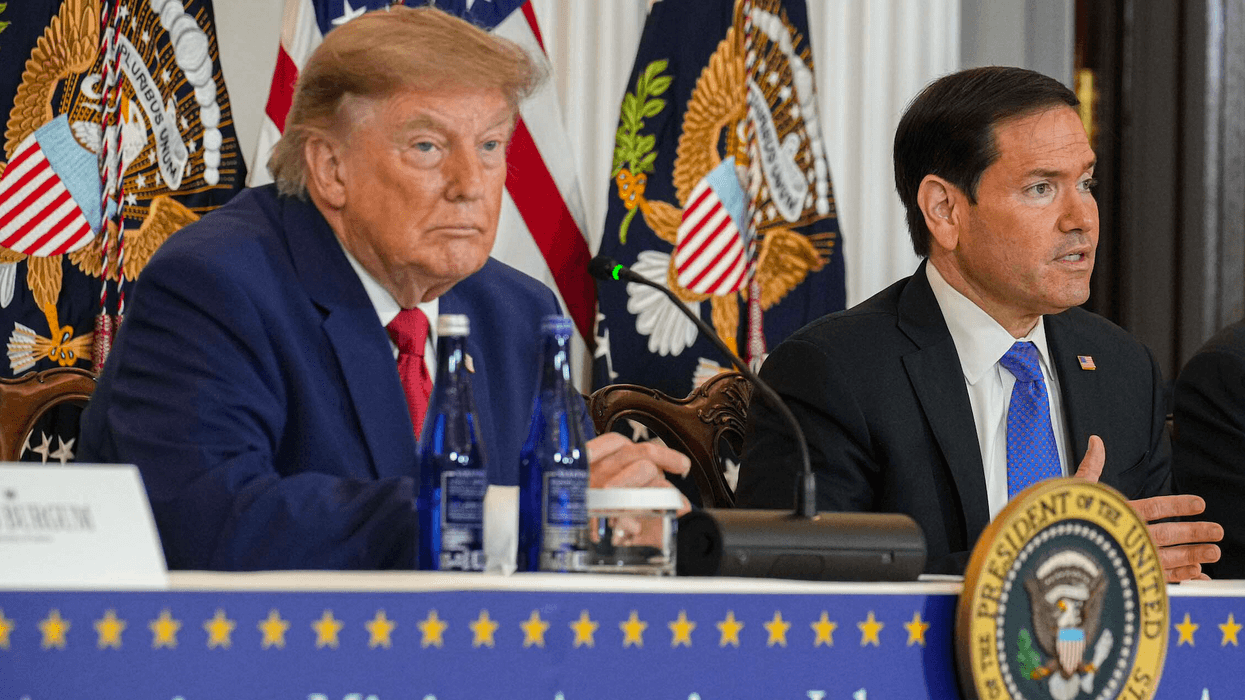
One Cuban diplomat accused the Trump administration of waging "economic warfare that actually kills people without bombs."
The Trump administration on Thursday intensified its campaign of economic pressure against Cuba, imposing sanctions on nine state-owned companies and three officials—a move critics condemned as an escalation of a decadeslong embargo amid a worsening humanitarian crisis.
"The Cuban regime has long sponsored a vast subversive network in the United States aimed at identifying, cultivating, and radicalizing subversives, largely operating under the pretext of educational or cultural exchange," US Secretary of State Marco Rubio dubiously claimed. Citing an executive order issued by President Donald Trump in May, he announced new sanctions against entities including the Cuban Ministry of Construction and the mining group GEOMINSAL.
Also sanctioned were three leaders of the Cuban Institute of Friendship with the Peoples, an international solidarity group, including ICAP president Fernando González Llort, a member of the so-called Cuban Five who served 15 years behind bars in the US after being convicted—critics say unfairly—of espionage in 2001 for infiltrating exile groups plotting terrorist attacks targeting Cuba's socialist government.
"The Trump administration will not stand by while a hostile foreign power seeks to exploit our freedoms—none of which are afforded to its people—by misleading and corrupting American citizens with lies, spy tradecraft, and other malfeasance as part of the regime’s raison d’être of exporting Marxism, racial resentment, and communist violence across the world," Rubio said.
Rubio—who has falsely claimed that his parents fled communism in Cuba when they actually emigrated during an earlier US-backed dictatorship—added that the new sanctions "make clear that the Trump administration will not tolerate the Cuban regime’s efforts to fund its repression or continue its decadeslong campaign of subversive anti-American activities."
Responding to the fresh sanctions, Cuban Foreign Minister Bruno Rodríguez accused Rubio of having a "failed obsession against Cuba" and seeking to "punish Cuban companies with the deliberate purpose of harming our economy and preventing the government of Cuba from guaranteeing basic services to the population, which are already in a critical situation as a result of the blockade."
Cuban Ambassador to the United Nations Ernesto Soberón asked on social media: "What is [Rubio] afraid of? If he's so convinced that the Cuban government is incompetent, why does he need to impose new sanctions that collectively punish the Cuban people and also attempt to prevent Cuba's trade relations with third parties?"
The Center for Economic and Policy Research (CEPR), a Washington, DC-based think tank, accused the US administration of "escalating its lethal and illegal economic aggression against Cuba."
CEPR research associate Pedro Labayen Herrera said in a statement that “these sanctions are the latest move in a more than 60-year US economic siege on Cuba, which has intensified since January’s naval blockade, an overt and illegal act of war."
“By targeting the island’s mining, metals, construction, and trade sectors, the administration will further restrict the Cuban government’s ability to manage a deliberately designed crisis that UN experts recently warned could become a ‘silent Gaza,'" he added.
The United Nations General Assembly has overwhelmingly condemned the broader US economic blockade of Cuba 33 times.
The new US measures follow months of escalating aggression against Cuba by the Trump administration, including threats and reported preparations to attack, an oil blockade that critics say is causing the deaths of infants and sick people, and a Department of Justice (DOJ) indictment of former President Raúl Castro for his alleged role in the 1996 shoot-down of planes operated by a hostile US-based counterrevolutionary group following repeated warnings that they had violated Cuban airspace.
The oil blockade has hit especially hard given the January US invasion of Venezuela—which supplied between one-third and half of Cuba's energy needs—and abduction of President Nicolás Maduro and his wife.
The Trump administration also reinstated Cuba on the US State Sponsors of Terrorism list, from which former President Joe Biden removed the country before leaving office in 2021. Cuba was initially added to the list during the Reagan administration amid a decadeslong campaign of US-backed Cuban exile terrorism, failed assassination attempts, economic warfare, and covert operations large and small in a futile effort to overthrow the government of longtime revolutionary leader Fidel Castro.
The fresh sanctions follow last month's State Department report baselessly claiming that Cuba aims to "conquer" the United States and is backing “left-wing terrorism on American soil" while using dozens of US civil society groups, activists, journalists, and elected officials to further Havana's supposedly nefarious goals.
“Rather than publishing unfounded, far-fetched claims of a Cuban-led campaign to subvert the United States as a pretext for military action against Havana, Washington should recognize that over half a century of strangulation has failed to bring about regime change," Herrera said on Thursday. "Instead, US policy has crippled the country’s economy and healthcare system, depriving its people of a dignified life and contributing to significant levels of out-migration."
“The Trump administration must lift all sanctions, respect Cuban sovereignty, and engage diplomatically," he added, "or risk further immiserating the Cuban people and widening a crisis that will reverberate throughout the hemisphere."
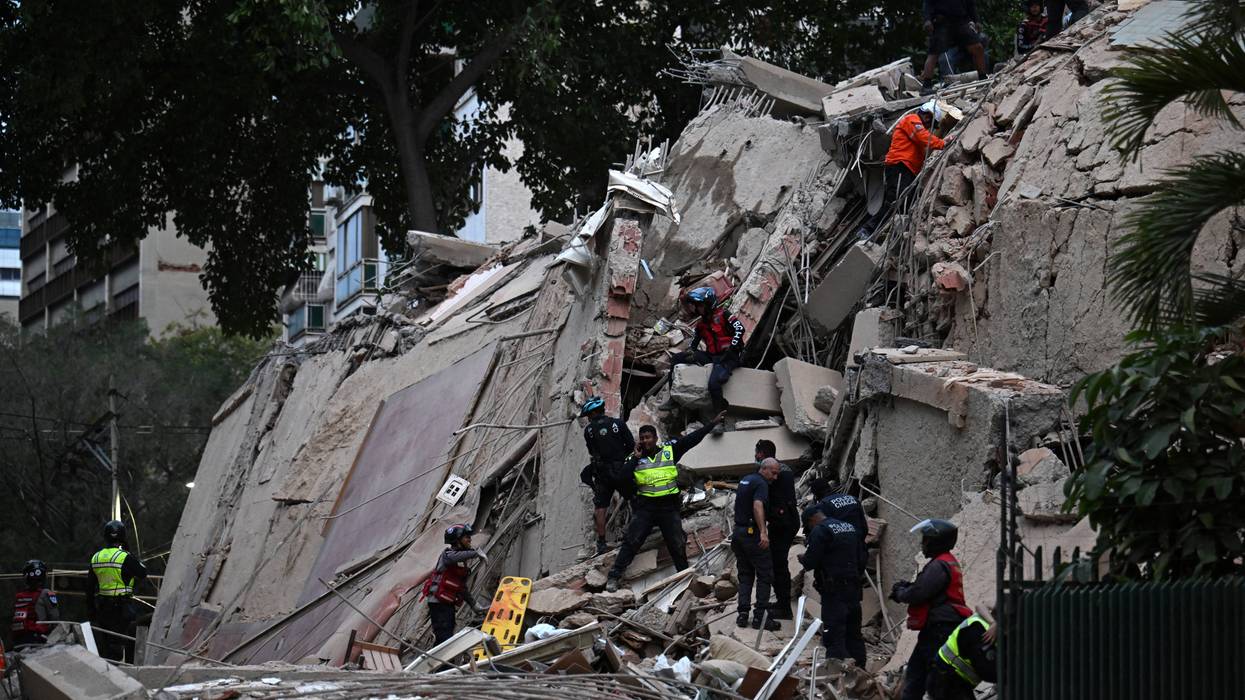
"This is the time for cooperation, compassion, and respect for Venezuela’s sovereignty," said CodePink.
Human rights groups on Thursday implored the United States and allied countries to lift all sanctions against Venezuela—which experts say have already killed tens of thousands of people—as the beleaguered South American country reels from Wednesday's devastating earthquakes.
At least 188 people are dead and over 1,500 others injured, with those figures almost certain to rise, following a 7.2-magnitude temblor centered in San Felipe, Yaracuy—about 100 miles west of Caracas—and a 7.5-magnitude quake that struck less than a minute later, also in centered in Yaracuy.
US President Donald Trump, who authorized the illegal invasion of Venezuela and abduction of President Nicolás Maduro earlier this year, wrote on social media after the earthquakes that his administration “stands ready, willing, and able to help."
“We will be there for our new and great friends," Trump claimed.
Delcy Rodríguez, Maduro's vice president and acting president since his ouster, thanked the Trump administration for "offering support and solidarity to the people of Venezuela in the face of this tragedy that has plunged us into mourning."
However, US sanctions—first imposed during then-President George W. Bush's second term while Hugo Chávez was leading Venezuela and ramped up under the Obama, Trump, and Biden administrations—remain in place, complicating relief efforts after one of the country's worst-ever natural disasters.
While the Trump administration has issued narrow exemptions from sanctions to companies looking to profit from Venezuela's crisis and copious natural resources, primarily oil, these waivers have not delivered broad relief to the people who need it most.
"Today’s catastrophe makes clear what we have long argued: When a country is deliberately weakened through economic warfare, its ability to prepare for, respond to, and recover from disasters is also weakened," the US-based peace group CodePink said in a statement. "The United States has a responsibility to help address the humanitarian consequences of the policies it has imposed."
🇻🇪 CODEPINK extends our deepest condolences to the people of Venezuela following the devastating earthquakes that have taken hundreds of lives, injured thousands, and left entire communities in urgent need of assistance.Our full statement: buff.ly/QzYcQ3p
[image or embed]
— CODEPINK (@codepink.bsky.social) June 25, 2026 at 2:22 PM
CodePink continued:
Too often, we’ve seen the US and other Western countries exploit natural disasters like this in order to deepen foreign control. In Haiti, the US and its allies have repeatedly pushed militarization and politically conditioned aid instead of genuine recovery led by the country itself. In this moment, the world must refuse to allow Venezuela to be forced down the same path.
We also call on the administration to immediately lift all US sanctions on Venezuela and release Venezuelan funds under US jurisdiction so they can be used for emergency relief, reconstruction, and recovery.
"This is the time for cooperation, compassion, and respect for Venezuela’s sovereignty," CodePink added. "We urge the international community to support relief efforts and stand with the Venezuelan people as they rebuild their homes, their communities, and their future."
The Center for Economic and Policy Research (CEPR), a Washington, DC-based think tank, said Thursday that "while the Trump administration has issued a series of general licenses to allow foreign businesses and banks to operate in Venezuela in spite of US sanctions, the continued existence of these sanctions significantly discourages international economic and financial actors from expanding operations there."
CEPR co-director Mark Weisbrot said that “we must remember that Venezuela suffered the worst depression in the history of the world, without a war, due to illegal US economic sanctions."
"This deadly destruction was not a mistake, but an expected result that would happen to any country that was cut off by sanctions from the international financial system, and also from the vast majority of its foreign exchange earnings from exports," he continued.
According to a 2019 CEPR report, as many as 40,000 Venezuelans died due to sanctions during the previous two years. The sanctions ostensibly targeted Maduro's government, but made it much more difficult for millions of people to obtain food, medicine, and other necessities.
“Tens of thousands, and more likely hundreds of thousands, of Venezuelans died as a result of those sanctions," Weisbrot said Thursday. "The United States is therefore obligated to help prevent further loss of life in Venezuela."
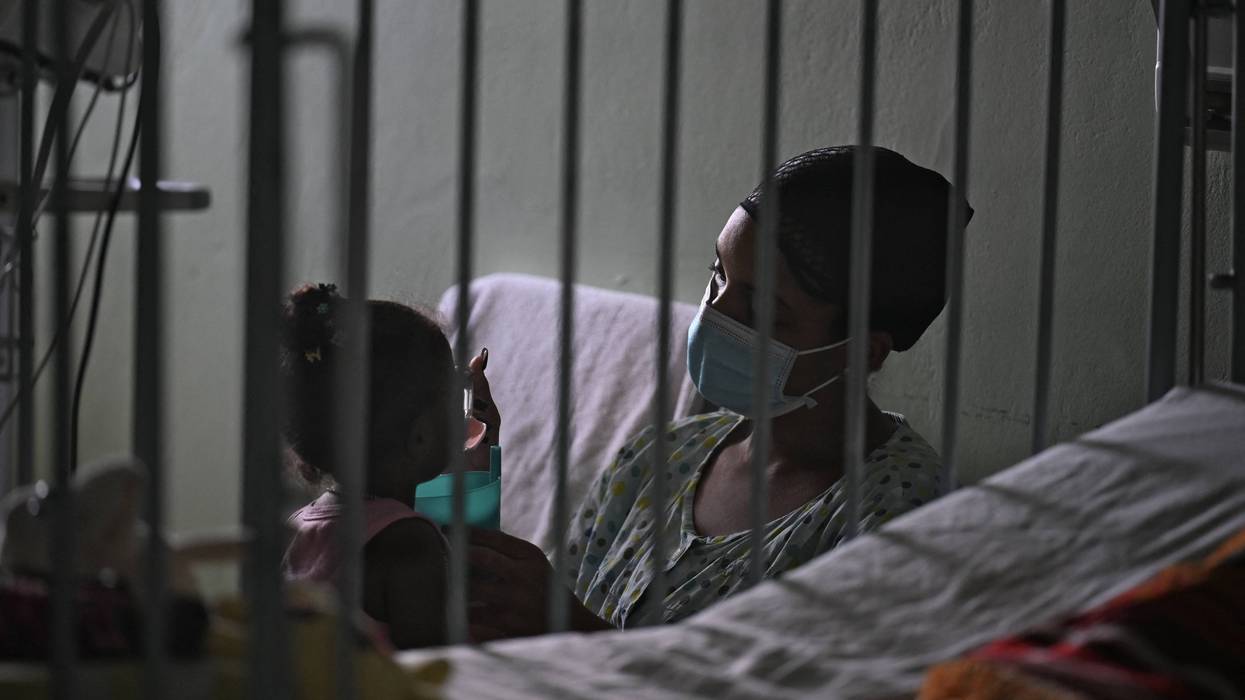
“The question is how many more babies will have to die before the current economic siege against Cuba is lifted.”
The publication Monday of another report showing that President Donald Trump's tightening of the 65-year US embargo of Cuba over his two terms in office is "likely the primary cause of a major increase in infant mortality" on the economically besieged island prompted renewed calls for the lifting of deadly sanctions.
The report by Alexander Main, Joe Sammut, Mark Weisbrot, and Guillaume Long of the Center for Economic Policy and Research (CEPR) found an "unprecedented increase" in Cuba’s infant mortality rate (IMR), which soared 148% between 2018 and 2025.
In the early-to-mid 2010s, Cuba’s IRM was typically around 4–5 deaths per 1,000 live births, with the country regularly ranked in the top 10-15 nations with the lowest infant mortality. By 2025, the figure had soared to 9.9 deaths out of every 1,000 infants born alive.
The report's authors said that had Cuba's IMR remained unchanged since 2018, roughly 1,800 fewer babies would have died.
“The blockade has had a particularly dire effect on Cuba’s healthcare infrastructure, with frequent power outages interrupting the use of critical equipment for the treatment of patients, including incubators for premature babies, and ventilators to help sick newborns breathe,” said Sammut, CEPR's senior research fellow.
The report examines the social and economic consequences of Trump's tightened sanctions regime, focusing on the impact of the embargo on Cuba’s healthcare sector.
According to CEPR:
Trump administration pressure on Cuba has included restrictions that have sharply diminished the island’s important tourism sector; severely limited exports of goods to Cuba—including essential medication and medical equipment; cut Cuba’s access to international financial markets by putting the country back on the State Sponsors of Terrorism list; curbed remittances; pressured countries to end their partnerships with Cuba’s medical missions; and notably imposed a recent fuel blockade that prevents Venezuelan oil from reaching the island.
Trump has recently ratcheted up military threats and economic pressure on Cuba, which was already reeling from decades of US sanctions and the inefficiencies of centralized state control. His tightened embargo has severely restricted fuel imports, exacerbating an energy emergency characterized by blackouts and deadly suffering among the most vulnerable Cubans, including sick people and children.
“The Trump policy of ‘maximum pressure’ on Cuba has killed a lot of babies—and, although we don’t yet have data for the last few months, it’s highly likely that more babies are dying now, and at an even higher rate than last year as a result of the current US fuel blockade targeting Cuba,” said Main, CEPR's director of international policy. “The question is how many more babies will have to die before the current economic siege against Cuba is lifted.”
It's not just babies. As Common Dreams reported last month, nearly 100,000 Cubans—including 11,000 children—werer waiting for surgery. Childhood cancer survival rates have also fallen significantly.
"The sanctions on Cuba starkly illustrate how these economic sanctions work: They target the civilian population, often with the goal of provoking regime change,” said Weisbrot, CEPR's co-director. “This can dramatically increase death rates."
During his first term, Trump began rolling back the Obama administration’s diplomatic normalization with Cuba's socialist government. He activated a provision of the Helms-Burton Act allowing lawsuits over property confiscated after the Cuban Revolution, and on his last day in office he redesignated Cuba a state sponsor of terrorism.
Critics denounced the move as absurd, especially given that Cuba has never carried out any acts of terrorism—unlike the United States and the militant Cuban exiles it harbors, who have a decadeslong record of terrorist bombings and other attacks, as well as numerous failed or aborted attempts to assassinate former revolutionary leader Fidel Castro.
The United Nations General Assembly has overwhelmingly condemned the blockade—which Cuba's government says has cost the island more than $1 trillion—33 times.
“The collective punishment of civilians is prohibited by the Fourth Geneva Convention when there is armed conflict, and can be prosecuted as a war crime," Weisbrot noted. "This would appear to be applicable now that the current naval blockade involves the US military.”
Previous reports have sounded the alarm on Cuba's rising IMR, including a United Nations Inter-Agency Group for Child Mortality Estimation published in February that put the 2025 infant mortality rate a 7.4, considerably lower than the CEPR analysis. The British Medical Journal Pediatrics Open in February reported a 9.9 IMR for Cuba.
The IMR surge comes amid reporting that the Pentagon is “quietly ramping up” preparations to wage war on Cuba, which would be the 11th country attacked by Trump, the self-proclaimed president of peace, the most of any US leader ever.
US Sens. Tim Kaine (D-Va.), Adam Schiff (D-Calif.), and Ruben Gallego (D-Ariz.) introduced a war powers resolution aimed at preventing Trump from attacking Cuba without congressional authorization as required by law. The resolution could be put to a vote as soon as Tuesday.
Numerous war powers resolutions related to Iran, Venezuela, and Trump’s extralegal high seas boat bombings have failed to pass.
World leaders, activists, and academics are among those urging the US to lift the embargo on Cuba.
"Stop this damned blockade on Cuba and let the Cuban people live their lives," Brazilian President Luiz Inácio Lula da Silva said last week in Barcelona. "Cuba has problems. But they are Cuba's problems. Not Lula's. Not Trump's. Not the empire's."
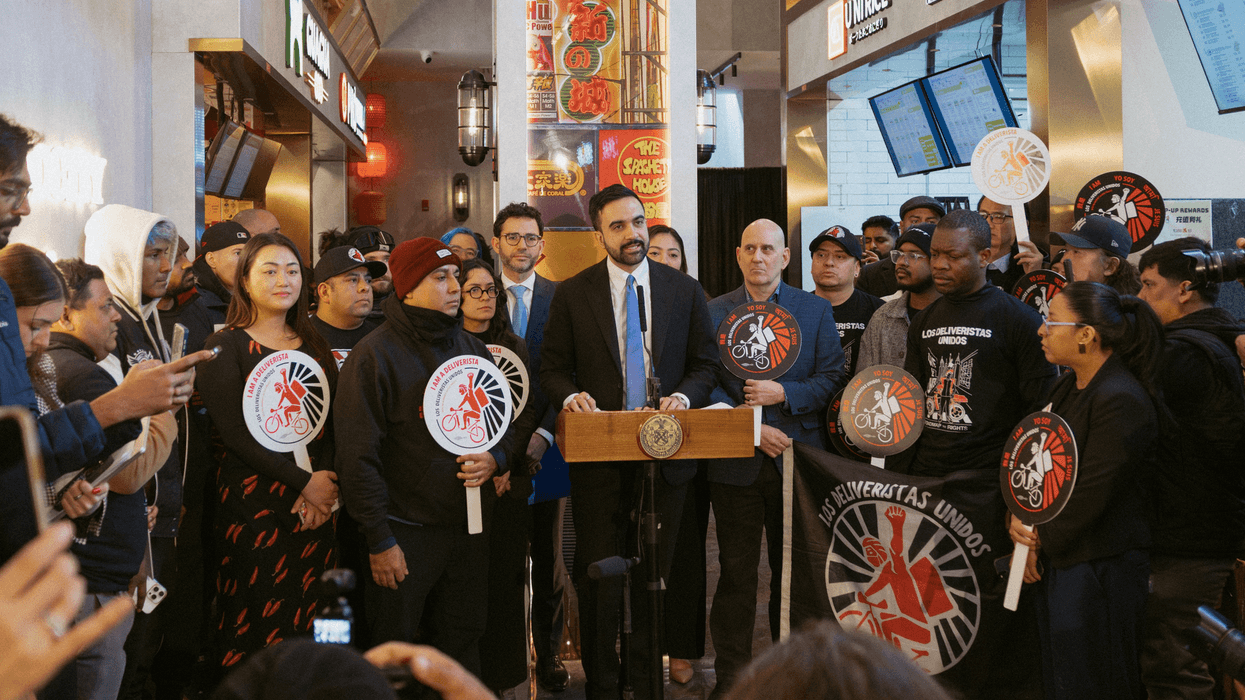
"It's time we have a politics that puts them at the heart of what it is that we're pursuing and not as part of the appendix."
As he has done numerous times before, New York City Mayor Zohran Mamdani on Thursday rejected the notion that democratic socialism has limited appeal outside of progressive urban centers by asserting that his worker-centered policies are aimed at uplifting the nation's biggest demographic cohort—working people and their families.
Mamdani appeared on "CBS Mornings" and was asked what grade he'd give himself after 100 days leading the world's most important city.
"You know, I'll always leave it to New Yorkers to give me the grade but I will say that I'm proud of what the team has accomplished over the 100 days," Mamdani told "CBS Mornings" hosts Gayle King and Vladimir Duthiers. "I mean, we saw $1.2 billion secured in a partnership with Gov. [Kathy] Hochul to deliver universal childcare in our city."
"We held bad landlords accountable for $32 millon, fixed 6,070 apartments," he added. "We filled 102,000 potholes and we did all of this while also returning $9.3 million back to workers and small businesses that have been ripped off by megacorporations."
Duthiers asked whether "a democratic socialist platform can translate into something that's electorally viable in a statewide election or a national election given that, according to Gallup, many older and rural voters still have issues with the term, with the label, socialist."
Mamdani replied: "You know, what I find is that New Yorkers ask me less about how I describe my politics and more about whether my politics includes them, and I think what we can see is that a democratic socialist politics is one that should be judged on its delivery, like any ideology. And what we're showing in this city is we can we can pursue the big things like universal childcare and do the pothole politics at the same time."
"I think that this is a politics that can flourish anywhere," he added, "because frankly there is only one majority in this country that's the working class and it's time we have a politics that puts them at the heart of what it is that we're pursuing and not as part of the appendix."
Turning to the illegal US-Israeli war of choice against Iran, Mamdani lamented that "we're talking about spending close to $30 billion to kill thousands of people an ocean away while we're told that we don't have even an ounce of that money to help working-class Americans across this country."
According to a Marist poll published earlier this month, 48% of New Yorkers approved of Mamdani's overall performance, while 30% disapproved and 23% are unsure. A majority of respondents—55%—"have either a very favorable or somewhat favorable view of the mayor, and 33% have either a somewhat unfavorable or very unfavorable opinion."
A majority of respondents also said the city is heading in the right direction under Mamdani, while nearly three-quarters believe the mayor is "working hard," and 58% "have a great deal or a good amount of trust in Mayor Mamdani to make decisions that are in the best interest of New York City."
Previous polling has also shown that Mamdani's economic policies are popular across the country.
Responding to Mamdani's "CBS Mornings" appearance, the Center for Economic and Policy Research (CEPR) shared its newly published "Majority Agenda," a “roadmap” to passing policies that most Americans see as major priorities to improve their lives.
"The Majority Agenda is a collection of policy briefs on important issues where Americans generally have broad agreement across the political landscape," CEPR explained. "The project organizes these reports into three main areas: good jobs, strong infrastructure, and fair play."
"We're not as divided as some media and politicians want us to believe," CEPR contended.
"Every dollar of tariff revenue represents a dollar extracted from American businesses and households."
President Donald Trump has long insisted, in the face of decades of research by economists, that foreign producers are the only ones who are paying for his tariffs on imported goods.
However, a major new study released Monday by the Kiel Institute for the World Economy, an economic think tank based in Germany, shows that US businesses and consumers are shouldering the burden for the vast majority of Trump's tariffs.
After examining more than 25 million shipment records of goods imported to the US last year, the institute found that foreign exporters only absorbed 4% of the $200 billion in tariff payments, with the remaining 96% being passed on to US importers and consumers.
"This finding has profound implications," the study explains. "If foreign exporters do not reduce their prices in response to tariffs, then the entire burden of the tariff falls on US buyers. The tariff functions not as a tax on foreign producers, but as a consumption tax on Americans. Every dollar of tariff revenue represents a dollar extracted from American businesses and households."
The study identifies several factors to explain why exporters did not slash their prices to remain competitive in the lucrative US market, including exporters shifting their sales to other markets where they will not face such high tariffs; firms not being able to shoulder the high price cut that would be needed to overcome the tariff rates set by the president; and companies not wanting to give Trump an incentive for further tariffs by rewarding US consumers with lower prices.
Julian Hinz, research director at the Kiel Institute and an author of the study, described the Trump tariffs as an "own goal" that has harmed Americans far more than it has harmed foreigners.
"The claim that foreign countries pay these tariffs is a myth," explained Hinz. "The data show the opposite: Americans are footing the bill."
The Kiel Institute study came out two days after Trump vowed to slap even more tariffs on European countries opposed to his efforts to take over Greenland.
In an analysis published Monday, economist Dean Baker of the Center for Economic and Policy Research (CEPR) said that the latest Trump tariffs on Europe amounted to a "$75 billion tax increase" in an attempt to fulfill the president's "demented dreams" of taking over the self-governing Danish territory.
"Well over 90% of the cost of a Trump tariff is borne by consumers or importers in the United States, not by the exporting countries," Baker contended. "When Trump starts yelling 'tariff, tariff, tariff,' he is yelling 'tax, tax, tax,' and we’re the ones paying it. And $75 billion is not trivial. It’s 1% of the budget, more than twice the cost of the enhanced premiums for Obamacare policies that Trump says we can’t afford."
There has been "almost no hiring since April," observed one economist.
The US labor market appears to be running on fumes under President Donald Trump, as the latest jobs report revealed that the American economy added just 50,000 jobs in December, below economists' consensus estimate of 55,000 jobs.
The report, released on Friday by the Bureau of Labor Statistics (BLS), also found that the US economy as a whole created just 584,000 jobs in 2025, which is less than a third of the 2 million jobs created in 2024 during the last year of former President Joe Biden's term.
The 2025 figure also marked the lowest number of annual jobs created since 2020, when the economy was shut down due to the Covid-19 pandemic.
Fox Business anchor Cheryl Casone couldn't put a happy spin on the jobs report after its release, as she noted that the gains of just 37,000 private-sector jobs on the month were "much weaker than expected."
"Private sector payrolls coming in much weaker than expected" -- Maria Bartiromo and company cope with an underwhelming December jobs report (wait for Stephen Moore's bonkers commentary at the end) pic.twitter.com/C5D8qu5h8f
— Aaron Rupar (@atrupar) January 9, 2026
Digging further into the report, Bloomberg economic analyst Joe Weisenthal observed on X that manufacturing employment has been hit particularly hard in recent months, despite Trump's vow that his tariffs would lead to a manufacturing revival in the US.
"It's not just that total manufacturing employment is shrinking," he explained. "The number of manufacturing sub-sectors that are adding jobs is rapidly shrinking. Of the 72 different types of manufacturing tracked by the BLS, just 38.2% are still adding jobs. A year ago it was 47.2%."
Heather Long, chief economist at Navy Federal Credit Union, noted that the weakness in the labor market extends beyond the manufacturing sector, as there has been "almost no hiring outside of healthcare and hospitality" since the start of Trump's second term.
Richardson also observed that "there was almost no hiring since April" of last year, when Trump announced his "Liberation Day" tariffs that sent shockwaves through the global economy.
Economist Dean Baker, co-founder of the Center for Economic and Policy Research, zeroed in on downward revisions in prior jobs reports, reinforcing that the current labor market is anemic.
"With the revisions, the average for the last three months was a fall of 22,000 [jobs]," Baker explained. "The healthcare and social assistance sector added an average of 49,000 jobs over this period, which means that outside of healthcare the economy lost an average of 71,000 jobs in the last three months."
Alex Jacquez, chief economist at Groundwork Collaborative, said the jobs report reflected a "lifeless economy," and he pinned the blame on Trump and his trade policies as a top reason.
"Working families face sluggish wage growth, fewer job opportunities, and never-ending price hikes on groceries, household essentials, and utilities," said Jacquez. "Despite the president's endless attempts to deflect and distract from the bleak economic reality, workers and job seekers know their budgets feel tighter than ever thanks to Trump’s disastrous economic mismanagement."
Economist Elise Gould of the Economic Policy Institute took a look at the jobs numbers and concluded the US labor market now is far weaker than the one Biden left Trump nearly one year ago.
"The slowdown in job growth this year is stark compared to 2024," Gould wrote on Bluesky. "The average monthly gain was only 49,000 in 2025 compared to 168,000 in 2024. Over the last three months, average job growth was actually negative, meaning there are fewer jobs now than in September."
Correction: An earlier version of this story misidentified the Navy Federal Credit Union's chief economist. That error has been corrected.
"The booming job market exists only in Donald Trump's demented head," said economist Dean Baker.
Economists on Wednesday expressed significant concerns after new data from global payroll processing firm ADP estimated that the US economy lost 32,000 jobs last month.
As reported by CNBC, small businesses bore the brunt of the job losses, as firms with fewer than 50 employees shed a total of 120,000 jobs, more than offsetting the 90,000 in job gains reported by firms with 50 or more employees.
The loss of 32,000 jobs in November marked a major miss for economists' consensus estimate of 40,000 jobs added on the month, and CNBC noted that the total number of jobs lost according to ADP data "was the biggest drop since March 2023."
Heather Long, chief economist at Navy Federal Credit Union, noted in a post on X that the job losses recorded by ADP were widespread across the US economy.
"Yikes," she wrote in reaction to the report. "Most industries were doing layoffs. The only ones still are hiring are hospitality and healthcare."
Long also said the disparity between small and large businesses in terms of job growth was more evidence that the US is experiencing a "K-shaped" economy in which those at the top of the economic ladder thrive, even as everyone else struggles.
"Larger companies are still hiring," she explained. "Smaller firms (under 50 workers) are doing the layoffs. It's been a very tough year for small biz due to tariffs and more selective spending from lower and middle-class consumers."
Kevin Gordon, head of macro research and strategy at the Schwab Center for Financial Research, observed that ADP hasn't reported such a big drop in small-business employment since October 2020, when the US economy was suffering through the peak of the Covid-19 pandemic.
Alex Jacquez, chief of policy and advocacy at Groundwork Collaborative, cautioned against reading too much into ADP data, although he added that "in the absence of up to date government payrolls, all other signs point to a further deteriorating labor market."
Charlie Bilello, chief market strategist at financial planner Creative Planning, argued that the ADP jobs numbers were part of a negative three-month trend in which the US economy lost an estimated 4,000 jobs per month, which he said was "the first three-month decline since the 2020 recession."
Bilello added that "a year ago, we were adding over 200,000 jobs per month."
Diane Swonk, chief economist at accounting firm KPMG, argued that the ADP report showed job losses in the US economy were "broad based" and "were accompanied by a cooling of wage gains" for workers who still have jobs or are switching from one job to another.
"Those with a job are clinging on, while those without are left wanting," she explained.
Dean Baker, senior economist at the Center for Economic and Policy Research, argued that the ADP report blows up President Donald Trump's spin about the health of the US economy.
"The booming job market exists only in Donald Trump's demented head," he wrote.

"If the goal is relief for Americans, just get rid of the tariffs," explained one economist.
As poll numbers on his handling of the US economy have continued to sink in recent weeks, President Donald Trump has floated sending Americans a $2,000 check that he has claimed will be funded with revenue collected from his tariffs on imported products.
However, economist Dean Baker of the Center for Economic and Policy Research (CEPR) on Tuesday crunched some numbers and found that Trump's proposed tariff "dividend" simply doesn't add up.
In particular, Baker found that the revenue being generated by the tariffs is less than half of the total cost of sending nearly every US citizen a $2,000 check.
"At $2,000 a piece it would come to $600 billion, more than twice what Trump is collecting from us with his import taxes," Baker explained. "Since he's already $330 billion short, how can Trump think he has money to pay down the national debt?"
Baker declared Trump's tariff math "crazy," and then speculated that the president sincerely believes the false claims he's been making about securing $18 trillion in investments from foreign countries. What's more, Baker said that it appears that no one on the president's economic policy team wants to tell him that this belief is purely delusional.
"People like Treasury Secretary Scott Bessent or National Economic Adviser Kevin Hassett may not be brilliant intellects, but they know that Trump does not have trillions of dollars from foreign countries to play with, and that we are still running deficits that would ordinarily be considered very large," he said. "But they are too scared of Donald Trump to explain this to him."
Erica York, vice president of federal tax policy at the Tax Foundation, said in an interview with CNN published on Tuesday that Trump could also reignite inflation by sending out $2,000 checks to everyone, as this would likely increase demand for goods and services without a corresponding increase in supply.
"All of this is exactly the wrong recipe if you want to get inflation under control and make things feel more affordable," she said.
York also said in a separate interview with the Associated Press that it makes little sense to cut Americans a check when one of the main reasons they're paying more for so many products has been the president's tariffs.
"If the goal is relief for Americans, just get rid of the tariffs," she said.
Michael Pearce, deputy chief US economist at Oxford Economics, echoed York's concern about the dividend checks worsening inflation, and he told CNN that the risk with Trump's plan is "if you add a stimulus check on top of a tax cut refund, you're going to overheat the economy."
University of Michigan economist Justin Wolfers was even more blunt in his take on Trump's tariff dividend idea, which he labeled, "insane, unfair, pointless and dumb."
"If tariffs are making Americans poorer," Wolfers told CNN, "the simplest and fairest way to stop that is not to tariff."
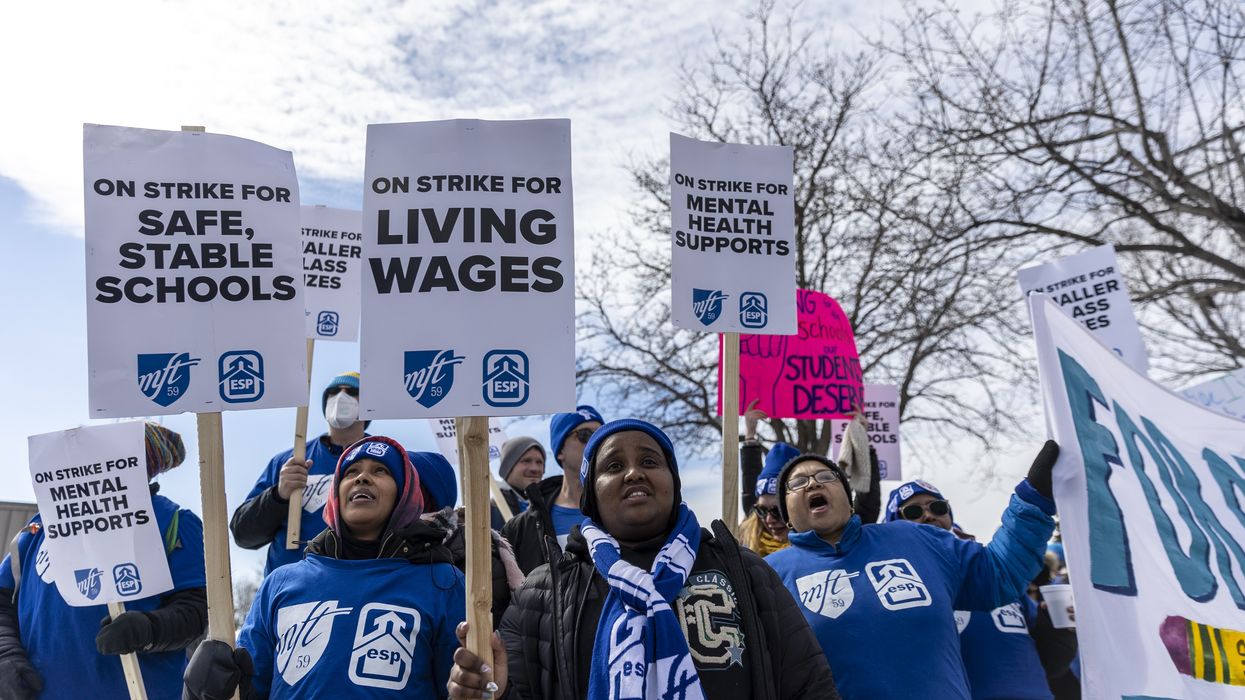
"The quality of a public education greatly hinges on our efforts to sufficiently invest in our schools and teachers," the new report stresses, calling for "targeted and sustained investments."
The gap between the weekly wages of US public school teachers and other college graduates not only continued to grow last year, but "reached a record high," according to a report released Wednesday by a pair of think tanks.
Sylvia Allegretto, a senior economist at the Center for Economic and Policy Research and research associate at the Economic Policy Institute, found that this gap, known as the teacher pay penalty, grew to 26.9% in 2024, "a significant increase from 6.1% in 1996."
Allegretto tracked data back even further—to 1979, when teachers earned an average of $1,219 a week, while other graduates earned $1,580, adjusted for inflation. In 2024, those figures rose to $1,447 for teachers and $2,361 for other similarly educated workers.
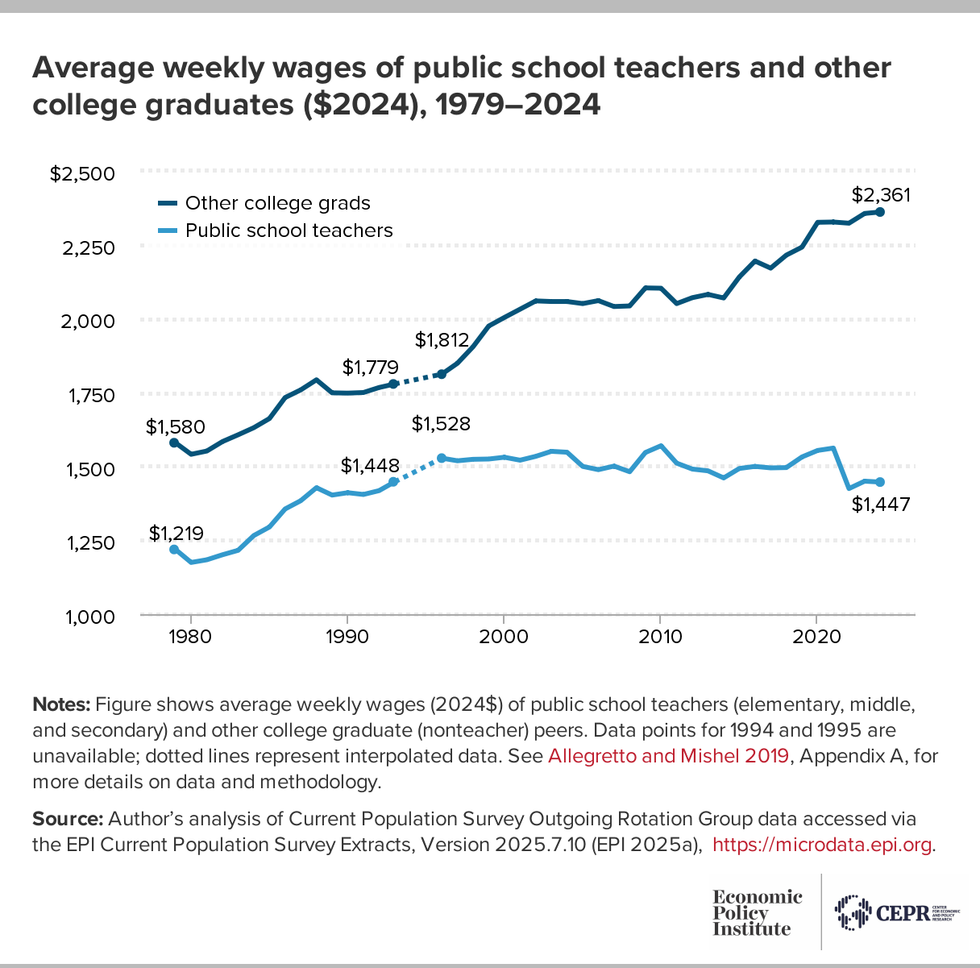
The numbers above are simple averages. The researcher also aimed to "estimate weekly wages of public school teachers relative to other similarly situated college graduates working in other professions," accounting for "ways the two groups may differ fundamentally which typically affect pay on margins such as age, educational attainment, race/ethnicity, and state of residence."
She found a "nearly 30-year trend of relative teacher weekly wages increasingly falling behind those of other similarly qualified professionals." While the gap averaged 8.7% pre-1994, "the shortfall worsened considerably starting in the mid-1990s."
In 1996, "on average, teachers earned 73.1 cents on the dollar in 2024, compared with what similar college graduates earned
working in other professions—much less than the relative 93.9 cents on the dollar that teachers earned in 1996," the report says.
Allegretto also separated workers by gender, and found that while the relative female teacher weekly wage "was at a premium that averaged 3.3%" before 1994, "starting in 1996, the female gap quickly went from parity to a penalty, landing at a 21.5% penalty in 2024."
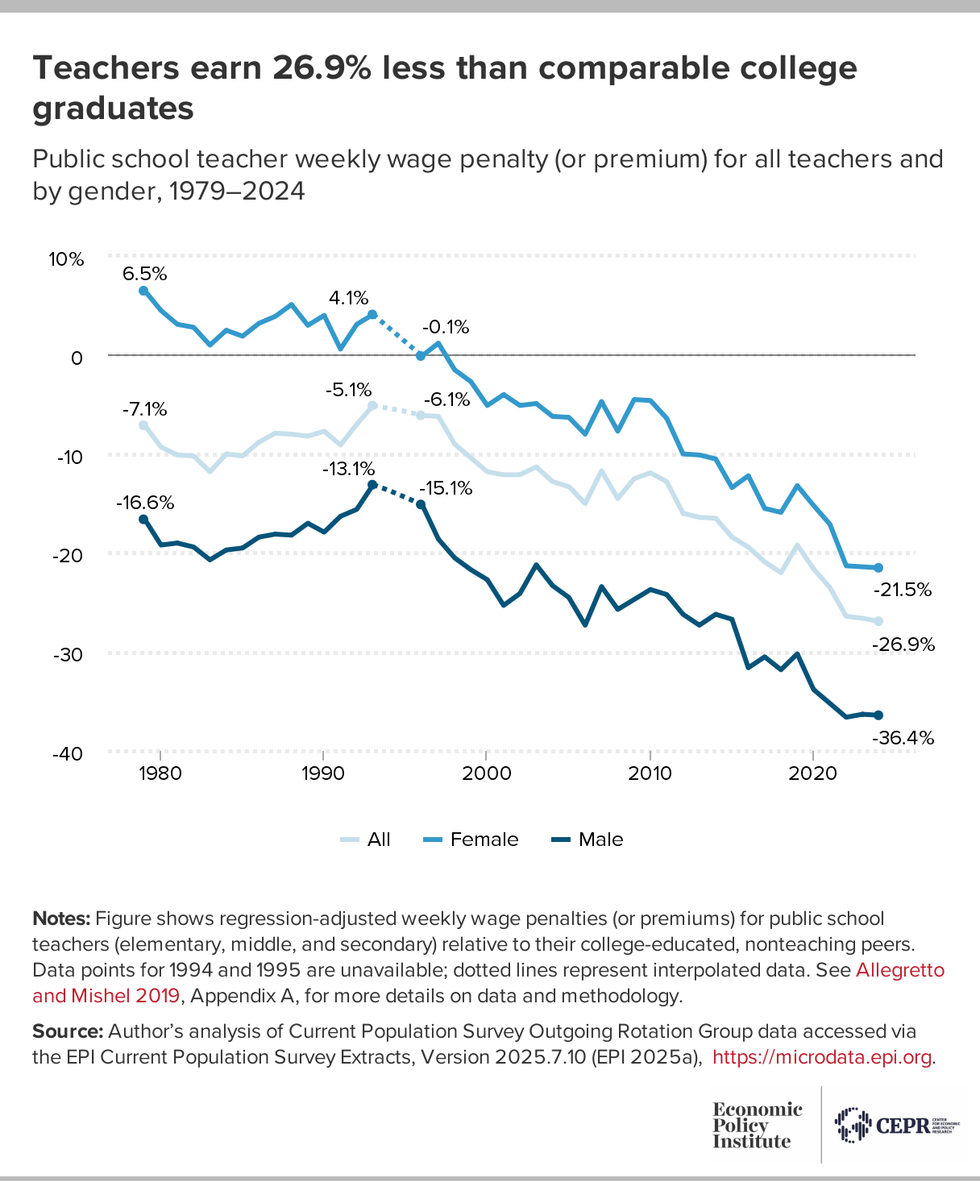
As the report details:
There is an important story behind the declining relative wages experienced by female teachers. Historically, the teaching profession relied on a somewhat captive labor pool of educated women who had few employment opportunities. This is thankfully no longer the case, but increased opportunity costs are a part of the story and reflected in these results. Expanding opportunities for women enabled them to earn more as they entered occupations and professions from which they were once barred.
In fact, the simple average weekly wages (inflation-adjusted) of female teachers compared with their nonteaching counterparts grew in lock step from 1979 until they started to diverge in the late 1990s. They were close to parity in 1996, when other female college graduates earned just 0.7% more than female teachers. But this divide grew nearly every year—reaching 40.9% in 2024.
Conversely, the trends in the weekly wages of male teachers compared with other male college graduates were never at parity. But like their female counterparts, men also experienced a considerable increase in the pay gap—from 24.1% in 1996 to 81.7% in 2024. Therefore, the regression-adjusted relative wages of male teachers have seen sizable penalties throughout the timeframe of this paper (1979–2024) and in my earlier analyses using 1960, 1970, and 1980 decennial Census data. Over the long run, the male relative penalty worsened from 20.5% in 1960 to 36.3% in 2024.
While all states and the District of Columbia have a wage gap between teachers and similar graduates, Allegretto examined how the penalties vary by state. The biggest penalties since 2019 were recorded in Colorado (38.5%), Alabama (34.3%), Arizona (33.8%), Minnesota (33.3%), and Virginia (32.7%), while the lowest were Rhode Island (10%), Wyoming (11%), New Jersey (12.7%), Vermont (13%), and South Carolina (14.1%).
Allegretto also acknowledged "the view that, on average in the US, teachers generally receive a larger share of their total compensation as benefits—such as health or other insurance and retirement plans—compared with other professionals."
From 2020-24, "the benefits advantage that favors teachers varied from 8.8% to 9.9%, but over the same timeframe the teacher wage penalty grew substantially. Thus, in 2024, the teacher total compensation gap widened to -17.1%—the largest on record," she wrote. "Of course, even if the teacher benefits advantage could exceed the large teacher wage penalty, the standard of living for teachers would likely fall, as they would have little in the way of earnings to make ends meet."
In 2024, teachers earned 73 cents for every dollar their similarly educated peers made, on average—a record low.In 1996, the gap was much smaller: teachers earned 94 cents for every dollar.We need to pay teachers more! How? By investing in public education. www.epi.org/publication/...
[image or embed]
— Economic Policy Institute (@epi.org) September 24, 2025 at 9:59 AM
The report says that trends from "the last three decades have no doubt already had profound consequences on teacher retention and recruitment," citing research on staffing challenges, college students forgoing teaching careers due to low wages, parents steering their children into professions that pay better, fast-tracking credentials in response to shortages, the heavy use of unqualified teachers, and the reliance on unqualified substitutes.
"The quality of a public education greatly hinges on our efforts to sufficiently invest in our schools and teachers," the publication stresses, calling for "targeted and sustained investments" at the local, state, and federal levels, and the expansion of collective bargaining.
"Regrettably, sustained and effective policy interventions capable of mitigating, much less substantially improving, the trends outlined in this long-running series have been lacking," concludes the report. "This is a troublesome reality, especially in the United States—a country that has more than enough resources and wealth to be the envy of public education around the world."
The publication comes as President Donald Trump works to dismantle the US Department of Education and elected Republicans, along with some Democrats, try to push tax dollars toward private and charter schools.
Amid such efforts this summer, Senate Health, Education, Labor, and Pensions Committee Ranking Member Bernie Sanders (I-Vt.) held a town hall with educators and introduced the Pay Teachers Act, which would ensure they earn at least $60,000 annually, require districts to give raises throughout teachers' careers, and provide at least $1,000 per year for classroom supplies.