SUBSCRIBE TO OUR FREE NEWSLETTER
Daily news & progressive opinion—funded by the people, not the corporations—delivered straight to your inbox.
5
#000000
#FFFFFF
To donate by check, phone, or other method, see our More Ways to Give page.
Daily news & progressive opinion—funded by the people, not the corporations—delivered straight to your inbox.
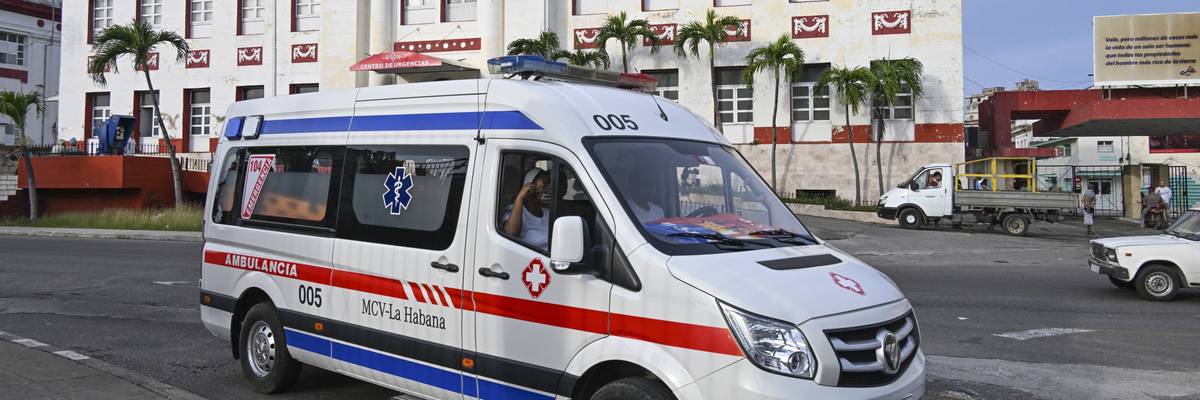
Cuba's Deputy Foreign Minister Carlos Fernandez de Cossio said he hoped the people of the United States would ask, "Why does our government treat the whole population of Cuba this way?"
More than 96,000 Cubans, including 11,000 children, are "waiting for surgery" due to a fuel shortage caused by the American blockade, the country's deputy foreign minister, Carlos Fernandez de Cossio, said on Sunday.
The numbers cited by the minister on NBC's "Meet the Press" on Sunday were first reported earlier this month by Cuban Minister of Public Health José Ángel Portal Miranda, who explained that President Donald Trump's policy of “energy asphyxiation," using tariffs to threaten countries out of importing fuel to Cuba, has devastated its National Health Service.
The policy has left Cuba unable to import oil from abroad for more than three months, reducing its fuel supply by about 90% and leading to periodic blackouts and strict energy rationing.
Using the severely limited electricity at its disposal, Cuba's health system has been forced to prioritize continuing cancer treatments and other lifesaving procedures, putting those awaiting non-urgent surgeries on the sidelines.
Last month, a specialist at a hospital in Holguín told Diario de Cuba that the surgeries canceled included "uncomplicated hernias, cataract surgeries, some non-urgent gynecological procedures, and scheduled orthopedic surgeries."
Other healthcare professionals said that nobody was being admitted to the hospital for tests and that it was running low on basic supplies like syringes, IV tubing, and antibiotics, which could not be delivered due to fuel shortages. Most of those that have been used had to be donated by family members or purchased for exorbitant prices on the black market.
Jorge Barrera, a reporter for CBC News, spoke with patients and employees at Havana’s National Institute of Cardiology and Cardiovascular Surgery this weekend and found it to be at about half capacity, and that nonessential care has been virtually all suspended.
"Even though the health system is a point of pride for Cuba... something that they export to the rest of the world," Barrera explained, "because of this crisis, because of the impact it's had on the skyrocketing prices, it's just not enough for them to make ends meet. So people are quitting... to find other ways to make money to feed their families."
Experts with the United Nations have condemned the blockade of Cuba as "a serious violation of international law." Condemnations have grown louder over the past week as Trump said he believed he'd have "the honor of taking Cuba" after it collapsed.
De Cossio said he hoped the people of the United States would ask "Why does our government treat the whole population of Cuba this way?" and that they'd "understand that it's not correct to treat another nation the way the US is doing simply to try to achieve political goals."
The US blockade of Cuba is largely unpopular with the American public. A poll published last week by YouGov found that just 28% of adult US citizens said they approved of the US blocking oil shipments to the country, while 46% said they opposed it.
Asked by anchor Kristen Welker about suggestions from Trump that Cuba would collapse "on its own" without the need for the US to intervene militarily, De Cossio retorted, "What does 'on its own' mean when it’s being forced by the United States?"
Prior to Trump's further measures to isolate Cuba in January, the US had placed Cuba under an economic embargo for more than 60 years, which severely hampered the country's economic development and has cost Cuba trillions of dollars since it began, according to the UN.
"It’s a very bizarre statement, and it’s claimed by most US politicians repeatedly that Cuba will collapse on its own," De Cossio said. "Then why does the US government need to employ so many resources, so much political capital, so many human resources to try to destroy the economy of another country? Evidently, it implies that the country does not have the characteristics to collapse on its own."
Dear Common Dreams reader, It’s been nearly 30 years since I co-founded Common Dreams with my late wife, Lina Newhouser. We had the radical notion that journalism should serve the public good, not corporate profits. It was clear to us from the outset what it would take to build such a project. No paid advertisements. No corporate sponsors. No millionaire publisher telling us what to think or do. Many people said we wouldn't last a year, but we proved those doubters wrong. Together with a tremendous team of journalists and dedicated staff, we built an independent media outlet free from the constraints of profits and corporate control. Our mission has always been simple: To inform. To inspire. To ignite change for the common good. Building Common Dreams was not easy. Our survival was never guaranteed. When you take on the most powerful forces—Wall Street greed, fossil fuel industry destruction, Big Tech lobbyists, and uber-rich oligarchs who have spent billions upon billions rigging the economy and democracy in their favor—the only bulwark you have is supporters who believe in your work. But here’s the urgent message from me today. It's never been this bad out there. And it's never been this hard to keep us going. At the very moment Common Dreams is most needed, the threats we face are intensifying. We need your support now more than ever. We don't accept corporate advertising and never will. We don't have a paywall because we don't think people should be blocked from critical news based on their ability to pay. Everything we do is funded by the donations of readers like you. When everyone does the little they can afford, we are strong. But if that support retreats or dries up, so do we. Will you donate now to make sure Common Dreams not only survives but thrives? —Craig Brown, Co-founder |
More than 96,000 Cubans, including 11,000 children, are "waiting for surgery" due to a fuel shortage caused by the American blockade, the country's deputy foreign minister, Carlos Fernandez de Cossio, said on Sunday.
The numbers cited by the minister on NBC's "Meet the Press" on Sunday were first reported earlier this month by Cuban Minister of Public Health José Ángel Portal Miranda, who explained that President Donald Trump's policy of “energy asphyxiation," using tariffs to threaten countries out of importing fuel to Cuba, has devastated its National Health Service.
The policy has left Cuba unable to import oil from abroad for more than three months, reducing its fuel supply by about 90% and leading to periodic blackouts and strict energy rationing.
Using the severely limited electricity at its disposal, Cuba's health system has been forced to prioritize continuing cancer treatments and other lifesaving procedures, putting those awaiting non-urgent surgeries on the sidelines.
Last month, a specialist at a hospital in Holguín told Diario de Cuba that the surgeries canceled included "uncomplicated hernias, cataract surgeries, some non-urgent gynecological procedures, and scheduled orthopedic surgeries."
Other healthcare professionals said that nobody was being admitted to the hospital for tests and that it was running low on basic supplies like syringes, IV tubing, and antibiotics, which could not be delivered due to fuel shortages. Most of those that have been used had to be donated by family members or purchased for exorbitant prices on the black market.
Jorge Barrera, a reporter for CBC News, spoke with patients and employees at Havana’s National Institute of Cardiology and Cardiovascular Surgery this weekend and found it to be at about half capacity, and that nonessential care has been virtually all suspended.
"Even though the health system is a point of pride for Cuba... something that they export to the rest of the world," Barrera explained, "because of this crisis, because of the impact it's had on the skyrocketing prices, it's just not enough for them to make ends meet. So people are quitting... to find other ways to make money to feed their families."
Experts with the United Nations have condemned the blockade of Cuba as "a serious violation of international law." Condemnations have grown louder over the past week as Trump said he believed he'd have "the honor of taking Cuba" after it collapsed.
De Cossio said he hoped the people of the United States would ask "Why does our government treat the whole population of Cuba this way?" and that they'd "understand that it's not correct to treat another nation the way the US is doing simply to try to achieve political goals."
The US blockade of Cuba is largely unpopular with the American public. A poll published last week by YouGov found that just 28% of adult US citizens said they approved of the US blocking oil shipments to the country, while 46% said they opposed it.
Asked by anchor Kristen Welker about suggestions from Trump that Cuba would collapse "on its own" without the need for the US to intervene militarily, De Cossio retorted, "What does 'on its own' mean when it’s being forced by the United States?"
Prior to Trump's further measures to isolate Cuba in January, the US had placed Cuba under an economic embargo for more than 60 years, which severely hampered the country's economic development and has cost Cuba trillions of dollars since it began, according to the UN.
"It’s a very bizarre statement, and it’s claimed by most US politicians repeatedly that Cuba will collapse on its own," De Cossio said. "Then why does the US government need to employ so many resources, so much political capital, so many human resources to try to destroy the economy of another country? Evidently, it implies that the country does not have the characteristics to collapse on its own."
More than 96,000 Cubans, including 11,000 children, are "waiting for surgery" due to a fuel shortage caused by the American blockade, the country's deputy foreign minister, Carlos Fernandez de Cossio, said on Sunday.
The numbers cited by the minister on NBC's "Meet the Press" on Sunday were first reported earlier this month by Cuban Minister of Public Health José Ángel Portal Miranda, who explained that President Donald Trump's policy of “energy asphyxiation," using tariffs to threaten countries out of importing fuel to Cuba, has devastated its National Health Service.
The policy has left Cuba unable to import oil from abroad for more than three months, reducing its fuel supply by about 90% and leading to periodic blackouts and strict energy rationing.
Using the severely limited electricity at its disposal, Cuba's health system has been forced to prioritize continuing cancer treatments and other lifesaving procedures, putting those awaiting non-urgent surgeries on the sidelines.
Last month, a specialist at a hospital in Holguín told Diario de Cuba that the surgeries canceled included "uncomplicated hernias, cataract surgeries, some non-urgent gynecological procedures, and scheduled orthopedic surgeries."
Other healthcare professionals said that nobody was being admitted to the hospital for tests and that it was running low on basic supplies like syringes, IV tubing, and antibiotics, which could not be delivered due to fuel shortages. Most of those that have been used had to be donated by family members or purchased for exorbitant prices on the black market.
Jorge Barrera, a reporter for CBC News, spoke with patients and employees at Havana’s National Institute of Cardiology and Cardiovascular Surgery this weekend and found it to be at about half capacity, and that nonessential care has been virtually all suspended.
"Even though the health system is a point of pride for Cuba... something that they export to the rest of the world," Barrera explained, "because of this crisis, because of the impact it's had on the skyrocketing prices, it's just not enough for them to make ends meet. So people are quitting... to find other ways to make money to feed their families."
Experts with the United Nations have condemned the blockade of Cuba as "a serious violation of international law." Condemnations have grown louder over the past week as Trump said he believed he'd have "the honor of taking Cuba" after it collapsed.
De Cossio said he hoped the people of the United States would ask "Why does our government treat the whole population of Cuba this way?" and that they'd "understand that it's not correct to treat another nation the way the US is doing simply to try to achieve political goals."
The US blockade of Cuba is largely unpopular with the American public. A poll published last week by YouGov found that just 28% of adult US citizens said they approved of the US blocking oil shipments to the country, while 46% said they opposed it.
Asked by anchor Kristen Welker about suggestions from Trump that Cuba would collapse "on its own" without the need for the US to intervene militarily, De Cossio retorted, "What does 'on its own' mean when it’s being forced by the United States?"
Prior to Trump's further measures to isolate Cuba in January, the US had placed Cuba under an economic embargo for more than 60 years, which severely hampered the country's economic development and has cost Cuba trillions of dollars since it began, according to the UN.
"It’s a very bizarre statement, and it’s claimed by most US politicians repeatedly that Cuba will collapse on its own," De Cossio said. "Then why does the US government need to employ so many resources, so much political capital, so many human resources to try to destroy the economy of another country? Evidently, it implies that the country does not have the characteristics to collapse on its own."