Medicare For All May Not Be as Far Away as You Fear
The pessimistic view that we are moving in the wrong direction sees only the waves at the surface. It misses the subterranean tremors underneath. If we fight, we can win.
As policy-wise and popular as Improved Medicare for All is, the nation may appear to be as far away from enacting Improved Medicare for All as possible. During his first term, Trump did what he could to accelerate the privatization of Medicare. Unfortunately, his thumb on the scale in favor of privatized Medicare is not only back, but is on steroids.
Adding to the sense that the nation may be as far away from Improved Medicare for All as possible, the Republicans enacted legislation that is projected to cause 15 million people to lose their health insurance. Adding to the sense that we are nowhere near enacting Improved Medicare for All, the two prior presidential elections, in 2016 and 2020, saw Senator Bernie Sanders (I-Vt.) and Senator Elizabeth Warren (D-Mass.), two leading champions of Medicare for All, lose in the primary to the more centrist candidate Hillary Clinton, in 2016, and Joe Biden, in 2020. Trump defeated Clinton and won a second term in 2024 against Vice President Kamala Harris. Though Harris did not mention the fact in her presidential campaign, she was an original cosponsor of the Sanders-authored Medicare for All Act.
Trump’s election to a second term, the Republican control of Congress (as these words are written), and a Supreme Court with two-thirds of the justices who are acting as Trump advocates rather than independent jurists appear to suggest that the nation is moving away from national health insurance. But it is crucial to recognize that today is only a snapshot in time. The pessimistic view that we are moving in the wrong direction sees only the waves at the surface. It misses the subterranean tremors underneath. The Republican cuts to health insurance are already putting a strain on rural and inner-city hospitals, as well as nursing homes. The nation is seeing hospitals close as a result of the enactment. Their closure, in turn, strains even those hospitals and nursing homes not directly affected by the cuts.
Improved Medicare for All won’t magically become a reality. It will take all of us who support it to fight for it, in small and large ways.
With the cost of health care rising and, with it, increased insecurity, a majority of the electorate are concluding that the nation is moving in the wrong direction. Perhaps even more significantly, it will become clearer and clearer that the current path is unsustainable.
Importantly, two action-forcing events requiring Congressional legislation are on the horizon. Social Security and Medicare Part A, by law, can only pay benefits if they have sufficient dedicated revenue to cover their costs. To avoid an automatic across-the-board reduction of around 20 percent of the monthly Social Security benefits received by more than 70 million beneficiaries, and to avoid hospitals no longer being reimbursed, Congress must act. However the precise dates shift over the next few years, Congress unquestionably will have to act in the next half decade or so, before the revenue is insufficient to continue to pay full benefits.
Those action-forcing events provide an opportunity. Because those action-forcing events will result in must-pass legislation, provisions that expand Medicare, as well as Social Security, could be included. To make that a reality, though, it is essential that those who support Improved Medicare for All are fully prepared.
Improved Medicare for All won’t magically become a reality. It will take all of us who support it to fight for it, in small and large ways. The wonderful news is that determined activists are currently working hard to make Improved Medicare for All the law of the land. Building a winning coalition and other steps are already underway.
It is imperative that a winning coalition is built strong enough to defeat those who will fight against Improved Medicare for All. Physicians have been extremely active politically since the United States first started to seriously debate universal health insurance at the start of the twentieth century. Initially, the American Medical Association, whose members in 1910 comprised more than half the doctors in the nation, endorsed the legislation under consideration. Individual doctors, however, strenuously objected and made those objections known through their state medical societies. As a result, in 1920, the AMA’s House of Delegates formally voted to reverse its support, and instead opposed the initiatives.
While the AMA has been a staunch opponent ever since, that may be changing. Though the AMA has opposed national health insurance for over a century, doctors have much to gain from it. The image of the self-employed family doctor who makes house calls is virtually an anachronistic image. Today, around four out of five physicians – 77.6 percent – work for corporations. Historically, doctors have expressed concern over government oversight and interference. More and more, though, physicians’ reality is that they now live under commercial insurance oversight and interference. Unlike elected officials for whom Americans vote and whose salaries are set and paid transparently from public funds, doctors have no say over who runs private insurance companies and how they are operated.
A survey of doctors conducted by the Chicago Medical Society found that 66.8 percent had favorable views of a single-payer system.
The doctors most active in support of Improved Medicare for All are the leaders and 25,000 members of Physicians for a National Health Program (PNHP). They have provided a clear and steady voice on the issue since their founding in 1987. In part because of PNHP’s sustained effort, doctors seem to be moving toward support for Improved Medicare for All. A survey of doctors conducted by the Chicago Medical Society found that 66.8 percent had favorable views of a single-payer system. In fact, when asked to choose between Medicare for All and an improved Affordable Care Act (colloquially known as Obamacare), the doctors chose Medicare for All by two to one!
The increasing support among doctors for Improved Medicare for All is likely in large part a response to how vexing and inadequate the current system is for all participants, including doctors. The increasing support for Improved Medicare for All may also reflect a more diversified pool of physicians. When Medicare was enacted in 1965, doctors were overwhelmingly white men, who tended to identify as Republicans. Accordingly, the AMA gave the majority of its campaign contributions to Republican candidates. Ninety-four percent of the medical students at that time were men. Only 2.5 percent of practicing physicians were African-American, generally having been trained in segregated settings. An even tinier 0.2 percent of medical students were Hispanic or indigenous at that time.
In contrast, women comprised 55.1 percent of the entering classes in accredited medical schools across the country for academic year 2024-25. That was the sixth year in a row that women made up the majority of medical school students. They comprised 54.9 percent of total enrollment. African-Americans comprised 10.3 percent of total enrollment, and Hispanics, 12.3 percent. In 2021, more than one out of four surgeons and other physicians – 26.5 percent – were foreign-born.
Led by PNHP, advocates of Improved Medicare for All must have a focused strategy geared toward physicians to solidify the support of doctors, with the goal of converting the AMA from a force in opposition to a force in support. With a focus on improving the quality of medical practice while compensating its providers adequately, along with improving Medicare and extending it to everyone, the goal for supporters of Improved Medicare for All should be to convince doctors to become a force for its enactment.
Physicians have been perhaps the hardest opponent to overcome in the past, because of the extremely close relationship they have had historically with their patients, who rely on their doctors when their lives are literally on the line. When doctors give patients advice, those words carry enormous weight, even if the advice is about whether universal health insurance would lead to better or worse health care. If physicians tell their patients the proposed legislation will harm their practice and therefore their patients’ health care, that is influential.
While attaining the support of the AMA can likely be achieved with concerted effort particularly and primarily by physicians themselves and would be extremely valuable, that support is not essential. After all, Medicare was enacted despite the AMA’s strong opposition. Moreover, while doctors historically have been extremely influential with their patients about health policy, and they remain so, the need to change doctors because they are no longer in-network and the increasing reliance on teams of healthcare providers, including nurses, nurse practitioners, and physicians’ assistants, have increased the influence of nonphysician providers.
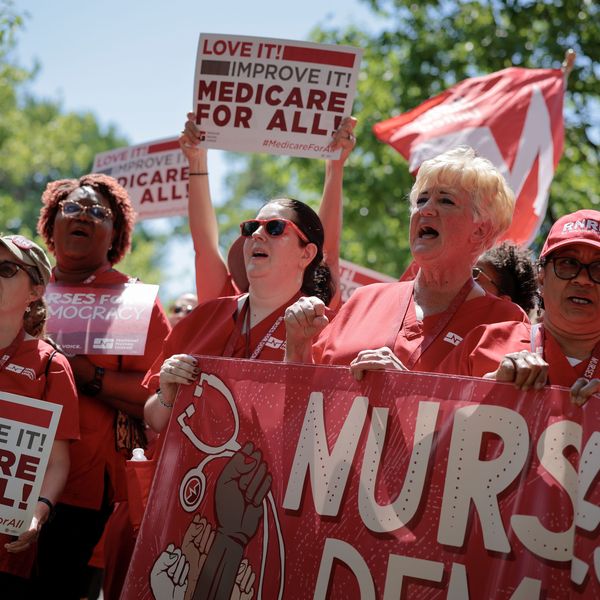
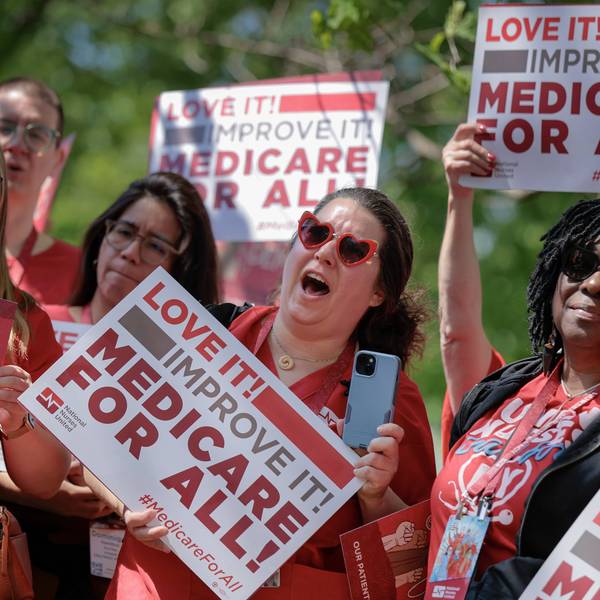
Nurses are another key group, and fortunately they have been leading the fight for Improved Medicare for All. Unlike the AMA, National Nurses United (NNU), the largest professional association of registered nurses, with 225,000 members nationwide, has been advocating for Improved Medicare for All for decades, with determination and effectiveness.
Following the lead of the AMA, the American Hospital Association (AHA), which represents nearly 5,000 hospitals, has opposed the last century of efforts to enact national health insurance. Improved Medicare for All, with its guaranteed payments to providers, its ability to incentivize healthcare providers to practice where the need is highest, and its ability to use tax dollars to subsidize the most at-risk hospitals, is a solution. Though the AHA does not yet support Improved Medicare for All, advocates may be able to persuade individual hospital administrators and, over time, the AHA itself to recognize the advantages of Improved Medicare for All and join the effort.
Another powerful group that started as supportive in the early years but then quickly switched were employers, who worried about the cost to them and the potential government interference in what they considered their independent authority. Though they still oppose it today, they might be persuaded of its value to them because healthcare costs have grown so substantially, and the lack of universal national health insurance puts them at a competitive disadvantage to their foreign counterparts.
Most companies are primarily focused on the cost of health care and, therefore, should be open to Improved Medicare for All, if they are convinced it would reduce their costs. There are some industries, though, that have an overwhelmingly strong stake in the current inefficient, costly system. Pharmaceutical manufacturers, pharmacists, and their associations have been aggressive parts of the opposition from the beginning. Another opponent has been the insurance industry. Neither pharmaceutical companies nor health insurance companies are likely to be convinced to end their opposition to Improved Medicare for All. Pharmaceutical companies take advantage of the bloated system to make extraordinary profits. Under Improved Medicare for All, the pharmaceutical industry will still make profits. Price gouging, however, will stop. Similarly, health insurance companies, for which Improved Medicare for All is an existential threat, will fight as hard as possible.
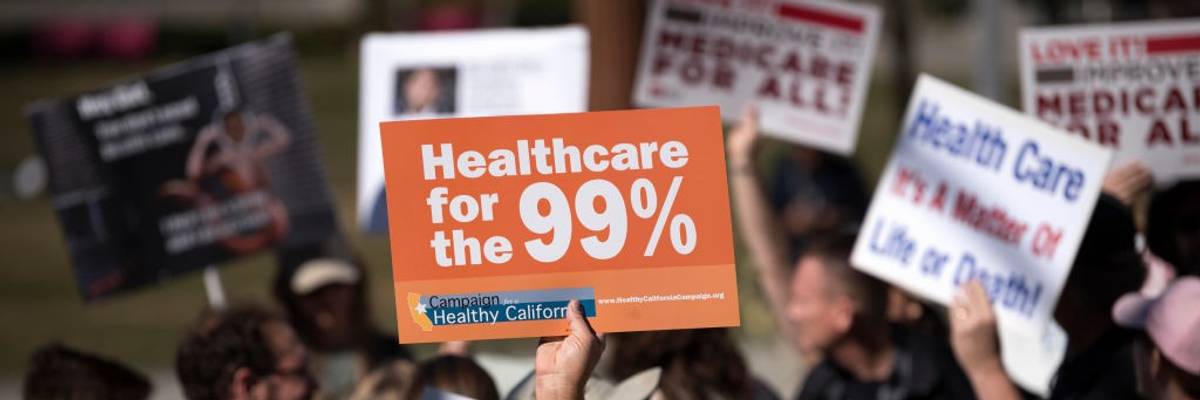
Health care is a matter of life and death for virtually all of us at some point in our lives.
Those monied interests must be defeated – no easy task given their vast resources. As powerful as they are, history shows that they can be beaten. They can be defeated, if the electorate is engaged and determined. The way to defeat those stakeholders that cannot be convinced of the benefits of Improved Medicare for All is with ongoing motivated action at both the grassroots and grasstops levels. The strong antipathy to commercial health insurance, exposed by the murder of the UnitedHealthcare CEO, reveals that the public may be ready to fight persistently, relentlessly, and effectively for accessible, affordable, high-quality health care for all.
History reveals that Americans’ support for national health insurance is generally widespread and strong at the start of the public push, likely because the need is so great, but that support can easily be shaken. Polling shows that support for Improved Medicare for All is susceptible to opposition messaging that invokes fear of loss and danger. That is not surprising, because health care is a matter of life and death for virtually all of us at some point in our lives. The challenge will be to keep people motivated and not swayed by half-truths and lies, which history demonstrates opponents are willing to deploy. The uber-wealthy want to defeat anything that will increase their costs and reduce their wealth, even by a little. They will seek to scare the American people to retain the status quo. Obviously, fear of failing to obtain adequate health care when needed is an extremely powerful fear that can be exploited.
A key player in maintaining the active support of the American people is organized labor. Studies show that union members are more likely to vote, to volunteer for candidates, and to be influenced by their union leadership in political matters generally. Importantly, they remain a counterweight to the corrosive power of self-interested billionaires and multinational corporations. While organized labor can be counted on, it does have concerns that should be addressed. These include the fact that in negotiating for the generous healthcare plans their members enjoy, they had to trade away current compensation. Moreover, some workers involved in the administration of the current wasteful system will lose employment as a result of the greater efficiency of Improved Medicare for All. Both of those concerns should be addressed as part of the fight for Improved Medicare for All. Both issues are discussed in greater detail in the next chapter, which focuses on the counterattack.
A crucial part to winning the fight for Improved Medicare for All is extremely careful messaging to strengthen the commitment and effort of supporters and to win over those who may be skeptical.
As part of the effort to enact Improved Medicare for All, advocates must be an active part of the fight for workers’ rights to unionize and build union strength. In addition, advocates must employ a careful strategy, in addition to relying on unions, to convince the American people to fight for Improved Medicare for All.
Using the right messaging is key. While the majority of Americans favor Improved Medicare for All, polling indicates that the support can be shaken simply by the way the issue is framed. For example, while 63 percent have a positive reaction to the phrases “Medicare for all,” and “Universal health coverage,” that reaction drops to 49 percent when the phrase is “Single-payer health insurance system,” and 43 percent when the proposal is called “Socialized medicine.” People’s opinions can change dramatically depending on what is emphasized. When those polled are told that Medicare for All will increase their taxes, support drops to just 37 percent. When, though, they are told there will be no premiums and out-of-pocket costs will be reduced, support increases to 67 percent. Indeed, when those polled are told that the proposal guarantees health care as a right for all, support jumps to 71 percent.
This means that a crucial part to winning the fight for Improved Medicare for All is extremely careful messaging to strengthen the commitment and effort of supporters and to win over those who may be skeptical. While the facts are important and strongly on the side of advocates of Improved Medicare for All, history teaches that winning must include effective messaging that is repeated frequently.
Careful strategizing and messaging are especially crucial with respect to older Americans who are Medicare beneficiaries or are about to become so. Seniors have, on average, the greatest need for health care and are the most reliable voters. History shows that they generally pay keen attention to conversations about retirement security and health care. Older Americans were key to the enactment of Social Security in 1935 and its improvements ever since. They were also key to the enactment of Medicare in 1965. History also reveals, though, that the deployment of fear tactics targeted toward seniors can be effective, unfortunately. Consequently, it is vital that proponents of national health insurance have a systematic strategy with respect to seniors, including careful messaging.
In particular, the name Medicare for All may be a two-edged sword. The name presumably tests so well because Medicare, having completed its 61st year, is widely known and understood. Virtually all Americans know people who currently are covered by Medicare and appropriately expect to be covered themselves one day, if they aren’t currently. Consequently, it is harder to demonize as something scary, foreign, and potentially dangerous.
As important as the enactment of Medicare was, both in its own right and as a first big step toward Improved Medicare for All, its creation established a part of the population that might believe that they have something to lose by its expansion to others. Opponents can and have played on the fear that expanding Medicare to the entire population will dilute it and endanger it. For this reason, it may be prudent to always call the proposal, as this book does, Improved Medicare for All.
Starting with the word, “improved” subtly emphasizes that it will benefit those currently on Medicare. The improvements make the proposal a winner for current beneficiaries. It will eliminate all of their out-of-pocket costs. Its long-term care coverage will be a lifesaver for one out of every three seniors and their families. That coverage of long-term care will end the need for seniors to spend all of their assets to qualify for Medicaid and the care they need. Instead, it will allow seniors to pass on whatever savings they have accumulated to their children and grandchildren. Moreover, simply the knowledge of that coverage will provide everyone with greater peace of mind.
For those who today have traditional Medicare, Improved Medicare for All will provide them with hearing, vision, and dental services. And it will free everyone from the complicated sign-up process that current Medicare enrollees must wade through for prescription drug coverage, Medigap coverage, and, for increasing numbers, the erroneously-named Medicare Advantage. In that regard, though, supporters must have a strategy for those who are enrolled in Medicare Advantage. The ending of Medicare Advantage is particularly challenging to message, because it is extremely popular at least until people get seriously ill, when its extra benefits are of less concern and its narrow network of providers and deny/delay tactics are life-threatening. How to message Medicare Advantage, as well as messaging more generally to seniors, is dealt with in greater detail in the next chapter. The basic point, though, is that messaging specifically aimed at reassuring and enlisting seniors must be a key part of a winning strategy.
Fundamentally, advocates must be astute about employing the most effective messaging. The issue should be constantly polled and the messaging refined, as part of an overarching strategy and game plan. The bottom line, though, is that a winning strategy must include careful messaging that is snappy and compelling, but brief. The messaging must be used repeatedly, consistently, and widely.
We are at a crossroads
This country and this world are at a monumental crossroads. In a few short weeks, US voters will have an opportunity to beat back the forces of fascism and confront the billionaires who are rigging the economy, our media system, and our democracy, making it increasingly impossible for ordinary people to get by. We’re not just talking about the election. We’re talking about what must be done once these fascist elements are vanquished from power. We need a bolder set of solutions than what either major party has so far been willing to offer and a working-class movement ready to fight like hell for it. Trump didn't emerge from nowhere. The conditions that fueled MAGA authoritarianism were created by decades of radical neoliberal economic policies and a corrupt political system dominated by corporate interests. They slashed taxes on the super-rich, promising that the benefits would trickle down. They said giveaways to the corporate titans would make life more affordable for the rest of us. It was all bullshit. And when a bitter, betrayed populace searches for someone to blame, right-wing demagogues have little trouble finding scapegoats. People know when they're being lied to, but you won't hear any of this from the corporate media. Only independent journalism—powered and funded by people who believe in building a better world—can deliver truly trustworthy daily news. Our Fall Campaign is underway, and we need your help. To power our newsroom through the rest of the year, we need to raise $125,000 by midnight on October 31. So if you share our vision, please contribute whatever you can to sustain our work. |
Nancy Altman is president of Social Security Works and chair of the Strengthen Social Security Coalition. She is co-author of two books and author of three, including her most recent, The Road to Medicare for All: A Call to Action.
As policy-wise and popular as Improved Medicare for All is, the nation may appear to be as far away from enacting Improved Medicare for All as possible. During his first term, Trump did what he could to accelerate the privatization of Medicare. Unfortunately, his thumb on the scale in favor of privatized Medicare is not only back, but is on steroids.
Adding to the sense that the nation may be as far away from Improved Medicare for All as possible, the Republicans enacted legislation that is projected to cause 15 million people to lose their health insurance. Adding to the sense that we are nowhere near enacting Improved Medicare for All, the two prior presidential elections, in 2016 and 2020, saw Senator Bernie Sanders (I-Vt.) and Senator Elizabeth Warren (D-Mass.), two leading champions of Medicare for All, lose in the primary to the more centrist candidate Hillary Clinton, in 2016, and Joe Biden, in 2020. Trump defeated Clinton and won a second term in 2024 against Vice President Kamala Harris. Though Harris did not mention the fact in her presidential campaign, she was an original cosponsor of the Sanders-authored Medicare for All Act.
Trump’s election to a second term, the Republican control of Congress (as these words are written), and a Supreme Court with two-thirds of the justices who are acting as Trump advocates rather than independent jurists appear to suggest that the nation is moving away from national health insurance. But it is crucial to recognize that today is only a snapshot in time. The pessimistic view that we are moving in the wrong direction sees only the waves at the surface. It misses the subterranean tremors underneath. The Republican cuts to health insurance are already putting a strain on rural and inner-city hospitals, as well as nursing homes. The nation is seeing hospitals close as a result of the enactment. Their closure, in turn, strains even those hospitals and nursing homes not directly affected by the cuts.
Improved Medicare for All won’t magically become a reality. It will take all of us who support it to fight for it, in small and large ways.
With the cost of health care rising and, with it, increased insecurity, a majority of the electorate are concluding that the nation is moving in the wrong direction. Perhaps even more significantly, it will become clearer and clearer that the current path is unsustainable.
Importantly, two action-forcing events requiring Congressional legislation are on the horizon. Social Security and Medicare Part A, by law, can only pay benefits if they have sufficient dedicated revenue to cover their costs. To avoid an automatic across-the-board reduction of around 20 percent of the monthly Social Security benefits received by more than 70 million beneficiaries, and to avoid hospitals no longer being reimbursed, Congress must act. However the precise dates shift over the next few years, Congress unquestionably will have to act in the next half decade or so, before the revenue is insufficient to continue to pay full benefits.
Those action-forcing events provide an opportunity. Because those action-forcing events will result in must-pass legislation, provisions that expand Medicare, as well as Social Security, could be included. To make that a reality, though, it is essential that those who support Improved Medicare for All are fully prepared.
Improved Medicare for All won’t magically become a reality. It will take all of us who support it to fight for it, in small and large ways. The wonderful news is that determined activists are currently working hard to make Improved Medicare for All the law of the land. Building a winning coalition and other steps are already underway.
It is imperative that a winning coalition is built strong enough to defeat those who will fight against Improved Medicare for All. Physicians have been extremely active politically since the United States first started to seriously debate universal health insurance at the start of the twentieth century. Initially, the American Medical Association, whose members in 1910 comprised more than half the doctors in the nation, endorsed the legislation under consideration. Individual doctors, however, strenuously objected and made those objections known through their state medical societies. As a result, in 1920, the AMA’s House of Delegates formally voted to reverse its support, and instead opposed the initiatives.
While the AMA has been a staunch opponent ever since, that may be changing. Though the AMA has opposed national health insurance for over a century, doctors have much to gain from it. The image of the self-employed family doctor who makes house calls is virtually an anachronistic image. Today, around four out of five physicians – 77.6 percent – work for corporations. Historically, doctors have expressed concern over government oversight and interference. More and more, though, physicians’ reality is that they now live under commercial insurance oversight and interference. Unlike elected officials for whom Americans vote and whose salaries are set and paid transparently from public funds, doctors have no say over who runs private insurance companies and how they are operated.
A survey of doctors conducted by the Chicago Medical Society found that 66.8 percent had favorable views of a single-payer system.
The doctors most active in support of Improved Medicare for All are the leaders and 25,000 members of Physicians for a National Health Program (PNHP). They have provided a clear and steady voice on the issue since their founding in 1987. In part because of PNHP’s sustained effort, doctors seem to be moving toward support for Improved Medicare for All. A survey of doctors conducted by the Chicago Medical Society found that 66.8 percent had favorable views of a single-payer system. In fact, when asked to choose between Medicare for All and an improved Affordable Care Act (colloquially known as Obamacare), the doctors chose Medicare for All by two to one!
The increasing support among doctors for Improved Medicare for All is likely in large part a response to how vexing and inadequate the current system is for all participants, including doctors. The increasing support for Improved Medicare for All may also reflect a more diversified pool of physicians. When Medicare was enacted in 1965, doctors were overwhelmingly white men, who tended to identify as Republicans. Accordingly, the AMA gave the majority of its campaign contributions to Republican candidates. Ninety-four percent of the medical students at that time were men. Only 2.5 percent of practicing physicians were African-American, generally having been trained in segregated settings. An even tinier 0.2 percent of medical students were Hispanic or indigenous at that time.
In contrast, women comprised 55.1 percent of the entering classes in accredited medical schools across the country for academic year 2024-25. That was the sixth year in a row that women made up the majority of medical school students. They comprised 54.9 percent of total enrollment. African-Americans comprised 10.3 percent of total enrollment, and Hispanics, 12.3 percent. In 2021, more than one out of four surgeons and other physicians – 26.5 percent – were foreign-born.
Led by PNHP, advocates of Improved Medicare for All must have a focused strategy geared toward physicians to solidify the support of doctors, with the goal of converting the AMA from a force in opposition to a force in support. With a focus on improving the quality of medical practice while compensating its providers adequately, along with improving Medicare and extending it to everyone, the goal for supporters of Improved Medicare for All should be to convince doctors to become a force for its enactment.
Physicians have been perhaps the hardest opponent to overcome in the past, because of the extremely close relationship they have had historically with their patients, who rely on their doctors when their lives are literally on the line. When doctors give patients advice, those words carry enormous weight, even if the advice is about whether universal health insurance would lead to better or worse health care. If physicians tell their patients the proposed legislation will harm their practice and therefore their patients’ health care, that is influential.
While attaining the support of the AMA can likely be achieved with concerted effort particularly and primarily by physicians themselves and would be extremely valuable, that support is not essential. After all, Medicare was enacted despite the AMA’s strong opposition. Moreover, while doctors historically have been extremely influential with their patients about health policy, and they remain so, the need to change doctors because they are no longer in-network and the increasing reliance on teams of healthcare providers, including nurses, nurse practitioners, and physicians’ assistants, have increased the influence of nonphysician providers.
Nurses are another key group, and fortunately they have been leading the fight for Improved Medicare for All. Unlike the AMA, National Nurses United (NNU), the largest professional association of registered nurses, with 225,000 members nationwide, has been advocating for Improved Medicare for All for decades, with determination and effectiveness.
Following the lead of the AMA, the American Hospital Association (AHA), which represents nearly 5,000 hospitals, has opposed the last century of efforts to enact national health insurance. Improved Medicare for All, with its guaranteed payments to providers, its ability to incentivize healthcare providers to practice where the need is highest, and its ability to use tax dollars to subsidize the most at-risk hospitals, is a solution. Though the AHA does not yet support Improved Medicare for All, advocates may be able to persuade individual hospital administrators and, over time, the AHA itself to recognize the advantages of Improved Medicare for All and join the effort.
Another powerful group that started as supportive in the early years but then quickly switched were employers, who worried about the cost to them and the potential government interference in what they considered their independent authority. Though they still oppose it today, they might be persuaded of its value to them because healthcare costs have grown so substantially, and the lack of universal national health insurance puts them at a competitive disadvantage to their foreign counterparts.
Most companies are primarily focused on the cost of health care and, therefore, should be open to Improved Medicare for All, if they are convinced it would reduce their costs. There are some industries, though, that have an overwhelmingly strong stake in the current inefficient, costly system. Pharmaceutical manufacturers, pharmacists, and their associations have been aggressive parts of the opposition from the beginning. Another opponent has been the insurance industry. Neither pharmaceutical companies nor health insurance companies are likely to be convinced to end their opposition to Improved Medicare for All. Pharmaceutical companies take advantage of the bloated system to make extraordinary profits. Under Improved Medicare for All, the pharmaceutical industry will still make profits. Price gouging, however, will stop. Similarly, health insurance companies, for which Improved Medicare for All is an existential threat, will fight as hard as possible.
Health care is a matter of life and death for virtually all of us at some point in our lives.
Those monied interests must be defeated – no easy task given their vast resources. As powerful as they are, history shows that they can be beaten. They can be defeated, if the electorate is engaged and determined. The way to defeat those stakeholders that cannot be convinced of the benefits of Improved Medicare for All is with ongoing motivated action at both the grassroots and grasstops levels. The strong antipathy to commercial health insurance, exposed by the murder of the UnitedHealthcare CEO, reveals that the public may be ready to fight persistently, relentlessly, and effectively for accessible, affordable, high-quality health care for all.
History reveals that Americans’ support for national health insurance is generally widespread and strong at the start of the public push, likely because the need is so great, but that support can easily be shaken. Polling shows that support for Improved Medicare for All is susceptible to opposition messaging that invokes fear of loss and danger. That is not surprising, because health care is a matter of life and death for virtually all of us at some point in our lives. The challenge will be to keep people motivated and not swayed by half-truths and lies, which history demonstrates opponents are willing to deploy. The uber-wealthy want to defeat anything that will increase their costs and reduce their wealth, even by a little. They will seek to scare the American people to retain the status quo. Obviously, fear of failing to obtain adequate health care when needed is an extremely powerful fear that can be exploited.
A key player in maintaining the active support of the American people is organized labor. Studies show that union members are more likely to vote, to volunteer for candidates, and to be influenced by their union leadership in political matters generally. Importantly, they remain a counterweight to the corrosive power of self-interested billionaires and multinational corporations. While organized labor can be counted on, it does have concerns that should be addressed. These include the fact that in negotiating for the generous healthcare plans their members enjoy, they had to trade away current compensation. Moreover, some workers involved in the administration of the current wasteful system will lose employment as a result of the greater efficiency of Improved Medicare for All. Both of those concerns should be addressed as part of the fight for Improved Medicare for All. Both issues are discussed in greater detail in the next chapter, which focuses on the counterattack.
A crucial part to winning the fight for Improved Medicare for All is extremely careful messaging to strengthen the commitment and effort of supporters and to win over those who may be skeptical.
As part of the effort to enact Improved Medicare for All, advocates must be an active part of the fight for workers’ rights to unionize and build union strength. In addition, advocates must employ a careful strategy, in addition to relying on unions, to convince the American people to fight for Improved Medicare for All.
Using the right messaging is key. While the majority of Americans favor Improved Medicare for All, polling indicates that the support can be shaken simply by the way the issue is framed. For example, while 63 percent have a positive reaction to the phrases “Medicare for all,” and “Universal health coverage,” that reaction drops to 49 percent when the phrase is “Single-payer health insurance system,” and 43 percent when the proposal is called “Socialized medicine.” People’s opinions can change dramatically depending on what is emphasized. When those polled are told that Medicare for All will increase their taxes, support drops to just 37 percent. When, though, they are told there will be no premiums and out-of-pocket costs will be reduced, support increases to 67 percent. Indeed, when those polled are told that the proposal guarantees health care as a right for all, support jumps to 71 percent.
This means that a crucial part to winning the fight for Improved Medicare for All is extremely careful messaging to strengthen the commitment and effort of supporters and to win over those who may be skeptical. While the facts are important and strongly on the side of advocates of Improved Medicare for All, history teaches that winning must include effective messaging that is repeated frequently.
Careful strategizing and messaging are especially crucial with respect to older Americans who are Medicare beneficiaries or are about to become so. Seniors have, on average, the greatest need for health care and are the most reliable voters. History shows that they generally pay keen attention to conversations about retirement security and health care. Older Americans were key to the enactment of Social Security in 1935 and its improvements ever since. They were also key to the enactment of Medicare in 1965. History also reveals, though, that the deployment of fear tactics targeted toward seniors can be effective, unfortunately. Consequently, it is vital that proponents of national health insurance have a systematic strategy with respect to seniors, including careful messaging.
In particular, the name Medicare for All may be a two-edged sword. The name presumably tests so well because Medicare, having completed its 61st year, is widely known and understood. Virtually all Americans know people who currently are covered by Medicare and appropriately expect to be covered themselves one day, if they aren’t currently. Consequently, it is harder to demonize as something scary, foreign, and potentially dangerous.
As important as the enactment of Medicare was, both in its own right and as a first big step toward Improved Medicare for All, its creation established a part of the population that might believe that they have something to lose by its expansion to others. Opponents can and have played on the fear that expanding Medicare to the entire population will dilute it and endanger it. For this reason, it may be prudent to always call the proposal, as this book does, Improved Medicare for All.
Starting with the word, “improved” subtly emphasizes that it will benefit those currently on Medicare. The improvements make the proposal a winner for current beneficiaries. It will eliminate all of their out-of-pocket costs. Its long-term care coverage will be a lifesaver for one out of every three seniors and their families. That coverage of long-term care will end the need for seniors to spend all of their assets to qualify for Medicaid and the care they need. Instead, it will allow seniors to pass on whatever savings they have accumulated to their children and grandchildren. Moreover, simply the knowledge of that coverage will provide everyone with greater peace of mind.
For those who today have traditional Medicare, Improved Medicare for All will provide them with hearing, vision, and dental services. And it will free everyone from the complicated sign-up process that current Medicare enrollees must wade through for prescription drug coverage, Medigap coverage, and, for increasing numbers, the erroneously-named Medicare Advantage. In that regard, though, supporters must have a strategy for those who are enrolled in Medicare Advantage. The ending of Medicare Advantage is particularly challenging to message, because it is extremely popular at least until people get seriously ill, when its extra benefits are of less concern and its narrow network of providers and deny/delay tactics are life-threatening. How to message Medicare Advantage, as well as messaging more generally to seniors, is dealt with in greater detail in the next chapter. The basic point, though, is that messaging specifically aimed at reassuring and enlisting seniors must be a key part of a winning strategy.
Fundamentally, advocates must be astute about employing the most effective messaging. The issue should be constantly polled and the messaging refined, as part of an overarching strategy and game plan. The bottom line, though, is that a winning strategy must include careful messaging that is snappy and compelling, but brief. The messaging must be used repeatedly, consistently, and widely.
- True Universal Healthcare Means Medicare For All, Not a 'Public Option' ›
- Yale Study: Medicare for All Would Save Over 114,000 Lives and $1 Trillion a Year ›
- Medicare for All Backers Argue It's a Better Solution Than Whatever Trump Is Cooking Up ›
- Medicare For All: If Not Now, When? ›
- 'Now Is the Time to Organize,' Says Medicare for All Coalition ›
Nancy Altman is president of Social Security Works and chair of the Strengthen Social Security Coalition. She is co-author of two books and author of three, including her most recent, The Road to Medicare for All: A Call to Action.
As policy-wise and popular as Improved Medicare for All is, the nation may appear to be as far away from enacting Improved Medicare for All as possible. During his first term, Trump did what he could to accelerate the privatization of Medicare. Unfortunately, his thumb on the scale in favor of privatized Medicare is not only back, but is on steroids.
Adding to the sense that the nation may be as far away from Improved Medicare for All as possible, the Republicans enacted legislation that is projected to cause 15 million people to lose their health insurance. Adding to the sense that we are nowhere near enacting Improved Medicare for All, the two prior presidential elections, in 2016 and 2020, saw Senator Bernie Sanders (I-Vt.) and Senator Elizabeth Warren (D-Mass.), two leading champions of Medicare for All, lose in the primary to the more centrist candidate Hillary Clinton, in 2016, and Joe Biden, in 2020. Trump defeated Clinton and won a second term in 2024 against Vice President Kamala Harris. Though Harris did not mention the fact in her presidential campaign, she was an original cosponsor of the Sanders-authored Medicare for All Act.
Trump’s election to a second term, the Republican control of Congress (as these words are written), and a Supreme Court with two-thirds of the justices who are acting as Trump advocates rather than independent jurists appear to suggest that the nation is moving away from national health insurance. But it is crucial to recognize that today is only a snapshot in time. The pessimistic view that we are moving in the wrong direction sees only the waves at the surface. It misses the subterranean tremors underneath. The Republican cuts to health insurance are already putting a strain on rural and inner-city hospitals, as well as nursing homes. The nation is seeing hospitals close as a result of the enactment. Their closure, in turn, strains even those hospitals and nursing homes not directly affected by the cuts.
Improved Medicare for All won’t magically become a reality. It will take all of us who support it to fight for it, in small and large ways.
With the cost of health care rising and, with it, increased insecurity, a majority of the electorate are concluding that the nation is moving in the wrong direction. Perhaps even more significantly, it will become clearer and clearer that the current path is unsustainable.
Importantly, two action-forcing events requiring Congressional legislation are on the horizon. Social Security and Medicare Part A, by law, can only pay benefits if they have sufficient dedicated revenue to cover their costs. To avoid an automatic across-the-board reduction of around 20 percent of the monthly Social Security benefits received by more than 70 million beneficiaries, and to avoid hospitals no longer being reimbursed, Congress must act. However the precise dates shift over the next few years, Congress unquestionably will have to act in the next half decade or so, before the revenue is insufficient to continue to pay full benefits.
Those action-forcing events provide an opportunity. Because those action-forcing events will result in must-pass legislation, provisions that expand Medicare, as well as Social Security, could be included. To make that a reality, though, it is essential that those who support Improved Medicare for All are fully prepared.
Improved Medicare for All won’t magically become a reality. It will take all of us who support it to fight for it, in small and large ways. The wonderful news is that determined activists are currently working hard to make Improved Medicare for All the law of the land. Building a winning coalition and other steps are already underway.
It is imperative that a winning coalition is built strong enough to defeat those who will fight against Improved Medicare for All. Physicians have been extremely active politically since the United States first started to seriously debate universal health insurance at the start of the twentieth century. Initially, the American Medical Association, whose members in 1910 comprised more than half the doctors in the nation, endorsed the legislation under consideration. Individual doctors, however, strenuously objected and made those objections known through their state medical societies. As a result, in 1920, the AMA’s House of Delegates formally voted to reverse its support, and instead opposed the initiatives.
While the AMA has been a staunch opponent ever since, that may be changing. Though the AMA has opposed national health insurance for over a century, doctors have much to gain from it. The image of the self-employed family doctor who makes house calls is virtually an anachronistic image. Today, around four out of five physicians – 77.6 percent – work for corporations. Historically, doctors have expressed concern over government oversight and interference. More and more, though, physicians’ reality is that they now live under commercial insurance oversight and interference. Unlike elected officials for whom Americans vote and whose salaries are set and paid transparently from public funds, doctors have no say over who runs private insurance companies and how they are operated.
A survey of doctors conducted by the Chicago Medical Society found that 66.8 percent had favorable views of a single-payer system.
The doctors most active in support of Improved Medicare for All are the leaders and 25,000 members of Physicians for a National Health Program (PNHP). They have provided a clear and steady voice on the issue since their founding in 1987. In part because of PNHP’s sustained effort, doctors seem to be moving toward support for Improved Medicare for All. A survey of doctors conducted by the Chicago Medical Society found that 66.8 percent had favorable views of a single-payer system. In fact, when asked to choose between Medicare for All and an improved Affordable Care Act (colloquially known as Obamacare), the doctors chose Medicare for All by two to one!
The increasing support among doctors for Improved Medicare for All is likely in large part a response to how vexing and inadequate the current system is for all participants, including doctors. The increasing support for Improved Medicare for All may also reflect a more diversified pool of physicians. When Medicare was enacted in 1965, doctors were overwhelmingly white men, who tended to identify as Republicans. Accordingly, the AMA gave the majority of its campaign contributions to Republican candidates. Ninety-four percent of the medical students at that time were men. Only 2.5 percent of practicing physicians were African-American, generally having been trained in segregated settings. An even tinier 0.2 percent of medical students were Hispanic or indigenous at that time.
In contrast, women comprised 55.1 percent of the entering classes in accredited medical schools across the country for academic year 2024-25. That was the sixth year in a row that women made up the majority of medical school students. They comprised 54.9 percent of total enrollment. African-Americans comprised 10.3 percent of total enrollment, and Hispanics, 12.3 percent. In 2021, more than one out of four surgeons and other physicians – 26.5 percent – were foreign-born.
Led by PNHP, advocates of Improved Medicare for All must have a focused strategy geared toward physicians to solidify the support of doctors, with the goal of converting the AMA from a force in opposition to a force in support. With a focus on improving the quality of medical practice while compensating its providers adequately, along with improving Medicare and extending it to everyone, the goal for supporters of Improved Medicare for All should be to convince doctors to become a force for its enactment.
Physicians have been perhaps the hardest opponent to overcome in the past, because of the extremely close relationship they have had historically with their patients, who rely on their doctors when their lives are literally on the line. When doctors give patients advice, those words carry enormous weight, even if the advice is about whether universal health insurance would lead to better or worse health care. If physicians tell their patients the proposed legislation will harm their practice and therefore their patients’ health care, that is influential.
While attaining the support of the AMA can likely be achieved with concerted effort particularly and primarily by physicians themselves and would be extremely valuable, that support is not essential. After all, Medicare was enacted despite the AMA’s strong opposition. Moreover, while doctors historically have been extremely influential with their patients about health policy, and they remain so, the need to change doctors because they are no longer in-network and the increasing reliance on teams of healthcare providers, including nurses, nurse practitioners, and physicians’ assistants, have increased the influence of nonphysician providers.
Nurses are another key group, and fortunately they have been leading the fight for Improved Medicare for All. Unlike the AMA, National Nurses United (NNU), the largest professional association of registered nurses, with 225,000 members nationwide, has been advocating for Improved Medicare for All for decades, with determination and effectiveness.
Following the lead of the AMA, the American Hospital Association (AHA), which represents nearly 5,000 hospitals, has opposed the last century of efforts to enact national health insurance. Improved Medicare for All, with its guaranteed payments to providers, its ability to incentivize healthcare providers to practice where the need is highest, and its ability to use tax dollars to subsidize the most at-risk hospitals, is a solution. Though the AHA does not yet support Improved Medicare for All, advocates may be able to persuade individual hospital administrators and, over time, the AHA itself to recognize the advantages of Improved Medicare for All and join the effort.
Another powerful group that started as supportive in the early years but then quickly switched were employers, who worried about the cost to them and the potential government interference in what they considered their independent authority. Though they still oppose it today, they might be persuaded of its value to them because healthcare costs have grown so substantially, and the lack of universal national health insurance puts them at a competitive disadvantage to their foreign counterparts.
Most companies are primarily focused on the cost of health care and, therefore, should be open to Improved Medicare for All, if they are convinced it would reduce their costs. There are some industries, though, that have an overwhelmingly strong stake in the current inefficient, costly system. Pharmaceutical manufacturers, pharmacists, and their associations have been aggressive parts of the opposition from the beginning. Another opponent has been the insurance industry. Neither pharmaceutical companies nor health insurance companies are likely to be convinced to end their opposition to Improved Medicare for All. Pharmaceutical companies take advantage of the bloated system to make extraordinary profits. Under Improved Medicare for All, the pharmaceutical industry will still make profits. Price gouging, however, will stop. Similarly, health insurance companies, for which Improved Medicare for All is an existential threat, will fight as hard as possible.
Health care is a matter of life and death for virtually all of us at some point in our lives.
Those monied interests must be defeated – no easy task given their vast resources. As powerful as they are, history shows that they can be beaten. They can be defeated, if the electorate is engaged and determined. The way to defeat those stakeholders that cannot be convinced of the benefits of Improved Medicare for All is with ongoing motivated action at both the grassroots and grasstops levels. The strong antipathy to commercial health insurance, exposed by the murder of the UnitedHealthcare CEO, reveals that the public may be ready to fight persistently, relentlessly, and effectively for accessible, affordable, high-quality health care for all.
History reveals that Americans’ support for national health insurance is generally widespread and strong at the start of the public push, likely because the need is so great, but that support can easily be shaken. Polling shows that support for Improved Medicare for All is susceptible to opposition messaging that invokes fear of loss and danger. That is not surprising, because health care is a matter of life and death for virtually all of us at some point in our lives. The challenge will be to keep people motivated and not swayed by half-truths and lies, which history demonstrates opponents are willing to deploy. The uber-wealthy want to defeat anything that will increase their costs and reduce their wealth, even by a little. They will seek to scare the American people to retain the status quo. Obviously, fear of failing to obtain adequate health care when needed is an extremely powerful fear that can be exploited.
A key player in maintaining the active support of the American people is organized labor. Studies show that union members are more likely to vote, to volunteer for candidates, and to be influenced by their union leadership in political matters generally. Importantly, they remain a counterweight to the corrosive power of self-interested billionaires and multinational corporations. While organized labor can be counted on, it does have concerns that should be addressed. These include the fact that in negotiating for the generous healthcare plans their members enjoy, they had to trade away current compensation. Moreover, some workers involved in the administration of the current wasteful system will lose employment as a result of the greater efficiency of Improved Medicare for All. Both of those concerns should be addressed as part of the fight for Improved Medicare for All. Both issues are discussed in greater detail in the next chapter, which focuses on the counterattack.
A crucial part to winning the fight for Improved Medicare for All is extremely careful messaging to strengthen the commitment and effort of supporters and to win over those who may be skeptical.
As part of the effort to enact Improved Medicare for All, advocates must be an active part of the fight for workers’ rights to unionize and build union strength. In addition, advocates must employ a careful strategy, in addition to relying on unions, to convince the American people to fight for Improved Medicare for All.
Using the right messaging is key. While the majority of Americans favor Improved Medicare for All, polling indicates that the support can be shaken simply by the way the issue is framed. For example, while 63 percent have a positive reaction to the phrases “Medicare for all,” and “Universal health coverage,” that reaction drops to 49 percent when the phrase is “Single-payer health insurance system,” and 43 percent when the proposal is called “Socialized medicine.” People’s opinions can change dramatically depending on what is emphasized. When those polled are told that Medicare for All will increase their taxes, support drops to just 37 percent. When, though, they are told there will be no premiums and out-of-pocket costs will be reduced, support increases to 67 percent. Indeed, when those polled are told that the proposal guarantees health care as a right for all, support jumps to 71 percent.
This means that a crucial part to winning the fight for Improved Medicare for All is extremely careful messaging to strengthen the commitment and effort of supporters and to win over those who may be skeptical. While the facts are important and strongly on the side of advocates of Improved Medicare for All, history teaches that winning must include effective messaging that is repeated frequently.
Careful strategizing and messaging are especially crucial with respect to older Americans who are Medicare beneficiaries or are about to become so. Seniors have, on average, the greatest need for health care and are the most reliable voters. History shows that they generally pay keen attention to conversations about retirement security and health care. Older Americans were key to the enactment of Social Security in 1935 and its improvements ever since. They were also key to the enactment of Medicare in 1965. History also reveals, though, that the deployment of fear tactics targeted toward seniors can be effective, unfortunately. Consequently, it is vital that proponents of national health insurance have a systematic strategy with respect to seniors, including careful messaging.
In particular, the name Medicare for All may be a two-edged sword. The name presumably tests so well because Medicare, having completed its 61st year, is widely known and understood. Virtually all Americans know people who currently are covered by Medicare and appropriately expect to be covered themselves one day, if they aren’t currently. Consequently, it is harder to demonize as something scary, foreign, and potentially dangerous.
As important as the enactment of Medicare was, both in its own right and as a first big step toward Improved Medicare for All, its creation established a part of the population that might believe that they have something to lose by its expansion to others. Opponents can and have played on the fear that expanding Medicare to the entire population will dilute it and endanger it. For this reason, it may be prudent to always call the proposal, as this book does, Improved Medicare for All.
Starting with the word, “improved” subtly emphasizes that it will benefit those currently on Medicare. The improvements make the proposal a winner for current beneficiaries. It will eliminate all of their out-of-pocket costs. Its long-term care coverage will be a lifesaver for one out of every three seniors and their families. That coverage of long-term care will end the need for seniors to spend all of their assets to qualify for Medicaid and the care they need. Instead, it will allow seniors to pass on whatever savings they have accumulated to their children and grandchildren. Moreover, simply the knowledge of that coverage will provide everyone with greater peace of mind.
For those who today have traditional Medicare, Improved Medicare for All will provide them with hearing, vision, and dental services. And it will free everyone from the complicated sign-up process that current Medicare enrollees must wade through for prescription drug coverage, Medigap coverage, and, for increasing numbers, the erroneously-named Medicare Advantage. In that regard, though, supporters must have a strategy for those who are enrolled in Medicare Advantage. The ending of Medicare Advantage is particularly challenging to message, because it is extremely popular at least until people get seriously ill, when its extra benefits are of less concern and its narrow network of providers and deny/delay tactics are life-threatening. How to message Medicare Advantage, as well as messaging more generally to seniors, is dealt with in greater detail in the next chapter. The basic point, though, is that messaging specifically aimed at reassuring and enlisting seniors must be a key part of a winning strategy.
Fundamentally, advocates must be astute about employing the most effective messaging. The issue should be constantly polled and the messaging refined, as part of an overarching strategy and game plan. The bottom line, though, is that a winning strategy must include careful messaging that is snappy and compelling, but brief. The messaging must be used repeatedly, consistently, and widely.
- True Universal Healthcare Means Medicare For All, Not a 'Public Option' ›
- Yale Study: Medicare for All Would Save Over 114,000 Lives and $1 Trillion a Year ›
- Medicare for All Backers Argue It's a Better Solution Than Whatever Trump Is Cooking Up ›
- Medicare For All: If Not Now, When? ›
- 'Now Is the Time to Organize,' Says Medicare for All Coalition ›