

SUBSCRIBE TO OUR FREE NEWSLETTER
Daily news & progressive opinion—funded by the people, not the corporations—delivered straight to your inbox.
5
#000000
#FFFFFF
To donate by check, phone, or other method, see our More Ways to Give page.
Daily news & progressive opinion—funded by the people, not the corporations—delivered straight to your inbox.

+1 617 482 1211 (Toll-free 1-800-77-OXFAM)
Campaigners from the People's Vaccine Alliance say the refusal of pharmaceutical companies to openly share their vaccine science and technology, coupled with the lack of action from rich countries to ensure access to vaccines globally, have created the perfect breeding ground for new variants such as Omicron.
A year since a UK grandmother became the first person in the world to receive the Pfizer/BioNTech COVID-19 vaccine outside of a trial, great strides have been made to fully vaccinate more than three billion people, but many poorer parts of the world have been left behind.
While countries like the US, UK, and Canada have had enough doses to fully vaccinate their entire populations, countries in Sub-Saharan Africa have only received enough doses to vaccinate 1 in 8 people. The number of people in the US who've had their booster shot is twice the total number of people who have fully vaccinated across all low-income countries.
The People's Vaccine Alliance, which has over 80 members including the African Alliance, Oxfam and UNAIDS, are calling for pharmaceutical firms and rich nations to change course before it is too late. This must include:
* Immediate approval of the waiving of intellectual property rules to end the monopoly control of pharmaceutical firms over COVID-19 vaccines, tests and treatments. The World Trade Organization (WHO) General Council must urgently reconvene now, not next year, to finally get a waiver agreed.
* All vaccines, including new versions of vaccines designed to combat the Omicron variant, to be declared global public goods, and vaccine recipes and know-how shared openly with producers worldwide via the WHO.
"Omicron is with us because we have failed to vaccinate the world. This should be a wake-up call," said Winnie Byanyima, Executive Director of UNAIDS and Co-Chair of the People's Vaccine Alliance. "Business as usual has led to huge profits for pharmaceutical firms, but many people left unvaccinated meaning that this virus continues to mutate. It is the definition of madness to keep doing the same thing and expect a different outcome. We need to press reset."
"We call on Pfizer, Moderna, BioNTech and others to change course. You have made huge profits in the last year. We now have vaccine billionaires. You don't need to make any more money. Changing your vaccines to meet the challenge of Omicron is no good if your vaccine recipes are once again locked up behind a wall of profit and monopoly," continued Byanyima.
The Alliance are also calling on rich nations to change course by using all of their powers to insist on the open sharing of successful vaccine technology and know-how and to fund a huge expansion in vaccine production all over the world.
Back in March, the Alliance along with 77 epidemiologists from some of the world's leading academic institutions warned that unless we vaccinate the world, we'd be at risk of virus mutations that could render our current vaccines ineffective.
"Fighting to buy up limited supplies of hugely expensive vaccines to protect your own citizens while ignoring the rest of the world will only lead to more variants, more mutations, more lockdowns and more lives lost," said Maaza Seyoum, of the African Alliance and People's Vaccine Alliance Africa. "The same leaders, after failing the world repeatedly while allowing profiteering, are now laying the blame at the doorstep of the countries they have ignored.
"Pharmaceutical monopolies and profiteering have prevented vaccination in Africa and the rest of the developing world. It is time that pharmaceutical companies and rich nations finally put protecting people and putting an end to this pandemic ahead of profits, monopolies and self-defeating attempts to protect themselves whilst allowing this disease to rampage across the rest of the world," continued Seyoum.
"With the new threat of the Omicron variant, it is clear that we cannot just booster our way out of the pandemic, while leaving much of the developing world behind. Unless all countries are vaccinated as soon as possible we could see wave after wave of variants," said Anna Marriott Oxfam's Health Policy Manager. "What is the point in developing new vaccines in 100 days if they are then only sold in limited amounts to the highest bidder, once again leaving poor nations at the back of the line?"
"We cannot correct the mistakes of the past 21 months, but we need rich countries to chart a new path forward in which they step up and insist the pharmaceutical companies start sharing their science and technology with qualified manufacturers around the world, so we can vaccinate people in all countries and finally end the pandemic," continued Marriott.
In a statement sent to European Union negotiators and member states this week, the People's Vaccine Alliance joined with more than 170 organizations, NGOs, unions, including the ONE campaign and the International Union of Food Workers, in criticising the EU's opposition to a waiver of intellectual property rules. The statement said that "the identification of the Omicron variant only heightens the urgency of a change in approach and is evidence of why the EU's position is a threat to us all".
Last week, Norway was the latest of more than 100 countries to offer their support for the waiver at the WTO. Meanwhile, President Emmanuel Macron withdrew France's earlier support, a decision the Alliance has called ludicrous and dangerous in the face of the new variant.
"It's not only shameful that six times more booster shots are being administered daily than primary doses in low-income countries, it's an enormous risk to ending the pandemic globally," said John Mark Mwanika, ITF Urban Transport Chair, Uganda. "It is no coincidence that the new Omicron variant was first discovered by scientists in countries that have been denied the right to produce their own vaccines. We are in a global emergency and workers are paying the price, particularly in the Global South."
Oxfam International is a global movement of people who are fighting inequality to end poverty and injustice. We are working across regions in about 70 countries, with thousands of partners, and allies, supporting communities to build better lives for themselves, grow resilience and protect lives and livelihoods also in times of crisis.
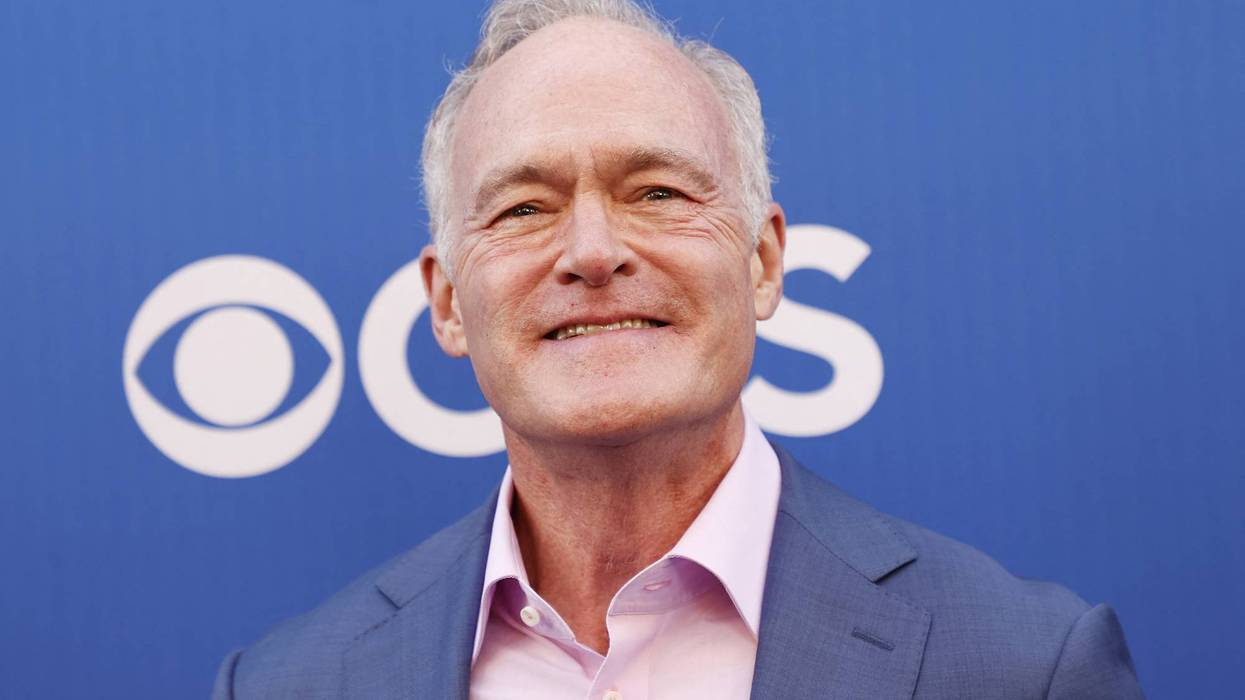
"Incompetence and unprofessionalism in the new management have wreaked havoc," said the veteran journalist as his 37-career with CBS News came to an end.
Fired by the network where he had worked for nearly four decades on Tuesday night, veteran "60 Minutes" correspondent Scott Pelley said in a statement that he had been directed by the new management team at CBS News, led by editor-in-chief Bari Weiss, "to inject falsehoods and bias into a politically sensitive story" and also "told to include assertions that are unverified" in his reporting.
What looks like the collapse of "60 Minutes" has played out both behind closed doors at the network in recent months and publicly, with a series of high-profile firings of other longtime journalists and producers at the show. Details of internal meetings have been leaked, revealing serious tension between veteran members of the nation's most-watched television news magazine and Weiss' new management team.
“The leadership of 60 Minutes is no longer recognizable,” Pelley said in his statement, released just hours after Nick Bilton, the show's new executive producer appointed by Weiss last month, announced the firing. “The principles I hold dear are gone, and so I must leave as well."
Bilton said in his statement that Pelley had been “terminated for cause effective immediately," following a contentious staff meeting on Monday in which Pelley accused Weiss, who was not at the meeting, of being "brought in to kill" the program, not save it.
Despite "repeated attempts to have direct conversations with him over the weekend" and earlier on Tuesday, Bilton said, his efforts "to find common ground" with Pelley were not successful. "That was not the path Scott chose," he said.
Pelley's narrative of events was starkly different.
"Last month, 60 Minutes lost its DNA when our entire senior leadership and two of our best on-air correspondents were cruelly fired without cause," Pelley said in a statement sent to several news outlets. "Good people were silenced because they stood up for our audience. They stood for fairness against the forces of political bias; they stood for professionalism against chaos."
“For my part," he continued, "new management has instructed me to inject falsehoods and bias into a politically sensitive story. I’ve been told to include assertions that are unverified. To date, in every case, I have managed to ignore these instructions or refuse them. Recently, politicians have been invited to choose correspondents for interviews on the broadcast. Giving politicians control over 60 Minutes interviews is not how this is done. Finally, incompetence and unprofessionalism in the new management have wreaked havoc. In a case involving one of my stories, the entire program came within 19 minutes of not getting on the air at all.”
Pelley concluded: “I depart after 37 years at CBS with one emotion—a heart brimming with gratitude for the men and women of CBS News who encouraged and enriched my work, very often at the risk of their own lives. I pray for a day when those people and their ideals are honored again—a day when sanity, competence, and courage return.”
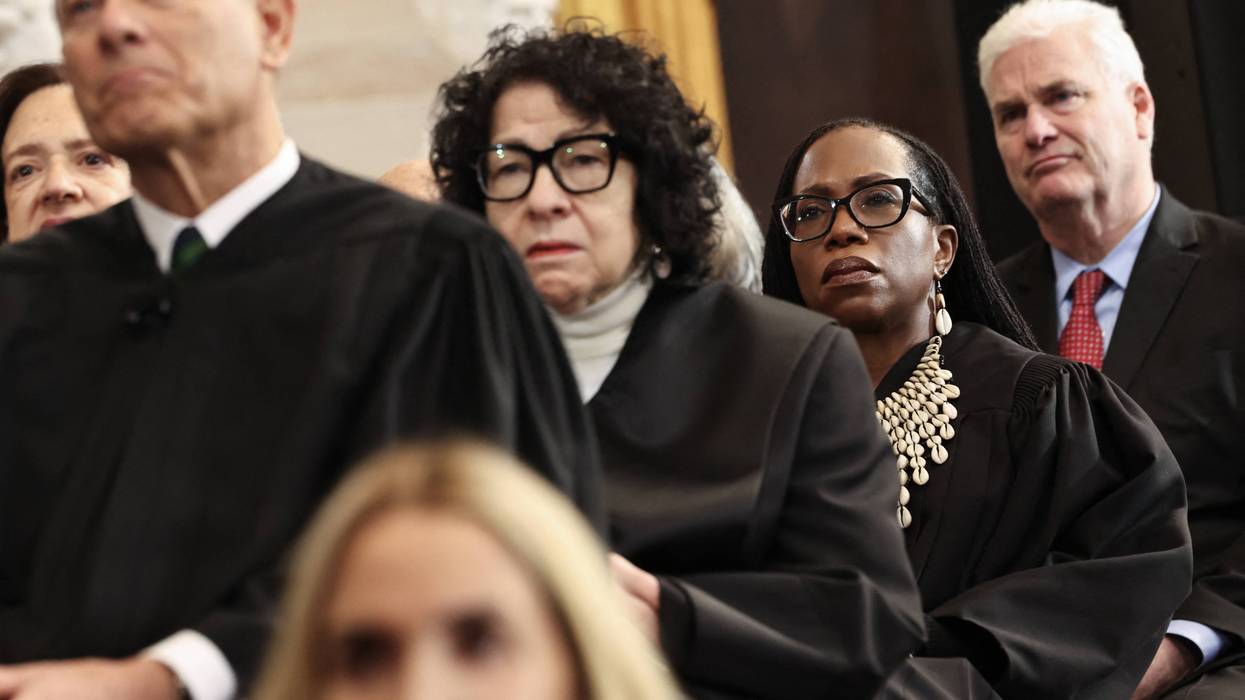
"Just as Alabama doubled down on racial discrimination, the court today doubles down on chaos," wrote Justice Sonia Sotomayor.
The US Supreme Court late Tuesday gave Alabama a green light to use an aggressively gerrymandered congressional map that a lower court said was "tainted by intentional race-based discrimination."
The unsigned decision, from which the high court's three liberal justices dissented, enables Alabama's Republican-dominated government to replace its current congressional map, which has two majority-Black districts, with a map that the US Supreme Court struck down in 2023. That map has just one majority-Black district.
In her dissenting opinion, liberal Justice Sonia Sotomayor wrote that "just as Alabama doubled down on racial discrimination, the court today doubles down on chaos."
"In addition to being wrong on the merits, the court’s decision inflicts two grave harms on the public," wrote Sotomayor. "It debases the democratic process by upending Alabama’s entire election in the name of permitting Alabama to discriminate against Black Alabamians. It also corrodes the rule of law by rewarding Alabama’s gamesmanship and outright defiance of court orders."
The liberal justice noted that in order to switch to the map previously struck down by the high court, Alabama election officials "will have to reassign hundreds of thousands of voters across the state to new congressional districts."
"Three of Alabama’s counties will be particularly hard hit because they are split across two congressional districts," Sotomayor noted. "These counties have about 600,000 registered voters between them (roughly 15% of the state’s total number of registered voters).”
Alabama Gov. Kay Ivey, a Republican, postponed US House primary elections in the wake of the Supreme Court's April decision in Louisiana v. Callais, which severely narrowed the 1965 Voting Rights Act’s protections against racial discrimination and paved the way for Alabama and other states to impose new maps ahead of the 2026 midterms.
“The Supreme Court’s shameful ruling allowing Alabama to move forward with a gerrymander that was drawn with the explicit intent to dilute Black voting power—as found by a panel of judges that included two Trump appointees—is an absolute affront to the founding principles of our democracy, and wipes out whatever was left of the court’s credibility,” said Marina Jenkins, executive director of the National Redistricting Foundation. “This country deserves better, and we must continue to work toward federal legislation that not only bans partisan and racial gerrymandering but also ensures that our rights cannot be undermined by captured courts.”
The ruling drew condemnation from the two Democrats in Alabama's US congressional delegation. Rep. Shomari Figures, who was elected to the US House under the independently drawn map that Alabama Republicans are working to replace, said in a statement that "the Supreme Court has now confirmed that there is no longer a Voting Rights Act in America, and states are essentially free to discriminate against minority voters with no consequences."
"This is a dangerous ruling that sets the state and this nation back decades," said Figures.
Rep. Terri Sewell called the ruling "just the latest in a pattern of outrageous Supreme Court decisions that help Republicans desperately cling to power ahead of the midterm elections while diluting Black voices and erasing decades of hard-fought civil rights progress."
"No matter how hard Alabama state officials may try, they will not succeed in silencing our voices," said Sewell. "We will not go back to the Jim Crow era. The fight for fair representation continues."
“This decision lets the president direct a sweeping fossil fuel agenda, with no authorization from Congress and no meaningful judicial review, and then tells the children harmed by that agenda that they cannot challenge it until it is unconstitutionally implemented piece by piece," one lawyer said.
A federal judge in the District of Montana last year "reluctantly" dismissed a lawsuit filed by young Americans challenging a trio of President Donald Trump's anti-climate executive orders and invited the US Court of Appeals for the 9th Circuit to correct him—but the panel on Tuesday again tossed the case.
Backed by attorneys at Our Children's Trust and Public Justice, Eva Lighthiser, Rikki Held of Held v. State of Montana, and 20 other children and young adults sued in May 2025 over Trump's executive orders (EOs) boosting the coal industry, declaring a "national energy emergency," and calling on federal agencies to accelerate fossil fuel development.
After the first dismissal from US District Judge Dana Christensen, the young Americans and their lawyers vowed to appeal. However, the 9th Circuit on Tuesday found that "plaintiffs can only speculate that the executive orders are the cause of the many agency actions they allege will exacerbate climate change," and "they have not plausibly alleged that enjoining federal agencies from implementing the executive orders is substantially likely to prevent agencies from taking similar emissions-inducing actions under other lawful authorities."
Issuing an injunction sought by the plaintiffs "would effectively place one federal district court in charge of executive branch energy policy—'an extraordinary and unprecedented role' for a member of the 'unelected and politically unaccountable branch,'" the appellate court also concluded. "Further, by effectively challenging hundreds of current and anticipated agency actions in one lawsuit, Plaintiffs seek to circumvent the jurisdictional and procedural rules Congress has established for challenges to agency actions."
Julia Olson, chief legal counsel and co-executive director of Our Children's Trust, declared in a Tuesday statement that "this decision lets the president direct a sweeping fossil fuel agenda, with no authorization from Congress and no meaningful judicial review, and then tells the children harmed by that agenda that they cannot challenge it until it is unconstitutionally implemented piece by piece. That is not how the Constitution works."
"The court did not decide whether these executive orders are constitutional. It did not decide whether the federal government may knowingly endanger children," she explained. "Instead, it slammed the courthouse doors on children fighting for their lives and told them to file hundreds of cases against every agency action carrying out the president's unconstitutional executive orders. Courts do not become policymakers when they stop unconstitutional government action. That is their job. These young people deserve a court willing to do it."
The lead plaintiff, Lighthiser, stressed that "the court never said we were wrong. They never said the harm isn't real. They just said they wouldn't stop the harm."
"They had the power to act. and they chose not to," she continued. "By the time we are harmed enough to satisfy them, it will be too late. I am a young person. This is my life, my health, my future. And I deserve better than this. We all do."
The decision comes as Trump and his allies continue to serve the interests of the fossil fuel executives who helped him return to power, regardless of the consequences for people and the planet—from gutting key agencies and attacking clean power projects to dismantling a deep-ocean monitoring system that helps researchers understand the impacts of the climate crisis.
"The Trump administration is responsible for a children's health emergency by obligating federal agencies to take actions that dramatically increase greenhouse gas emissions and climate change," Dan Snyder, director of Public Justice's Environmental Enforcement Project, said Tuesday. "The 9th Circuit makes no mention of this emergency. Indeed, the 9th Circuit's decision is shocking in what it lacks."
"The court didn't even consider US Supreme Court decisions—or decisions from within its own circuit—which would require it to reach a very different decision than the one it did today," he highlighted. "The court ignored significant and undisputed facts that Trump's executive orders are causing real-world injuries to our children today. And the court ignores its most basic responsibility: finding workable remedies that provide relief to the uncontested injuries being inflicted by the Trump administration on our kids."