December, 22 2020, 11:00pm EDT

AFL-CIO Outraged By Harassment of Mexican Trade Unionist
WASHINGTON
The AFL-CIO is outraged by the ongoing harassment and false criminal charges that have been filed against Mexican independent trade union lawyer and attorney Susana Prieto Terrazas by the state governments of Tamaulipas and Chihuahua. Prieto was jailed in Tamaulipas in June, and ordered to attend court hearings in Chihuahua, where it is possible that she will again be detained and incarcerated. The ongoing repression against Prieto is designed to undermine her efforts to support independent labor unions in these states.
"President-elect Biden and I agree: it's time to end the exploitation and misery in Mexico's maquiladoras," said AFL-CIO President Richard Trumka. "Mexican workers should be making decent wages and be able to exercise their rights in the workplace."
For two years, Prieto has represented workers at Tridonex in Matamoros who have been harassed and fired for trying to organize with SNITIS, an independent Mexican union of their choice, to replace a corrupt "protection" union. Prieto gained international media notice after the Tamaulipas governor, who is opposed to labor reform, imprisoned her for a month in a COVID-ridden state penitentiary on trumped-up charges. Prieto was only released after agreeing to internal exile in another Mexican state and a ban on appearing in labor court.
Workers at Tridonex, a subsidiary of Philadelphia-based Cardone Industries, make auto parts for the U.S. market. Tridonex has refused their legal demand to transfer their dues to the independent union, while continuing to support a company union. The company has fired more than 600 supporters of the independent union, SNITIS, which was formed after worker protests in 2019 forced the maquiladoras in Matamoros to raise wages.
Corporations' denial of workers basic rights undermines the livelihoods and lives of workers in Mexico and the United States.
"Tridonex workers are suffering from the abuses of a corrupt and criminal union leader, who is protected by the company so that it can continue providing precarious wages and working conditions," said Mexican union leader Prieto. "All of this through oppressors who harass, intimidate and beat the workers with the consent and protection of Tamaulipas Governor, Francisco Garcia Cabeza de Vaca. We are fighting so that no one ever is afraid of freely electing the union they wish to represent them and to make history, ending several generations of modern slavery."
The Tamaulipas state government has acted on the company's behalf, blocking the workers' demand for an election. Shortly after Prieto was released from jail in Tamaulipas and exiled to Chihuahua, the government there also brought bogus criminal charges against her and but for repeated COVID-19 related court delays, seem intent on trying to imprison her again. Her request to have the hearings online was denied despite her ongoing challenges related to COVID-19, as well as other health issues.
"Susana Prieto has been subjected to harassment, threats of bodily harm and imprisonment because of her fight for the rights of the workers," Trumka said. "If right-wing state governors are allowed to criminalize the defense of workers' rights, that nullifies the worker protections in USMCA. We don't intend to let that happen."
"Susana has fought for the rights of the workers, and we intend to fight for her. We are calling on President Lopez Obrador to protect Susana from further harassment, intimidation and threats. Her fight for the rights of the workers at Tridonex is our fight as well, and we will work with our friends in Congress and the administration to protect them," concluded President Trumka.
The American Federation of Labor and Congress of Industrial Organizations (AFL-CIO) works tirelessly to improve the lives of working people. We are the democratic, voluntary federation of 56 national and international labor unions that represent 12.5 million working men and women.
LATEST NEWS
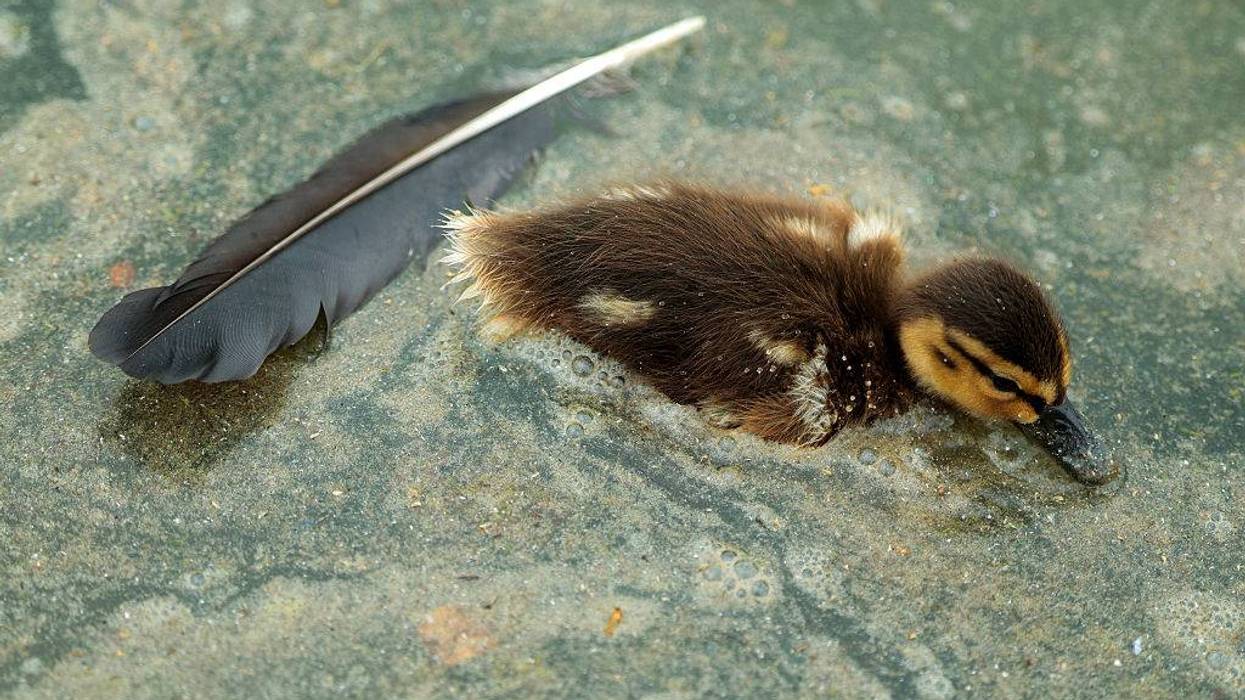
Experts Fear Trump Has Turned Reflecting Pool Into a 'Giant Duck Death Trap'
"Instead of letting this administration’s bizarre boondoggle keep killing innocent ducks, I hope the Fish and Wildlife Service steps in to do its job," said one critic.
Jun 24, 2026
President Donald Trump's disastrous $14 million renovation of the Lincoln Memorial Reflecting Pool may be turning deadly for local wildlife.
Shortly after three ducks were discovered dead in or near the pool, The Washington Post spoke on Monday with animal experts who expressed concern that the waterfowl could have fallen ill due to either the assorted chemicals that have been dumped into the pool in recent weeks or the potentially toxic cyanobacteria that can be found in algae blooms.
A separate investigation published by the Post last week found that “algae levels spiked days after Trump’s renovation" of the pool was completed and reached their highest level in at least five years.
Additionally, multiple news outlets have documented blue material installed in the pool peeling off and floating to the surface of the water.
April Linton, president of City Wildlife, told the Post that she's worried the ducks "could have had exposure to the Reflecting Pool," which "could be something related to peeling paint or algae."
The Center for Biological Diversity on Tuesday called on the US Fish and Wildlife Service to conduct an investigation to determine whether the president's pricey pool renovation was responsible for the ducks' passing.
The center also noted that, if someone is found to be responsible for the ducks' deaths, they could be charged criminally under the Migratory Bird Treaty Act.
Tara Zuardo, senior campaigner at the Center for Biological Diversity, said that Trump's pool renovations killing the ducks would match a pattern of actions that are "cruel, stupid, and selfish."
"Wasting taxpayer money turning the reflecting pool into a giant duck death trap just in time for America’s 250th birthday party is as Trump as it gets," Zuardo said. “Instead of letting this administration’s bizarre boondoggle keep killing innocent ducks, I hope the Fish and Wildlife Service steps in to do its job and protect America’s wildlife."
Trump has tried to blame any problems with the pool renovations on left-wing saboteurs, whom he alleged sliced up the pool with "knives" in "the dark of night."
But according to a Tuesday report in The New York Times, internal government documents show that National Park Service workers had discovered problems with the pool's renovations just days after their completion and weeks before any supposed vandalism of the project had occurred.
Among other things, the Times reported, the workers observed "holes, cracks, and peeling caulking in parts of the pool, along with cuts in sections of the foam," even as Trump was personally crowing about the quality of renovations.
"I’m very good at building things and constructing things," Trump said on June 15, six days after issues with the Reflecting Pool were first documented by workers.
A video posted by meteorologist Chris Gloninger in a Wednesday social media post showed members of the National Guard, whom Trump deployed in Washington, DC against the wishes of local residents last year, patrolling the pool and asking visiting children to stop putting their hands into the pool waters.
The President of the United States deployed the National Guard… to stop kids from splashing in the reflecting pool.
Not the troops' fault…they follow orders.
But what the fu*k are we doing here? pic.twitter.com/5PFlEDiTvj
— Chris Gloninger, CCM, CBM (@ChrisGloninger) June 24, 2026
"Not the troops' fault... they follow orders," Gloninger commented. "But what the fuck are we doing here?"
Keep ReadingShow Less
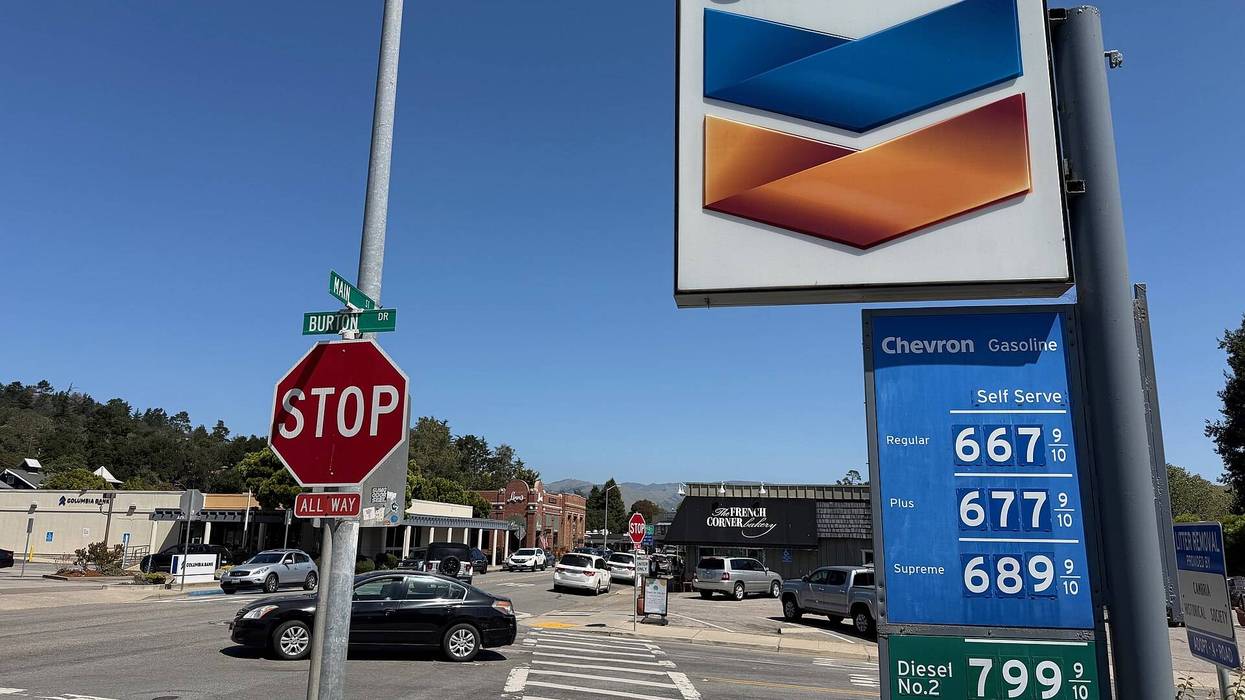
As Trump Discovers Gas Price Gouging, Democrats Offer a Solution: Tax Big Oil
"Mr. President: I have a windfall excess profits bill you could support," said one Democratic senator.
Jun 24, 2026
President Donald Trump said Tuesday that he has directed the US Department of Justice to investigate fossil fuel companies for not lowering gasoline prices as the cost of oil declines amid the prospect of an end to the Iran War.
"The big Oil Companies are not dropping their price at the pump commensurate with the sharply lower prices they are paying for Oil. Those prices are dropping like a rock! In other words, customers are being 'gouged,'" Trump said on his Truth Social network.
"I have instructed the DOJ to immediately start looking into this," he added. "Gasoline prices better start going down a lot faster than what I’m seeing!"
While benchmark West Texas Intermediate and Brent Crude oil prices have fallen to their lowest levels since Trump launched the illegal US-Israeli war of choice on Iran on February 28, the average price for a gallon of unleaded gasoline in the United States was $3.93 per gallon on Wednesday, around one-third higher than it was the day before the war started but down from a high of $4.52 a month ago, according to the American Automobile Association.
"The price of fuel is not only a national security issue, it impacts the wallet of every American," an unnamed Trump administration official told ABC News on Wednesday following the president's post. "We will always commit to ensuring affordability in this nation."
Responding to Trump's post, US Sen. Sheldon Whitehouse (D-RI) noted on social media that he has a solution for Big Oil price gouging.
In March, Whitehouse and Rep. Ro Khanna (D-Calif.) reintroduced the Big Oil Windfall Profits Tax Act “to curb profiteering by oil companies and provide Americans relief at the gas pump.”
The legislation—which only applies to large oil companies—would impose a per-barrel tax “equal to 50% of the difference between the current price per barrel of oil and the average price per barrel last year, when big oil companies were already earning large profits.”
Democrats in both chambers of Congress have also called for the prosecution of corporations that use the war as a pretext for price gouging.
Polling has shown that Americans largely support a tax on Big Oil windfall profits, which, according to The Guardian, amounted to $23 billion in the first month of the war alone—or $30 million per hour.
NEW: As Americans face rising oil costs, Maine Senate candidate Graham Platner has released an energy plan aiming to “End Big Oil Price Gouging.”We find voters support key elements of the plan, including an oil windfall tax to freeze or lower electricity rates.
[image or embed]
— Data for Progress (@dataforprogress.org) June 18, 2026 at 11:49 AM
Trump has been a staunch supporter of fossil fuel companies. While running for reelection on a "drill, baby, drill" energy platform, he reportedly promised Big Oil executives that he would eviscerate climate regulations enacted by the Biden administration if they gave $1 billion to his campaign.
Fossil fuel interests spent nearly $450 million during the 2024 election cycle on campaign contributions, lobbying, and efforts supporting Republican causes and candidates, including Trump.
As pump prices soared and Americans suffered amid Trump's war, the president—who promised gas under $2 a gallon and no new wars—said that “when oil prices go up, we make a lot of money."
Last week, the Institute on Taxation and Economic Policy estimated that Americans have paid nearly $54 billion extra for gas and fuel—more than $400 per household—than they would have if the war never happened.
Keep ReadingShow Less
'Totally Crazy': Trump Holds Bipartisan Housing Bill Hostage to Push Evisceration of Voting Rights
"Trump just threw a tantrum," said Sen. Elizabeth Warren. "He's refusing to sign bipartisan legislation to make housing more affordable in a bizarre effort to try to rig the elections."
Jun 24, 2026
Congress this week passed a bipartisan bill "to build more housing, lower costs, and stop private equity's housing grab," as US Sen. Elizabeth Warren highlighted after the final vote, but President Donald Trump on Wednesday scrapped his plans to sign the 21st Century ROAD to Housing Act over a stalled GOP attack on voting rights.
Trump initially took a swipe at Warren (D-Mass.) on his Truth Social platform Wednesday morning, writing that "the Elizabeth 'Pocahontas' Warren centric housing bill, which is of minor importance compared to lower interest rates, and even FISA, pales in comparison to passing THE SAVE AMERICA ACT. That is what Americans, both Dumocrats, Republicans, and everyone else, care about."
"Get the bad Republicans to approve it or, better yet, Terminate the Filibuster and approve it, AND EVERYTHING ELSE REPUBLICANS HAVE EVER DREAMED OF," Trump continued. "The Dumocrats will do it in hour one, 100%. Republicans will feel very stupid if they don’t do it first. I'll be watching with tears in my eyes!!!"
Less than an hour later, he added, "Today's Housing News Conference and Signing is hereby cancelled until such time as we pass the desperately needed SAVE AMERICA ACT, which I consider to be a National Emergency."
Trump and other backers of the anti-voter bill argue it is needed to prevent undocumented immigrants from voting in US elections—which is already illegal, and research shows is remarkably rare. Critics warn that the legislation would disenfranchise eligible voters who lack access to proof-of-citizenship documents.
While Speaker Mike Johnson (R-La.) responded by stressing that he and other Republicans in the House of Representatives support the SAVE America Act, and Senate Majority Leader John Thune (R-SD) said the canceled ceremony was Trump's "call to make" but expressed hope that he'll "find his way to sign" the housing bill, other lawmakers—including Warren—and supporters of the legislation took aim at the president over his move.
"Congress overwhelmingly passed a housing bill to bring down costs. But Trump just threw a tantrum," Warren wrote on social media. "He's refusing to sign bipartisan legislation to make housing more affordable in a bizarre effort to try to rig the elections. Nope—I'll keep fighting to lower housing costs."
Senate Minority Leader Chuck Schumer (D-NY) told journalists that "Trump is running away from one of the very few accomplishments that could actually help the American people," and urged the president not to veto the 21st Century ROAD to Housing Act.
Approved by the Senate in an 85-5 vote on Monday and the House in a 358-32 vote on Tuesday, the bill contains dozens of provisions to promote the rebuilding of older homes and development of vacant buildings, encourage local governments to build more housing, streamline regulations for construction, ban corporate investors from buying single-family homes to rent out, and more.
Stressing that the bill passed "overwhelmingly in a bipartisan way," and would "save American families a lot of money when it comes to housing," Sen. Andy Kim (D-Calif.) said that "I honestly can't believe that the president is holding this hostage."
"I hope the American people see this for what it is, which is that he doesn't care at all about the high cost of living that a lot of Americans are struggling with," Kim declared. "He doesn't care about the housing crisis. He is just continuing to push forward on his extreme agenda."
In the House, Minority Leader Hakeem Jeffries (D-NY) replied to the president: "The housing crisis is a national emergency. Do something to make life more affordable for hardworking American taxpayers. Sign the bill."
Rep. Don Beyer (D-Va.) pointed to Trump's campaign pledges, writing: "The president who promised lower costs on Day 1 is refusing to sign the largest housing affordability bill in a generation. It's a slap in the face to millions of Americans struggling to afford a place to live. My Republican colleagues need to find some courage and stand up to this mad king."
In a video, Rep. Pramila Jayapal (D-Wash.) warned the public that Trump "is taking away your housing for his personal projects that can never pass and are unconstitutional."
Longtime human rights advocate Kenneth Roth, who's now a visiting professor at Princeton University, similarly summarized: "Trump to America: I [couldn't] care less about affordable housing. So I won't sign a bill to advance it unless Congress endorses my autocratic efforts to restrict the right to vote."
Although Trump has not decisively said whether he will formally block the bill, Roth wondered, "Will the Republicans have the backbone to override his veto?"
Either way, The New York Times noted that "Trump's decision threatened to deprive Republicans, in particular, of an opportunity to showcase a legislative success in a year with very few of them—one that spoke directly to voters' economic concerns."
In a Wednesday statement, Brett Edkins, managing director of policy and political affairs at the progressive advocacy group Stand Up America, looked to the midterm elections, in which Democrats aim to retake majorities in both chambers of Congress.
"Donald Trump has been clear: The SAVE Act is his #1 legislative priority—not lowering costs for working people, creating good-paying jobs, or helping families afford a roof over their heads," said Edkins. "Today, he decided it was more important to help Republicans avoid accountability for the cost-of-living crisis than actually do something about it."
"Trump was born on third base, and it shows. He has no clue what it’s like to struggle to make rent, save for a down payment, pay a mortgage, or worry that your kids will be able to afford a home of their own," he added. "Trump could've signed bipartisan legislation today to help lower housing costs and give Republicans something—anything—to show voters that they deserve reelection this November. Instead, he told working families to screw themselves. It's selfish, petty, and self-defeating."
Keep ReadingShow Less
Most Popular