

SUBSCRIBE TO OUR FREE NEWSLETTER
Daily news & progressive opinion—funded by the people, not the corporations—delivered straight to your inbox.
5
#000000
#FFFFFF
To donate by check, phone, or other method, see our More Ways to Give page.
Daily news & progressive opinion—funded by the people, not the corporations—delivered straight to your inbox.

Alexandra Ringe, 212-549-2666, media@aclu.org
In the first-ever study of people serving life without parole for nonviolent offenses in the United States, the ACLU found that at least 3,278 prisoners fit this category in federal and state prisons combined.
"A Living Death: Life Without Parole for Nonviolent Offenses" features key statistics about these prisoners, an analysis of the laws that produced their sentences, and case studies of 110 men and women serving these sentences. Of the 3,278 prisoners, 79% were convicted of nonviolent, drug-related crimes such as possession or distribution; 20% of nonviolent property crimes like theft.
"The punishments these people received are grotesquely out of proportion to the crimes they committed," said Jennifer Turner, ACLU Human Rights Researcher and author of the report. "In a humane society, we can hold people accountable for drug and property crimes without throwing away the key."
The ACLU estimates that, of the 3,278 serving life without parole for nonviolent offenses, 65% are Black, 18% are white, and 16% percent are Latino, evidence of extreme racial disparities. Of the 3,278, most were sentenced under mandatory sentencing policies, including mandatory minimums and habitual offender laws that required them to be incarcerated until they die.
"The people profiled in our report are an extreme example of the millions of lives ruined by the persistent ratcheting up of our sentencing laws over the last forty years," said Vanita Gupta, Deputy Legal Director of the ACLU. "We must change our sentencing practices to make our justice system smart, fair, and humane. It's time to undo the damage wrought by four decades of the War on Drugs and 'tough-on-crime' attitudes."
Douglas Ray Dunkins Jr., who has served 22 years so far, told the ACLU, "It's devastating, horrible, not being around to see [my children] graduate and go to school." Dicky Joe Jackson, who has served 17 years, said, "I would rather have had a death sentence than a life sentence."
The federal courts account for 63% of the 3,278 life-without-parole sentences for nonviolent offenses. The remaining prisoners are in Louisiana (429 prisoners), Florida (270), Alabama (244), Mississippi (93), South Carolina (88), Oklahoma (49), Georgia (20), Illinois (10), and Missouri (1). The ACLU estimates that federal and state taxpayers spend $1.8 billion keeping these people in prison for life instead of more appropriate terms.
In addition to interviews, correspondence, and a survey of hundreds of prisoners serving life without parole for nonviolent offenses, the ACLU based "A Living Death" on court records, a prisoner survey, and data from the United States Sentencing Commission, Federal Bureau of Prisons, and state Departments of Corrections obtained through Freedom of Information Act and open records requests.
"A Living Death" features comments from the prisoners' family members, and in multiple instances, prisoners' sentencing judges express frustration and outrage at the severity of the punishment the law required. Judge Milton I. Shadur told Rudy Martinez as he sentenced Martinez to life without parole: "[F]airness has departed from the system."
The report includes recommendations to federal and state governments for changes in sentencing and clemency. The proposed policy reforms would help bring balance back to sentencing--crucial steps to reduce our nation's dependence on incarceration.
"We must change the laws that have led to such unconscionable sentences," said Turner. "For those now serving life without parole for nonviolent offenses, President Obama and state governors must step in and reduce their sentences. To do nothing is a failure of justice."
The ACLU has placed ads online and in print to raise public awareness of the prisoners serving life-without-parole for nonviolent offenses and the larger problem of mass incarceration. Featuring photographs of six prisoners profiled in "A Living Death," the ads will appear multiple times in print and online in such national outlets as Jet, the Nation, the New York Times, USA Today, and the Washington Post.
The report is available here: www.aclu.org/fairandsmart
The American Civil Liberties Union was founded in 1920 and is our nation's guardian of liberty. The ACLU works in the courts, legislatures and communities to defend and preserve the individual rights and liberties guaranteed to all people in this country by the Constitution and laws of the United States.
(212) 549-2666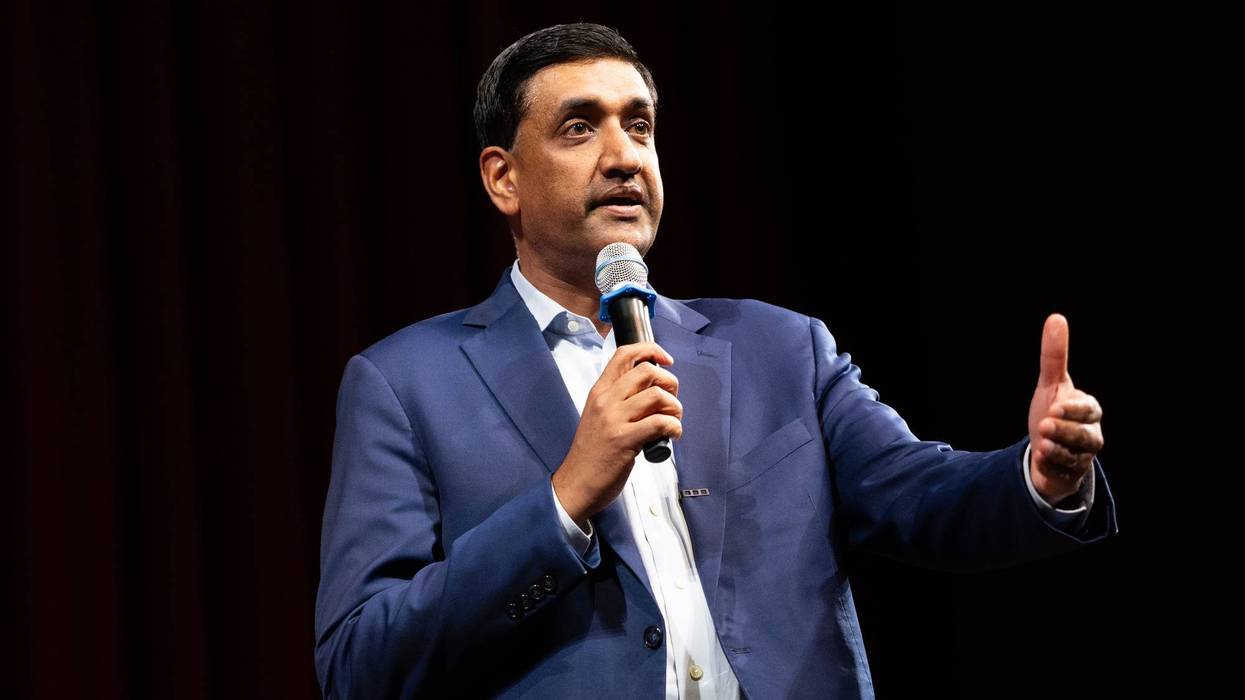
"These hoodlums come in with machine guns—M4, an American-made machine gun—and they detain us. They block off the road."
Rep. Ro Khanna this week was detained by a group of Israeli settlers whom he described as "hoodlums... with machine guns" while making a visit to a Palestinian village in the occupied West Bank.
In an interview with Reuters published on Saturday, Khanna (D-Calif.) said he and his tour group were surrounded by armed settlers as they were traveling through the West Bank on Wednesday.
"We were at a village that Israeli settlers had destroyed, they had destroyed the school, they had destroyed that village, and we were just looking at it," said Khanna. "And these hoodlums come in with machine guns—M4, an American-made machine gun—and they detain us. They block off the road."
The California Democrat said that the settlers called in members of the Israel Defense Forces (IDF) to help them deal with him and his group.
"The IDF is on their side," Khanna remarked, "not on the side of the Americans."
Cameron Kasky, an aide to Khanna, told Reuters that the group was held for over an hour before officials whom he believed to be police intervened and secured their release.
The IDF told Reuters that both military troops and police officers dispersed the settlers who had set up a roadblock near the small Palestinian village of Khirbet Zanuta.
Khanna wasn't the only American to have a run-in with Israeli settlers this week, as CNN reported that four settlers attacked groups of journalists, including CNN reporters and crew, who were traveling through an area north of the Palestinian city of Ramallah on Saturday.
As the journalists were driving, four settlers blocked off the road with their cars and began attacking the reporters' vehicles with wooden clubs and metal rods.
"The settlers then began to jump on the vehicle behind CNN's—carrying another group of journalists—and smashed the windshield of that vehicle," the network reported. "Another group of settlers tried to block a separate exit route before chasing the journalists towards the town of Sinjil."
Israeli police arrived on the scene and arrested four settlers who were allegedly responsible for the attacks, CNN reported.
"The Israel Police and the IDF view any manifestation of violence or causing damage to property very seriously," the Israeli officers said after the arrests, "especially when it concerns media personnel performing their work."
Israeli settlers for years have carried out violent attacks on Palestinians living in the West Bank, and witnesses have regularly described IDF soldiers at the scene either standing by as the attacks occur or even actively helping the attackers.
In an interview with CNN on Tuesday, Israeli Prime Minister Benjamin Netanyahu said that claims about settler violence have been "blown up beyond belief," describing attacks as being carried out by a small number of "juvenile delinquents."
"This brazen act should be seen as nothing more than an attempt to prevent the public from knowing what is happening in their country by intimidating journalists from doing their jobs."
The Trump administration on Friday escalated its war with the press by subpoenaing several reporters at The New York Times days after the paper published a story on Wednesday that detailed security concerns about the luxury jet the Qatari government gave to President Donald Trump.
According to the Times, the subpoenas are attempting to force reporters to testify before a federal grand jury in Manhattan on Wednesday next week, a move that the paper describes as an "extraordinary escalation in President Trump’s efforts to threaten and intimidate independent news organizations."
The issued subpoenas do not specifically name the Times' reporting on the Qatari jet as the reason for the grand jury probe, although they were given to all four journalists—Tyler Pager, Julian Barnes, Eric Schmitt, and Eric Lipton—who reported the story.
Additionally, the Times noted, a senior official at the FBI had asked the paper to hold off publishing its story on the jet before it came out on Wednesday, citing unspecified national security concerns about its content.
David McCraw, the top attorney representing the Times' newsroom, denounced the subpoenas as an attack on the freedom of the press.
"The appearance of federal law enforcement agents on the doorstep of news reporters should shock the conscience of any American who believes in the Constitution and the press freedom it protects," said McGraw. “This brazen act should be seen as nothing more than an attempt to prevent the public from knowing what is happening in their country by intimidating journalists from doing their jobs."
It is highly uncommon for government investigators to subpoena journalists when they are probing national security leaks, as such actions are generally seen as having a chilling effect on reporters’ ability to gather information.
Rick Stengel, former under secretary of state for President Barack Obama, said that the Times' reporting on the Qatari jet, whose security upgrades are being financed with US tax dollars, is completely within the scope of constitutional protections for press freedom.
"The reporting that the Times journalists have been subpoenaed for is exactly the kind of journalism the First Amendment is designed to protect: matters involving national security and taxpayer dollars," wrote Stengel in a Saturday social media post. "Reporting that embarrasses a president is protected speech."
Fox News chief national security correspondent Jennifer Griffin also denounced the Trump administration for trying to drag reporters into a grand jury investigation.
"This action by the US government to subpoena reporters for reporting legitimate news on security concerns about Air Force One should alarm every American," Griffin wrote.
Seth Stern, chief of advocacy for the Freedom of the Press Foundation, accused the Trump administration of abusing government power not to defend national security, but to protect the president from personal humiliation.
"We've long said that when the government claims it needs to investigate journalists to protect national security, it really means its own reputational security," said Stern. "This is as clear an example as you can get. The administration's embarrassment that it reportedly charged taxpayers hundreds of millions of dollars to retrofit a flying bribe that still isn't secure enough for hostile times does not supersede the need for a free and independent press."
This is the second time in recent weeks that the Trump administration has tried to subpoena reporters to compel their testimony in grand jury investigations.
In June, the US Department of Justice issued subpoenas for national security reporters at The Washington Post and The Wall Street Journal related to national security leaks.
Subpoenas against both news organizations were withdrawn after they issued legal challenges in sealed filings.
“If the party’s selected nominee does not publicly adopt this platform... this statewide volunteer network will not organize, fundraise, or mobilize on that candidate’s behalf."
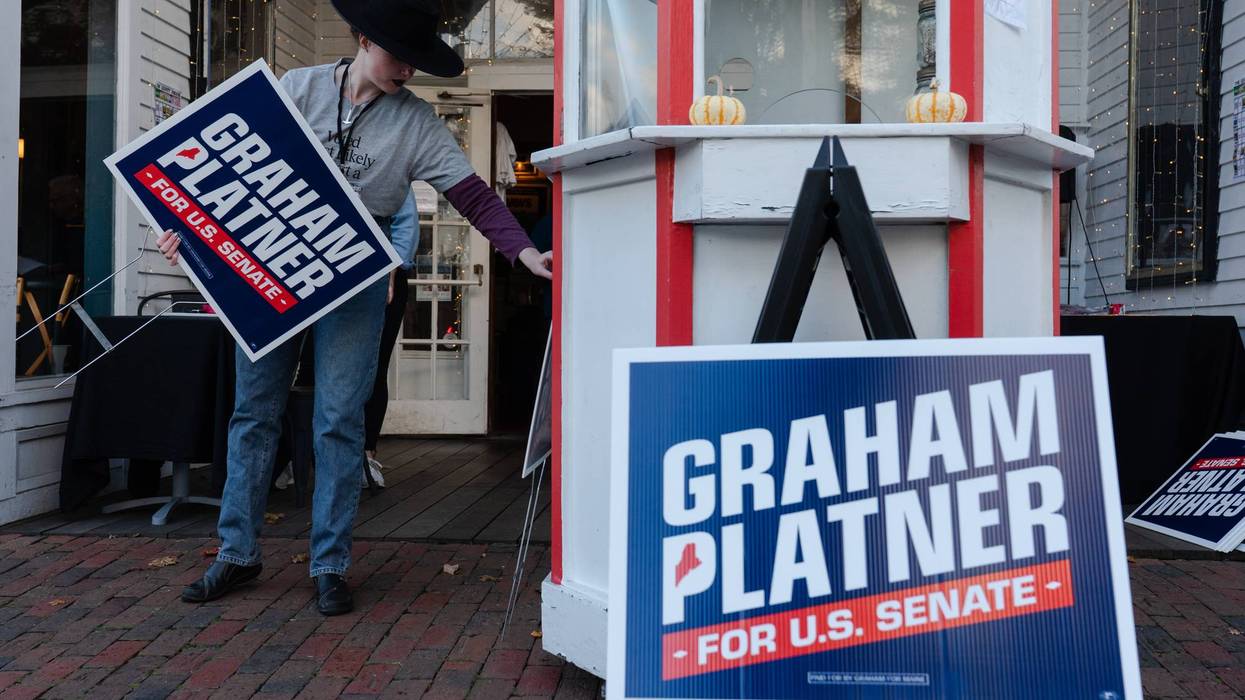
As Graham Platner officially ended his US Senate campaign in Maine Friday after being accused of sexual assault and other misconduct, the volunteer network powering his campaign warned that it will not support any new Democratic nominee who does not align with the disgraced democratic socialist's progressive platform.
Platner notified the Maine Secretary of State's office that he is formally withdrawing his candidacy, just a month and a day after winning the Democratic Senate Primary.
The Secretary of State's office subsequently said that Platner's name will no longer appear on the ballot, and that his party has until July 27 to replace him with a qualified candidate.
Also on Friday, Drop Site News obtained a draft letter from the 15,000-strong volunteer network that was instrumental to Platner's erstwhile success, presenting the Maine Democratic Party and prospective candidates with policy platform demands including “healthcare as a right, housing affordability, an economy that works for regular people and not billionaires, strengthening workers and unions, end forever wars, oppose complicity in atrocities, an end to mass deportation enforcement, energy and climate accountability, and human rights for all.”
“The volunteer infrastructure that this movement built—the organizers, door-knockers, the small-dollar donors, the hosts, the people who make phone calls and staff tables between now and November—does not transfer automatically to whoever the party selects," the letter warns. "That infrastructure exists because people believe in a specific platform. It will only continue to exist and only continue to be deployed for a nominee who publicly and explicitly adopts these core commitments as their own." (emphasis original)
“If the party’s selected nominee does not publicly adopt this platform, we want to be transparent now, before the convention, rather than silent until after it: This statewide volunteer network will not organize, fundraise, or mobilize on that candidate’s behalf," the letter continues, adding, “that is not a threat, but rather a statement of fact about what motivates the people who make up this movement.”
As Drop Site noted:
The Maine Democratic Party’s 100-person state committee voted to approve a process by which 600 delegates, 500 county committee elected delegates, and the 100 state committee members themselves will select the new nominee from a slate of candidates vying to replace Platner. Troy Jackson, Shenna Bellows, Nirav Shah, Dan Kleban, Jordan Wood, and Vallie Geiger are running for the spot. All the candidates lost their respective Democratic gubernatorial and congressional primaries in June, aside from Geiger, who serves as a state representative for the Rockland area.
Drop Site obtained private Maine Democratic Party information showing that the 500 delegates will be proportionally appointed based on 2024 election Democratic vote totals in their respective counties. How those 500 delegates will be elected is still under debate.
Ben Chin, who managed Platner's campaign, on Wednesday accused the Maine Democratic Party of working "behind closed doors" with national party leaders to choose a replacement candidate.
"Both the state and national parties cut our team, our volunteers, and our vast networks of supporters out of the conversation completely," Chin alleged in a text to supporters. “We firmly believe that the supporters and volunteers who built this movement deserve to have a real role in any nomination process."