SUBSCRIBE TO OUR FREE NEWSLETTER
Daily news & progressive opinion—funded by the people, not the corporations—delivered straight to your inbox.
5
#000000
#FFFFFF
To donate by check, phone, or other method, see our More Ways to Give page.
Daily news & progressive opinion—funded by the people, not the corporations—delivered straight to your inbox.
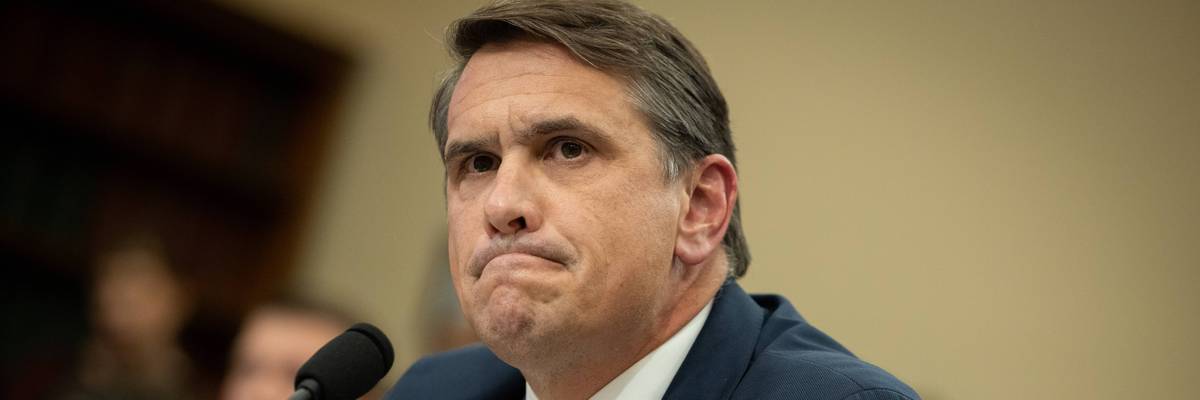
Acting US Attorney General Todd Blanche testifies at the Rayburn House Office Building in Washington, DC on June 2, 2026.
"The potential of the government intruding into the newsgathering process is even greater when you are in the grand jury than it is for a subpoena for documents," said one press freedom advocate.
The US Department of Justice's attempt to compel journalists to testify before a grand jury is drawing blowback from a top press freedom group, which is accusing President Donald Trump's administration of behaving like an authoritarian regime.
According to a Tuesday report in The New York Times, the DOJ earlier this month issued subpoenas for national security reporters at The Washington Post and The Wall Street Journal related to national security leaks.
Subpoenas against both news organizations were withdrawn after they issued legal challenges in sealed filings.
"The Justice Department had sought information from three reporters at The Journal about an article detailing how top officials warned... Trump of the risks of a major military campaign against Iran," reported the Times. "It also sought information from a reporter at The Post, Ellen Nakashima, about reporting related to US military action in Venezuela."
As the Times noted, it is highly uncommon for government investigators to subpoena journalists when they are probing national security leaks, as such actions are generally seen as having a chilling effect on reporters' ability to gather information.
After the details of the subpoenas and news of their withdrawal broke, Reporters Without Borders slammed the Trump DOJ for hitting a "new low" in its attempt to "suppress information from the American people."
"Subpoenaing journalists to appear before a grand jury under the guise of ‘national security’ is straight out of the dictator's playbook," the group said. "Fortunately, in the United States, newsrooms are fighting back and winning."
A Tuesday CNN report claimed that Trump had personally pushed acting Attorney General Todd Blanche to subpoena the journalists, going so far as to hand Blanche "a sticky note—with the word 'Treason' written in Sharpie—placed atop a stack of printed articles."
CNN also reported that both the Post and the Journal "remain on guard against the possibility that the subpoenas will be reissued in the future."
A spokesperson for the Post ripped the Trump DOJ for issuing "an unwarranted subpoena of our reporter," which the newspaper described as "a clear violation of constitutionally guaranteed press freedom."
"We will continue to stand fully behind the journalism of The Washington Post," the spokesperson added, "and fight all efforts by any administration that violate our First Amendment rights."
Gabe Rottman, vice president of policy at Reporters Committee for Freedom of the Press, said in an interview with the Post that issuing grand jury subpoenas to reporters puts core First Amendment rights at risk because "once you are up in front of the grand jury, the testimony can go in many different ways and can inquire into stories that are unrelated to the underlying investigation."
"The potential of the government intruding into the newsgathering process is even greater when you are in the grand jury than it is for a subpoena for documents," Rottman added.
Dear Common Dreams reader, It’s been nearly 30 years since I co-founded Common Dreams with my late wife, Lina Newhouser. We had the radical notion that journalism should serve the public good, not corporate profits. It was clear to us from the outset what it would take to build such a project. No paid advertisements. No corporate sponsors. No millionaire publisher telling us what to think or do. Many people said we wouldn't last a year, but we proved those doubters wrong. Together with a tremendous team of journalists and dedicated staff, we built an independent media outlet free from the constraints of profits and corporate control. Our mission has always been simple: To inform. To inspire. To ignite change for the common good. Building Common Dreams was not easy. Our survival was never guaranteed. When you take on the most powerful forces—Wall Street greed, fossil fuel industry destruction, Big Tech lobbyists, and uber-rich oligarchs who have spent billions upon billions rigging the economy and democracy in their favor—the only bulwark you have is supporters who believe in your work. But here’s the urgent message from me today. It's never been this bad out there. And it's never been this hard to keep us going. At the very moment Common Dreams is most needed, the threats we face are intensifying. We need your support now more than ever. We don't accept corporate advertising and never will. We don't have a paywall because we don't think people should be blocked from critical news based on their ability to pay. Everything we do is funded by the donations of readers like you. When everyone does the little they can afford, we are strong. But if that support retreats or dries up, so do we. Will you donate now to make sure Common Dreams not only survives but thrives? —Craig Brown, Co-founder |
The US Department of Justice's attempt to compel journalists to testify before a grand jury is drawing blowback from a top press freedom group, which is accusing President Donald Trump's administration of behaving like an authoritarian regime.
According to a Tuesday report in The New York Times, the DOJ earlier this month issued subpoenas for national security reporters at The Washington Post and The Wall Street Journal related to national security leaks.
Subpoenas against both news organizations were withdrawn after they issued legal challenges in sealed filings.
"The Justice Department had sought information from three reporters at The Journal about an article detailing how top officials warned... Trump of the risks of a major military campaign against Iran," reported the Times. "It also sought information from a reporter at The Post, Ellen Nakashima, about reporting related to US military action in Venezuela."
As the Times noted, it is highly uncommon for government investigators to subpoena journalists when they are probing national security leaks, as such actions are generally seen as having a chilling effect on reporters' ability to gather information.
After the details of the subpoenas and news of their withdrawal broke, Reporters Without Borders slammed the Trump DOJ for hitting a "new low" in its attempt to "suppress information from the American people."
"Subpoenaing journalists to appear before a grand jury under the guise of ‘national security’ is straight out of the dictator's playbook," the group said. "Fortunately, in the United States, newsrooms are fighting back and winning."
A Tuesday CNN report claimed that Trump had personally pushed acting Attorney General Todd Blanche to subpoena the journalists, going so far as to hand Blanche "a sticky note—with the word 'Treason' written in Sharpie—placed atop a stack of printed articles."
CNN also reported that both the Post and the Journal "remain on guard against the possibility that the subpoenas will be reissued in the future."
A spokesperson for the Post ripped the Trump DOJ for issuing "an unwarranted subpoena of our reporter," which the newspaper described as "a clear violation of constitutionally guaranteed press freedom."
"We will continue to stand fully behind the journalism of The Washington Post," the spokesperson added, "and fight all efforts by any administration that violate our First Amendment rights."
Gabe Rottman, vice president of policy at Reporters Committee for Freedom of the Press, said in an interview with the Post that issuing grand jury subpoenas to reporters puts core First Amendment rights at risk because "once you are up in front of the grand jury, the testimony can go in many different ways and can inquire into stories that are unrelated to the underlying investigation."
"The potential of the government intruding into the newsgathering process is even greater when you are in the grand jury than it is for a subpoena for documents," Rottman added.
The US Department of Justice's attempt to compel journalists to testify before a grand jury is drawing blowback from a top press freedom group, which is accusing President Donald Trump's administration of behaving like an authoritarian regime.
According to a Tuesday report in The New York Times, the DOJ earlier this month issued subpoenas for national security reporters at The Washington Post and The Wall Street Journal related to national security leaks.
Subpoenas against both news organizations were withdrawn after they issued legal challenges in sealed filings.
"The Justice Department had sought information from three reporters at The Journal about an article detailing how top officials warned... Trump of the risks of a major military campaign against Iran," reported the Times. "It also sought information from a reporter at The Post, Ellen Nakashima, about reporting related to US military action in Venezuela."
As the Times noted, it is highly uncommon for government investigators to subpoena journalists when they are probing national security leaks, as such actions are generally seen as having a chilling effect on reporters' ability to gather information.
After the details of the subpoenas and news of their withdrawal broke, Reporters Without Borders slammed the Trump DOJ for hitting a "new low" in its attempt to "suppress information from the American people."
"Subpoenaing journalists to appear before a grand jury under the guise of ‘national security’ is straight out of the dictator's playbook," the group said. "Fortunately, in the United States, newsrooms are fighting back and winning."
A Tuesday CNN report claimed that Trump had personally pushed acting Attorney General Todd Blanche to subpoena the journalists, going so far as to hand Blanche "a sticky note—with the word 'Treason' written in Sharpie—placed atop a stack of printed articles."
CNN also reported that both the Post and the Journal "remain on guard against the possibility that the subpoenas will be reissued in the future."
A spokesperson for the Post ripped the Trump DOJ for issuing "an unwarranted subpoena of our reporter," which the newspaper described as "a clear violation of constitutionally guaranteed press freedom."
"We will continue to stand fully behind the journalism of The Washington Post," the spokesperson added, "and fight all efforts by any administration that violate our First Amendment rights."
Gabe Rottman, vice president of policy at Reporters Committee for Freedom of the Press, said in an interview with the Post that issuing grand jury subpoenas to reporters puts core First Amendment rights at risk because "once you are up in front of the grand jury, the testimony can go in many different ways and can inquire into stories that are unrelated to the underlying investigation."
"The potential of the government intruding into the newsgathering process is even greater when you are in the grand jury than it is for a subpoena for documents," Rottman added.