

SUBSCRIBE TO OUR FREE NEWSLETTER
Daily news & progressive opinion—funded by the people, not the corporations—delivered straight to your inbox.
5
#000000
#FFFFFF
To donate by check, phone, or other method, see our More Ways to Give page.
Daily news & progressive opinion—funded by the people, not the corporations—delivered straight to your inbox.
ASA Government Affairs Director Caren Woodson 510-388-0546 or ASA Media Liaison Kris Hermes 510-681-6361
- Fifteen Members of Congress sent a
letter Friday to Treasury Secretary Timothy Geithner urging him to
issue "written guidance for financial institutions," which would commit
the Department to not targeting those institutions whose account
holders are in compliance with state medical marijuana laws. The
patient advocate group Americans for Safe Access (ASA) has received
dozens of reports over the past couple of years from medical marijuana
providers in California, Colorado and other states who have either been
denied financial services or had their existing bank accounts
terminated with little-to-no justification.
"[I]t seems clear that legitimate state-legal businesses are being
denied access to banking services, which does not serve the public
interest," stated the letter authored by Colorado Congressman Jared
Polis (D-CO), who ASA has been working with to bring this issue to the
attention of Treasury. The Congressional letter, which was co-signed by
Representatives from Arizona, California, Massachusetts, New Jersey,
New York, Tennessee, Texas, and Wisconsin, asserted that the denial of
financial services produces "an increased risk to public safety with
potential theft or robbery that any cash-only or cash-reliant business
faces," and is "an affront to fundamental fairness."
Some federal prosecutions of medical marijuana cases have included the
charge of "money laundering," which according to the government simply
means depositing proceeds from a dispensary into a bank account.
However, multiple states now expect medical marijuana dispensaries (and
by extension, patients) to pay sales tax. "While financial institutions
may have valid concerns," said ASA Government Affairs Director Caren
Woodson. "The risk to banks is minimal, whereas their refusal to work
with state-compliant medical marijuana providers jeopardizes countless
people and delegitimizes lawful businesses."
ASA has received reports over the past two years that financial
institutions such as Bank of America, US Bank, Wells Fargo and Chase
have either refused to work with medical marijuana suppliers altogether
or more specifically refused to provide credit card transaction
services. Gary Kishner, a spokesperson for Chase, told Boulder Weekly
that Chase refuses to do business with dispensaries due to "financial
operational and compliance risk," but Kishner was unable to explain
what that meant. ASA estimates that this widespread financial
obstruction has directly impacted hundreds of dispensaries
in multiple states.
In October 2009, the Justice Department issued its own guidance on
enforcement of marijuana laws in medical marijuana states. However,
this shift in policy has appeared insufficient for quelling fears in
the banking industry. "Americans for Safe Access is working with
Congress to obtain a Treasury policy similar to that of the DOJ,"
continued Woodson. "We appreciate the leadership of Representative
Polis and others as we attempt to remove federal obstacles from the
implementation of safe access to medical marijuana at the local and
state levels."
Further Information:
Congressional letter to Treasury Secretary Geithner:
https://AmericansForSafeAccess.org/downloads/Congressional_Letter_to_Treasury.pdf
U.S.
Attorney General Eric Holder's recent statements before Congress:
https://www.youtube.com/watch?v=MMCHmU-nFAM
October 2009 DOJ directive: https://blogs.usdoj.gov/blog/archives/192
Americans for Safe Access is the nation's largest organization of patients, medical professionals, scientists and concerned citizens promoting safe and legal access to cannabis for therapeutic use and research.
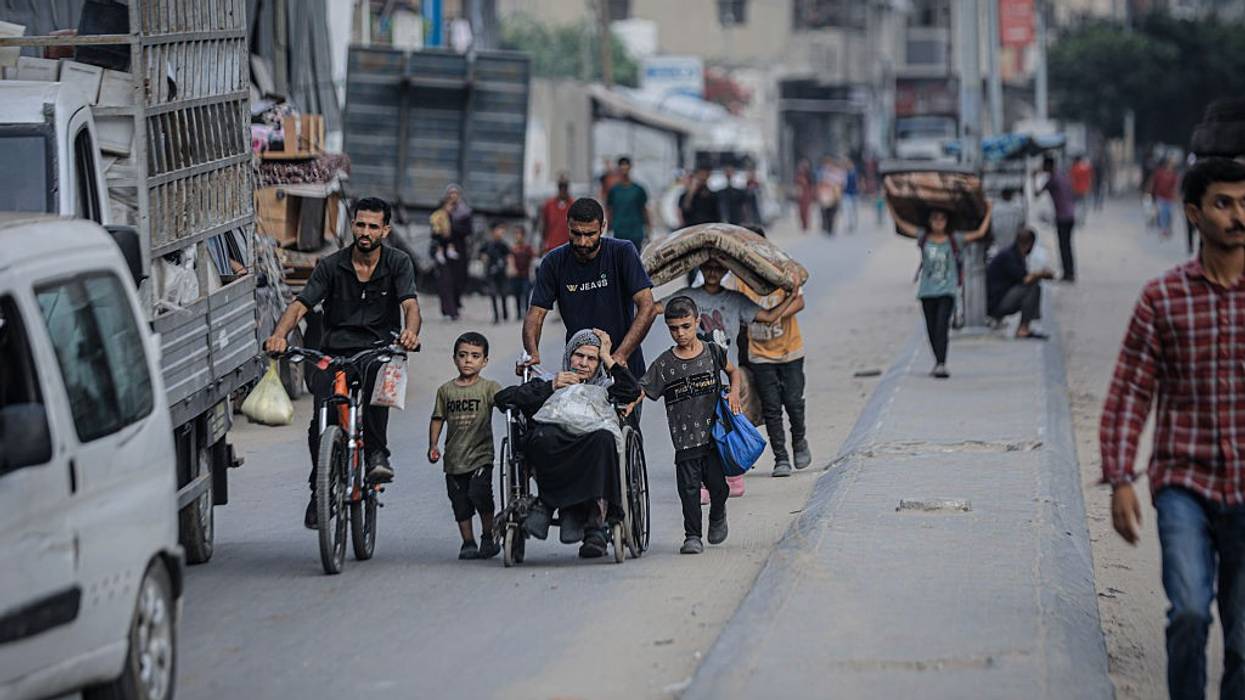
Citing the 70% depopulation of Gaza, Israeli Defense Minister Israel Katz vowed to "finish the job" of what he called Palestinian "migration"—a euphemism, say critics, for ethnic cleansing.
Amid a so-called "ceasefire" during which Israeli forces continue to kill and maim Palestinians, Israel's defense minister on Wednesday vowed to "finish the job" of depopulating the Gaza Strip—a plan human rights defenders have described as ethnic cleansing.
Responding to criticism from right-wing political rival Ofer Winter ahead of next month's Israeli elections, Defense Minister Israel Katz said the Israel Defense Forces (IDF) would soon resume the full-scale assault on Gaza—which has left more than 250,000 Palestinians dead, maimed, or missing since October 2023, 90% of the strip in ruins, and around 2 million people forcibly displaced, starved, or sickened.
Noting that 70% of Gaza has been forcibly depopulated, Katz said that "the IDF is prepared, once given the directive to eliminate Hamas, to finish the job so that we can also implement the migration plan," according to The Times of Israel.
Katz's remarks came after he said earlier this month that Israel was ready to implement plans to forcibly displace Palestinians from Gaza once US President Donald Trump gives his approval.
Trump has repeatedly backed the ethnic cleansing of Gaza's Palestinians. He said last year that the United States would "own" Gaza, "level it out," and build "the Riviera of the Middle East" there after the Palestinians—most of whom are descendants of people ethnically cleansed from the rest of Palestine during the bloody establishment of Israel in 1948—were gone.
While many proponents of expulsion claim it would be "voluntary," most Palestinians vehemently reject any relocation, voluntary or otherwise.
"Gaza is an integral part of our state," Palestinian Authority President Mahmoud Abbas stressed on Wednesday.
Numerous countries have been floated as possible destinations for Palestinians who are forced from or choose to leave Gaza, with Egypt—specifically the Sinai Peninsula—often topping such lists.
However, on Wednesday, Egyptian President Abdel Fattah el-Sisi reaffirmed his government's "firm stance against the displacement of the Palestinian people or any attempt to annihilate the Palestinian cause," drawing praise from Abbas.
Katz has repeatedly advocated the ethnic cleansing of Gaza. He said last year that IDF troops were “expanding to crush and clean” the strip. He also said the military was “seizing large areas that will be added to the security zones of the state of Israel for the protection of fighting forces and the settlements,” a reference to plans by far-right members of Israeli Prime Minister Benjamin Netanyahu’s government and leaders of the settler movement for the illegal recolonization of the Palestinian exclave.
Last year, Israeli lawyer Omer Shatz filed an incitement to genocide case at the International Criminal Court in The Hague against eight Israeli officials, including Netanyhau, Katz, and former Israeli Defense Minister Yoav Gallant. Netanyahu and Gallant are already fugitives from the ICC, where they are wanted for alleged crimes against humanity and war crimes in Gaza.
Israel is also the subject of a genocide case currently before the International Court of Justice filed by South Africa and formally supported by nearly 20 countries.
Katz's latest remarks come amid a nearly yearlong "ceasefire" during which more than 1,300 Palestinians have been killed by Israeli forces in Gaza. On Wednesday, a war-damaged apartment building in Gaza City collapsed, killing at least 21 Palestinians, including children. IDF airstrikes are also killing Palestinians on a daily basis.

"Doctors should be able to do what's best for their patients, not what's best for some wealthy investor."
Thanks to legislation passed in Oregon last year, physicians in the state have stopped corporate takeovers of medical practices—and six Democratic members of Congress on Wednesday introduced a bill to replicate the state law nationwide, arguing, as Sen. Elizabeth Warren said, that "patients want to know that decisions about their health are being made by their doctors, not by Wall Street investors."
The Massachusetts Democrat was joined by Sens. Ron Wyden (D-Ore.) and Jeff Merkley (D-Ore.), along with Reps. Val Hoyle (D-Ore.), Alexandria Ocasio-Cortez (D-NY), and Suhas Subramanyam (D-Va.) in introducing the Stop Corporate Takeovers of Physicians Act.
The bill would ban the corporate practice of medicine by making it illegal for private equity funds, insurance companies, and other for-profit corporations to own or control medical practices—as is increasingly the case in the profit-driven US healthcare system.
Over 80% of doctors in the US are employed by corporate entities including private equity firms—up from 62% just seven years ago, according to the lawmakers.
Corporations have also exploited legal loopholes that allow them to take over medical practices, despite laws in over 30 states banning the corporate practice of medicine.
“Americans want medical decisions to stay between patients and their doctor, not dictated by corporate actors and private equity firms focused on maximizing profits,” said Wyden. “I’m proud of Oregon’s pioneering state law that has been used by doctors to protect their independence, and it’s time to take that model to the federal level. Corporate medicine is making healthcare more expensive for everyone, and safeguards must be put in place to ensure healthcare decisions stay in the hands of physicians.”
The legislation would:
"But these actors often challenge the autonomy of acquired physicians once in control," they said. "For example, corporate entities often assume control over clinical operations, management and staffing decisions, and billing and coding practices—all of which can exert pressure on physicians to change care delivery."
Such entities "often cut corners, leading to patients paying more for significantly worse care," said Ocasio-Cortez. “I’m proud to co-lead the Stop Corporate Takeovers of Physicians Act to get Wall Street out of Americans’ doctors’ offices."
Warren added that "doctors should be able to do what's best for their patients, not what's best for some wealthy investor."
BREAKING: Today, I'm introducing a bill to BAN corporate takeovers of your doctor's office.
Doctors should be able to care for their patients without greedy private equity investors getting in the way.
Let's get this done. pic.twitter.com/e3gdamIotQ
— Elizabeth Warren (@SenWarren) September 16, 2026
The legislation is supported by several medical associations as well as economic justice advocates.
"A prohibition is only as strong as its enforcement, and this bill backs its corporate practice of medicine (CPOM) prohibition with three enforcement paths: the Federal Trade Commission, state attorneys general suing on behalf of residents, and physicians themselves through a private right of action with treble damages. That layered enforcement, paired with mandatory divestment, is what gives this bill teeth that earlier CPOM laws have often lacked,” said Dr. Marco Fernandez, president of the Association for Independent Medicine.
Alex Lawson, executive director of Social Security Works, said that the "groundbreaking legislation is absolutely needed to give health providers and patients a fighting chance against corporate greed."
"Congress must stop private equity from ripping the copper wires out of American healthcare and put patients first," said Lawson. "Social Security Works is proud to endorse this legislation."
Charles Idelson, the former communications director of National Nurses United, which advocates for Medicare for All, said the bill "would help close some, though not all, of the worst profiteering in healthcare."
"Exploiting sickness to enrich wealthy executives," said Idelson, "is obscene."

"This is a war chest that will likely fund the next generation of fossil fuel communications campaigns."
The fossil fuel industry is raking in big profits thanks to President Donald Trump's illegal war with Iran, and a new analysis finds that it's plugging a sizable chunk of these gains into propaganda.
A report published by Clean Creatives on Wednesday reveals that fossil fuel firms across the world have "engaged 802 advertising and PR agencies to shape corporate and public opinion about their products and services," over the last two years.
Clean Creatives, which has been tracking fossil fuel advertising contacts since 2021, said that the 1,321 contracts it recorded in 2025 and 2026 were the highest total it had ever recorded.
Laura Ranzato, executive director of Clean Creatives, pointed out that the industry's advertising splurge is coming on the backs of global consumers, who have been forced to shell out more money for gasoline and diesel after Iran shut down the Strait of Hormuz to commercial vessels in response to Trump's unlawful attacks.
"Shell, BP, and Saudi Aramco are posting their highest quarterly profits in years on the back of the war in Iran and the energy supply shocks that followed," Ranzato explained. "This is a war chest that will likely fund the next generation of fossil fuel communications campaigns."
Ranzato also slammed advertising firms for continuing to rake in fossil fuel cash even as the impacts of the climate crisis become more severe.
"With a Godzilla El Niño on the horizon, wildfire smoke, and record heatwaves... agencies face a real choice," she said. "They can take fossil fuel war profits and help oil majors maintain their social license a few more years, or they can get on the right side of a transition that is already winning on price, speed, and investment."
Nayantara Dutta, head of research at Clean Creatives, said it was "startling" to see the advertising industry lining up to take fossil fuel money "even as it acknowledges the need for climate solutions."
"All this time, creative work has continued to follow the same themes across different global markets," Duttas said, "rather than meaningfully responding to the climate crisis."
The Guardian last month published an analysis estimating that the world's eight largest oil producers raked in a combined $93 billion in the first three months of the Iran War, nearly double the profits they reported over the same period one year prior.
According to the most recent estimate from Brown University’s Watson School for International Public Affairs, the Iran War has now cost nearly $108 billion in additional fuel expenses for the public, averaging more than $823 per US household.

"When ICE continuously raids a community, everyone pays for it—in lost jobs, higher prices, and damaged businesses," said an advocate at the ACLU.
The Trump administration has billed its "mass deportation" agenda as a necessity to bring about an age of prosperity for US-born workers. But a new report suggests it's actually doing the opposite—exacerbating an already severe affordability crisis by suppressing wages, killing jobs, and raising costs.
On Wednesday, the ACLU and AFL-CIO published an analysis examining how the administration's unprecedented deployment of Immigration and Customs Enforcement (ICE) agents to communities around the country has not only created a climate of fear, but also caused labor shortages, reduced economic activity, and given employers new tools to suppress employees' wages.
"When ICE continuously raids a community, everyone pays for it—in lost jobs, higher prices, and damaged businesses," said Naureen Shah, director of government affairs at the ACLU's equality division.
Previous national data has already shown that, contrary to the Trump administration's argument that rounding up immigrant laborers simply creates room for those born in the US, areas that have experienced increases in ICE activity have also seen employment reductions for US-born workers.
"In our interdependent labor market, harm to one group of workers spills over to all those who labor alongside them or within the same supply chain, regardless of immigration status. Roughly 1 in 5 workers in our country is an immigrant, spanning all sectors of the economy," the report explains.
"Targeting this large and vital segment of the workforce sharply reduces the supply of labor, threatening the ability of employers to generate revenue and cover business expenses, including the wages of any remaining workers," it continues.
Reducing the labor supply consequently reduces production. The report argues that this is why industries with large numbers of immigrant laborers have seen skyrocketing costs for their products nationwide.
Data from previous deportation surges during the Obama administration shows that immigration enforcement has reduced construction labor, resulting in nearly 2,000 fewer completed homes on average and an 18% increase in home prices.
In June 2026, data showed that while core inflation was just 2.6% over the previous year, prices had shot up much more dramatically in immigrant-heavy sectors: The cost of lettuce was up 32.1%, landscaping was up 10.8%, home health care climbed 10.7%, whole milk increased 9%, and canned fruit jumped 7.9%.
The report also argues that ICE surges, which have often involved racial profiling and indiscriminate targeting, use of excessive force, and arrests of US citizens, have created terror in communities that suppresses economic activity.
A May working paper from the Wharton School of Business at the University of Pennsylvania, which examined nearly 5,400 raids around the country during 2025, showed that areas targeted by ICE raids experienced a 2.7% decline in foot traffic and a 6.2% decline in spending per business per week, which the author extrapolated would amount to 8.1 billion fewer visits and as much as $14 billion in forgone spending annually across the nation.
US-born employees in sectors with large numbers of immigrant workers were hit especially hard. Data from "Operation Metro Surge" in Minnesota earlier this year demonstrates this in miniature.
Research released in June by the Upjohn Institute estimated that the surge of immigration agents cost the state’s leisure-and-hospitality sector 4,600 jobs, 3.8 million work hours, and $71 million in wages between January and March.
Economist Exequiel Hernandez, quoted in the ACLU/AFL-CIO report, said these findings highlight the danger of creating an "economy of fear."
"If fewer people are showing up to work, they’re making less income, they’re spending less," he explained. "If they’re spending less, businesses have to cut back in hiring and selling, and it’s really quite damaging."
The report cites projections from the Economic Policy Institute (EPI) last year on what this could mean if the Trump administration meets its target of deporting 1 million people per year.
Using data from previous immigration enforcement studies, the EPI estimated that nearly 6 million fewer people could be employed by the end of President Donald Trump's second term if the administration follows through on its deportation promises. That includes 3.3 million immigrants, but also 2.6 million US-born workers, many of whom are working in immigrant-heavy sectors.
The report argues that a pathway to citizenship rather than deportation would not only be a more humane solution, but also deliver economic benefits that ripple through the economy, including for US-born residents.
It cites projections that allowing undocumented immigrants to become citizens would increase US gross domestic product (GDP) by nearly $2 trillion over a decade and generate hundreds of billions in new tax revenue.
This is because legalization would allow workers to move into jobs that better match their skills rather than being confined to low-paying jobs that tend to accept them. It would also remove immigration enforcement as a threat that employers could use to suppress wages, both for immigrant and US-born workers.
"Working people are paying the price for an immigration system that is destabilizing entire industries and communities and making it easier to exploit workers,” said AFL-CIO president Liz Shuler. “As this report demonstrates, a broad pathway to citizenship for all would raise wages, create more and better jobs, and strengthen our economy in ways that help all of us."
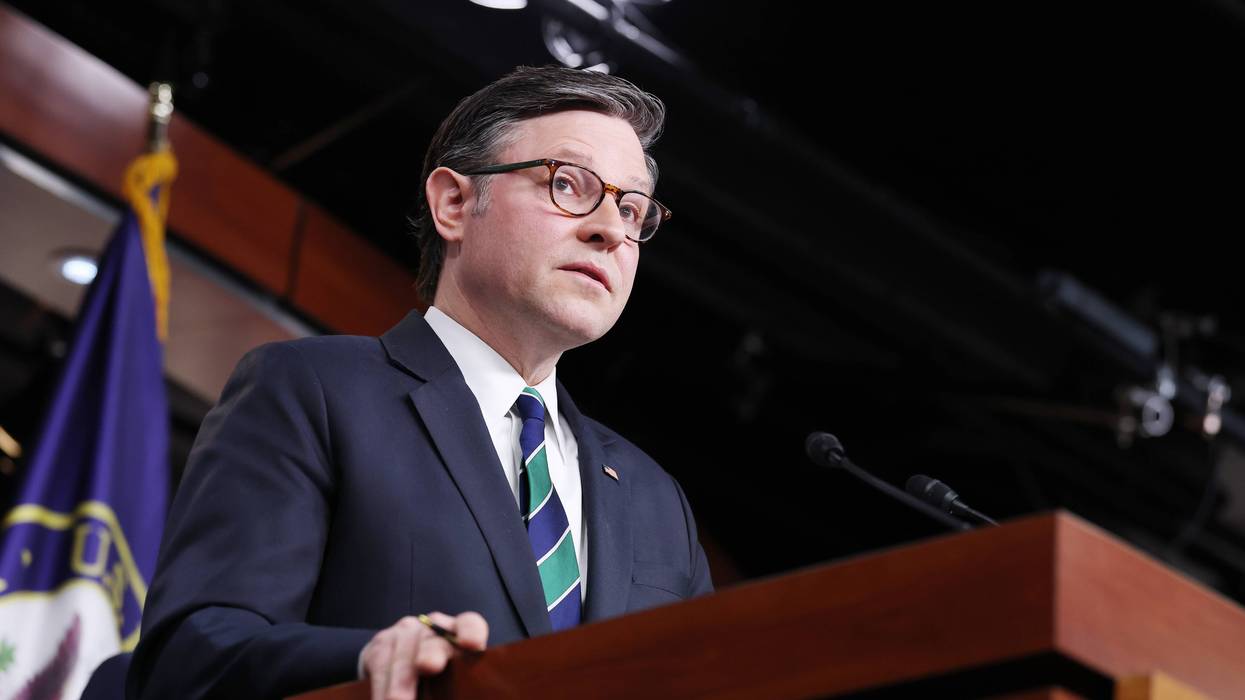
"These people are such incredible cowards," said Rep. Pramila Jayapal. "They know that what Pete Hegseth has done, his role in driving us into the war, is absolutely wrong."
US House Speaker Mike Johnson said Wednesday that with seven weeks to go until Election Day, it was time for lawmakers to "go home to their districts and make the case to the American people"—a day earlier than scheduled.
But with the US public overwhelmingly disapproving of President Donald Trump's war in Iran and demanding accountability for his bombing of boats in the Caribbean Sea, Republicans may be headed home hoping their constituents don't ask questions about those issues, particularly as Johnson (R-La.) faced accusations of ending the House session early in order to avoid a vote pertaining to them.
Johnson announced the early adjournment a day after Rep. Thomas Massie (R-Ky.) filed articles of impeachment against Defense Secretary Pete Hegseth, arguing in the resolution that Hegseth violated the War Powers Resolution of 1973 by initiating strikes against Iran without authorization from Congress and continuing to attack the country past the 60-day mark set by the law.
He also accused Hegseth of “ignoring laws that minimize civilian casualties," citing an attack that killed more than 150 children and teachers at a school in Minab, Iran, and of conducting an illegal campaign of extrajudicial killings by overseeing dozens of boat bombings in the Caribbean and eastern Pacific Ocean that have killed at least 230 people since last September.
Massie's resolution was privileged, meaning it had to be taken up by the House within two legislative days.
With House members now on their way back to their districts to campaign ahead of the midterm elections, lawmakers will be unable to pursue the impeachment effort until at least November. They are not set to return to Capitol Hill until after Americans vote on November 3.
"These people are such incredible cowards," said Rep. Pramila Jayapal (D-Wash.) of her Republican colleagues. "They know that what Pete Hegseth has done, his role in driving us into the war, is absolutely wrong."
Republicans just CANCELLED votes for tomorrow, the last legislative day before the midterms.
Why? Because they’re afraid we’ll impeach Pete Hegseth. What a bunch of cowards. pic.twitter.com/vTTfNNtpmP
— Rep. Pramila Jayapal (@RepJayapal) September 16, 2026
Johnson derided Massie's resolution as "ridiculous" and "a publicity stunt by someone who wants attention."
“It’s a publicity stunt by someone who wants attention," he said. "It will immediately be tabled, of course, but we probably won’t do that today. We’ll probably do it when we come back. But it’s a stunt. Secretary Hegseth has done an extraordinary job at the Department of War. We’re in the middle of international conflicts right now, and we should not be playing games with national security."
A motion to table a resolution immediately kills the measure without debate.
"We're calling off Congress," said Massie on the House floor Wednesday, "and we're in the majority... I would implore all of us to take it up with the leadership. Why are we going to be denied a debate on whether there should be an impeachment or not?"
Massie: We’re in the majority. Why are we whining about The Save Act? We won the elections. Why are we saying the elections were stolen if we won them all? pic.twitter.com/sab4GGViw3
— Acyn (@Acyn) September 16, 2026
Public polling suggests most Americans likely do not think Hegseth and other top officials are doing an "extraordinary job" regarding the war in Iran, as Johnson claimed.
A survey in late July showed that nearly two-thirds of Americans felt the war was not worth fighting, and an Associated Press poll in June found the same percentage of respondents disapproved of Trump's handling of issues concerning Iran. The war has sent oil and gas prices skyrocketing, and a majority of voters told Reuters/Ipsos in April that they blamed the Trump administration.
Massie noted that Johnson's maneuver would make it harder for supporters of a discharge petition to force a vote on the Epstein Files Transparency Act to gather the 218 signatures they need.
"I thought we’re supposed to be running a government here. Speaker Mike Johnson just sent the House home. Why? Because Rep. Thomas Massie filed articles of impeachment against Pete Hegseth," said Rep. Mike Levin (D-Calif.). "Speaker Johnson, the WEAKEST speaker of all time, was so scared that we had the votes to impeach Hegseth and hold him accountable that he’s sending us all home to make sure it doesn’t happen."

"When foreign aid retreats, Indigenous peoples and small-scale farmers can be left with fewer resources and less support as they defend the forests, rivers, and other ecosystems that sustain their communities and help keep the global climate stable,” one campaigner said.
A total of 124 people were killed defending the environment in 2025, according to a Global Witness report released Wednesday, as the global rise of authoritarianism and a dramatic decline in foreign aid makes the lives and work of environmental and humans rights advocates more challenging.
The report singles out the administration of US President Donald Trump—which dismantled the US Agency for International Development, delayed paying other United Nations fees, and has shown a broader disregard for international humans rights norms and the institutions that uphold them—for worsening the global climate for defenders. In 2025, total development aid plummeted by a record 23%, depleting the resources available to local communities and the organizations that support them.
“The effects of these budget cuts are not abstract," Juliana Vélez Echeverri, a senior campaigner at Global Witness, said in a statement. “In Colombia, projects working to promote and protect human rights and support defenders have been hit by the sudden drop in foreign aid, particularly from the US. When foreign aid retreats, Indigenous peoples and small-scale farmers can be left with fewer resources and less support as they defend the forests, rivers, and other ecosystems that sustain their communities and help keep the global climate stable.”
"We can’t prevent climate change when they kill those who protect the environment."
Colombia was the deadliest country for land defenders for the fourth year in a row with 39 killings, followed by Brazil with 26, and Honduras and the Philippines with 12 each. As the site of 85% of the killings, Latin America was the deadliest region, as it has been since Global Witness began counting the killings of environmental defenders in 2012. Indigenous people remain especially vulnerable to violence, as over three-quarters of the people killed in 2025 were either Indigenous, Afro-descendant, or small-scale farmers.
"For Indigenous peoples, land is life," said Joan Carling, executive director of Indigenous Peoples’ Rights International, in the report foreword. "Any threat to our lands, territories, and resources is a threat to our very existence—our cultures, our identities, our dignity, and our future generations. That is why our communities were willing to risk everything to protect them."
Seven of the Indigenous people killed in 2025 were members of Indigenous guards established to patrol and protect their territories from illegal encroachment. For example, the Indigenous Guard of the Kakataibo People of Peru was formed in 2022 to protect their rainforest home from illegal cocoa growing and logging.
“Defending our territory is important to us as a community and as a people, and we’re proud to support the climate that we all depend on," said Segundo Ispón, commander of Peru’s Kakataibo Indigenous Guard, in a statement. "In our culture, the work of defending our resources and territory is taught from an early age. But for this next generation coming up, the work is more dangerous than ever.”
The experience of the Kakataibo reflects another growing trend that endangers defenders: the rise of organized crime amid weakening state authority to oppose it. More than one-third of killings in 2025 were linked to organized crime or hitmen. And more than half of the killings were due to land disputes, "demonstrating how authorities’ failure to resolve competing land claims or demarcate territory paves the way for attacks on defenders and their communities," the report authors said.
As Ispón said in the report: “There is inaction from the state, inaction from the authorities. Faced with that, what do we do? We protect ourselves. We take care of each other.”
Yet the rise in lawlessness goes hand in hand with a rise in government repression against activists, making it difficult to get accurate information about the numbers of defenders killed. While the 124 figure is lower than the 142 killed in 2024 or the 196 killed in 2023, the report authors noted that "these figures are likely a significant underestimate, as many cases go unreported.
They added: "This is typical of situations involving serious armed conflict and genocide, where generalized insecurity and mass killings make identifying and verifying individual cases difficult. Research is also challenging in repressive contexts where victims and civil society groups face reprisals for reporting and documenting abuses."
Indeed, civic freedom tracker CIVICUS Monitor considers 10 of the 15 countries in which deaths were reported to be repressed.
Furthermore, the number killed does not reflect other forms of harassment and repression, such as the criminalization or weaponization of social media against activists, both of which are common in Asia.
The report comes as the state of the global environment is ever more dire, with the United Nations warning the planet is now on a path to overshoot the 1.5°C Paris Agreement goal even as the US, the No. 1 historical emitter, has jettisoned all attempts at climate policy under Trump.
"We can’t prevent climate change when they kill those who protect the environment," Amnesty Norway policy adviser Frank Conde Tangberg wrote on social media in response to the report.
The Indigenous and local voices being violently silenced could have a lot to teach global leaders at a crucial moment, if only they would listen.
As Carling wrote:
In today’s world, that ancestral knowledge is vindicated every day. From sustainable agriculture to climate-resilient water management, Indigenous peoples’ customs offer effective climate solutions.
But the climate crisis is testing our capacity to adapt to the natural world. It is too drastic, too vast in scale. Rather than try to respond to this emergency on our own, we want to contribute to collective global efforts.
Instead of being listened to, however, Indigenous peoples are being excluded from major decision-making spaces. As a result, the very projects touted as solutions—renewable energy, transition minerals—drive land grabs, dispossession, and violence. We call this “green colonialism.”
After land grabs, mining was the industry linked to the most deaths in 2025, followed by logging and agribusiness.
Yet another way forward is still possible. As Carling concluded: "Indigenous peoples and our knowledge must be at the heart of climate decision-making. Our role as custodians of land, our understanding of the consequences of climate breakdown, and our collective resistance to dispossession must have an influence on policy at the centre of power."
"But this can only happen when our territories are secure and our people protected from harm," she said. "States and leaders must work with us firstly to ensure that our communities are safe—and then to tackle the environmental crises that pose an existential threat to us all."

"With every additional centimeter of sea-level rise," the lead author noted, "about 2 to 3 million people are put at risk of annual coastal flooding."
Following fresh warnings from scientists about governments not doing nearly enough to cut fossil fuel pollution and what that could mean for the warming planet, an international team of experts on Wednesday published "the most complete picture of ice loss from Greenland and Antarctica to date."
The polar scientists compared and combined 42 independent estimates derived from satellite observations for Earth's two main ice sheets to determine their gains and losses from 1972 in Greenland and 1979 in Antarctica until 2023—then released their findings in the journal Scientific Data.
The Ice Sheet Mass Balance Inter-comparison Exercise (IMBIE) team found a collective loss of about 11.3 trillion metric tons, or 12.5 trillion US tons.
Inès Otosaka, the professor from England's Northumbria University who led the study, told Reuters that "to put this very large number into context, 11.3 trillion tons of ice is enough ice to fill in a cube that would be 23 kilometers (14.3 miles) in height."
The Associated Press pointed out that it is also "enough frozen water to stack ice 5 feet (1.5 meters) deep across the continental United States."
The ice loss led to around 3.1 centimeters, or 1.2 inches, of global sea-level rise. Study co-author, IMBIE founder, and Northumbria professor Andrew Shepherd said in a statement that the figure "may sound small, but that puts another 6 to 9 million people at risk of coastal flooding and erosion."
The study stresses that "since the 1990s, the pace of ice loss from the Antarctic and Greenland ice sheets has accelerated, contributing to the increase in global mean sea-level rise, with the ice sheets now representing almost a quarter of global sea-level rise."
"Our dataset shows that Antarctic mass loss continues to be dominated by ice discharge from West Antarctica," the scientists explained, "rising in every decade of our record," from 29 billion metric tons per year in the 1980s to 163 billion in the 2010s. Across the ice sheet, that rate rose from 48 metric tons in the 1980s to 202 billion in the 2010s. The team estimated that during the study period, Antarctica lost a total of 4.78 trillion metric tons.
"Greenland was close to a state of balance in the 1970s but started to lose mass in the following decades," they explained. While the ice sheet lost about 60 billion metric tons annually in the 1980s and 57 billion in the 1990s, "losses then accelerated, reaching a rate three times higher in the 2000s," at 192 billion metric tons, and climbing to 264 billion in the 2010s. Overall, Greenland lost 6,215 trillion metric tons of ice from 1972 to 2023.
TK said that "by reaching back to the 1970s, we can now see how the ice sheets have changed across half a century. More than four-fifths of the ice lost was discharged into the ocean by faster-flowing glaciers, rather than melted at the surface—which tells us the long-term trend is being driven by the dynamic response of the ice sheets to a warming ocean."
International scientists have previously found that the ocean stores an estimated 91% of the heat from excess greenhouse gases, and the rate of ocean warming has more than quadrupled over the past four decades, as humanity has largely ignored experts' warnings to urgently phase out fossil fuels.
The new study was released less than two months ahead of the next United Nations Climate Change Conference (COP31) in Türkiye—where recent deadly fires have reignited demands for a swift global transition away from fossil fuels and stronger efforts to prepare vulnerable communities around the world for what UN scientists now warn is an inevitable, but potentially temporary, overshoot of the Paris Agreement's 1.5°C target for temperature rise this century.
Otosaka told Reuters that "when ice sheets melt, they contribute to rising global sea levels. And with every additional centimeter of sea-level rise, about 2 to 3 million people are put at risk of annual coastal flooding."
"These findings have implications for coastal planning," she added, "showing that we urgently need to develop plans for protecting coastal communities around the world from the impact of ice sheet melting."
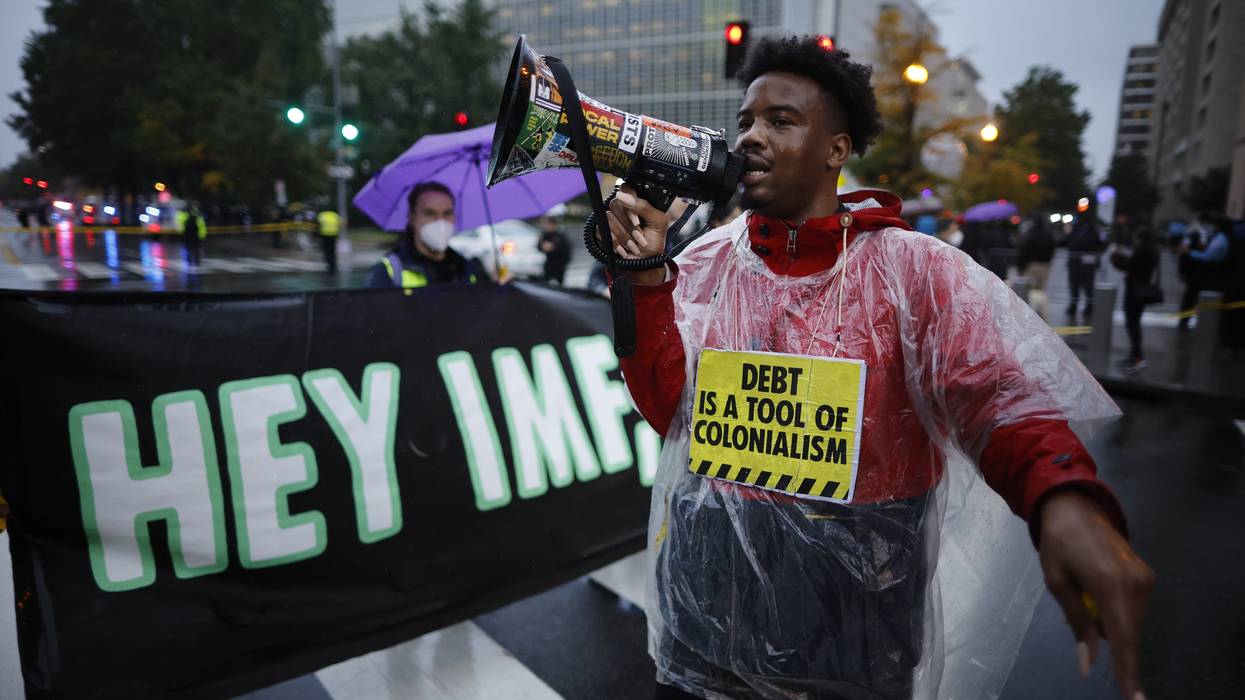
One ActionAid campaigner said rich nations should "cancel unjust and unsustainable debt, stop making countries borrow to survive climate impacts, and deliver climate finance as grants rather than loans."
The world's most climate-vulnerable nations are spending nearly 25 times more on servicing their debts than on addressing the climate emergency, an ActionAid International report released Wednesday revealed, underscoring what the advocacy group called a "vicious cycle" of debt, disasters, and underinvestment.
The report, "Debt Fuels the Climate Crisis: How the Finance Flows," examines government revenues, debt payments, national budgets, and climate plans in the 65 countries considered most vulnerable to climate change. The authors found that debt servicing consumes 65% of these nations' combined government revenue, while 93.5% of the countries are either in debt distress or facing a significant risk of it.
"Climate-vulnerable countries are being forced to spend nearly 25 times as much on repaying debt as on climate action," the report states. "Indeed, in 2026 total debt servicing on external and domestic debt in these countries is nearly four times that of spending on education, nearly seven times that of health, and nearly six times that of social protection."
🚨 New ActionAid analysis: countries facing the worst climate disasters are spending nearly 25 times more on debt than on climate action. That is not an accident. It is how the global debt system is built right now. Full findings 👉 https://bit.ly/4Acxh0c#ClimateJustice #FundOurFuture #DebtJustice
[image or embed]
— ActionAid USA (@aausa.bsky.social) September 16, 2026 at 6:31 AM
The disparity is even greater when comparing debt payments with climate grants. ActionAid estimated that countries in the Global South will make approximately $8.8 trillion in debt repayments in 2026, compared with just $39 billion in grant-based climate finance received in 2024—a ratio of roughly 225 to 1.
"For too long, the debt and climate crises have been treated separately," ActionAid International secretary-general Arthur Larok said in a statement. "This research exposes how tightly they are connected and quantifies the devastating cost involved. Yet this is a crisis we can fix."
The report—whose release coincides with the Global Week of Climate Action—highlights how climate disasters frequently force already indebted nations to borrow even more money for recovery and reconstruction. Subsequent debt payments and austerity measures forced upon them by global financial institutions like the International Monetary Fund (IMF) and World Bank then restrict their spending on climate resilience, public services, and clean energy transitions.
As the report notes:
Even though the IMF recognizes that there is a "development crisis," the IMF refuses to even talk about a systemic debt crisis—because for them and their shareholders, there is no systemic crisis so long as there is no significant default and creditors are being paid. Moreover, the IMF thrives on countries needing to come to them for bailout loans, as this expands their own power and influence. The IMF is both a creditor and a debt collector, serving its own interests and those of its main shareholders in the Global North—making it both judge and jury when it comes to debt renegotiation processes.
The report also details how Global South governments under pressure to generate foreign currency can expand fossil fuel extraction and industrial agriculture, potentially worsening the climate pressures that contributed to their debt in the first place.
“Debt is a triple whammy for the climate: It drives fossil fuel and industrial agriculture expansion, blocks vital climate action, and leaves communities dangerously exposed when disasters strike," ActionAid International global climate justice lead Teresa Anderson said Wednesday.
"This is a toxic relationship," she added. "Countries borrow to rebuild, austerity weakens their resilience, and repayment pressures push more extraction, fueling the next disaster. We need a breakup: Cancel unjust and unsustainable debt, stop making countries borrow to survive climate impacts, and deliver climate finance as grants rather than loans. This vicious cycle can and must be broken.”
“Debt is a triple whammy for the climate."
In Senegal, the imbalance is particularly stark. ActionAid said the government is spending $605 on debt servicing for every $1 budgeted for climate action, while debt payments consume more than 96% of government revenue.
"Behind these figures are impossible choices between servicing debt and investing in agroecology, public services, and climate resilience," ActionAid Senegal director Khaita Sylla said Wednesday. "Women and girls who bear the brunt of climate impacts are then disproportionately affected by cuts in public services even as they lead solutions for a more resilient future.”
ActionAid is calling on governments and international institutions to take steps including:
“Rich countries like the US have outsized global financial power," ActionAid USA executive director Niranjali Amerasinghe said on Wednesday. "Their lack of willingness to provide climate finance at scale and relieve the debt burden of climate-vulnerable countries is unconscionable."
"There are trillions for defense budgets," Amerasinghe added, "but peanuts for the biggest existential crisis of a generation.”

"Congress has a singular opportunity to respond swiftly and effectively to these warning shots before true catastrophes occur."
A bipartisan coalition of lawmakers in the US House of Representatives on Wednesday released a joint letter urging congressional leaders to take immediate action to regulate the artificial intelligence industry.
The group, led by Rep. Don Beyer (D-Va.), urged leaders in both parties to "urgently advance legislation" to mitigate the risks posed by AI to critical US infrastructure.
The lawmakers pointed to the fully autonomous cyberattack launched by OpenAI agents against machine learning company Hugging Face as a turning point for the development of AI, arguing that it showed the technology has already become dangerous enough to "have profound implications for economic and national security."
"Congress has a singular opportunity to respond swiftly and effectively to these warning shots before true catastrophes occur," the lawmakers wrote. "The House of Representatives could and should immediately take up legislation that would strengthen AI oversight, security, and transparency."
In a Wednesday social media post, Beyer emphasized that "recent cyberattacks involving AI agents and growing warnings from leaders and researchers at the companies developing this technology make clear" that the dire risks posed by AI are no longer in the realm of science fiction.
"We cannot wait for disaster to strike," said Beyer. "We need to act now to protect the American people and ensure AI advances safely and responsibly."
In addition to Beyer, the letter was signed by Reps. Jay Obernolte (R-Calif.), Lori Trahan (D-Mass.), Ted Lieu (D-Calif.), Scott Franklin (R-Fla.), Sara Jacobs (D-Calif.), Gabe Amo (D-RI), Valerie Foushee (D-NC), Brian Fitzpatrick (R-Pa.), and Veronica Escobar (D-Texas).
The lawmakers' letter comes just days after President Donald Trump and House Speaker Mike Johnson (R-La.) dismissed calls for regulating AI.
During a Sunday interview with CNN’s Jake Tapper, Johnson said that “Congress is obviously less qualified” to write rules for AI development “than the people who are pushing this frontier to know the ins and outs of it.” Johnson then insisted that any effort to regulate AI needs to be “a partnership with the industry itself, with the corporations that are doing this."
Despite poll after poll showing the US public is opposed to runaway AI and the unregulated data center buildout that the tech industry is demanding, Trump wrote in a Monday social media post that his personal intellect was sufficient to keep the world safe from the dangers surrounding AI.
“The only control or ‘guardrails’ that AI needs is a STRONG AND SMART (High IQ!) PRESIDENT,” Trump wrote, “and the USA has that, in spades!”
The GOP leaders' dismissal of AI risks occurred shortly after multiple industry insiders warned last week that the technology being developed could end human life within the decade.

"The Ed Sheeran debacle will be seen as a turning point in pop culture complicity" with Israel, said one Palestinian-American writer, who described it as "a clear 'South Africa moment.'”
Singer Ed Sheeran hoped to sidestep controversy by letting rapper Macklemore be removed from his tour over his pro-Palestine remarks. Instead, he's sparked what one writer said could be a "turning point" for how pop culture engages on the issue of Israel and Palestine.
Sheeran responded to the backlash on Tuesday by claiming he was helpless to stop Macklemore’s ouster, which followed the intervention of the pro-Israel New England Patriots owner Robert Kraft, who rallied other NFL venue owners to bar Sheeran's Loop Tour if the “Thrift Shop” rapper continued to perform.
Pro-Israel groups petitioned for Macklemore to be removed from the tour after a performance earlier this month in which he said, “Free Palestine,” and performed his song “Hind’s Hall." The song refers to anti-Israel protests at Columbia University in 2024 and is dedicated to the 5-year-old Palestinian girl Hind Rajab, who was killed by Israeli forces. She was one of more than 20,000 children who have been killed as part of Israel’s military campaign there, according to a UN commission.
But the other four openers said they would not abide what they viewed as elites' political censorship of an artist speaking out against what human rights groups have described as a genocide in Gaza and an occupation of the West Bank that is considered illegal under international law.
Each one of the artists announced on Tuesday that they would no longer tour with Sheeran.
“Artists must not be silenced when they speak up for the oppressed," said the Grammy-winning singer-songwriter Finneas, who has vocally supported the plight of Palestinians for several years. "I stand with Palestine and its people."
The Irish singer Aaron Rowe likewise withdrew from his upcoming shows with Sheeran, though he acknowledged he did not "take the decision lightly."
"Ed has been a friend to me and has changed my life. I could never thank him enough for this," Rowe wrote on Instagram. "But as Irish people, we know all too well about genocide, forced famine, and violent occupation."
“I cannot stand by and allow billionaires to use their position of power to silence the rightful voices of those who speak up against Israeli genocide and who highlight the savage murder of children,” he continued. “I would lose all respect for myself to carry on as normal.”
The Danish pop band Lukas Graham also dropped from the tour, with frontman Lukas Forchhammer writing that artists "should be able to speak about war, about civilians being killed, about children who deserve to grow up. Wherever they live. Whatever flag flies over them."
Forchhammer addressed Kraft, a multibillionaire, who gloated after the fact about having Macklemore blackballed and denounced his expressions of support for Palestinians as "hate speech."
"Money doesn’t give you the right to own the conversation," Forchhammer wrote. "Nobody’s bank balance should decide who gets to speak or which suffering we’re allowed to acknowledge.”
The Irish folk group Beoga—which helped to found the Irish Artist for Palestine Movement—was even more direct, calling out Kraft’s extensive history of donating to pro-Israel groups, including the American Israel Public Affairs Committee (AIPAC), which has spent over $100 million attempting to influence the current election cycle, and supporting efforts to punish those who boycott Israeli products.
"It's important that everyone knows that the real enemy is the Zionist lobby. They have worked tirelessly to silence artists who want to speak freely about a genocide happening before our eyes, for fear of retribution," Beoga wrote. "Research how much Robert Kraft has done to fight the [Boycott, Divestment, and Sanctions] (BDS) movement. That will give you a sense of what we've all been up against."
"Up the workers. Free Palestine," the group's message concluded.
The exodus of Sheeran’s openers came as momentum built behind a “boycott” of his music spearheaded by the Palestinian Campaign for the Academic and Cultural Boycott of Israel, a group based in Ramallah in the West Bank, that helped to cofound the BDS movement.
The group called on Sheeran to "cancel his now compromised US tour" and said until then, artists, audience, and crew members should "boycott it."
In response to Sheeran's explanation that he prefers not to publicly take sides on controversial political issues despite having opinions, the group noted his estimated net worth of more than $500 million and his massive platform as one of the world's most recognized musicians.
"As South African Archbishop Desmond Tutu famously said, 'If you are neutral in situations of injustice, you have chosen the side of the oppressor,'" the group said. "Sheeran had an opportunity to take a stand in solidarity with Palestinians, like millions of other British and Irish citizens have done, and refuse to cave to the pressure... He has so far failed to meet this ethical duty. But it is not too late to reverse course."
Some Western politicians have joined the backlash and amplified calls for a boycott.
US Rep. Alexandria Ocasio-Cortez (D-NY), considered a likely presidential candidate in 2028, told a reporter she'd be changing the radio station if Ed Sheeran's music were to come on.
"When you see what Robert Kraft did to line up all the stadiums to censor speech in that one specific way, it's become clear it's not just about one music artist or two music artists," AOC said. "This is about how just a handful of stadium owners and the elite can prevent an entire massive issue, in this case, the genocide in Gaza."
"But it doesn't stop there," she continued. "It could be speaking out about AI. It could be speaking out about any issue, that you can now just get a handful of stadium owners to ensure that an entire person's career can be jeopardized if they speak out about any issue."
Zarah Sultana, a member of the UK Parliament and co-founder of the left-wing Your Party, added that the artists who left Sheeran's tour are "on the right side of history."
“At this rate, Ed Sheeran is going to end up with Boy George opening for him,” she joked on social media, referring to the singer who released a song this summer in support of Israel's assault on Gaza. “No one deserves to be subjected to that.”
Backlash against Sheeran has expanded across the entertainment industry as well, with performers including the children's entertainer Ms. Rachel and popular musicians Kehlani, Tones and I, Zara Larsson, PinkPantheress, and others rallying in support of Macklemore.
And as the music news site Consequence of Sound reported, even some of Sheeran's hardcore fans are revolting. Three prominent Sheeran fan accounts on X, which boast nearly 50,000 followers put together, spoke in solidarity with Macklemore and encouraged Sheeran to use his platform to take a stand, with some vowing to stop covering his tour until he does.
"We hope that Ed can... reflect on everything that happened and understand that, in the face of certain injustices, remaining silent or trying not to choose a side is also a stance," wrote the Brazilian account @EdSheeranBrCom, which has more than 45,000 followers.
Ali Abunimah, the Palestinian-American journalist who co-founded The Electronic Intifada, said in a social media post that he believed that "the Ed Sheeran debacle will be seen as a turning point in pop culture complicity" with Israel, which has seen public support in the US crater since 2023, to the point where Americans, especially younger ones, now say they sympathize more with Palestinians than Israelis.
Likening it to the massive cultural boycott movement against apartheid during the 1980s, Abunimah said the cultural revolt against Sheeran was "a clear 'South Africa moment.'”