'Break Up Big Medicine': Taking On Healthcare Industry Greed Could Save US Families $6,000+ a Year
One expert said the options are to "watch the US healthcare system spiral into profit-driven chaos or finally treat the Big Medicine disease to create a healthcare system that puts patients and clinicians in control of care."
As millions of working-class Americans suffer from President Donald Trump and congressional Republicans' cuts to the already dysfunctional US healthcare system, a leading anti-monopoly group this week released a report with recommendations to restore "affordability and control to patients, clinicians, and communities across the country."
"The healthcare crisis didn’t happen by accident, it is the direct result of decades of neoliberal policy choices that handed more power to corporate healthcare giants while families paid the price," said Morgan Harper, director of policy and advocacy at the American Economic Liberties Project (AELP).
"The choice now is clear: Continue to watch the US healthcare system spiral into profit-driven chaos or finally treat the Big Medicine disease to create a healthcare system that puts patients and clinicians in control of care," she explained. "This agenda presents a roadmap for how to do it."
Harper and Emma Freer, AELP's senior policy analyst for healthcare, co-authored the new report, "Break Up Big Medicine," with contributions from a trio of other experts. One of them is Dr. Will Flanary, an independent ophthalmologist in Portland, Oregon.
"The US healthcare system, once made up of mostly independent practices like mine, is now dominated by Big Medicine behemoths—including private insurance conglomerates, Big Pharma manufacturers, pharmaceutical middlemen, megahospitals, and private equity-backed practices—whose only fiduciary duty is to executives and investors," he wrote in the foreword. "This makes it increasingly difficult to keep my practice afloat and uphold my oath, resulting in moral injury."
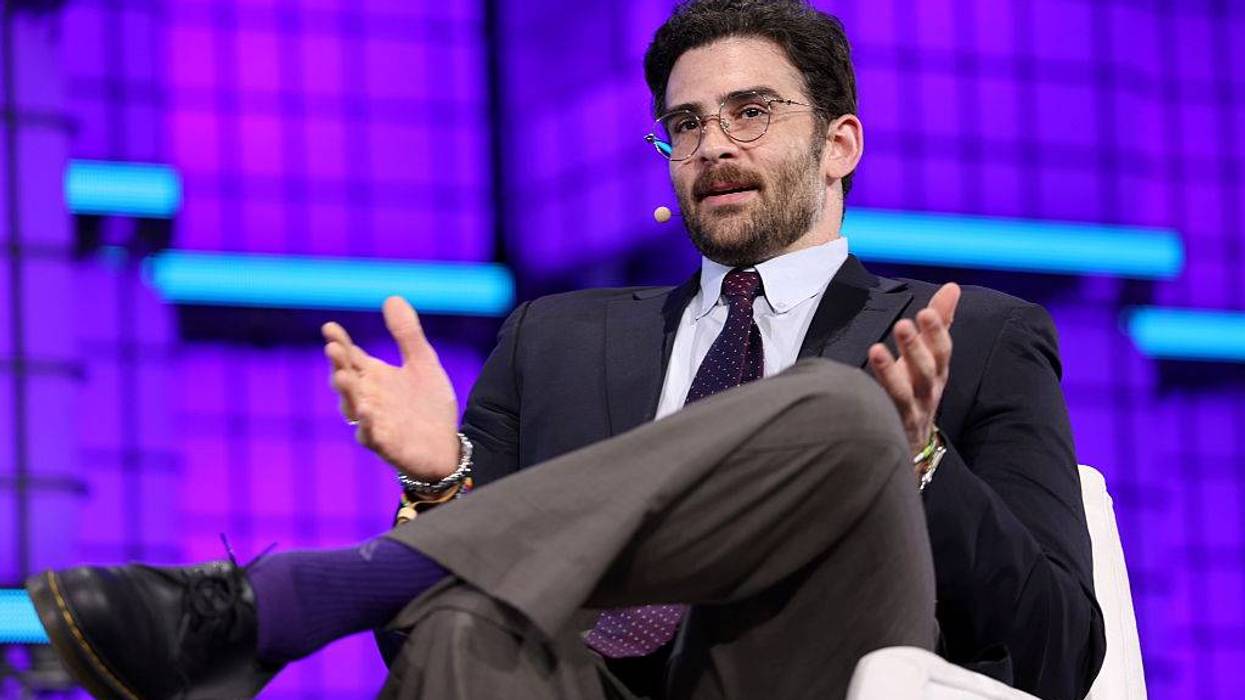
"So, I now have a second career as an advocate," who goes by "Dr. Glaucomflecken" on social media. "What my patients need most is bold policy reforms to break up Big Medicine and build a better healthcare system, one where they can access affordable, high-quality care and independent physicians like me can thrive."
The report notes that "between 2005 and 2025, the annual cost of employer-sponsored family coverage nearly tripled, from $12,214 to $35,119," US patients pay nearly three times as much for prescription drug prices as people in other countries, and "the United States spends more than $15,000 per person on healthcare each year—roughly one-fifth of our entire economy, and more than twice what peer nations spend, in return for worse patient outcomes on a variety of metrics."
Costs continue to rise, with The Wall Street Journal reporting last week that, according to benefits consulting giant Aon, US workers with employer-sponsored insurance are expected to spend an average of $5,297 on healthcare this year, or $388 more than last year. Another consultant, WTW, found that US employers expect their healthcare costs will rise 11.1% next year.
Meanwhile, six "corporate behemoths" in the sector—Cardinal Health, Cencora, Cigna, CVS Health, McKesson, and UnitedHealth Group—"now rank among the Fortune 15, making nearly $34 billion in annual profit," collectively, as AELP detailed Thursday. "Big Medicine now employs more than four in five US doctors," and practices must spend time completing, "on average, 40 prior authorizations per physician per week, time that would be better spent on patient care."
"Our current healthcare crisis is the result of several decades of federal policymaking by both political parties based on the flawed premise that empowering private insurers to ration access to healthcare, rather than addressing the underlying root causes of high prices, would effectively contain costs," the AELP report says.
The publication lays out a four-part "treatment plan" to save Americans $795 billion annually, or more than $6,000 per household: break up Big Medicine, bring down healthcare prices, build capacity, and bolster enforcement of existing laws.
The first section highlights how some solutions already exist in Congress, pointing to various bills, including Sens. Elizabeth Warren (D-Mass.) and Josh Hawley's (R-Mo.) Break Up Big Medicine Act, their Patients Before Monopolies Act with Reps. Diana Harshbarger (R-Tenn.) and Jake Auchincloss (D-Mass.), Sen. Jeff Merkley (D-Ore.) and Rep. Val Hoyle's (D-Ore.) Patients Over Profits Act, Sen. Chris Murphy (D-Conn.) and Rep. Mary Gay Scanlon's (D-Pa.) Take Back Our Hospitals Act, and the Corporate Crimes Against Health Care Act, introduced by Rep. Maggie Goodlander (D-NH) and Sens. Richard Blumenthal (D-Conn.), Peter Welch (D-Vt.), Merkley, and Warren.
The second section calls for standardizing and capping "healthcare prices across public and private payers using traditional Medicare reimbursement rates for inpatient and outpatient services and negotiated drug prices as benchmarks." It urges a ban on prior authorization, an end to patient cost-sharing obligations, investments "in public options that eliminate Big Medicine administrative waste," and passage of Rep. Rashida Tlaib's (D-Mich.) Medicines for the People Act.
The third section calls for investments in the US prescription drug manufacturing base as well as in providers, "especially safety-net hospitals in rural and low-income metro areas, independent medical and dental practices, community pharmacies, and primary care physicians."
The final section calls on Congress to "close loopholes that allow anti-competitive business practices, which Big Medicine uses to drive up prescription drug costs," specifically promoting the repeal of the 1987 safe harbor for pharmacy benefit managers (PBMs) and other pharmaceutical middlemen, and the prohibition of "price discrimination, spread pricing, self-preferencing, network discrimination, and sole-source or exclusive contracting terms across all payers." It further advocates for an increase in funding for antitrust enforcers at the Federal Trade Commission and the US Department of Justice.
"For decades, healthcare reform has focused on expanding private coverage and putting more money into a broken system while allowing corporate giants to consolidate power and drive up costs," said Freer. "Working families have paid more only to receive lower-quality care.
"Americans need a new policy paradigm that actually takes on the root causes of the crisis: consolidation, corporate control, and lack of competition," she argued. "This agenda is about moving beyond the status quo to build a healthcare system where patients come first, clinicians can thrive, and every American can afford the care they need."
The report comes amid renewed scrutiny of the president's "most favored nation" deals with Big Pharma, with Peter Maybarduk, access to medicines director for the watchdog Public Citizen, saying last week that "Trump has three kinds of drug pricing policy: fake, exaggerated, and not-real-yet, probably-won't-happen."
After pointing out on social media Wednesday that Health and Human Services Secretary Robert F. Kennedy Jr. in April agreed to publicize the deals for medicines listed on the direct-to-consumer website TrumpRx, and "months later, still crickets," Warren wondered, "Why should Americans believe this isn't just another Trump handout to fatten Big Pharma's pockets?"
Additionally, as Americans have started contending with the Medicaid cuts in the One Big Beautiful Bill Act passed by Republicans in Congress and signed by Trump last year, as well as the GOP's refusal to extend Affordable Care Act subsidies, which has caused premiums to skyrocket, there have also been renewed calls for shifting the United States to a universal healthcare system.
A study published earlier this month by researchers at Yale University suggests the Medicare for All Act that's been repeatedly introduced by Sen. Bernie Sanders (I-Vt.) would save more than $1 trillion and over 114,000 lives annually.
"At a time when 15 million Americans are being thrown off the healthcare they have and 20 million Americans have already seen their premiums double, on average, as a result of Trump’s so-called ‘Big Beautiful Bill,’ we need Medicare for All now more than ever," Sanders said in response to the study. "The time is now to end the greed of the big insurance and drug companies and pass Medicare for All."
David Dayen, executive editor of The American Prospect and the author of books including Monopolized: Life in the Age of Corporate Power, noted in his Thursday coverage of AELP's report that "while it's complementary to a Medicare for All approach, single-payer insurance is not mentioned."
"In tandem with moving toward a Medicare for All system, we have to address consolidation that is the cause of healthcare being so expensive, with degraded quality, and the squeezing of healthcare professionals," Freer told Dayen. "Otherwise we end up with something like Medicare Advantage for All, which would be disastrous."