SUBSCRIBE TO OUR FREE NEWSLETTER
Daily news & progressive opinion—funded by the people, not the corporations—delivered straight to your inbox.
5
#000000
#FFFFFF
To donate by check, phone, or other method, see our More Ways to Give page.
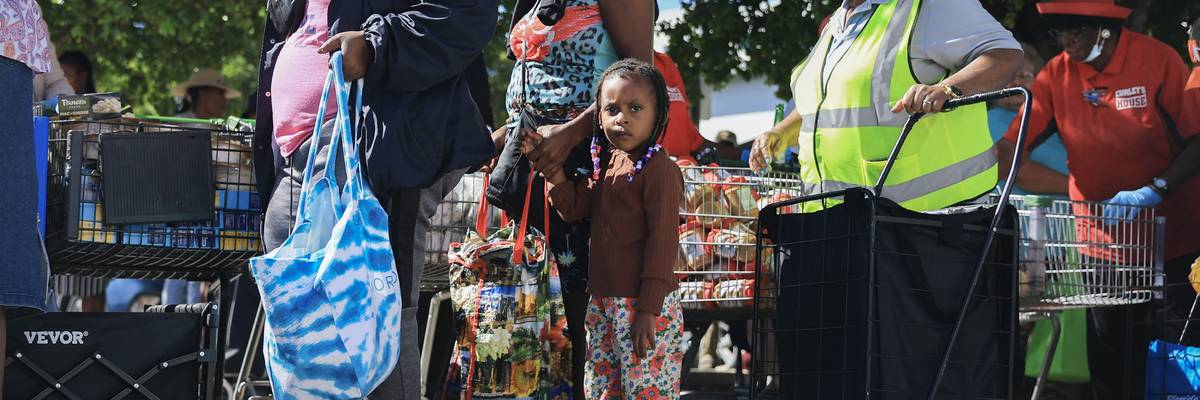
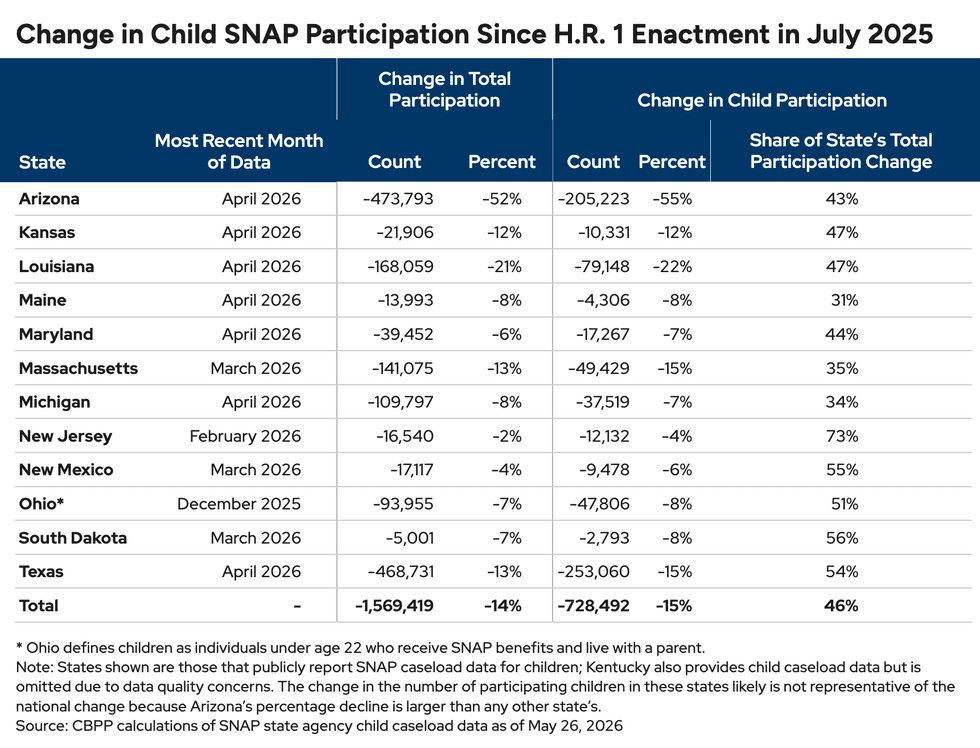
The budget package that US President Donald Trump and congressional Republicans rammed through last summer has already spurred large-scale loss of nutrition assistance among low-income children, with an analysis released Wednesday estimating that more than 700,000 kids across a dozen states have lost federal food aid since the GOP law took effect.
The Center on Budget and Policy Priorities (CBPP), a liberal think tank, found that the "sharp participation declines" among children likely stem from provisions of the Republican law that—for the first time in the program's history—shift large Supplemental Nutrition Assistance Program (SNAP) benefit costs onto states. The law also expands punitive SNAP work requirements.
The new analysis notes that children account for "nearly half of the 1.6-million-person decline" in SNAP enrollment since last July among people of all ages in the 12 states with data available.
"The new law’s cost shift has led states to take steps that are making it harder for eligible people to receive SNAP, including families with children," CBPP explained. "Losing SNAP also makes it harder for low-income children to qualify for other food assistance, such as WIC and free school meals—jeopardizing the short- and long-term health, education, and economic benefits of nutrition programs for our children and society."
Republican lawmakers repeatedly denied that their legislation would strip food aid from needy children, with House Speaker Mike Johnson (R-La.) saying the package was laser-focused on "fraud, waste, and abuse."
"We are not cutting SNAP," Johnson falsely claimed in May 2025, just over a month before Trump signed the Republican legislation into law. The package will cut $186 billion from SNAP over the next decade and strip food aid from millions of low-income people, according to the nonpartisan Congressional Budget Office.
Katie Bergh, a senior policy analyst at CBPP, emphasized that the SNAP cuts triggered by the Republican law have not "fully taken effect," meaning recent benefit losses among families across the country are just the start unless Congress moves quickly to avert disaster.
"Congress must act before even more eligible low-income families—including families with children—lose the food assistance they need to afford groceries, starting by delaying this SNAP cost shift for all states," Bergh wrote on social media.
The Trump-GOP cuts to SNAP, combined with rising grocery costs stemming in large part from the president's tariffs and war of choice against Iran, have resulted in surging food bank demand across the country.
"We’ve been going to food banks every week,” a single mom in Arizona whose SNAP benefits were recently cut off told NBC News. “We’re eating less, we’re eating more frozen stuff.”
Far from reversing course on their assault on federal nutrition assistance, Republicans and the Trump administration are doubling down, pursuing massive cuts to fruit and vegetable benefits for low-income mothers. CBPP has projected that roughly 5.4 million people would lose fruit and vegetable aid if Republicans' newly proposed cuts become law.
The budget package that US President Donald Trump and congressional Republicans rammed through last summer has already spurred large-scale loss of nutrition assistance among low-income children, with an analysis released Wednesday estimating that more than 700,000 kids across a dozen states have lost federal food aid since the GOP law took effect.
The Center on Budget and Policy Priorities (CBPP), a liberal think tank, found that the "sharp participation declines" among children likely stem from provisions of the Republican law that—for the first time in the program's history—shift large Supplemental Nutrition Assistance Program (SNAP) benefit costs onto states. The law also expands punitive SNAP work requirements.
The new analysis notes that children account for "nearly half of the 1.6-million-person decline" in SNAP enrollment since last July among people of all ages in the 12 states with data available.
"The new law’s cost shift has led states to take steps that are making it harder for eligible people to receive SNAP, including families with children," CBPP explained. "Losing SNAP also makes it harder for low-income children to qualify for other food assistance, such as WIC and free school meals—jeopardizing the short- and long-term health, education, and economic benefits of nutrition programs for our children and society."
Republican lawmakers repeatedly denied that their legislation would strip food aid from needy children, with House Speaker Mike Johnson (R-La.) saying the package was laser-focused on "fraud, waste, and abuse."
"We are not cutting SNAP," Johnson falsely claimed in May 2025, just over a month before Trump signed the Republican legislation into law. The package will cut $186 billion from SNAP over the next decade and strip food aid from millions of low-income people, according to the nonpartisan Congressional Budget Office.
Katie Bergh, a senior policy analyst at CBPP, emphasized that the SNAP cuts triggered by the Republican law have not "fully taken effect," meaning recent benefit losses among families across the country are just the start unless Congress moves quickly to avert disaster.
"Congress must act before even more eligible low-income families—including families with children—lose the food assistance they need to afford groceries, starting by delaying this SNAP cost shift for all states," Bergh wrote on social media.
The Trump-GOP cuts to SNAP, combined with rising grocery costs stemming in large part from the president's tariffs and war of choice against Iran, have resulted in surging food bank demand across the country.
"We’ve been going to food banks every week,” a single mom in Arizona whose SNAP benefits were recently cut off told NBC News. “We’re eating less, we’re eating more frozen stuff.”
Far from reversing course on their assault on federal nutrition assistance, Republicans and the Trump administration are doubling down, pursuing massive cuts to fruit and vegetable benefits for low-income mothers. CBPP has projected that roughly 5.4 million people would lose fruit and vegetable aid if Republicans' newly proposed cuts become law.
The budget package that US President Donald Trump and congressional Republicans rammed through last summer has already spurred large-scale loss of nutrition assistance among low-income children, with an analysis released Wednesday estimating that more than 700,000 kids across a dozen states have lost federal food aid since the GOP law took effect.
The Center on Budget and Policy Priorities (CBPP), a liberal think tank, found that the "sharp participation declines" among children likely stem from provisions of the Republican law that—for the first time in the program's history—shift large Supplemental Nutrition Assistance Program (SNAP) benefit costs onto states. The law also expands punitive SNAP work requirements.
The new analysis notes that children account for "nearly half of the 1.6-million-person decline" in SNAP enrollment since last July among people of all ages in the 12 states with data available.
"The new law’s cost shift has led states to take steps that are making it harder for eligible people to receive SNAP, including families with children," CBPP explained. "Losing SNAP also makes it harder for low-income children to qualify for other food assistance, such as WIC and free school meals—jeopardizing the short- and long-term health, education, and economic benefits of nutrition programs for our children and society."
Republican lawmakers repeatedly denied that their legislation would strip food aid from needy children, with House Speaker Mike Johnson (R-La.) saying the package was laser-focused on "fraud, waste, and abuse."
"We are not cutting SNAP," Johnson falsely claimed in May 2025, just over a month before Trump signed the Republican legislation into law. The package will cut $186 billion from SNAP over the next decade and strip food aid from millions of low-income people, according to the nonpartisan Congressional Budget Office.
Katie Bergh, a senior policy analyst at CBPP, emphasized that the SNAP cuts triggered by the Republican law have not "fully taken effect," meaning recent benefit losses among families across the country are just the start unless Congress moves quickly to avert disaster.
"Congress must act before even more eligible low-income families—including families with children—lose the food assistance they need to afford groceries, starting by delaying this SNAP cost shift for all states," Bergh wrote on social media.
The Trump-GOP cuts to SNAP, combined with rising grocery costs stemming in large part from the president's tariffs and war of choice against Iran, have resulted in surging food bank demand across the country.
"We’ve been going to food banks every week,” a single mom in Arizona whose SNAP benefits were recently cut off told NBC News. “We’re eating less, we’re eating more frozen stuff.”
Far from reversing course on their assault on federal nutrition assistance, Republicans and the Trump administration are doubling down, pursuing massive cuts to fruit and vegetable benefits for low-income mothers. CBPP has projected that roughly 5.4 million people would lose fruit and vegetable aid if Republicans' newly proposed cuts become law.