

SUBSCRIBE TO OUR FREE NEWSLETTER
Daily news & progressive opinion—funded by the people, not the corporations—delivered straight to your inbox.
5
#000000
#FFFFFF
To donate by check, phone, or other method, see our More Ways to Give page.
Daily news & progressive opinion—funded by the people, not the corporations—delivered straight to your inbox.
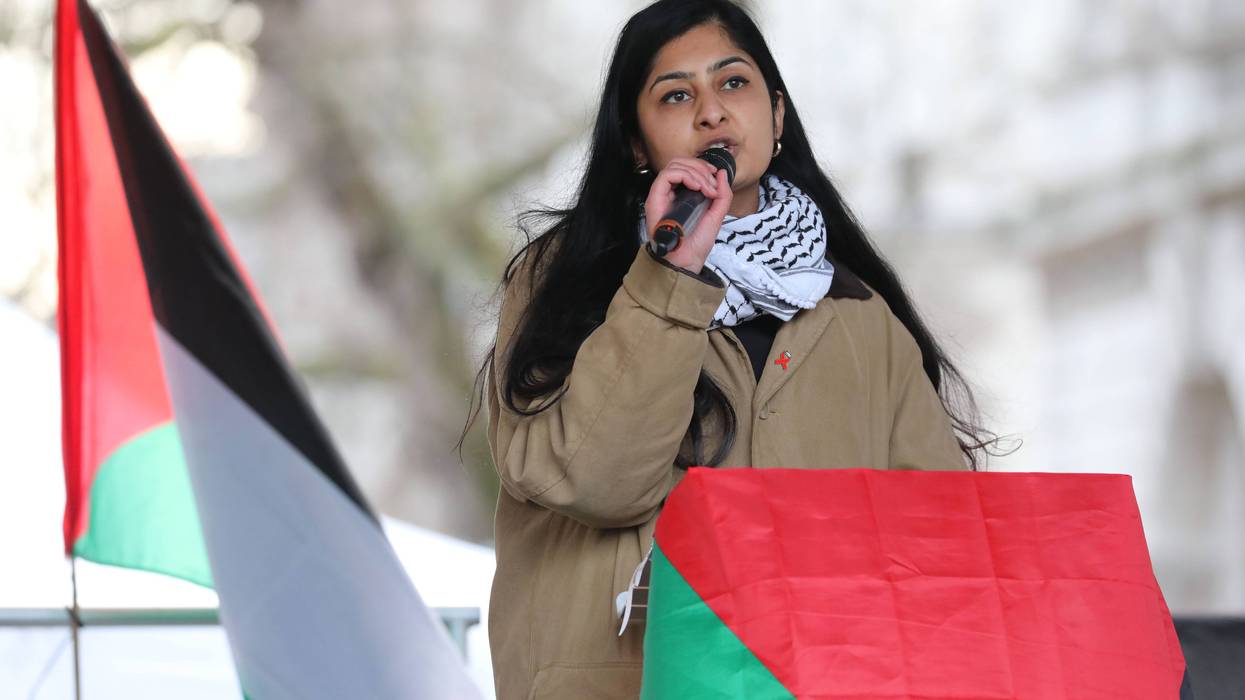
"I will not be intimidated into silence," said MP Zarah Sultana. "If anything, this ban only strengthens my resolve to keep speaking out."
Zarah Sultana, a member of the UK Parliament, said she won't stop speaking about the rights of Palestinians after Israel banned her from entering the country on Tuesday.
"Given that this is a fascist government presiding over genocide, apartheid and an illegal occupation, I’ll wear it as a badge of honor," she said in a post to X. "I will not be intimidated into silence. I will continue to speak out against Israel’s genocide and against the UK’s complicity. If anything, this ban only strengthens my resolve to keep speaking out."
Sultana, who represents Coventry South and is a co-founder of the left-wing Your Party, was one of 11 members of Parliament whom Israel announced it was blocking from entry in retaliation after the UK joined Canada, France, and other nations to announce an import ban on goods from Israeli settlements in the West Bank, which are considered illegal under international law.
Following a year of record violence against Palestinians in the territory, UK Foreign Secretary Ed Miliband said the import ban was in response to the "ethnic cleansing of Palestinians in areas of the West Bank—perpetrated by settler terrorists."
Israel has reacted with fury at the move, closing the British consulate in East Jerusalem, which handles relations with Palestinians in East Jerusalem, the West Bank, and Gaza.
Also banned from the country are UK Labour MPs Diane Abbott, Richard Burgon, John McDonnell, and Naz Shah; Green MPs Siân Berry, Ellie Chowns, Carla Denyer, Adrian Ramsay, and Hannah Spencer; as well as Jeremy Corbyn, who led the Labour Party from 2015-20 before co-founding Your Party with Sultana in 2025.
Remarking on his and his colleagues' ban from the country, Corbyn said Israel's treatment of Palestinians was "the real scandal."
"I have visited all parts of Palestine on several occasions, where I have witnessed the horrors of occupation, as well as the resilience and humanity of the Palestinian people," Corbyn wrote on X. "They are the ones who suffer from Israel's apartheid. It is their freedom which is egregiously curtailed, alongside thousands of Palestinian refugees who are denied the right of return."
He added: "As the world wakes up to the genocide in Gaza, it is shocking that Israel continues to deny entry to UN investigators and international journalists. Israel doesn't want the world to see what it is doing—but we can never give up in our attempts to expose the truth."
Israel also banned Fahad Ansari, a lawyer who has represented Hamas’ political wing in court in the UK and—like Sultana—said on X, “I am neither British nor an MP but do take this as a badge of honor (although pretty sure I’m already a persona non grata in the apartheid state).”
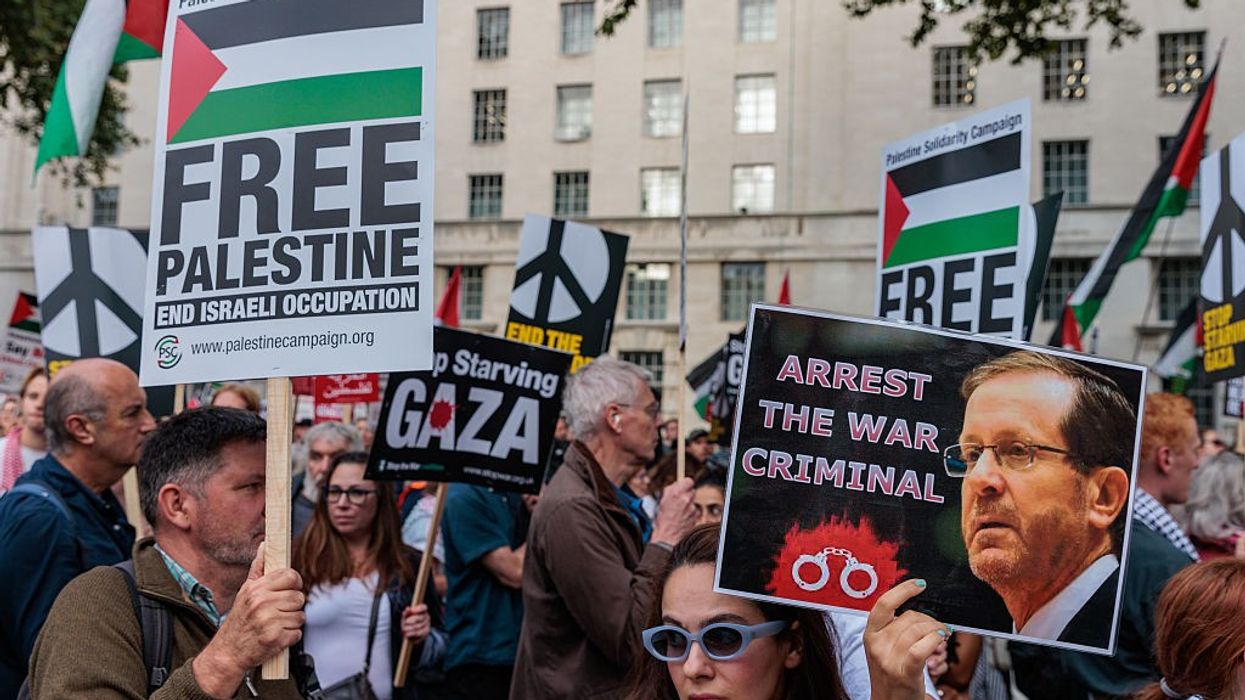
"The only reason to welcome this man into our country," said one critic, "is to immediately facilitate his transfer to The Hague to be tried for war crimes."
Thousands of people turned out in London Tuesday to call for the arrest of visiting Israeli President Isaac Herzog—who is the subject of criminal complaints alleging incitement to genocide and crimes against humanity—and to denounce UK complicity in the annihilation of Gaza.
Demonstrators rallied outside UK Prime Minister Keir Starmer's office in central London, where they waved Palestinian flags and chanted messages including, "Keir Starmer, you can't hide, we charge you with genocide!" and, "From the river to the sea, Palestine will be free!"
"Herzog's presence here is an insult to every Palestinian who has lost their home, their family, their life," said Amina, a 34-year-old protester holding a sign that read, "Stop the Genocide in Gaza."
"Starmer must act now—arrest Herzog and show the world that the UK stands against war crimes," she added.
Zarah Sultana—a member of Parliament (MP) who recently quit Starmer's Labour Party and joined with fellow former Labour MP Jeremy Corbyn and others to launch the Independent Alliance—told protesters that Herzog has "dehumanized an entire population and openly called for their extermination."
"This Labour government is complicit, is enabling genocide," she added.
Later on Tuesday, protesters gathered outside the InterContinental London Park Lane Hotel, where Herzog was reportedly staying, calling him the "genocide president" and chanting, "Free Palestine!" and "No justice, no peace!"
While not targeted by the International Criminal Court—which last year issued arrest warrants for Israeli Prime Minister Benjamin Netanyahu and former Defense Minister Yoav Gallant for alleged crimes against humanity and war crimes in Gaza—Herzog is the subject of criminal complaints filed in Switzerland last year by the advocacy group Legal Action Against Genocide "for incitement to genocide and crimes against humanity."
Days after the Hamas-led attack of October 7, 2023 that left more than 1,100 Israelis and others dead—at least some of whom were killed by so-called "friendly fire" and under the intentionally fratricidal Hannibal Directive—and around 250 people kidnapped, Herzog suggested that every Palestinian man, woman, and child in Gaza was a legitimate target.
"It is an entire nation out there that is responsible," Herzog told reporters on October 13, 2023. "It is not true this rhetoric about civilians not being aware, not involved. It's absolutely not true. They could have risen up. They could have fought against that evil regime which took over Gaza."
That same month, Ezra Yachin—a 95-year-old veteran of the Zionist terror militia Stern Gang who allegedly took part in the 1948 massacre of more than 100 Palestinian civilians at Deir Yassin—delivered a motivational speech to troops about to invade Gaza, urging them to "wipe out [Palestinians'] memory, their families, mothers, and children."
Herzog hailed Yachin's speech as "a wonderful example to generations of soldiers."
When the International Court of Justice (ICJ)—which is currently weighing a genocide case against Israel filed by South Africa—issued its January 2024 order for Israel to avoid genocidal acts in Gaza, Herzog's October 13, 2023 comments were listed second in a series of "dehumanizing" statements by Israeli officials who were possibly inciting genocide.
Tuesday's protests against Herzog followed a demonstration earlier in the day outside the Defense and Security Equipment International (DSEI) arms fair at Excel London at Royal Victoria Dock, where thousands of people rallied against UK complicity in Israel's genocidal war and famine.
Israel's 705-day onslaught has left at least 237,000 Palestinians dead, maimed, or missing. Hundreds of thousands of Gazans are starving due to Israel's "complete siege" and engineered famine, and around 1 million Palestinians are facing ethnic cleansing under a US-backed plan to conquer, occupy, and resettle Gaza.
UK leaders have come under fire for cracking down on anti-genocide protests, including by banning the group Palestine Action and arresting hundreds of people who have publicly voiced support for the organization.
Condemnation of Herzog's visit was not limited to the streets of London. In the House of Commons, Scottish National Party Leader Stephen Flynn told fellow parliamentarians that "Gaza is a graveyard."
"Gaza is a graveyard...What does it say of this Prime Minister that he will harbour this man whilst children starve?"SNP Westminster leader Stephen Flynn criticises the PM's decision to host Israel's president later today. #PMQs
[image or embed]
— Holyrood (@holyroodmag.bsky.social) September 10, 2025 at 5:34 AM
"But rather than end arms sales, extend sanctions, and stand by international law, the prime minister will today welcome into his home.. the man who called for the collective punishment of the Palestinian people, and who signed the artillery shells that destroyed their homes, their families, and their friends," Flynn said.
"What does it say of this prime minister that we will harbor this man while children starve?" Flynn asked.
Zack Polanski, a member of the London Assembly and leader of the Green Party of England and Wales, said Tuesday in a statement that "welcoming a potential war criminal to the UK is another demonstration of how this Labour government is implicated in the ongoing genocide in Gaza."
"A refusal to detain Herzog can be seen as a contravention of the Geneva Convention, which makes clear that states have legal responsibility for preventing the targeting of civilians," Polanski added. "When this is breached, individuals must be prosecuted, and this should be applied to Herzog."
Critical media also decried Herzog's visit, with the pro-independence Scottish newspaper The National on Wednesday running the front-page headline, "Starmer Rolls Out Red Carpet for Genocide."
Tomorrow's front page 📰Starmer rolls out red carpet for genocide
[image or embed]
— The National (@scotnational.bsky.social) September 9, 2025 at 2:43 PM
Writing for Middle East Eye, British author, political commentator, and Labour politician Ali Milani noted Wednesday that "Starmer has... described the actions of Herzog's government as 'appalling, counterproductive, and intolerable.'"
"To say one thing in Parliament about Israel's actions, and then to roll out the red carpet for Herzog, would not only endorse the impunity granted to Tel Aviv over Israeli crimes in Gaza; it would also shred the credibility of Labour's foreign policy," he argued.
"There should be no red carpet. There should be no ministerial meetings. Instead, there should be accountability," Milani added. "The only reason to welcome this man into our country is to immediately facilitate his transfer to The Hague to be tried for war crimes."
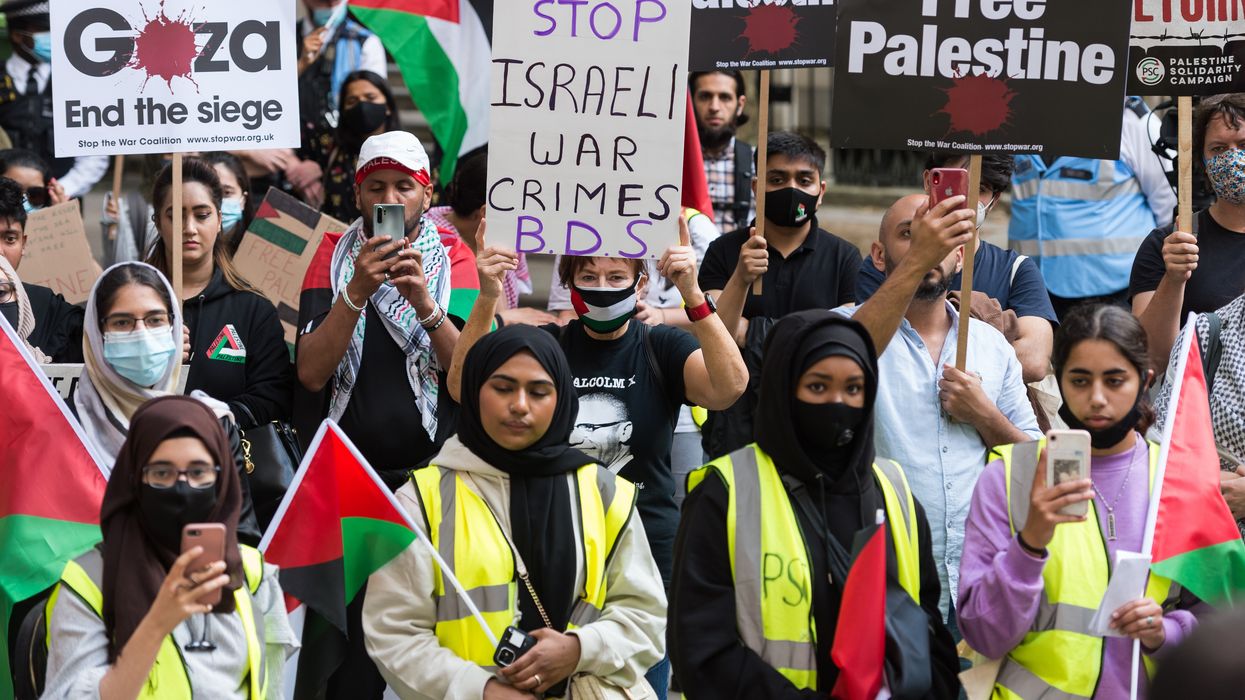
Civil society critics argue the proposal threatens "freedom of expression, and the ability of public bodies and democratic institutions to spend, invest, and trade ethically in line with international law and human rights."
Advocacy organizations raised the alarm on Monday as a bill to ban local councils and universities in the United Kingdom from boycotting Israel over human rights abuses was introduced in the U.K. Parliament.
The Economic Activity of Public Bodies (Overseas Matters) Bill—tabled by Michael Gove, the Conservative secretary of state for leveling up, housing, and communities—aims to "prevent public bodies from being influenced by political or moral disapproval of foreign states when taking certain economic decisions, subject to certain exceptions."
While the long-anticipated proposal would allow the U.K. secretary of state or minister for the Cabinet Office to "specify a country or territory" for which the policy does not apply, the bill makes clear that such exceptions cannot relate "specifically or mainly to Israel, the occupied Palestinian territories, or the occupied Golan Heights."
Middle East Eye, exclusively reporting on a draft of the bill Friday, noted that "it is the only reference to any specific countries or territories."
"If passed, this law will stifle a wide range of campaigns concerned with the arms trade, climate justice, human rights, international law, and international solidarity with oppressed peoples struggling for justice."
Dozens of U.K. groups—including the Campaign Against Arms Trade, Campaign for Nuclear Disarmament, Communication Workers Union, European Legal Support Center, Friends of the Earth, Global Justice Now, Greenpeace U.K., Jews for Justice for Palestinians, Liberty, National Union of Students, Palestine Solidarity Campaign, Stop the War Coalition, and War on Want—have signed a joint statement of opposition.
"As a group of civil society organizations made up of trade unions, charities, NGOs, faith, climate justice, human rights, cultural, campaigning, and solidarity organizations, we advocate for the right of public bodies to decide not to purchase or procure from, or invest in companies involved in human rights abuse, abuse of workers' rights, destruction of our planet, or any other harmful or illegal acts," says the coalition's statement. "We therefore oppose the government's proposed law to stop public bodies from taking such actions."
Noting that the bill is meant to block boycotts of Israel, the statement adds: "We are concerned that this would prevent public bodies from deciding not to invest in or procure from companies complicit in the violation of the rights of the Palestinian people. We affirm that it is the right of public bodies to do so, and in fact a responsibility to break ties with companies contributing to abuses of rights and violations of international law in occupied Palestine and anywhere else where such acts occur."
The statement continues:
From bus boycotts against racial segregation to divestment from fossil fuel companies to arms embargoes against apartheid, boycott, divestment, and sanctions campaigns have been applied throughout history to put economic, cultural, or political pressure on a regime, institution, or company to force it to change abusive, discriminatory, or illegal policies. If passed, this law will stifle a wide range of campaigns concerned with the arms trade, climate justice, human rights, international law, and international solidarity with oppressed peoples struggling for justice. The proposed law presents a threat to freedom of expression, and the ability of public bodies and democratic institutions to spend, invest and trade ethically in line with international law and human rights.
Along with declaring that "this proposal must be understood in the context of the current government bringing in some of the most repressive legislation we've seen in decades," the coalition's webpage provides some key global context.
"At least 35 states in the U.S. have passed similar laws, as has Germany, and similar legislation has been proposed in several other European countries," the site says. "Broadly speaking, many of these laws have targeted the Palestinian-led Boycott, Divestment, and Sanctions (BDS) movement, which aims to pressure Israel to meet its obligations under international law in relation to justice for Palestinians."
A growing list of global human rights groups worldwide condemn Israeli policies and actions against Palestinians as apartheid.
While organizations such as the Board of Deputies and the Jewish Leadership Council are backing the new bill, leaders of 14 Israeli groups sent a letter Monday urging Tory U.K. Prime Minister Rishi Sunak and three other top ministers to oppose it.
As the U.K.-based Jewish News reported:
The letter's authors, who include the directors of Peace Now, the co-directors of Ofek: The Israeli Center for Public Affairs, and the executive director of Combatants for Peace, claimed the bill compromised the U.K.'s current position of "recognizing the illegality of settlements" in the West Bank, and also raised concerns about civil liberty and free speech issues.
They also suggested that rather than preventing antisemitism, the bill was "deeply damaging to the very real fight" against anti-Jewish racism.
Husam Zomlot, head of the Palestinian Mission to the United Kingdom, also criticized the proposal, according to The National.
"By providing a cloak of impunity, this bill encourages more violations of international law, including the acquisition of territory by force, the moving of civilian settler populations to occupied territory—a war crime—or land confiscations and home demolitions," the ambassador warned, as Israel plans to expand illegal settlements.
"We are deeply concerned that this has broader implications for Britain's supposed commitment to the global rule-of-law-based order," Zomlot added. "We view the proposed legislation as yet another sign that the U.K. is abdicating its historic responsibility for and direct role in creating the plight of the Palestinian people."
Meanwhile, Gove said Monday that "it is simply wrong that public bodies have been wasting taxpayers' time and money pursuing their own foreign policy agenda. The U.K. must have a consistent approach to foreign policy, set by U.K. government."
The Tory minister also claimed that "these campaigns not only undermine the U.K.'s foreign policy but lead to appalling antisemitic rhetoric and abuse. That is why we have taken this decisive action to stop these disruptive policies once and for all."
As the Israeli newspaper Haaretz highlighted:
Local councils in Lancaster, Leicester, and West Dunbartonshire (near Glasgow) have previously voted to divest from Israel, while many student unions across the country have adopted motions in support of the BDS movement that calls to boycott, divest from, and sanction Israel.
The proposal was first laid out in the Conservative Party manifesto for the 2019 election and is the brainchild of Gove and Cabinet Secretary Oliver Dowden. Both of their ministries have already published internal guidelines against such boycotts.
There was no formal debate on the U.K. bill in the House of Commons on Monday, as is standard for a first reading. A second reading, which involves debate, "is already slated for July," according to Haaretz. After that, there are several more stages before it may become law.
The measure's introduction in the United Kingdom came as an Israeli forces attack on a West Bank refugee camp killed at least five Palestinians, including a 15-year-old boy, and wounded dozens more—among them, a critically injured teenager who was shot in the head.

Ignoring key climate demands "will mean that Extinction Rebellion has no choice but to unquit—and to step up our campaign to force the government to take the drastic and radical actions necessary."
After kicking off 2023 by announcing a departure from "public disruption as a primary tactic" and plans for a mass demonstration in London, Extinction Rebellion U.K. and allied groups threatened a historic wave of civil disobedience if Parliament declines to engage with their demands for climate action by next week.
The new announcement came ahead of "The Big One," the demonstration set to kick off in London on Friday. The coalition's primary demands are:
"We have come to Parliament to deliver two demands for a better world. These demands will give children a fairer, safer future," declared 7-year-old Drake, whose 43-year-old mother and 72-year-old grandfather joined him in delivering the demands to policymakers on Tuesday.
Drake's mother, Hester Campbell, explained that "parents like myself are increasingly concerned about the huge issues our government is neglecting. Hunger, inequality, racism, and the climate crisis—all are rapidly worsening. The government is failing in its duty to protect us and we are calling for that to end."
Dirk Campbell, the boy's grandfather, said that "I've seen the government breaking promise after promise. We are offering them a last chance and they must take it seriously."
"I've seen the government breaking promise after promise. We are offering them a last chance and they must take it seriously."
The U.K. arm of Extinction Rebellion (XR) and other groups are giving the government until 5:00 pm BST on Monday to craft a plan to deliver on their demands.
"Four months ago, Extinction Rebellion announced 'We quit' and entered into a period of alliance-building with other movements and groups by temporarily stepping back from our tactics of civil disobedience," explained XR's Rob Callender. "Since then, the government has made policy announcements that effectively double down on deadly climate chaos. This is their last chance to show us that they are serious about saving our lives and our futures by agreeing to enter negotiations around our demands."
"A failure to do so will mean that Extinction Rebellion has no choice but to unquit—and to step up our campaign to force the government to take the drastic and radical actions necessary to avoid runaway climate change," Callender continued. "This time, we're not alone—allies from this 200-strong bloc will be stepping up alongside us."
"The four days of The Big One will see the people deciding what to do next if the government lets us down yet again by failing to meet our deadline," Callender said. If necessary, by Monday night, "the people will have delivered a plan for stepping up their campaigns," he vowed, and "within three months, Extinction Rebellion will have designed a plan for the greatest acts of civil disobedience in this country's history."
Other organizations supporting The Big One include the Campaign for Nuclear Disarmament, Don't Pay U.K., Friends of the Earth, Global Justice Now, Green Christian, Greenpeace, Just Stop Oil, Landworkers Alliance, Parents for Future U.K., Patagonia, Pesticide Action Network U.K., Public and Commercial Services (PCS) Union, Scientists for Global Responsibility, Viva!, and War on Want.
"Every day more lives and livelihoods are lost to the climate crisis," said Nick Dearden of Global Justice Now, adding that the involved groups "now get this fact and want to take action together to do something about it," and "The Big One will be a springboard for building a bigger and bigger movement that drives the long-term systemic change that our society needs."
Don't Pay U.K.'s Joe Davies similarly said that "right now, with everything that is happening in the world, we need solidarity more than ever and that is what The Big One is all about. It will empower and bring together tens of thousands of people with very different opinions and modalities of protest and resistance to share their goals and find ways of delivering them together."
Final preparations for the gathering—which XR and allies have been promoting across country with "Unite to Survive" banners—come as the U.K. government has not only backed new climate-wrecking fossil fuel projects in the North Sea and "false solutions" like carbon capture and storage but also introduced "authoritarian and draconian laws" targeting protesters, noted XR co-founder Clare Farrell.
"It's quite astonishing how this government want to legislate out of existence a bunch of hippies with tubes of glue in their pocket because they scare the state so much," said Farrell. "It's important to have an open conversation of the impacts of these laws. But it's also important to note that they are not having the chilling effect that the state had hoped for. Instead, people are coming together at moments like The Big One to find new and creative ways to protest effectively."
"Stepping up after The Big One is going to take many different and disruptive forms. It doesn't have to mean taking to the streets with us or gluing yourself to things," she stressed. "We have recently seen lawyers who had ways to disrupt their profession by refusing to take part in the prosecution of climate activists. I can imagine people within the media, which continues to be guilty of untruths and misleading stories about the climate, developing their own ways of disrupting their own industry."
"Over the months ahead," she predicted, "millions of people are going to start getting very creative and clever about what disruption means to them and what they are prepared to do to make it happen—because more and more [of] them know for sure that we are in deep shit and that those in power are doing next to nothing about it."
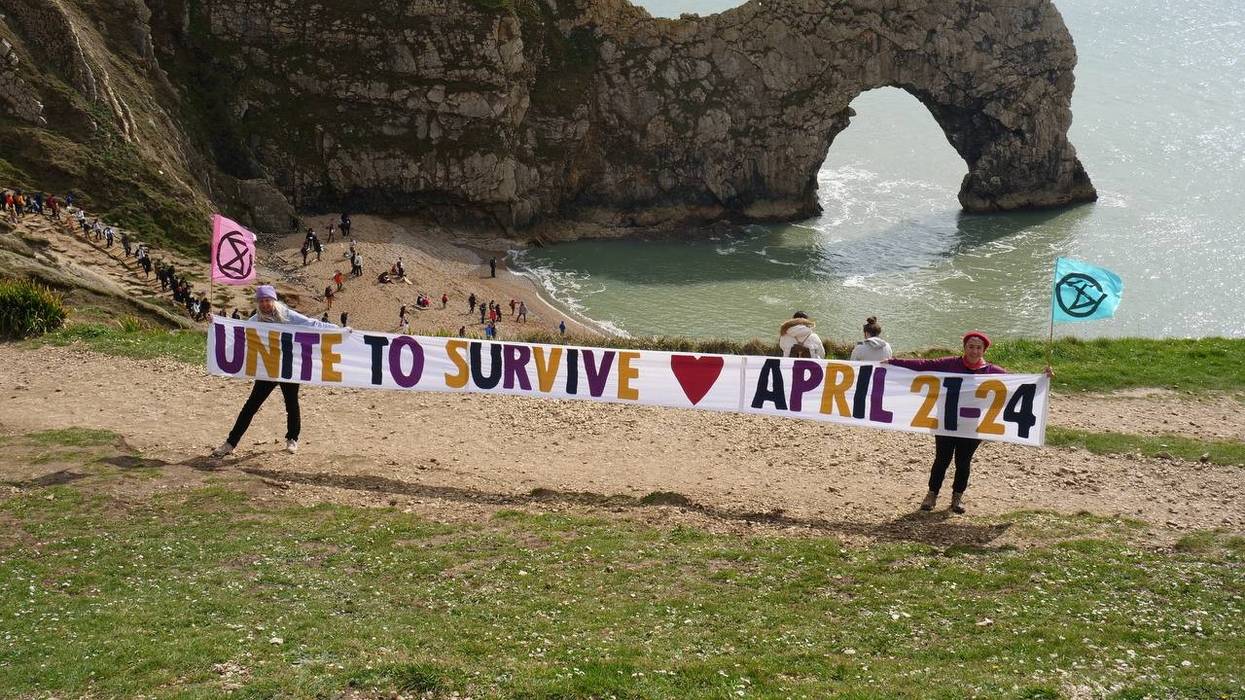
"I am very worried about the world my students will inherit," said one history teacher. "This is why I will be in London from April 21st to demand meaningful action on the climate and ecological crisis."
Dozens of colorful banners were dropped across the United Kingdom on Thursday to invite people to London later this month for a four-day peaceful protest outside Parliament demanding action on the climate emergency to ensure "a future that is safe and fair."
Extinction Rebellion (XR), backed by nearly 100 other organizations, hopes to bring together at least 100,000 people for "The Big One," which the group announced at the start of this year along with its shift away from "public disruption as a primary tactic."
While XR members have still engaged in some civil disobedience since—from dousing a U.K. government building in black paint resembling oil to calling out law firms for "defending climate criminals" on office windows—the movement argues that "at this crucial moment in history it's time to do the work and decide together on the kind of future we all want and need."
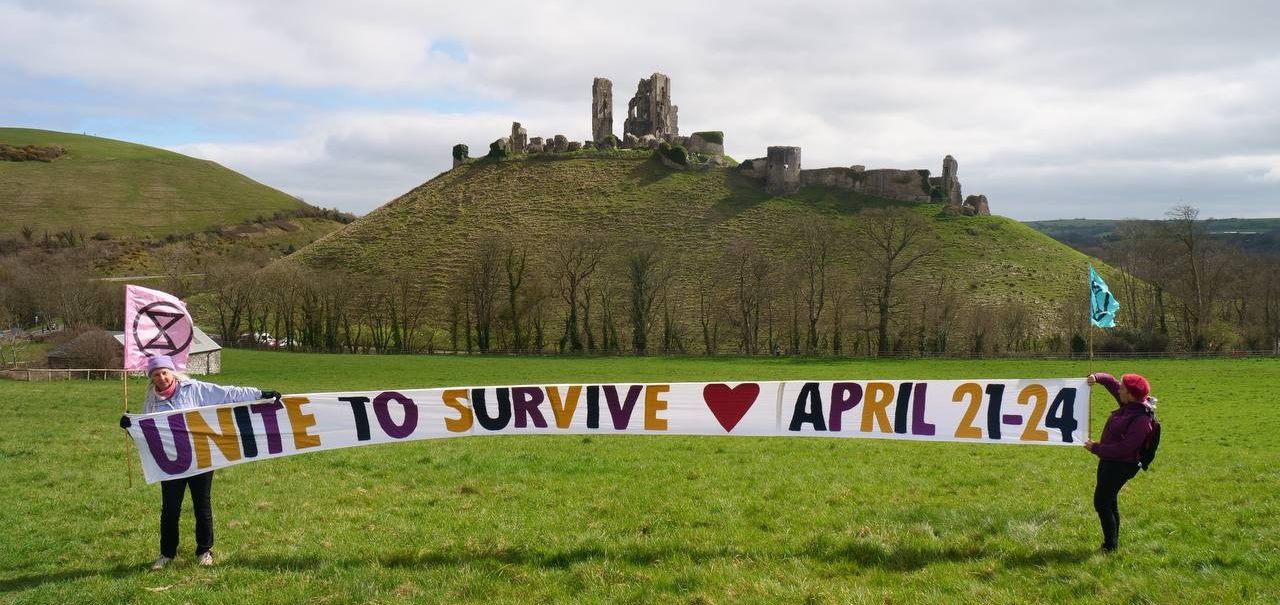
Banners calling on U.K. residents to "Unite to Survive" were hung Thursday at iconic and everyday sites, from bridges and castles to coastal fences and stone circles—including Durdle Door, Dufus Castle, the Angel of the North, and Castlerigg Stone Circle.

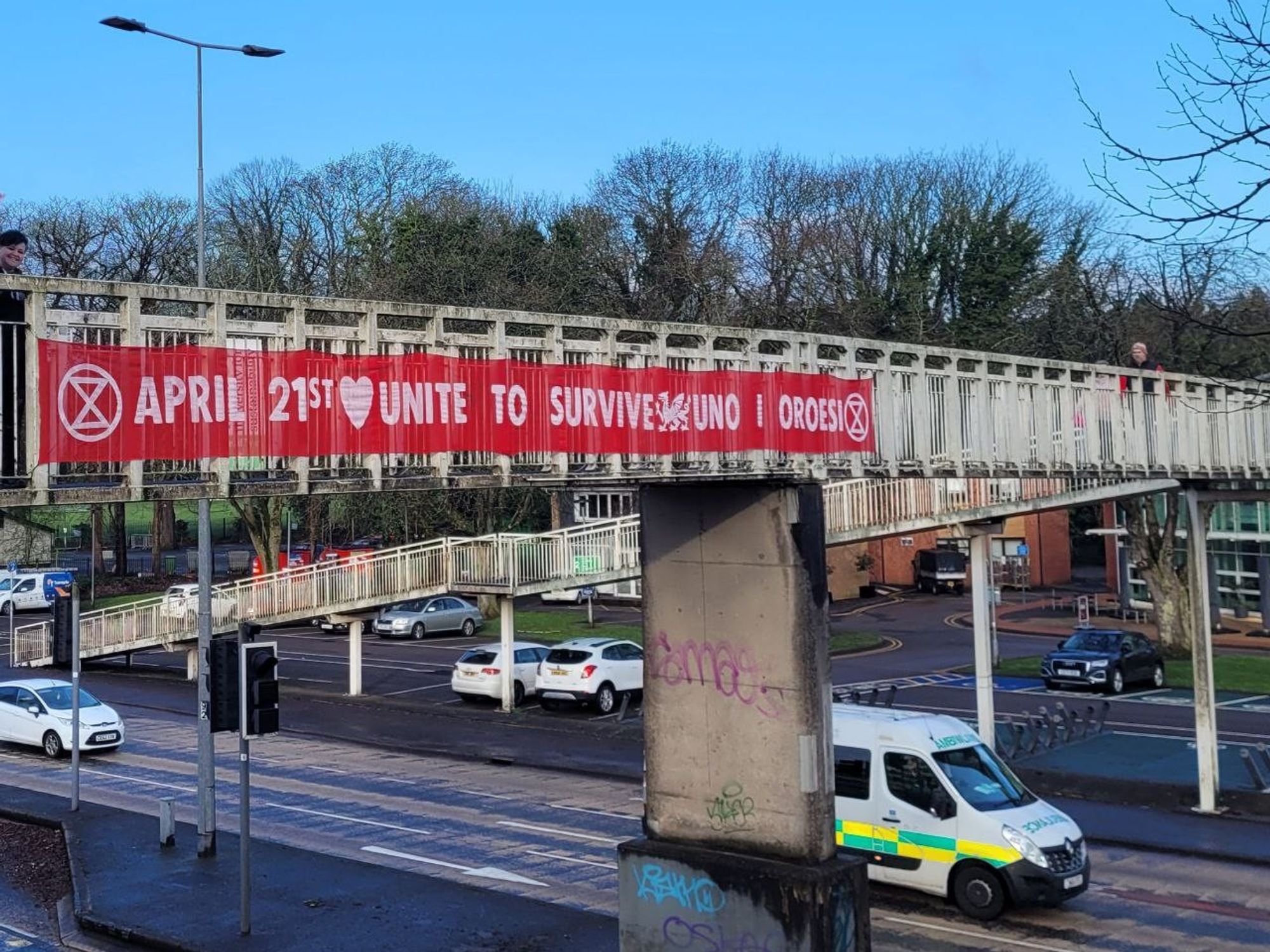
"We will not stand by as the planet burns," vowed Olly Baines, a 72-year-old retired chief executive from St. Austell in Cornwall, England. "Our banners on the A30 in Cornwall are calling for all to join us and Unite to Survive on April 21-24 in London, which aims to be the biggest environmental protest ever. There is no time left."
During those four days, "the streets will be transformed with people's pickets outside government departments and a diverse program of speakers, performers, and workshops, awash with color and culture," says the XR webpage for the event. "There will be art and music, talks from experts, places to listen and engage, and activities for the kids."
The current schedule is:
" Extinction Rebellion is founded in creativity with arts groups all over the world," said Bridget Turgoose, a 57-year-old creative director from London. "We make things by hand with an emphasis on doing it together rather than the perfection of a brush stroke!"
"This mass banner drop is to spread the word about the Big One in London, where our creativity and passion will be impossible to ignore," Turgoose added. "There is so much joy in creating which is essential in these dark times. To create is to rebel."

The Big One will come on the heels of the latest Intergovernmental Panel on Climate Change released in March and described by United Nations Secretary-General António Guterres as "a survival guide for humanity." The document stresses the need for immediate, dramatic cuts to planet-heating pollution, largely by phasing out fossil fuels—and details the dire consequences if the world refuses to do so.
John Lardner, a history teacher from Forres, Scotland, said Thursday that "I am very worried about the world my students will inherit."
"This is why I will be in London from April 21st to demand meaningful action on the climate and ecological crisis," Lardner explained. "For over 50 years we have known about these things but a cabal of greedy fossil fuel businessmen, bankers, politicians, and journalists, have obscured the truth. Enough is enough."
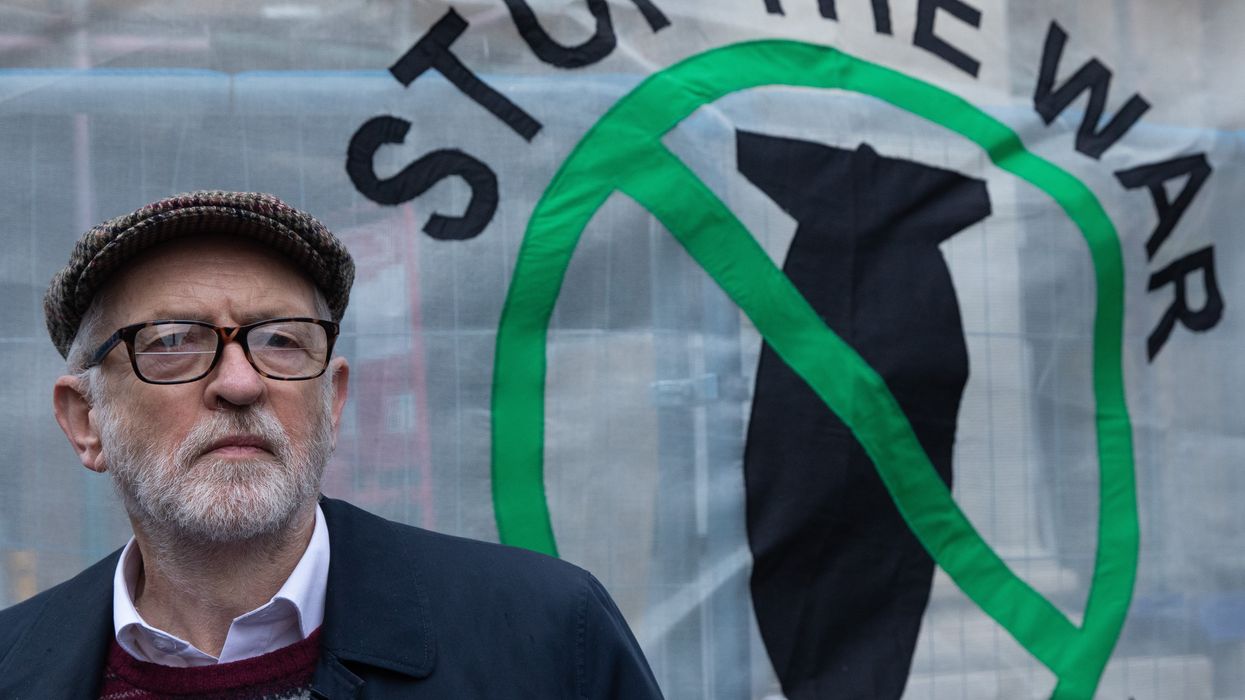
"Blocking Jeremy Corbyn from standing as a Labour candidate is an affront to decency and a declaration of civil war within a party about to metamorphose from a broad church to a toxic sect," said Yanis Varoufakis.
Former U.K. Labour Leader Jeremy Corbyn is expected to seek reelection as an independent next year after current Leader Keir Starmer and his establishment allies on Tuesday made good on their pledge to formally block the leftist member of Parliament from running under the party's banner.
After Starmer publicly declared last month that "Jeremy Corbyn will not stand as a Labour candidate at the next general election," the party's National Executive Committee (NEC) voted 22-12 on Starmer's motion to not endorse Corbyn's candidacy.
The Times reported that Corbyn's allies say the MP has already decided to run as an independent, with one source telling the London newspaper: "It's become personal. There will be an announcement by the end of the week."
Our message is clear: We are not going anywhere. Neither is our determination to stand up for a better world.
Corbyn has represented the Greater London constituency Islington North for four decades and served as an independent MP since he was suspended from Labour in 2020 due to a battle over allegations of antisemitism in the party.
After news broke of Starmer's motion on Monday, Corbyn charged that the party leader "has broken his commitment to respect the rights of Labour members and denigrated the democratic foundation of the party."
Noting that Islington North voters have elected him as a Labour MP 10 consecutive times since 1983, Corbyn said that "I am proud to represent a community that supports vulnerable people, joins workers on the picket line, and fights for transformative change."
Also calling out the ruling Conservative Party, Corbyn continued:
This latest move represents a leadership increasingly unwilling to offer solutions that meet the scale of the crises facing us all. As the government plunges millions into poverty and demonizes refugees, Keir Starmer has focused his opposition on those demanding a more progressive and humane alternative.
I joined the Labour Party when I was 16 years old because, like millions of others, I believed in a redistribution of wealth and power. Our message is clear: We are not going anywhere. Neither is our determination to stand up for a better world.
Some other MPs, constituents, journalists, and leftists from around the world have, since Monday, blasted Starmer's "disgraceful" move and expressed solidarity with Corbyn.
Greek leftist MP Yanis Varoufakis warned that "Starmer's Labour Party is close to the point of no return. Blocking Jeremy Corbyn from standing as a Labour candidate is an affront to decency and a declaration of civil war within a party about to metamorphose from a broad church to a toxic sect."
Critics have highlighted that in February 2020, Starmer said: "The selections for Labour candidates needs to be more democratic and we should end NEC impositions of candidates. Local party members should select their candidates for every election."
In a joint statement Tuesday, officers from the Islington North Constituency Labour Party (CLP) denounced the move by Starmer and the NEC.
"We believe in the democratic right of all constituency parties to choose their prospective parliamentary candidate," the CLP leaders from Corbyn's area said. "Therefore, we reject the NEC's undue interference in Islington North, which undermines our goal of defeating the Conservatives and working with our communities for social justice."
Noting the CLP's statement in a series of tweets Tuesday, Guardian columnist Owen Jones, who identifies as a socialist and a longtime Labour voter, also took aim at Starmer:
While Starmer was seeking his leadership role, "I think he said a lot of things he didn't believe at all, because he thought that if he didn't, then he wouldn't be elected leader of the Labour Party. And he was absolutely right in that calculation," Jones asserted.
"A lot of Starmer's cheerleaders see themselves as upstanding liberals who believe in decency, honesty, and integrity in politics. They don't," he said. "They disregard the colossal deceit of Starmer because they hate the left, and they believe anything done to crush the left is a good thing."
"Anyway, I don't think it will end well for a Labour leadership which is founded on a load of lies, essentially believes in nothing, and is ahead in the polls solely because of Tory self-destruction," Jones added. "They'll win the election by default, then political reality will intrude."
The grassroots group Momentum, which has supported Corbyn since his successful 2015 campaign to lead the Labour Party, called Tuesday "a dark day for democracy."
While there was previously no appeals process for anyone blocked by the NEC, Sky News revealed Tuesday as the party faces "accusations of fixing parliamentary selections for candidates who are preferred by the leadership," those "who wish to stand for Labour at the next election will be given the right to appeal if the party rejects their bid to become an MP."
According to the outlet, "Candidates will be provided with written feedback as to why they 'fell below the standards expected of a Westminster parliamentary candidate,' while an appeals panel will be convened to hear the claim."
Welcoming the development on Twitter, Momentum said that "socialists and trade unionists have been wrongly excluded in favor of those favored by a narrow London clique. The result has been a cohort of prospective MPs dominated by the professional political classes, making Labour less representative of the communities we seek to serve."
"This new process should mark an end to the Labour right's factional abuses of selections process," the group added. "In Islington North as everywhere else—let local members decide."

"It's the ordinary people of this country, taking a stand against this greed and destruction that the British legal system prosecutes and imprisons, jailing them just for talking about the climate crisis and fuel poverty."
More than 120 mostly English lawyers on Friday published a "declaration of conscience" pledging to withhold their services from "supporting new fossil fuel projects" and "action against climate protesters exercising their democratic right of peaceful protest."
The United Kingdom has in recent years faced protests from numerous climate groups, including those with more pronounced direct actions like Just Stop Oil, Insulate Britain, and Extinction Rebellion. As part of those protests, participants have filled the streets, blocked fossil fuel facilities, glued scientific papers and themselves to a government building, called out major law firms for "defending climate criminals," and even, controversially, tossed tomato soup on one of Vincent van Gogh's glass-protected paintings.
Released on the heels of the latest Intergovernmental Panel on Climate Change (IPCC) report, the lawyers' statement notes the U.K. Parliament's 2019 climate emergency declaration, the International Energy Agency's warning against future oil and gas development, and United Nations Secretary-General António Guterres' proclamation that "investing in new fossil fuels infrastructure is moral and economic madness."
The attorneys' declaration also recognizes that the world is on track to breach the 2015 Paris climate agreement's 1.5°C goal and the "dire consequences" of doing so, pointing out that "in the U.K. alone, we are already seeing unprecedented heatwaves, wildfires, flooding, and coastal erosion. In other parts of the globe the effects are already far worse."
Along with vowing to restrict their services, the lawyers:
The attorneys, collectively calling themselves Lawyers Are Responsible, are supported by the groups Good Law Project and Plan B.Earth—whose director, Tim Crosland, highlighted that "the U.N. has said we're on a 'highway to climate hell' and that to get off it, we need to stop new fossil fuel developments now. But behind every new oil and gas deal sits a lawyer getting rich."
"Meanwhile, it's the ordinary people of this country, taking a stand against this greed and destruction that the British legal system prosecutes and imprisons, jailing them just for talking about the climate crisis and fuel poverty," Crosland said. "The rule of law has been turned on its head. Lawyers are responsible. It's time to take a stand."
Taking a stand is not without risk. In the United Kingdom, generally, solicitors advise clients on specific issues and barristers argue in court—and the former are able to choose their cases and clients while the latter are subject to the "cab rank rule," obligating them to provide services as long as they are qualified, even if the case or client is objectionable.
As Lawyers Are Responsible's website details in response to some right-wing outrage over the declaration:
The classic example of the cab rank rule in action is of a criminal barrister who accepts a brief to represent a person accused of murder, against whom there is strong evidence of guilt. In that situation, there is no conflict between the cab rank rule and the interests of justice. The barrister is agreeing to perform his or her role within a system of justice that produces, on the whole, just outcomes. By representing the accused, the barrister is merely helping to ensure that there is a fair trial and is serving the greater good.
The signatories to the declaration are convinced that at the present time offering their services in support of new fossil fuel projects or action against peaceful climate protesters would not serve the greater good.
Good Law Project director and declaration signatory Jolyon Maugham wrote in a Friday opinion piece for The Guardian that "like Big Tobacco, the fossil fuel industry has known for decades what its activities mean. They mean the loss of human life and property, which the civil law should prevent but does not."
"The scientific evidence is that global heating, the natural and inevitable consequence of its actions, will cause the deaths of huge numbers of people. The criminal law should punish this but it does not," Maugham continued. "Nor does the law recognize a crime of ecocide to deter the destruction of the planet. The law works for the fossil fuel industry—but it does not work for us."
"Today's history books speak with horror about what the law of yesterday did, of how it permitted racism, rape, and murder," he added. "And tomorrow's history books will say the same about the law as it stands today, of how it enabled the destruction of our planet and the displacement of billions of people."
The Guardian reported that "18 barristers, including six king's counsel, have signed the declaration" and "will now self-refer to the Bar Standards Board." The newspaper noted that while barristers can face fines for rule-breaking, "the consequences can be more far-reaching for junior members of the profession, who can find themselves blocked from receiving the 'silk' awarded to king's counsel, or from promotion to the judiciary."
In a statement from Plan B, one junior lawyer who wished to remain anonymous said that "young lawyers are being placed in an impossible position. We're being told by our firms and regulators it's a professional obligation to act for fossil fuel projects, knowing that doing so will poison our own future and all of life on Earth."
"That's wrong on every level. It's indefensible," the lawyer added. "If the profession doesn't look out for my generation, how does it expect to survive?"

"Keir Starmer's statement about my future is a flagrant attack on the democratic rights of Islington North Labour Party members. It is up to them—not party leaders—to decide who their candidate should be."
Former U.K. Labour chief Jeremy Corbyn—a member of Parliament who represents the Greater London constituency Islington North—called out Leader Keir Starmer this week for barring him from running with the party in the nation's next general election.
In a move that outraged progressives worldwide, Corbyn was suspended from Labour in 2020 over allegations of antisemitism, which the leftist contested. Starmer said Wednesday the party had changed "and we are not going back, and that is why Jeremy Corbyn will not stand as a Labour candidate at the next general election."
Corbyn responded on Twitter that "ever since I was elected as a Labour MP 40 years ago, I have fought on behalf of my community for a more equal, caring, and peaceful society. Day in, day out, I am focused on the most important issues facing people in Islington North: poverty, rising rents, the healthcare crisis, the safety of refugees, and the fate of our planet."
"Any attempt to block my candidacy is a denial of due process, and should be opposed by anybody who believes in the value of democracy."
"Keir Starmer's statement about my future is a flagrant attack on the democratic rights of Islington North Labour Party members. It is up to them—not party leaders—to decide who their candidate should be," he argued. "Any attempt to block my candidacy is a denial of due process, and should be opposed by anybody who believes in the value of democracy."
Also taking aim at the Tories now in power, Corbyn charged that "at a time when the government is overseeing the worst cost-of-living crisis in a generation, this is a divisive distraction from our overriding goal: to defeat the Conservative Party at the next general election."
"I am proud to represent the labor movement in Parliament through my constituency," he continued. "I am focused on standing up for workers on the picket line, the marginalized, and all those worried about their futures. That is what I'll continue to do. I suggest the Labour Party does the same."
Former Greek Finance Minister Yanis Varoufakis said that "few leaders around the world have shown the same commitment to the many, to every single minority, to every decent and worthy campaign against the oligarchy as Jeremy Corbyn has. Labour is all the poorer now that Starmer, seeking to impress the oligarchy, is expelling Jeremy."
Corbyn's statement did not address whether he will seek the seat as an independent, but many anticipate a bitter battle if he does.
Noting that Corbyn has been backed by the grassroots group Momentum since his 2015 campaign to lead the Labour Party—which he did for nearly five years—The Guardian reported Wednesday:
Asked whether he would put Momentum "on notice," Starmer said: "Well, I have many powers and duties and responsibilities in the Labour Party, but that one is not for me, I'm afraid. But look, whatever group or individual in the Labour Party, I think the message from this morning couldn't be clearer."
A Momentum spokesperson said on Wednesday: "Labour is a democratic socialist party—it's written on our membership cards. This party does not belong to one man alone—it belongs to its members and trade unions."
"It should be for Labour members in Islington North to decide their candidate. That is their democratic right."
In a separate analysis for The Guardian Wednesday, deputy political editor Jessica Elgot wrote that if the "former leader capitalizes on huge local support to stand as an independent, party allies and supportive MPs face a dilemma."
"Many on the Labour left still want to keep the party as a broad church where they can fight on issues like nationalization, student fees, trade union rights, and fair pay," she explained. "The question now is whether supporting the leader that first inspired many of them will cost them their ability to influence Labour in government."
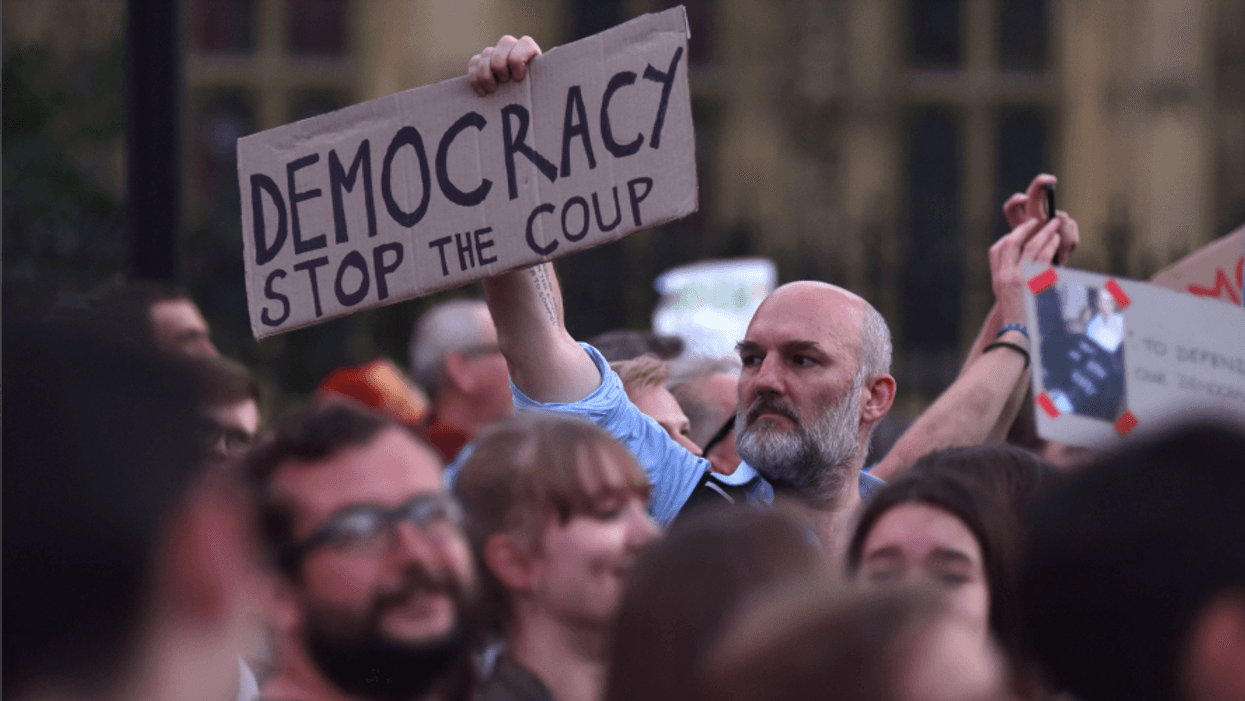
Many thousands of people took to the streets across the United Kingdom on Wednesday evening--including crowds in central London who surrounded the Palace of Westminster--demanding the end of efforts to suspend Parliament launched earlier in the day by Prime Minister Boris Johnson.
"If Boris Johnson thinks he can suspend parliament and force through no deal he has another think coming. We will build a mass movement to save democracy, and everyone who wants to stop this travesty must get ready to mobilize, demonstrate and resist." --Clive Lewis, UK Labour Party MP
As the thousands of protesters assembled in the streets in numerous cities, an online petition calling for a stop of the temporary prorogation of Parliament had gathered more than 1.1 million signatures, ten times the necessary amount to trigger an official response from MPs.
As this video dispatch from the Guardian newspaper shows, thousands of people flooded the streets outside Westminster--shouting "Stop the Coup! Stop the Coup!" and "Boris Johnson! Out, out, out!--as they denounced the move by the Tory-led government and the subservience of Queen Elizabeth II who approved the proroguing of Parliament at Johnson's request:
"We're here because our democracy wasn't given to us as an act of generosity or charity by the people on top," said Owen Jones, a progressive activist and columnist for the newspaper, speaking as a protest particpant. "It was won through the struggle and sacrifice of our ancestors and it's not for an unelected prime minister to shut down the elected parliament to ram through a no deal [Brexit] for which he has not democratic mandate."
Jones repeated and expanded on the point in subsequent social media videos--in which he accused Johnson of starting a "war with our democracy"--and in more dramatic fashion during a speech given to the large gathered crowd:
Paul Mason--another journalist, book author, and political activist--was also at the demonstrations in London and said he was now calling for people across the U.K. to join those in the streets to put their bodies on the line against the orchestrated overthrow of the British government by Johnson and other right-wing elites.
Asked about his message for U.S. President Donald Trump, who earlier in the day had weighed in on the situation by backing Johnson's effort, Mason did not hold back.
"Fuck Trump is my response. Full stop. Exclamation mark. Underlined," Mason said. "The guy doesn't understand democracy. What right has he to dictate the outcome of a British political crisis."
Members of the opposition Labour Party--including a letter sent to the Queen by Leader Jeremy Corbyn requesting a meeting to discuss her approval of the proroguing of Parliament--said they would fight back against the anti-democratic "smash and grab" moves by Johnson with all their might.
"If Boris Johnson thinks he can suspend parliament and force through no deal he has another think coming," said Labour MP Clive Lewis, who serves as the shadow government's Treasury minister. "We will build a mass movement to save democracy, and everyone who wants to stop this travesty must get ready to mobilize, demonstrate and resist. MPs, too, will have to play their part. They'll have to drag me out of the chamber."
Even after night fell in London, huge crowds refused to leave the city's streets as the demonstration turned into an impromptu sit-in:
Deputy leader of the nation's Green Party, Amelia Womack, was also in the crowd. "We're here to stand against Boris Johnson's coup," she told the Guardian. "We have a representative democracy and by suspending parliament, you are removing people's democratic right."
While many on the left in the UK had warned that Johnson might take such drastic measures to push through a no deal Brexit regardless of the consequences of his mandate, Womack said she "didn't think he would make such a brutal move that showed such a disregard for our parliamentary procedures."
As geopolitical tensions escalate in the Middle East and the world teeters on the brink of a new Cold War, it's clear that the only way to eliminate the threat of nuclear warfare is for governments to fulfill their long-held commitment to the "general and complete disarmament" of nuclear weapons - permanently. A bold and essential step towards this crucial goal is to decommission Trident, the UK's ineffective, unusable, and costly nuclear deterrent submarines. Renewing Trident would not only undermine international disarmament efforts for years to come, it will reinforce the hazardous belief that maintaining a functional nuclear arsenal is essential for any nation seeking to wield power on the world stage.
Needless to say, modern nuclear bombs are many times more destructive than those dropped on Japan at the end of the Second World War and would result in a host of immeasurably devastating impacts on the natural world and human life if they were deployed today. The extent to which nuclear weapons currently proliferate around the globe is, therefore, alarming and underscores the need for radical action on this critical issue. According to the Stockholm International Peace Research Institute, nine countries (the United States, Russia, the United Kingdom, France, China, India, Pakistan, Israel and North Korea) possess a total of 16,000 nuclear weapons, of which 4,300 are deployed with operational forces and 1,800 are "kept in a state of high operational alert" - which means they can be launched within a 5 to 15-minute timeframe if necessary.
However, these figures don't tell the full story. According to the International Campaign to Abolish Nuclear Weapons, five other European nations host US nuclear weapons on their territory as part of a NATO agreement, and 23 additional countries rely on US nuclear capabilities for their national security. Furthermore, the spread of nuclear technology and the illicit trade in nuclear weapons means that any state can potentially develop or purchase nuclear-grade weapons, which confirms the widely held view that a number of other nations unofficially harbor nuclear warheads, and many more could do so in the years ahead.
The abundance of nuclear weapons and related technology highlights the weakness of the international Non-Proliferation Treaty, which has only made limited progress on nuclear disarmament since its inception in 1968 despite near-universal membership. With high levels of nuclear stockpiles still in existence, there is also a very real risk of unintended but deadly consequences. According to a report by The Royal Institute of International Affairs, there have been 13 instances of nuclear bombs being 'accidently' deployed since 1962 by Russia, the US and other countries - mainly due to technical malfunctions or breakdowns in communication. As international disarmament efforts diminish, such risks are set to increase alongside the growing likelihood of targeted terrorist attacks on existing nuclear facilities.
It's clear that Trident, like every other nuclear weapons system, is a relic of a bygone age that simply cannot guarantee the safety of any nation at a time when global terrorism and climate change pose a far more urgent threat to national security than other states with nuclear weapons. As the columnist Simon Jenkins puts it, "All declared threats to Britain tend to come either from powers with no conceivable designs on conquering Britain or from forces immune to deterrence." Indeed, most countries of the world (including 25 NATO states) don't maintain their own nuclear stockpiles, and yet they have been just as successful in 'deterring' nuclear war as the UK.
Moreover, the International Court of Justice has ruled that the threat or use of nuclear weapons would be contrary to the rules of international law, which means that their use would be illegal in virtually any situation. Given that it is close to unimaginable that a so-called world leader would ever deploy nuclear weapons (on ethical and legal grounds, as well as for fear of retaliatory consequences) their value as an effective deterrent is unjustifiable and deeply flawed. The farcical arguments employed to rationalize building and maintaining such weapon systems are amusingly summarised in a Yes, Prime Minister comedy sketch from 1986, which aired soon after Margret Thatcher first inaugurated the Trident missile system in the UK:
Sir Humphrey: With Trident we could obliterate the whole of eastern Europe.
Hacker: I don't want to obliterate the whole of eastern Europe.
Sir Humphrey: But it's a deterrent.
Hacker: It's a bluff. I probably wouldn't use it.
Sir Humphrey: Yes, but they don't know that you probably wouldn't.
Hacker: They probably do.
Sir Humphrey: Yes, they probably know that you probably wouldn't. But they can't certainly know.
Hacker: They probably certainly know that I probably wouldn't.
Sir Humphrey: Yes, but even though they probably certainly know that you probably wouldn't, they don't certainly know that, although you probably wouldn't, there is no probability that you certainly would.
Given that the nine nuclear-armed governments together spend an astounding $100bn a year on nuclear forces (mainly via private corporations), those who play a significant role in sustaining this appalling industry are also likely to be profiting handsomely from it. In the UK, for example, strong support for renewing Trident comes from the lucrative and influential defense industry as well as the many banks, insurance companies, pension funds, and asset managers that invest heavily in companies producing nuclear weapon systems. According to some calculations, 15 percent of members in the UK's House of Lords "have what can be deemed as 'vested interests' in either the corporations involved in the programme or the institutions that finance them".
In both moral and economic terms, spending such vast amounts of public money on producing these weapons of mass destruction is tantamount to theft as long as austerity-driven governments profess to lack the funding needed to safeguard basic human needs and ensure that all people have sufficient access to essential public services. While estimates for the cost of renewing Trident vary considerably, it is likely that the initial outlay will be in the region of PS30-40bn ($42-56bn), although this figure could rise to as much as PS167bn ($234bn) over the course of its lifetime.
Rather than wasting these vast sums on the inhumane machinery of warfare, some of it could be used to provide emergency assistance to desperate refugees and asylum seekers that the Tory government has shamefully neglected, or to shore up overseas aid budgets that are being syphoned away to cover domestic refugee-related expenses. As the Campaign for Nuclear Disarmament (CND) calculate, if PS100bn ($140bn) from the Trident budget was spent bolstering vital public services instead, it would be enough to "fully fund A&E services for 40 years, employ 150,000 new nurses, build 1.5 million affordable homes, build 30,000 new primary schools, or cover tuition fees for 4 million students."
In light of the pressing need to decommission nuclear stockpiles and redistribute public resources in a way that truly serves the (global) common good, the upcoming vote in the UK Parliament on renewing Trident presents an important opportunity for campaigners and concerned citizens to raise our voice for a just and peaceful future. Many thousands of protesters are expected to unite on the streets of London this Saturday 27th February in a joint demand to end the UK's Trident program and share public resources more equitably. As CND point out in their scrap trident campaign, it's high time the UK government complies with its obligation under international law to eliminate our nuclear arsenal: "By doing so we would send a message to the world that spending for peace and development and meeting people's real needs is our priority, not spending on weapons of mass destruction."