

SUBSCRIBE TO OUR FREE NEWSLETTER
Daily news & progressive opinion—funded by the people, not the corporations—delivered straight to your inbox.
5
#000000
#FFFFFF
To donate by check, phone, or other method, see our More Ways to Give page.
Daily news & progressive opinion—funded by the people, not the corporations—delivered straight to your inbox.
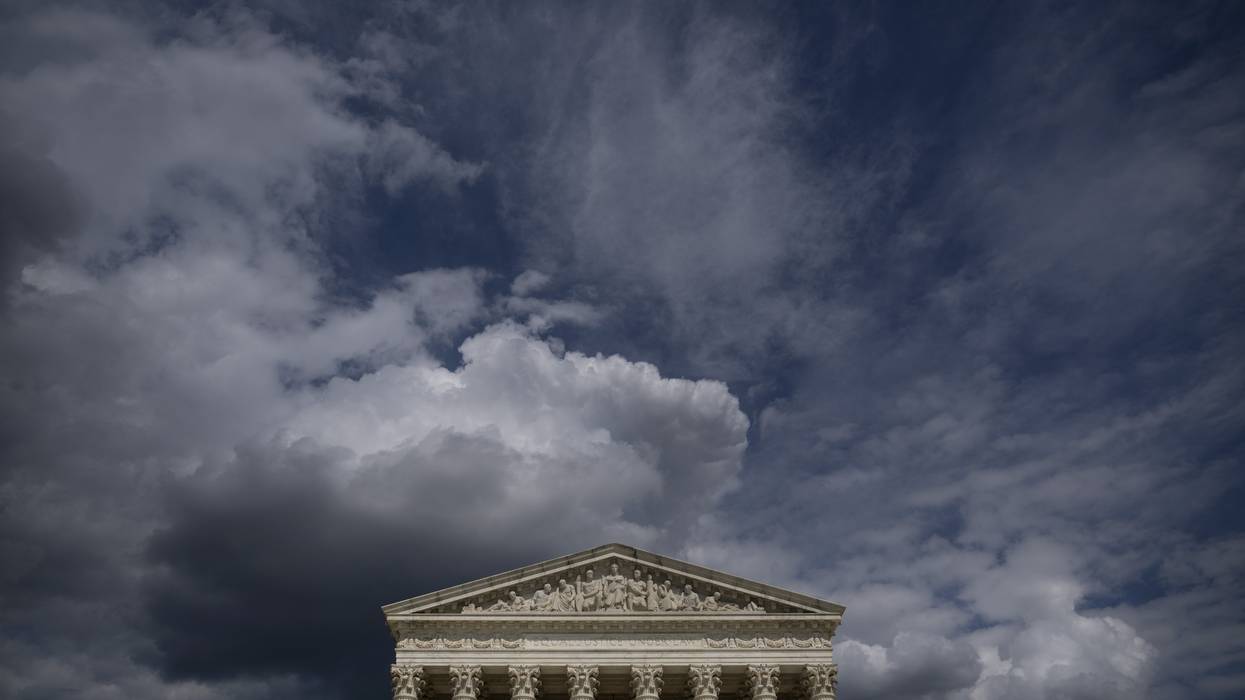
In exercising its power today, the Supreme Court’s priority is not the state of the nation, but the well-being of corporate enterprise.
The Supreme Court of the United States today is the final arbiter of public policy—deciding incontestably which laws will stand and which will not—but that power was simply asserted by the court years ago, never bestowed by the Constitution or in law.
Merriam-Webster defines a tyrant this way: an absolute ruler unrestrained by law or constitution; a usurper of sovereignty. Close enough?
In exercising its power today the court’s priority is not the state of the nation, but the well-being of corporate enterprise in America.
A recent example: On June 29, 2026 the court issued its decision in the case of Trump v. Slaughter. It found unconstitutional the statutory isolation of the Federal Trade Commission from partisan political interference. It said President Donald Trump could fire Commissioner Rebecca Slaughter not for cause—inefficiency, neglect of duty, or malfeasance, as specified in the Federal Trade Commission Act of 1914—but only because she is a Democrat.
By neutering the Voting Rights Act, encouraging gerrymandering, and freeing Trump to gut the Federal Election Assistance Commission, the court is up to its enrobed necks in rigging the upcoming elections.
The largest winner by far was not Donald Trump, but every corporation in America regulated by law. There are dozens of other independent regulatory agencies protecting the American people from harmful activities, conditions, and practices. So critical are these agencies to the health, safety, and welfare of the nation, Congress intentionally set them apart from the executive branch, to insulate them from the back-and-forth of partisan politics. The court has upended that safeguard, exposing the agencies to the whims of Donald Trump—who can staff them now with corporate-friendly Republicans. (Trump wasted no time in decapitating the Federal Election Assistance Commission, the agency funding election security measures at the state level.)
Note how the Supreme Court jeopardized the regulatory agencies. It declared as unconstitutional the provision in the Federal Trade Commission Act protecting commissioners from capricious removal. The court can do this because it holds a power known as judicial review. It measures the laws underlying its cases against the Constitution, and strikes down those it finds inconsistent.
Supreme Court justices were never elected, but they nullify laws enacted by people who were—the Congress and the president. Every time it does so the court literally overrides democracy. Isn’t that tyranny?
This is not remotely what the Framers of the Constitution intended.
Article III Section 2 specifies what the Supreme Court can do. Except for infrequent interstate and international litigation the court functions with appellate jurisdiction. The court can do either of two things: It can uphold a lower court decision, or overturn it. Nothing else. That’s it. The court is empowered to sit in judgment of law cases. Nowhere is it empowered to sit in judgment of the laws.
The Framers meant the court to be subordinate. In Federalist 78 Alexander Hamilton said this:
The Judiciary is beyond comparison the weakest of the three departments of powers... it can never attack with success either of the other two [branches]…
And in Federalist 81 he was explicit:
...there is not a syllable in the plan under consideration [i.e. the Constitution] which directly empowers the national courts to construe the laws according to the spirit of the Constitution…
Today’s Supreme Court invalidates laws without a speck of constitutional authority, and it has done so for 233 years.
That takes us back to 1803 and the Supreme Court case of Marbury v. Madison.
Federalist President John Adams in the last days of his term appointed 16 new lower court judges—all of Adams’ Federalist persuasion. Among them was William Marbury. The judges’ commissions were to be delivered by the secretary of state, as specified in the Judiciary Act of 1789, but in the scurry of a departing administration they were not. Then Democratic-Republican Thomas Jefferson was sworn in as president. Intending to appoint judges of his own party instead, Jefferson ordered his Secretary of State James Madison not to deliver the commissions. Marbury sued for his, citing the 1789 law. John Marshall’s Supreme Court found Madison guilty, but also saw the Judiciary Act as slightly askew of the Constitution. It was the pickiest technicality, but on that basis the court dismissed the case.
Chief Justice Marshall said in the court’s written decision, “It is emphatically the duty of the Judicial Department to say what the law is... a law repugnant to the Constitution is void.” So said John Marshall, but nobody else, certainly not the writers of the Constitution.
Marshall claimed judicial review simply by fiat and set the subordinate court on the road to tyranny.
Note where our Supreme Court is today. By neutering the Voting Rights Act, encouraging gerrymandering, and freeing Trump to gut the Federal Election Assistance Commission, the court is up to its enrobed necks in rigging the upcoming elections.
Judicial review was initially benign. After Marbury it wasn’t invoked again for 57 years, and might have remained tolerable had not the court paired it with another appalling action: a decision enabling corporate enterprise eventually to dominate the writing of public policy.
In the 1886 case of Santa Clara County v. Southern Pacific Railroad, the Supreme Court simply declared chartered corporations were persons as described in the 14th Amendment, with rights guaranteed by the Constitution: free speech, equal protection under the law, etc. The declaration violated the protocols for establishing legal precedents, but later courts cited the case anyway. Corporate personhood—prima facie preposterous—became a matter of stare decisis, “settled law.”
If corporations have constitutional rights and if they can prove in court those rights are violated by a law, they can sue to have the law overturned. They can use judicial review as a weapon.
And after Santa Clara County they did.
The 14th Amendment was meant to grant citizenship to Black Americans, freed from enslavement by the Emancipation Proclamation, and to guarantee their equal treatment under the law.
Three-hundred and seventy-seven cases based on the 14th Amendment were heard by the Supreme Court over the 27 years following Santa Clara County: 19 of them dealt with Black citizens seeking equal protection under the law; 288 were initiated by corporation citizens, also seeking equal protection—primarily to invalidate irksome laws.
As the centuries turned corporations succeeded in overturning minimum wage laws, child labor laws, laws limiting the workday, workmen’s compensation statutes, laws limiting corporate lobbying, and laws regulating utility companies. They sued for and won additional constitutional rights, those granted by the Fourth and Fifth Amendments—rights of privacy and the freedom from unreasonable search and seizure. Between 1905 and the mid-1930’s, the Supreme Court found some 200 corporate-restraining laws and regulations to be unconstitutional.
As the 20th century progressed the toxicity grew. The combination of judicial review and corporate personhood would prove in time to be fatal to democracy.
In a 1976 case, Buckley v. Valero, the Supreme Court found unconstitutional the 1910 Corrupt Practices Act, a law strictly limiting the money political candidates could spend campaigning. No, the court said, spending money is a form of free speech, and the Congress cannot abridge that right. Dollars are words? Isn’t that also prima facie preposterous? Two years later in First National Bank of Boston v. Bellotti, the court overturned the 1907 Tilman Act, prohibiting corporations from spending money on political campaigns. Citing Buckley, the court said the equivalence of money and speech applied to corporations as well.
Bellotti, however, clashed with an existing law, not prohibiting but sharply limiting corporate campaign contributions: FECA, the Federal Election Campaign Act of 1972.
In 2010 the case of Citizens United v. FEC resolved the clash. If corporations could not be restrained at all, then how much they spent was immaterial. Section 441b of FECA was unconstitutional. Out with it. Corporations can spend as much as they please.
But not to worry, Justice Anthony Kennedy wrote for the majority:
...independent expenditures, including those made by corporations, do not give rise to corruption or the appearance of corruption…The appearance of influence or access will not cause the electorate to lose faith in democracy.
Yes, prima facie preposterous, as documented in a 2026 study by the Brennan Center: 92% of registered voters surveyed said corruption is a major problem in politics and government, citing campaign contributions from corporations and billionaires as the causative factors.
After Citizens United a torrent of corporate money cascaded into the political campaigns of both parties, protected by the right of free speech. And for years corporate lobbying had been protected by their right of petition. The corporate grip tightened in a frontal attack on democracy.
Corporations today outspend citizen interest groups in lobbying by a factor of 86:1. In the 2024 election cycle corporations and their PACs and super PACs contributed 71% of the total of campaign donations, about $10.65 billion. “Large private donors” (read billionaires) contributed another $2.85 billion, 19% of the total. Small individual donations came to $1.5 billion, about 10%.
By any measure corporations and to a lesser extent billionaires are the dominant influencers of federal governance today. Their financing of political campaigns renders elected officials into indentured servitude, open to corporate requests. Then corporate lobbyists specify the details.
Public policy today routinely advances not the well-being of the American people, then, but the preferences of corporate America and its embedded billionaires.
This is what the Supreme Court has enabled, after Marbury, after Santa Clara County, after Buckley, after Bellotti, after Citizens United, after Trump v. Slaughter,
Dollars outweigh votes.
This article is drawn from a book the author is completing, The Triumph of Corporate Oligarchy: How It Defeated Democracy, Normalized Fraudulent Warfare, Devastated a Thriving Nation, and Enabled the Trump Presidencies.
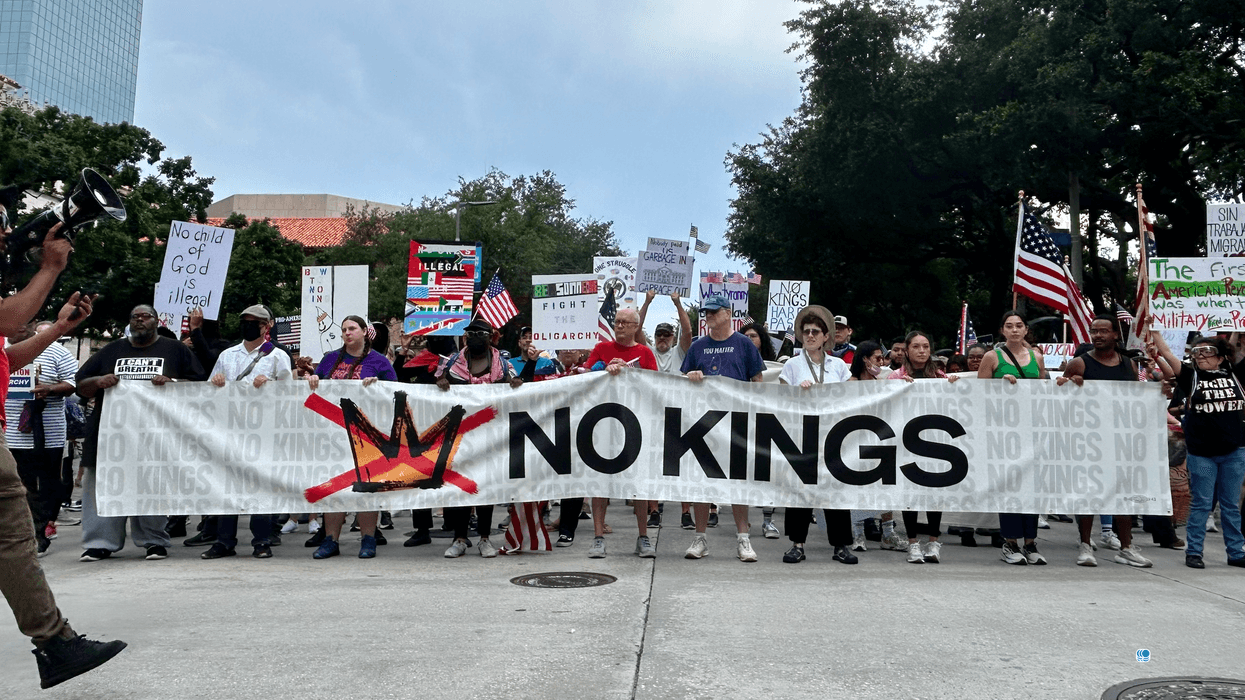
“Today’s decision in Trump v. Slaughter takes a wrecking ball to a 90-year pillar of American law," said House Judiciary Committee Ranking Member Jamie Raskin.
The US Supreme Court on Monday upheld President Donald Trump's firing of Federal Trade Commissioner Rebecca Slaughter, overturning 90 years of precedent and giving the chief executive what dissenting Justice Sonia Sotomayor called "a power unknown even to the English Crown against which the Founders revolted."
Last March, Trump fired Slaughter and Alvaro Bedoya, the two Democratic FTC commissioners at the time, without cause in what critics called yet another illegal abuse of power by the twice-impeached convicted felon.
Under the Federal Trade Commission Act (FTCA) of 1914, a president may only fire FTC commissioners "for inefficiency, neglect of duty, or malfeasance in office." The Supreme Court's 1935 Humphrey's Executor v. United States ruling interpreted the FTCA to mean that the president could not remove an FTC commissioner for any other reason, such as a policy disagreement.
The justices shredded that precedent with Monday's 6-3 decision in Trump v. Slaughter, which found that "the FTC's for-cause removal provision is contrary to the separation of powers enshrined in the Constitution."
BREAKING: The Supreme Court upholds Trump’s firing of FTC commissioner Rebecca Slaughter without cause.The decision overturns a 90-year-old precedent that protected the heads or board members of independent agencies from arbitrary presidential dismissals. Full story to come.
[image or embed]
— Democracy Docket (@democracydocket.com) June 29, 2026 at 7:20 AM
Chief Justice John Roberts joined fellow conservative Justices Clarence Thomas, Samuel Alito, Neil Gorsuch, Brett Kavanaugh, and Amy Coney Barrett—the last three appointed by Trump—in the majority, while liberal Justices Elena Kagan, Sonia Sotomayor, and Ketanji Brown Jackson dissented.
Delivering the court's opinion, Roberts wrote that the "Humphrey's framework, in short, has not withstood the test of time."
"We long ago abandoned the notion that there are some powers that are only partly executive," the chief justice asserted. "Forty years have now passed, in fact, since we recognized that the FTC exercises executive power—and did so even in 1935, when Humphrey's was decided."
Slaughter and officials at independent executive agencies, Roberts wrote, "exercise the president’s power, not their own, and thus must be responsible to him."
"At this point, all that is left of Humphrey's is its observation that an agency that 'exercises no part of the executive power' need not fall within the rule of presidential removal," he added. "If anything more is left of Humphrey's, we overrule it."
As she did last week with Mullin v. Al Otro Lado, a 6-3 ruling that affirmed Trump's deadly policy of blocking people legally seeking asylum from entering the United States, Sotomayor took the rare step of reading her dissent in Slaughter from the bench.
"Today, this court undoes centuries of political practice and concludes that all three branches of government have been acting in open defiance of the Constitution all this time. Its conclusion is wrong," she asserted. "The text of the Constitution, along with its history, the long-standing practices of the political branches, and the precedents of this court, make clear that Congress may limit the causes for which the heads of commissions like the FTC can be removed by the president."
"In holding otherwise, the court gives the president a power unknown even to the English Crown against which the Founders revolted, elevating him above his once-coequal branches by transforming a duty to take care that the laws be faithfully executed into a license to act in defiance of those very laws," she continued.
"If nothing else, the doctrine of stare decisis, which today’s decision cursorily dismisses, should have made this a profoundly easy case under Humphrey’s," Sotomayor added, referring to the Latin legal term for "to stand by things decided," or precedent.
Responding to the ruling, Congressman Jamie Raskin (D-Md.), the ranking member of the House Judiciary Committee, said that “today’s decision in Trump v. Slaughter takes a wrecking ball to a 90-year pillar of American law and to Congress’ power to create independent expert agencies that serve the will of the American people as expressed in federal law rather than the whimsical political agenda of one president."
“In overturning Congress’ authority to prevent the president from removing the leaders of independent agencies at whim, the court’s right-wing majority has given President Trump sweeping new power to purge Senate-confirmed commissioners at the Federal Trade Commission and other independent agencies for no reason other than personal loyalty, political obedience, or refusal to bend the law to the personal will of the president," Raskin added. "This decision invites presidential domination of the independent agencies Congress created to protect the people against corporate fraud, financial corruption, attacks on workers’ rights, and other abuses of concentrated economic and political power."
Numerous civil society groups and constitutional experts also expressed alarm over Monday's ruling, which follows the high court's previous affirmations of expanded executive power in cases including Trump v. United States. Roberts wrote for the 6-3 majority in that 2024 case that the president enjoys prosecutorial immunity for all "official acts"—which Sotomayor said in her dissent made him "a king above the law."
“Independent agencies are the guardians of American consumers, workers, and investors," Robert Weissman, co-president of the consumer advocacy group Public Citizen, said of Trump v. Slaughter. "They have held wealthy corporations that rip off hardworking Americans accountable and forced dangerous products from the market. Having stripped most independent agencies of their independence, President Trump is already politicizing and weaponizing them, including agencies such as the FTC and the Federal Communications Commission, to the detriment of everyday Americans.”
At Issue One, a group dedicated to reducing the influence of money in politics, vice president of advocacy Alix Fraser said that “today, the Supreme Court greenlit further abuses of presidential power and stripped independent commissions of their independence."
"The ruling opens the floodgates for more governing decisions based on the president’s whims and self-interest," he added. "This ruling not only subverts the Constitution’s clear guardrails against executive overreach, it also breaks from the court’s historical precedent to uphold the FTC removal provision."
The Slaughter case, overturning precedent, returns us to a spoils system where a president can “clean house” every four years, destroying our professional, independent civil service.
— Barb McQuade (@barbmcquade.bsky.social) June 29, 2026 at 8:31 AM
Leah Greenberg, co-executive director at the pro-democracy group Indivisible, issued a statement calling the ruling "shocking, but sadly not surprising."
"John Roberts and the MAGA majority are willing to set fire to history, precedent, and any consistent constitutional principle in order to give Trump more power with less oversight," she said. "This brazen, undemocratic partisanship and corruption must be investigated, the justices must be held accountable, and the court must be reformed to disempower the current anti-constitutional majority.”
Brett Edkins, managing director of policy and affairs at the anti-corruption watchdog Stand Up America—which said the ruling "opens the door to king-like powers for Trump to fire independent watchdogs and install loyalists throughout government"—lamented that “the MAGA Supreme Court just overturned a century of law to give more power to Donald Trump."
"Trump couldn’t find a lawful reason to fire a member of an independent agency, so he ignored the law, fired them anyway, and turned to his allies on the Supreme Court to reward his gross abuses of executive power," he continued. "His lackeys on the court obliged."
“Today’s ruling hands Trump sweeping power to purge independent watchdogs and install loyalists throughout the US government who will answer to him alone," Edkins added.
Republicans have long sought a repeal of Humphrey's. Project 2025—the Heritage Foundation-led blueprint for a far-right overhaul of the federal government—calls for the ruling to be overturned.
Trump welcomed Monday's decision with a post on his Truth Social network claiming that he personally "won" the ruling.
Monday's decision means Trump will now be able to fire at will leaders from agencies including the Consumer Product Safety Commission, Equal Employment Opportunity Commission, National Labor Relations Board, Nuclear Regulatory Commission, and US Postal Service.
But not the Federal Reserve Board of Governors. That's because in a separate but related ruling released on Monday, the justices rejected Trump's attempt to oust Federal Reserve Gov. Lisa Cook, finding 5-4 in Trump v. Cook that his bid to fire her did not comply with the Federal Reserve Act's for-cause removal protections.
“The court’s decision in Slaughter is all the more peculiar in light of... Trump v. Cook," Raskin said in his statement."There, the court rightly rejected President Trump’s lawless attempt to fire Federal Reserve Gov. Lisa Cook without adequate cause, due process, or judicial review."
While acknowledging that "central bank independence matters immensely to the American economy," Raskin contended that "Congress' constitutional judgments about the necessity of institutional independence should matter just as much at the FTC, the Securities and Exchange Commission, the National Labor Relations Board, the Federal Communications Commission, and the many other important independent agencies Congress has created to serve the interests of the American people."
Humphrey's Executor is dead and the president can fire anyone in the executive branch at will but NOT Federal Reserve governors is really a parody of the difference between the money power and everything else in America
— David Dayen (@ddayen.bsky.social) June 29, 2026 at 7:20 AM
Indivisible's Greenberg said that “the carveout for the Federal Reserve only shows how grossly political" the Slaughter decision is.
"Apparently, independence only matters when financial markets are at stake," she added, "but not when agencies are protecting consumers, workers, or the public from corporate abuse."