
SCOTUS as Tyrant: Handmaiden to Corporate America
In exercising its power today, the Supreme Court’s priority is not the state of the nation, but the well-being of corporate enterprise.
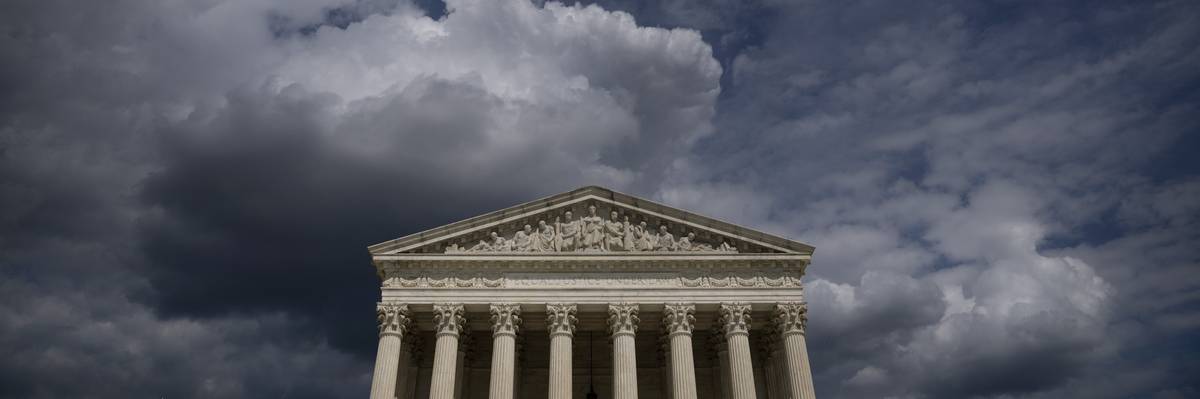
The Supreme Court of the United States today is the final arbiter of public policy—deciding incontestably which laws will stand and which will not—but that power was simply asserted by the court years ago, never bestowed by the Constitution or in law.
Merriam-Webster defines a tyrant this way: an absolute ruler unrestrained by law or constitution; a usurper of sovereignty. Close enough?
In exercising its power today the court’s priority is not the state of the nation, but the well-being of corporate enterprise in America.
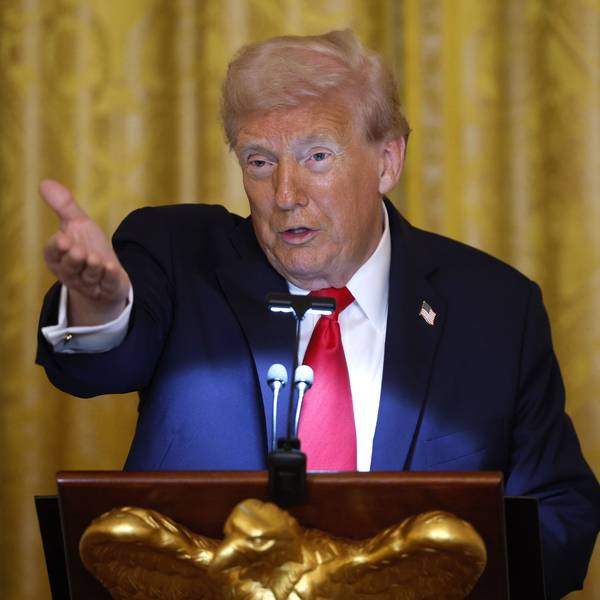
A recent example: On June 29, 2026 the court issued its decision in the case of Trump v. Slaughter. It found unconstitutional the statutory isolation of the Federal Trade Commission from partisan political interference. It said President Donald Trump could fire Commissioner Rebecca Slaughter not for cause—inefficiency, neglect of duty, or malfeasance, as specified in the Federal Trade Commission Act of 1914—but only because she is a Democrat.
By neutering the Voting Rights Act, encouraging gerrymandering, and freeing Trump to gut the Federal Election Assistance Commission, the court is up to its enrobed necks in rigging the upcoming elections.
The largest winner by far was not Donald Trump, but every corporation in America regulated by law. There are dozens of other independent regulatory agencies protecting the American people from harmful activities, conditions, and practices. So critical are these agencies to the health, safety, and welfare of the nation, Congress intentionally set them apart from the executive branch, to insulate them from the back-and-forth of partisan politics. The court has upended that safeguard, exposing the agencies to the whims of Donald Trump—who can staff them now with corporate-friendly Republicans. (Trump wasted no time in decapitating the Federal Election Assistance Commission, the agency funding election security measures at the state level.)
Note how the Supreme Court jeopardized the regulatory agencies. It declared as unconstitutional the provision in the Federal Trade Commission Act protecting commissioners from capricious removal. The court can do this because it holds a power known as judicial review. It measures the laws underlying its cases against the Constitution, and strikes down those it finds inconsistent.
Supreme Court justices were never elected, but they nullify laws enacted by people who were—the Congress and the president. Every time it does so the court literally overrides democracy. Isn’t that tyranny?
This is not remotely what the Framers of the Constitution intended.
Article III Section 2 specifies what the Supreme Court can do. Except for infrequent interstate and international litigation the court functions with appellate jurisdiction. The court can do either of two things: It can uphold a lower court decision, or overturn it. Nothing else. That’s it. The court is empowered to sit in judgment of law cases. Nowhere is it empowered to sit in judgment of the laws.
The Framers meant the court to be subordinate. In Federalist 78 Alexander Hamilton said this:
The Judiciary is beyond comparison the weakest of the three departments of powers... it can never attack with success either of the other two [branches]…
And in Federalist 81 he was explicit:
...there is not a syllable in the plan under consideration [i.e. the Constitution] which directly empowers the national courts to construe the laws according to the spirit of the Constitution…
Today’s Supreme Court invalidates laws without a speck of constitutional authority, and it has done so for 233 years.
That takes us back to 1803 and the Supreme Court case of Marbury v. Madison.
Federalist President John Adams in the last days of his term appointed 16 new lower court judges—all of Adams’ Federalist persuasion. Among them was William Marbury. The judges’ commissions were to be delivered by the secretary of state, as specified in the Judiciary Act of 1789, but in the scurry of a departing administration they were not. Then Democratic-Republican Thomas Jefferson was sworn in as president. Intending to appoint judges of his own party instead, Jefferson ordered his Secretary of State James Madison not to deliver the commissions. Marbury sued for his, citing the 1789 law. John Marshall’s Supreme Court found Madison guilty, but also saw the Judiciary Act as slightly askew of the Constitution. It was the pickiest technicality, but on that basis the court dismissed the case.
Chief Justice Marshall said in the court’s written decision, “It is emphatically the duty of the Judicial Department to say what the law is... a law repugnant to the Constitution is void.” So said John Marshall, but nobody else, certainly not the writers of the Constitution.
Marshall claimed judicial review simply by fiat and set the subordinate court on the road to tyranny.
Note where our Supreme Court is today. By neutering the Voting Rights Act, encouraging gerrymandering, and freeing Trump to gut the Federal Election Assistance Commission, the court is up to its enrobed necks in rigging the upcoming elections.
Judicial review was initially benign. After Marbury it wasn’t invoked again for 57 years, and might have remained tolerable had not the court paired it with another appalling action: a decision enabling corporate enterprise eventually to dominate the writing of public policy.
In the 1886 case of Santa Clara County v. Southern Pacific Railroad, the Supreme Court simply declared chartered corporations were persons as described in the 14th Amendment, with rights guaranteed by the Constitution: free speech, equal protection under the law, etc. The declaration violated the protocols for establishing legal precedents, but later courts cited the case anyway. Corporate personhood—prima facie preposterous—became a matter of stare decisis, “settled law.”
If corporations have constitutional rights and if they can prove in court those rights are violated by a law, they can sue to have the law overturned. They can use judicial review as a weapon.
And after Santa Clara County they did.
The 14th Amendment was meant to grant citizenship to Black Americans, freed from enslavement by the Emancipation Proclamation, and to guarantee their equal treatment under the law.
Three-hundred and seventy-seven cases based on the 14th Amendment were heard by the Supreme Court over the 27 years following Santa Clara County: 19 of them dealt with Black citizens seeking equal protection under the law; 288 were initiated by corporation citizens, also seeking equal protection—primarily to invalidate irksome laws.
As the centuries turned corporations succeeded in overturning minimum wage laws, child labor laws, laws limiting the workday, workmen’s compensation statutes, laws limiting corporate lobbying, and laws regulating utility companies. They sued for and won additional constitutional rights, those granted by the Fourth and Fifth Amendments—rights of privacy and the freedom from unreasonable search and seizure. Between 1905 and the mid-1930’s, the Supreme Court found some 200 corporate-restraining laws and regulations to be unconstitutional.
As the 20th century progressed the toxicity grew. The combination of judicial review and corporate personhood would prove in time to be fatal to democracy.
In a 1976 case, Buckley v. Valero, the Supreme Court found unconstitutional the 1910 Corrupt Practices Act, a law strictly limiting the money political candidates could spend campaigning. No, the court said, spending money is a form of free speech, and the Congress cannot abridge that right. Dollars are words? Isn’t that also prima facie preposterous? Two years later in First National Bank of Boston v. Bellotti, the court overturned the 1907 Tilman Act, prohibiting corporations from spending money on political campaigns. Citing Buckley, the court said the equivalence of money and speech applied to corporations as well.
Bellotti, however, clashed with an existing law, not prohibiting but sharply limiting corporate campaign contributions: FECA, the Federal Election Campaign Act of 1972.
In 2010 the case of Citizens United v. FEC resolved the clash. If corporations could not be restrained at all, then how much they spent was immaterial. Section 441b of FECA was unconstitutional. Out with it. Corporations can spend as much as they please.
But not to worry, Justice Anthony Kennedy wrote for the majority:
...independent expenditures, including those made by corporations, do not give rise to corruption or the appearance of corruption…The appearance of influence or access will not cause the electorate to lose faith in democracy.
Yes, prima facie preposterous, as documented in a 2026 study by the Brennan Center: 92% of registered voters surveyed said corruption is a major problem in politics and government, citing campaign contributions from corporations and billionaires as the causative factors.
After Citizens United a torrent of corporate money cascaded into the political campaigns of both parties, protected by the right of free speech. And for years corporate lobbying had been protected by their right of petition. The corporate grip tightened in a frontal attack on democracy.
Corporations today outspend citizen interest groups in lobbying by a factor of 86:1. In the 2024 election cycle corporations and their PACs and super PACs contributed 71% of the total of campaign donations, about $10.65 billion. “Large private donors” (read billionaires) contributed another $2.85 billion, 19% of the total. Small individual donations came to $1.5 billion, about 10%.
By any measure corporations and to a lesser extent billionaires are the dominant influencers of federal governance today. Their financing of political campaigns renders elected officials into indentured servitude, open to corporate requests. Then corporate lobbyists specify the details.
Public policy today routinely advances not the well-being of the American people, then, but the preferences of corporate America and its embedded billionaires.
This is what the Supreme Court has enabled, after Marbury, after Santa Clara County, after Buckley, after Bellotti, after Citizens United, after Trump v. Slaughter,
Dollars outweigh votes.
This article is drawn from a book the author is completing, The Triumph of Corporate Oligarchy: How It Defeated Democracy, Normalized Fraudulent Warfare, Devastated a Thriving Nation, and Enabled the Trump Presidencies.
We are at a crossroads
This country and this world are at a monumental crossroads. In a few short weeks, US voters will have an opportunity to beat back the forces of fascism and confront the billionaires who are rigging the economy, our media system, and our democracy, making it increasingly impossible for ordinary people to get by. We’re not just talking about the election. We’re talking about what must be done once these fascist elements are vanquished from power. We need a bolder set of solutions than what either major party has so far been willing to offer and a working-class movement ready to fight like hell for it. Trump didn't emerge from nowhere. The conditions that fueled MAGA authoritarianism were created by decades of radical neoliberal economic policies and a corrupt political system dominated by corporate interests. They slashed taxes on the super-rich, promising that the benefits would trickle down. They said giveaways to the corporate titans would make life more affordable for the rest of us. It was all bullshit. And when a bitter, betrayed populace searches for someone to blame, right-wing demagogues have little trouble finding scapegoats. People know when they're being lied to, but you won't hear any of this from the corporate media. Only independent journalism—powered and funded by people who believe in building a better world—can deliver truly trustworthy daily news. Our Fall Campaign is underway, and we need your help. To power our newsroom through the rest of the year, we need to raise $125,000 by midnight on October 31. So if you share our vision, please contribute whatever you can to sustain our work. |
Richard Behan lives and writes in Corvallis, Oregon. For two decades he has been writing about democracy’s decline, corporate dominion, and the fraudulent “war on terrorism.” He is completing a book, Defeated Democracy and Criminal War: the Backstories of America’s Interlocked Tragedies. Behan welcomes comments and he can be reached at richard.behan@icloud.com.
The Supreme Court of the United States today is the final arbiter of public policy—deciding incontestably which laws will stand and which will not—but that power was simply asserted by the court years ago, never bestowed by the Constitution or in law.
Merriam-Webster defines a tyrant this way: an absolute ruler unrestrained by law or constitution; a usurper of sovereignty. Close enough?
In exercising its power today the court’s priority is not the state of the nation, but the well-being of corporate enterprise in America.
A recent example: On June 29, 2026 the court issued its decision in the case of Trump v. Slaughter. It found unconstitutional the statutory isolation of the Federal Trade Commission from partisan political interference. It said President Donald Trump could fire Commissioner Rebecca Slaughter not for cause—inefficiency, neglect of duty, or malfeasance, as specified in the Federal Trade Commission Act of 1914—but only because she is a Democrat.
By neutering the Voting Rights Act, encouraging gerrymandering, and freeing Trump to gut the Federal Election Assistance Commission, the court is up to its enrobed necks in rigging the upcoming elections.
The largest winner by far was not Donald Trump, but every corporation in America regulated by law. There are dozens of other independent regulatory agencies protecting the American people from harmful activities, conditions, and practices. So critical are these agencies to the health, safety, and welfare of the nation, Congress intentionally set them apart from the executive branch, to insulate them from the back-and-forth of partisan politics. The court has upended that safeguard, exposing the agencies to the whims of Donald Trump—who can staff them now with corporate-friendly Republicans. (Trump wasted no time in decapitating the Federal Election Assistance Commission, the agency funding election security measures at the state level.)
Note how the Supreme Court jeopardized the regulatory agencies. It declared as unconstitutional the provision in the Federal Trade Commission Act protecting commissioners from capricious removal. The court can do this because it holds a power known as judicial review. It measures the laws underlying its cases against the Constitution, and strikes down those it finds inconsistent.
Supreme Court justices were never elected, but they nullify laws enacted by people who were—the Congress and the president. Every time it does so the court literally overrides democracy. Isn’t that tyranny?
This is not remotely what the Framers of the Constitution intended.
Article III Section 2 specifies what the Supreme Court can do. Except for infrequent interstate and international litigation the court functions with appellate jurisdiction. The court can do either of two things: It can uphold a lower court decision, or overturn it. Nothing else. That’s it. The court is empowered to sit in judgment of law cases. Nowhere is it empowered to sit in judgment of the laws.
The Framers meant the court to be subordinate. In Federalist 78 Alexander Hamilton said this:
The Judiciary is beyond comparison the weakest of the three departments of powers... it can never attack with success either of the other two [branches]…
And in Federalist 81 he was explicit:
...there is not a syllable in the plan under consideration [i.e. the Constitution] which directly empowers the national courts to construe the laws according to the spirit of the Constitution…
Today’s Supreme Court invalidates laws without a speck of constitutional authority, and it has done so for 233 years.
That takes us back to 1803 and the Supreme Court case of Marbury v. Madison.
Federalist President John Adams in the last days of his term appointed 16 new lower court judges—all of Adams’ Federalist persuasion. Among them was William Marbury. The judges’ commissions were to be delivered by the secretary of state, as specified in the Judiciary Act of 1789, but in the scurry of a departing administration they were not. Then Democratic-Republican Thomas Jefferson was sworn in as president. Intending to appoint judges of his own party instead, Jefferson ordered his Secretary of State James Madison not to deliver the commissions. Marbury sued for his, citing the 1789 law. John Marshall’s Supreme Court found Madison guilty, but also saw the Judiciary Act as slightly askew of the Constitution. It was the pickiest technicality, but on that basis the court dismissed the case.
Chief Justice Marshall said in the court’s written decision, “It is emphatically the duty of the Judicial Department to say what the law is... a law repugnant to the Constitution is void.” So said John Marshall, but nobody else, certainly not the writers of the Constitution.
Marshall claimed judicial review simply by fiat and set the subordinate court on the road to tyranny.
Note where our Supreme Court is today. By neutering the Voting Rights Act, encouraging gerrymandering, and freeing Trump to gut the Federal Election Assistance Commission, the court is up to its enrobed necks in rigging the upcoming elections.
Judicial review was initially benign. After Marbury it wasn’t invoked again for 57 years, and might have remained tolerable had not the court paired it with another appalling action: a decision enabling corporate enterprise eventually to dominate the writing of public policy.
In the 1886 case of Santa Clara County v. Southern Pacific Railroad, the Supreme Court simply declared chartered corporations were persons as described in the 14th Amendment, with rights guaranteed by the Constitution: free speech, equal protection under the law, etc. The declaration violated the protocols for establishing legal precedents, but later courts cited the case anyway. Corporate personhood—prima facie preposterous—became a matter of stare decisis, “settled law.”
If corporations have constitutional rights and if they can prove in court those rights are violated by a law, they can sue to have the law overturned. They can use judicial review as a weapon.
And after Santa Clara County they did.
The 14th Amendment was meant to grant citizenship to Black Americans, freed from enslavement by the Emancipation Proclamation, and to guarantee their equal treatment under the law.
Three-hundred and seventy-seven cases based on the 14th Amendment were heard by the Supreme Court over the 27 years following Santa Clara County: 19 of them dealt with Black citizens seeking equal protection under the law; 288 were initiated by corporation citizens, also seeking equal protection—primarily to invalidate irksome laws.
As the centuries turned corporations succeeded in overturning minimum wage laws, child labor laws, laws limiting the workday, workmen’s compensation statutes, laws limiting corporate lobbying, and laws regulating utility companies. They sued for and won additional constitutional rights, those granted by the Fourth and Fifth Amendments—rights of privacy and the freedom from unreasonable search and seizure. Between 1905 and the mid-1930’s, the Supreme Court found some 200 corporate-restraining laws and regulations to be unconstitutional.
As the 20th century progressed the toxicity grew. The combination of judicial review and corporate personhood would prove in time to be fatal to democracy.
In a 1976 case, Buckley v. Valero, the Supreme Court found unconstitutional the 1910 Corrupt Practices Act, a law strictly limiting the money political candidates could spend campaigning. No, the court said, spending money is a form of free speech, and the Congress cannot abridge that right. Dollars are words? Isn’t that also prima facie preposterous? Two years later in First National Bank of Boston v. Bellotti, the court overturned the 1907 Tilman Act, prohibiting corporations from spending money on political campaigns. Citing Buckley, the court said the equivalence of money and speech applied to corporations as well.
Bellotti, however, clashed with an existing law, not prohibiting but sharply limiting corporate campaign contributions: FECA, the Federal Election Campaign Act of 1972.
In 2010 the case of Citizens United v. FEC resolved the clash. If corporations could not be restrained at all, then how much they spent was immaterial. Section 441b of FECA was unconstitutional. Out with it. Corporations can spend as much as they please.
But not to worry, Justice Anthony Kennedy wrote for the majority:
...independent expenditures, including those made by corporations, do not give rise to corruption or the appearance of corruption…The appearance of influence or access will not cause the electorate to lose faith in democracy.
Yes, prima facie preposterous, as documented in a 2026 study by the Brennan Center: 92% of registered voters surveyed said corruption is a major problem in politics and government, citing campaign contributions from corporations and billionaires as the causative factors.
After Citizens United a torrent of corporate money cascaded into the political campaigns of both parties, protected by the right of free speech. And for years corporate lobbying had been protected by their right of petition. The corporate grip tightened in a frontal attack on democracy.
Corporations today outspend citizen interest groups in lobbying by a factor of 86:1. In the 2024 election cycle corporations and their PACs and super PACs contributed 71% of the total of campaign donations, about $10.65 billion. “Large private donors” (read billionaires) contributed another $2.85 billion, 19% of the total. Small individual donations came to $1.5 billion, about 10%.
By any measure corporations and to a lesser extent billionaires are the dominant influencers of federal governance today. Their financing of political campaigns renders elected officials into indentured servitude, open to corporate requests. Then corporate lobbyists specify the details.
Public policy today routinely advances not the well-being of the American people, then, but the preferences of corporate America and its embedded billionaires.
This is what the Supreme Court has enabled, after Marbury, after Santa Clara County, after Buckley, after Bellotti, after Citizens United, after Trump v. Slaughter,
Dollars outweigh votes.
This article is drawn from a book the author is completing, The Triumph of Corporate Oligarchy: How It Defeated Democracy, Normalized Fraudulent Warfare, Devastated a Thriving Nation, and Enabled the Trump Presidencies.
- Let’s Wish Corporate Constitutional Rights a Very Unhappy Birthday ›
- Billionaire Harlan Crow Also Bankrolled GOP Lawmakers Blocking SCOTUS Ethics Reform ›
- SCOTUS Ruling in CFPB Case Sends Dangerous Signal ›
- The Self-Serving Supreme Court Is Exonerating Corrupt Officials For Its Own Benefit ›
- Supreme Court's Right-Wing Majority Delivers Gift to Corporate Criminals ›
- 'A Disaster for Democracy': Report Shows Surging Corporate Spending in 2026 Elections ›
Richard Behan lives and writes in Corvallis, Oregon. For two decades he has been writing about democracy’s decline, corporate dominion, and the fraudulent “war on terrorism.” He is completing a book, Defeated Democracy and Criminal War: the Backstories of America’s Interlocked Tragedies. Behan welcomes comments and he can be reached at richard.behan@icloud.com.
The Supreme Court of the United States today is the final arbiter of public policy—deciding incontestably which laws will stand and which will not—but that power was simply asserted by the court years ago, never bestowed by the Constitution or in law.
Merriam-Webster defines a tyrant this way: an absolute ruler unrestrained by law or constitution; a usurper of sovereignty. Close enough?
In exercising its power today the court’s priority is not the state of the nation, but the well-being of corporate enterprise in America.
A recent example: On June 29, 2026 the court issued its decision in the case of Trump v. Slaughter. It found unconstitutional the statutory isolation of the Federal Trade Commission from partisan political interference. It said President Donald Trump could fire Commissioner Rebecca Slaughter not for cause—inefficiency, neglect of duty, or malfeasance, as specified in the Federal Trade Commission Act of 1914—but only because she is a Democrat.
By neutering the Voting Rights Act, encouraging gerrymandering, and freeing Trump to gut the Federal Election Assistance Commission, the court is up to its enrobed necks in rigging the upcoming elections.
The largest winner by far was not Donald Trump, but every corporation in America regulated by law. There are dozens of other independent regulatory agencies protecting the American people from harmful activities, conditions, and practices. So critical are these agencies to the health, safety, and welfare of the nation, Congress intentionally set them apart from the executive branch, to insulate them from the back-and-forth of partisan politics. The court has upended that safeguard, exposing the agencies to the whims of Donald Trump—who can staff them now with corporate-friendly Republicans. (Trump wasted no time in decapitating the Federal Election Assistance Commission, the agency funding election security measures at the state level.)
Note how the Supreme Court jeopardized the regulatory agencies. It declared as unconstitutional the provision in the Federal Trade Commission Act protecting commissioners from capricious removal. The court can do this because it holds a power known as judicial review. It measures the laws underlying its cases against the Constitution, and strikes down those it finds inconsistent.
Supreme Court justices were never elected, but they nullify laws enacted by people who were—the Congress and the president. Every time it does so the court literally overrides democracy. Isn’t that tyranny?
This is not remotely what the Framers of the Constitution intended.
Article III Section 2 specifies what the Supreme Court can do. Except for infrequent interstate and international litigation the court functions with appellate jurisdiction. The court can do either of two things: It can uphold a lower court decision, or overturn it. Nothing else. That’s it. The court is empowered to sit in judgment of law cases. Nowhere is it empowered to sit in judgment of the laws.
The Framers meant the court to be subordinate. In Federalist 78 Alexander Hamilton said this:
The Judiciary is beyond comparison the weakest of the three departments of powers... it can never attack with success either of the other two [branches]…
And in Federalist 81 he was explicit:
...there is not a syllable in the plan under consideration [i.e. the Constitution] which directly empowers the national courts to construe the laws according to the spirit of the Constitution…
Today’s Supreme Court invalidates laws without a speck of constitutional authority, and it has done so for 233 years.
That takes us back to 1803 and the Supreme Court case of Marbury v. Madison.
Federalist President John Adams in the last days of his term appointed 16 new lower court judges—all of Adams’ Federalist persuasion. Among them was William Marbury. The judges’ commissions were to be delivered by the secretary of state, as specified in the Judiciary Act of 1789, but in the scurry of a departing administration they were not. Then Democratic-Republican Thomas Jefferson was sworn in as president. Intending to appoint judges of his own party instead, Jefferson ordered his Secretary of State James Madison not to deliver the commissions. Marbury sued for his, citing the 1789 law. John Marshall’s Supreme Court found Madison guilty, but also saw the Judiciary Act as slightly askew of the Constitution. It was the pickiest technicality, but on that basis the court dismissed the case.
Chief Justice Marshall said in the court’s written decision, “It is emphatically the duty of the Judicial Department to say what the law is... a law repugnant to the Constitution is void.” So said John Marshall, but nobody else, certainly not the writers of the Constitution.
Marshall claimed judicial review simply by fiat and set the subordinate court on the road to tyranny.
Note where our Supreme Court is today. By neutering the Voting Rights Act, encouraging gerrymandering, and freeing Trump to gut the Federal Election Assistance Commission, the court is up to its enrobed necks in rigging the upcoming elections.
Judicial review was initially benign. After Marbury it wasn’t invoked again for 57 years, and might have remained tolerable had not the court paired it with another appalling action: a decision enabling corporate enterprise eventually to dominate the writing of public policy.
In the 1886 case of Santa Clara County v. Southern Pacific Railroad, the Supreme Court simply declared chartered corporations were persons as described in the 14th Amendment, with rights guaranteed by the Constitution: free speech, equal protection under the law, etc. The declaration violated the protocols for establishing legal precedents, but later courts cited the case anyway. Corporate personhood—prima facie preposterous—became a matter of stare decisis, “settled law.”
If corporations have constitutional rights and if they can prove in court those rights are violated by a law, they can sue to have the law overturned. They can use judicial review as a weapon.
And after Santa Clara County they did.
The 14th Amendment was meant to grant citizenship to Black Americans, freed from enslavement by the Emancipation Proclamation, and to guarantee their equal treatment under the law.
Three-hundred and seventy-seven cases based on the 14th Amendment were heard by the Supreme Court over the 27 years following Santa Clara County: 19 of them dealt with Black citizens seeking equal protection under the law; 288 were initiated by corporation citizens, also seeking equal protection—primarily to invalidate irksome laws.
As the centuries turned corporations succeeded in overturning minimum wage laws, child labor laws, laws limiting the workday, workmen’s compensation statutes, laws limiting corporate lobbying, and laws regulating utility companies. They sued for and won additional constitutional rights, those granted by the Fourth and Fifth Amendments—rights of privacy and the freedom from unreasonable search and seizure. Between 1905 and the mid-1930’s, the Supreme Court found some 200 corporate-restraining laws and regulations to be unconstitutional.
As the 20th century progressed the toxicity grew. The combination of judicial review and corporate personhood would prove in time to be fatal to democracy.
In a 1976 case, Buckley v. Valero, the Supreme Court found unconstitutional the 1910 Corrupt Practices Act, a law strictly limiting the money political candidates could spend campaigning. No, the court said, spending money is a form of free speech, and the Congress cannot abridge that right. Dollars are words? Isn’t that also prima facie preposterous? Two years later in First National Bank of Boston v. Bellotti, the court overturned the 1907 Tilman Act, prohibiting corporations from spending money on political campaigns. Citing Buckley, the court said the equivalence of money and speech applied to corporations as well.
Bellotti, however, clashed with an existing law, not prohibiting but sharply limiting corporate campaign contributions: FECA, the Federal Election Campaign Act of 1972.
In 2010 the case of Citizens United v. FEC resolved the clash. If corporations could not be restrained at all, then how much they spent was immaterial. Section 441b of FECA was unconstitutional. Out with it. Corporations can spend as much as they please.
But not to worry, Justice Anthony Kennedy wrote for the majority:
...independent expenditures, including those made by corporations, do not give rise to corruption or the appearance of corruption…The appearance of influence or access will not cause the electorate to lose faith in democracy.
Yes, prima facie preposterous, as documented in a 2026 study by the Brennan Center: 92% of registered voters surveyed said corruption is a major problem in politics and government, citing campaign contributions from corporations and billionaires as the causative factors.
After Citizens United a torrent of corporate money cascaded into the political campaigns of both parties, protected by the right of free speech. And for years corporate lobbying had been protected by their right of petition. The corporate grip tightened in a frontal attack on democracy.
Corporations today outspend citizen interest groups in lobbying by a factor of 86:1. In the 2024 election cycle corporations and their PACs and super PACs contributed 71% of the total of campaign donations, about $10.65 billion. “Large private donors” (read billionaires) contributed another $2.85 billion, 19% of the total. Small individual donations came to $1.5 billion, about 10%.
By any measure corporations and to a lesser extent billionaires are the dominant influencers of federal governance today. Their financing of political campaigns renders elected officials into indentured servitude, open to corporate requests. Then corporate lobbyists specify the details.
Public policy today routinely advances not the well-being of the American people, then, but the preferences of corporate America and its embedded billionaires.
This is what the Supreme Court has enabled, after Marbury, after Santa Clara County, after Buckley, after Bellotti, after Citizens United, after Trump v. Slaughter,
Dollars outweigh votes.
This article is drawn from a book the author is completing, The Triumph of Corporate Oligarchy: How It Defeated Democracy, Normalized Fraudulent Warfare, Devastated a Thriving Nation, and Enabled the Trump Presidencies.
- Let’s Wish Corporate Constitutional Rights a Very Unhappy Birthday ›
- Billionaire Harlan Crow Also Bankrolled GOP Lawmakers Blocking SCOTUS Ethics Reform ›
- SCOTUS Ruling in CFPB Case Sends Dangerous Signal ›
- The Self-Serving Supreme Court Is Exonerating Corrupt Officials For Its Own Benefit ›
- Supreme Court's Right-Wing Majority Delivers Gift to Corporate Criminals ›
- 'A Disaster for Democracy': Report Shows Surging Corporate Spending in 2026 Elections ›