

SUBSCRIBE TO OUR FREE NEWSLETTER
Daily news & progressive opinion—funded by the people, not the corporations—delivered straight to your inbox.
5
#000000
#FFFFFF
To donate by check, phone, or other method, see our More Ways to Give page.
Daily news & progressive opinion—funded by the people, not the corporations—delivered straight to your inbox.
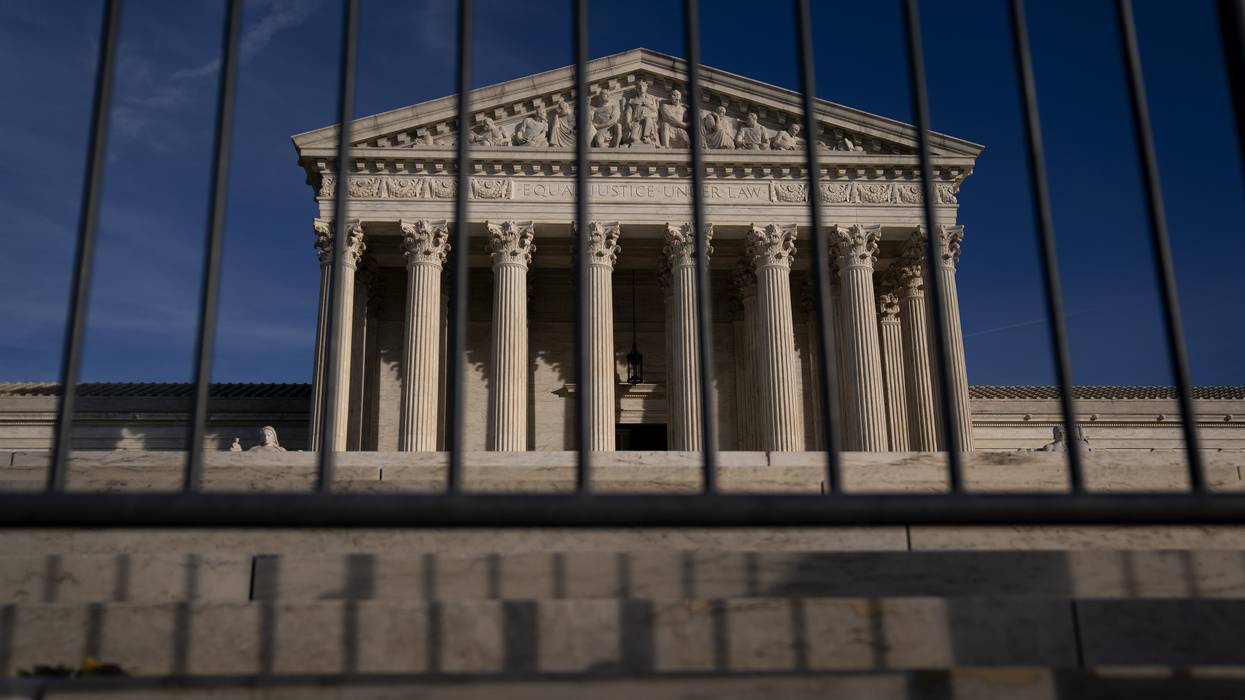
Monday’s ruling overturns the basic idea—part of the fabric of our government for well over a century—that Congress has the power to create independent regulatory bodies.
First of all, you should know that I spent five years of my life advising the commissioners of the Federal Trade Commission how they could best protect Americans from monopolies and deceptive corporate practices.
I’m proud of the work the FTC did then, and proud of much of what it’s accomplished since then. When I served there, the chair of the FTC was Michael Pertschuk, an energetic and charismatic trust-buster and consumer advocate. More recently, the FTC has been chaired by Lina Khan, who courageously stood up to some of the biggest and most politically powerful corporations in America.
Part of the reason the FTC has been so effective is that it is—or was—independent, and therefore immune to the political moves of powerful corporations seeking to stop it from acting for the common good.
The FTC was established in 1914 as part of what’s known as the “progressive era” when the government first sought to rescue the nation from the grip of the robber barons who then ran the railroads, oil, shipping, and much of the rest of the economy—and corrupted the nation’s politics—during the First Gilded Age.
These independent agencies, staffed with experts, have become a major countervailing power to the political clout of large corporations. But as of Monday, they’re no longer independent and no longer have any countervailing power.
Reformers of that era created an income tax to try to limit the Robber Barons’ incomes, caps on corporate campaign expenditures to limit their political reach, and independent regulatory agencies such as the FTC to limit their power.
That progressive era was followed by the New Deal, when Congress and FDR established other independent regulatory agencies, modeled in part on the FTC, to use their expertise for the benefit of the American people—and not just the wealthiest an most powerful citizens whose unbridled greed had led the nation into the Great Depression.
We’re now in America’s Second Gilded Age, when a new set of robber barons (think Elon Musk, Jeff Bezos, Mark Zuckerberg, and Larry and David Ellison) are running much of the economy and corrupting our politics.
Unfortunately, we now have a president and a Supreme Court, three of whose members he appointed, who are in their pockets.
Hence, Monday’s Supreme Court ruling that a president can utterly disregard the will of Congress and install his own hacks in all independent regulatory agencies (with the odd exception of the Federal Reserve Board).
The ruling is in direct conflict with a 1935 case in which the court ruled that FDR could not replace an FTC commissioner because Congress had explicitly given FTC commissioners protection against such firing, in a case known as Humphrey’s Executor v. United States. Monday marked the culmination of a years-long weakening of that New Deal-era precedent.
Humphrey’s Executor v. United States concerned a federal law that protected commissioners of the Federal Trade Commission, saying they could be removed only for “inefficiency, neglect of duty, or malfeasance in office”—the same language that Congress has since used to protect most other independent commissioners and board members throughout government.
Franklin D. Roosevelt nonetheless fired commissioner William Humphrey, arguing only that Humphrey’s actions were not aligned with the administration’s policy goals. The Supreme Court held that the firing was unlawful and the law establishing the independence of the Federal Trade Commission was constitutional.
But the Roberts Supreme Court doesn’t like independent regulatory agencies. Most of the current justices subscribe to what’s called the “unitary executive” theory, a bonkers notion that the framers intended for a president to have total control over every aspect of the executive branch.
It’s a bonkers theory because the framers didn’t say anything like this. In fact, their biggest fear was that the executive branch would become too powerful.
In 2020, the Roberts Supreme Court laid the groundwork for reversing Humphrey’s Executor in a case involving the Consumer Financial Protection Bureau. The law that created the bureau—again, using language identical to that at issue in Humphrey’s Executor—said the president could remove its director only for “inefficiency, neglect of duty, or malfeasance in office.”
In a 5-4 decision, the Roberts Supreme Court struck down that provision, ruling that it violated the separation of powers and that the president could remove the bureau’s director for any reason.
Roberts, writing for the majority, said the presidency requires an “energetic executive.” He continued, “In our constitutional system, the executive power belongs to the president, and that power generally includes the ability to supervise and remove the agents who wield executive power in his stead.”
Two justices—Clarence Thomas and Neil M. Gorsuch—would have pulled the plug on independent agencies then and there. Thomas wrote: “The decision in Humphrey’s Executor poses a direct threat to our constitutional structure and, as a result, the liberty of the American people. With today’s decision, the court has repudiated almost every aspect of Humphrey’s Executor. In a future case, I would repudiate what is left of this erroneous precedent.”
Justice Elena Kagan, writing for what were then the court’s four liberals, dissented, saying the Constitution did not address the scope of the president’s power to fire subordinates. Congress should therefore be free, she said, to grant agencies “a measure of independence from political pressure.”
That 2020 decision by the majority of the Supreme Court anticipated the Supreme Court’s decision in July of 2024 that granted Trump, then a private citizen, immunity from prosecution for any “official” conduct during his first term.
Of all the things the framers of the Constitution worried about, their biggest worry was that a president would become as powerful as a king. Which is why they created Congress and the judiciary—to check and constrain him.
Congress has by now established 19 independent regulatory agencies, including the Securities and Exchange Commission, the Federal Reserve, the Commodity Futures Trading Commission, the National Labor Relations Board, the Federal Deposit Insurance Corporation, the Consumer Financial Protection Bureau, and the Office of Special Counsel.
These independent agencies, staffed with experts, have become a major countervailing power to the political clout of large corporations.
But as of Monday, they’re no longer independent and no longer have any countervailing power.
Monday’s ruling overturns the basic idea—part of the fabric of our government for well over a century—that Congress has the power to create independent agencies.
As the nation prepares to mark the 250th anniversary of our independence from a king, the Supreme Court and our current president are doing everything possible to resurrect a king in America.
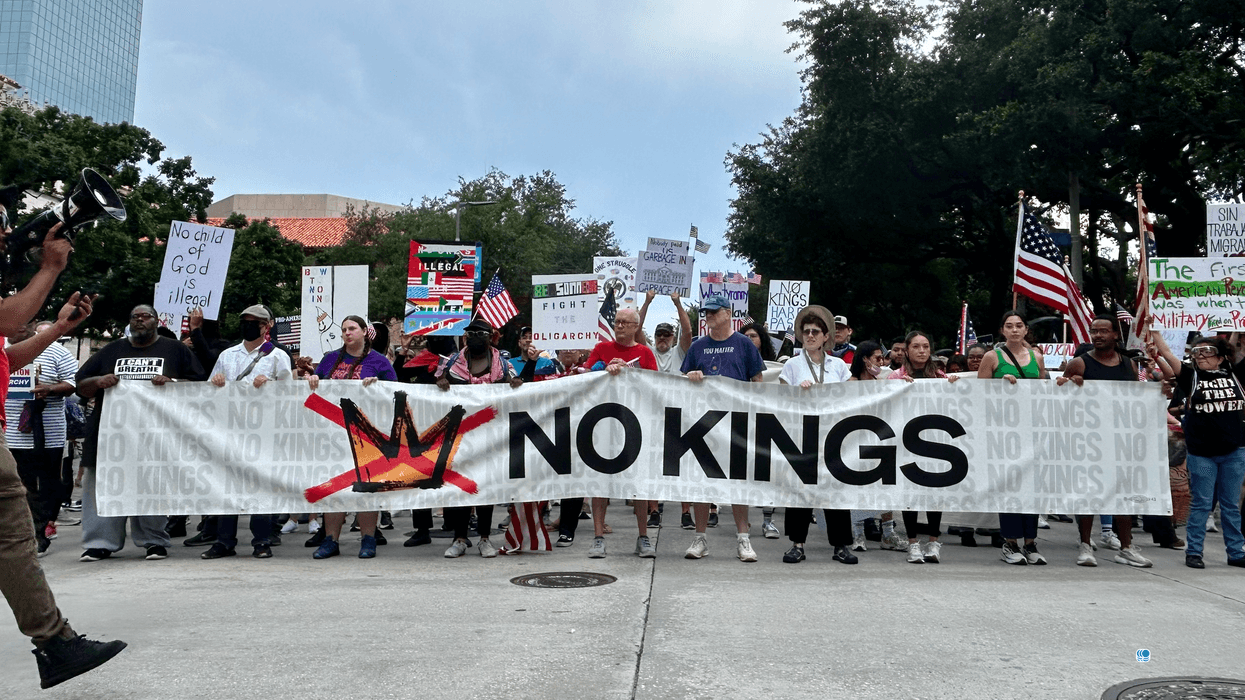
“Today’s decision in Trump v. Slaughter takes a wrecking ball to a 90-year pillar of American law," said House Judiciary Committee Ranking Member Jamie Raskin.
The US Supreme Court on Monday upheld President Donald Trump's firing of Federal Trade Commissioner Rebecca Slaughter, overturning 90 years of precedent and giving the chief executive what dissenting Justice Sonia Sotomayor called "a power unknown even to the English Crown against which the Founders revolted."
Last March, Trump fired Slaughter and Alvaro Bedoya, the two Democratic FTC commissioners at the time, without cause in what critics called yet another illegal abuse of power by the twice-impeached convicted felon.
Under the Federal Trade Commission Act (FTCA) of 1914, a president may only fire FTC commissioners "for inefficiency, neglect of duty, or malfeasance in office." The Supreme Court's 1935 Humphrey's Executor v. United States ruling interpreted the FTCA to mean that the president could not remove an FTC commissioner for any other reason, such as a policy disagreement.
The justices shredded that precedent with Monday's 6-3 decision in Trump v. Slaughter, which found that "the FTC's for-cause removal provision is contrary to the separation of powers enshrined in the Constitution."
BREAKING: The Supreme Court upholds Trump’s firing of FTC commissioner Rebecca Slaughter without cause.The decision overturns a 90-year-old precedent that protected the heads or board members of independent agencies from arbitrary presidential dismissals. Full story to come.
[image or embed]
— Democracy Docket (@democracydocket.com) June 29, 2026 at 7:20 AM
Chief Justice John Roberts joined fellow conservative Justices Clarence Thomas, Samuel Alito, Neil Gorsuch, Brett Kavanaugh, and Amy Coney Barrett—the last three appointed by Trump—in the majority, while liberal Justices Elena Kagan, Sonia Sotomayor, and Ketanji Brown Jackson dissented.
Delivering the court's opinion, Roberts wrote that the "Humphrey's framework, in short, has not withstood the test of time."
"We long ago abandoned the notion that there are some powers that are only partly executive," the chief justice asserted. "Forty years have now passed, in fact, since we recognized that the FTC exercises executive power—and did so even in 1935, when Humphrey's was decided."
Slaughter and officials at independent executive agencies, Roberts wrote, "exercise the president’s power, not their own, and thus must be responsible to him."
"At this point, all that is left of Humphrey's is its observation that an agency that 'exercises no part of the executive power' need not fall within the rule of presidential removal," he added. "If anything more is left of Humphrey's, we overrule it."
As she did last week with Mullin v. Al Otro Lado, a 6-3 ruling that affirmed Trump's deadly policy of blocking people legally seeking asylum from entering the United States, Sotomayor took the rare step of reading her dissent in Slaughter from the bench.
"Today, this court undoes centuries of political practice and concludes that all three branches of government have been acting in open defiance of the Constitution all this time. Its conclusion is wrong," she asserted. "The text of the Constitution, along with its history, the long-standing practices of the political branches, and the precedents of this court, make clear that Congress may limit the causes for which the heads of commissions like the FTC can be removed by the president."
"In holding otherwise, the court gives the president a power unknown even to the English Crown against which the Founders revolted, elevating him above his once-coequal branches by transforming a duty to take care that the laws be faithfully executed into a license to act in defiance of those very laws," she continued.
"If nothing else, the doctrine of stare decisis, which today’s decision cursorily dismisses, should have made this a profoundly easy case under Humphrey’s," Sotomayor added, referring to the Latin legal term for "to stand by things decided," or precedent.
Responding to the ruling, Congressman Jamie Raskin (D-Md.), the ranking member of the House Judiciary Committee, said that “today’s decision in Trump v. Slaughter takes a wrecking ball to a 90-year pillar of American law and to Congress’ power to create independent expert agencies that serve the will of the American people as expressed in federal law rather than the whimsical political agenda of one president."
“In overturning Congress’ authority to prevent the president from removing the leaders of independent agencies at whim, the court’s right-wing majority has given President Trump sweeping new power to purge Senate-confirmed commissioners at the Federal Trade Commission and other independent agencies for no reason other than personal loyalty, political obedience, or refusal to bend the law to the personal will of the president," Raskin added. "This decision invites presidential domination of the independent agencies Congress created to protect the people against corporate fraud, financial corruption, attacks on workers’ rights, and other abuses of concentrated economic and political power."
Numerous civil society groups and constitutional experts also expressed alarm over Monday's ruling, which follows the high court's previous affirmations of expanded executive power in cases including Trump v. United States. Roberts wrote for the 6-3 majority in that 2024 case that the president enjoys prosecutorial immunity for all "official acts"—which Sotomayor said in her dissent made him "a king above the law."
“Independent agencies are the guardians of American consumers, workers, and investors," Robert Weissman, co-president of the consumer advocacy group Public Citizen, said of Trump v. Slaughter. "They have held wealthy corporations that rip off hardworking Americans accountable and forced dangerous products from the market. Having stripped most independent agencies of their independence, President Trump is already politicizing and weaponizing them, including agencies such as the FTC and the Federal Communications Commission, to the detriment of everyday Americans.”
At Issue One, a group dedicated to reducing the influence of money in politics, vice president of advocacy Alix Fraser said that “today, the Supreme Court greenlit further abuses of presidential power and stripped independent commissions of their independence."
"The ruling opens the floodgates for more governing decisions based on the president’s whims and self-interest," he added. "This ruling not only subverts the Constitution’s clear guardrails against executive overreach, it also breaks from the court’s historical precedent to uphold the FTC removal provision."
The Slaughter case, overturning precedent, returns us to a spoils system where a president can “clean house” every four years, destroying our professional, independent civil service.
— Barb McQuade (@barbmcquade.bsky.social) June 29, 2026 at 8:31 AM
Leah Greenberg, co-executive director at the pro-democracy group Indivisible, issued a statement calling the ruling "shocking, but sadly not surprising."
"John Roberts and the MAGA majority are willing to set fire to history, precedent, and any consistent constitutional principle in order to give Trump more power with less oversight," she said. "This brazen, undemocratic partisanship and corruption must be investigated, the justices must be held accountable, and the court must be reformed to disempower the current anti-constitutional majority.”
Brett Edkins, managing director of policy and affairs at the anti-corruption watchdog Stand Up America—which said the ruling "opens the door to king-like powers for Trump to fire independent watchdogs and install loyalists throughout government"—lamented that “the MAGA Supreme Court just overturned a century of law to give more power to Donald Trump."
"Trump couldn’t find a lawful reason to fire a member of an independent agency, so he ignored the law, fired them anyway, and turned to his allies on the Supreme Court to reward his gross abuses of executive power," he continued. "His lackeys on the court obliged."
“Today’s ruling hands Trump sweeping power to purge independent watchdogs and install loyalists throughout the US government who will answer to him alone," Edkins added.
Republicans have long sought a repeal of Humphrey's. Project 2025—the Heritage Foundation-led blueprint for a far-right overhaul of the federal government—calls for the ruling to be overturned.
Trump welcomed Monday's decision with a post on his Truth Social network claiming that he personally "won" the ruling.
Monday's decision means Trump will now be able to fire at will leaders from agencies including the Consumer Product Safety Commission, Equal Employment Opportunity Commission, National Labor Relations Board, Nuclear Regulatory Commission, and US Postal Service.
But not the Federal Reserve Board of Governors. That's because in a separate but related ruling released on Monday, the justices rejected Trump's attempt to oust Federal Reserve Gov. Lisa Cook, finding 5-4 in Trump v. Cook that his bid to fire her did not comply with the Federal Reserve Act's for-cause removal protections.
“The court’s decision in Slaughter is all the more peculiar in light of... Trump v. Cook," Raskin said in his statement."There, the court rightly rejected President Trump’s lawless attempt to fire Federal Reserve Gov. Lisa Cook without adequate cause, due process, or judicial review."
While acknowledging that "central bank independence matters immensely to the American economy," Raskin contended that "Congress' constitutional judgments about the necessity of institutional independence should matter just as much at the FTC, the Securities and Exchange Commission, the National Labor Relations Board, the Federal Communications Commission, and the many other important independent agencies Congress has created to serve the interests of the American people."
Humphrey's Executor is dead and the president can fire anyone in the executive branch at will but NOT Federal Reserve governors is really a parody of the difference between the money power and everything else in America
— David Dayen (@ddayen.bsky.social) June 29, 2026 at 7:20 AM
Indivisible's Greenberg said that “the carveout for the Federal Reserve only shows how grossly political" the Slaughter decision is.
"Apparently, independence only matters when financial markets are at stake," she added, "but not when agencies are protecting consumers, workers, or the public from corporate abuse."