SUBSCRIBE TO OUR FREE NEWSLETTER
Daily news & progressive opinion—funded by the people, not the corporations—delivered straight to your inbox.
5
#000000
#FFFFFF
To donate by check, phone, or other method, see our More Ways to Give page.
Daily news & progressive opinion—funded by the people, not the corporations—delivered straight to your inbox.
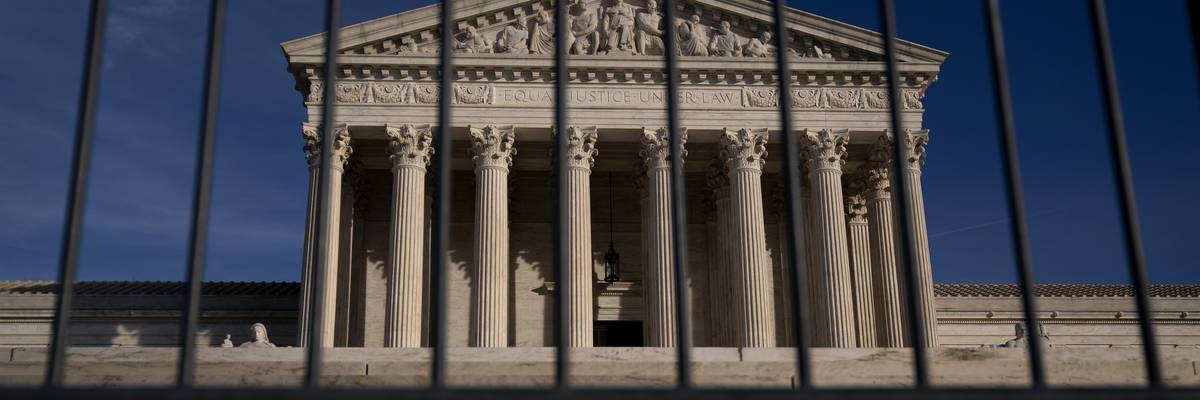
Police barricades stand in front of the US Supreme Court on December 11, 2020 in Washington, DC.
Monday’s ruling overturns the basic idea—part of the fabric of our government for well over a century—that Congress has the power to create independent regulatory bodies.
First of all, you should know that I spent five years of my life advising the commissioners of the Federal Trade Commission how they could best protect Americans from monopolies and deceptive corporate practices.
I’m proud of the work the FTC did then, and proud of much of what it’s accomplished since then. When I served there, the chair of the FTC was Michael Pertschuk, an energetic and charismatic trust-buster and consumer advocate. More recently, the FTC has been chaired by Lina Khan, who courageously stood up to some of the biggest and most politically powerful corporations in America.
Part of the reason the FTC has been so effective is that it is—or was—independent, and therefore immune to the political moves of powerful corporations seeking to stop it from acting for the common good.
The FTC was established in 1914 as part of what’s known as the “progressive era” when the government first sought to rescue the nation from the grip of the robber barons who then ran the railroads, oil, shipping, and much of the rest of the economy—and corrupted the nation’s politics—during the First Gilded Age.
These independent agencies, staffed with experts, have become a major countervailing power to the political clout of large corporations. But as of Monday, they’re no longer independent and no longer have any countervailing power.
Reformers of that era created an income tax to try to limit the Robber Barons’ incomes, caps on corporate campaign expenditures to limit their political reach, and independent regulatory agencies such as the FTC to limit their power.
That progressive era was followed by the New Deal, when Congress and FDR established other independent regulatory agencies, modeled in part on the FTC, to use their expertise for the benefit of the American people—and not just the wealthiest an most powerful citizens whose unbridled greed had led the nation into the Great Depression.
We’re now in America’s Second Gilded Age, when a new set of robber barons (think Elon Musk, Jeff Bezos, Mark Zuckerberg, and Larry and David Ellison) are running much of the economy and corrupting our politics.
Unfortunately, we now have a president and a Supreme Court, three of whose members he appointed, who are in their pockets.
Hence, Monday’s Supreme Court ruling that a president can utterly disregard the will of Congress and install his own hacks in all independent regulatory agencies (with the odd exception of the Federal Reserve Board).
The ruling is in direct conflict with a 1935 case in which the court ruled that FDR could not replace an FTC commissioner because Congress had explicitly given FTC commissioners protection against such firing, in a case known as Humphrey’s Executor v. United States. Monday marked the culmination of a years-long weakening of that New Deal-era precedent.
Humphrey’s Executor v. United States concerned a federal law that protected commissioners of the Federal Trade Commission, saying they could be removed only for “inefficiency, neglect of duty, or malfeasance in office”—the same language that Congress has since used to protect most other independent commissioners and board members throughout government.
Franklin D. Roosevelt nonetheless fired commissioner William Humphrey, arguing only that Humphrey’s actions were not aligned with the administration’s policy goals. The Supreme Court held that the firing was unlawful and the law establishing the independence of the Federal Trade Commission was constitutional.
But the Roberts Supreme Court doesn’t like independent regulatory agencies. Most of the current justices subscribe to what’s called the “unitary executive” theory, a bonkers notion that the framers intended for a president to have total control over every aspect of the executive branch.
It’s a bonkers theory because the framers didn’t say anything like this. In fact, their biggest fear was that the executive branch would become too powerful.
In 2020, the Roberts Supreme Court laid the groundwork for reversing Humphrey’s Executor in a case involving the Consumer Financial Protection Bureau. The law that created the bureau—again, using language identical to that at issue in Humphrey’s Executor—said the president could remove its director only for “inefficiency, neglect of duty, or malfeasance in office.”
In a 5-4 decision, the Roberts Supreme Court struck down that provision, ruling that it violated the separation of powers and that the president could remove the bureau’s director for any reason.
Roberts, writing for the majority, said the presidency requires an “energetic executive.” He continued, “In our constitutional system, the executive power belongs to the president, and that power generally includes the ability to supervise and remove the agents who wield executive power in his stead.”
Two justices—Clarence Thomas and Neil M. Gorsuch—would have pulled the plug on independent agencies then and there. Thomas wrote: “The decision in Humphrey’s Executor poses a direct threat to our constitutional structure and, as a result, the liberty of the American people. With today’s decision, the court has repudiated almost every aspect of Humphrey’s Executor. In a future case, I would repudiate what is left of this erroneous precedent.”
Justice Elena Kagan, writing for what were then the court’s four liberals, dissented, saying the Constitution did not address the scope of the president’s power to fire subordinates. Congress should therefore be free, she said, to grant agencies “a measure of independence from political pressure.”
That 2020 decision by the majority of the Supreme Court anticipated the Supreme Court’s decision in July of 2024 that granted Trump, then a private citizen, immunity from prosecution for any “official” conduct during his first term.
Of all the things the framers of the Constitution worried about, their biggest worry was that a president would become as powerful as a king. Which is why they created Congress and the judiciary—to check and constrain him.
Congress has by now established 19 independent regulatory agencies, including the Securities and Exchange Commission, the Federal Reserve, the Commodity Futures Trading Commission, the National Labor Relations Board, the Federal Deposit Insurance Corporation, the Consumer Financial Protection Bureau, and the Office of Special Counsel.
These independent agencies, staffed with experts, have become a major countervailing power to the political clout of large corporations.
But as of Monday, they’re no longer independent and no longer have any countervailing power.
Monday’s ruling overturns the basic idea—part of the fabric of our government for well over a century—that Congress has the power to create independent agencies.
As the nation prepares to mark the 250th anniversary of our independence from a king, the Supreme Court and our current president are doing everything possible to resurrect a king in America.
Dear Common Dreams reader, It’s been nearly 30 years since I co-founded Common Dreams with my late wife, Lina Newhouser. We had the radical notion that journalism should serve the public good, not corporate profits. It was clear to us from the outset what it would take to build such a project. No paid advertisements. No corporate sponsors. No millionaire publisher telling us what to think or do. Many people said we wouldn't last a year, but we proved those doubters wrong. Together with a tremendous team of journalists and dedicated staff, we built an independent media outlet free from the constraints of profits and corporate control. Our mission has always been simple: To inform. To inspire. To ignite change for the common good. Building Common Dreams was not easy. Our survival was never guaranteed. When you take on the most powerful forces—Wall Street greed, fossil fuel industry destruction, Big Tech lobbyists, and uber-rich oligarchs who have spent billions upon billions rigging the economy and democracy in their favor—the only bulwark you have is supporters who believe in your work. But here’s the urgent message from me today. It's never been this bad out there. And it's never been this hard to keep us going. At the very moment Common Dreams is most needed, the threats we face are intensifying. We need your support now more than ever. We don't accept corporate advertising and never will. We don't have a paywall because we don't think people should be blocked from critical news based on their ability to pay. Everything we do is funded by the donations of readers like you. When everyone does the little they can afford, we are strong. But if that support retreats or dries up, so do we. Will you donate now to make sure Common Dreams not only survives but thrives? —Craig Brown, Co-founder |
First of all, you should know that I spent five years of my life advising the commissioners of the Federal Trade Commission how they could best protect Americans from monopolies and deceptive corporate practices.
I’m proud of the work the FTC did then, and proud of much of what it’s accomplished since then. When I served there, the chair of the FTC was Michael Pertschuk, an energetic and charismatic trust-buster and consumer advocate. More recently, the FTC has been chaired by Lina Khan, who courageously stood up to some of the biggest and most politically powerful corporations in America.
Part of the reason the FTC has been so effective is that it is—or was—independent, and therefore immune to the political moves of powerful corporations seeking to stop it from acting for the common good.
The FTC was established in 1914 as part of what’s known as the “progressive era” when the government first sought to rescue the nation from the grip of the robber barons who then ran the railroads, oil, shipping, and much of the rest of the economy—and corrupted the nation’s politics—during the First Gilded Age.
These independent agencies, staffed with experts, have become a major countervailing power to the political clout of large corporations. But as of Monday, they’re no longer independent and no longer have any countervailing power.
Reformers of that era created an income tax to try to limit the Robber Barons’ incomes, caps on corporate campaign expenditures to limit their political reach, and independent regulatory agencies such as the FTC to limit their power.
That progressive era was followed by the New Deal, when Congress and FDR established other independent regulatory agencies, modeled in part on the FTC, to use their expertise for the benefit of the American people—and not just the wealthiest an most powerful citizens whose unbridled greed had led the nation into the Great Depression.
We’re now in America’s Second Gilded Age, when a new set of robber barons (think Elon Musk, Jeff Bezos, Mark Zuckerberg, and Larry and David Ellison) are running much of the economy and corrupting our politics.
Unfortunately, we now have a president and a Supreme Court, three of whose members he appointed, who are in their pockets.
Hence, Monday’s Supreme Court ruling that a president can utterly disregard the will of Congress and install his own hacks in all independent regulatory agencies (with the odd exception of the Federal Reserve Board).
The ruling is in direct conflict with a 1935 case in which the court ruled that FDR could not replace an FTC commissioner because Congress had explicitly given FTC commissioners protection against such firing, in a case known as Humphrey’s Executor v. United States. Monday marked the culmination of a years-long weakening of that New Deal-era precedent.
Humphrey’s Executor v. United States concerned a federal law that protected commissioners of the Federal Trade Commission, saying they could be removed only for “inefficiency, neglect of duty, or malfeasance in office”—the same language that Congress has since used to protect most other independent commissioners and board members throughout government.
Franklin D. Roosevelt nonetheless fired commissioner William Humphrey, arguing only that Humphrey’s actions were not aligned with the administration’s policy goals. The Supreme Court held that the firing was unlawful and the law establishing the independence of the Federal Trade Commission was constitutional.
But the Roberts Supreme Court doesn’t like independent regulatory agencies. Most of the current justices subscribe to what’s called the “unitary executive” theory, a bonkers notion that the framers intended for a president to have total control over every aspect of the executive branch.
It’s a bonkers theory because the framers didn’t say anything like this. In fact, their biggest fear was that the executive branch would become too powerful.
In 2020, the Roberts Supreme Court laid the groundwork for reversing Humphrey’s Executor in a case involving the Consumer Financial Protection Bureau. The law that created the bureau—again, using language identical to that at issue in Humphrey’s Executor—said the president could remove its director only for “inefficiency, neglect of duty, or malfeasance in office.”
In a 5-4 decision, the Roberts Supreme Court struck down that provision, ruling that it violated the separation of powers and that the president could remove the bureau’s director for any reason.
Roberts, writing for the majority, said the presidency requires an “energetic executive.” He continued, “In our constitutional system, the executive power belongs to the president, and that power generally includes the ability to supervise and remove the agents who wield executive power in his stead.”
Two justices—Clarence Thomas and Neil M. Gorsuch—would have pulled the plug on independent agencies then and there. Thomas wrote: “The decision in Humphrey’s Executor poses a direct threat to our constitutional structure and, as a result, the liberty of the American people. With today’s decision, the court has repudiated almost every aspect of Humphrey’s Executor. In a future case, I would repudiate what is left of this erroneous precedent.”
Justice Elena Kagan, writing for what were then the court’s four liberals, dissented, saying the Constitution did not address the scope of the president’s power to fire subordinates. Congress should therefore be free, she said, to grant agencies “a measure of independence from political pressure.”
That 2020 decision by the majority of the Supreme Court anticipated the Supreme Court’s decision in July of 2024 that granted Trump, then a private citizen, immunity from prosecution for any “official” conduct during his first term.
Of all the things the framers of the Constitution worried about, their biggest worry was that a president would become as powerful as a king. Which is why they created Congress and the judiciary—to check and constrain him.
Congress has by now established 19 independent regulatory agencies, including the Securities and Exchange Commission, the Federal Reserve, the Commodity Futures Trading Commission, the National Labor Relations Board, the Federal Deposit Insurance Corporation, the Consumer Financial Protection Bureau, and the Office of Special Counsel.
These independent agencies, staffed with experts, have become a major countervailing power to the political clout of large corporations.
But as of Monday, they’re no longer independent and no longer have any countervailing power.
Monday’s ruling overturns the basic idea—part of the fabric of our government for well over a century—that Congress has the power to create independent agencies.
As the nation prepares to mark the 250th anniversary of our independence from a king, the Supreme Court and our current president are doing everything possible to resurrect a king in America.
First of all, you should know that I spent five years of my life advising the commissioners of the Federal Trade Commission how they could best protect Americans from monopolies and deceptive corporate practices.
I’m proud of the work the FTC did then, and proud of much of what it’s accomplished since then. When I served there, the chair of the FTC was Michael Pertschuk, an energetic and charismatic trust-buster and consumer advocate. More recently, the FTC has been chaired by Lina Khan, who courageously stood up to some of the biggest and most politically powerful corporations in America.
Part of the reason the FTC has been so effective is that it is—or was—independent, and therefore immune to the political moves of powerful corporations seeking to stop it from acting for the common good.
The FTC was established in 1914 as part of what’s known as the “progressive era” when the government first sought to rescue the nation from the grip of the robber barons who then ran the railroads, oil, shipping, and much of the rest of the economy—and corrupted the nation’s politics—during the First Gilded Age.
These independent agencies, staffed with experts, have become a major countervailing power to the political clout of large corporations. But as of Monday, they’re no longer independent and no longer have any countervailing power.
Reformers of that era created an income tax to try to limit the Robber Barons’ incomes, caps on corporate campaign expenditures to limit their political reach, and independent regulatory agencies such as the FTC to limit their power.
That progressive era was followed by the New Deal, when Congress and FDR established other independent regulatory agencies, modeled in part on the FTC, to use their expertise for the benefit of the American people—and not just the wealthiest an most powerful citizens whose unbridled greed had led the nation into the Great Depression.
We’re now in America’s Second Gilded Age, when a new set of robber barons (think Elon Musk, Jeff Bezos, Mark Zuckerberg, and Larry and David Ellison) are running much of the economy and corrupting our politics.
Unfortunately, we now have a president and a Supreme Court, three of whose members he appointed, who are in their pockets.
Hence, Monday’s Supreme Court ruling that a president can utterly disregard the will of Congress and install his own hacks in all independent regulatory agencies (with the odd exception of the Federal Reserve Board).
The ruling is in direct conflict with a 1935 case in which the court ruled that FDR could not replace an FTC commissioner because Congress had explicitly given FTC commissioners protection against such firing, in a case known as Humphrey’s Executor v. United States. Monday marked the culmination of a years-long weakening of that New Deal-era precedent.
Humphrey’s Executor v. United States concerned a federal law that protected commissioners of the Federal Trade Commission, saying they could be removed only for “inefficiency, neglect of duty, or malfeasance in office”—the same language that Congress has since used to protect most other independent commissioners and board members throughout government.
Franklin D. Roosevelt nonetheless fired commissioner William Humphrey, arguing only that Humphrey’s actions were not aligned with the administration’s policy goals. The Supreme Court held that the firing was unlawful and the law establishing the independence of the Federal Trade Commission was constitutional.
But the Roberts Supreme Court doesn’t like independent regulatory agencies. Most of the current justices subscribe to what’s called the “unitary executive” theory, a bonkers notion that the framers intended for a president to have total control over every aspect of the executive branch.
It’s a bonkers theory because the framers didn’t say anything like this. In fact, their biggest fear was that the executive branch would become too powerful.
In 2020, the Roberts Supreme Court laid the groundwork for reversing Humphrey’s Executor in a case involving the Consumer Financial Protection Bureau. The law that created the bureau—again, using language identical to that at issue in Humphrey’s Executor—said the president could remove its director only for “inefficiency, neglect of duty, or malfeasance in office.”
In a 5-4 decision, the Roberts Supreme Court struck down that provision, ruling that it violated the separation of powers and that the president could remove the bureau’s director for any reason.
Roberts, writing for the majority, said the presidency requires an “energetic executive.” He continued, “In our constitutional system, the executive power belongs to the president, and that power generally includes the ability to supervise and remove the agents who wield executive power in his stead.”
Two justices—Clarence Thomas and Neil M. Gorsuch—would have pulled the plug on independent agencies then and there. Thomas wrote: “The decision in Humphrey’s Executor poses a direct threat to our constitutional structure and, as a result, the liberty of the American people. With today’s decision, the court has repudiated almost every aspect of Humphrey’s Executor. In a future case, I would repudiate what is left of this erroneous precedent.”
Justice Elena Kagan, writing for what were then the court’s four liberals, dissented, saying the Constitution did not address the scope of the president’s power to fire subordinates. Congress should therefore be free, she said, to grant agencies “a measure of independence from political pressure.”
That 2020 decision by the majority of the Supreme Court anticipated the Supreme Court’s decision in July of 2024 that granted Trump, then a private citizen, immunity from prosecution for any “official” conduct during his first term.
Of all the things the framers of the Constitution worried about, their biggest worry was that a president would become as powerful as a king. Which is why they created Congress and the judiciary—to check and constrain him.
Congress has by now established 19 independent regulatory agencies, including the Securities and Exchange Commission, the Federal Reserve, the Commodity Futures Trading Commission, the National Labor Relations Board, the Federal Deposit Insurance Corporation, the Consumer Financial Protection Bureau, and the Office of Special Counsel.
These independent agencies, staffed with experts, have become a major countervailing power to the political clout of large corporations.
But as of Monday, they’re no longer independent and no longer have any countervailing power.
Monday’s ruling overturns the basic idea—part of the fabric of our government for well over a century—that Congress has the power to create independent agencies.
As the nation prepares to mark the 250th anniversary of our independence from a king, the Supreme Court and our current president are doing everything possible to resurrect a king in America.