

SUBSCRIBE TO OUR FREE NEWSLETTER
Daily news & progressive opinion—funded by the people, not the corporations—delivered straight to your inbox.
5
#000000
#FFFFFF
To donate by check, phone, or other method, see our More Ways to Give page.
Daily news & progressive opinion—funded by the people, not the corporations—delivered straight to your inbox.
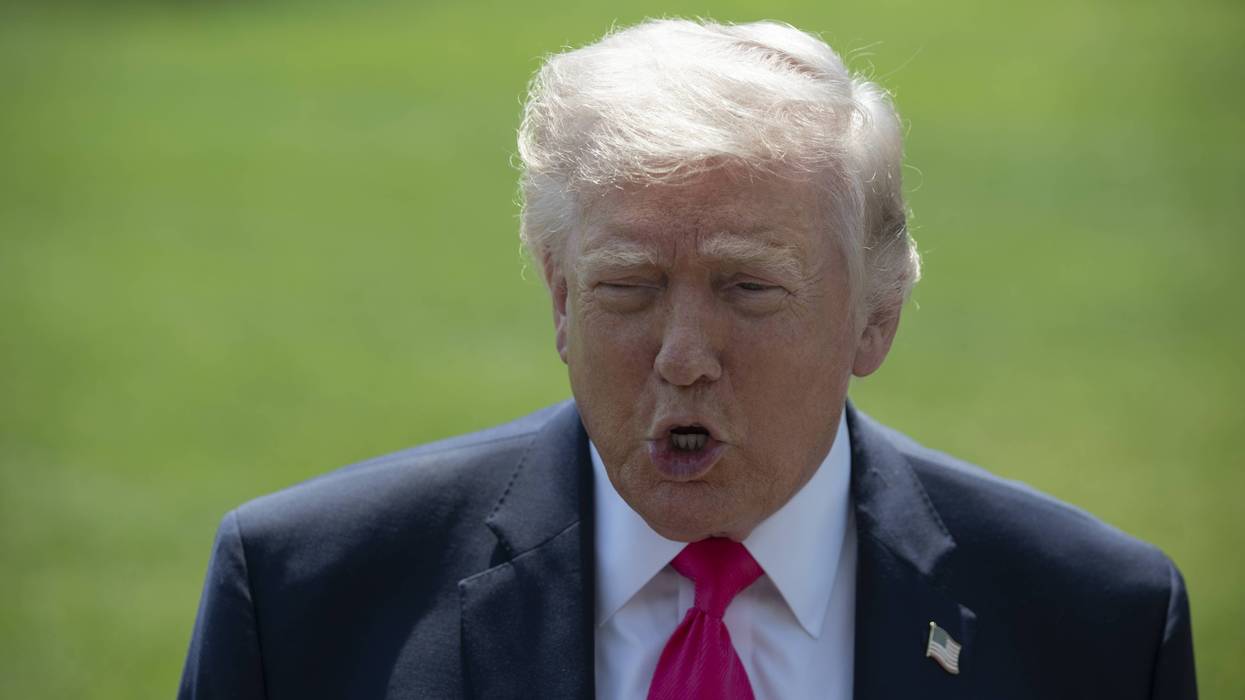
"The hypocrisy is the point," said Rep. Ayanna Pressley.
President Donald Trump has pushed to strip millions of Americans of the right to vote by mail. But he doesn't seem to think these restrictions should apply to him.
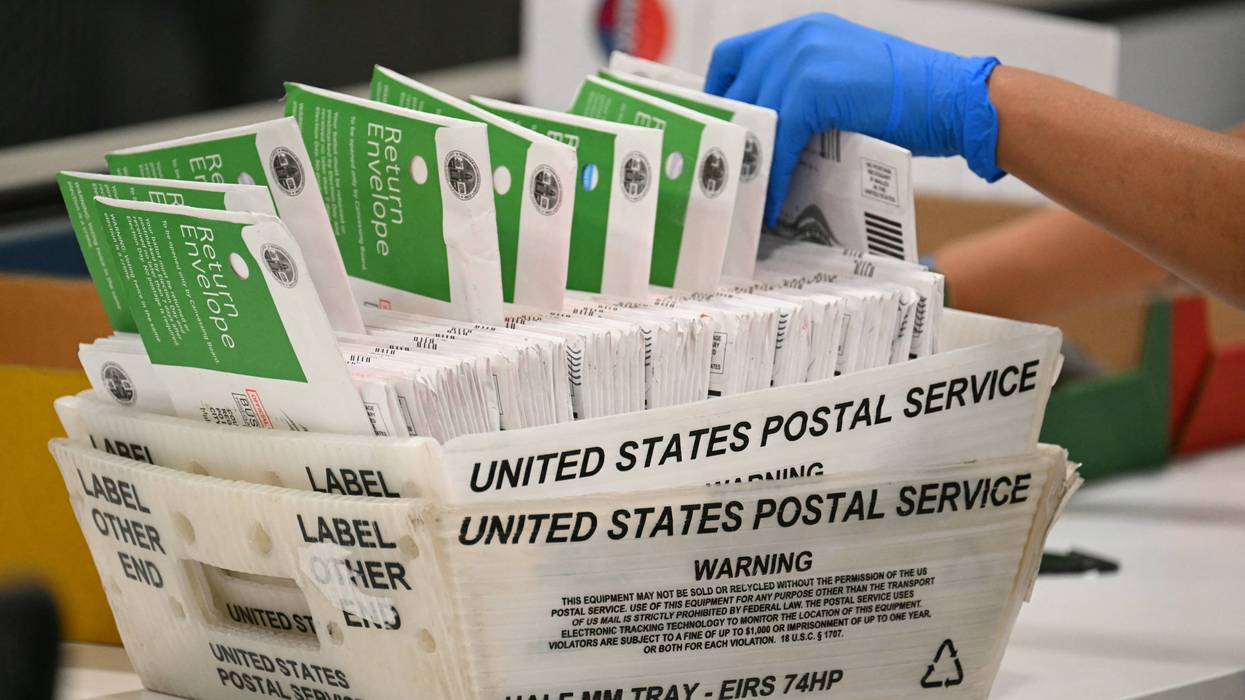
The White House confirmed to The New York Times that the president voted by mail ahead of Florida's Republican primary on Tuesday, marking at least the third time he has done so since becoming president. He also voted by mail in a state legislative special election earlier this year and in the 2020 Republican primary.
Though Trump has repeatedly characterized mail-in voting itself as a form of "cheating" and pushed to abolish it for most Americans under his proposed SAVE America Act, White House spokesperson Olivia Wales said it was a "non-story" that he chose to participate in the practice himself.
"The SAVE America Act has commonsense exceptions for Americans to use mail-in ballots for illness, disability, military, or travel— but universal mail-in voting should not be allowed because it’s highly susceptible to fraud," she said. "As everyone knows, the president is a resident of Palm Beach and participates in Florida elections, but he obviously primarily lives at the White House in Washington, DC."
Florida notably does not distinguish between absentee and other forms of mail-in voting, allowing residents to cast votes without an excuse—so the system Trump used to vote by mail is the same one he wants to make illegal.
Failing to pass his SAVE America Act through Congress, Trump has attempted to restrict mail-in voting via executive order.
An order he signed in March required states to hand over lists of eligible voters to the federal government and said that the US Postal Service could block residents of states from voting by mail if they refused to comply. The order also directed the Department of Homeland Security (DHS) to create state "citizenship lists" to be sent to election officials.
This order has been blocked in federal court, and Trump has pushed for the Supreme Court to allow it to go into effect before the November 3 midterm election. Voting rights advocates have warned that if the order goes into effect, many eligible voters will be wrongly excluded because their names don't appear on DHS's federal lists.
There is scarce evidence that any form of mail-in balloting is susceptible to fraud anywhere near the levels that would be necessary to swing the result of an election.
An analysis by the Brookings Institution last year, which examined data from the right-wing Heritage Foundation's election fraud database, found that for every 10 million mail ballots cast, about four ballots were associated with voting fraud, though the database is not exhaustive.
It's not clear why voting by mail for convenience would be any more "susceptible to fraud" than doing so for illness, disability, military, or travel, as the White House claims.
In fact, the Brookings study found that states with universal no-excuse mail-in voting have the lowest rates of mail-in fraud, and some states, like Washington, have seen reductions in fraud after transitioning to universal mail-in voting.
Advocates for universal mail-in balloting have emphasized that it makes voting easier and more accessible than when it's restricted to election days at physical polling places. They also say restricting it is especially harmful to voters from racial minority groups who face greater barriers to in-person voting and are more likely to have absentee ballot applications rejected.
Rep. Ayanna Pressley (D-Mass.) rejected the idea that the right of other Americans to vote by mail was any less legitimate than Trump's right to do so.
"Trump just voted by mail AGAIN while trying to take away the right for millions of people to do the same," Pressley wrote in a social media post. "The hypocrisy is the point. We won't let Republicans attack the sacred right to vote, including by mail."
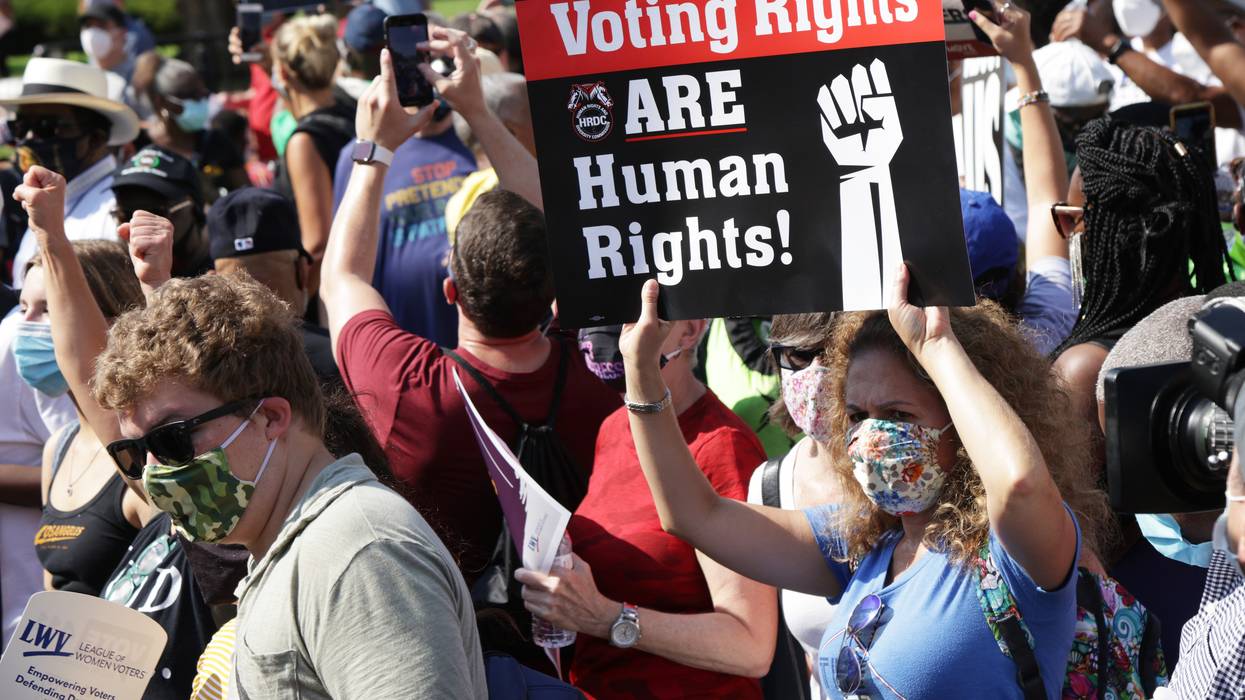
The suppression of Black votes and of women's votes are not separate struggles—they are the same assault, mounted by the same forces, to concentrate power permanently in the hands of those who hold it.
This month marks 61 years since Lyndon Johnson signed the Voting Rights Act into law. Fifty-four years ago, Congress sent the Equal Rights Amendment to the states—now ratified by the three-quarters of the states the Constitution requires. On August 26, the 19th Amendment granting women’s universal suffrage turns 106. Three anniversaries, one question: Why, in 2026, are we still fighting for rights already won—the right to vote, equal pay, the Equal Rights Amendment Congress refuses to recognize as ratified?
In April, the Supreme Court answered part of that question. In Louisiana v. Callais, a 6-3 majority ruled that challengers to a discriminatory voting map must prove intent to discriminate, not merely effect—the same sleight of hand the court used in Shelby County v. Holder (2013) to gut the Voting Rights Act's preclearance formula. The John R. Lewis Voting Rights Advancement Act, which would fix what Shelby County broke, still sits in Congress 13 years later. That is not neglect. It is a choice—and it is shameful.
The consequences are not abstract: At least six Black Democratic members of Congress face elimination through Republican redistricting this year, and one-third of the majority-minority districts under threat are held by women. The Congressional Black Caucus—grown from 13 members in 1971 to a historic high of 62 today—is being dismantled, district by district, ruling by ruling.
Then there's President Donald Trump's SAVE America Act, dressed up as election security: It requires documentary proof of citizenship to register. But an estimated 69 million American women hold a legal name that doesn't match their birth certificate—married, divorced, or changed. A woman may need a birth certificate, marriage license, divorce decree, passport, and driver's license just to prove she is herself: a paperwork tax that falls hardest on women with low incomes, survivors of domestic violence, and older women whose records are scattered across a lifetime.
You cannot protect the paycheck if you cannot protect the ballot. You cannot protect the ballot if you cannot protect the Constitution.
The suppression of Black votes and of women's votes are not separate struggles—they are the same assault, mounted by the same forces, to concentrate power permanently in the hands of those who hold it. Every woman in America who has changed her name is in the crosshairs. The attack on the Voting Rights Act, on women's economic security, and the fight for the Equal Rights Amendment are one battle.
What ties it together is economic justice: For the second consecutive year, the gender pay gap has widened. Women working full time now earn 81 cents for every dollar men earn—down from 83 cents, down from 84 the year before, the first back-to-back widening since the 1960s. For Black women, that figure drops to 65 cents, a gap of $28,340 a year. For Latinas, 58 cents—$33,620 a year. Over a lifetime, the gap costs a woman roughly half a million dollars—and for many women of color, more than $1 million.
That is not a gap. It’s a transfer of wealth—smaller Social Security checks, depleted retirement savings, less generational wealth. The root cause: Women lack the constitutional guarantee of equality that would force government, courts, and employers to treat these harms seriously.
That guarantee is the Equal Rights Amendment. The legal threshold for ratification has been met—all that remains is for Congress to pass a joint resolution affirming the ERA as the 28th Amendment. Every House Democrat has co-sponsored it. One Republican has joined them. Only one.
Our organizations are built on a truth that has not changed: Economic justice and political power are inseparable.
You cannot protect the paycheck if you cannot protect the ballot. You cannot protect the ballot if you cannot protect the Constitution.
Today we stand more than 100 years past the Suffrage Amendment, 61 past the Voting Rights Act, 54 past the day Congress sent the ERA to the states. A new Congress, elected in November, can choose which anniversary this country keeps: rights fought for and won, or rights quietly let go.
The forces of reaction aren't just trying to curtail our votes and reduce our paychecks. They’re trying to erase them. We will not stop until Congress acts.
This op-ed was distributed by American Forum.

"There is zero reason to not take Trump at his word that he and his team are planning something alarming to disrupt the midterms," said CNN host Jake Tapper.
A right-wing talk show host on Tuesday pushed President Donald Trump to declare a "national security emergency" that would let him meddle in the 2026 midterm elections—and the president did not rule it out.
In an appearance on Real America's Voice, Trump listened as host Wayne Allyn Root rattled off actions he would like to see the president take ahead of the midterms.
"Let me put an idea in your head," Root told Trump. "Because it's so hard to get the Senate to do anything, now they're on recess, they never get anything done. If they never get the SAVE America Act done, you have the right to declare a national security emergency for elections."
🚨🚨🚨
WAYNE ALLYN ROOT: You have the right to declare a national security emergency for elections. If you do this in the next month, we will get photo ID, proof of citizenship, and a limit to mail ballots
TRUMP: Let me just say stranger things have happened. I'll leave it at… pic.twitter.com/SvXYoYI0lQ
— Aaron Rupar (@atrupar) August 11, 2026
Root then told the president that "if you do this in the next month" it would allow for the implementation of photo identification and proof of citizenship requirements, as well as restrictions on mail-in ballots.
"Let me just say that stranger things have happened," Trump said in response. "I'll leave it at that."
The US Constitution does not give the president power to declare a "national emergency" that would allow him to unilaterally rewrite states' election laws.
Regardless, ABC News reported in February that a group of pro-Trump attorneys were circulating a 17-page draft order that would use the purported threat of election interference from the Chinese government to declare a "national emergency" that would outright ban mail-in ballots and mandate that all ballots be hand-counted.
Trump has not yet signed such an order, but he has issued other election-related directives, including one that instructs the United States Postal Service (USPS) to not deliver ballots in any states that have not given the federal government access to their voter lists.
The USPS executive order and an order that required Americans to show proof of citizenship when registering to vote have been blocked by courts.
Regardless, some observers expressed concern that the president wasn't yet finished in his efforts to meddle in the coming elections.
"There is zero reason," wrote CNN host Jake Tapper, "to not take Trump at his word that he and his team are planning something alarming to disrupt the midterms and beyond."
Criminal defense attorney Scott Greenfield observed in response to the president's appearance on Real America's Voice that "Trump has no legal authority to do this," but warned "that doesn't mean he won't try."
Journalist Mike Rothschild questioned what the conversation between Trump and Root said about both men’s mental stability.
"Once again, Donald Trump is not a wizard," wrote Rothschild. "He can't just manifest things into existence by saying them or with a tweet. There is no 'right' to do this in US law, nor is there any mechanism that would enable any of this to happen. Both people in this conversation are deranged."
After losing the 2020 presidential election to former President Joe Biden, Trump refused to concede the race, lied about the election being "stolen" by nefarious actors, pressured Georgia Secretary of State Brad Raffensperger to "find" enough votes to overtake Biden in the Peach State, and pushed then-Vice President Mike Pence to reject certifying the election despite lacking constitutional authority to do so.
When these efforts to overturn the election failed, Trump encouraged his followers to march to the US Capitol, where they broke into the building, assaulted law enforcement officers, and sent members of Congress running for their lives.
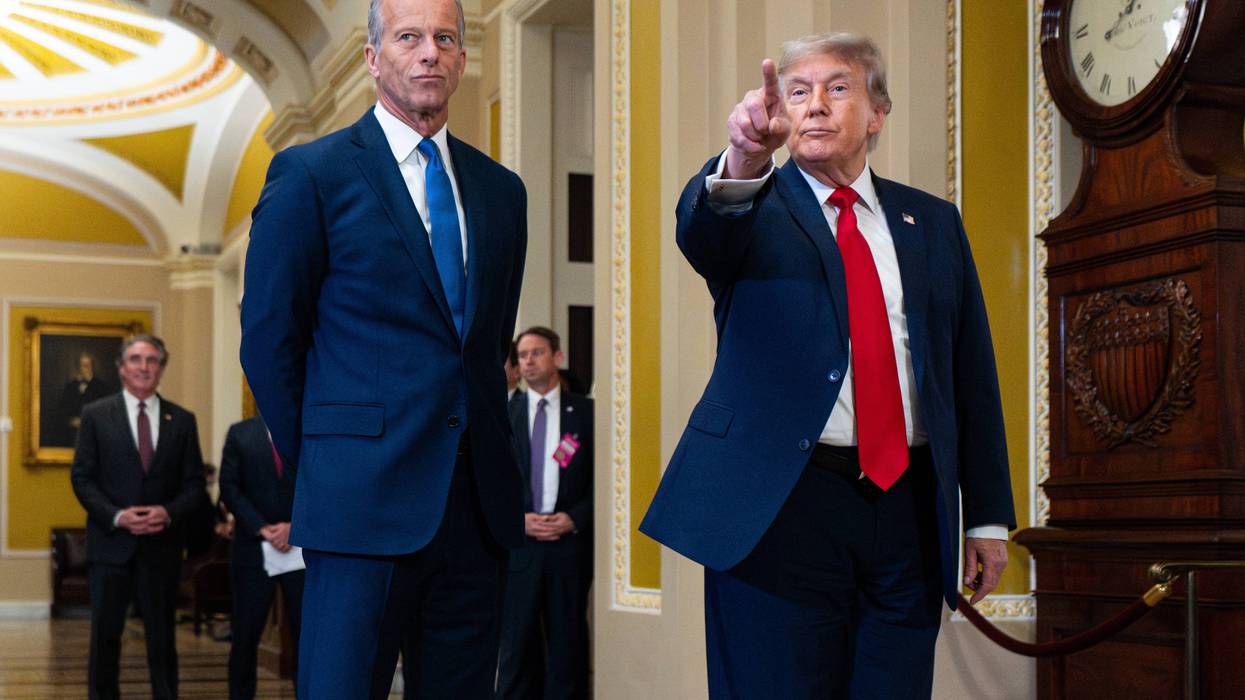
Experts say the so-called Save America Act would prevent millions from casting ballots by imposing onerous documentation requirements.
President Donald Trump on Monday pushed Republican Senate Majority Leader John Thune to cancel the chamber's upcoming August recess and enact a voter suppression bill that has stalled due inadequate support.
"John Thune should not allow the United States Senate to 'leave town' until it passes The Save America Act or, far better still, TERMINATES THE FILIBUSTER, where Republicans can then quickly pass everything they ever dreamed of, including a full and deep throated SAVE AMERICA ACT, the Budget, and the ever looming Debt Ceiling disaster," Trump wrote on his social media platform.
With the Senate's legislative filibuster intact, the so-called SAVE America Act needs 60 votes to advance—meaning Republicans need some Democratic support for the bill, which they don't currently have. Experts say the legislation would prevent millions of American voters from casting ballots by imposing onerous documentation requirements.
As the Brennan Center for Justice explained in a recent letter to senators, the legislation would "effectively require every American to produce a passport or birth certificate each time they register or re-register to vote." The Republican-controlled House passed a version of the bill earlier this year.
"More than 21 million American citizens do not have those documents readily available. Roughly half of Americans do not even have a passport. Millions lack easy access to a paper copy of their birth certificate. Millions more women whose married names are not on their birth certificates or passports would face extra steps just to make their voices heard," the group wrote in a recent letter to senators. "In addition, the SAVE America Act would eliminate or upend most methods of registering to vote. Mail and online registration would be essentially abolished, as would voter registration drives that add hundreds of thousands of citizens to the rolls every election cycle. Automatic voter registration would be severely limited in states across the country."
Trump's demand came hours after Sen. Mike Lee (R-Utah), the SAVE America Act's lead Senate sponsor, urged Thune to cancel August recess, which is set to begin next week.
"The Senate doesn’t need a summer vacation as much as the country needs the SAVE America Act," Lee said. "Let’s cancel recess."
Thune has bristled at the Trump White House's increasingly aggressive pressure campaign, insisting that he simply doesn't have the votes to eliminate the filibuster or pass the SAVE America Act, a top priority of the president ahead of the 2026 midterms.
Last week, after White House Press Secretary Karoline Leavitt told reporters that Trump's "patience" with GOP leadership in the Senate "is running out," Thune responded, "Maybe she or somebody else ought to get on the phone and get the votes."
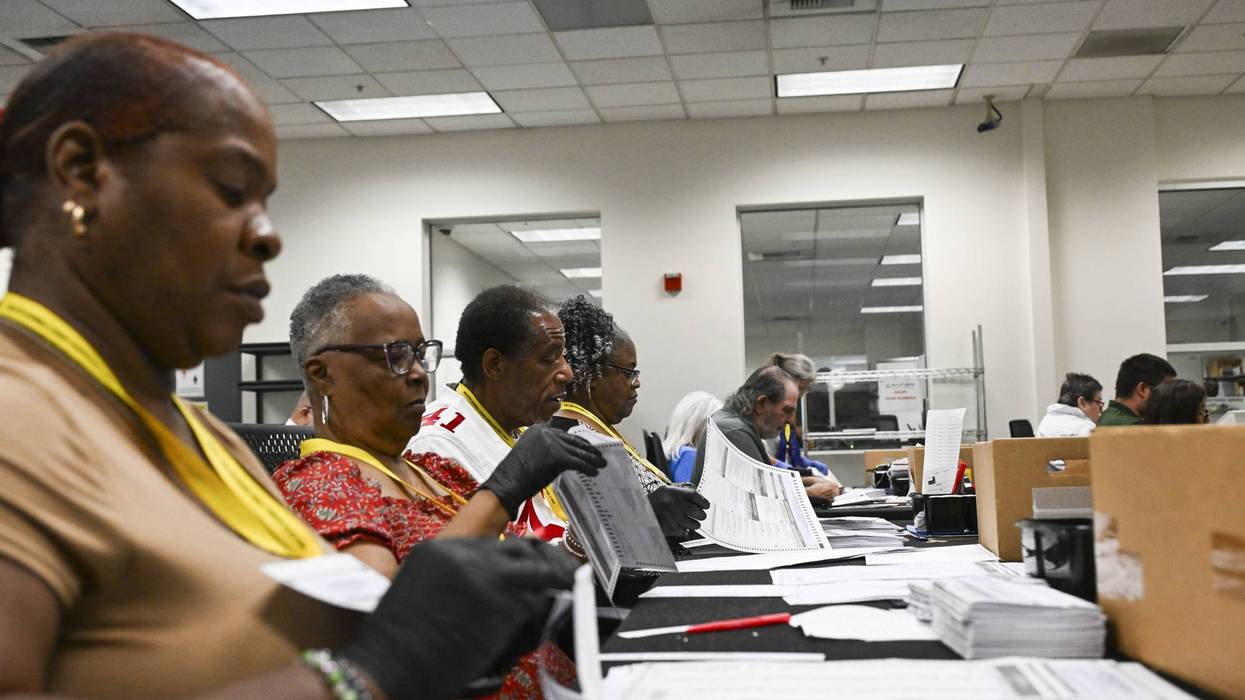
A majority of the three-judge appellate panel called part of the president's March executive order "an unprecedented federal incursion into states’ exclusive power to determine voter eligibility."
A federal appellate panel on Saturday rejected the Trump administration's request to lift a lower court's injunction blocking the US Postal Service from enforcing President Donald Trump's March executive order targeting mail-in ballots as part of Republicans' broader attack on voting rights.
A three-judge panel of the Boston-based 1st US Circuit Court of Appeals ruled 2-1 against a motion by the administration seeking a pause on US District Judge Indira Talwani's June order blocking major portions of Trump's directive, which is aimed at restricting postal voting, including by directing the USPS to ensure that mailed ballots have unique barcodes and envelope logos.
"Under the Constitution, state and local officials are responsible for administering federal elections," Judges Gustavo Gelpí and Julie Rikelman—both appointed by former President Joe Biden—wrote in a joint opinion. "In the spring of 2026, President Trump issued an executive order with nationwide effects on how state and local officials can administer federal elections, including the upcoming primary and general elections in September and November. In particular, the executive order directed substantial involvement by the United States Postal Service in deciding which ballots sent to and from voters would be delivered."
Judge Joshua Dunlap, a Trump appointee, partially dissented from the majority. The decision applies to the 23 states and District of Columbia that filed a lawsuit challenging the executive order.
The ruling also focuses on the executive order’s threats to criminally punish any state or local officials who refuse to comply. Under the order, the USPS would only send mail ballots to states that send their unredacted voter files to [the US Department of Homeland Security], which would approve voter eligibility via a national voter registration database. This is an unprecedented federal incursion into states’ exclusive power to determine voter eligibility as deemed by the US Constitution.
Saturday's ruling comes just over three weeks after Judge Emmet Sullivan of the US District Court for the District of Columbia halted the USPS' implementation of Trump's executive order. Sullivan granted a request by the NAACP to enforce a 2021 settlement agreement requiring the USPS to protect mail-in voting and prioritize delivery of mail related to elections through 2028.
That decision followed a June ruling by Chief US District Judge Denise Casper in Massachusetts that blocked portions of the president's order requiring people to show proof of citizenship when registering to vote.
Trump's March order is part of a broader attack on voting rights that includes pushing an updated version of Republicans' so-called SAVE America Act, which would mandate proof of citizenship and strict photo ID requirements to register to vote in federal elections. The legislation, which was passed by the House of Representatives in February, is stalled in the narrowly split Senate, where it lacks the support of 60 lawmakers needed to avoid a Democrat filibuster.
By constantly raising the alarm about election fraud, Trump seeks to stir fear, doubt, and confusion in the minds of voters.
With 112 days to go until Election Day, President Donald Trump’s drive to undermine the vote continues. As time runs short, his efforts grow more aggressive, more brazen. But they are facing pushback with ever greater assurance.
Last Friday, Trump pushed out the remaining commissioners on the Election Assistance Commission. This tiny agency exists to provide help and funding for states. Trump had previously tried to force the commission to implement his pet voter suppression policy—requiring a passport to register to vote—but a federal court barred it from doing so in a lawsuit brought last year by the Brennan Center and others. Now, without any commissioners, the agency can’t do much of anything.
Another federal judge quashed Justice Department subpoenas issued to hundreds of election workers in Fulton County, Georgia. The judge said the subpoenas were “staggering,” and that the Justice Department was engaged in a “fishing expedition.”
Also last week, the Department of Justice (DOJ) sent a scarifying letter to state officials warning that they will be held criminally liable if noncitizens are found on the voter rolls or voting.
All of us who care about free, fair, and secure elections in 2026 should say loud and clear: Voters can vote with certainty.
Utah’s Republican lieutenant governor, who runs elections in that state, wrote: “Got another love letter this morning from the DOJ sprinkled throughout with threats of criminal prosecution. I’m sure I’m not the only chief election officer of a state who is being targeted for following state and federal laws by resisting DOJ’s demands for private voter data that have thus far been ruled illegal by at least a dozen courts. This is truly bizarre behavior by the federal agency that is supposed to be protecting civil rights.”
Trump even claimed that recently deceased Sen. Lindsey Graham’s (R-SC) last conversation with him involved his allegedly ardent support for the anti-voter SAVE Act.
Now comes word that on Thursday, Trump will deliver an address to the nation, rumored to be when he will reveal that the 2020 election was hacked by... China? Iran? Whoever.
Why is the president continuing to press on like this? Yes, he’s relitigating the 2020 election. And some of his desired election policy changes, were they to become law, could restrict the vote for millions.
But the bigger reason is to stir fear, doubt, and confusion in the minds of voters.
We’re seeing a psychological warfare campaign waged against American democracy by leaders of its own government.
People tell me of encounters they’ve recently had with voters. One voter is convinced she will have a hard time voting because she changed her name when she got married from the one on her birth certificate, even though the SAVE Act has not become law. Another worries that the Supreme Court’s Voting Rights Act ruling in Louisiana v. Callais means they cannot vote.
Crazy rumors fly. That former Venezuelan leader Nicolás Maduro, for example, will “confess” to stealing the 2020 election in exchange for leniency. And so on. Few pan out. But the decibel level can be deafening.
All this requires deftness by those who would protect the vote. Every election year, voting advocates like the Brennan Center weigh carefully whether and how to reassure voters, as merely mentioning the potential threats to voting could backfire and scare people away from the polls.
Latino voters and other immigrants, for example, may fear Immigration and Custom Enforcement being present at polling places. Even though such a deployment would be illegal, simply raising it as a possibility may cause voters to stay home. Fear would have done its work.
For other voters, though, we may see a new phenomenon: Efforts at suppression could fuel mobilization. In the South, Black voters are outraged by the efforts to redraw election maps after the Supreme Court’s Callais decision gutted the Voting Rights Act. They could turn out in historic numbers. People get really mad when you try to take something from them—and when it’s representation and the vote, watch out.
All of us who care about free, fair, and secure elections in 2026 should say loud and clear: Voters can vote with certainty. Make a plan to vote. Vote as early as you can. In person, via drop box, in the mail.
One hundred twelve days. It will feel like longer. But when this year is done, the strong response across the country to an egregious effort to undermine our democracy may be the real story.
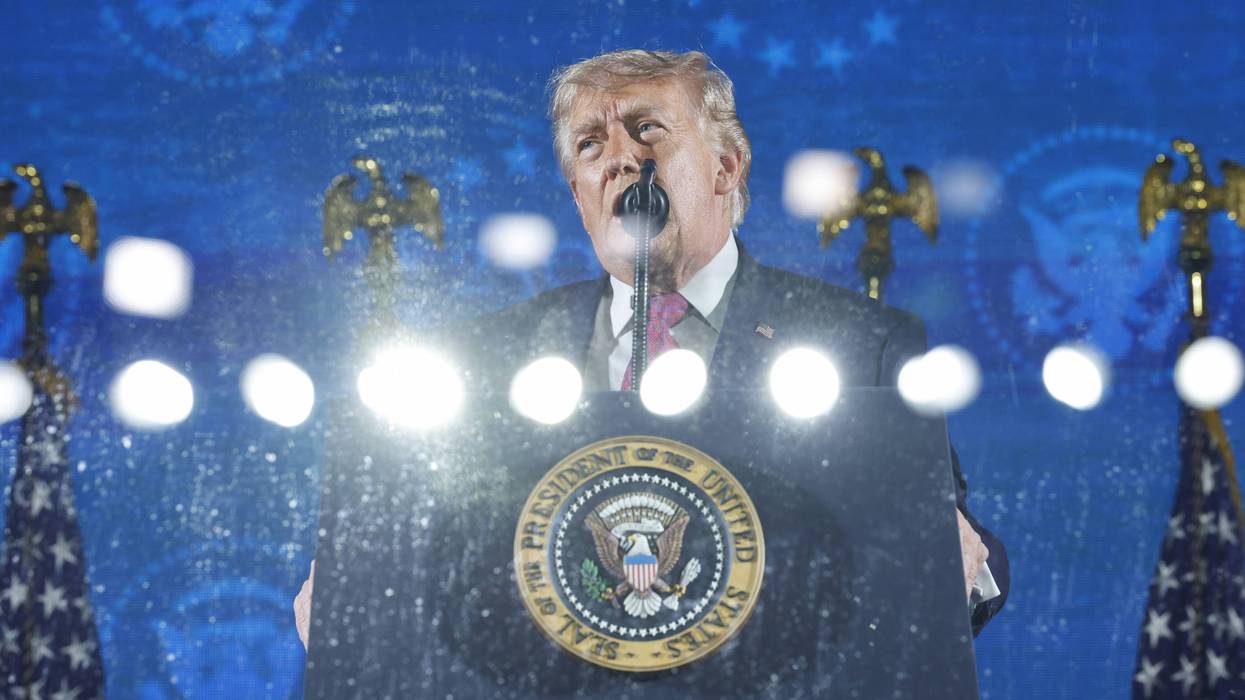
"If we terminate the filibuster as we should do and immediately vote for the SAVE America Act then we will not lose an election for a hundred years," the president said.
President Donald Trump spent his address to the United States the night before its 250th birthday fearmongering about the "communist menace" and suggesting that his Republican Party should govern the nation for a century.
"America will never be a communist country," he said from Mount Rushmore, South Dakota Friday night. "We can only lose the midterms if we allow ourselves to lose the midterms, if we are foolish, stupid, and unwise. But if we terminate the filibuster as we should do and immediately vote for the SAVE America Act then we will not lose an election for a hundred years."
His remarks clearly implied a false link between communism and the Democratic Party and promoted a bill that critics say will make it harder for millions of eligible voters to participate in elections. The SAVE America Act claims to address the documented non-problem of noncitizen voting by requiring voters to show documents such as passports and birth certificates, which can be expensive and difficult to obtain, especially for low-income voters. Such requirements would also impose added burdens on rural voters and married women who have changed their names.
Melanie D’Arrigo, executive director of the Campaign for New York Health, wrote on social media that with his remarks, Trump was "clearly defining the effects of voter suppression bills."
Trump clearly defining the effects of voter suppression bills. https://t.co/vKOytLxdm0
— Melanie D'Arrigo (@DarrigoMelanie) July 4, 2026
"What message could be more unifying on the nation’s 250th birthday weekend than touting one-party rule?" writer Michael Freeman posted on social media.
California state Sen. Scott Wiener (D-11) wrote: "The thing about Trump is he tells us what he wants & what he intends to do. He wants to end democracy. Freeze MAGA in power forever. Have zero accountability to the people. Just seize power & keep it. We are so close to true authoritarianism. We must use every ounce of power & leverage we have to stop them."
Before arguing for 100 years of Republican rule, Trump continued the exaggerated anti-communist rhetoric he has employed in the weeks since progressive and Democratic-Socialist candidates won a series of Democratic primary victories.
"There is now a resurgence of the communist menace in our land, including from newcomers to our country who embrace ideas totally opposed to our way of life and our great success," Trump said on Friday. "These are not mere political disagreements like differences over taxes or regulations. Communism is a mortal threat to American liberty. It is the greatest threat to our country, including World War I, World War II, Pearl Harbor, or even 9/11."
In fact, the Democratic Socialists who won primary elections in New York City last month ran on a platform of affordable housing, Medicare for All, stronger unions, and an end to US military support for Israel's genocide in Gaza, policies backed by large numbers of ordinary Americans.
Trump doubled down on an opposition between communism and US values and also linked his anti-communist to his anti-immigrant stance, threatening to send communists into "exile."
"You can be a communist or you can be a patriot. You cannot be both," Trump said in a quote later posted from the White House X account.
Apparently, you can be a rapist and an alleged pedophile and become President. https://t.co/aYAMCJQOPO
— Wajahat Ali (@WajahatAli) July 4, 2026
"This July 4th, the Trump regime is pushing a new Red Scare. This is an actual White House post. The regime is pretending that communism is a serious threat to America," Tom Joscelyn, who served as a senior professional staffer on the January 6 Committee, responded on social media.
MeidasNews editor in chief Ron Filipkowski argued that Trump was leaning on anti-communism to divert attention from his own disastrous policies.
"Trump fucks up the economy with his tariffs, raises gas prices for every American with his foolish war, piles on to the national debt with his budget & wasteful spending on vanity projects, covers up Epstein, makes billions for himself, then starts yelling about communism to distract," he wrote on social media.
Journalist Mark Chadbourn agreed, writing on social media that the speech reflected Trump's "new strategy."
"Now he’s failed completely abroad, he’s looking to the Enemy Within to create new Hate Figures to unite his wavering followers," Chadbourn said. "Can’t stop Iran’s threat so let’s have a 2026 Red Scare to turn neighbour against neighbour. A new HUAC on the way? Very dangerous."
Trump's July 3 remarks contrasted with those of New York Democratic Socialist Mayor Zohran Mamdani earlier that day, who uplifted the country's immigrant heritage, decried greed and racial supremacy, and argued that “time and again, including 250 years ago, those forces of division have been vanquished by the forces of progress.”
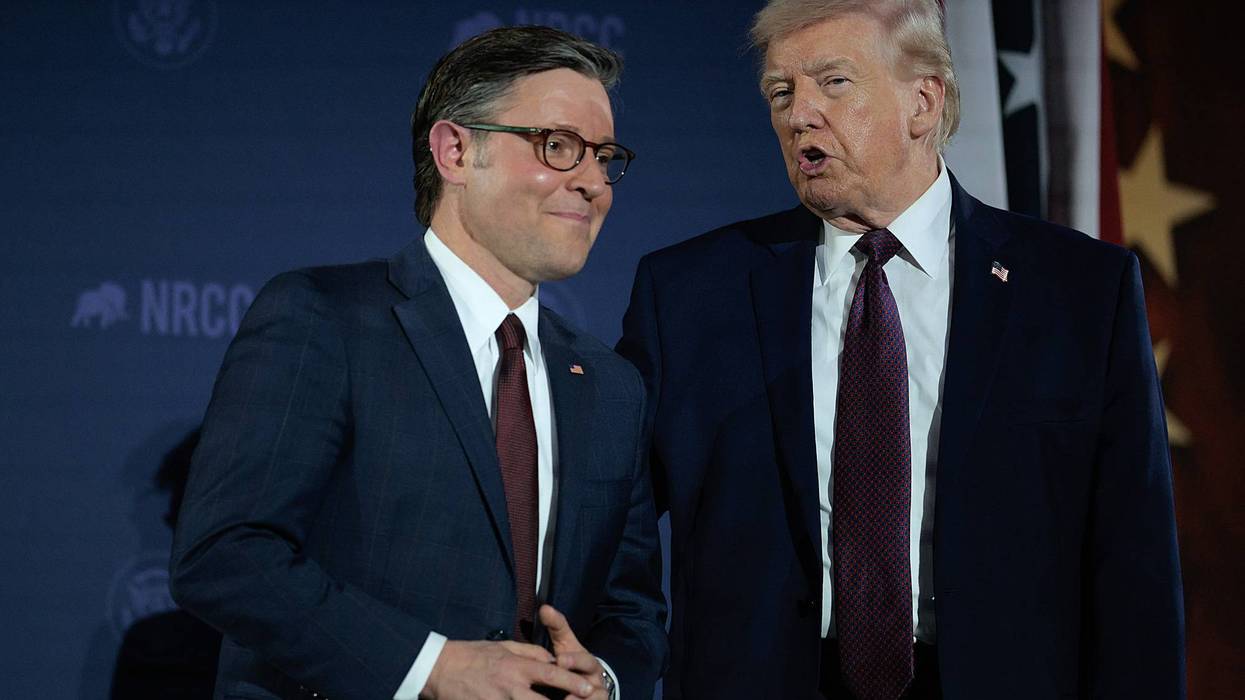
"A yawn? Try telling that to the families who can't afford rent, can't afford to buy gas or groceries, and are one paycheck away from losing everything."
Democrats in the US House of Representatives quickly fired back on Monday after President Donald Trump called pending affordable housing legislation a "big yawn" compared to the attack on voting rights that he wants Republicans to pass.
Trump last Wednesday canceled a planned signing ceremony for the 21st Century ROAD to Housing Act and demanded that Congress, which is narrowly controlled by Republicans, pass the Safeguard American Voter Eligibility, or SAVE America, Act.
House Speaker Mike Johnson (R-La.) on Monday sent Trump the bipartisan housing bill—which will become law with no action by the president after 10 days.
Asked by reporters whether he'll sign the housing legislation, Trump replied: "It hasn't been sent to me yet. It's coming, I understand, and then I'll make a de—Here's what I would like to say... It's a yawn. Some people say it's wonderful. To me, compared to the SAVE America Act, just about everything is a big yawn."
Sharing a clip of the president's remarks on social media, House Minority Whip Katherine Clark (D-Mass.) declared, "He truly doesn't give a damn about you."
Other Democrats delivered similar responses. Congresswoman Pramila Jayapal (Wash.) said that "Trump does not care about lowering housing prices," while Rep. Becca Balint (Vt.) wrote of his comments, "Donald Trump literally does not care about your cost of living, part one million."
Democratic Colorado Congresswoman Brittany Pettersen said: "A yawn? Try telling that to the families who can't afford rent, can't afford to buy gas or groceries, and are one paycheck away from losing everything. Believe him when he tells you who he is."
Rep. Christian D. Menefee, a Texas Democrat, charged that "Trump cares more about rigging elections than Americans affording homes."
The Democratic National Committee's (DNC) rapid response director, Kendall Witmer, said in a statement that "Donald Trump continues to mock what everyday Americans are experiencing. Time and again, Trump has had the chance to lower costs for working families, but without fail, he has chosen to prioritize his own interests and those of his wealthy friends."
"As Americans struggle to put a roof over their heads and afford basic necessities," Witmer added, "Trump continues to double down on his disastrous policies and self-serving agenda—and Americans are fed up."
Trump's comments came just over four months away from the November midterm elections, in which Democrats aim to regain control of both chambers of Congress.
In the lead-up to the midterms, Trump has ramped up pressure on Republicans in Congress to pass the SAVE America Act, which would force Americans to show proof of citizenship when registering to vote, and photo identification at the ballot box. Critics have warned that the former requirement could disenfranchise millions of Americans who may not have access to documents such as a birth certificate or passport with their current name.
Johnson said Sunday on Fox News that "we're going to try to pass it again, and this time we’re going to try to put it on a reconciliation bill," which "prevents the necessity of 60 votes in the Senate."
The speaker on Monday also sent a message to his GOP colleagues who might block unrelated legislation in a bid to pressure senators to pass the SAVE America Act: "Whomever is thinking that stopping the work of House Republicans to make Americans safer right now and to bring down the cost of living—impeding that progress just because stubborn Senate Democrats won't do the job of the American people is self-defeating. It doesn't make any sense."
Punchbowl reported on Monday that GOP leadership has also expressed interest in creating a $4 billion grant program that would incentivize states to enact parts of the bill. Some Republican state lawmakers have already pursued copycat legislation.
As elected Republicans attack voting rights at the national level, the US Supreme Court—whose right-wing supermajority has often rubber-stamped Trump's agenda—delivered a surprise victory for voting rights on Monday: Two conservatives joined the three liberal justices in rejecting the Republican National Committee's (RNC) challenge to states counting mailed ballots that are postmarked by Election Day but received afterward.
"The DNC is proud to have stood with the state of Mississippi to defeat the RNC's latest attack on Americans’ voting rights," said the Democrats' chair, Ken Martin. "Trump and Republicans are attacking our elections and trying to rig the system in their favor because they know the American people are ready to reject their chaos and corruption this November."
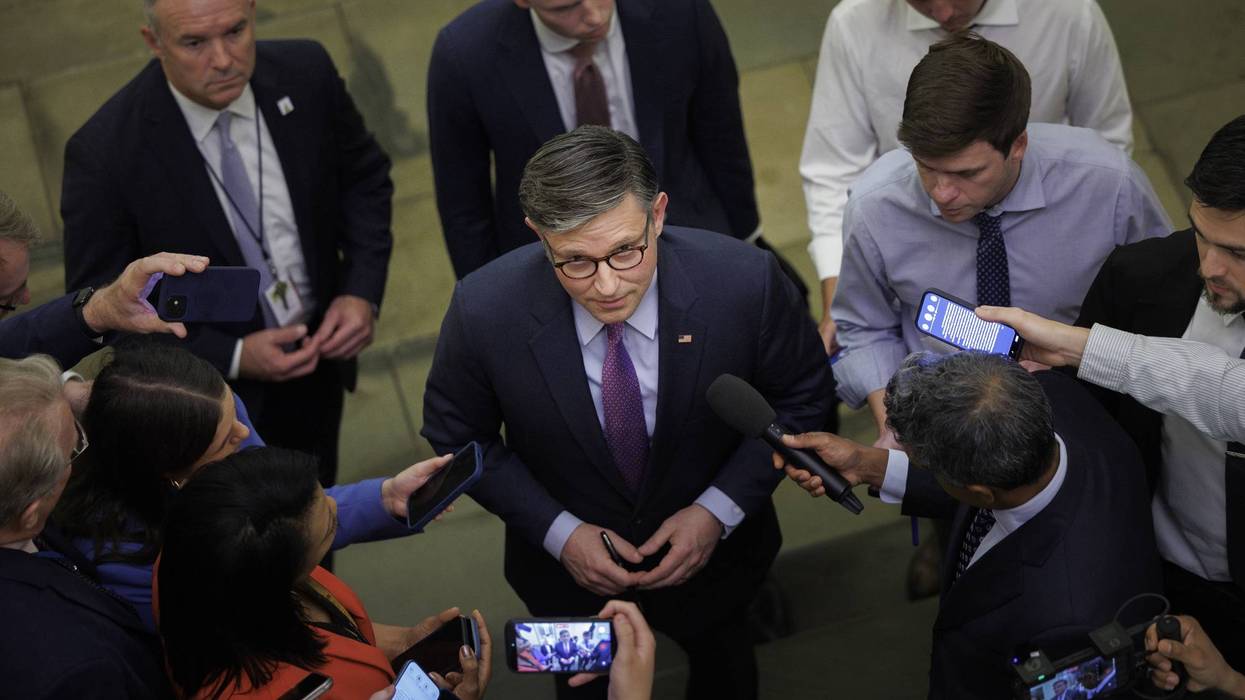
House Speaker Mike Johnson said that “this time we’re going to try to put it on a reconciliation bill,” which “prevents the necessity of 60 votes in the Senate.”
With Senate Republicans appearing unwilling to nuke the filibuster to pass President Donald Trump's SAVE America Act, House Republican leaders are trying a new tactic to pressure states to enact the bill's severe voting rights restrictions without actually passing the bill itself.
The SAVE America Act has already passed the House multiple times. Trump has tried to hold a bipartisan housing bill hostage in order to pressure Senate Republicans to pass the bill without support from Democrats, but failed to get enough GOP senators on board.
On Sunday, House Speaker Mike Johnson (R-La.) told Fox Business that "we're going to try to pass it again, and this time we're going to try to put it on a reconciliation bill," which "prevents the necessity of 60 votes in the Senate."
Punchbowl reported on Monday that GOP leadership had expressed interest in creating a $4 billion grant program in order to incentivize states to enact parts of the bill, including requirements that voters re-register to vote with documents proving their citizenship and provide voter ID at the polls while outlawing mail-in ballots in most cases.
Johnson's plan is an alternative to the approach taken by Rep. Anna Paulina Luna (R-Fla.), and a group of other staunch Trump allies, who have threatened to torpedo the National Defense Authorization Act unless the full SAVE America Act is attached in a bid to force the Senate to pass it.
Luna has said that if her amendments are ruled out of order, she and her far-right colleagues will vote against procedural rules on other House bills to essentially grind the chamber to a halt.
Trump and other supporters of the legislation have said these measures are necessary to prevent noncitizens from voting, which is already illegal.
Even data from the right-wing Heritage Foundation, which has authored much of Trump's second-term agenda, shows that noncitizen voting is exceedingly rare: It has identified just 77 instances of noncitizen voting between 1999 and 2023.
Federal law already requires that voters provide their driver's license or the last four digits of their Social Security number when registering to vote, which allows election officials to verify their citizenship status.
But Republicans are hoping to replace this system with one that is far more burdensome, requiring voters to provide original copies of personal documents to prove their citizenship, such as a passport or birth certificate matching their legal name, and to present them in person at an election office, effectively banning online registration.
Critics have warned that millions of eligible voters could face cost burdens when attempting to exercise their right to vote as a result, as a passport costs $165 to acquire and tens of millions of Americans do not have access to the original copy of their birth certificate.
Many voters, especially in rural areas, also live several hours away from their election office, and around 69 million married women have different legal names than the ones on their birth certificates.
Only two states, Georgia and Arizona, have historically enforced laws requiring voters to prove their citizenship with documents. But according to the Center for American Progress, 12 more have enacted provisions similar to those in the SAVE America Act since 2024, though many cannot be applied to federal elections and some have been blocked by courts.
New Hampshire, Wyoming, South Dakota, Ohio, Utah, Louisiana, and Florida have enacted laws requiring voters to prove their citizenship using physical documentation. Kansas, Mississippi, Kentucky, Tennessee, and Indiana have enacted laws that can require certain voters flagged as potential noncitizens to present proof.
Following a 5-4 Supreme Court ruling on Monday in which two conservative justices joined the three liberals to rule that states can count mail ballots that arrive after Election Day as long as they are postmarked before, Trump put more pressure on Republican holdouts in the Senate.
"All Dumocrats, and our five Republican Senate Hold Outs, Lisa Murkowski, Susan Collins, Thom Tillis, Bill Cassidy, and Mitch McConnell must vote to SAVE OUR COUNTRY," he wrote on Truth Social.
Cassidy (R-La.) wrote in response, "Mr. President, I don’t know which version of the SAVE America Act you’re referring to, but I am a cosponsor and support the latest version. I don’t know which staffer misled you, but thank you for your attention to this matter!!"
"Btw, it’s irresponsible to postpone signing the Housing bill due to the SAVE Act. We need to start delivering relief to people for the high cost of housing ASAP!!" the senator added.
In the Oval Office, Trump told reporters that all other bills, including the housing bill and the defense spending bill, were "a big yawn" in comparison to the SAVE America Act.
Senate Minority Leader Chuck Schumer (D-NY) said that "as the midterm elections approach, Trump and his allies are working overtime to silence Americans’ votes" and vowed that "Senate Democrats will continue to do everything we can to protect free and fair elections, where everyone’s voice is heard.”
"The court rightly recognized that the president and the executive branch lack both the legal authority and the capacity to compile a complete and accurate list of US citizens or eligible voters in every state."
On the heels of a federal judge in the District of Massachusetts siding with Democratic state attorneys general who challenged President Donald Trump's executive order requiring Americans to show proof of citizenship when registering to vote, another judge in the same district on Thursday blocked key portions of a second Trump order attacking US elections.
In the latest decision, District Judge Indira Talwani struck down Section 2, which orders the US Department of Homeland Security to create "confirmed citizen lists" of eligible voters, as well as Section 3, which directs the US Postal Service to create rules to limit the mailing of ballots to voters not included on its own lists.
"The Constitution does not grant the president any specific powers over elections. Broadly, the Constitution vests the president with 'executive power' and commands him to 'take care that the laws be faithfully executed,'" wrote Talwani, an appointee of former President Barack Obama. "Sections 2 and 3... are legally void as they are ultra vires and unconstitutionally violate the separation of powers."
The judge also struck down Section 5, which requires the US Deparment of Justicee and all other executive agencies "with relevant authority" to "take all lawful steps to deter and address noncompliance with federal law," plus mandates that states and localities "preserve, for a five-year-period, all records and materials—excluding ballots cast—evidencing participation in any federal election (e.g., ballot envelopes, regardless of carriers)." She found that this portion of the order "is merely precatory."
Several state attorneys general were involved in both of this week's cases, including New York Democrat Letitia James, who called Thursday's decision a "major victory" as well as a "critical step in defending the foundation of our democracy and protecting the sacred right to vote."
California Attorney General Rob Bonta on Thursday also cheered the back-to-back wins against the Republican president.
"Just yesterday, President Trump's first elections-related Executive Order was blocked. Now, his second elections-related executive Order has suffered the same fate, and rightfully so. As the federal judge wrote in today's decision, 'The Constitution does not grant the president any specific powers over elections.' Those powers are reserved to the states and Congress," Bonta said. "Democracy doesn't work on its own—it requires constant vigilance. And that's what my fellow attorneys general and I will continue to provide."
The AGs weren't alone in challenging Trump's order. The Association of Americans Resident Overseas, Delta Sigma Theta Sorority, League of Women Voters, LWV of Massachusetts, OCA – Asian Pacific American Advocates, and US Vote Foundation also filed suit, represented by the national and Massachusetts arms of the ACLU as well as Asian Americans Advancing Justice, Brennan Center for Justice, Legal Defense Fund, and LatinoJustice PRLDEF.
The attorneys and plaintiffs in that case said in a joint statement that as Thursday's decision "makes clear, President Trump's executive order from March 2026 attempting to seize control of elections is unconstitutional and dangerous."
"This ruling is a critical step in preserving free and fair elections," they said. "The court rightly recognized that the president and the executive branch lack both the legal authority and the capacity to compile a complete and accurate list of US citizens or eligible voters in every state. The ruling also rightly recognizes that the US Postal Service has no authority to limit the distribution of mail ballots."
"The court has yet to rule on our request to block the executive order's provisions on mail voting on behalf of a nonpartisan coalition of voting rights groups," they noted. "The same reasoning underpinning today's decision should hold in our case. President Trump's unlawful executive order violates the separation of powers, threatens the integrity of our elections, and must be enjoined from taking effect in the upcoming primary and midterm elections."
Meanwhile, White House spokesperson Abigail Jackson signaled the administration will continue the fight, telling multiple media outlets that "President Trump is committed to ensuring that Americans have full confidence in the administration of our elections. The president's executive order lawfully protects our elections, and we are confident that we will ultimately prevail in its implementation."
Jackson also reiterated the administration's support for the proposed Safeguard American Voter Eligibility Act, saying that "President Trump has also urged Congress to pass the SAVE America Act and other legislative proposals that would establish a uniform standard of photo ID for voting, prohibit no-excuse mail-in voting, and end the practice of ballot harvesting to secure our elections for generations to come."
Trump on Wednesday canceled his planned signing ceremony for the bipartisan 21st Century ROAD to Housing Act "until such time as we pass the desperately needed SAVE AMERICA ACT, which I consider to be a National Emergency."
In response, US Sen. Elizabeth Warren (D-Mass.) summarized: "Congress overwhelmingly passed a housing bill to bring down costs. But Trump just threw a tantrum. He's refusing to sign bipartisan legislation to make housing more affordable in a bizarre effort to try to rig the elections."