

SUBSCRIBE TO OUR FREE NEWSLETTER
Daily news & progressive opinion—funded by the people, not the corporations—delivered straight to your inbox.
5
#000000
#FFFFFF
To donate by check, phone, or other method, see our More Ways to Give page.
Daily news & progressive opinion—funded by the people, not the corporations—delivered straight to your inbox.
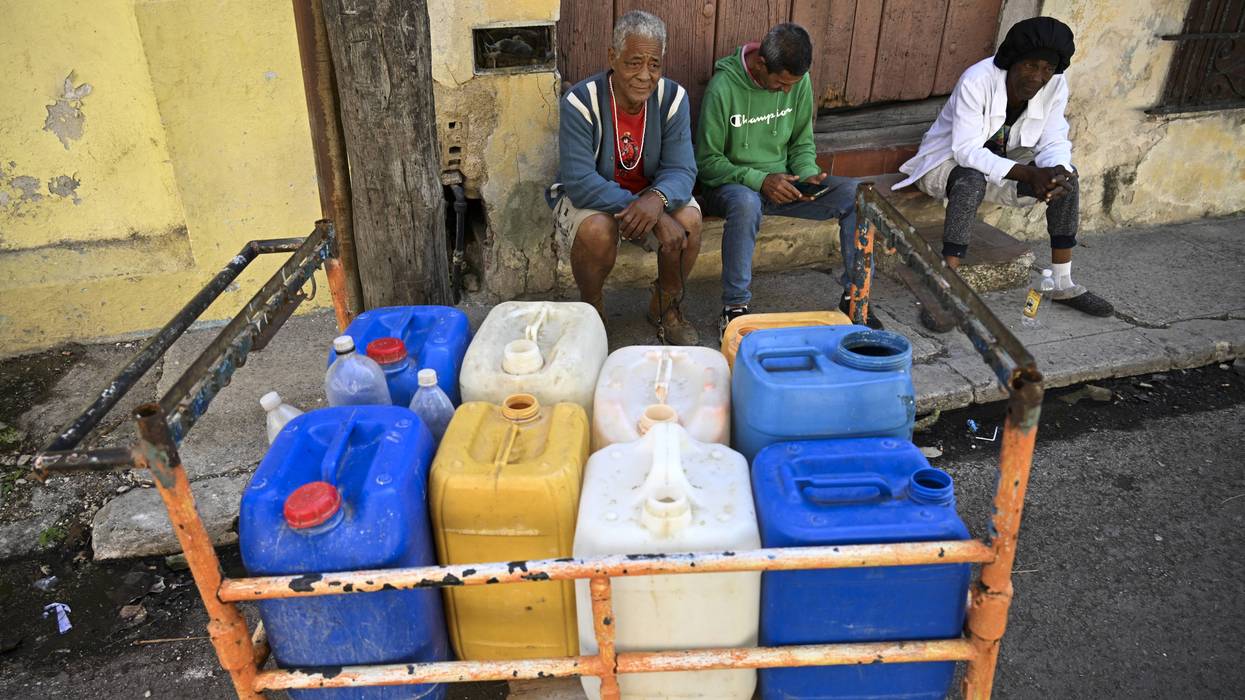
The president's decision means the US "will not illegally intercept and seize the entirely legal and legitimate sovereign trade in oil," said one observer.
President Donald Trump said Sunday that his administration would let a Russia-owned tanker carrying an estimated 730,000 barrels of oil to reach Cuba, loosening the illegal fuel blockade that has intensified the island's already-grave humanitarian crisis.
Speaking to reporters aboard Air Force One, Trump said that "if a country wants to send some oil into Cuba right now, I have no problem," backing off his previous threat to tariff any nation that supplied the besieged island with fuel. Cuba has not received any oil imports since January 9, sparking nationwide blackouts and food shortages and leaving hospitals without critical supplies—with deadly consequences for patients.
Trump insisted that the oil on the Russian tanker—which experts say is enough to buy Cuba at least several weeks of energy—is "not going to have an impact," declaring, "Cuba is finished."
"They have a bad regime, and they have very bad and corrupt leadership," added Trump, who presides over what analysts have deemed the most corrupt administration in US history. "Whether or not they get a boat of oil is not going to matter."
Reporter: There's a report that the US is going to let a Russian oil tanker go to Cuba?
Trump: If a country wants to send some oil into Cuba, I have no problem with that.
Reporter: Do you worry that that helps Putin?
Trump: It doesn’t help him. He loses one boatload of oil.… pic.twitter.com/8Vh6gHwaxs
— Acyn (@Acyn) March 30, 2026
Trump's comments came after The New York Times reported that, "barring orders instructing it otherwise," the US Coast Guard would not intercept the Russian tanker as it approached Cuba.
The Russian vessel, known as the Anatoly Kolodkin, is expected to reach the island by Monday night, providing some reprieve to a nation whose economy has been strangled by unlawful US economic warfare for decades. In recent days, an international convoy of activists has delivered tons of food, medicine, and other aid to the island, but the shipments are a Band-Aid on a gaping wound.
Michael Gallant, a member of the Progressive International Secretariat, welcomed news that the US is allowing the Russian tanker to reach Cuba as "very good news"—but said Trump's decision is hardly deserving of praise.
Very good news. “The US will allow,” of course, means “will not illegally intercept and seize the entirely legal and legitimate sovereign trade in oil” https://t.co/YF2RRIXC2S
— Michael Galant (@michael_galant) March 29, 2026
Trump imposed the fuel blockade in January, absurdly characterizing Cuba as an "unusual and extraordinary threat" to US national security.
Earlier this month, Trump threatened to "take" Cuba by force, calling it a "very weakened nation." Trump's remarks prompted Cuba's president, Miguel Díaz-Canel, to vow "impregnable resistance" to any US attempt to seize the island. The Trump administration is reportedly seeking Díaz-Canel's removal as a necessary condition in talks with the Cuban government.
Trump's threats led Reps. Gregory Meeks (D-NY) and Pramila Jayapal (D-Wash.) to introduce legislation last week that would prohibit the administration from using federal funds for any attack on Cuba without congressional authorization.
"Trump has started illegal regime change conflicts in Venezuela and Iran and is now threatening Cuba," Jayapal said in a statement. "These military attacks put our troops in danger, endanger innocent civilians, waste billions of taxpayer dollars, and are not what the American people want."
"Trump promised to end forever wars—he lied," Jayapal added. "Congress alone has the power to declare war, something Trump clearly does not respect. He has no plan to improve conditions for the Cuban people or promote democracy, and we must pass this legislation to block him from acting on a whim."
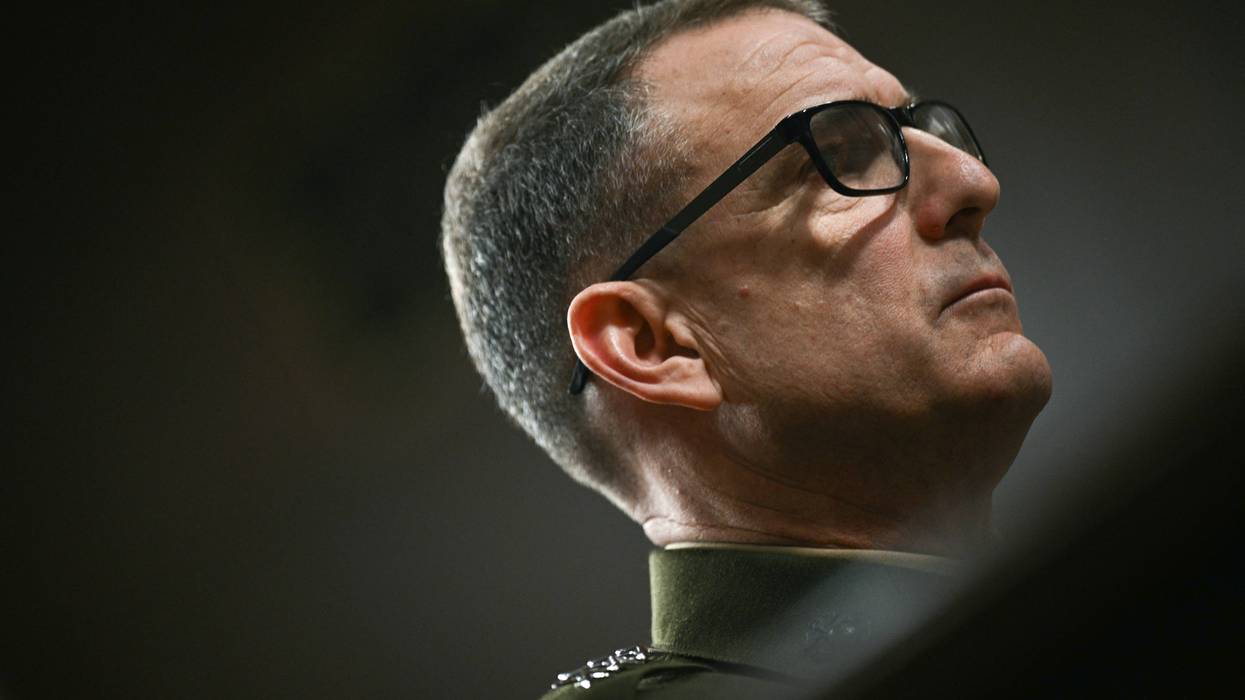
One foreign policy expert noted that fears of a "mass exodus" of refugees come "as the US starves Cuba of energy and food."
As the Trump administration sows chaos with a crushing fuel blockade of Cuba, a general told Congress that the military will "set up a camp" at Guantánamo Bay to detain those who try to flee the humanitarian crisis inflicted by the United States.
The phrase "humanitarian crisis" was used by Sen. Tom Cotton (R-Ark.) to describe the situation in Cuba during a Senate Armed Services Committee hearing on Thursday, as he questioned US Marine Corps Gen. Francis Donovan, the commander of the US Southern Command (SOUTHCOM).
Donovan, a 37-year Marine veteran, took command of SOUTHCOM in February after being tapped by President Donald Trump. His predecessor, Adm. Alvin Holsey, abruptly resigned in December reportedly after he'd raised concerns about the Trump administration's bombings of alleged drug trafficking boats in the Caribbean, which have been widely described as illegal under international law.
On Thursday, Cotton asked Donovan, "Are we prepared for any kind of humanitarian crisis in Cuba—the possible flow of refugees, other civil disorder that may threaten our interests, especially if the decrepit, corrupt Castro regime finally falls or flees?"
"Senator, yes we are," Donovan responded. "SOUTHCOM... We have an [executive] order to be prepared to support [the Department of Homeland Security] (DHS) in a mass migration event. They would take the lead, we would follow."
Donovan said this would include using the US military base at Guantánamo Bay, "where we would set up a camp to deal with those migrants or any overflow from any situation in Cuba itself."
Trump signed an executive order during his first month in office last year directing DHS and the Pentagon to “expand the Migrant Operations Center at Naval Station Guantánamo Bay to full capacity," which the administration said meant scaling the facility up to more than 30,000 beds.
The base, which houses a prison infamous for the extrajudicial torture of detainees during the global War on Terror, was designated under Trump's order to hold "high‑priority criminal aliens unlawfully present in the United States.”
But Donovan suggested it may now be used to hold Cubans fleeing chaos and deprivation following Trump's own acts of economic warfare.
Cotton's question followed a warning that same day from Republican Florida Gov. Ron DeSantis of a "possible mass exodus out of Cuba," which experienced an island-wide electricity blackout earlier this week following the Trump administration's blockade of fuel entering the island, which a group of UN rapporteurs said in January was “a serious violation of international law and a grave threat to a democratic and equitable international order.”
DeSantis, whose state is home to about 1.6 million Cuban-Americans, said, "[W]e don’t want to see a massive armada of people showing up on the shores of the Florida Keys."
He said he believed the Trump administration "would rather see people in Florida go help… hopefully get a new government going" in Cuba, possibly referring to the long-held hope of some right-wing Cuban exiles to take over the island.
Following more than 60 years of an embargo that has strangled Cuba's economic development, the Trump administration tightened the noose even more in January, signing an executive order that would slap harsh tariffs on any country that provides oil to Cuba.
As a result of the blockade, explained Juanita Goebertus, Americas director at Human Rights Watch, "people don’t have reliable access to drinking water, hospitals can’t operate safely, basic goods are becoming increasingly difficult to obtain, and garbage is piling up in the streets.”
Trump first described his blockade as part of an effort to carry out regime change against Cuba's Communist Party leadership, but this week, he made the imperialist declaration that he may seek to outright "take" the island and that he could "do anything I want" with the "weakened nation."
Erik Sperling, the executive director of Just Foreign Policy, emphasized that the possible "mass migration event" described by Donovan was only coming "as the US starves Cuba of energy and food."
"Trump and [Secretary of State Marco] Rubio are to blame for any refugee crisis from Cuba, as the US intentionally harms civilians with an oil blockade," said Just Foreign Policy in a social media post responding to Republican warnings of Cuban mass migration. "US sanctions and meddling in Latin America have always been a leading cause of migrant flows."
Immigration journalist Arturo Dominguez explained that "What [Donovan] essentially said was, 'We're ready to accommodate the flow of refugees by putting them in camps.'" He added that "the way these military goons jump right in to 'accommodate' atrocity is beyond the pale."
Trump's blockade of Cuba is unpopular with the American public, according to a YouGov poll released earlier this week. Just 28% of adult US citizens said they approved of the US blocking oil shipments to the country, while 46% said they opposed it. The same survey found that just 13% want the US to use military force to attack Cuba, while 61% would oppose it.
Just Foreign Policy said, "The American people do not want their government to starve Cubans and cause a 'mass migration event.'"
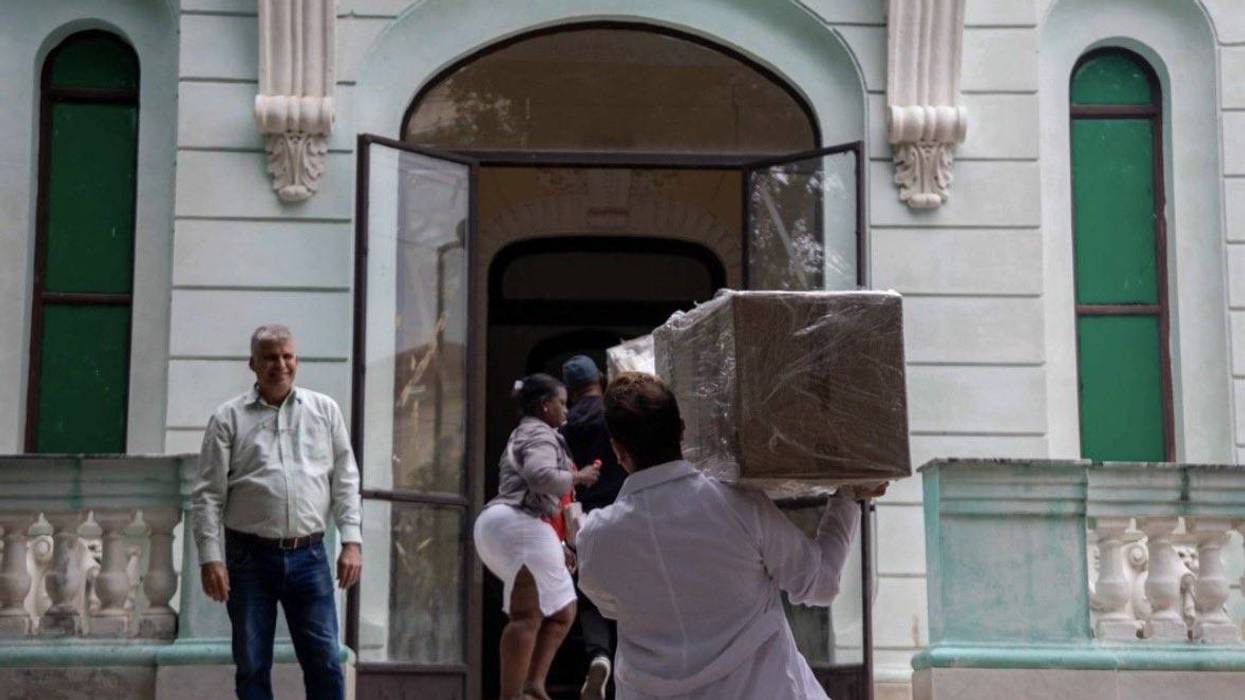
"People are looking at Trump's siege of this island with horror," said convoy organizer David Adler. "They understand... if it's successfully applied on a small, peaceful island nation like Cuba, they could be next."
As the United States strangles Cuba with an economic blockade, a convoy of activists from around the world is seeking to break it by traveling to the island with more than five tons of humanitarian aid.
The “Nuestra America Convoy” began arriving on the island on Wednesday with more than five tons of desperately needed supplies valued at more than $570,000.
Progressive International, the transnational left-wing organization that organized the campaign, said on Thursday that it had already delivered several tons of medical supplies to hospitals around Havana. They included cancer drugs, antibiotics, pain medication, surgical materials, and treatments for chronic conditions.
Attempts are also underway to directly defy the US oil blockade. On Wednesday, The Guardian reported that a sanctioned Russian tanker had set sail for Cuba with more than 730,000 barrels of crude oil and was expected to make landfall on March 23. Cuba has not imported any oil since January 9.
The activists arrived in Cuba days after the island was roiled by a total blackout amid the American blockade, which has effectively cut off 90% of its fuel imports—disrupting everything from medical care to food harvesting to garbage collection.
President Donald Trump enacted the blockade in January via an executive order, threatening to place tariffs on any nation selling oil to Cuba in a bid to cripple the island's economy and force regime change, after more than 60 years of a crushing US embargo.
As the crisis on the island escalated this week, the president threatened to take the island outright, saying he could "do anything I want with it."
"The consequences of the US blockade are lethal, for newborns and parents, for the elderly and the sick," the organizers of the convoy said. "That is why we are mobilizing by air, land, and sea in solidarity with the Cuban people."
The project began as a small flotilla, but has morphed into a much broader effort and attracted support from well-known public figures, including former UK Labour Party Leader Jeremy Corbyn and US Rep. Rashida Tlaib (D-Mich.).
Other famous faces, including the Swedish humanitarian and climate activist Greta Thunberg, the journalists Ryan Grim and Owen Jones, the left-wing streamer Hasan Piker, and the Irish rap group Kneecap, are also expected to travel to Cuba as part of the convoy.
More than 120 activists from at least 19 countries touched down with the convoy's first delegation at Havana's airport on Wednesday. But they are just the first of several groups expected to arrive in the coming days.
Several more vessels from Mexico are expected to arrive on the island on Saturday, carrying "food, medicine, and essential supplies." In total, activists with the effort hope to transport 20 tons of aid.
"When we first put out this call to respond to the aggravated humanitarian crisis on the island, thousands of people heard that call," said David Adler, the co-coordinator of Progressive International.
"People are looking at Trump's siege of this island with horror," he said, "not only because it has disastrous consequences... but also because they understand that this really barbaric tactic of a siege, if it's successfully applied on a small, peaceful island nation like Cuba, they could be next."
The activists involved in the effort have said they took inspiration from the Global Sumud Flotilla that attempted to break Israel's siege of Gaza with humanitarian aid last fall. However, the effort to provide aid to Cuba is very different.
Whereas the ships attempting to enter Gaza were intercepted by the Israeli military, activists entering Cuba are unlikely to face physical danger, as the blockade is not being enforced militarily and the Cuban government has welcomed their arrival.
(Video by The National)
Nathan J. Robinson and Alex Skopic, editors of the American left-wing magazine Current Affairs, who are traveling to Cuba as part of the convoy on Friday, said in an article published earlier this week they were outraged by the lack of action taken by the US government and other governments around the world, especially since it's "perfectly legal to bring humanitarian supplies to the island."
"The fact that it’s fallen to a handful of activists to carry out this work should bring shame to every elected official, everywhere in the world, who hasn’t launched a ship full of supplies to Havana," they said. "If this mission becomes a big enough international news story, perhaps more governments can be pressured to do exactly that."
"Beyond food, medicine, and energy infrastructure, this mission sends a message. As Americans, we want to make it crystal clear that the Trump administration does not speak for us, and we’re sickened by what Trump and [Secretary of State Marco] Rubio are doing to the Cuban people in the name of US foreign policy," they continued. "We’re determined to do what we can, and we’re going to make sure the people of Cuba do not stand alone."