

SUBSCRIBE TO OUR FREE NEWSLETTER
Daily news & progressive opinion—funded by the people, not the corporations—delivered straight to your inbox.
5
#000000
#FFFFFF
To donate by check, phone, or other method, see our More Ways to Give page.
Daily news & progressive opinion—funded by the people, not the corporations—delivered straight to your inbox.
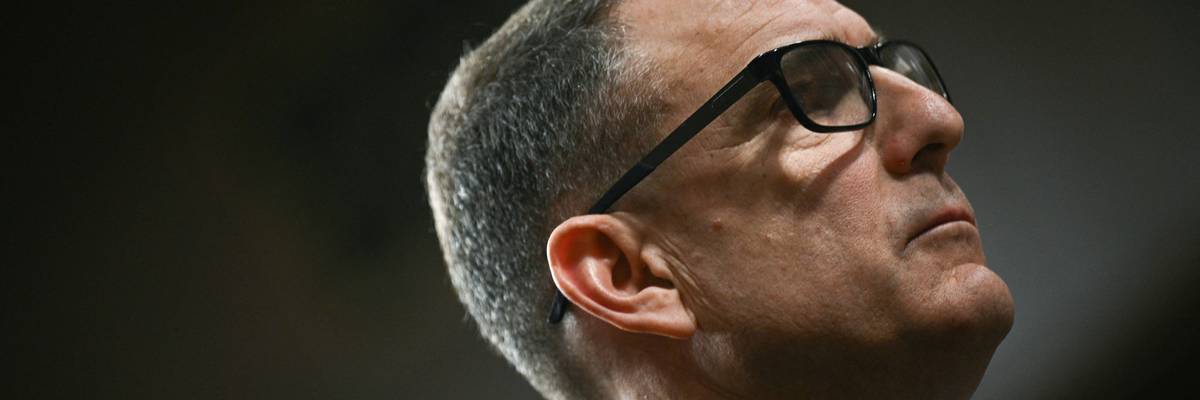
US Marine Corps Lt. Gen. Francis L. Donovan, then the nominee for commander of US Southern Command (SOUTHCOM), testifies during a Senate Committee on Armed Services hearing on his nomination on Capitol Hill in Washington, DC, on January 15, 2026.
One foreign policy expert noted that fears of a "mass exodus" of refugees come "as the US starves Cuba of energy and food."
As the Trump administration sows chaos with a crushing fuel blockade of Cuba, a general told Congress that the military will "set up a camp" at Guantánamo Bay to detain those who try to flee the humanitarian crisis inflicted by the United States.
The phrase "humanitarian crisis" was used by Sen. Tom Cotton (R-Ark.) to describe the situation in Cuba during a Senate Armed Services Committee hearing on Thursday, as he questioned US Marine Corps Gen. Francis Donovan, the commander of the US Southern Command (SOUTHCOM).
Donovan, a 37-year Marine veteran, took command of SOUTHCOM in February after being tapped by President Donald Trump. His predecessor, Adm. Alvin Holsey, abruptly resigned in December reportedly after he'd raised concerns about the Trump administration's bombings of alleged drug trafficking boats in the Caribbean, which have been widely described as illegal under international law.
On Thursday, Cotton asked Donovan, "Are we prepared for any kind of humanitarian crisis in Cuba—the possible flow of refugees, other civil disorder that may threaten our interests, especially if the decrepit, corrupt Castro regime finally falls or flees?"
"Senator, yes we are," Donovan responded. "SOUTHCOM... We have an [executive] order to be prepared to support [the Department of Homeland Security] (DHS) in a mass migration event. They would take the lead, we would follow."
Donovan said this would include using the US military base at Guantánamo Bay, "where we would set up a camp to deal with those migrants or any overflow from any situation in Cuba itself."
Trump signed an executive order during his first month in office last year directing DHS and the Pentagon to “expand the Migrant Operations Center at Naval Station Guantánamo Bay to full capacity," which the administration said meant scaling the facility up to more than 30,000 beds.
The base, which houses a prison infamous for the extrajudicial torture of detainees during the global War on Terror, was designated under Trump's order to hold "high‑priority criminal aliens unlawfully present in the United States.”
But Donovan suggested it may now be used to hold Cubans fleeing chaos and deprivation following Trump's own acts of economic warfare.
Cotton's question followed a warning that same day from Republican Florida Gov. Ron DeSantis of a "possible mass exodus out of Cuba," which experienced an island-wide electricity blackout earlier this week following the Trump administration's blockade of fuel entering the island, which a group of UN rapporteurs said in January was “a serious violation of international law and a grave threat to a democratic and equitable international order.”
DeSantis, whose state is home to about 1.6 million Cuban-Americans, said, "[W]e don’t want to see a massive armada of people showing up on the shores of the Florida Keys."
He said he believed the Trump administration "would rather see people in Florida go help… hopefully get a new government going" in Cuba, possibly referring to the long-held hope of some right-wing Cuban exiles to take over the island.
Following more than 60 years of an embargo that has strangled Cuba's economic development, the Trump administration tightened the noose even more in January, signing an executive order that would slap harsh tariffs on any country that provides oil to Cuba.
As a result of the blockade, explained Juanita Goebertus, Americas director at Human Rights Watch, "people don’t have reliable access to drinking water, hospitals can’t operate safely, basic goods are becoming increasingly difficult to obtain, and garbage is piling up in the streets.”
Trump first described his blockade as part of an effort to carry out regime change against Cuba's Communist Party leadership, but this week, he made the imperialist declaration that he may seek to outright "take" the island and that he could "do anything I want" with the "weakened nation."
Erik Sperling, the executive director of Just Foreign Policy, emphasized that the possible "mass migration event" described by Donovan was only coming "as the US starves Cuba of energy and food."
"Trump and [Secretary of State Marco] Rubio are to blame for any refugee crisis from Cuba, as the US intentionally harms civilians with an oil blockade," said Just Foreign Policy in a social media post responding to Republican warnings of Cuban mass migration. "US sanctions and meddling in Latin America have always been a leading cause of migrant flows."
Immigration journalist Arturo Dominguez explained that "What [Donovan] essentially said was, 'We're ready to accommodate the flow of refugees by putting them in camps.'" He added that "the way these military goons jump right in to 'accommodate' atrocity is beyond the pale."
Trump's blockade of Cuba is unpopular with the American public, according to a YouGov poll released earlier this week. Just 28% of adult US citizens said they approved of the US blocking oil shipments to the country, while 46% said they opposed it. The same survey found that just 13% want the US to use military force to attack Cuba, while 61% would oppose it.
Just Foreign Policy said, "The American people do not want their government to starve Cubans and cause a 'mass migration event.'"
Dear Common Dreams reader, It’s been nearly 30 years since I co-founded Common Dreams with my late wife, Lina Newhouser. We had the radical notion that journalism should serve the public good, not corporate profits. It was clear to us from the outset what it would take to build such a project. No paid advertisements. No corporate sponsors. No millionaire publisher telling us what to think or do. Many people said we wouldn't last a year, but we proved those doubters wrong. Together with a tremendous team of journalists and dedicated staff, we built an independent media outlet free from the constraints of profits and corporate control. Our mission has always been simple: To inform. To inspire. To ignite change for the common good. Building Common Dreams was not easy. Our survival was never guaranteed. When you take on the most powerful forces—Wall Street greed, fossil fuel industry destruction, Big Tech lobbyists, and uber-rich oligarchs who have spent billions upon billions rigging the economy and democracy in their favor—the only bulwark you have is supporters who believe in your work. But here’s the urgent message from me today. It's never been this bad out there. And it's never been this hard to keep us going. At the very moment Common Dreams is most needed, the threats we face are intensifying. We need your support now more than ever. We don't accept corporate advertising and never will. We don't have a paywall because we don't think people should be blocked from critical news based on their ability to pay. Everything we do is funded by the donations of readers like you. When everyone does the little they can afford, we are strong. But if that support retreats or dries up, so do we. Will you donate now to make sure Common Dreams not only survives but thrives? —Craig Brown, Co-founder |
As the Trump administration sows chaos with a crushing fuel blockade of Cuba, a general told Congress that the military will "set up a camp" at Guantánamo Bay to detain those who try to flee the humanitarian crisis inflicted by the United States.
The phrase "humanitarian crisis" was used by Sen. Tom Cotton (R-Ark.) to describe the situation in Cuba during a Senate Armed Services Committee hearing on Thursday, as he questioned US Marine Corps Gen. Francis Donovan, the commander of the US Southern Command (SOUTHCOM).
Donovan, a 37-year Marine veteran, took command of SOUTHCOM in February after being tapped by President Donald Trump. His predecessor, Adm. Alvin Holsey, abruptly resigned in December reportedly after he'd raised concerns about the Trump administration's bombings of alleged drug trafficking boats in the Caribbean, which have been widely described as illegal under international law.
On Thursday, Cotton asked Donovan, "Are we prepared for any kind of humanitarian crisis in Cuba—the possible flow of refugees, other civil disorder that may threaten our interests, especially if the decrepit, corrupt Castro regime finally falls or flees?"
"Senator, yes we are," Donovan responded. "SOUTHCOM... We have an [executive] order to be prepared to support [the Department of Homeland Security] (DHS) in a mass migration event. They would take the lead, we would follow."
Donovan said this would include using the US military base at Guantánamo Bay, "where we would set up a camp to deal with those migrants or any overflow from any situation in Cuba itself."
Trump signed an executive order during his first month in office last year directing DHS and the Pentagon to “expand the Migrant Operations Center at Naval Station Guantánamo Bay to full capacity," which the administration said meant scaling the facility up to more than 30,000 beds.
The base, which houses a prison infamous for the extrajudicial torture of detainees during the global War on Terror, was designated under Trump's order to hold "high‑priority criminal aliens unlawfully present in the United States.”
But Donovan suggested it may now be used to hold Cubans fleeing chaos and deprivation following Trump's own acts of economic warfare.
Cotton's question followed a warning that same day from Republican Florida Gov. Ron DeSantis of a "possible mass exodus out of Cuba," which experienced an island-wide electricity blackout earlier this week following the Trump administration's blockade of fuel entering the island, which a group of UN rapporteurs said in January was “a serious violation of international law and a grave threat to a democratic and equitable international order.”
DeSantis, whose state is home to about 1.6 million Cuban-Americans, said, "[W]e don’t want to see a massive armada of people showing up on the shores of the Florida Keys."
He said he believed the Trump administration "would rather see people in Florida go help… hopefully get a new government going" in Cuba, possibly referring to the long-held hope of some right-wing Cuban exiles to take over the island.
Following more than 60 years of an embargo that has strangled Cuba's economic development, the Trump administration tightened the noose even more in January, signing an executive order that would slap harsh tariffs on any country that provides oil to Cuba.
As a result of the blockade, explained Juanita Goebertus, Americas director at Human Rights Watch, "people don’t have reliable access to drinking water, hospitals can’t operate safely, basic goods are becoming increasingly difficult to obtain, and garbage is piling up in the streets.”
Trump first described his blockade as part of an effort to carry out regime change against Cuba's Communist Party leadership, but this week, he made the imperialist declaration that he may seek to outright "take" the island and that he could "do anything I want" with the "weakened nation."
Erik Sperling, the executive director of Just Foreign Policy, emphasized that the possible "mass migration event" described by Donovan was only coming "as the US starves Cuba of energy and food."
"Trump and [Secretary of State Marco] Rubio are to blame for any refugee crisis from Cuba, as the US intentionally harms civilians with an oil blockade," said Just Foreign Policy in a social media post responding to Republican warnings of Cuban mass migration. "US sanctions and meddling in Latin America have always been a leading cause of migrant flows."
Immigration journalist Arturo Dominguez explained that "What [Donovan] essentially said was, 'We're ready to accommodate the flow of refugees by putting them in camps.'" He added that "the way these military goons jump right in to 'accommodate' atrocity is beyond the pale."
Trump's blockade of Cuba is unpopular with the American public, according to a YouGov poll released earlier this week. Just 28% of adult US citizens said they approved of the US blocking oil shipments to the country, while 46% said they opposed it. The same survey found that just 13% want the US to use military force to attack Cuba, while 61% would oppose it.
Just Foreign Policy said, "The American people do not want their government to starve Cubans and cause a 'mass migration event.'"
As the Trump administration sows chaos with a crushing fuel blockade of Cuba, a general told Congress that the military will "set up a camp" at Guantánamo Bay to detain those who try to flee the humanitarian crisis inflicted by the United States.
The phrase "humanitarian crisis" was used by Sen. Tom Cotton (R-Ark.) to describe the situation in Cuba during a Senate Armed Services Committee hearing on Thursday, as he questioned US Marine Corps Gen. Francis Donovan, the commander of the US Southern Command (SOUTHCOM).
Donovan, a 37-year Marine veteran, took command of SOUTHCOM in February after being tapped by President Donald Trump. His predecessor, Adm. Alvin Holsey, abruptly resigned in December reportedly after he'd raised concerns about the Trump administration's bombings of alleged drug trafficking boats in the Caribbean, which have been widely described as illegal under international law.
On Thursday, Cotton asked Donovan, "Are we prepared for any kind of humanitarian crisis in Cuba—the possible flow of refugees, other civil disorder that may threaten our interests, especially if the decrepit, corrupt Castro regime finally falls or flees?"
"Senator, yes we are," Donovan responded. "SOUTHCOM... We have an [executive] order to be prepared to support [the Department of Homeland Security] (DHS) in a mass migration event. They would take the lead, we would follow."
Donovan said this would include using the US military base at Guantánamo Bay, "where we would set up a camp to deal with those migrants or any overflow from any situation in Cuba itself."
Trump signed an executive order during his first month in office last year directing DHS and the Pentagon to “expand the Migrant Operations Center at Naval Station Guantánamo Bay to full capacity," which the administration said meant scaling the facility up to more than 30,000 beds.
The base, which houses a prison infamous for the extrajudicial torture of detainees during the global War on Terror, was designated under Trump's order to hold "high‑priority criminal aliens unlawfully present in the United States.”
But Donovan suggested it may now be used to hold Cubans fleeing chaos and deprivation following Trump's own acts of economic warfare.
Cotton's question followed a warning that same day from Republican Florida Gov. Ron DeSantis of a "possible mass exodus out of Cuba," which experienced an island-wide electricity blackout earlier this week following the Trump administration's blockade of fuel entering the island, which a group of UN rapporteurs said in January was “a serious violation of international law and a grave threat to a democratic and equitable international order.”
DeSantis, whose state is home to about 1.6 million Cuban-Americans, said, "[W]e don’t want to see a massive armada of people showing up on the shores of the Florida Keys."
He said he believed the Trump administration "would rather see people in Florida go help… hopefully get a new government going" in Cuba, possibly referring to the long-held hope of some right-wing Cuban exiles to take over the island.
Following more than 60 years of an embargo that has strangled Cuba's economic development, the Trump administration tightened the noose even more in January, signing an executive order that would slap harsh tariffs on any country that provides oil to Cuba.
As a result of the blockade, explained Juanita Goebertus, Americas director at Human Rights Watch, "people don’t have reliable access to drinking water, hospitals can’t operate safely, basic goods are becoming increasingly difficult to obtain, and garbage is piling up in the streets.”
Trump first described his blockade as part of an effort to carry out regime change against Cuba's Communist Party leadership, but this week, he made the imperialist declaration that he may seek to outright "take" the island and that he could "do anything I want" with the "weakened nation."
Erik Sperling, the executive director of Just Foreign Policy, emphasized that the possible "mass migration event" described by Donovan was only coming "as the US starves Cuba of energy and food."
"Trump and [Secretary of State Marco] Rubio are to blame for any refugee crisis from Cuba, as the US intentionally harms civilians with an oil blockade," said Just Foreign Policy in a social media post responding to Republican warnings of Cuban mass migration. "US sanctions and meddling in Latin America have always been a leading cause of migrant flows."
Immigration journalist Arturo Dominguez explained that "What [Donovan] essentially said was, 'We're ready to accommodate the flow of refugees by putting them in camps.'" He added that "the way these military goons jump right in to 'accommodate' atrocity is beyond the pale."
Trump's blockade of Cuba is unpopular with the American public, according to a YouGov poll released earlier this week. Just 28% of adult US citizens said they approved of the US blocking oil shipments to the country, while 46% said they opposed it. The same survey found that just 13% want the US to use military force to attack Cuba, while 61% would oppose it.
Just Foreign Policy said, "The American people do not want their government to starve Cubans and cause a 'mass migration event.'"

