
SUBSCRIBE TO OUR FREE NEWSLETTER
Daily news & progressive opinion—funded by the people, not the corporations—delivered straight to your inbox.
5
#000000
#FFFFFF
To donate by check, phone, or other method, see our More Ways to Give page.


Daily news & progressive opinion—funded by the people, not the corporations—delivered straight to your inbox.
The Birds and Bees Protection Act would eliminate 80 to 90% of the neonics used in New York each year by banning applications that are either easily replaceable or do not give an economic boost to farmers.
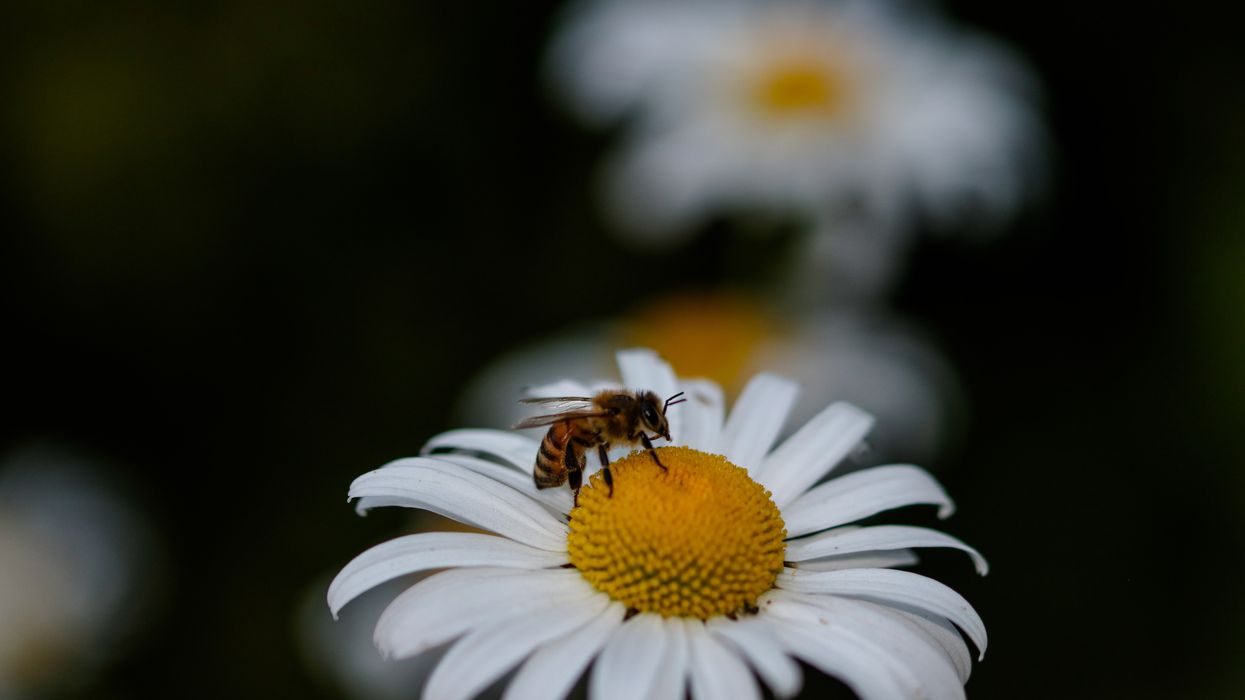
New York state on Friday became the first state in the nation to pass legislation restricting neonicotinoid pesticides (neonics) that are toxic to bees and other pollinators and wildlife.
The Birds and Bees Protection Act would eliminate 80 to 90% of the neonics used in New York each year by banning applications that are either easily replaceable or do not give an economic boost to farmers.
"Every year for the past decade, New York beekeepers have lost more than 40% of their bee colonies—largely due to neonic pesticides," bill sponsor State Senator Brad Hoylman-Sigal said in a statement. "Today, in this landmark victory for our pollinators, economy, and farming industry, New York is working to reverse that trend."
The bill passed the New York State Senate on Wednesday and the New York State Assembly on Friday and now goes to Gov. Kathy Hochul for signature. It bans the use of neonics to coat corn, soybean, and wheat seeds as well as for lawns and gardens.
"Pollinators are vital members of healthy ecosystems and our food supply chain," New York Assemblymember Deborah J. Glick said in a statement. "Protecting them by limiting toxins that pose adverse effects and health risks is an important step forward in our work to stop poisoning the environment and create a healthier New York."
Neonics are a class of pesticides that work by attacking the nervous systems of insect pests, as the Natural Resources Defense Council (NRDC) explains. A lethal dose will cause paralysis and death, while non-lethal effects include memory, immune, navigation, and fertility problems.
They are one of the deadliest pesticides out there, yet they are also the leading insecticide used in the U.S. This is a problem because about 95% of neonics used to coat seeds don't enter the plant at all, but instead spread into the environment via the soil, where they do not break down easily.
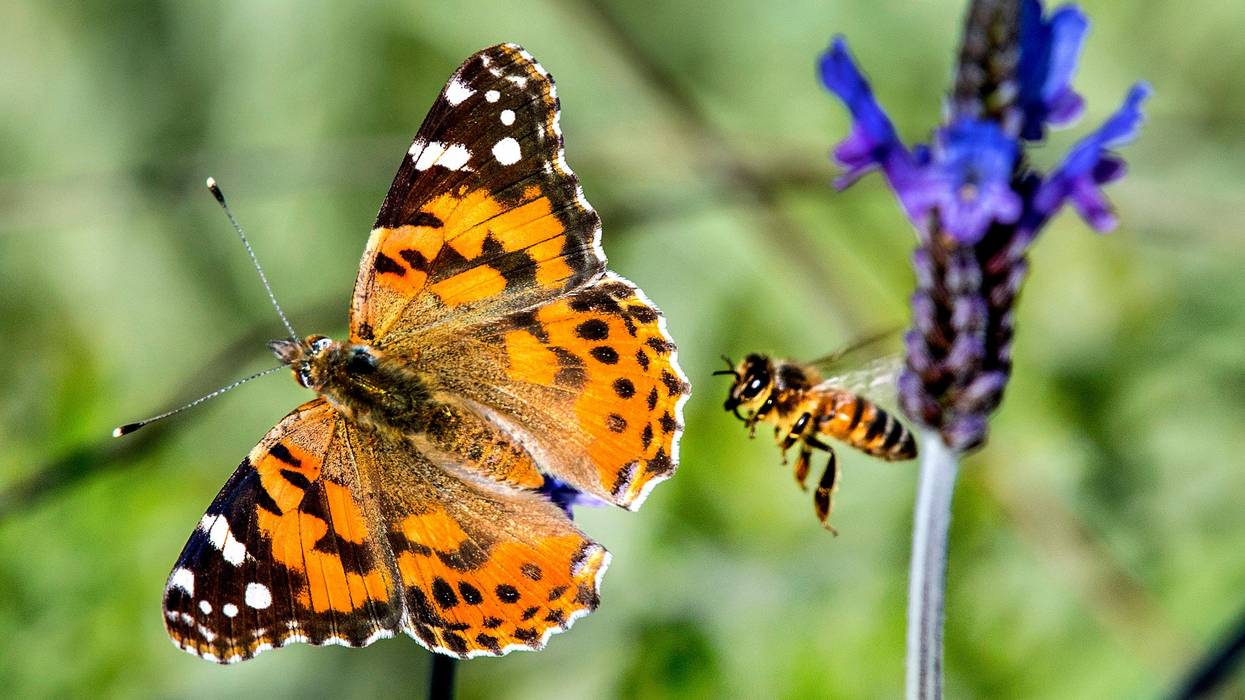
The concern is that neonics don't just harm target species but also beneficial insects like bees and butterflies.
"It's critical that we passed this bill to protect the health of humans and other living beings on our planet."
"They also harm the development of birds and mammals; and studies have linked ingredients of neoicotinoid insecticides with adverse human health outcomes as well," New York state Sen. Pete Harckham, another bill supporter, said in a statement. "It's critical that we passed this bill to protect the health of humans and other living beings on our planet."
The legislation was based in part on a Cornell University study that found that most neonic use in New York did not actually provide an economic benefit or could easily be swapped out for a safer alternative. It also comes about a month after an Environmental Protection Agency (EPA) assessment found that three common neonic chemicals threaten 11% of the species on the U.S. endangered species list.
"The Birds and the Bees Protection Act is the first-in-the-nation to limit neonic coated seeds, which contaminate our soil, our waterways, and our bodies," Dan Raichel, the acting director of NRDC's Pollinator Initiative, said in a statement. "We've long known neonics kill bees, but we now see links between neonics and mass losses of birds, the collapse of fisheries, developmental risks in people, and vast water contamination in New York."
The U.S. has long lagged behind similar countries in regulating neonics. The EU has banned their outdoor use, and Canada has largely stopped using them to coat seeds.
The new legislation was passed a little more than a week after the Center for Food Safety and the Pesticide Action Network North America (PANNA) sued the EPA over its failure to regulate the toxic chemicals.
"For too long, EPA has allowed pesticide-coated seeds to jeopardize threatened and endangered species across the country."
"For too long, EPA has allowed pesticide-coated seeds to jeopardize threatened and endangered species across the country," PANNA senior scientist and plaintiff Margaret Reeves said in a statement at the time. "EPA must close the regulatory loophole for toxic pesticide-coated seeds to prevent further harm to wildlife, ecosystems, and people."
While environmental groups continue to push for national regulations, they celebrated change in New York.
"Today is a great day for pollinators, clean water, and healthier communities," Caitlin Ferrante, the conservation program manager of the Sierra Club Atlantic Chapter, said in a statement.
Environmental and food safety advocates highlighted Thursday the decline in iconic pollinators following new analyses released by the U.S. Environmental Protection Agency showing three widely used neonicotinoid insecticides are "likely to adversely affect" the majority of the endangered plants and animals the agency assessed.
"These extremely toxic pesticides are causing drastic ecological harm, both the collapse of bee populations as well as putting literally hundreds of endangered species at extinction risk across the country."
"Now the EPA can't ignore the fact that these popular insecticides are wiping out our country's most endangered plants and animals," Lori Ann Burd, environmental health director at the Center for Biological Diversity, said in a statement.
"Neonicotinoids are used so widely, and in such large quantities," she said, "that even the EPA's industry-friendly pesticide office had to conclude that few endangered species can escape their toxic effects."
Burd's comments came in response to draft biological evaluations for three neonicotinoids, or "neonics," which are: clothianidin, imidacloprid and thiamethoxam. The evaluations, which now face a 60-day public comment period, were required by settlements the agency reached earlier this year with NRDC and the Center for Food Safety (CFS).
Neonics have come under the repeated scrutiny of environmental watchdogs and scientists, with previous studies linking their use to harm to insects, including bees and butterflies, as well as birds and freshwater marine species.
In its Thursday statement, the Center for Biologicical Diversity summarized the EPA's damning findings on the neonics' adverse impacts to threatened species and their habitats :
Nearly 80% of all endangered species--1,445 different kinds of plants and animals--are likely to be "adversely affected" by imidacloprid, and the pesticide will adversely modify the designated critical habitats of 658 species. For thiamethoxam, 1,396 (77% of all) endangered species are likely to be adversely affected, and the pesticide will adversely modify the designated critical habitats of 644 species. About two thirds of all endangered species, 1,225, are likely to be adversely affected by clothianidin, and the pesticide will adversely modify the designated critical habitats of 644 species.
CFS also noted the "remarkable levels of harm" the evaluations found with regards to the neonics.
According to George Kimbrell, legal director of the group, the analyses "confirm what scientists have told EPA and industry for over a decade: These extremely toxic pesticides are causing drastic ecological harm, both the collapse of bee populations as well as putting literally hundreds of endangered species at extinction risk across the country."
In light of that confirmation, Kimbrell urged the Biden administration "to complete its process with all due speed in order to start protecting these iconic species."
Burd, in her comments, stressed that there's simply no reason for the EPA to further drag its feet on taking neonics off the shelves.
"The EPA doesn't need any more proof. It should ban neonicotinoids right now," she said, pointing to "a heartbreaking extinction crisis" in which neonics "are playing an outsized role."
"Pollinator populations are declining nationwide," Burd said, citing as evidence the decline in the American bumblebee. "Once the most common bumblebee in the country, [it] has declined by an estimated 89% in just the past 20 years. There are more Starbucks stores than monarch butterflies in California."
"What will it take," she asked, "for the EPA to act on this information and ban these deadly chemicals?"
Beekeepers this year in the United States reported the second highest annual loss of managed honey bee colonies since records began in 2006, according to results of a nationwide survey released Wednesday.
The non-profit Bee Informed Partnership (BIP) said in its preliminary analysis that beekeepers--ranging from small backyard keepers to commercial operations--lost 45.5% of their colonies between April 2020 and April 2021. The results are based on a survey of over 3,300 U.S. beekeepers managing a combined 192,384 colonies.
"The worrisome part is we see no progression towards a reduction of losses."
"This year's survey results show that colony losses are still high," said Nathalie Steinhauer, BIP's science coordinator and a post-doctoral researcher in the University of Maryland Department of Entomology, in a statement.
The annual loss is 6.1 percentage points higher than the average loss rate of 39.4% over the last 10 years, the researchers said.
"Though we see fluctuations from year to year," said Steinhauer, "the worrisome part is we see no progression towards a reduction of losses."
During winter beekeepers reported losses of 32.2%--9.6 percentage points higher than last year and 3.9 points higher than the 15-year average. Summer losses came in at 31.1%. While that figure is 0.9 percentage points lower than last year, it's 8.6 points higher than the survey average.
The beekeepers attributed the losses this year to a number of factors, with the parasitic Varroa destructor mite being cited most frequently for winter losses and queen issues most frequent for summer losses. Other causes of colony loss beekeepers cited included starvation, weather, and pesticides.
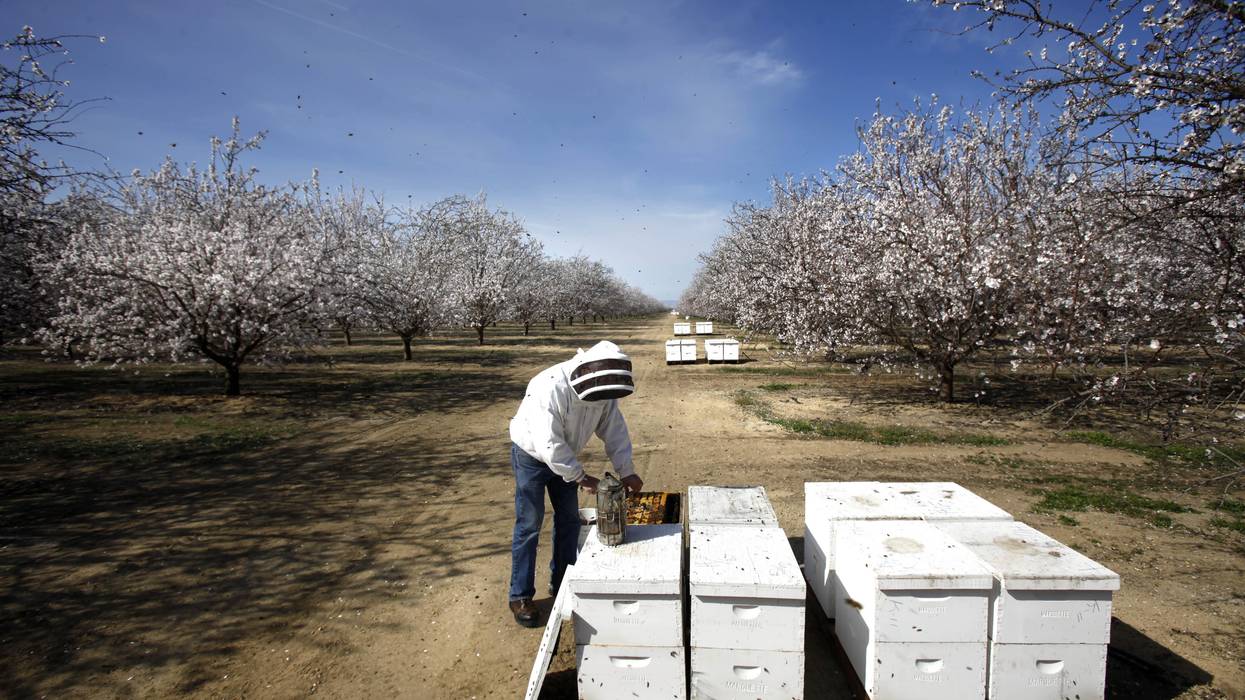
Continued losses are bad news for food security, as agricultural crops like blueberries and almonds rely on the bees for pollination.
"Beekeepers of all types consistently lose a high number of colonies each year, which puts a heavy burden on many of them to recoup those losses in time for major pollination events like California almonds," said survey co-author Geoffrey Williams, an assistant professor of entomology at Auburn University.
"Colony losses remain elevated," he said, "and this year's annual and summer loss rates are among the highest recorded."
For Jason Davidson, senior food and agriculture campaigner with Friends of the Earth, the survey results were a damning indictment of the U.S. Environmental Protection Agency's (EPA) failure to act on what conservation advocates call an "insect apocalypse" that was furthered by the Trump administration's pro-pesticide industry decisions.
"These bee losses highlight the disturbing lack of progress from the EPA in the fight to protect pollinators from toxic pesticides," said Davidson, urging the EPA not to "sit on the sidelines while beekeepers experience horrific losses year after year."
"It will take meaningful policy protection and rapid market change to reverse these unsustainable declines in honey bees and to protect the future of our food supply," he added.
BIP's findings were delivered during National Pollinator Week and as Rep. Earl Blumenauer (D-Ore.) reintroduced (pdf) the Saving America's Pollinators Act.
Pollinators, Blumenauer said Wednesday, are "critically important to the food we eat and the environment that sustains us. Unfortunately, our pollinators weren't immune from [former President Donald] Trump's war on science and the environment. In fact, they were a target, as the previous administration actually fought to allow more bee-killing pesticides back on the market."
"Now, it's up to us to work overtime to protect them, which is why I've reintroduced the Saving America's Pollinators Act," he said.
According to Emily Knobbe, policy manager at the Center for Food Safety, which endorsed the legislation, "National Pollinator Week is the perfect time for Rep. Blumenauer to reintroduce his progressive pollinator protection bill--and a perfect time to ask legislators to support this continued dedication to pollinators."
She said the latest version of the bill rightly responds to the decline in pollinator health, pointing to the 80% decline in 20 years of the Eastern Monarch butterfly populations as one example. She also pointed to a group of pesticides called neonicotinoids, or neonics, as key to pollinator recovery, given their links to pollinator harm.
"Rep. Blumenauer's bill would require not a suspension, but a ban on all neonicotinoid pesticides," wrote Knobbe. "This change to the proposed legislation reflects that the time for requesting incremental action from the EPA has passed."
"Pollinators need swift action in order to survive--banning neonicotinoids would provide a lifeline for these essential species," she said.
Advocating for a ban on toxic pesticides that have led to massive bee die-offs nationwide, a truck filled with millions of dead pollinators trundled across the country on Wednesday afternoon to reach its final destination: the front steps of the Environmental Protection Agency (EPA) headquarters in Washington, D.C.
"If we stop keeping bees, who's going to pollinate your fruits and vegetables? This can't go on."
--Roger Williams,
Central Maryland Beekeepers Association
The truck's arrival at EPA headquarters heralds a rally in which environmental groups, beekeepers, organic food advocates and others will "deliver over 4 million signatures urging an immediate ban on bee-killing pesticides" to the agency, writes the conservation group Friends of the Earth.
"Bees pollinate most of the world's most common crops, including summer favorites like peaches and watermelon," said Environment America in a press statement. "But over 40 percent of U.S. honeybee hives die each year, costing the farming and beekeeping industry more than $2 billion annually."
As Scott Nash, CEO of Mom's Organic, said in a statement, "What's happening today to pollinators is no different than what happened 50 years ago with the collapse of the osprey, bald eagle, and other bird and aquatic animal populations due to the use of DDT. If we allow the chemical agribusiness industry to continue these short-sighted practices, food costs will increase as food supplies diminish."
"In the five years since I started keeping bees, I've seen many hives killed by pesticides," added James Cook, a Minnesota-based beekeeper who has been driving the truck across the country since last Monday. "If some fundamental things don't change, it's going to be really hard for beekeepers to adapt to the environment around us."
As the crisis continues, studies show that the so-called neonicotinoid class of pesticides, or neonics, are a major contributing factor to bee population decline, as Common Dreams has reported. (Pesticide giants have lobbied heavily against any regulations of their multi-billion dollar industry.)
And despite "a process to assess four types of neonics and their impacts on pollinators" the EPA launched a year ago, and an agency study that in January confirmed the link between one variety of neonics and widespread bee deaths, further agency assessments of what critics describe as bee-toxic pesticides--and in turn, action--are still outstanding.
Yet the bees and their keepers don't have time to lose.
"We have so many losses it's worse than break-even. It is getting harder and harder to keep bees and make a living," said Roger Williams, president of the Central Maryland Beekeepers Association. "And if we stop keeping bees, who's going to pollinate your fruits and vegetables? This can't go on."
Rally participants documented the event on Twitter under the hashtag #keepthehivesalive:
A top scientist with the U.S. Department of Agriculture (USDA) filed a whistleblower complaint Wednesday, accusing the agency of harassment and retaliation for his work showing harmful effects on monarch butterflies from a class of widely used insecticides known as neonicotinoids, or neonics.
The department reportedly imposed a 14-day suspension (pdf) on Dr. Jonathan Lundgren, a senior research entomologist at the USDA, for publishing an unapproved report manuscript in a science journal on the "non-target effects" of a widely used neonic strain and for travel violations ahead of a presentation on the results to a scientific panel.
"What else is USDA hiding about the health and environmental impacts of pesticides?"
--Gary Ruskin, U.S. Right to Know
According to Lundgren and his supporters, the suspension was just censorship.
"Politics inside USDA have made entomology into a most perilous discipline," said Laura Dumais, staff counsel with Public Employees for Environmental Responsibility (PEER), which filed the complaint on Lundgren's behalf.
The Merit Systems Protection Board, a federal civil service tribunal, will hear the case. Lundgren wrote in his complaint:
Since late March, I have been subjected to a sudden but escalating pattern of impediments and disruption of my scientific work, restraints on my ability to communicate with scientific colleagues, as well as the media and a growing professional toll that is making further scientific work in ARS untenable. This abrupt onset of actions undoubtedly appears to have been prompted by the scientific activities that are supposed to be specifically safeguarded and encouraged under the USDA Scientific Integrity Policy.
"It is USDA policy that political suppression and manipulation of science are not to be tolerated, but it is empty rhetoric," Dumais added.
Neonics have long been linked to dramatic population losses for butterflies, bees, and other pollinators, which environmental experts say threatens food security.
Lundgren and other researchers also previously found that neonics on the whole did not increase crop yields for farmers--casting yet more doubts on the supposed efficacy of the controversial products.
The case also "raises questions about whether USDA is suppressing other research adverse to the interests of the agrichemical industry," said Gary Ruskin, co-director of consumer advocacy group U.S. Right to Know. "Is this an isolated incident or part of a larger pattern? What else is USDA hiding about the health and environmental impacts of pesticides?"
As PEER executive director Jeff Ruch said on Wednesday, "Dr. Lundgren's case underscores why legal protections for government scientists are sorely needed. Bureaucracies under political pressure from corporate stakeholders routinely shoot the messenger, even if they are wearing a lab coat."